
Introduction
A Dining Room Chair Set of 2 is one of the most practical furniture choices for modern homes because it blends flexibility, comfort, and space efficiency in a way that larger sets often cannot. A single setup could squeeze into compact urban spots, dwellings with narrow breakfast nooks, or stretch across vast areas needing structure. Paired chairs introduce calm where chaos used to sit, keep room open for daily rituals like buttering bread and sipping warm drinks, and still vanish neatly during cleaning or rearranging. Motion flows better when fewer things block the path.
Nowadays, dinner spots do more than host meals. They turn into offices, classrooms, places for coffee, hangouts – sometimes all before lunch. Come 2026, a chair’s online photo won’t decide its worth. What counts is whether it lines up right with the table, survives daily shifting, stays solid after long stretches, and fits real routines. Design slips into usefulness quietly, almost by accident.
Start by skipping those common suggestions everyone shares. Focus on size before anything else – check the numbers, make sure it lines up with your space. After that, examine the materials carefully and see what each part is built from. How something feels during hours of sitting holds equal weight; notice pressure points after a while. Shape should follow the tabletop it joins, be it circular, angular, or stretched out wide. Start with what feels right now, not just trendy. Clear thoughts come through, nothing hidden or vague. Each detail lands where it should, building slowly. By the time you finish, the choices already line up behind your eyes.
Why a dining room chair set of 2 is such a smart purchase
A pair of chairs sits well without taking over. Together, they offer seating while leaving air between a small table. In compact homes or open studios, they tuck neatly by a meal nook in the kitchen zone. The dining area stands apart visually, light and unobtrusive. Just two keep clutter low, space feeling wide and simple.
What gives this option its edge? Think about how it slips into different spots. Near a tiny table, two chairs work fine – but they also hold down both ends of a long table, or fill gaps when more guests arrive. As things change around them, these two adjust quietly, no drama needed. Start rearranging, layering on new touches, giving each piece a fresh shape – maybe blend them later with contrasting forms. What matters is how they grow when you do, because homes rarely remain frozen in their first version.
One chair today might seem fine – yet grabbing two together usually saves more in the long termng term. Hold off on full collections till you’ve tested how things fit where you live. A proper duo, made well, becomes the base instead of an afterthought. Better details emerge that way, pieces shaped for actual rooms, choices that feel settled months down the line. Most times, size doesn’t decide what wins at dinner. Location shapes your plate just as much as habit does.
Best use cases for a set of 2
A dining room chai set of 2 is especially useful in a few common scenarios. It works beautifully in a breakfast nook where space is limited. It fits a small apartment where the dining zone must stay compact. It suits a kitchen corner where a full dining set would feel excessive. It also works well in an open-plan home where the dining area shares visual attention with the living room or kitchen.
This setup is also smart for households that dine in different ways. Some people use their dining table mostly for quick meals. Others use it for remote work, crafts, study time, or long conversations. A pair of chairs gives you enough seating for the ordinary day, while still leaving room to expand if your needs change later.
The fast answer: how to choose the right dining room chairs set of 2
The most reliable buying order is simple:
Measure your table and room first.
Check seat height against table height.
Decide whether comfort or space-saving matters more.
Choose a material that matches your lifestyle.
Match the chair style to the room, not only the table.
Buy within budget, but do not ignore durability.
That sequence works because dining chairs are not decorative objects alone. They are physical, functional, frequently used pieces that affect posture, movement, cleaning, and the overall flow of the room. When you choose in the right order, you avoid the common mistake of buying a chair that looks stylish but behaves badly in real life.
Measure the table and the room before you buy anything
This is the most important part of the entire process. A chair can look elegant online and still feel awkward in your home if the proportions are wrong. The relationship between the chair, table, and surrounding space determines whether the room feels comfortable or cramped.
Start with the basics: table height, chair seat height, chair width, chair depth, and clearance behind the chairs. Once you have those numbers, the rest becomes much easier.
A practical measurement guide
| What to measure | Smart target | Why it matters |
| Dining table height | 28–31 in | Keeps the chair-table relationship comfortable |
| Chair seat height | 17–20 in | Helps feet rest naturally and supports posture |
| The gap between the seat and the tabletop | 10–12 in | Leaves enough legroom |
| Chair width | 18–20 in | Prevents crowding |
| Space between chairs | About 6 in in tight layouts | Improves elbow room and movement |
| Chair depth | 16–22 in | Supports the thighs without cutting into the knees |
| Back height above the seat | 12–16 in for casual chairs; about 20 in for formal chairs | Affects back support and visual presence |
The most Important number for many buyers is the seat-to-table relationship. A chair that sits too high can make meals uncomfortable. A chair that sits too low can make the table feel too tall and awkward to use. That is why careful measurement matters more than style photos.
You also need to think about circulation space. The chair should not just fit under the table. It should also allow people to pull it out and sit down without hitting a wall, cabinet, or walkway. A beautiful chair that blocks movement will become annoying very quickly. In smaller homes, that kind of friction affects daily life more than people expect.
A useful rule is to leave enough space around the table for comfortable sitting and passage. In tight dining areas, every inch matters. In high-traffic spaces, more clearance usually makes the room feel calmer and more open.
Put comfort first, because dining chairs are used more than people think
Many people imagine a dining chair as a seat used only for short meals. In reality, it often serves as a work chair, a homework chair, a conversation chair, and a lingering-after-dinner chair. That means comfort is not a luxury. It is a core performance feature.
A comfortable chair naturally supports the body. It does not force an awkward posture. It does not press painfully behind the knees. It does not make the lower back feel unsupported after fifteen minutes. Instead, it allows the body to rest with ease.
What comfort really means
Comfort comes from several design elements working together:
A seat height that keeps the feet flat on the floor.
A seat depth that supports the thighs without pressing behind the knees.
A backrest that follows the lower back naturally.
A cushion level that feels supportive rather than overly soft.
A slight recline or relaxed angle that helps the body settle.
A good chair should feel balanced. It should not be too rigid, but it also should not be so plush that you sink into it and struggle to rise. The goal is support, not slouching. The best chairs are the ones you barely notice because they feel so naturally usable.
A quick comfort test
Before buying online, ask yourself:
Can this chair support a normal meal without discomfort?
Does the backrest feel supportive enough for longer sitting?
Is the seat edge soft enough not to dig into the legs?
Does the shape fit the body, or is it only attractive in the product image?
Would I still like sitting here after 30 minutes, not just 3?
That test is very useful because it focuses on real-world use. A chair can be beautiful and still be the wrong choice if it is tiring, too firm, or poorly shaped.
Choose the right chair type for your lifestyle.
The best material and frame style depend on how your household actually lives. A home with kids and daily meals needs different qualities than a formal dining room used only on weekends. The chair you choose should follow your habits, not just your taste.
Upholstered chairs
Upholstered chairs are usually the best option when comfort is the priority. They feel softer, look more refined, and make long meals more pleasant. They can also create a cozy, elevated atmosphere that works well in contemporary homes.
The trade-off is care. Fabric needs attention, and some materials stain more easily than others. If you choose upholstery, think about cleaning habits, household traffic, and whether you need a performance fabric or an easier-care finish.
Wooden chairs
Wooden chairs remain one of the most enduring choices because they are classic, sturdy, and visually versatile. They work in traditional rooms, modern dining spaces, Scandinavian interiors, and transitional homes. They often age well and can blend with changing décor over time.
Their only limitation is that they may feel firmer than cushioned options. For many buyers, that is easy to solve with a seat pad or a well-shaped seat.
Metal chairs
Metal chairs often suit modern, industrial, or urban-inspired interiors. They bring a sharp visual line and usually feel strong and durable. They can be excellent in casual dining zones, loft-style spaces, or minimalist rooms that need a crisp silhouette.
The downside is that they may appear cooler or harder unless softened with surrounding textures, cushions, or a warmer table finish.
Rattan or cane chairs
Rattan and cane Chairs Introduce texture, warmth, and natural character. They work especially well in rooms that aim for a relaxed, airy, slightly coastal, or organic look. They can make a dining area feel less formal and more welcoming.
Because they are more delicate in appearance, they often need gentler care than solid wood or metal.
Mixed-material chairs
Mixed-material chairs are very relevant in 2026 because they create a more curated, design-conscious look. A wooden frame with upholstered seating, a metal base with fabric cushioning, or a wood-and-cane combination can make a room feel more interesting without becoming visually chaotic.
The key is balance. Mixed materials should feel intentional. When they are thoughtfully combined, they bring depth and texture. When they are badly combined, they can look random.
Match the chairs to the table shape.
One of the easiest ways to improve a room is to make the chair and table feel visually coherent. The two pieces do not have to match exactly, but they should relate to each other in scale, mood, and proportion.
Round table
Round tables usually look best with chairs that feel lightweight and flowing. The idea is to preserve the table’s gentle shape. Chunky chairs can overwhelm the softness of a round table, while slimmer silhouettes help the room feel airy.
Rectangular table
Rectangular tables offer the most flexibility. They can take matching chairs, coordinated chairs, or a mixture of side chairs and statement end chairs. This makes them ideal for anyone who wants to build a dining set gradually or create a more layered look.
A dining room chair set of 2 fits particularly well here because it can function as a paired set that you later expand with additional seats.
Square table
Square tables call for balance and compact proportions. Oversized chairs can crowd the edges and make the table feel smaller than it really is. Cleaner lines and moderate width usually work best.
Tables with a heavy base
If the table already has a visually strong base, the chairs should not fight it. Very bulky chairs can make the arrangement feel dense. A better choice is often a cleaner silhouette that complements the strength of the table without competing with it.
Tables with a slim base
A table with slender legs or an open base usually pairs well with lighter chairs. This creates a sense of visual flow and helps the dining zone feel more open. It is especially useful in smaller homes where too much visual weight can make the room feel crowded.
Think about the current style direction, not just basic matching
The dining room in 2026 is less about rigid perfection and more about controlled coordination. That means the old idea of a perfectly matched set is no longer the only acceptable option. Many modern spaces now lean toward mixed seating, subtle contrast, and more personalized combinations.
What feels current in 2026
Mixing wood with upholstery.
Using one pair of chairs as statement pieces.
Keeping a cohesive color palette even when textures differ.
Choosing curved backs, tapered legs, or sculptural outlines.
Letting one detail stand out while the rest stay calm.
The key to a modern look is restraint. You do not need every element to scream for attention. A simple chair with one thoughtful design feature can often look more sophisticated than a heavily decorated one.
What still works well
Matching sets still have a strong place, especially when the goal is calmness, visual order, or cost efficiency. A coordinated pair can look elegant, tidy, and timeless. It is also easier to shop this way if you want a quick solution without comparing multiple styles.
The design lesson is not that matching is bad. The lesson is that matching should be intentional. If you choose a coordinated set because it suits the room, the budget, and the table, that is a strong decision. If you choose it merely because it feels safe, the result may feel flat.
Choose chairs carefully for small dining rooms
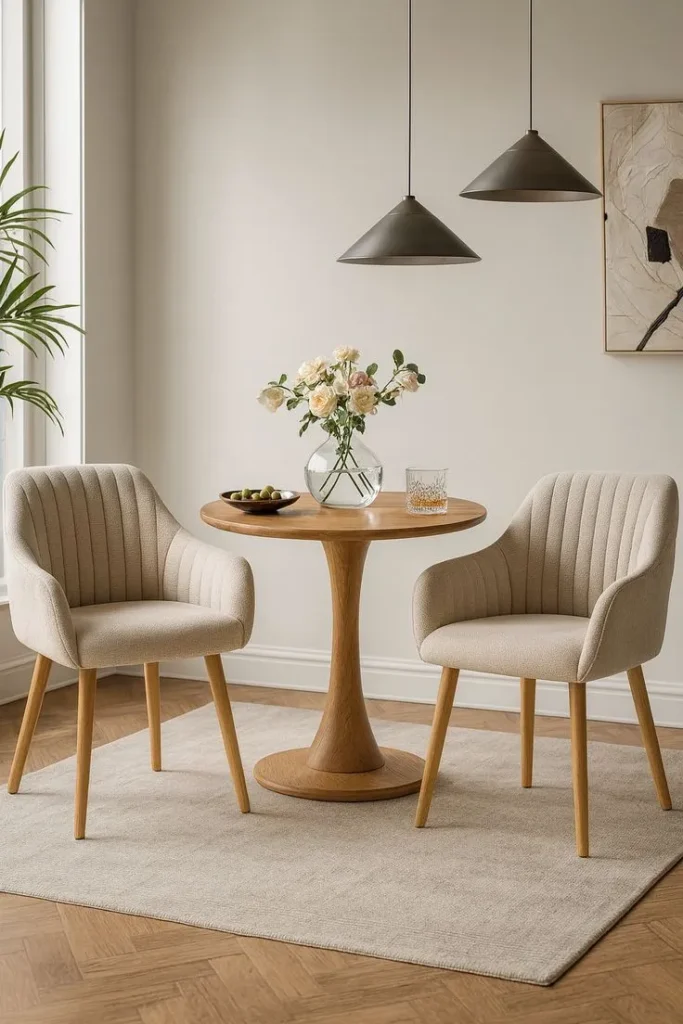
A dining room chair set of 2 is one of the best options for compact spaces because it gives you enough seating without overwhelming the footprint of the room. In a small dining area, every detail matters: the width of the chair, the openness of the back, the thickness of the legs, and the visual lightness of the silhouette.
Best features for small spaces
Armless or slim-arm designs
Narrow legs rather than thick bases
Open backs or curved outlines
Compact width and moderate depth
Light tones or visually soft finishes
A design that slides neatly under the table
A small room often looks better when the furniture appears breathable rather than heavy. That does not mean everything has to be minimal. It simply means the pieces should leave visual space for the eye to rest.
Small-space styling rules
Use lighter colors to make the room feel more open.
Choose chairs that tuck under the table cleanly.
Avoid thick arms if the circulation space is tight.
Keep the chair height proportional to the table and surrounding furniture.
Pick a shape that does not clutter the room visually.
A compact dining space can still feel polished. In fact, smaller rooms often look more refined when they are carefully proportioned. The right chair pair can make the room feel intentional rather than cramped.
Use a buying formula so you do not make a costly mistake
Many shopping regrets happen because people buy based on appearance alone. A better strategy is to follow a structured sequence every time. That reduces guesswork and makes the choice more reliable.
The buying formula
Room → Table → Ergonomics → Material → Style → Budget
Room
Measure the space, note the traffic flow, and decide whether the room is tight, moderate, or spacious.
Table
Check the height, shape, apron clearance, and visual weight of the table.
Ergonomics
Confirm the seat height, seat depth, and back support.
Material
Choose a finish that suits your cleaning habits, household activity, and long-term wear expectations.
Style
Decide whether the look should be matching, coordinated, contrasting, or mixed.
Budget
Compare the frame quality, upholstery quality, and joinery before judging by price alone.
This sequence works because it follows how a chair will actually function in the room. It prevents a common problem where a buyer falls in love with the shape first, then discovers the dimensions or maintenance level are wrong later.
Budget guide: where to save and where to spend
A budget should not be based on price alone. It should be based on use. A chair that will be used every day should be built differently from a chair that will sit in a formal dining room and only be used occasionally.
Spend more on:
Structural strength
Seat comfort
Fabric quality or finish quality
Leg stability and joints
Easy maintenance
Save on:
Unnecessary decorative features
Extras you will never use
Overly trendy styling that may age quickly
Perfect matching if you plan to mix pieces later
In most homes, the best value comes from a chair that balances durability and comfort, not from the cheapest option on the market. A sturdy pair that lasts for years is usually the smarter long-term investment.
Common mistakes to avoid
Even a beautiful dining room chair, set of 2, can become the wrong purchase if a few common mistakes go unnoticed.
Buying before measuring
This is the most frequent error. People often focus on the style they want and only later realize the chair is too tall, too deep, or too wide for the room.
Ignoring comfort
A chair that looks elegant but becomes tiring in ten minutes is not a good buy. Dining furniture should work for real sitting, not just display.
Choosing a design that is too bulky
Large chairs can Dominate a small room, interrupt walking paths, and make the area feel tighter than it should.
Making everything match too perfectly
Overly identical furniture can sometimes flatten the room. A touch of contrast often adds life and depth.
Forgetting how the chair will be used
Homes with children, pets, daily meals, or frequent guests need tougher surfaces and easier cleaning. A formal chair may look lovely, but may not suit everyday life.
Pros and cons of buying a dining room chair set of 2
Pros
Flexible for small and medium rooms
Easy to move and rearrange
Often more budget-friendly than full sets
Useful as end chairs or extra seating
Works in kitchens, nooks, and open-plan rooms
Simple to mix with other furniture later
Cons
May not fully satisfy a large formal dining room on its own
Can feel visually light if the design is too plain
Cheaper options may sacrifice comfort or durability.
Replacing the set later may be harder if discontinued.d
Requires more thoughtful styling when mixed with other chairs
These strengths and trade-offs are why the set of 2 is such a practical category. It is not perfect for every setting, but in many homes it gives the best blend of control, value, and adaptability.
Best design ideas for different home styles
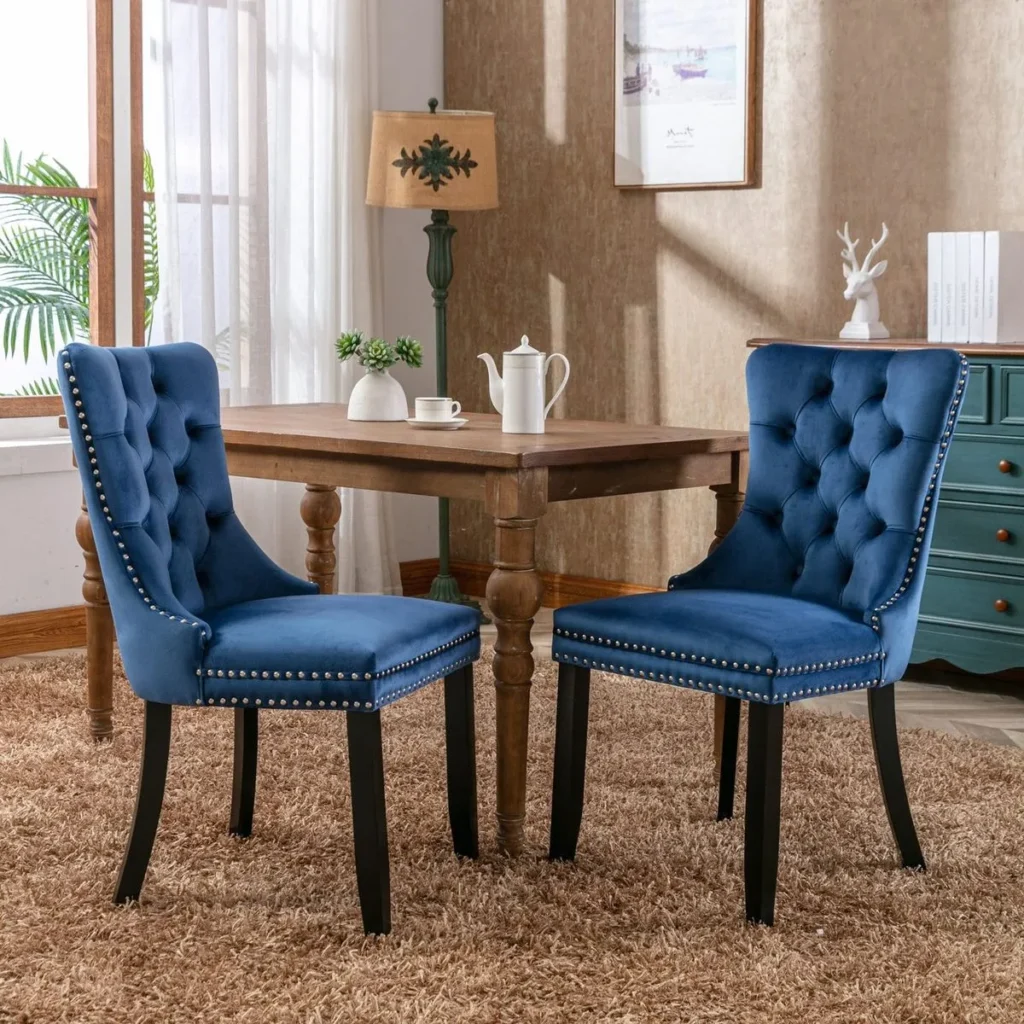
A chair pair should not only fit the room physically. It should also feel right visually. That means the design language of the chair should speak the same visual language as the rest of the space.
Modern minimal
Choose slim profiles, clean lines, muted colors, and a quiet silhouette. This style works especially well in apartments and open-plan layouts where visual clutter needs to stay low.
Scandinavian
Look for natural wood tones, soft fabric, and a light, airy palette. Scandinavian-inspired chairs create a calm and inviting dining area without looking overdesigned.
Mid-century inspired
Tapered legs, curved backs, and warm wood finishes give the room a timeless modern feel. This is a strong style if you want something that feels stylish but still approachable.
Industrial
Metal frames, darker finishes, and straighter forms suit loft-style homes and urban interiors. This direction works best when the surrounding room already has some texture or contrast.
Soft luxury
Upholstered chairs in textured fabrics, velvet-like surfaces, or elegant neutral tones can make the dining area feel more refined and comfortable. This look is especially effective when you want the room to feel a little more elevated without becoming formal.
The best style is not always the trendiest one. It is the one that makes the room feel coherent, Comfortable, and easy to live in every day.
Maintenance, care, and durability tips
A dining chair should not only look good when it arrives. It should still feel solid and attractive after regular use. That means maintenance deserves real attention during the buying decision.
Care basics by material
Wood: dust regularly, avoid harsh moisture, and check the joints occasionally.
Upholstery: vacuum often, treat spills quickly, and use fabric-safe cleaning methods.
Metal: wipe with a soft cloth and watch for scratches or marks.
Rattan or cane: clean gently and keep away from excess moisture.
Mixed materials: follow the care needs of each component separately.
Durability checklist
Before buying, ask:
Are the legs sturdy?
Do the joints feel solid?
Will the finish handle daily wear?
Can the seat support regular use?
Is the material easy enough to clean for your household?
These questions matter because a dining chair is a working piece of furniture. It is not just something to photograph. It is something to live with.
Quick tips for getting the best result
Measure twice before ordering.
Keep chair height aligned with your table height.
Choose comfort first if the chairs will be used daily.
Use slim silhouettes in compact rooms.
Mix materials only when the room can handle the visual variation.
For rectangular tables, consider statement chairs at the ends.
Make sure the chair tucks under the table without scraping.
These simple habits can save you from the most common buying regrets and help you choose a dining room chair set of 2 that feels right in actual use, not only in an online photo.
FAQs about dining room chairs set of 2
For a standard dining table, a seat height of around 17 to 20 inches is commonly recommended, with about 10 to 12 inches of space between the seat and tabletop. IKEA and Oak Furnitureland both support this general range with slightly different metric framing.
Upholstered chairs usually feel softer and more comfortable for longer sitting, while wooden chairs are often easier to maintain and can be more durable over time. The better choice depends on how you use the room.
Yes. Recent interior design content shows that mixing chair styles, materials, and tones can look curated and modern, especially around rectangular tables. IKEA also gives practical tips for mixing and matching while keeping comfort in mind.
Many current buying guides suggest around 24 inches per person in a dining arrangement, and about 6 inches between chairs for elbow room in tighter setups.
Slim armless chairs, open backs, light tones, and narrow legs usually work best because they make the room feel less crowded. Room-clearance guides also support keeping the chair footprint light.
Final verdict
Weeks go by before a chair reveals its true nature – sunlight fades cloth, spills linger, legs wobble under daily weight. Not every design holds up close; some shine only at a distance, then disappoint in function. What matters grows clear slowly: alignment with the table’s height, ease within tight spaces, endurance through long evenings. First Impressions lie flat when comfort fails, or materials sag mid-use. Proper fit isn’t about looks alone – it lives in small shifts over time, in wear patterns and posture support. Only repetition exposes flaws hidden during glances across a showroom floor. Quiet shows up when shape fits reason, turning ordinary moments steady. Only then does a plain seat catch your eye – once harmony arrives.
Picture picking items next season with attention. It isn’t placing objects at random – shadows shift when chairs meet across space just so. A lift in feeling comes, born of smooth motion, as layout gently guides how you move. Days stack up; pausing flows into moving through spaces, never rooted where you started.
