
Introduction
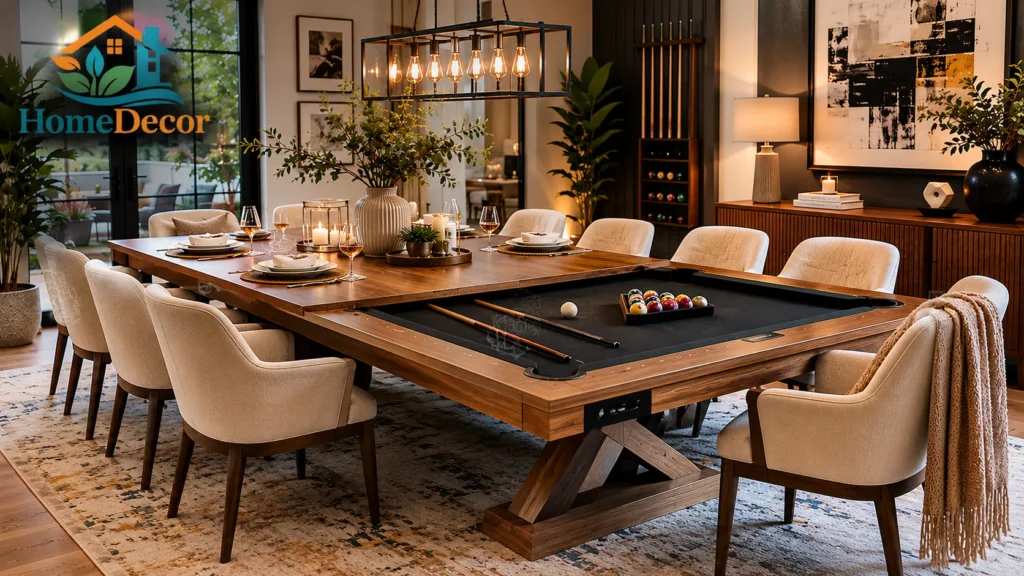
A Dining Room Pool Table is one of the smartest ways to make a home feel both practical and fun. Instead of choosing between a beautiful dining area and a place to play pool, you can have both in one elegant setup. That is exactly why this furniture category keeps growing: it solves the space problem without making your room feel like a compromise. Retailers and design brands continue to emphasize the same core benefit in different ways, from removable tops to slim cabinet profiles and contemporary finishes.
In 2026, homeowners want rooms that work harder. A table that can host dinner on Tuesday and a game night on Friday is far more useful than a single-purpose piece that stays idle half the week. The best dining pool tables now combine slate playing surfaces, refined finishes, and dining-friendly proportions, which makes them especially appealing in open-plan homes, apartments, and modern family spaces.
This guide breaks everything down in plain language: what to buy, how much space you need, how to style it, what mistakes to avoid, and how to make sure the table still feels like a real dining table, not just a game piece with a top on it.
Mini takeaway: The right dining pool table should feel beautiful at dinner, playable after dinner, and balanced in the room every day.
What Is a Dining Room Pool Table?
A dining room pool table, also called a pool dining table or Dining Pool Table, is a convertible table designed to serve two purposes: dining and billiards. In practice, that usually means a pool table body with a removable or interlocking dining top that covers the playing surface when the table is being used for meals.
The reason this category works so well is simple. It solves the age-old problem of limited space. Instead of dedicating an entire room to a game table, one piece can support everyday dining and occasional entertainment. Home Leisure Direct describes pool dining tables as especially useful for households that want one table to serve two purposes, while Sawyer Twain frames them as a quick shift between dining and playing modes.
Some models are more design-led than others. Luxury versions may use slimmer cabinets, under-table storage, benches, and matching accessories. Home Leisure Direct notes that pool dining tables can have cabinet depths around 20 cm, and some luxury versions may go down to 14 cm, helping them look much sleeker in a home setting.
Snippet-ready answer
A dining room pool table is a convertible furniture piece that works as both a dining table and a billiard table. It usually has a removable top, a slate playing surface, and a design made to blend into a home dining space.
Why It Matters in 2026
This category matters because modern homes are asking more from every square foot. Open-plan layouts, compact apartments, and multifunctional family rooms all push people toward furniture that can do more than one job. Current buying guides and style pages reflect that shift, with repeated emphasis on multi-use tables, contemporary finishes, and space-saving functionality.
It also matters because style expectations have changed. A pool table no longer has to look bulky or “game-room only.” Today’s dining pool tables can look like high-end dining furniture first and entertainment equipment second. That is a major advantage for anyone who wants a refined dining room that still feels welcoming and social.
Finally, buyers are thinking more carefully about value. A dual-purpose table can be easier to justify than buying a separate dining table and pool table, especially when the room cannot comfortably support both. That practical value is a major reason this niche keeps attracting attention.
Mini takeaway: In 2026, the best home furniture is not just attractive; it earns its footprint.
Best Types of Dining Room Pool Tables
| Type | Best For | Main Benefit | Watch Out For |
| Convertible pool dining table | Families and casual players | Easy switch between dining and play | Check top storage and weight |
| Luxury slim-cabinet diner | Designer interiors | Sleeker, more furniture-like look | Usually higher price |
| Traditional-style pool diner | Classic or transitional rooms | Balanced blend of game and dining use | Can feel more substantial in the room |
| American-style table | Larger homes | Bigger playing format | Needs more room clearance |
| British/English-style table | Smaller spaces | Easier fit in compact rooms | Smaller playing scale than American tables |
Retailer guides distinguish between British and American pool dining tables and note that room-size needs depend on cue length and table size. That makes the format choice just as important as the finish or brand.
1. Convertible Dining Pool Table
This is the most common version. A removable or interlocking top sits over the playing surface, giving you a clean dining tabletop when you need it and full pool functionality when you do not. This is the most practical option for a family home.
2. Slim-Cabinet Luxury Model
Luxury models aim to look like true dining furniture, with a more elegant base and a lower visual profile. They are often designed for homeowners who care as much about interior style as they do about gameplay.
3. Compact Home-Friendly Model
If your room is not huge, compact models can be a smarter fit. Smaller table formats and shorter cues may help you keep the room usable without sacrificing the social appeal of the piece. Brunswick notes that shorter cues such as 48 or 52 inches can help when space is limited.
4. Statement Designer Table
This type works best when the table is part of the room’s visual identity. Think oak finishes, matte black frames, warm walnut, or minimal modern lines. Pool Tables Online notes that contemporary gloss finishes, rustic wood looks, and multi-use tables are all popular style directions.
How Much Space Do You Need?
This is the question most people care about first, and it should be treated seriously. You need enough room for dining chairs, walking space, and cue movement. Houzz recommends 36 to 42 inches of space around a dining table for seating and passage, while Brunswick says a standard cue is 58 inches, and shorter cues of 48 or 52 inches can help when space is tight.
Because a dining pool table has two jobs, you need to think about both sets of clearance rules. The dining side wants a comfortable chair pull-back space. The poolside wants enough room for cue strokes at the cushions. That is why a room that feels “big enough” for dinner may still feel awkward for play.
Practical room-planning guide
| Table Size | Best Use Case | Planning Note |
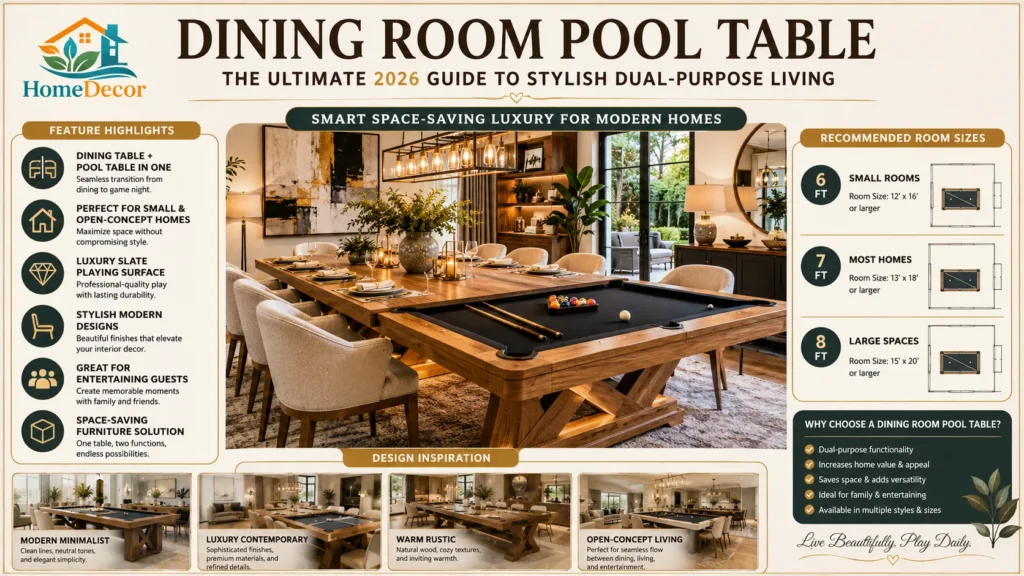
| 6 ft | Compact homes and apartments | Easier to fit, but still measure cue clearance carefully |
| 7 ft | Most flexible home option | Often, the sweet spot for family use |
| 8 ft | Larger rooms and stronger gameplay focus | Needs more floor space and better circulation |
Home Leisure Direct provides room-size charts for English and American pool tables that show how required space changes with table size and cue length. For example, its guide lists different minimum room dimensions for 6 ft, 7 ft, and 8 ft tables depending on cue choice.
A simple planning rule
If you want the room to feel comfortable for both dining and pool, measure the open area, not just the wall-to-wall dimensions. Account for door swings, sideboards, walking paths, and chair movement before you commit. That advice follows the same logic used in professional space planning, where room flow matters as much as furniture size.
Mini takeaway: Measure the room for both people and cues, not just for the table itself.
Dining Room Pool Table Styles That Look Best in 2026
Modern Minimalist
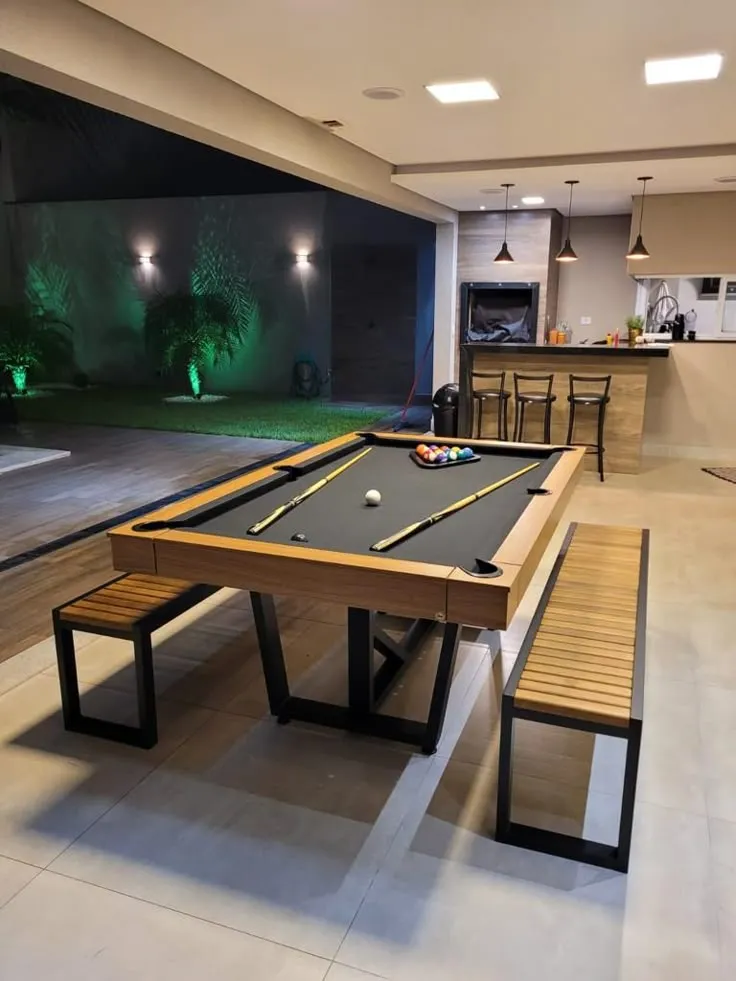
Clean lines, matte or satin finishes, and a restrained color palette make the table feel refined. This is a strong choice for open-plan homes and new-build interiors. Contemporary gloss and modern multi-use styling are already visible in current buying guides.
Warm Rustic
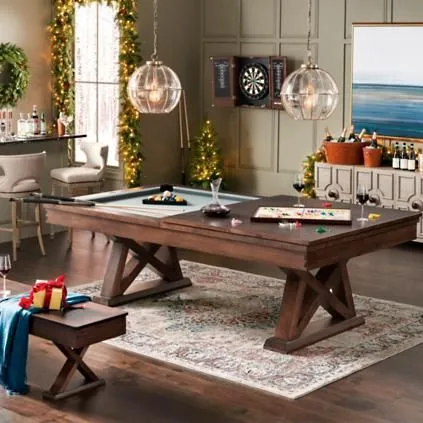
Wood grain, oak tones, and natural textures help the table blend into a cozy dining room. Rustic and reclaimed-wood looks are still popular because they soften the technical feel of game furniture.
Luxury Transitional
This style sits between traditional and modern. It often uses rich wood, elegant bases, and upholstered seating to make the room feel polished. Retailers also highlight matching Accessories, benches, and sleek cabinet profiles in this category.
High-Contrast Contemporary
Black, white, charcoal, and stone-inspired finishes create a dramatic visual statement. These tables work best in rooms with strong architectural lines and minimal clutter.
Buying Guide: How to Choose the Right One
Start with room size
Do not shop by appearance alone. Measure the room, then compare those measurements with the cue clearance and dining clearance. Use the 36–42-inch dining space guidance and the 58-inch cue reference as your baseline.
Choose your table size
A 7 ft table is often the safest middle ground for a home dining room, while 6 ft works better in tighter spaces and 8 ft suits larger rooms. Home Leisure Direct and other buying guides show that size and cue choice directly affect the minimum room you need.
Decide on playing style
If you want a more authentic feel, look for a proper slate surface. Many premium and luxury dining pool tables are built around the same components used in regular tables, which support consistent playability.
Check the dining top
The top should feel stable, align neatly, and store easily. A good top should make the table look like furniture, not like a game table wearing a cover. Current buying guides emphasize removable or interlocking tops as the core feature of the category.
Review cabinet depth and legroom
Home Leisure Direct points out that dining-pool cabinets are designed slimmer than regular pool-table cabinets, so chairs and legs can fit more naturally. That design difference is a big part of what makes them usable in actual dining rooms.
Think about storage
Dining tops, cues, chalk, and racks all need a home. Some luxury models offer under-table storage or matching accessories, which reduces clutter and improve daily convenience.
Match the finish to your interior
The table should look intentional in the room. Gloss finishes feel modern, oak feels warm, and darker tones feel more dramatic and architectural.
Comparison: Dining Pool Table vs Regular Pool Table vs Standard Dining Table
| Feature | Dining Pool Table | Regular Pool Table | Standard Dining Table |
| Main purpose | Dining + play | Play only | Dining only |
| Space efficiency | Excellent | Moderate to low | High for dining, low for play |
| Style impact | Strong if well chosen | More game-room focused | Usually furniture-first |
| Everyday flexibility | Very high | Low | Medium |
| Best for | Multi-use homes | Dedicated game rooms | Families prioritizing meals |
Home Leisure Direct’s comparison shows that pool dining tables are especially useful when a home needs one piece to do Both Jobs, while regular pool tables suit dedicated games spaces. Houzz’s dining-table sizing guidance shows why traditional dining tables are easier to fit for meals alone, but they obviously cannot replace billiards.
Pros of a dining room pool table
- Saves space
- Creates a social focal point
- Makes entertaining more fun
- Can look highly luxurious
- Gives more value from one purchase
Cons of a dining room pool table
- Needs careful measuring
- Dining tops need storage
- Premium models can be expensive
- Heavy pieces may be harder to move
- The room must balance two functions well
Budget-Friendly Options
If you are shopping on a tighter budget, focus on practicality first and luxury second. The biggest win comes from choosing the right size and shape for the room, not from overbuying a finish that does not fit your space. Quedos’ guide makes price a central consideration, which is a useful reminder that this is a meaningful investment.
A budget-friendly dining pool table should still have:
- A stable top
- Solid construction
- Reasonable cue clearance
- A finish that works with your room
- Easy-to-clean surfaces
A lower-cost model is worth it only if the table still feels comfortable to live with every day. If it looks bulky, flimsy, or awkward in the room, the savings disappear fast.
Premium and Luxury Options
Luxury dining pool tables are about more than price. They are about how well the table disappears into the room as furniture and how smoothly it performs when the top comes off. Home Leisure Direct and Fusion Tables both emphasize sleek contemporary design, slimmer cabinets, and a more refined appearance for home interiors.
Luxury features may include:
- Slim cabinet profiles
- Designer wood finishes
- Matching benches
- Hidden top storage
- High-quality slate surfaces
- Coordinated accessories
If your dining room is part of your home’s visual identity, luxury is often worth it. The better the table blends in, the less it feels like a compromise.
Smart and Modern Design Trends
Current style guides point to three major directions: contemporary gloss finishes, rustic/reclaimed wood, and multi-use furniture that works for both socializing and play. Those trends line up perfectly with what buyers want in dual-purpose living spaces.
Best trend combinations for 2026
- White or black base + warm wood chairs
- Walnut finish + cream upholstery
- Matte charcoal frame + light oak floors
- Rustic wood table + linen seating
- Minimal table base + statement pendant light
A smart modern dining room pool table should feel like part of the architecture, not a temporary entertainment item. That is what gives the room long-term visual value.
Common Mistakes to Avoid
1. Buying before measuring
This is the biggest mistake. A table that looks perfect online can feel cramped once chairs, cues, and circulation are added. Professional Room-planning guidance exists for a reason.
2. Ignoring cue length
Long cues need more room. Brunswick’s room-size guidance clearly shows that cue length changes the minimum space requirement.
3. Forgetting top storage
The dining top has to go somewhere while you play. A beautiful table becomes annoying quickly if the top has no proper storage plan.
4. Choosing style over comfort
The room still has to function as a dining room. Houzz’s dining guidance reminds us that seating and movement matter as much as visual appeal.
5. Skipping maintenance planning
Pool cloth, wood, and slate all need care. If you do not plan for cleaning and room conditions, the table will age badly.
Expert Tips Most People Ignore
- Use shorter cues when the room is tight.
Brunswick notes that shorter cues can help when space is limited, and that a small adjustment can make the difference between playable and awkward. - Choose chairs that slide cleanly.
Dining comfort matters. The more easily chairs move, the more naturally the room works for both dinner and pool. Houzz’s seating-space guidance supports that logic. - Keep the table visually low-clutter.
A clean tabletop, matching pendant, and restrained color palette make the table feel designed instead of added later. That aligns with the current contemporary design direction. - Plan for storage before delivery day.
Cues, balls, chalk, and dining tops should all have a dedicated home so the room stays elegant. - Think of it as a social anchor.
The best dual-purpose furniture invites people to stay longer. That is a design advantage, not just a functional one.
Maintenance, Care, and Long-Term Value
A dining room pool table is a long-term piece, so care matters. Brunswick recommends basic table-cleaning habits such as keeping the surface clean and brushing felt gently with soft bristles. More recent maintenance guidance also emphasizes stable humidity and temperature to protect wood and cloth over time.
Simple care routine
- Brush the felt regularly.
- Keep drinks and food off the playing surface.
- Wipe wood finishes with gentle, non-abrasive care.
- Keep the room’s humidity stable.
- Store cues properly.
- Use covers when the table is not in use.
Why maintenance matters
A table that looks great but plays poorly loses its value quickly. Proper care preserves both the dining appearance and the billiard performance, which is the whole reason people buy this type of furniture in the first place.
Mini takeaway: A good dining pool table is not just bought; it is maintained like a premium piece of furniture and a precision game table at the same time.
Best Color Combinations
- Walnut + cream
- Black + oak
- White + taupe
- Charcoal + beige
- Natural wood + soft gray
- Dark espresso + brass accents
These combinations work because they keep the table grounded in the room’s interior palette. In 2026, the strongest looks are still the ones that feel intentional and calm rather than loud. Contemporary gloss, rustic wood, and sleek luxury finishes continue to be strong style directions.
Best Materials and Decor Choices
Materials to prioritize
- Slate playing surface for serious playability
- Hardwood or engineered wood for furniture presence
- Quality felt for smoother play
- Durable top panels for dining use
- Sturdy legs and frame for stability
Retailer guidance consistently ties good playability to the same core components used in regular pool tables, while dining-friendly cabinet design keeps the room looking elegant.
Decor that works well nearby
- Pendant light above the table
- Upholstered chairs or benches
- Simple centerpiece when dining
- Wall art that does not overwhelm the room
- A rug that defines the dining zone without crowding the table
Houzz’s dining and space-planning guidance supports the idea that the table area should remain readable, usable, and easy to move around.
Styling Tips for Different Room Sizes
Small dining room
Choose a 6 ft or compact 7 ft model, lighter finishes, and slimmer chairs. Use shorter cues if needed. Keep the room visually quiet so the table does not feel heavy.
Medium dining room
A 7 ft table is often the most practical compromise. It usually gives enough presence for meals and play without overwhelming the room.
Large dining room
You can go more dramatic with an 8 ft table, darker finishes, or a luxury statement base. In larger spaces, the table can become the visual anchor of the room.
Who Should Choose This Style?
A dining room pool table is a strong choice for:
- Families who entertain often
- Apartment owners who need dual use
- Open-plan homeowners
- Game-room lovers who still want formal dining
- Buyers who value design and practicality equally
This category is especially appealing when the home needs one central table to do multiple jobs without looking temporary.
Who Should Avoid This Style?
This may not be the right choice if:
- Your dining room is already tight and crowded
- You never plan to use the pool feature
- You prefer lightweight furniture
- You want a very formal dining room with no leisure function
- You do not want to manage top storage or maintenance
If the room is too small for cue movement and chair clearance, a dining pool table will feel frustrating instead of useful.
People Also Ask
Yes, if you want one piece of furniture to handle both dining and entertainment. The best versions save space and look more refined than a separate game-room table.
You need to account for the table, dining clearance, and cue clearance. Dining tables generally need about 36 to 42 inches around them, and standard pool cues are 58 inches long, with shorter cues available for tighter rooms.
Good ones can. Retailer guidance states that premium pool dining tables use the same core components as regular tables, helping maintain playability.
Good ones can. Retailer guidance states that premium pool dining tables use the same core components as regular tables, helping maintain playability.
Brush the felt, avoid harsh cleaners, keep the room climate stable, and store cues and tops properly. Humidity control matters because it protects both the wood and the cloth.
Conclusion
A dining room pool table is ideal for homeowners who want a room that feels stylish, social, and truly useful every day. It works best when it is chosen with care: measure the room, match the size to your layout, choose a finish that belongs in the space, and plan for both dining comfort and pool play. The strongest models in 2026 are the ones that look like real furniture first and Entertainment equipment second.
For most buyers, the best balance comes from a 7 ft or compact 7 ft-style solution, a thoughtful finish, and enough surrounding clearance for chairs and cues. For larger rooms, premium slim-cabinet models can create a stunning centerpiece. Either way, the goal is the same: make the room work harder without making it feel crowded.
If TheRoomsArt.com builds a cluster around this topic with supporting articles on dining room layouts, wall art, lighting, and space-saving furniture, this page can become a strong pillar asset for long-term topical authority.
Legal Disclaimer
Prices, materials, trends, and product availability may change over time depending on region, suppliers, and brands. Always verify dimensions, materials, and compatibility before purchase or renovation.
