
Introduction
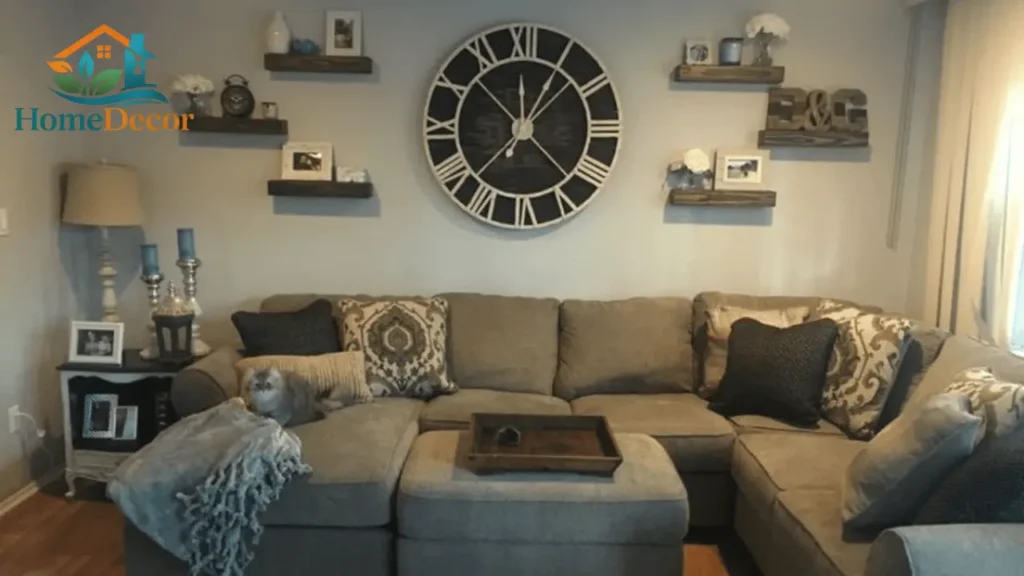
A Living Room Wall Clock is no longer just a tool for checking the time. In 2026, it has become a design anchor, a visual stabilizer, and a simple way to make a room look complete. In many homes, the clock is now doing the work that once belonged only to framed art or decorative mirrors. It fills blank wall space, adds personality, and gives the room a sense of structure without making it feel crowded.
That is one reason the living room wall clock remains highly relevant. Even though phones, tablets, smart speakers, and TVs all display time, a wall clock still solves a very real interior design problem: empty walls that need purpose. A good clock can turn a plain surface into a finished feature. It can calm a busy room, warm up a sterile room, and add rhythm to a room that feels visually flat.
The strongest design direction in 2026 supports this perfectly. Homes are leaning toward warmer woods, tactile textures, lived-in comfort, and pieces that feel personal rather than overly polished. The idea is not to create a showhome that looks untouched. The idea is to make a room feel inhabited, balanced, and expressive. A wall clock fits that shift because it can be both useful and stylish at the same time.
The best part is that you do not need a large house or a luxury budget to make it work. A living room wall clock can look elegant in a compact apartment, a standard family lounge, or a big open-plan room with high ceilings. What matters most is choosing the right size, the right material, the right shape, and the right position on the wall. Once those elements align, the result feels intentional instead of accidental.
This guide breaks down every important detail in clear, practical language so you can choose confidently without second-guessing the layout. Whether you want a minimalist clock, a rustic wood design, a bold oversized piece, or a quiet modern option, the same core principles will help you choose well.
Why a living room wall clock still matters in 2026
Some people assume clocks are becoming outdated because nearly every device shows the time. In reality, that assumption misses the bigger picture. In a living room, a clock is not just about timing. It is about composition, balance, and visual order. A wall clock can solve several design challenges at once.
First, it fills open wall space in a controlled way. Blank walls often make a room feel unfinished, even when the furniture is beautiful. A clock gives that surface a focal point without adding clutter. Second, it creates a sense of rhythm. The eye naturally responds to round shapes, clear numerals, and strong silhouettes. A wall clock gives the room a point of rest. Third, it offers practical value. People still glance at a wall clock in a shared space, especially during family routines, gatherings, or daily work-from-home life.
A clock also works well because it is versatile. It does not need to dominate the room to be effective. It can be quiet and subtle.It can blend into the wall or become the star of the wall. That flexibility makes it one of the easiest home accessories to adapt across styles.
In 2026, interior design continues to move away from cold, empty minimalism. Rooms are becoming warmer, softer, and more lived-in. Rich wood tones, matte finishes, mixed materials, and slightly imperfect textures all feel more current than ultra-shiny, hyper-sterile surfaces. A wall clock aligns beautifully with this direction because it can carry character without making the room look busy. A simple clock with good proportions can feel more refined than a wall full of small objects.
A living room wall clock also helps define style. A round wooden clock suggests warmth. A black metal clock suggests modern clarity. An oversized clock suggests confidence. A vintage-inspired clock suggests charm and personality. In other words, the clock is not just a decoration. It is a visual statement about how the room should feel.
How to choose the right living room wall clock
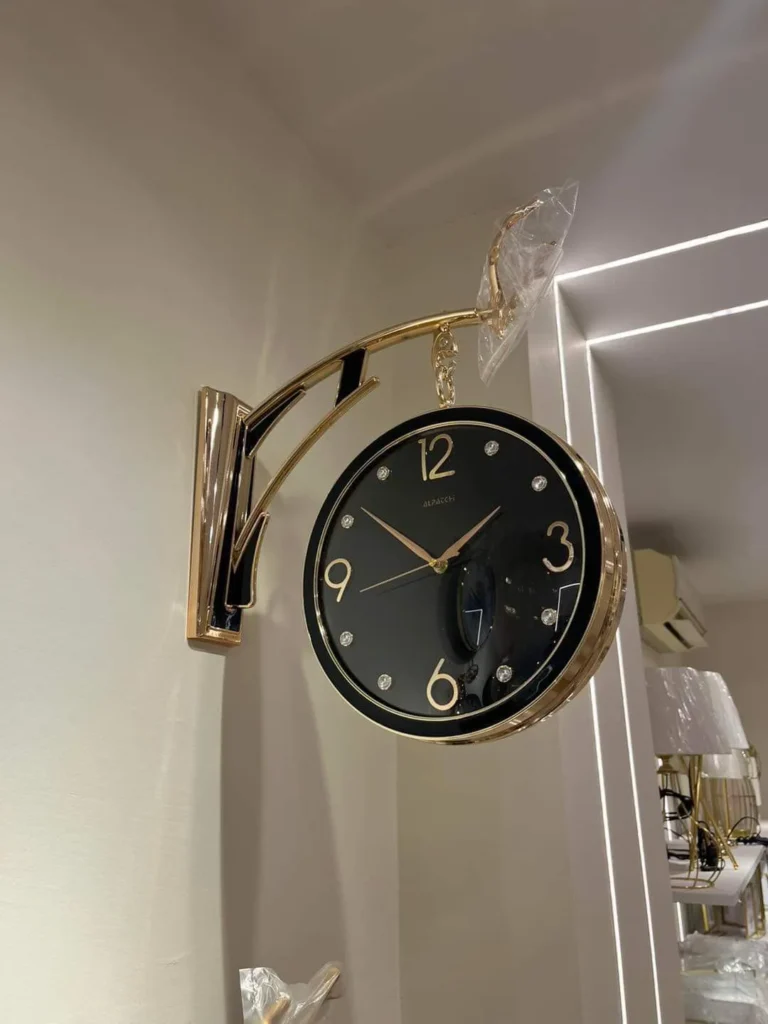
Choosing the best living room wall clock becomes much easier when you break the decision into four main parts: size, style, material, and placement. If those four elements work together, the clock will almost always look right.
Start with size
Size is the most important factor. A clock that is too small will look lost. A clock that is too large can overpower the room and make the wall feel cramped. The goal is visual balance.
The easiest way to think about size is to look at the furniture below the clock and the amount of wall space around it. If the clock sits above a sofa, console, or sideboard, it should relate to the width of that furniture. A clock that is floating alone with too much space around it can appear random. A clock that is too wide for the wall can feel heavy.
Here is a simple reference:
| Clock size | Best for | Visual effect |
| Small wall clock | narrow walls, reading corners, compact rooms | neat, light, understated |
| Medium wall clock | standard living rooms, side walls, console areas | balanced, flexible, easy to style |
| Large wall clock | blank feature walls, open-plan rooms, sofa walls | bold, dramatic, focal-point driven |
A useful rule is to let the clock match the job it has to do. If it is the main statement on the wall, it should have enough scale to hold attention. If it is part of a broader display with art or shelves, it can be more restrained.
Match the style to the room’s personality
A clock should feel like part of the room’s story. That does not mean it must perfectly match every object in the space, but it should make sense within the room’s overall mood.
A modern room usually calls for a cleaner, simpler clock. A rustic room often benefits from wood grain, natural texture, or a softer finish. A traditional room may welcome Roman numerals, vintage detailing, or a more decorative frame. A mixed-style room can handle more experimentation, especially if the clock repeats a material or color already present elsewhere.
In 2026, the strongest style signals are warmth, texture, and realism. That makes wood, matte metal, stone-like finishes, and mixed-material pieces especially relevant. A clock does not need to be flashy to feel current. Often, the best choice is the one that looks grounded and timeless while still feeling fresh.
Consider sound and movement
This detail is easy to overlook, but it matters a lot in a living room. If the space is used for relaxing, talking, reading, or watching TV, a loud ticking clock can become irritating. A quiet or nearly silent movement is usually the smarter option.
This is not about fashion. It is about comfort. A living room should feel restful. If the clock creates a constant sound in an otherwise calm space, it can become a distraction. That is especially true in smaller rooms, quiet apartments, or family spaces where people spend long periods of time.
Choose a finish that fits the room
The finish affects whether the clock blends in or stands out. In 2026, the most adaptable finishes include warm wood, black, bronze, brass, soft white, muted silver, and matte charcoal. These tones work well because they feel calm, mature, and easy to integrate into a range of room styles.
If your room already has bold colors, a simple clock finish can keep the space from feeling too busy. If your room is mostly neutral, the clock can become the accent that adds contrast and definition. Think of the finish as a design bridge. It helps the clock connect with the rest of the room.
Best living room wall clock styles in 2026
Different rooms need different clock personalities. The right style depends on the mood you want the room to communicate.
| Style | Best for | Design feeling |
| Minimalist wall clock | modern homes, apartments, calm interiors | clean, refined, uncluttered |
| Rustic wood clock | cozy spaces, farmhouse-inspired rooms, warm interiors | welcoming, natural, lived-in |
| Oversized statement clock | large walls, open-plan homes, sofa walls | bold, dramatic, confident |
| Vintage-inspired clock | classic spaces, mixed-style rooms | charming, timeless, collected |
| Gallery wall clock | family rooms, creative corners, layered walls | personal, expressive, curated |
| Illuminated or digital clock | tech-friendly rooms, media rooms, night-visible spaces | practical, sleek, modern |
Minimalist wall clocks
A minimalist living room wall clock is one of the most reliable choices for 2026. It works especially well in rooms that already contain visual activity, such as patterned rugs, textured cushions, strong artwork, or decorative shelving. Because the clock stays simple, it gives the eye a place to rest.
These clocks often use slim frames, clean numerals, fine hands, and neutral finishes. They do not compete for attention. Instead, they contribute to the room’s sense of order. This makes them ideal for apartments, smaller lounges, and spaces where calm design is more important than decoration for decoration’s sake.
Rustic wood clocks
Wood brings warmth almost instantly. A Wood Wall Clock can soften a room that feels cold or too polished. It pairs beautifully with linen, woven textures, earthy colors, soft lighting, and natural furniture. In 2026, this style feels even more relevant because interior design is increasingly celebrating texture, authenticity, and pieces that feel organic rather than overly manufactured.
Rustic does not have to mean rough or old-fashioned. A wood clock can look elegant, minimal, or refined depending on the cut, grain, and shape. Even a simple round wooden clock can make a room feel more grounded and welcoming.
Oversized statement clocks
Oversized clocks are for rooms that need presence. They work best on wide walls, above large sofas, in high-ceiling spaces, or in open-plan areas where smaller objects would disappear. A big clock can function like wall art while still serving a practical purpose.
The advantage of an oversized clock is that it immediately creates a focal point. The eye knows where to land. That can be incredibly useful in a room that otherwise feels spread out or visually loose. The clock becomes the anchor that holds the composition together.
Vintage-inspired clocks
Vintage-inspired clocks add charm and depth. They are especially useful in homes that combine new and old pieces, or in rooms that need a touch of softness. A vintage clock can reduce the sharpness of a modern room and make the space feel more collected over time.
This style works well when the room already has character but needs one more layer of personality. It is a smart choice for people who like interiors that feel lived-in rather than overly coordinated.
Gallery wall clocks
A living room wall clock does not need to stand alone. It can also be part of a gallery wall. This is one of the smartest ways to combine function and decoration. A clock can sit among framed prints, photographs, abstract art, or decorative objects and still feel balanced.
The key is composition. The clock can work as the anchor piece in the display, or it can offset the visual weight of the artwork around it. The best gallery walls are not rigidly symmetrical. They feel balanced because the elements relate to one another in scale, color, and spacing.
Illuminated or digital clocks
Digital or illuminated clocks are more practical than decorative, but they have their place. They work well in contemporary homes, media rooms, and spaces where visibility matters. They are also useful for families who want an easy-to-read display from a distance.
This style is less about softness and more about clarity. It is a good fit when the room is already modern, and the homeowner values convenience as much as appearance.
Placement and space planning tips
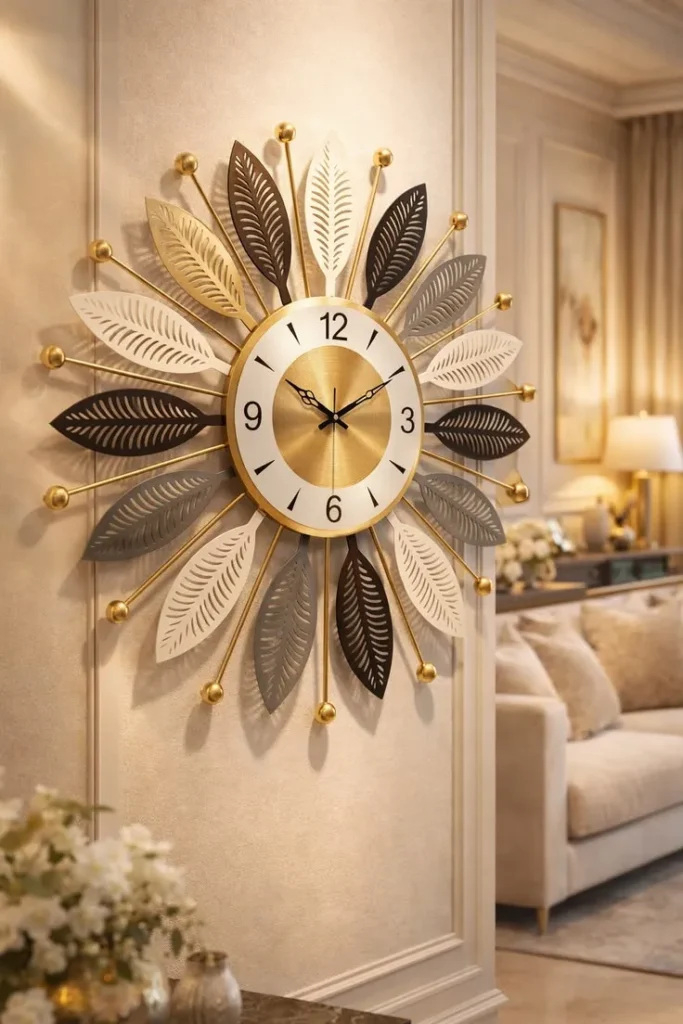
Placement can make or break the look of a living room wall clock. Even a beautiful clock can feel wrong if it is hung too high, too small, or too far from the furniture around it. Good placement creates a connection. Bad placement creates awkwardness.
Above the sofa
This is the most common location for a wall clock. It makes sense because the sofa often occupies the largest wall in the room, and the space above it is naturally available. The clock should feel connected to the sofa, not like it has been placed randomly above it.
A useful rule is to keep the clock close enough to the sofa that the two elements read as one composition. There should be visible breathing space, but not so much that the clock appears detached. The relationship between the clock and the sofa should feel deliberate.
If the sofa is large, the clock should be substantial enough to match it. If the sofa is small or low-profile, the clock should be lighter in scale. The goal is harmony, not dominance.
Above a console table
A console wall is one of the most elegant places for a clock because the area beneath it can be styled with lamps, books, vases, candles, or decorative bowls. This creates a layered arrangement that feels designed rather than accidental.
A clock above a console also helps add height to a room. It draws the eye upward and gives the wall a vertical rhythm. This is especially useful in living rooms that connect to hallways or entry zones.
On an empty feature wall
If the wall is large and mostly empty, the clock has to work harder. In that case, a small clock often disappears. The better choice is usually a larger, more visible design with enough character to hold the space.
The objective is not to fill every inch of the wall. It is to give the wall a clear purpose. A strong clock can do that elegantly if its scale suits the room.
Inside a gallery wall
A clock inside a gallery wall offers both utility and variety. It introduces shape variation, which keeps the wall from feeling too rigid. It also gives the eye a clear anchor among the other pieces.
You can place the clock centrally, slightly off-center, or higher/lower, depending on the overall wall shape. What matters is the sense of balance. A gallery wall should feel composed, not crowded.
At eye level
When hanging a single clock on a plain wall, the center of the clock should usually sit near eye level. A commonly used reference point is around 57 inches from the floor, though the surrounding furniture can shift that slightly. The most important thing is that the clock feels comfortably placed in relation to the room, not suspended too high where it loses connection to the rest of the space.
Living room wall clock ideas for different home styles
The right clock depends heavily on the type of room you are Styling. A one-size-fits-all approach usually leads to weak results. Use the room’s design language as your guide.
Modern living room
In a modern living room, the best wall clock is usually simple, streamlined, and visually clean. Black frames, white faces, slim metal details, and geometric shapes are strong choices. These clocks support the modern look without adding clutter.
A modern room often already includes straight lines, neutral upholstery, and reduced ornamentation. The clock should follow that lead rather than fight it.
Luxury living room
A more luxurious room can handle richer finishes and stronger visual character. Bronze, brass, smoked metal, dark wood, marble-inspired details, and sculptural frames can all work well if they feel intentional.
Luxury in 2026 is less about overt shine and more about tactile quality. That means a clock with depth, material richness, and subtle presence often looks better than something too glossy or too decorative.
Small living room
In a small room, restraint is usually the smartest design move. A medium-sized clock with a clean frame often looks better than an oversized one. The room should feel open, not crowded.
A round clock is often easier to live with in a compact space because it softens sharp lines and feels less intrusive. Light finishes can also help the wall feel less heavy.
Budget-friendly living room
A wall clock does not need to be expensive to look elegant. What matters most is proportion, color harmony, and placement. A budget-friendly clock can look premium when it repeats a material or tone already present in the room.
For example, a black clock can echo curtain rods or table legs. A wood clock can connect to a coffee table or shelving unit. A bronze clock can repeat the finish of a lamp or decorative tray. These visual echoes make the room feel coordinated.
Contemporary global home
Many homes today blend several influences rather than following one strict style. In that kind of interior, a warm neutral wall clock often works best. It can adapt to different furniture types, different finishes, and different color palettes without creating conflict.
A balanced clock with wood, metal, or neutral tones usually has the broadest appeal because it remains compatible even when the room evolves.
Color, lighting, and furniture pairing
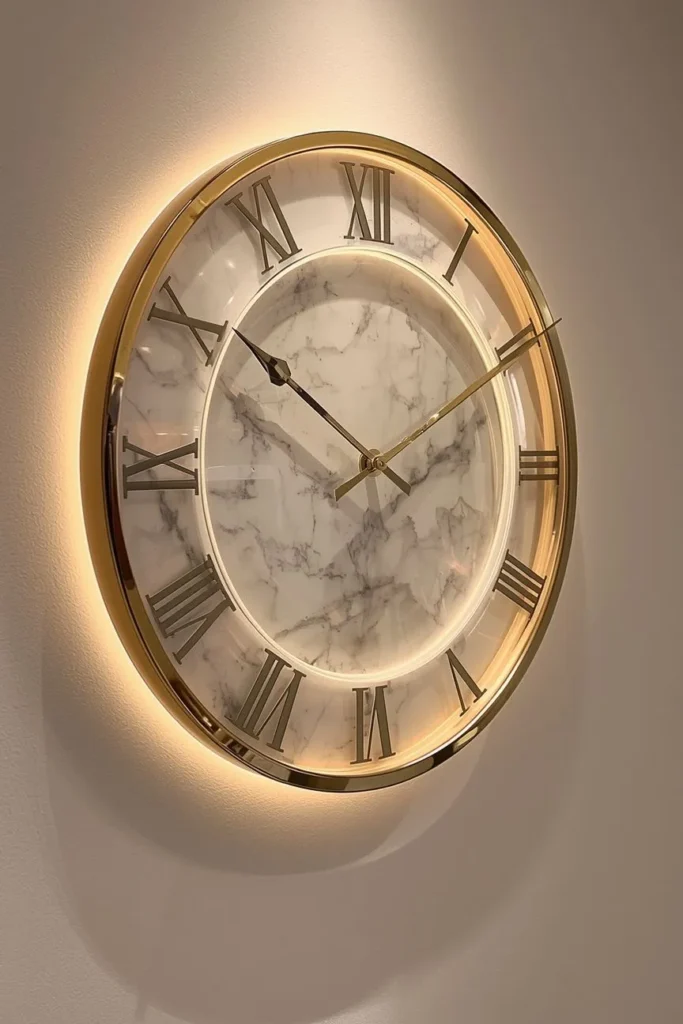
A living room wall clock should never feel isolated. It should connect with the room in at least one way. That connection can come through color, material, shape, or finish.
If the clock is black, repeat black elsewhere in the room, such as in a lamp base, picture frame, or side table detail. If the clock has metal detailing, carry that same finish into another accessory. Repetition creates unity.
Lighting matters too. On a dark wall, a clock may need nearby light or a stronger contrast so it remains readable. On a bright wall, the clock may need a darker outline or bolder numerals to avoid disappearing. This is one reason dark woods, black frames, and bronze accents are so useful in current interiors. They stand out without feeling harsh.
Furniture also changes the visual balance. A large sofa needs a clock with more substance. A low, delicate sofa often pairs best with a lighter, less imposing clock. The same applies to console tables, shelving, and sideboards. The goal is for the clock to feel like part of the room’s rhythm rather than a separate object placed as an afterthought.
Pros and cons of adding a living room wall clock
A strong article should be honest about the trade-offs.
| Pros | Cons |
| adds function and style in one piece | too small can look lost |
| fills blank wall space neatly | Ticking can feel distracting |
| suits many design styles | A wrong finish can clash |
| can anchor a sofa or console to the walls | Bad placement looks awkward |
| available at many price points | Oversized designs can overwhelm small rooms |
The main advantage is clear: a wall clock is both useful and decorative. The main risk is also clear: poor scale or poor placement can disrupt the whole room. That is why choosing carefully matters more than choosing quickly.
Common mistakes to avoid
The first mistake is buying a clock that is too small. Small clocks often vanish on big walls and make the room feel under-decorated. The second mistake is hanging the clock too high. When that happens, the clock loses its relationship to the furniture and seems to float without purpose.
The third mistake is ignoring the room’s style. A rustic clock can work in a modern room, but only if the contrast feels deliberate. The fourth mistake is overcrowding the wall. If the wall already contains shelves, mirrors, or strong art, the clock can disappear unless the composition is carefully planned.
The fifth mistake is choosing based only on appearance. A living room wall clock should be easy to read, easy to clean, and easy to live with every day. A beautiful clock that is hard to use is not a good long-term choice.
Maintenance, care, and durability tips
A wall clock does not require much maintenance, but a little care keeps it looking good for longer.
Dust the frame regularly with a soft cloth. Use mild cleaners only, Especially on delicate finishes. If the clock is heavy, check the hanging hardware occasionally to make sure it remains secure. Keep wood away from excess moisture. Wipe metal finishes gently so they do not lose their sheen. Use a microfiber cloth on glass or polished surfaces to avoid streaks.
Durability matters just as much as style. When buying a clock, consider whether the frame feels sturdy, whether the hands move smoothly, and whether the finish looks durable enough for daily life. A clock that feels solid in hand often performs better over time than one that only looks attractive in a product photo.
The installation itself should also be considered carefully. A larger or heavier clock should be fixed with the correct anchor or mounted into a stud where possible. Safety matters, especially in rooms with children, pets, or active daily movement.
Smart, modern, and future-ready clock ideas
A future-ready living room does not need to be overloaded with gadgets. It simply needs thoughtful pieces that still make sense as the home changes. A digital wall clock can be useful in a family room, media room, or multitasking household because it is easy to read at a glance. That practicality keeps it relevant.
Another smart option is a clock with a neutral, flexible design. Simple frames, balanced proportions, and classic colors are more likely to outlast design trends. This is often the best choice for people who want the room to evolve without needing a full refresh every season.
You can also think of the clock as part of a larger wall system. A gallery wall allows the clock to stay while the surrounding art changes over time. That gives the room flexibility and prevents it from feeling locked into one moment.
Quick tips before you buy
Measure the wall before buying, not after.
Match the clock scale to the furniture below it.
Decide whether the clock should be the main focal point or a supporting piece.
Choose quiet movement for rooms used for relaxing.
Repeat one color, finish, or material somewhere else in the room.
Use warm materials if the room already feels cool.
Keep the shape simple if the room already has a lot of visual activity.
FAQs about living room wall clocks
The best size depends on the wall and the furniture below it. A clock above a sofa should usually feel proportional to the sofa’s width. The two-thirds rule is a good starting point for scale.
A common choice is above the sofa, above a console, or on a clean feature wall. Keep the center near eye level and make sure the clock connects visually with the furniture around it.
Minimalist, black, metal, or simple geometric clocks usually work best in modern living rooms. These styles keep the room clean while still giving it a strong visual point.
Yes. Current trend coverage points to statement pieces, richer materials, and larger wall accents in 2026, so oversized clocks still make sense in the right room.
Not always, but a loud ticking clock can become distracting in a quiet room. A quieter movement is usually better for relaxed family spaces.
Conclusion
A living room wall clock is much more than a timekeeping object. It can finish a blank wall, improve the mood of the room, and make the entire space feel more thoughtful and complete. The best clock is not always the biggest, the most expensive, or the most decorative. It is the one that fits the wall, works with the furniture, and feels easy to live with every day.
In 2026, interiors are leaning toward warmth, texture, natural materials, and rooms that feel personal rather than staged. That makes the living room wall clock a particularly smart choice because it can combine function and style in a very natural way. When the scale is right and the placement is balanced, the clock does not feel like an accessory added at the end. It feels like it belongs there from the start.
A well-chosen clock can make a room feel calmer, richer, and more Complete. It can support the design without taking over. It can be classic or modern. Most importantly, it can help a living room feel finished in a way that is both practical and beautiful.
