
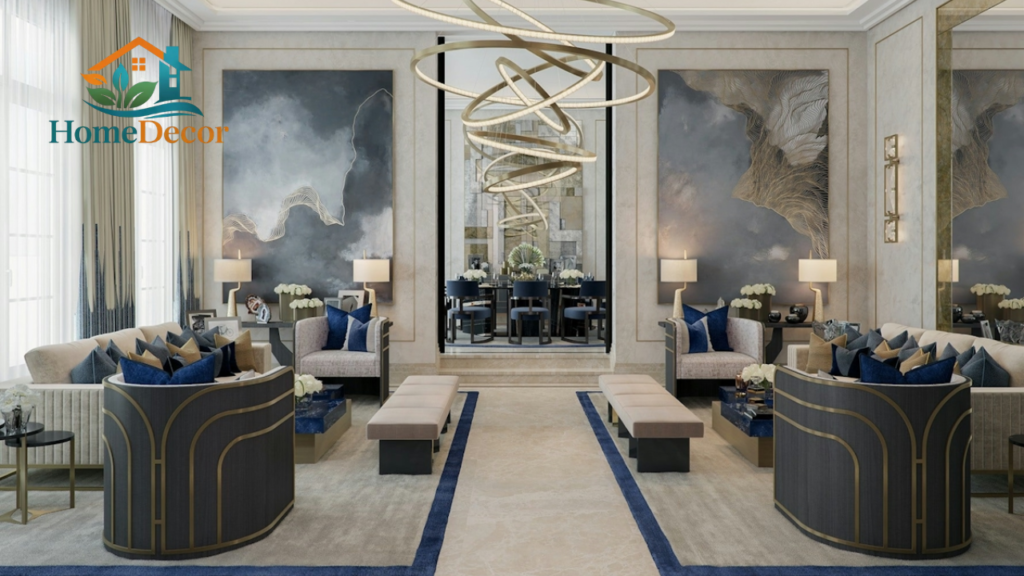
Introduction
Living room walls do much more than sit in the background. They shape the visual rhythm of the room, guide the eye, influence the mood, and determine whether the space feels complete or unfinished. A blank wall can make even a beautifully furnished living room feel slightly hollow, while thoughtful wall decor can instantly add warmth, structure, personality, and polish. That is why wall decor ideas for living room spaces continue to stay highly relevant year after year.
In modern interior design, walls are no longer treated as passive surfaces. They are active design tools. A wall can function as a focal point, an atmosphere builder, a light reflector, a texture layer, a room divider, or a storytelling surface. When chosen with intention, wall decor makes a living room feel more cohesive, more expressive, and more expensive without requiring a full renovation.
The strongest Living Room Wall Decor does not begin with the object itself. It begins with the purpose. Before selecting art, shelving, mirrors, panels, or wallpaper, it helps to decide what the wall needs to accomplish. Does the room need more dimension? More softness? More identity? Once that need is clear, the design decision becomes far easier, and the result looks naturally balanced.
This guide brings together 60 stylish wall decor ideas, practical placement advice, styling direction, and room-specific strategies so you can transform a plain wall into one of the strongest features in your home. Whether the style is modern, boho, minimalist, rustic, transitional, or luxurious, the goal stays the same: make the wall feel intentional, layered, and connected to the rest of the room.
How to choose the right wall decor for your living room
The smartest wall decor choices happen when style and function work together. A good living room wall should not simply be filled. It should solve a design problem. Some need movement. Some need softness. Others need reflection, contrast, or storage. When the decor answers the room’s actual need, it feels more natural and more refined.
Start with the room’s main need
A helpful way to begin is to identify what feels missing.
If the wall feels empty, oversized art or a large gallery arrangement can create a strong anchor.
If the room feels visually flat, texture is usually the best solution, whether through woven decor, sculptural pieces, wood slats, or paneling.
This is why the best wall decor ideas for living room designs tend to work in layers. They do not rely on one isolated object. They combine proportion, texture, color, shape, and spacing to create a complete composition.
Use the right size and spacing
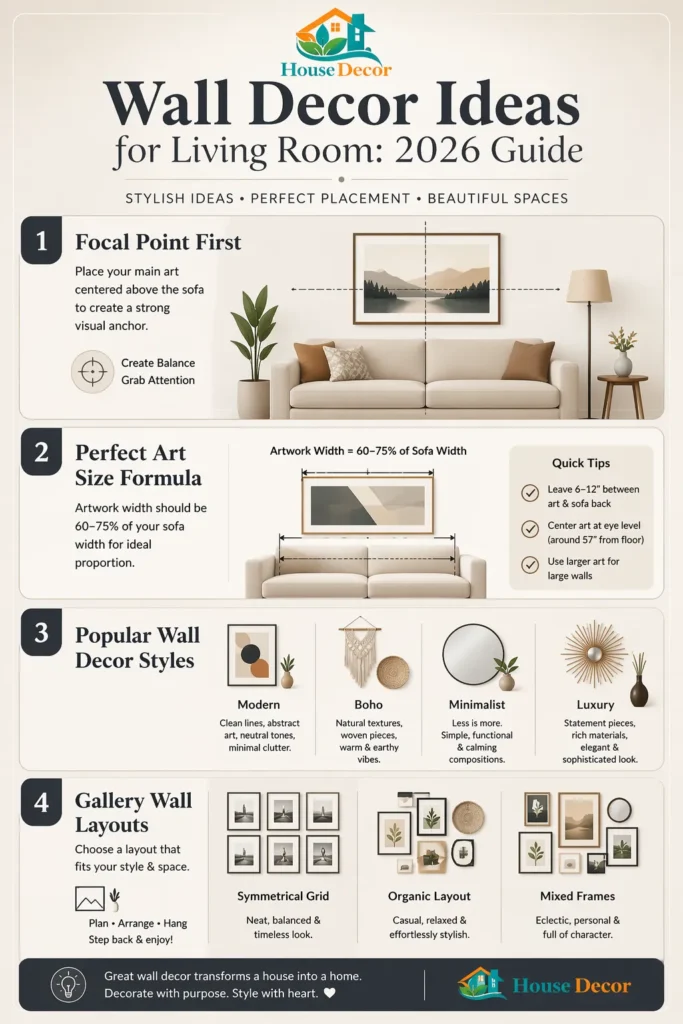
Scale matters more than cost. A piece that is too small can make an expensive room look underdone, while one that is too large can overwhelm the furniture below it. A practical guideline is to keep wall decor in proportion with the surface or furniture beneath it. Above a sofa or console, art often looks best when it spans roughly two-thirds of the furniture’s width.
Spacing matters just as much. Art that sits too high can feel detached. Art that sits too low can feel cramped. Keeping the center of the piece near eye level and allowing a modest gap above furniture helps the composition feel attached to the room rather than floating independently.
Choose according to light, color, and finish
Natural light changes how wall decor performs. A bright room can support darker artwork, deeper frames, and bolder contrast. A dim room often benefits from mirrors, soft-toned pieces, and lighter finishes that keep the wall from feeling heavy. Surface finish also changes the emotional effect. Glossy surfaces feel sharper and more contemporary. Matte textures feel warmer and more relaxed. Wood, linen, plaster, stone, and woven materials bring a softer, more tactile quality.
Current design direction also favors warmer neutrals, earthy undertones, and layered textures rather than flat, cold gray schemes. That makes living rooms feel calmer, richer, and more lived in.
Wall decor ideas for the living room: a quick comparison
Oversized wall art works best for large blank walls and creates a clear focal point.
Gallery walls suit personal spaces and add rhythm, memory, and variety.
Statement mirrors are ideal for smaller or darker rooms because they expand light and space.
Floating shelves offer flexible styling and combine display with function.
Textured wall panels add depth and luxury before any decorative objects are added.
Peel-and-stick wallpaper is especially useful for renters and anyone who wants a high-impact change without permanence.
Botanical wall decor brings softness and natural calm to the room.
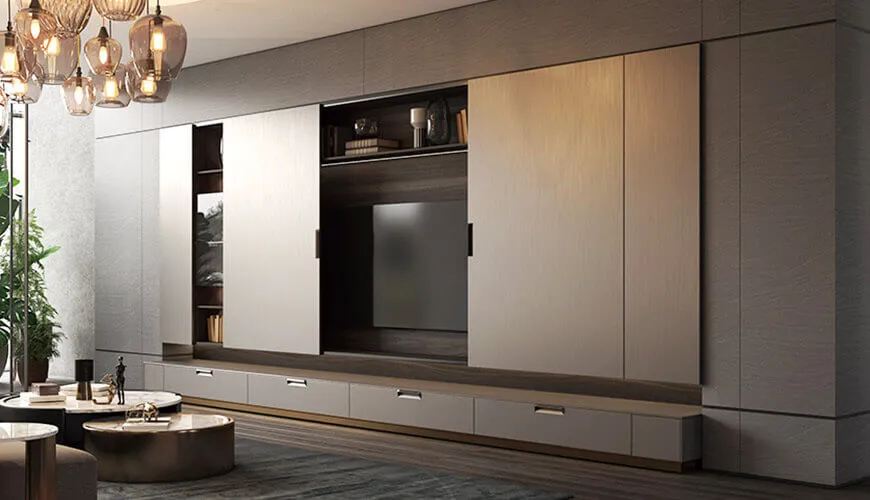
A styled media wall makes the television feel integrated rather than accidental.
Leaning art is relaxed, easy to update, and ideal for casual styling.
Sculptural pieces work beautifully on feature walls because they add gallery-like interest and dimension.
These approaches reflect the most effective living room wall decor strategies: visual balance, purposeful styling, easy adaptability, and a strong sense of atmosphere.
60 stylish wall decor ideas for living room walls
Modern and clean wall decor ideas
1. Oversized wall art
One large artwork can transform the entire feeling of a room. It introduces confidence, scale, and a clear focal point in a single move. In modern spaces, a large canvas often works better than several small pieces because it creates visual calm and avoids fragmentation.
2. Black-and-white gallery wall
A black-and-white gallery wall feels crisp, controlled, and timeless. The limited palette keeps the display cohesive, while matching frames bring order and polish. This is one of the easiest ways to achieve a refined look without overcomplicating the wall.
3. Slim-framed photography
Photography with thin frames brings a sleek, understated character to a modern room. The images remain the focus while the frames support the overall composition without adding visual heaviness.
4. Floating picture ledges
Picture ledges are ideal when you like to change things often. They allow layers of frames, art prints, and small decor objects without extra wall damage. This makes them both flexible and practical.
5. Asymmetrical two-piece art
Two related artworks placed off-center or with slight spatial tension can feel more modern than a single centered print. The composition feels curated, dynamic, and contemporary.
6. Sculptural metal wall art
Metal wall decor adds shadow, reflection, and depth. It is a strong choice for plain walls that need a more artistic, dimensional treatment without using conventional framed art.
Modern Geometric, Monochrome & Textured Wall Decor Ideas for a Balanced Living Room
7. Geometric wall decor
Shapes such as circles, lines, arches, and abstract geometry provide structure and order. They suit modern interiors because they feel deliberate, graphic, and clean.
8. Large monochrome canvas
A monochrome piece can quiet the room while still making a powerful statement. It works especially well when the rest of the room contains strong furniture lines or colorful accents.
9. Round mirror with a simple frame
A round mirror softens the geometry of a living room and creates a sense of balance. It is especially effective above a console table or sofa, where the room benefits from a curved counterpoint.
10. Tonal wall panels
Tonal panels bring understated sophistication. They add depth through shadow and surface variation rather than through color contrast, which makes the room feel calm but still layered.
Warm and cozy wall decor ideas
11. Woven baskets
A grouped arrangement of woven baskets adds natural warmth and handmade character. This is one of the easiest ways to bring softness and texture into the room while keeping the wall visually interesting.
12. Botanical prints
Leaf studies, floral sketches, and plant-themed art create a gentle, refreshing mood. These pieces pair beautifully with neutral sofas, wood furniture, and soft organic decor.
13. Dried floral wall decor
Dried grasses, pampas stems, preserved blooms, and natural bundles create a delicate, sculptural effect. They work especially well in rooms that lean toward earthy, airy, or romantic styling.
14. Wood slat accent wall
Wood slats bring both structure and warmth. They instantly give a room a more architectural feel and make the wall itself part of the design rather than just a background plane.
15. Limewash-style backdrop
A limewash-inspired finish creates a softly clouded surface with depth and movement. It is ideal for spaces that need a tactile, aged, and elegant atmosphere.
16. Natural fiber tapestry
A tapestry made from woven or textile-based materials helps soften echoes and adds a relaxed, grounded feeling. It is especially useful when the room needs warmth without heavy ornamentation.
17. Cane and rattan accents
Cane and rattan introduce a breezy, organic quality. They work especially well in warm, modern, boho, and coastal-inspired living rooms.
Elegant Wall Art & Architectural Details for a Refined Living Room
18. Framed landscape art
Landscape imagery gives the eye a place to rest. It can make a room feel more expansive, more serene, and more connected to nature.
19. Neutral mixed-media art
Mixed-media artwork using fabric, paper, paint, or layered materials feels current and sophisticated. It adds tactile richness without relying on bright color or a busy pattern.
20. Picture frame molding
Frame molding brings a custom, architectural finish to a plain wall. It gives the room a tailored, built-in quality that feels elevated and timeless.
Personal and creative wall decor ideas
21. Family photo grid
A symmetrical photo grid creates a tidy, meaningful display. Using matching frames and consistent image sizes keeps the arrangement elegant rather than chaotic.
22. Travel photo wall
A travel wall tells a story. It turns personal experiences into part of the room’s identity and creates an atmosphere that feels authentic and memorable.
23. Kids’ art display
Children’s artwork becomes much more polished when framed consistently and arranged with care. It turns a sentimental collection into a charming, intentional feature.
24. Shadow boxes
Shadow boxes let you display objects with meaning, such as keepsakes, collectibles, or small heirlooms. They are excellent for adding depth and memory to a wall.
25. Vintage signs
A single vintage sign can add personality and history. The key is restraint. One strong sign can look characterful; too many can make the wall feel cluttered.
26. Wall-mounted bookshelves
Books displayed on the wall create both personality and usefulness. They work especially well for readers who want decor that also frees up floor space.
27. Leaned art on a mantel
Leaning art creates a relaxed, collected feeling. It is a practical method for homeowners who like to switch pieces seasonally or avoid extra holes in the wall.
28. Decorative wall clocks
A clock can be both decorative and functional. In classic, transitional, and family living rooms, it serves as a visual anchor while also adding everyday utility.
29. Decorative plates
Plates arranged on the wall work well in eclectic, coastal, or Mediterranean-style spaces. Their shapes and patterns add rhythm and charm.
30. Handmade ceramic pieces
Ceramic wall objects bring a crafted quality to the room. They feel personal, artisanal, and distinct from mass-produced decor.
Small-space and renter-friendly wall decor ideas
31. Peel-and-stick wallpaper
This is one of the simplest ways to create a major transformation without committing to a permanent change. It is ideal for renters and anyone who wants a dramatic visual shift with minimal risk.
32. Removable wall decals
Wall decals can add pattern or shape without requiring a large investment. They are especially useful in small rooms where a little design energy goes a long way.
33. Lightweight hooks
Hooks make it possible to hang lighter decor without heavy installation. They are practical for woven pieces, small art, seasonal accents, and flexible displays.
Space-Saving Wall Decor Ideas for Stylish, Flexible Living Rooms
34. Leaned art
Leaned art works beautifully in compact rooms because it reduces visual pressure. It keeps the wall feeling open while still making the room feel styled.
35. Mirror trio
Three mirrors arranged in a simple formation can make a small room feel brighter and more spacious. The repetition creates symmetry while the reflective surfaces multiply light.
36. Vertical stack layout
A vertical arrangement draws the eye upward, which can make ceilings feel taller and narrow walls feel more intentional. It is especially useful in apartments and tight layouts.
37. Modular shelves
Modular shelving adapts easily to changing storage or styling needs. It is a strong option for flexible homes that need decor to evolve.
38. Slim canvas set
A slim set of canvases gives you a cohesive look without overwhelming the wall. It is a smart solution when the room needs structure but not visual heaviness.
39. Tapestry with removable hanging hardware
Textiles make rooms feel softer and more personal. Using removable hanging solutions keeps the design renter-friendly while still adding warmth and scale.
40. Mini gallery wall
A smaller gallery wall can still feel elegant if the spacing, frame choices, and visual rhythm are controlled. It is a good option for compact walls that need personality without excess.
Luxury and statement wall decor ideas
41. Floor-to-ceiling paneling
Tall paneling makes a living room feel custom and architecturally rich. It creates a strong vertical line that enhances the room’s height and presence.
42. Oversized statement mirror
A large mirror can dramatically expand light and perceived space. It also adds a touch of glamour and works well in both elegant and modern rooms.
43. Museum-style framing
Wide mats, substantial frames, and deliberate spacing make art feel more elevated. This approach works especially well when you want the wall to feel curated and sophisticated.
44. Diptych or triptych artwork
Two- or three-panel art creates visual power without requiring a single massive image. It feels polished, upscale, and thoughtfully composed.
45. Textured plaster wall
Plaster finishes introduce richness through subtle variation rather than decoration. The result feels timeless, tactile, and quietly luxurious.
46. Backlit shelving
Soft light behind shelves transforms storage into an atmosphere. It adds mood, highlights decor, and creates a gallery-like glow.
47. Metal sculpture
A large sculptural piece can turn the wall into an artistic feature. It is ideal when the room needs impact, dimension, and a more editorial feel.
48. Color-blocked wall section
A painted block of color can define a zone, frame a seating area, or create a dramatic backdrop for art. It is a bold but controlled way to build visual identity.
49. Marble-look wall feature
Marble-inspired surfaces offer elegance and visual richness. Used with restraint, they lend a sense of refinement without making the room feel overly formal.
50. Layered wall sconces
Sconces add both function and atmosphere. Their light gives the wall a Polished, finished feeling and can make surrounding decor appear more intentional.
Smart and future-ready wall decor ideas
51. TV media wall
A media wall integrates the television into the larger design story. It prevents the screen from dominating the room and helps everything around it feel coordinated.
52. Hidden cable management
Visible cords can make even beautiful decor feel unfinished. Hiding cables gives the wall a cleaner, more refined, and more high-end appearance.
53. Framed smart display
A framed smart screen can blend into the room more naturally when not in use. It offers a function without forcing the television to feel industrial or disconnected.
54. Modular art rails
Art rails make it easier to rearrange and refresh wall decor. They are especially useful for people who like seasonal styling or frequent changes.
55. Seasonal print system
Swapping prints instead of buying completely new decor is a clever way to keep the room current. It lets the wall evolve without a full redesign.
56. Smart picture lights
Picture lights highlight artwork and create a gallery-like effect. They also help wall decor become part of the room’s atmosphere after dark.
57. Moisture-resistant wall art
In busy homes or connected spaces, durable wall decor is a practical choice. It provides style while better withstanding daily wear and environmental changes.
58. Washable wallpaper
Washable wallpaper combines visual impact with practicality. It is an appealing choice for family living rooms that need both beauty and resilience.
59. Sound-absorbing felt tiles
Felt tiles are increasingly popular because they are decorative, customizable, and useful for sound softening. They bring texture and function together in a very modern way.
60. Integrated shelf-and-art wall
This approach combines frames, objects, books, and shelving into one layered composition. It feels collected, adaptable, and future-friendly because it can evolve.
Wall decor ideas for the living room by style
Modern living room wall decor
Modern living rooms benefit from simplicity, visual clarity, and intentional placement. Large abstract art, clean-lined frames, sleek mirrors, minimalist line art, and textured materials all work well here. The wall should feel considered, not crowded. In modern design, restraint often creates more impact than abundance.
Boho living room wall decor
Boho walls should feel relaxed, layered, and expressive. Woven textures, macramé, baskets, warm woods, handmade pieces, travel-inspired details, and collected objects all suit this style. The key is to let the wall feel personal rather than overly curated. Mixing textures matters more than perfect symmetry.
Minimalist living room wall decor
Minimalist spaces need calm. One strong artwork, one well-chosen mirror, or one precisely arranged pair of pieces can be enough. Too many objects interrupt the quiet feeling that defines this style. Clean spacing, limited color, and strong proportion keep the wall serene.
Rustic and farmhouse wall decor
Rustic and Farmhouse walls work best with natural materials, vintage frames, weathered wood, and warm neutral tones. These spaces often benefit from texture and familiarity. The decor should feel grounded, welcoming, and connected to everyday living.
Luxury and elegant living room wall decor
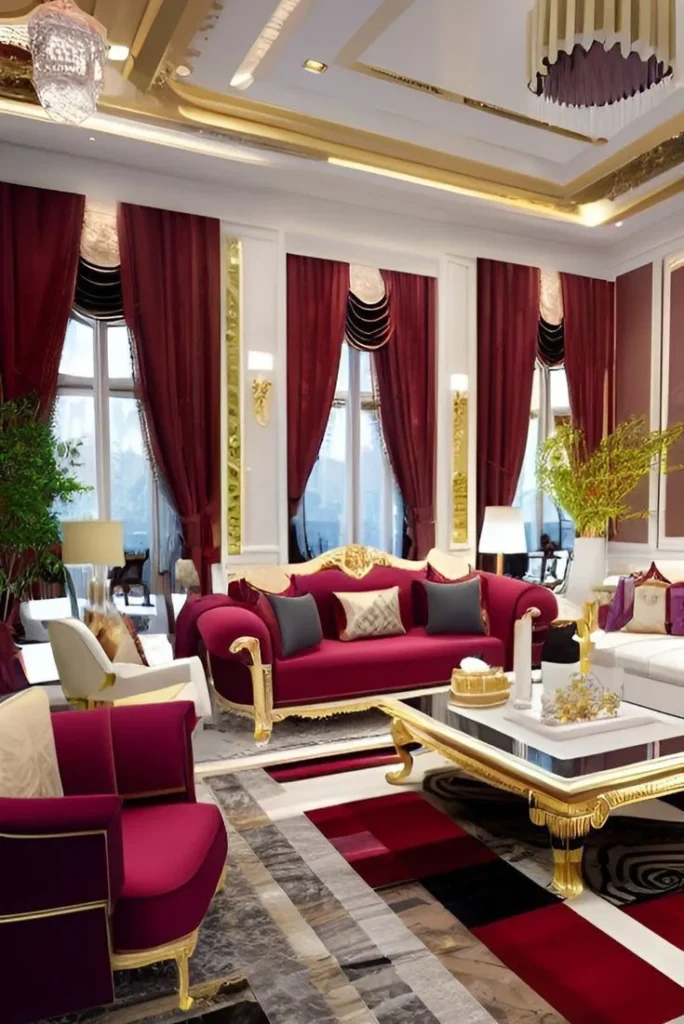
Luxury living room wall decor depends on scale, craftsmanship, and control. Oversized art, sculptural elements, rich textures, refined frames, layered lighting, and architectural wall treatments all help create a more elevated effect. Luxury is not about excess. It is about precision, quality, and visual confidence.
Best placement tips that make wall decor look expensive
Above the sofa
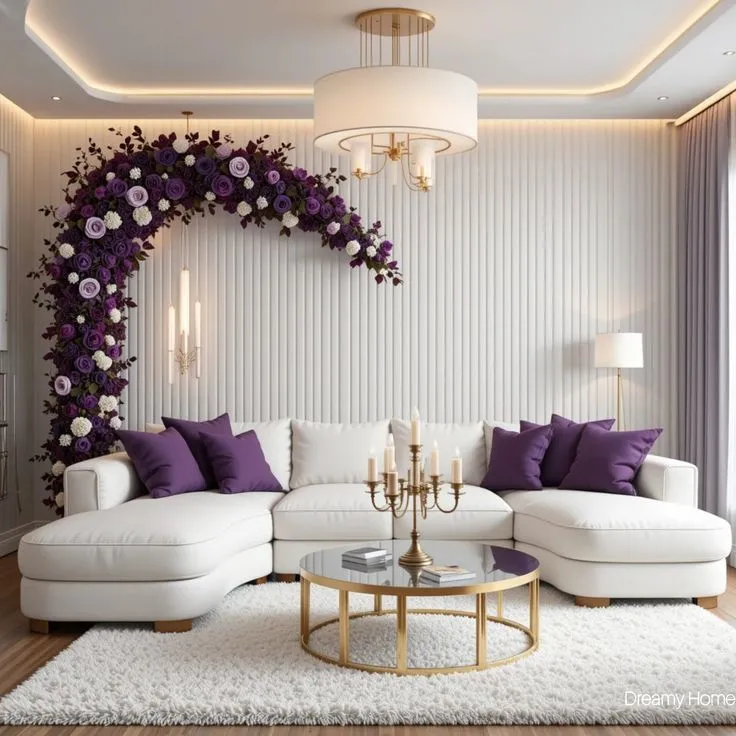
The wall above a sofa is often the most important decorative surface in the living room. Art or decor should feel connected to the seating below it. The strongest arrangement usually has enough width to relate to the sofa while still leaving a balanced amount of negative space around the piece. A too-small object can make the wall feel unfinished, while a properly scaled piece can make the whole room look intentional.
Above the fireplace
A fireplace already creates a natural focal point, so the decor above it should support that focal point instead of competing with it. A centered mirror, a large single artwork, or a symmetrical arrangement usually works best. The goal is harmony, not distraction.
Around the TV wall
The TV wall is one of the most common design challenges in modern homes. Rather than treating the television like a problem to hide, the better approach is to integrate it with shelving, paneling, framed artwork, or surrounding decor. When the TV wall is styled as part of the room, the whole space feels more finished.
On a large blank wall
Large blank walls need a strong plan. One substantial focal point, a structured gallery, or a deliberate zone of shelving and decor will usually work better than scattering many tiny objects across the space. Large walls reward confidence and composition.
In a small living room
Small rooms usually benefit from simpler, stronger choices. Mirrors, vertical layouts, lighter colors, and fewer but more meaningful pieces help prevent visual clutter. The wall should make the room feel open and airy, not crowded.
2026 wall decor trends for living rooms
Warm neutrals
Warm neutrals continue to rise because they make living rooms feel softer, richer, and more welcoming. Greige, taupe, clay, putty, cream, and earthy brown tones create a more human and relaxing backdrop than colder gray palettes.
More texture
Texture remains one of the most important directions in current living room design. Plaster, wood, layered textiles, sculptural surfaces, and textured wall art all add depth without creating clutter.
More personal walls
Rather than showroom-perfect symmetry, many living rooms are moving toward wall decor that feels collected over time. Family photos, travel memories, handmade pieces, and mixed displays create more emotional warmth and personality.
Layered prints and mixed media
Layering different media gives the wall a richer, more lived-in story. Paper, fabric, wood, metal, and paint can work together to create a wall that feels expressive and modern.
Statement wallpaper
Wallpaper is increasingly being used as a major design feature rather than a background pattern. Removable versions make it possible to experiment with stronger looks without long-term commitment.
Whimsy and personality
Current interior directions leave more room for charm, playfulness, and individuality. The most memorable walls are often the ones that feel collected, warm, and specific to the home rather than generic or overly restrained.
Budget-friendly wall decor ideas for living room spaces
A Beautiful Wall does not require a large budget. Some of the most effective designs use simple pieces with strong composition. A well-framed print, a single mirror, a DIY canvas, painted frames, or a few thoughtfully arranged shelves can look far more expensive than they actually are.
Smart budget moves include using thrifted frames painted in one consistent finish, printing artwork in matching sizes, creating a simple abstract painting, using floating shelves instead of custom built-ins, adding one peel-and-stick accent wall, or pairing natural baskets with simple artwork for texture. When the arrangement is clear and the scale is right, inexpensive decor can look surprisingly refined.
Common mistakes to avoid
Hanging art too high
One of the most common wall decor errors is placing art too far above the furniture. When decor floats too high, it disconnects from the rest of the room. Keeping pieces visually tied to the sofa, console, or mantel makes the wall look more composed.
Using pieces that are too small
A tiny piece above a large sofa or a broad wall can look accidental rather than intentional. In wall decor, scale is a design decision, not a luxury detail.
Filling every inch of wall space
Blank space is valuable. It gives the eye somewhere to rest and allows each decorative element to feel more important. Overfilling the wall often weakens the design rather than improving it.
Mixing too many styles at once
Eclectic styling can be beautiful, but a living room still needs a connecting thread. Color, frame finish, material, or tone should tie the pieces together so the wall feels unified.
Ignoring the room’s light
Lighting changes how every wall element reads. Dark finishes in a dim room may feel heavy, while reflective pieces in a bright room may feel dynamic and fresh.
Forgetting the TV wall
The television should be part of the design story. When it is left isolated, the room often feels incomplete. A good wall composition makes the TV feel intentional rather than intrusive.
Frequently asked questions
A good rule is to keep wall art visually connected to the sofa instead of floating too high. Many design sources recommend placing the center of the piece around eye level and leaving about 6 to 12 inches above the sofa, depending on the size of the art and the room layout.
A common guideline is to choose art that is about two-thirds of the width of the furniture beneath it. That helps the wall feel balanced and intentional. Living Spaces uses this proportion directly in its wall art guidance.
Use oversized printable art, thrifted frames, painted mats, floating shelves, or one strong gallery wall instead of many small objects. BHG shows that low-cost wall ideas can look polished when they are grouped thoughtfully.
Yes. Mirrors, vertical layouts, lighter colors, and fewer but stronger pieces can help a small living room feel more open. Design coverage in 2026 also shows that warm neutrals are replacing colder grays, which can make small rooms feel softer and more inviting.
The best TV wall decor balances the screen instead of fighting it. Shelving, matching frames, textured panels, or surrounding art can make the TV feel intentional and integrated. Houzz’s media wall galleries show how strong this search intent is right now.
Conclusion
The strongest wall decor ideas for living room spaces are the ones that match the room’s purpose, scale, lighting, and personality. A great wall is not simply filled with objects. It is designed with intention. It balances openness and detail, texture and simplicity, function and beauty.
Whether your taste leans toward modern living room wall decor, boho styling, minimalist calm, rustic warmth, or elegant luxury, the goal remains the same: create a wall that feels connected to the rest of the room and true to the way you live. The most successful living rooms do not rely on decoration alone. They use wall decor to build atmosphere, identity, and coherence.
The current direction in interior design supports exactly that kind of Approachhttps://theroomsart.com/sitting-room-wall-units-complete-guid/. Warm neutrals, richer textures, layered prints, removable finishes, and more personal compositions are helping living rooms feel more human and more inviting. With the right combination of scale, material, placement, and style, even the simplest wall can become the most memorable part of the room.
