
Introduction
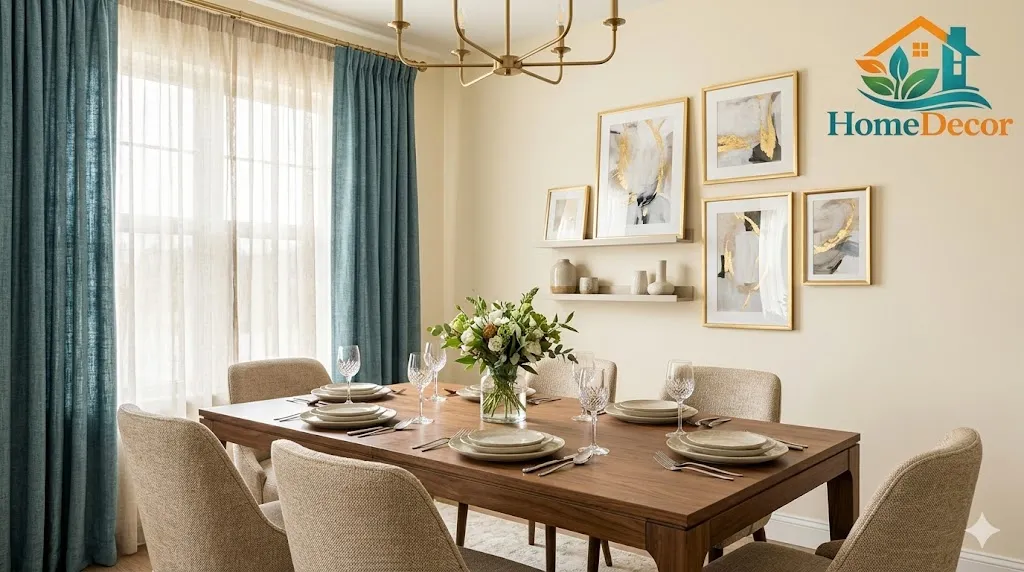
Dining Room Drapes do far more than cover a window. They shape the entire atmosphere of the room, regulate daylight during meals, protect privacy in the evening, soften hard surfaces, and add a polished, intentional finish to your interior. In a space where family dinners, celebrations, and everyday conversations happen, the right drapery can quietly elevate everything. A dining room can feel formal, warm, airy, dramatic, calm, or luxurious depending on the fabric, length, color, and hanging style you choose.
Many homeowners struggle to choose the right dining room drapes because the decision is layered with design and function. Should the panels be long or short? Should they just touch the floor or puddle slightly? Which fabric handles glare best? What works better for a relaxed space: linen, cotton blend, velvet, or polyester? Should you buy ready-made panels or invest in custom drapery? These are practical questions, but they also connect to aesthetics, room size, lighting, and budget.
This complete 2026 guide answers those questions in clear, simple language. It is written for real homes, real budgets, and real dining spaces. By the end, you will understand how to choose dining room drapes that work beautifully with your layout, color palette, lifestyle, and overall design goals.
You will learn how to:
Choose the right dining room drapes for your space
Select the best fabrics for different looks and budgets.
Understand modern and luxury drapery styles.
Measure drapes correctly for a clean, custom appearance
Hang drapes at the right height for visual impact.
Use 2026 color trends without making the room feel dated.
Style drapes in small and large dining rooms
Compare the budget-friendly and premium options.s
Explore smart drapery features for modern homes
Answer common dining room drapery questions with confidence
What Are Dining Room Drapes?
Dining room drapes are long fabric panels designed to frame windows in a dining area. They are usually made from heavier or more structured materials than lightweight curtains, and they often include lining to improve privacy, drape quality, insulation, and light management. In most homes, dining room drapes extend from near the ceiling or the top of the window to the floor, creating a sense of height and elegance.
Drapes and curtains are often used as if they mean the same thing, but they are not identical. Drapes tend to be more formal, more structured, and more substantial. Curtains can be lighter, shorter, and more casual. In a dining room, drapes usually create a more refined visual effect by anchoring the window and making the room feel complete.
A well-chosen drapery treatment also acts as a design connector. It links the window with the table, chairs, wall color, light fixtures, rug, and any artwork in the room. That is why window treatment selection is such an important part of dining room design: the window does not sit alone. It participates in the whole composition.
Dining Room Drapes vs Curtains
| Feature | Drapes | Curtains |
| Length | Usually floor-length | Can be short or long |
| Fabric | Thicker, often lined | Lighter, often unlined |
| Style | More formal and elegant | More casual and relaxed |
| Light Control | Stronger control | Moderate control |
| Insulation | Better insulation | Limited insulation |
| Look | Tailored and finished | Easygoing and simple |
Why Drapes Matter in a Dining Room
Dining room drapes are not only decorative. They solve everyday design and comfort problems.
They help control natural light during meals so bright afternoon sun does not wash out the space or create glare on the table. They improve privacy at night when the room is illuminated from inside. They soften the echo by absorbing sound, which can make conversation feel calmer and more pleasant. They add warmth to spaces that might otherwise feel hard or empty. And finally, they finish the room visually so the design feels intentional rather than incomplete.
A dining room without window treatments can sometimes feel visually bare, especially if the room has large windows, tall walls, or hard flooring. Drapes bring softness, balance, and a sense of enclosure. They help the room feel like a place to stay, not just a pass-through zone.
Pro insight: Heavy drapes work well in formal dining rooms, while lighter, airier fabrics suit casual daily use and modern family spaces.
Choosing the Right Fabric for Dining Room Drapes (2026 Guide)
Fabric choice influences nearly every part of the drapery experience: appearance, privacy, fullness, movement, maintenance, durability, and light filtration. The same curtain rod and the same window can look completely different depending on whether the panels are velvet, linen, silk, polyester, or a cotton blend.
The best fabric is not always the most expensive one. It is the one that supports your room’s purpose and your lifestyle. A home with frequent family meals, children, and guests may need easy-care fabric. A more formal dining area used mainly for entertaining may justify more luxurious materials.
Best Fabrics for Dining Room Drapes
| Fabric | Style Level | Best For |
| Velvet | Luxurious and dramatic | Formal dining rooms and elegant interiors |
| Linen | Light, natural, and fresh | Bright, relaxed, airy spaces |
| Cotton Blends | Flexible and practical | Most everyday homes |
| Silk | Refined and classic | Traditional or high-end interiors |
| Polyester | Affordable and low-maintenance | Budget-conscious households |
1. Velvet
Velvet is one of the richest-looking drapery fabrics. It has visual depth, a soft pile, and a graceful way of catching light. In a dining room, velvet creates a sense of warmth and importance. It works particularly well in formal spaces, darker color schemes, and rooms where drama is welcome. Velvet also helps with insulation and sound reduction, which adds another layer of practical value.
2. Linen
Linen feels fresh, breathable, and refined without looking heavy. It suits dining rooms that receive a lot of natural light or spaces where you want a soft, relaxed aesthetic. Linen can make the room feel open, especially when paired with neutral walls and simple furniture. It is a strong choice for coastal, Scandinavian, modern organic, and casual contemporary interiors.
3. Cotton Blends
Cotton blends are among the most versatile drapery fabrics available. They often balance softness, structure, and easier care. Because they are adaptable, they work in many types of dining rooms, from transitional to modern to traditional. A cotton blend may be the best middle-ground option for homeowners who want durability without sacrificing style.
4. Silk
Silk offers a delicate shine and a classic sense of luxury. It is beautiful in formal dining rooms and pairs especially well with elegant furniture, polished wood, and classic decorative details. However, silk can be more demanding to maintain, so it is best suited to spaces where care and preservation are realistic priorities.
5. Polyester
Polyester is practical, durable, and often budget-friendly. Modern polyester fabrics can look much more sophisticated than older versions, especially when they are woven to resemble linen or cotton. For families, rental homes, or high-use dining areas, polyester can be a smart solution because it is often easier to clean and less sensitive to everyday wear.
Key Fabric Considerations
Light Control
Thicker fabrics such as velvet, lined cotton blends, and blackout-backed panels block more sunlight and reduce glare more effectively. This is especially useful in south-facing rooms or dining areas with strong afternoon sun.
Durability
Dining rooms are social spaces. They are used regularly, and the drapes may be opened and closed often. A fabric that keeps its shape, resists stretching, and handles occasional dust or spills will serve you better over time.
Airflow
If you want a room that feels fresh and breathable, lighter fabrics such as linen or linen-look blends are ideal. They let the room feel open rather than overly enclosed.
Maintenance
Maintenance matters more than many shoppers expect. Some fabrics need dry cleaning, while others can be vacuumed, spot cleaned, or gently washed. Always consider the cleaning reality before committing to a delicate material.
Pro tip: Lined drapes tend to look more finished, hang better, block more light, and last longer than unlined panels.
Dining Room Drapes Styles & Design Ideas
Your drape style should match the tone of the room. A dining space can be modern, traditional, transitional, romantic, minimal, rustic, or richly layered. The drapery treatment should echo that personality instead of fighting it. When the style aligns with the room, the result feels cohesive and intentional.
Modern Minimalist Drapes
Minimalist drapes are ideal for clean interiors that rely on simplicity, subtle contrast, and calm visual rhythm. The goal is to avoid excess and let the architecture breathe. In this style, the drapes usually appear in neutral shades such as white, ivory, beige, soft gray, or taupe. Hardware is simple, clean, and understated. Patterns are minimal or absent.
This style works especially well in dining rooms that already contain sculptural furniture, sleek lighting, or open-plan layouts. The drapes support the room rather than dominate it.
Traditional Luxury Drapery
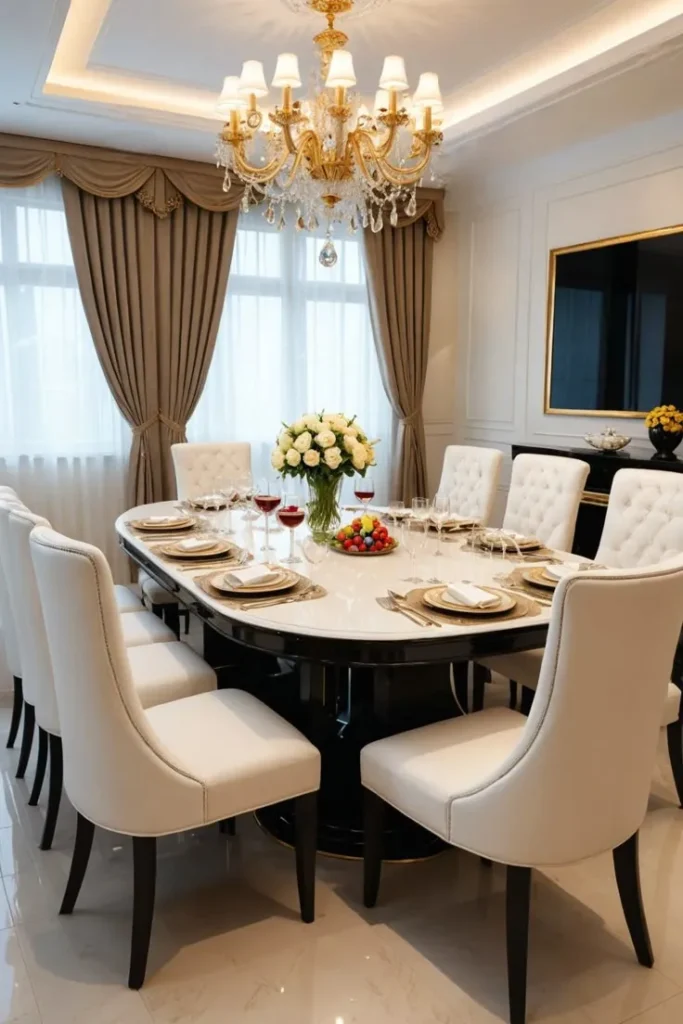
Traditional luxury drapery is suited to dining rooms that feel formal, classic, or richly detailed. Velvet, silk, jacquard, or lined woven fabrics often work best here. Rich colors such as navy, emerald, burgundy, chocolate, and charcoal can create a sense of depth and ceremony.
This style often includes pleats, ornamental rods, decorative finials, tassels, or elegant tiebacks. The result is polished and memorable, especially when paired with a chandelier, wood dining table, or upholstered chairs.
3. Layered Drapes: Sheer + Blackout
Layering is one of the strongest design trends in 2026 because it combines beauty with flexibility. A sheer layer provides daytime softness and filtered sunlight. A thicker outer layer or blackout panel gives privacy and stronger light control at night. Layered drapery creates dimension, movement, and visual richness.
It is also highly practical. You can keep the room bright during the day and easily shift into a more private, intimate atmosphere after sunset. This approach is especially useful in homes with large windows or open sightlines.
Bold Patterned Drapes
Patterned drapes can become the focal point of the room. They are ideal when the rest of the dining room is relatively neutral, and you want one strong visual statement. Florals, geometrics, abstract prints, stripes, and painterly motifs can all work depending on the room’s overall mood.
Use patterns with care. In a compact dining room, too much visual activity can make the space feel crowded. In a larger room with simple walls and furniture, patterns can add personality and energy.
Seasonal Drapery Swaps
Seasonal styling is an easy way to refresh the room without remodeling. In summer, linen and lighter tones can make the dining room feel cool and breezy. In winter, velvet or heavier-lined fabrics can add comfort and richness. Fall often suits warm, earthy colors, while spring can feel brighter with soft greens, pale blues, or muted florals.
This method is excellent for homeowners who enjoy changing the mood of the home throughout the year. It is also a practical way to manage a budget because you do not need to redesign the entire room every season.
How to Measure Dining Room Drapes
Correct measurements are one of the most Important Parts of buying drapes. Beautiful fabric will still look wrong if the width is too narrow, the length is off, or the rod is installed at the wrong height. A precise measurement creates balance, and balance creates elegance.
Measure Window Width
Measure the full width of the window, then extend beyond the frame if you want the drapes to create a fuller effect. In most cases, drapes should be wider than the actual glass area so they can stack back neatly and avoid blocking too much natural light when open.
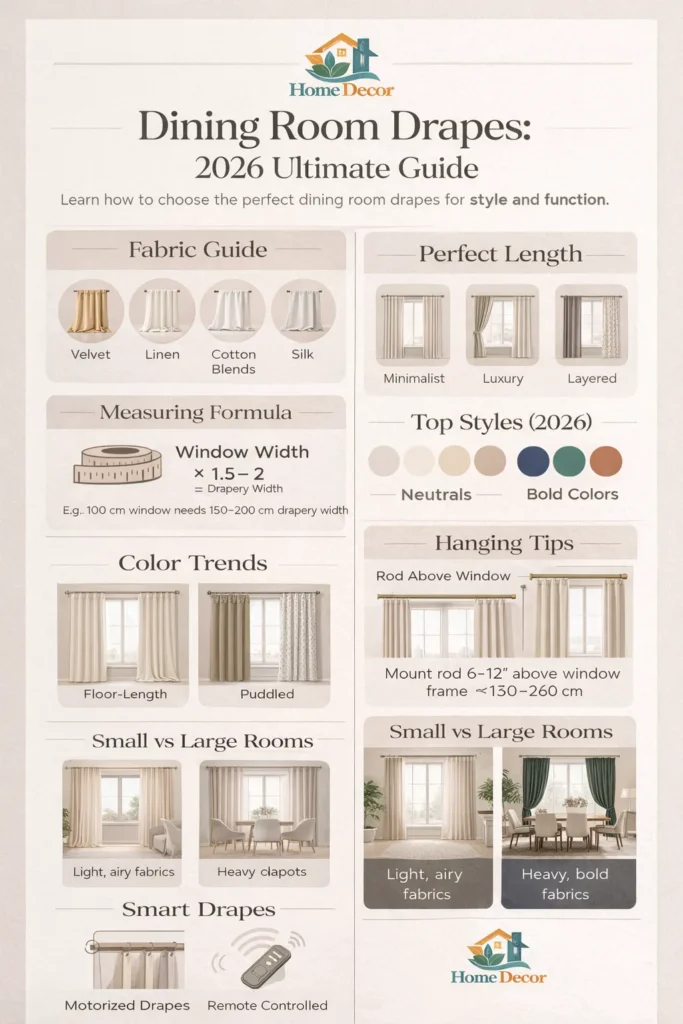
A good rule is to multiply the window width by 1.5 to 2. That gives the drapery enough fullness to look rich rather than flat.
For example, if the window is 100 cm wide, the drapery width may need to be around 150 cm to 200 cm, depending on fullness and fabric density.
Decide Mounting Height
The rod position dramatically changes the room’s visual proportions. Mounting the rod higher than the actual window frame creates a taller, more elegant look. This is a simple visual trick that works in almost every dining room.
For a refined appearance, the rod is often installed 6 to 12 inches above the top of the window. In rooms with low ceilings, placing the rod a little higher can make the ceiling feel more elevated and the room feel more spacious.
Choose the Right Length
Length has a huge impact on style.
Floor-length drapes are the most popular and generally the most elegant choice. They create a clean vertical line and help the room feel finished. Puddled drapes touch the floor and extend slightly beyond it, creating a softer, more romantic, and more formal effect. Sill-length drapes are shorter and usually feel more casual.
For most dining rooms, floor-length drapes offer the best balance of style and practicality.
Measurement Reference Table
| Window Width | Recommended Drapery Width |
| 100 cm | 150–200 cm |
| 150 cm | 225–300 cm |
| 200 cm | 300–400 cm |
Pro tip: For the most elegant effect, drapes should gently kiss the floor or barely touch it. That slight contact creates a tailored finish.
How to Hang Dining Room Drapes
The hanging method matters just as much as the fabric. Good installation improves function, silhouette, and usability. Poor installation can make even expensive drapes look awkward.
Rod System
A rod system is the most familiar option. It is visible, decorative, and versatile. Rods come in many styles, from minimal matte finishes to ornate decorative hardware. This makes them suitable for both modern and classic dining rooms.
Rod systems work well when you want the hardware itself to become part of the design. They are also easier for DIY installation in many cases.
Track System
A track system is more discreet. It offers a cleaner, more minimal appearance because the hardware is less visible. Tracks are often used for layered treatments or for spaces where smooth operation matters most.
This system is especially appealing in modern interiors or rooms where the goal is a quiet, architectural look.
Installation Tips
Make sure brackets are fixed securely into the wall. Extend the rod beyond the edges of the window so the drapes can stack back without covering the glass too much. Use proper anchors when the drapes are heavy. If the panels are dense or layered, choose hardware that can support the weight without sagging.
DIY vs Professional Installation
| Type | Best For |
| DIY | Small windows, simple panels, light to medium hardware |
| Professional | Large windows, layered setups, custom fabrics, luxury finishes |
DIY installation can be perfectly fine for straightforward projects. Professional installation becomes more worthwhile when the treatment is large, heavy, or part of a more complex design scheme.
Dining Room Drapes Color Guide (2026 Trends)
Color has a powerful effect on mood, spatial perception, and style identity. The color of your drapes can calm the room, energize it, warm it, or sharpen its contrast. It can also help the drapes blend in or stand out.
Neutral Colors: Timeless and Safe
Neutral drapes are the easiest to live with and often the most adaptable. Beige, cream, taupe, soft gray, and warm ivory work in many settings. They allow the table, chairs, light fixture, and wall art to take the lead visually.
Neutrals are Especially effective in modern, minimalist, Scandinavian, and transitional spaces. They also help small dining rooms feel larger and less visually crowded.
Bold Colors: Strong Personality
Deep navy, emerald green, terracotta, maroon, and charcoal are excellent for a richer, more dramatic atmosphere. These colors can make the dining room feel grounded, intimate, and more layered.
Bold colors are particularly effective when the dining room has ample natural light, higher ceilings, or a more formal decorative direction.
Pattern Tips
If your drapes feature a pattern, coordinate the dominant tones with the dining chairs, rug, or wall accents. That helps the design feel connected instead of random. Avoid very large prints in compact rooms because they can overpower the space. Save dramatic patterns for larger windows or rooms with more open visual breathing room.
Dining Room Drapes for Different Room Sizes
Room size changes the best drapery strategy. A treatment that works beautifully in a large formal dining room may overwhelm a smaller breakfast nook, and a lightweight solution that looks elegant in a compact room may feel too thin in a grand entertaining space.
Small Dining Rooms
In smaller dining rooms, the goal is to make the space feel brighter, taller, and more open. Light fabrics are usually the best choice because they allow natural light to move through the space rather than trapping it. Neutral tones support the sense of openness, and vertical visual lines can help the ceiling appear higher.
Simple rods, clean hems, and minimal stacking create a refined result without crowding the room.
Large Dining Rooms
Large dining rooms can handle more material, more color, and more visual drama. Heavier fabrics often work well because they help balance the scale of the room. Layered drapery, decorative tiebacks, and wider rods can all enhance the sense of grandeur.
In large rooms, the drapes should feel substantial enough to hold their own against large tables, statement lighting, and broad wall surfaces.
Budget-Friendly vs Luxury Drapes
Not every dining room needs a premium custom treatment. The right drapes are the ones that match your goals, not necessarily the ones with the highest price tag. That said, budget and luxury options create very different outcomes.
Budget-Friendly Ideas
Budget-friendly drapes often use polyester or blended fabrics that resemble higher-end materials. Ready-made panels are available in standard sizes and can still look stylish when carefully chosen. A simple rod and neutral palette can elevate the whole room without requiring a large investment. Many homeowners also save money by doing the installation themselves.
Budget drapes are ideal when you want a clean look, practical maintenance, and a sensible cost structure.
Luxury Drapes
Luxury drapes often use custom tailoring, premium fabrics, and specialized finishes. Velvet, silk, lined panels, and bespoke hardware all contribute to a richer outcome. Blackout or interlining may be added for structure and performance. Motorized operation is also common in higher-end homes.
Luxury treatments are best for dining rooms where design impact is a priority and where the owner wants the window treatment to become a notable architectural feature.
Common Mistakes to Avoid
Even strong fabric and beautiful colors can fall flat when the proportions or placement are wrong. These are some of the most common mistakes to avoid.
Do not hang drapes too low, because this shortens the room visually. Do not choose fabric that is too thin if you need privacy or structure. Do not guess at measurements, especially for floor-length panels. Do not use drapes that are too short unless the design intentionally calls for it. Avoid overly busy prints in a small room because the visual noise can make the dining area feel cramped. And do not ignore the undertones of the wall color, because mismatched warmth or coolness can make the whole arrangement feel off.
Maintenance & Care Tips
Drapes last longer and look better when they are cared for consistently. Dust and cooking particles can slowly dull the fabric, especially in dining rooms that connect to kitchens or open-plan layouts.
Vacuum the drapes occasionally using a soft brush attachment. Remove dust before it settles deeply into the fibers. Handle stains quickly so they do not set. Dry clean silk and velvet when needed. Store seasonal panels in breathable bags so they remain fresh and protected when not in use.
If the dining room receives a lot of indirect sunlight, rotate or reposition panels when possible to slow fading. Care is not Glamorous, but it is essential for preserving beauty.
Smart & Modern Drapery Ideas (2026)
Technology is becoming more common in home design, and dining room drapes are no exception. Smart systems are especially useful in homes that value convenience, precision, and a sleek modern experience.
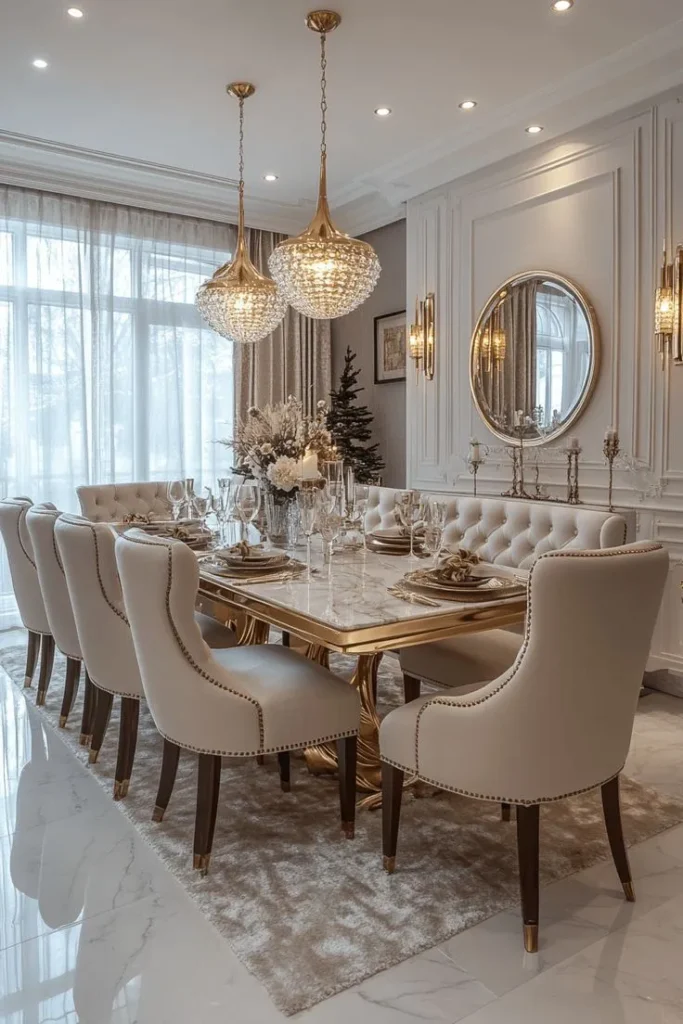
Motorized drapes allow you to open or close the panels with a remote or app. Smart home integration makes it possible to connect the drapes to systems such as Alexa, Google Home, or Apple Home. Light-sensitive settings can trigger automatic opening or closing based on time or brightness. Heat-sensitive systems can also help manage comfort by responding to temperature changes.
These features are particularly useful in dining rooms with large windows, difficult-to-reach rods, or homeowners who want a high-tech, polished lifestyle solution.
Quick Expert Tips
Choose floor-length drapes for the most elegant result.
Use double rods when you want layering and flexible light control.
Match drape undertones with the wall undertones for a more cohesive look.
Use washable or easy-care fabrics in busy family homes.
Install rods higher than the window frame to make the ceiling feel taller.
Choose lined panels when you want better structure, light control, and longevity.
FAQs
No, but they greatly improve privacy, comfort, and style.
Velvet for formal rooms, linen for casual rooms, and cotton blends for everyday meals.
Floor-length is ideal because it looks clean, modern, and elegant.
Yes. Thicker drapes reduce echo and make conversations clearer.
Drapes are thicker and more formal. Curtains are lighter and more casual.
Conclusion
Choosing the right dining room drapes is one of the most effective ways to improve a dining space without renovating the room itself. The right drapes can refine the mood, regulate light, support privacy, soften sound, and pull every design Element Together into one complete visual story. A window treatment that looks thoughtful will always elevate the room.
The best choice depends on your room size, ceiling height, natural light, furniture style, and daily routine. A bright casual dining room may benefit from linen or cotton blend panels. A formal dining room may look best with velvet or silk. A layered system may be ideal if you want flexibility. A neutral palette may be perfect if you want timeless calm. A bold color may be the right move if the room needs personality.
Use the ideas in this 2026 guide to make a decision that feels both practical and beautiful. When drapes are measured correctly, mounted at the right height, and chosen with the room’s overall design in mind, they do more than dress a window. They help define the entire experience of the dining room.
