
Introduction
A Square Dining Room Table is one of the most balanced and conversation-friendly furniture choices for a dining room. It feels symmetrical, creates a more intimate atmosphere, and can work especially well in square or compact rooms where proportion matters as much as style. The challenge is that many shoppers do not know what size to choose, how much clearance they need, or whether a square table is better than a round or rectangular one. That confusion is exactly why this guide exists. Square tables are often recommended for square-shaped rooms and smaller groups, while room flow, traffic space, and seating needs should guide the final choice.
In this guide, you will learn how to choose the right size, how many people a square table can seat, which materials are worth buying, how to style it beautifully, and when you should choose a different shape instead. You will also get practical room-planning advice backed by current design guidance, including the widely used recommendation to leave about 36 inches of clearance around the table for comfortable movement.
What Is a Square Dining Room Table?
A square dining room table has four equal sides, which creates a visually balanced footprint and an even seating arrangement. In practical terms, it is often best for everyday family meals, breakfast nooks, compact dining rooms, and square-shaped spaces where a rectangular table may feel too dominant. Square tables are also popular because they encourage face-to-face conversation and make the dining area feel more intimate.
Why Square Dining Tables Still Matter in 2026
Square tables remain relevant because modern homes increasingly need furniture that is both functional and space-aware. Designers continue to recommend choosing table shape based on room proportions rather than trend alone. In square or balanced rooms, a square dining table often looks more natural than a rectangle, and in smaller spaces, it can deliver a cleaner visual footprint when the room is not long and narrow.
Another reason they matter is flexibility. Many square tables now come with extension leaves or pedestal bases, which can make them more practical for households that host guests sometimes but do not need a large table every day. The market also shows a clear focus on size-based shopping decisions, especially 4-seat and 6-seat planning.
Mini summary:
Square dining tables work best when the room shape, seating needs, and circulation space all align. If those three factors are right, the table can look intentional, feel comfortable, and function better than a more conventional shape.
Benefits of a Square Dining Room Table
1) It creates equal seating
A square table places everyone on an equal side, which makes meals feel more relaxed and conversational. There is no “head of the table” effect, so the setting feels less formal and more social. Design sources consistently note that square tables create a more intimate dining experience.
2) It suits square rooms beautifully
Square tables naturally fit square rooms or balanced open-plan corners better than long rectangular tables. This keeps the room from feeling visually stretched or awkward. Interior design guidance repeatedly points to matching the table shape with the room proportion for the best result.
3) It can feel space-smart
In the right room, a square table can be a smart use of floor area because its footprint is contained and symmetrical. That is especially useful in breakfast areas, small dining rooms, and multipurpose spaces where circulation matters. Designers also note that smaller spaces benefit from thoughtful placement, lighter visual weight, and enough clearance for movement.
4) It styles well in modern interiors
Square tables often look clean and intentional in modern, minimalist, contemporary, and Scandinavian spaces. Their geometry works well with simple pendant lighting, centered rugs, and balanced chair placement.
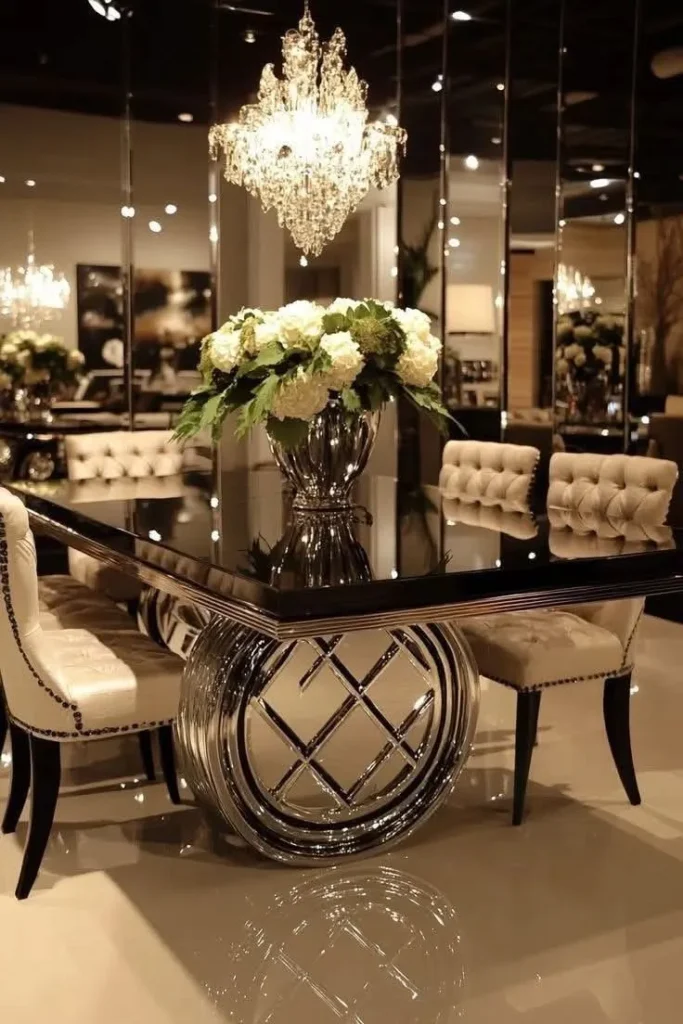
Drawbacks of Square Dining Tables
Square dining tables are not ideal for every room. The biggest limitation is that they can feel awkward in narrow dining rooms, where the equal sides compete with a long room shape. In those spaces, a rectangular or oval table often improves flow.
Another drawback is seating flexibility. A standard square table usually works best for four people, while larger seating counts often need extension leaves or a much bigger footprint. Without an extension, the table can become less comfortable as the number of guests increases.
Corners can also be a concern in tight layouts. Sharp edges may interrupt traffic flow more than a round or oval table, especially in compact homes with frequent movement through the dining area. That is why clearance planning matters so much.
Mini summary:
Choose a square table for symmetry, intimacy, and balanced rooms. Avoid it when the room is narrow, the traffic pattern is busy, or you regularly need to seat larger groups without an extension.
Square Dining Table Size Guide
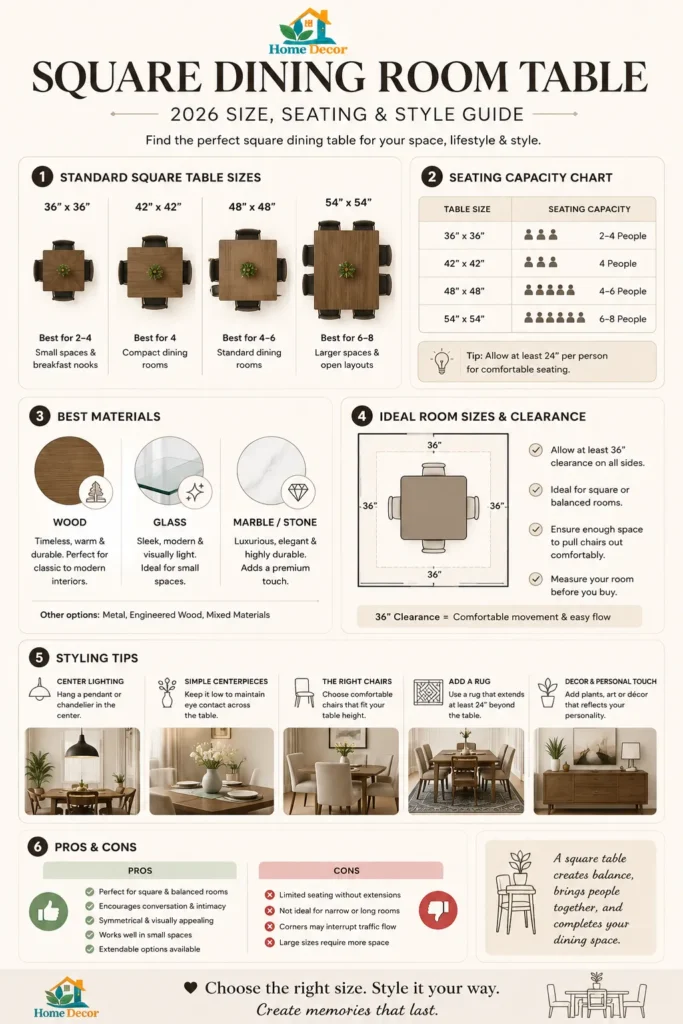
The safest way to choose the right table is to start with room size and seating needs, then check clearance. The Spruce notes that square dining tables commonly range from about 30 to 64 inches square, while practical shopping guides often place 36–48 inch tables in the 4-seat range and larger sizes in the 6–8 seat range, depending on chair design and layout.
Square Dining Table Seating Chart
| Table Size | Typical Seating | Best For |
| 30–36 inches | 2–4 | Breakfast nook, studio, very small dining space |
| 36–48 inches | 4 | Every day, families use compact dining rooms |
| 48–54 inches | 4–6 | Medium rooms, more comfortable elbow room |
| 54–64 inches | 6–8 | Larger square rooms, hosting open-plan areas |
| Extendable square table | 4–8+ | Flexible homes, occasional guests |
The exact number of seats depends on chair width, base style, and whether the table has leaves. Larger square tables or extendable designs can work well when the room is wide enough to preserve movement around the table.
Clearance Space Rule
A widely used recommendation is to leave at least 36 inches of space around the table so chairs can slide out and people can walk comfortably. Several design sources repeat this as the practical baseline for dining-room planning.
Simple measuring method
- Measure the full length and width of your dining area.
- Subtract at least 36 inches from each side for chair pull-out and walking space.
- Match the remaining footprint to the table size you are considering.
- Check whether chairs, rugs, or sideboards will reduce circulation.
- Reconfirm that the table shape suits the room’s proportions.
Mini summary:
For most buyers, the sweet spot is a 36–48 inch square table for four, a 48–54 inch square table for four to six, and an extendable model if the room must handle occasional guests. Keep the 36-inch clearance rule in mind before buying.
Square vs Round vs Rectangular Dining Table
| Shape | Best For | Seating Feel | Room Fit |
| Square | Balanced rooms, small groups, square dining spaces | Equal, intimate, conversational | Strong in square rooms |
| Round | Small spaces, casual dining, easier circulation | Soft, social, flexible | Good in compact or square rooms |
| Rectangular | Long rooms, large families, formal setups | Structured, traditional, scalable | Best in narrow or long rooms |
Design guidance consistently suggests that rectangular or oval tables suit long rooms, while square or round tables work better in compact or square-shaped spaces. That makes square tables a strong choice when proportion matters more than maximum seating.
Round tables usually win for flow, while square tables win for symmetry. Rectangular tables win when the goal is to seat more people in a long room. The right choice depends less on trend and more on how the room functions day to day.
Best Materials for a Square Dining Room Table
Wood
Wood is the most versatile choice because it feels warm, durable, and timeless. It suits modern, rustic, farmhouse, and transitional interiors, and it is usually the easiest material to live with over time. Solid wood can also age beautifully if cared for properly.
Glass
Glass makes a table feel visually lighter, which can be useful in smaller rooms. It is a Good Choice when you want the base or chairs to stand out and the room to feel less crowded. The trade-off is more visible fingerprints and more frequent cleaning.
Stone or Marble
Stone brings a more premium look and a solid feel. It works in luxury interiors, but weight, cost, and maintenance should be considered carefully. It is usually better for buyers who prioritize presence and durability over easy handling.
Metal or Mixed Materials
Metal bases and mixed-material designs work well in contemporary and industrial spaces. They often offer strong support and a sharper aesthetic, especially when paired with wood or glass tops.
| Material | Style Effect | Maintenance | Best For |
| Wood | Warm, classic, flexible | Moderate | Most homes |
| Glass | Light, modern | Higher cleaning | Small rooms |
| Marble/Stone | Premium, luxurious | Higher care | Statement spaces |
| Metal + Mixed | Modern, industrial | Varies | Contemporary interiors |
How to Choose the Right Square Dining Table
A good buying decision starts with the room, not the product photo. First, measure your dining area and decide how much walking space you need. Then choose the shape and size that keeps the room comfortable after chairs are pulled out. Design sources emphasize that poor scale is one of the most common dining-room mistakes, so size should always come before style.
Then think about the table’s daily job. A family table used every day needs a durable surface and an easy-care finish. A formal table used mainly for entertaining can be more decorative. If you host often, an extendable square table is one of the smartest options because it keeps the room neat day to day but expands when needed.
Buying checklist
- Measure the room first
- Keep at least 36 inches of clearance
- Check chair width and leg spacing
- Decide between fixed or extendable
- Match the material to the lifestyle
- Choose the base style that gives enough legroom
Square Dining Table Styling Ideas
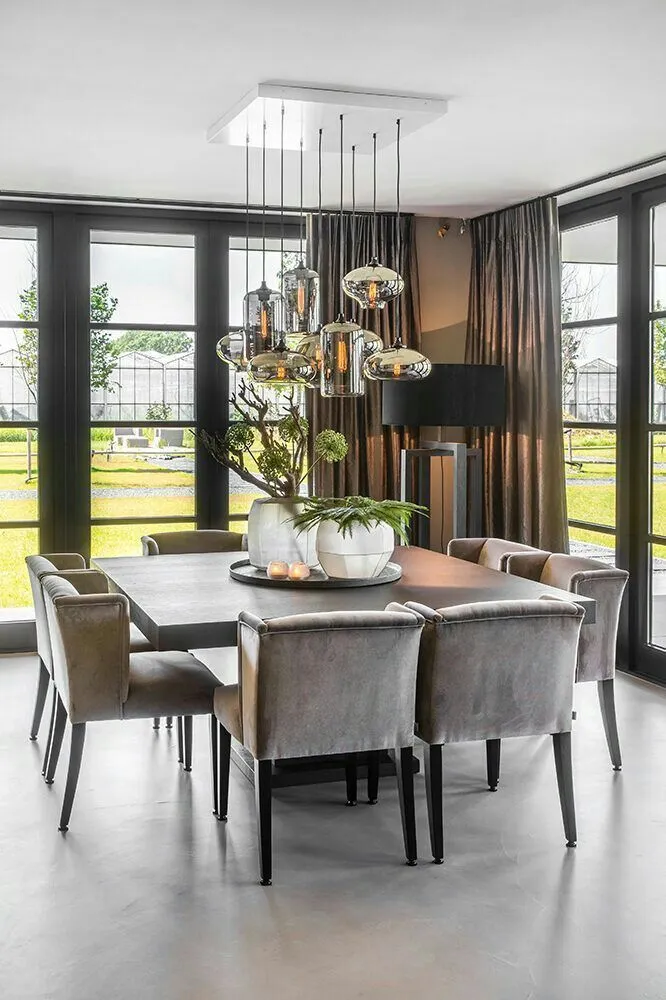
Styling matters because a square table looks best when the rest of the room respects its geometry. A centered pendant light, a balanced rug, and symmetrical chair placement all reinforce the shape cleanly. Designers also recommend avoiding cluttered tabletops, which can make the room feel smaller and less welcoming.
Styling ideas that work well
- Use a square or round rug that extends beyond the table edges
- Hang a pendant directly over the center of the table
- Keep the centerpiece low so sightlines stay open
- Mix chair materials for texture without losing balance
- Add a sideboard or console if storage is needed nearby
Small dining spaces benefit from intentional simplicity. Architectural Digest’s small-space guidance shows that compact dining areas feel better when they use smart lighting, balanced furniture, and thoughtful use of every inch.
Square Dining Table for Small Spaces
A square table can be excellent in a small space when the room itself is square or nearly square. The key is avoiding oversized dimensions and preserving enough clearance to move chairs comfortably. A table that is too large will make the room feel crowded very quickly.
For small rooms, a 30–36 inch square table is often enough for two to four people, especially if used as a casual dining or breakfast setup. If the room is multi-purpose, an extendable model gives more flexibility without permanently consuming floor space.
Best Uses for a Square Dining Table
A square table works especially well for:
- Everyday family meals
- Breakfast corners
- Small square dining rooms
- Open-plan dining zones that need visual balance
- Casual entertaining for four to six people
- Homes that want a more intimate seating setup
It is less ideal for:
- Narrow dining rooms
- Very large dinner parties
- Traffic-heavy spaces
- Homes that need flexible long-table seating regularly
Pros and Cons of a Square Dining Room Table
| Pros | Cons |
| Feels balanced and intimate | Can feel awkward in narrow rooms |
| Works beautifully in square spaces | Seating capacity is often limited |
| Encourages conversation | Sharp corners may affect the flow |
| Easy to style symmetrically | Larger versions need more floor space |
| Can be extendable | Not always the best for large gatherings |
This balance is why many buying guides recommend square tables for smaller groups and square rooms, but not as a universal solution. The right fit depends on how often you host, how much circulation space you have, and whether the room shape supports the table.
Common Buyer Mistakes to Avoid
- Buying by looks only
A beautiful table can still fail if it is too big or too small for the room. - Ignoring clearance space
Less than about 36 inches around the table often creates movement problems. - Forgetting chair width
Wide chairs can reduce usable seating even on a large table. - Choosing the wrong shape for the room
Square tables work best in square rooms, not long, narrow ones. - Overdecorating the tabletop
A crowded table can make the room feel tight and cluttered.
Expert Tips Most Buyers Ignore
A pedestal base often gives better legroom than bulky corner legs, Especially around a smaller square table. It can also make seating feel less restricted. Many shoppers overlook this detail and then wonder why the table feels cramped even when the measurements looked right.
Another overlooked point is visual balance. A square dining table looks best when the rug, lighting, and wall decor all support its geometry. In a well-planned room, the table should look like it belongs there, not like it was squeezed in at the last minute.
Buying Guide: What to Look For Before You Buy
Before you purchase, ask these questions:
- How many people do we seat daily?
- Do we need occasional extra seating?
- Is the room square, compact, or narrow?
- Do we want a fixed table or an extendable one?
- Which material best matches how we live every day?
Quality markers to check
- Stable base construction
- Smooth tabletop finish
- Durable joinery
- Easy-clean surface
- Good leg clearance
- Reliable extension mechanism, if applicable
Future Trends in Dining Tables
Current design coverage suggests continued interest in space-smart, adaptable dining furniture. That includes smaller footprint tables, extension options, mixed materials, and styling that works in multifunctional rooms. The broader trend is toward furniture that feels calm, intentional, and adaptable rather than oversized or overly formal.
FAQs
A typical square table seats four comfortably, while larger square or extendable models can seat six to eight, depending on the size and chair style.
A 36–48 inch square table is usually the most practical range for four people. It gives enough surface area without overwhelming the room.
Yes, especially in square rooms or compact dining areas. The main rule is to keep enough clearance around it so the room still feels easy to move through.
Square tables are better for symmetry and balanced rooms, while round tables are usually better for tighter circulation and softer visual flow. The right choice depends on the room shape and how you use the space.
Yes, but the table usually needs to be larger or extendable. A bigger footprint and enough chair clearance are essential for comfort.
Conclusion
A square dining room table is a smart choice when you want balance, intimacy, and a clean visual fit. It works especially well in square rooms, compact dining areas, and homes where conversation and everyday Comfort matter more than maximum seating. The key is choosing the right size, respecting the 36-inch clearance rule, and selecting a material that fits your lifestyle.
If you are shopping for a new table, start with room measurements first and style second. That one habit will save you from most buying mistakes and help you choose a table that feels right for years. Explore more related guides on TheLeatherItems.com for deeper buying advice, care tips, and furniture decisions that support a better home setup.
Legal disclaimer:
Leather quality, pricing, manufacturing standards, and product availability may vary by country, brand, and supplier. Always verify authenticity, material details, and care instructions before purchase.
