
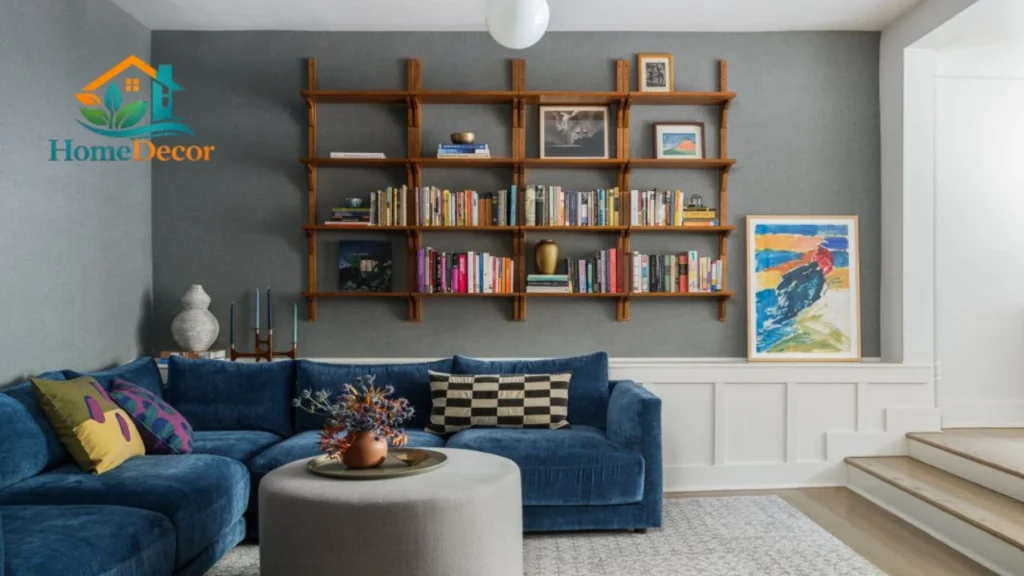
Introduction
Living Room Shelves do far more than hold books. They can turn an empty wall into a design feature, solve storage problems, and make a room feel more personal. In 2026, the best shelf setups are not just decorative; they are practical, easy to live with, and styled with intention. That is exactly why a strong living room shelves article has to cover more than “ideas.” It needs to explain which shelf type works best, how to choose the right material, where to place shelves, how to avoid clutter, and how to make the final result look finished rather than random. Google’s own guidance continues to favor helpful, reliable, people-first content, which means the pages that win are the ones that answer the real questions users have, not just the ones that look pretty.
That is the goal of this guide: to help you choose living room shelves that fit your room, your budget, and your style, while also giving you a clearer buying framework than the typical list-style article.
What Are Living Room Shelves?
Living room shelves are wall-mounted or freestanding storage and display systems used to organize books, decor, media accessories, plants, framed art, and everyday items. They can be minimal and nearly invisible, or they can become a strong visual anchor in the room.
The best living room shelves do three jobs at once:
They add storage without swallowing floor space.
They improve the room’s visual balance by filling empty wall space in a useful way.
Quick summary
Think of living room shelves as a mix of storage, styling, and structure. The strongest designs are not overloaded; they are planned.
Why Living Room Shelves Matter in 2026
Living room shelving has moved from “nice extra” to “core design feature.” A plain wall can feel unfinished, but the right shelving can make the whole room look intentional. Recent design coverage shows continued interest in built-ins, floating shelves, and open shelving as ways to add warmth, display, and visual lightness without crowding the room.
This matters because modern homes need more from every square foot. People want storage that does not feel heavy, and they want a display that feels curated instead of messy. Floating shelves are especially popular in small rooms because they take up less visual space than bulky cabinets, while built-ins are often used to make awkward walls, alcoves, and fireplace zones feel finished.
Practical takeaway
In 2026, the best shelf systems are lighter, smarter, and more intentional than before.
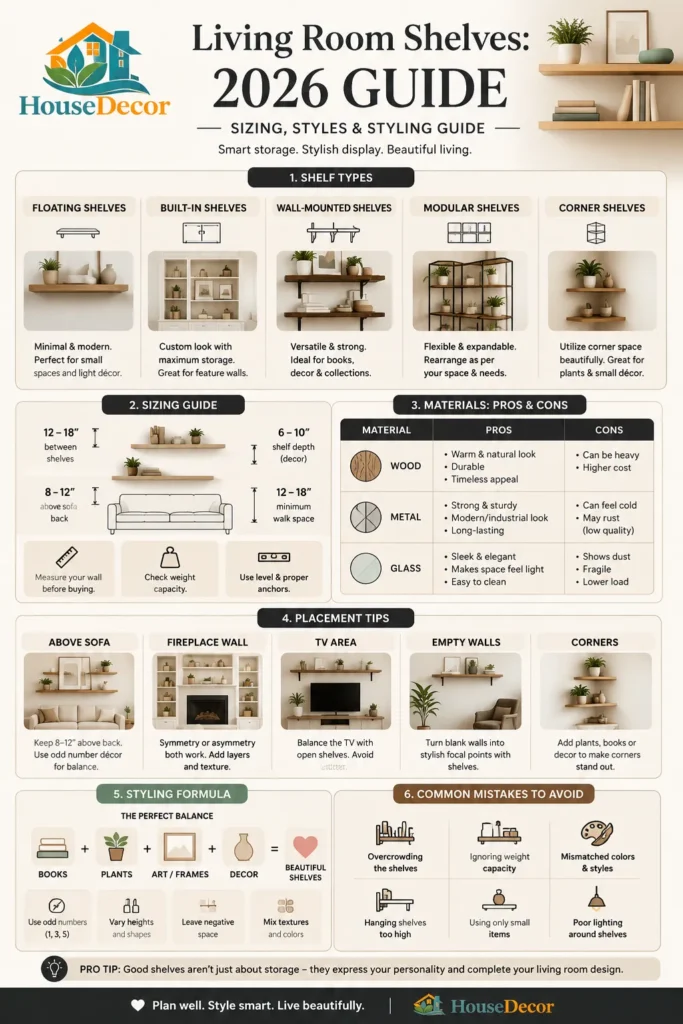
Types of Living Room Shelves
1) Floating Shelves
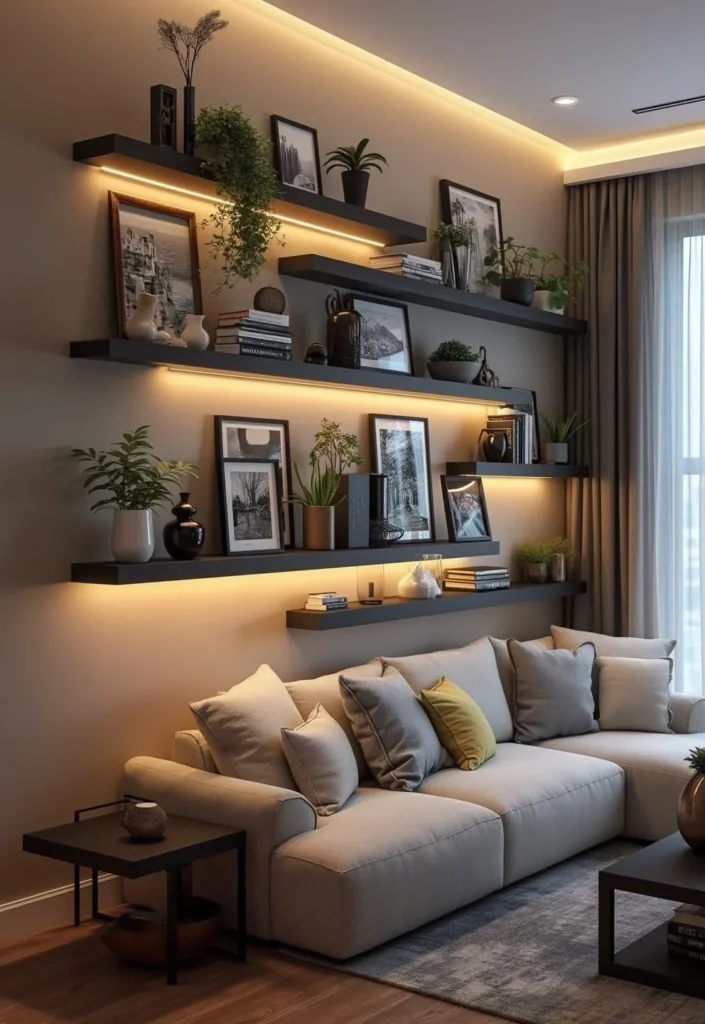
Floating shelves are wall-mounted shelves with hidden supports. They are minimal, modern, and easy to style. They work well above sofas, next to TVs, or on narrow walls where you want storage without bulk.
2) Wall Shelves with Brackets
These are more visible and often feel slightly more traditional or industrial. They are practical for heavier items if installed correctly, and they can suit rustic, farmhouse, or utility-focused interiors.
3) Built-In Shelving
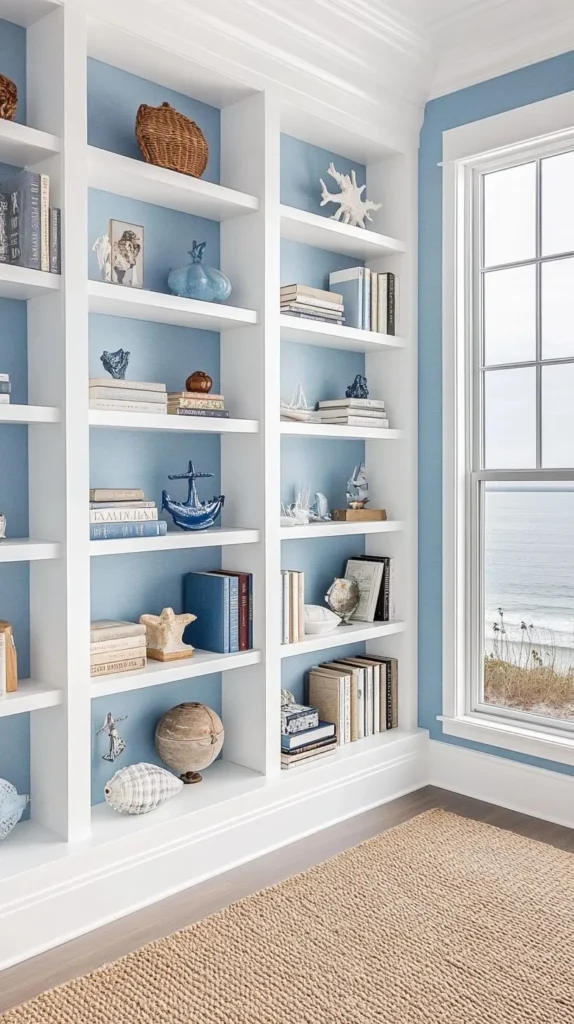
Built-ins are the most custom-looking option. They are ideal for fireplace walls, Media Walls, alcoves, and full-wall storage. Design coverage regularly shows built-ins used to turn empty walls into design features rather than leftover space.
4) Freestanding Bookcases and Display Units
Freestanding units are best when you want flexibility. They can be moved, replaced, or repurposed without wall drilling. They are also useful for renters.
5) Corner Shelves
Corner shelves help use dead space that usually goes unnoticed. They are useful in compact rooms or awkward layouts.
6) Modular Shelf Systems
These let you expand or rearrange the setup over time. They are ideal if your storage needs change often.
7) Media-Wall Shelves
These are designed around TVs and entertainment units. They often combine open display with closed storage for a cleaner look.
Comparison table: shelf types at a glance
| Shelf Type | Best For | Style Effect | Main Advantage | Main Drawback |
| Floating shelves | Small spaces, minimal interiors | Light, modern | Saves visual space | Lower load tolerance than many built-ins |
| Bracket wall shelves | Utility and decor | Versatile | Easy to install | Hardware is visible |
| Built-ins | Fireplaces, alcoves, feature walls | Custom, high-end | Maximum impact | Higher cost and less flexibility |
| Freestanding bookcases | Renters, changing layouts | Classic to modern | Portable | Uses floor space |
| Corner shelves | Tight or awkward corners | Space-saving | Uses dead space | Limited display area |
| Modular systems | Growing collections | Flexible | Expandable | Can look busy if overused |
Quick summary
Choose the shelf type based on space, weight, and style first. Do not start with looks alone.
How to Choose the Right Living Room Shelves
Decide the main job
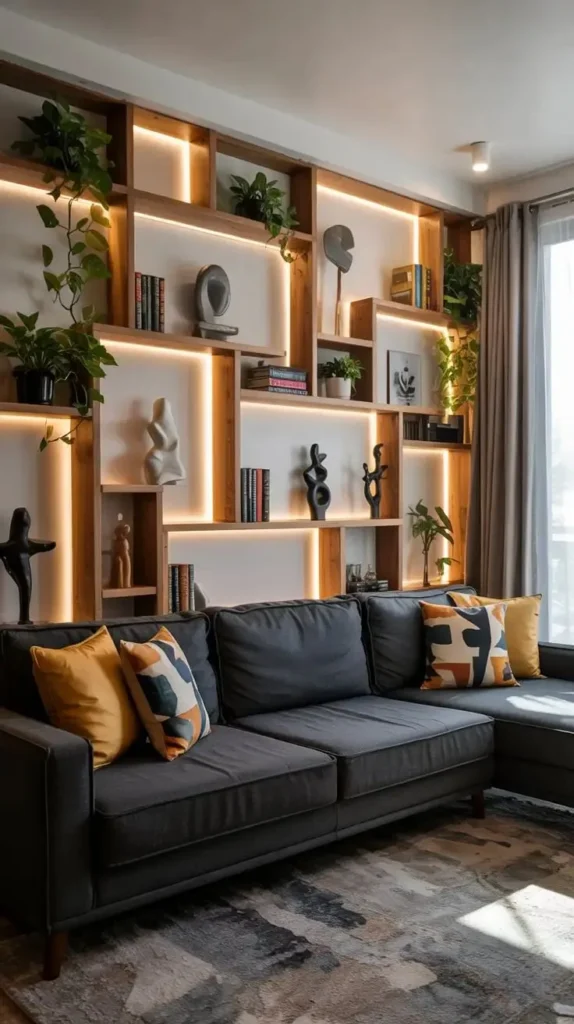
Ask what the shelves must do first. Are they for books, decor, media, plants, or a mix? Shelves meant for display can be lighter and more open. Shelves meant for storage need a stronger structure and better planning.
Measure the wall properly
Measure width, height, nearby furniture, and the amount of open space you want to leave around the shelves. A shelf looks wrong when it is either too tiny for the wall or so large that it dominates the room.
Match the shelf depth to the items
Shallow shelves work for framed art, small decor, and plants. Deeper shelves work better for books, storage bins, and larger objects.
Think about visual weight
A thick dark shelf can feel heavy. A slim floating shelf can feel airy. Your room needs the right balance.
Check the installation method
If the shelf holds anything heavy, secure anchoring matters. For built-ins or large systems, a professional may be worth the cost.
Match the shelf to your interior style
A rustic room usually works better with wood. A modern room may suit lacquer, glass, or slim metal. A transitional room can mix wood and metal.
Think long-term
The best shelf choice is one that still makes sense when your decor changes later.
Quick summary
The right shelf is not just the prettiest one. It is the one that fits your wall, weight needs, and lifestyle.
Materials Used for Living Room Shelves
Material choice changes the look, durability, and price of the shelf. It also changes how easy the shelf is to maintain.
Comparison table: materials
| Material | Best For | Strength | Look | Considerations |
| Solid wood | Premium homes, long-term use | High | Warm and natural | More expensive |
| Engineered wood / MDF | Budget projects | Moderate | Smooth and paintable | Can sag if overloaded |
| Metal | Industrial or modern rooms | High | Clean and strong | Can feel visually hard |
| Glass | Light, elegant displays | Moderate | Sleek and airy | Dust and fingerprints show easily |
| Wood + metal mix | Contemporary interiors | High | Balanced and versatile | Style depends on finish quality |
Quick summary
Material is where style meets function. Cheap material may save money now, but the wrong choice can sag, warp, or look dated fast.
How to Style Living Room Shelves Without Clutter
This is where many competitor articles are weakest. Good shelf styling is not about filling every inch. It is about creating rhythm, contrast, and Breathing room. Styling guidance from design sources consistently favors mixed objects, layered heights, and a restrained approach instead of clutter.
A simple styling formula
Use this pattern:
- Start with a few anchor items.
- Add books in small groups.
- Mix in one or two decorative objects.
- Add a plant or natural element.
- Leave open space on each shelf.
What works well on shelves
Books
Framed prints
Ceramic vases
Small sculptures
Candles
Plants
Baskets
Travel objects
Keepsakes
What makes shelves look messy
Too many tiny objects
Matching everything too closely
Filling every inch
Ignoring scale
Using only one material or one color
Hiding the shelf itself with clutter
Styling rule that almost always works
Use balance, not symmetry. Perfect symmetry can feel flat. Slight variation feels more natural and more expensive.
Quick summary
The best shelves look curated, not crowded. Leave room for the eye to rest.
Best Living Room Shelf Ideas by Use Case
Above the sofa
A single floating shelf or a pair of balanced shelves can add structure without overpowering the wall.
Around the TV
Use shelves to frame the screen and store media items, books, and decor. Keep the layout clean so the TV still feels like the focal point.
Beside the fireplace
Built-ins or asymmetric shelving can make the fireplace wall feel complete. This is one of the strongest applications for custom-looking storage.
In a small living room
Use floating shelves, shallow ledges, or vertical modular systems. These are popular because they add storage without feeling bulky.
In a rental
Choose freestanding units, tension-based systems where suitable, or lightweight wall shelves only if drilling is allowed.
In corners
Corner shelves can turn dead space into display space, especially for plants or small decor.
For a minimalist room
Use fewer shelves, bigger objects, and more negative space.
How to Buy Living Room Shelves: A Smart Buyer’s Guide
Before buying, ask these questions:
Does the shelf need to hold books or only decor?
Will it be wall-mounted or freestanding?
Do I want a temporary or permanent solution?
How much visual weight can this wall handle?
Will this shelf still fit my room if I rearrange the furniture later?
Buying checklist
- Measure your wall and furniture first
- Confirm load capacity
- Check the mounting hardware
- Match the finish to your room
- Decide if you need open or closed storage
- Think about dusting and maintenance
- Check assembly difficulty before buying
Pricing expectations
Prices vary a lot by market, material, and finish. In general, simple, ready-made shelves are the cheapest, freestanding units sit in the middle, and custom-built-ins are the most expensive. Current cost guides show that custom-built-ins can rise quickly depending on materials and labor, while mass-market floating shelves can stay relatively affordable.
Rough price bands
| Category | Typical Positioning | What You Usually Get |
| Budget shelves | Entry-level | Basic materials, simple finishes, limited load capacity |
| Mid-range shelves | Best value | Better hardware, stronger structure, more design choices |
| Premium shelves | Design-led | Better wood, better finishing, stronger visual appeal |
| Custom built-ins | Highest-end | Full room fit, tailored dimensions, professional labor |
Quick summary
Buy for the room you actually have, not for the styled room you saw online.
Pros and Cons of Living Room Shelves
Pros
They save floor space.
They add storage and display at the same time.
Cons
Poorly planned shelves can look cluttered fast.
Cheap materials may sag or warp.
Built-ins are costly and permanent.
Heavy items need proper installation.
Open shelves collect dust.
Quick summary
Shelves are worth it when the design is intentional. They become a problem when they are treated as last-minute decor.
Common Mistakes to Avoid
1) Buying before measuring
This is the fastest way to end up with shelves that feel too small or too dominant.
2) Ignoring load capacity
A shelf made for decor is not the same as a shelf meant for books.
3) Overfilling every shelf
Clutter kills the look. Good shelf styling needs negative space.
4) Choosing a finish that clashes
A beautiful shelf can still look wrong if its finish fights the room.
5) Forgetting maintenance
If you hate dusting, open shelving may not be your best choice.
6) Using the same object size everywhere
Repeating only small items or only tall items makes the shelf feel flat.
7) Treating shelves as pure storage
The best shelves do both: they store, and they decorate.
Care, Cleaning, and Maintenance Tips
Dust shelves regularly, especially open shelves and glass.
Use the right cleaner for the material.
Avoid overloading long spans.
Check wall anchors and brackets periodically.
Re-style the shelves once in a while so they stay fresh.
If you have wood shelves, keep them away from constant moisture and use soft cloths instead of harsh cleaners. If you have painted MDF, avoid soaking the surface.
Quick summary
Good maintenance keeps shelves looking intentional instead of tired.
Future Trends in Living Room Shelves
The strongest trend is still the same one showing up in current design coverage: shelves that blend function and style. Built-ins remain attractive for feature walls, floating shelves remain popular for small spaces, and open shelving continues to work when it is styled with restraint. Recent examples also show more interest in “curated” shelves, where books, art, and decor are arranged to feel personal rather than overly staged.
What to expect next
More modular systems
More warm wood finishes
More built-in media walls
More mixed closed-and-open storage
More emphasis on curated styling over crowded display
FAQs
Yes, but only if the shelf is built well and installed correctly. For heavier books, choose stronger materials and shorter spans rather than a long, cheap shelf.
Use fewer items, better spacing, and a stronger mix of textures. Add books, art, and one or two natural elements, then leave breathing room.
Floating shelves and slim modular units are usually the best choices because they keep the room feeling open.
Not always. Symmetry can work in formal rooms, but a slightly varied layout often feels more natural and modern.
They can add design appeal and improve storage, especially when they look custom and fit the room well. They are strongest in key feature areas like fireplaces and media walls.
Conclusion
The best living room shelves are not the biggest ones or the most decorative ones. They are the shelves that fit the wall, support the right items, and make the whole room feel calmer and more complete. If you are choosing shelves for a small space, floating or modular designs are usually the Smartest. If you want the safest all-round choice, a well-made mid-range shelf with the right finish and correct installation is usually the best balance of style and value.
Use this guide as your buying filter: choose the shelf type first, the material second, and the styling last. That order will save money, reduce clutter, and give you a result that still feels good months later. For stronger topical authority, link this article to your other room-styling and storage guides, and keep expanding around shelf styling, wall decor, and living room organization.
Legal disclaimer: shelf quality, materials, installation standards, and pricing vary by country, store, and supplier. Always verify dimensions, load capacity, material details, and installation instructions before purchase.
