
Introduction
A Walnut Dining Room Table is one of those pieces that can quietly transform a home. It brings warmth, depth, and a premium look without feeling flashy. Black walnut, especially, has long been prized for furniture because of its rich brown heartwood, attractive grain, and natural resistance to decay and insects. That combination makes it more than a style choice; it is a practical long-term investment for daily dining.
In 2026, walnut remains popular because buyers want furniture that feels timeless, works in modern interiors, and lasts. Current collections from makers and retailers continue to feature walnut in mid-century, contemporary, extendable, round, and rectangular dining designs, which shows that the material still fits today’s lifestyle needs.
This guide covers everything a buyer actually needs: what walnut is, the difference between solid walnut and veneer, how to size a table correctly, which finish to choose, how to care for it, how to judge quality, what price ranges to expect, and which buyers should choose walnut over other woods. It is written to help readers make a confident purchase and stay on the page longer because the answer is finally complete.
What Is a Walnut Dining Room Table?
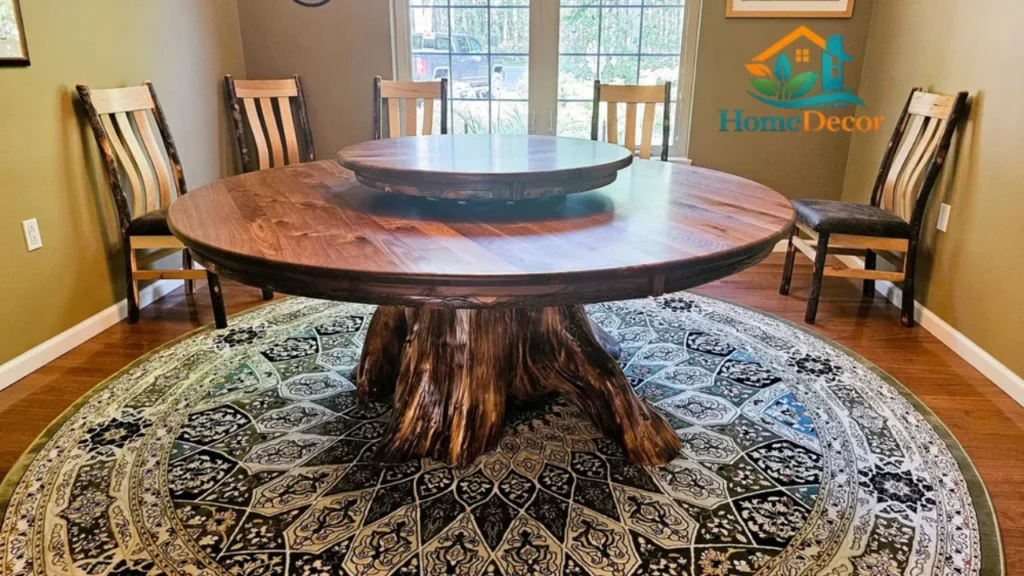
A walnut dining room table is a dining table made from walnut wood or walnut-faced construction. In furniture language, “walnut” often means American black walnut or a walnut veneer over another core material. The best-known species, Juglans nigra, is famous for its rich brown color, smooth grain character, and strong reputation in fine furniture. Historically, it was used not only for furniture but also for paneling, gunstocks, and other premium woodworking projects.
Walnut stands out because it sits in the middle of beauty and durability. It is not the hardest domestic hardwood, but it is sturdy, stable, and attractive. The Wood Database describes black walnut as a premium domestic hardwood with good dimensional stability and shock resistance, while also noting that it finishes well and is widely available. That makes it a strong choice for a dining room table that sees daily use.
Why Walnut Still Matters in 2026
Walnut has not gone out of style because it solves three problems at once: it looks expensive, it feels warm, and it holds up well. Buyers in 2026 want furniture that can work in a modern apartment, a family dining room, or a larger entertaining space without looking dated. Current retailer pages still position walnut as a modern and mid-century favorite, not a niche antique look.
Walnut also matters because people are thinking more carefully about longevity. A well-made walnut dining table can last for years, and that reduces replacement cycles. That long-use value is part of why walnut remains a premium domestic hardwood in the market.
History and Evolution of Walnut Dining Tables
Black walnut has a long woodworking history in North America. Purdue Extension describes it as one of the most famous hardwood species, valued for its lustrous brown heartwood and its use in furniture and other fine woodworking applications. It was also used historically for construction purposes because of its natural resistance to decay and insects.
Over time, walnut moved from being a serious cabinetmaker’s wood to a mainstream premium dining-room choice. Today, it appears in modern rectangular tables, round pedestal tables, extendable designs, and Scandinavian-inspired pieces. That evolution matters because the material now serves both classic and contemporary interiors.
Types, Styles & Variations You Should Know
1. Solid Walnut Dining Tables
These are made from solid walnut boards, not just a walnut-colored surface. They are typically the best choice for buyers who want long service life, repairability, and the most authentic wood character. Solid walnut is also the most premium route in both feel and price. The Wood Database notes walnut’s strong workability and premium Domestic Status, which helps explain why it is used in higher-end furniture.
2. Walnut Veneer Dining Tables
Walnut veneer means a thin layer of walnut over another substrate. This can lower cost and improve material efficiency, but it changes repair options and long-term durability. Competitor content often mentions veneer only briefly; that is a gap worth exploiting because buyers need to know exactly what they are paying for. West Elm’s product pages, for example, openly label some walnut tables as walnut veneer over engineered wood.
3. Extendable Walnut Dining Tables
Extendable tables are ideal for families and hosts. They allow a smaller everyday footprint with extra seating when needed. Current listings from major furniture brands continue to highlight extendable walnut options because this format solves a real space problem.
4. Shape Options
Rectangular tables are the most common for long rooms and larger gatherings. Round tables improve conversation flow and work well in compact spaces. Oval tables soften the look of a rectangle while preserving more seating. That shape logic is echoed across current size guides and retailer pages.
Walnut vs Oak vs Maple: Which Is Better?
Walnut is often chosen for beauty and warmth, while oak and maple are often chosen for hardness and a different visual character. On the Janka hardness scale, black walnut is about 1,010 lbf, red oak is about 1,220 lbf, and hard maple is about 1,450 lbf. That means walnut is generally softer than oak and maple, but it still performs well as a dining table material when properly finished and cared for.
| Wood | Janka Hardness | Visual Character | Practical Take |
| Walnut | 1,010 lbf | Rich brown, elegant grain | Best for warmth and premium style |
| Red Oak | 1,220 lbf | Bold, open grain | Better hardness, more rustic visual texture |
| Hard Maple | 1,450 lbf | Light, tight grain | Very hard and durable, but lighter in tone |
Walnut’s grain sits visually between oak and maple. Purdue Extension notes that its pore structure and grain character fall between the grainy feel of oak and the more uniform texture of maple. That gives walnut a refined look that many buyers prefer for a dining centerpiece.
Mini summary
Choose walnut if you want warmth and premium character. Choose oak if you want a bolder, more rustic look. Choose maple if hardness and a lighter appearance matter more than dramatic color.
Walnut Dining Table Size Guide for Real Homes
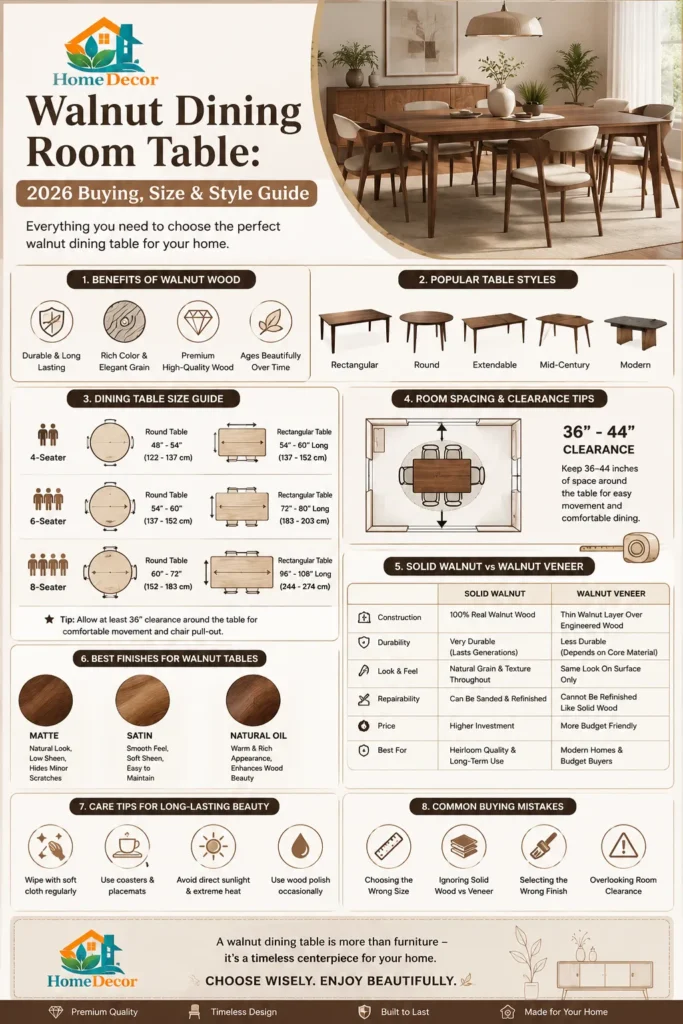
A walnut table only works if it fits the room. A beautiful table that crowds the chairs will feel wrong fast. Current dining guides consistently recommend generous clearance around the table, with about 36 inches / 90 cm minimum as a practical baseline and 42–48 inches for more comfortable movement in busier rooms. Noyer specifically recommends at least 90 cm of free space around the table, while other current guides reinforce the same principle.
| Seats | Common Table Size | Best Shape | Notes |
| 4 | 36–48 in round or square | Round/square | Best for compact dining areas |
| 6 | 60–72 in rectangular | Rectangular / oval | Most versatile family size |
| 8 | 84–96 in rectangular | Rectangular / oval | Needs a larger room and better clearance |
| 10–12 | 108–144 in long rectangular | Rectangular / oval | Best for formal rooms and entertaining |
A useful planning rule from current guides is about 60 cm of table space per person and at least 90 cm around the table for movement. If armchairs or bulky upholstered chairs are part of the plan, the allowance needs to go up.
Quick room-planning method
- Measure the room’s usable floor area.
- Subtract at least 36 inches on each usable side.
- Tape the table footprint on the floor.
- Check chair pull-out space.
- Walk around it before buying.
Walnut Dining Table Finishes Explained
The finish changes how the table looks, how it ages, and how much maintenance it needs. Competitor pages mention finish only briefly, but buyers actually need the breakdown before they spend money.
| Finish | Look | Best For | Maintenance |
| Matte | Soft, natural, low shine | Everyday modern homes | Low to moderate |
| Satin | Balanced sheen | Most family homes | Low |
| Gloss | Reflective, formal | Statement spaces | Shows fingerprints and dust more easily |
| Oil | Deep, warm, natural feel | Wood lovers, artisanal pieces | Needs periodic refreshing |
| Lacquer/polyurethane | Stronger surface protection | Homes with heavy daily use | More protective, but less “raw wood” feel |
If you want the most forgiving look, satin or matte is usually the safest everyday choice. If you want the richest wood tone, oil finishes often show walnut beautifully, but they require more discipline over time.
How Walnut Dining Tables Are Made
A good walnut table does not start with the finish. It starts with the wood selection, moisture control, board matching, joinery, and tabletop construction. Good makers select boards with thoughtful grain flow and use stable construction methods so the table does not warp or split as the seasons change. Walnut’s natural stability is one reason it is so valued in furniture-making.
What to inspect before buying
- Board thickness and edge quality
- Even grain matching across the top
- Solid joinery in the base and apron
- Finish quality on edges and underside
- Evidence of sound seasonal wood movement allowances
- Whether the top is solid walnut or veneer over core material
How to Tell Real Walnut from Veneer or a Fake Walnut Finish
Buyers often say they want walnut, but what they really want is the look of walnut. Those are not always the same thing. A table can be walnut veneer, stained to look like walnut, or made from another species entirely with a walnut finish. That is why product pages should clearly show the Construction.
Practical checks
- Ask whether it is solid walnut, veneer, or walnut-finish over another wood.
- Look at the underside and table edges for layer lines or core material.
- Check if the seller names the species as Juglans nigra or only says “walnut color.”
- Ask whether the piece can be refinished.
- Verify the finish type and warranty.
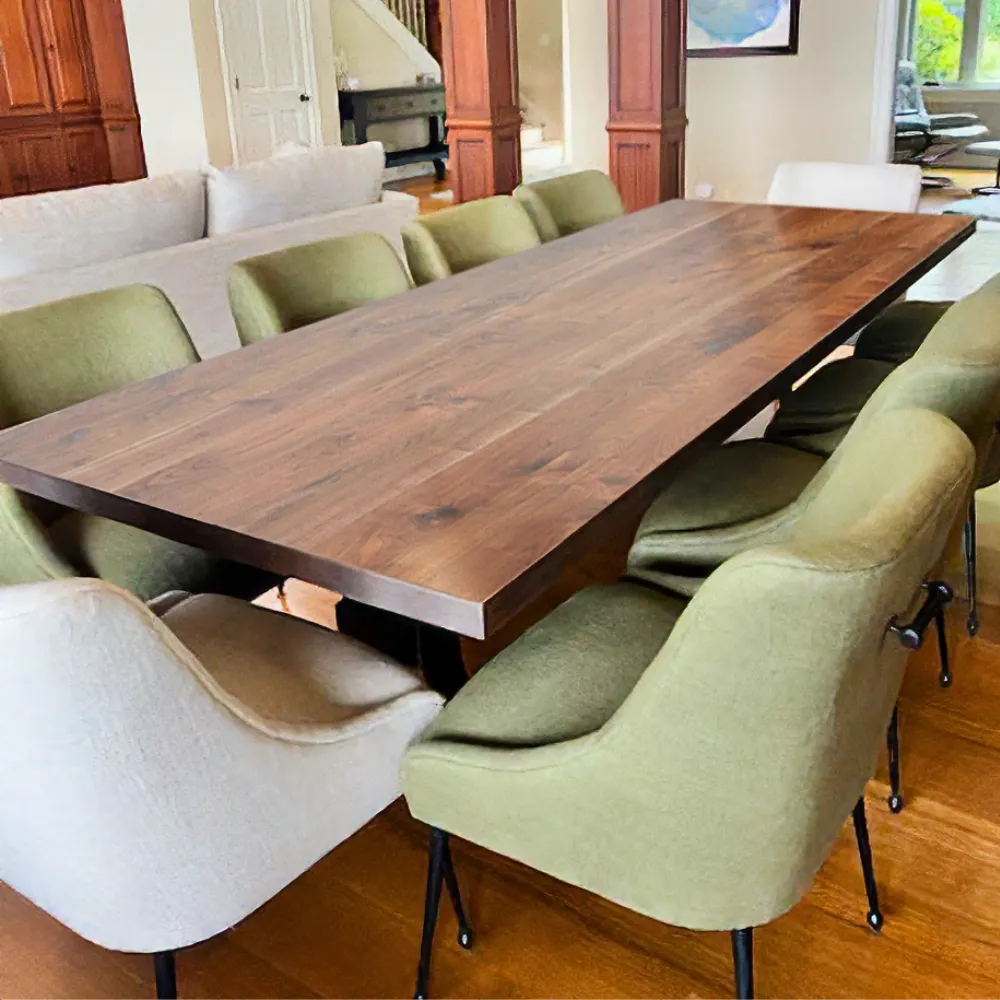
A real, solid walnut table usually has more weight, more grain variation, and better repair potential. Veneer can still be a good purchase, but only when the buyer understands the tradeoff. That distinction is one of the strongest content gaps to target in your article.
Complete Buying Guide: How to Choose the Right Walnut Dining Room Table
Step 1: Start with your room
Measure the actual floor area, not the fantasy layout in your head. Good guides consistently stress clearance and movement space, because a table that technically fits can still feel wrong if chairs cannot pull out comfortably.
Step 2: Choose the right shape
Round tables work best for smaller rooms and conversation. Rectangular tables are best for long rooms and formal seating. Oval tables give a softer look while keeping more seats than a round table. Current retailer guides keep returning to these same shape-use patterns because they match real dining behavior.
Step 3: Decide between solid walnut and veneer
Choose solid walnut if you want the best longevity, refinement, and refinishing potential. Choose veneer if you want a lower price point or a lighter structure, and you are comfortable with some trade-offs in repairability. West Elm and other retailers clearly separate these build types in product descriptions, and buyers should do the same.
Step 4: Pick a finish that matches your lifestyle
Families with daily use often do better with satin or lacquered surfaces. Design-focused buyers sometimes prefer oil finishes because they show walnut’s tone more naturally. The best finish is the one you can actually maintain.
Step 5: Check the base and chairs
DutchCraft’s advice about matching chair style to the table is useful: the base and chair proportions matter as much as the tabletop itself. If the base is too bulky, it can make the seating feel cramped.
Step 6: Ask for the material story
Ask where the walnut comes from, whether it is sustainably sourced, and whether the product is FSC-certified if that matters to you. Some current product pages already highlight responsibly managed wood and kiln-dried construction, which shows how important this has become in the market.
Buying checklist
- Room size measured
- Seating count decided
- Shape chosen
- Solid vs veneer confirmed
- Finish selected
- Base clearance checked
- Return policy and warranty reviewed
- Care requirements understood
Best Uses of a Walnut Dining Table
Walnut works especially well in homes that want a warm, grounded centerpiece. It fits mid-century rooms, modern minimal spaces, transitional interiors, and even more formal dining rooms. That versatility is one reason so many current collections still offer walnut across multiple styles.
It is also a strong choice for:
- Family dining rooms
- Open-plan kitchens
- Entertaining spaces
- Design-forward apartments
- Heirloom-style homes
Worldwide Price Ranges for Walnut Dining Tables
Prices vary a lot by country, size, build, and whether the table is solid walnut or veneer. Current market examples show walnut dining tables starting around the mid-hundreds and rising into the several-thousand-dollar range for handmade or premium pieces.
| Price Band | Typical Market Example | What You Usually Get |
| Budget | about $500–$1,200 | Smaller or simpler tables, often veneer or mixed construction |
| Mid-range | about $1,200–$3,000 | Better materials, stronger design, more size options |
| Premium | about $3,000–$6,000+ | Handmade, solid walnut, custom sizing, or extension systems |
These are observed examples, not fixed global rules. A buyer in Pakistan, the US, the UK, or Europe will see different pricing because of shipping, labor, timber source, and retail model.
Best Countries and Brands Known for Walnut Dining Tables
A useful angle for topical authority is to show where walnut furniture is commonly sold and which brands are currently visible in search. Current examples include Noyer in Denmark, Tom Faulkner in the UK, Stickley, Vermont Woods Studios, DutchCraft Furniture, West Elm, and Article in the US market. That gives readers real-world reference points without making the page feel like a generic brochure.
Budget-Friendly Options
Budget-friendly walnut tables usually aim for style and practicality first. A buyer in this category should pay close attention to build type, because the word “walnut” can describe a finish, a veneer, or a solid-wood product. Some current walnut listings on major marketplaces sit in the lower price bands while still offering attractive shapes and modern styling.
Budget buyers should prioritize:
- Stable construction
- Honest material labeling
- Easy-to-clean finish
- Smaller size that fits the room properly
Premium & Luxury Options
Premium walnut tables usually justify the price with better board selection, stronger joinery, custom dimensions, and a more refined finish. Handmade and custom pieces listed in the current market frequently sit above the mid-range and can climb above $5,000 depending on size and complexity.
This is where walnut really shines:
- Large, statement dining rooms
- Heirloom furniture buyers
- Design-conscious homeowners
- People who want a table that can be refinished later
Pros and Cons of Walnut Dining Room Tables
Pros
- Rich, elegant color
- Timeless design appeal
- Strong everyday performance
- Good stability and workability
- Ages beautifully with proper care
Cons
- Usually more expensive than many other woods
- Softer than hard maple and red oak
- Can show wear if abused
- Premium veneer vs solid confusion can mislead buyers
Common Buyer Mistakes to Avoid
- Buying by look alone. A beautiful walnut finish is not the same as solid walnut.
- Ignoring room clearance. The table may fit, but the chairs may not.
- Choosing the wrong finish. High-gloss surfaces look great but can show more marks.
- Forgetting chair proportions. Bulky chairs need more space per person.
- Skipping care planning. Walnut is durable, but it still needs sensible cleaning and protection.
Care, Cleaning & Maintenance Tips
Walnut care is straightforward, but it works best when done consistently. Furniture care guidance for walnut consistently recommends dusting with a soft cloth, cleaning gently with a lightly damp cloth when needed, avoiding harsh chemicals, protecting from direct sunlight, and using coasters or mats to prevent rings and scratches. Controlling humidity also helps preserve wood stability.
Simple care routine
- Dust weekly with a dry microfiber cloth
- Wipe spills immediately
- Use coasters and placemats
- Keep away from direct sunlight where possible
- Maintain stable indoor humidity
- Refresh the finish only as the manufacturer recommends
Walnut is durable, but that does not mean careless treatment is harmless. It looks best when buyers treat it like a long-term piece, not disposable furniture.
Expert Tips Most Buyers Ignore
- Check the table in natural daylight if possible, because walnut tone changes under warm indoor lighting.
- Look at the underside and edges, not just the top.
- Match the shape to the room flow, not only to the number of seats.
- If you entertain often, consider an extendable walnut instead of forcing a larger fixed table into the room.
- Ask whether the table can be refinished in the future. That is a major long-term value signal.
Who Should Buy a Walnut Dining Room Table?
Walnut is ideal for buyers who want warmth, sophistication, and a table that can live beautifully in the home for years. It is especially good for design-conscious homeowners, families who want a centerpiece with character, and buyers who value long-term furniture over quick replacements.
Who Should Avoid It?
A walnut dining table may not be the best choice for someone who wants the hardest possible surface, the lowest price point, or a look that is extremely light and bright. Buyers who expect zero maintenance should also look elsewhere, because all quality wood furniture needs basic care.
Future Trends in the Walnut Dining Table Market
Walnut will likely stay relevant because the market keeps rewarding timeless materials, cleaner silhouettes, and flexible dining layouts. Current product pages show continued interest in Extendable Tables, mid-century styling, responsible wood sourcing, and kiln-dried construction. Those are all signs that walnut is not just surviving as a material; it is adapting to modern expectations.
Suggested External Authority References and Where to Cite Them
Use these references inside the article where they fit best:
- Purdue Extension cites in the “what is walnut” and “history” sections because it explains black walnut’s heartwood, grain, decay resistance, and historic furniture use.
- The Wood Database is cited in the material comparison and durability sections because it gives the Janka context, stability, workability, and premium domestic hardwood framing.
- Tom Faulkner / Art Dei Marmi / Noyer cite in the sizing and clearance sections because they provide current dining-room space rules and table-size logic.
- Modena Mobilia is cited in the care section because it gives practical cleaning, humidity, and sunlight advice.
- West Elm / Article / Stickley / DutchCraft cite in style and trend sections because they show what contemporary walnut tables look like in the market right now.
FAQs
Yes. Walnut is a premium hardwood choice with rich color, stable performance, and strong visual appeal. It is slightly softer than oak and hard maple, but it remains an excellent material for dining tables when properly finished and cared for.
A rectangular or oval table around 60–72 inches is usually a strong starting point, with about 36 inches of clearance around the table for comfortable use.
Solid walnut is usually better for long-term durability, repairability, and resale value. Veneer can still be a smart buy if the core construction is strong and the price makes sense.
Use a soft cloth, clean spills quickly, keep the table out of harsh sunlight when possible, use coasters and placemats, and avoid harsh cleaners or abrasive pads.
Walnut is a premium domestic hardwood with desirable color, good workability, and strong visual character. Handmade construction, custom sizing, and solid-wood builds push the price higher.
Conclusion
A walnut dining room table is a smart choice when you want beauty, warmth, and long-term value in one piece. It works especially well for buyers who care about design but still want everyday function. The best walnut table is not just the prettiest one; it is the one that fits the room, matches the family’s Lifestyle, and is built with honest materials and sensible construction. Black walnut’s rich heartwood, stable performance, and premium status explain why it keeps showing up in both classic and modern dining spaces.
