
Introduction
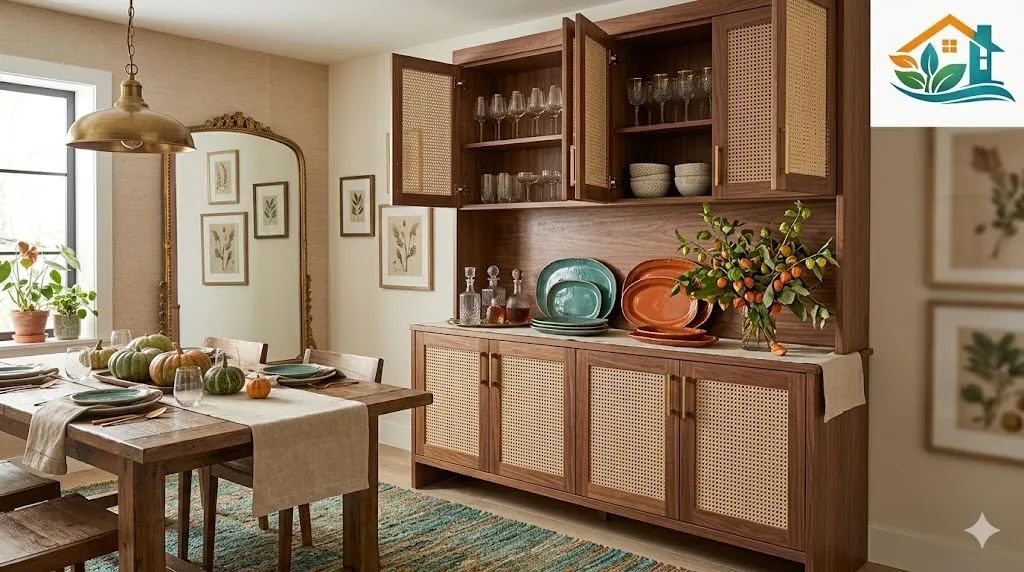
Dining Room Storage Cabinets are one of the most practical and value-rich furniture choices you can bring into a home. They do far more than hold dishes and table linens. The right cabinet can reduce visual clutter, organize daily essentials, support entertaining, and give the dining area a strong design anchor. In a small apartment, a well-chosen piece can create order without overwhelming the room. In a larger home, it can ground a blank wall and make the space feel intentional, finished, and visually balanced.
In 2026, homeowners are increasingly looking for furniture that combines beauty with utility. That means storage pieces are no longer just background furniture. They are multi-functional assets that shape how a room looks, feels, and performs. Sideboards, buffets, hutches, credenzas, and built-in cabinets are all part of that shift. They help people store dinnerware, glassware, serving bowls, table runners, candles, seasonal decorations, and even extra household items that would otherwise end up scattered around the home.
This guide is written for readers who want clarity, not fluff. It explains the major cabinet types, the difference between similar pieces, how to measure properly, how to match a cabinet to a room size, which materials make sense, how to style the top, and which mistakes create frustration later. It also uses a more search-friendly, semantic approach so the language covers the full intent behind the topic: storage, style, layout, buying decisions, room planning, and long-term usability.
A good dining room cabinet should do three things at once. It should look appropriate in the room, it should support real-life storage needs, and it should fit the available space without making movement awkward. When all three are working together, the dining room feels calm and easy to use.
What Are Dining Room Storage Cabinets?
Dining room storage cabinets are furniture pieces designed to store dining-related items while also contributing to the room’s visual identity. They may be low and wide, tall and vertical, open or closed, simple or decorative, modern or traditional. The exact form depends on how much you need to store and how much space you have available.
These cabinets often hold dinner plates, bowls, glassware, napkins, tablecloths, serving utensils, trays, candles, chargers, decorative objects, and party supplies. Some people also use them for books, board games, seasonal decor, or household overflow items. The goal is not simply storage for storage’s sake. The goal is a controlled organization that makes the room more useful and less chaotic.
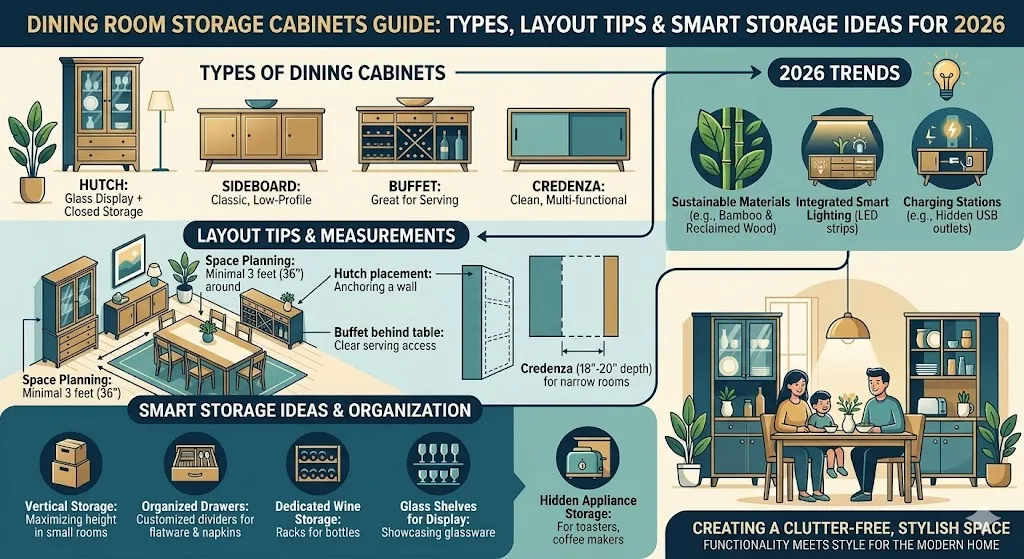
A sideboard is usually a long, low cabinet with drawers and doors. A buffet often has a similar shape but is especially useful for serving food and drinks. A hutch adds upper shelving or display sections above a lower storage base. A credenza is a sleek, often low-profile storage piece that fits well in contemporary interiors. Built-in cabinets are integrated into the wall or room architecture and are ideal when space needs to be maximized or a custom look is desired.
In real-world shopping, these terms overlap. Retailers often use them loosely, and many products combine elements from more than one category. That is why the most useful way to choose is not by name alone, but by function, scale, and room fit.
Why Dining Room Storage Cabinets Matter So Much
A dining room can look beautiful in photos and still feel disorganized in daily life. That happens when there is no dedicated place for the things used most often. A storage cabinet solves that problem by giving every item a home. It keeps the table available for meals, helps the room stay tidy, and reduces the visual noise that makes a space feel busy.
This is especially useful in homes where the dining room is not used only for formal meals. Many families use the dining area as a homework zone, craft area, gathering spot, gift wrapping station, or staging space for parties. A cabinet gives those activities a controlled storage point so the room can keep up with changing needs.
Dining room cabinets are also important because they can visually stabilize the room. A long wall with no furniture can feel empty, while the right cabinet adds balance and proportion. In a narrow room, a slimmer piece can offer storage without making the area feel cramped. In a larger room, a longer cabinet can create a strong horizontal line that helps the room feel more grounded.
The best storage pieces improve both function and atmosphere. They do not simply hold objects. They create a sense of order, intentionality, and calm.
Main Types of Dining Room Storage Cabinets
There are several common cabinet categories, and each serves a different purpose. Understanding the differences helps you choose a piece that matches your actual use case instead of just your style preference.
| Type | Best For | Storage Style | Space Fit | Main Advantage |
| Sideboard | Everyday dining storage | Low, wide, with drawers and doors | Medium to large rooms | Easy access and clean appearance |
| Buffet | Hosting and serving | Wide top with storage below | Dining rooms used for entertaining | Great serving surface |
| Hutch | Display plus storage | Upper shelves plus lower cabinet | Traditional and transitional rooms | Uses vertical space well |
| Credenza | Modern multipurpose use | Sleek, often closed storage | Open-plan or contemporary interiors | Minimal, polished look |
| Built-in cabinet | Custom storage needs | Wall-integrated storage | Small, awkward, or tailored layouts | Maximum efficiency |
A sideboard is one of the most flexible choices because it can store practical items while still functioning as a design feature. A buffet is especially helpful when you host often, because the top can work like a service station. A hutch is useful when you want a combination of display and hidden storage. A credenza often suits clean-lined modern rooms because it feels understated, compact, and orderly. Built-ins are best when the room needs precision, custom sizing, or full wall integration.
Sideboard vs. Buffet vs. Hutch vs. Credenza
Many buyers get stuck on the terminology, but the decision becomes much easier when you focus on use rather than labels.
A sideboard is typically the most adaptable choice for a typical home. It gives you a flat top for styling or serving and enclosed storage beneath for plates, bowls, and linens. It works in many room sizes and design schemes, which makes it a low-risk, high-value option.
A buffet is a strong choice for people who host dinners, holiday gatherings, or family celebrations. Its surface can support serving dishes, drinks, desserts, or decorative arrangements during mealtimes. If entertaining is a priority, a buffet can be more practical than a purely decorative piece.
A hutch is useful when you want storage that reaches upward rather than spreading outward. It lets you display items you love while still keeping less attractive essentials tucked away below. This makes it especially useful in rooms where wall space matters more than floor space.
A credenza usually feels more modern and streamlined. It is a good fit for rooms that need storage but should still feel airy and uncluttered. Because it often has a lower visual profile, it can blend well into minimalist or open-plan interiors.
A built-in cabinet is the most tailored solution. It is ideal for tricky wall layouts, small rooms with unusual dimensions, or homeowners who want a seamless custom look. Built-ins can feel elegant and highly efficient because they are designed around the room instead of forcing the room to adapt to the furniture.
How to Choose the Best Dining Room Storage Cabinets
The best cabinet is not the trendiest one. It is the piece that fits your room, your storage needs, and your lifestyle. A good decision usually comes from four practical steps: measure the space, define what you will store, choose the right material, and match the cabinet to the room’s proportions and style.
Measure the space first
Measurements are the foundation of a smart purchase. Before buying anything, measure the wall where the cabinet will stand, the dining table, the chair clearance, and the path people use to move through the room. A cabinet that looks perfect online can still be unusable if it blocks chair movement or squeezes the walkway too tightly.
You should think about the whole movement pattern of the room, not just the empty wall. Ask yourself whether the cabinet will interfere with chair pull-out space, whether the doors can open Comfortably, and whether the room will still feel open once the piece is installed. These practical details are what separate a good layout from a frustrating one.
In compact dining rooms, shallow or narrow cabinets often work better than deep, bulky ones. In larger rooms, there is more freedom, but proportion still matters. A piece that is too small can look lost, while a piece that is too large can dominate the room.
Match the cabinet to your actual lifestyle
Think in terms of use patterns. Do you entertain often? Then you may need drawers for flatware, shelves for serving dishes, and a surface that can double as a serving station. Do you mainly store everyday dishware and linens? Then, a closed cabinet with simple internal organization may be enough. Do you enjoy decorative styling? Then, glass fronts or open shelves may be more appealing.
A family that hosts holidays needs a different storage setup than a couple in a small apartment. A home that uses the dining room daily needs sturdier, easier-access storage than one that only entertains a few times a year. The best cabinet is the one that serves your actual habits, not a hypothetical ideal.
Choose the right material
Material choice affects durability, appearance, maintenance, and budget. Solid wood is a strong, long-term option and often feels more substantial. Durable metal can also be a smart choice in modern interiors or utility-focused spaces. Wood veneer and MDF can be practical,l lower-cost alternatives if the construction quality is good and the finish looks refined.
If the cabinet may be exposed to drinks, serving spills, or humidity, moisture-resistant finishes become especially important. Good hardware matters too. Hinges, drawer slides, and shelf support determine how the piece performs over time. A beautiful cabinet with weak construction becomes annoying quickly.
Pay attention to proportions
A cabinet should feel connected to the room, not dropped into it. Height, width, and depth all matter. A low sideboard on a huge wall may look underwhelming. A tall, heavy piece in a small room may feel overpowering. The ideal cabinet respects the dimensions of the room and complements the table, chairs, and surrounding architecture.
This is where many buyers make mistakes. They focus on style and forget scale. A dining room cabinet is not just a storage container. It is a visual object, and it needs to look intentional within the space.
Best Dining Room Storage Cabinets by Room Size
Different room sizes demand different design strategies. What works in a spacious formal dining room may not work in a compact apartment, and vice versa.
For small dining rooms
In a small room, the main objective is to gain useful storage without making the area feel crowded. A slim sideboard, narrow buffet, low closed cabinet, or compact hutch often works best. Pieces with lighter finishes, slimmer legs, and cleaner lines can help the room feel more open.
A shallow cabinet can still be highly effective if it is well organized. Small dining rooms often benefit from furniture with a lower visual weight, such as open bases, glass details, or pale wood tones. Keeping surfaces uncluttered also helps the room feel airier. The less visual bulk a cabinet creates, the more usable the dining room feels.
For medium dining rooms
Medium-sized dining rooms are often the easiest to furnish because they offer enough wall space for a substantial storage piece without feeling squeezed. This is the ideal setting for a standard sideboard, buffet, or credenza. You can also add styled artwork, mirrors, lamps, or decorative objects above the cabinet without making the wall feel crowded.
A medium room can support a single strong focal point, and a well-chosen cabinet is often that anchor. In this type of layout, balance matters more than minimalism. The cabinet should feel substantial enough to define the room but not so large that it dominates everything else.
For large dining rooms
Large dining rooms can handle long cabinets, wider buffets, full wall storage, or built-ins. In these spaces, furniture should help create structure. Otherwise, the room can feel empty or undefined. A longer cabinet helps ground the wall and makes the room feel complete.
In larger rooms, the cabinet may also act as a visual bridge between the dining table and other features such as artwork, mirrors, sconces, or pendant lighting. The best large-room cabinet does more than store items. It shapes the atmosphere of the entire space.
Design Ideas for Modern, Luxury, and Budget Homes
The right design style depends on the mood you want the dining room to create. Some spaces should feel clean and contemporary. Others should feel warm and elevated. Some should feel polished on a budget. A good cabinet can support all three directions.
Modern dining room storage cabinets
Modern dining rooms often work best with streamlined silhouettes, minimal hardware, warm wood finishes, and subtle texture. Handleless doors, fluted fronts, matte finishes, and mixed materials can create a fresh, updated look. Warm oak, walnut, soft black, and natural neutrals are especially effective because they feel current without becoming overly trendy.
A modern cabinet should feel calm and composed. It should contribute visual order, not compete for attention. Clean geometry, quiet detailing, and balanced proportions usually produce the best result.
Luxury dining room storage cabinets
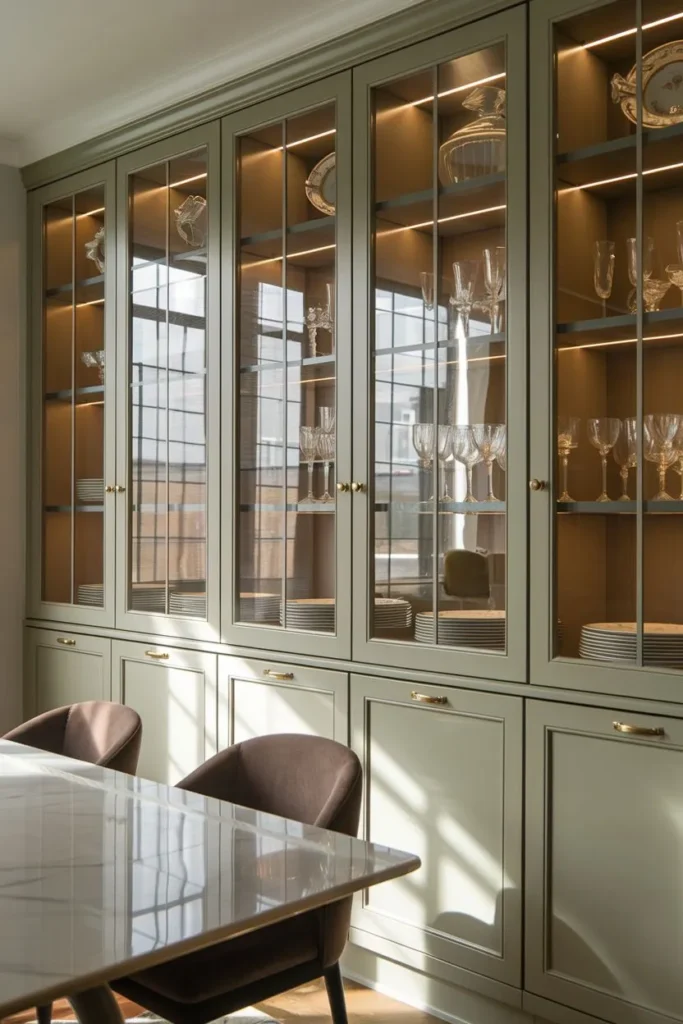
Luxury is not only about cost. It is about detail, finish quality, material richness, and visual harmony. A cabinet can feel upscale if it has elegant proportions, solid hardware, thoughtful lighting, and a refined finish. Walnut, dark wood, brass accents, and subtle curves often create a more elevated appearance.
Glass-front cabinets can also feel luxurious when styled carefully. The key is restraint. A few beautiful items displayed neatly are more powerful than shelves packed with too many objects. Luxury often reads as calm, deliberate, and uncluttered.
Budget-friendly dining room storage cabinets
A budget-friendly cabinet can still look sophisticated if the shape is good and the styling is intentional. You do not need the most expensive piece to create a polished dining room. Good proportions, a clean finish, and simple decorating can make even an affordable cabinet feel intentional.
MDF, veneer, and laminated finishes can work well when the overall build is sturdy. Upgrading handles, adding wall art, or styling the top with one lamp and one object can dramatically improve the finished look. A modest cabinet becomes much more attractive when the surrounding details are thoughtful.
Space Planning and Layout Tips for Dining Room Storage Cabinets
Space planning is one of the most important parts of buying a dining room cabinet, yet it is also one of the most overlooked. Many disappointing purchases happen because the cabinet was chosen for appearance instead of layout compatibility.
A helpful starting point is to think about the room as a flow system. People need to move around the table, pull out chairs, walk behind the cabinet, and open drawers or doors without friction. The furniture should support those movements, not interfere with them.
| Planning Question | What to Check |
| Will chairs still pull out easily? | Leave comfortable clearance around the table |
| Will the cabinet block traffic flow? | Maintain a clear walkway behind or beside it |
| Is the cabinet too deep? | Use shallower pieces in compact rooms |
| Will it overwhelm the wall? | Match the cabinet width to the wall proportion |
| Can it open fully? | Check the drawer and door swing in advance |
This kind of planning is practical, not theoretical. A beautiful cabinet that blocks movement becomes a daily annoyance. A more modest cabinet that fits the room well usually feels better and performs better over time.
Where to place the cabinet
The best locations are usually the longest clear wall, the wall behind the dining table if there is enough clearance, an alcove that benefits from built-in storage, or a serving zone in an open-plan layout. The right placement should make the room feel more useful and more balanced.
If the cabinet will sit behind the dining table, make sure the chair movement remains comfortable. If it will sit along a side wall, make sure it does not interrupt the natural path through the room. Placement should improve circulation, not create obstacles.
Where not to place it
Avoid blocking major pathways. Avoid placing tall furniture where it cuts off light or makes the room feel closed in. Avoid squeezing a large cabinet into a wall that already feels crowded. Avoid placing a piece where it visually clashes with the table or interrupts the room’s symmetry.
Good placement helps the room breathe. Bad placement makes even beautiful furniture feel inconvenient.
Color, Lighting, and Furniture Pairing Tips
A dining room cabinet is not isolated from the rest of the room. It interacts with the floor, table, chairs, wall color, natural light, and accessories. That is why color and lighting matter so much.
Color
Warm neutrals, soft wood tones, earthy shades, and muted darker finishes are all strong choices for dining rooms. Walnut, oak, greige, mushroom, muted green, cream, charcoal, and matte black can all work depending on the room’s mood and light levels. A finish that feels elegant in one home may feel too heavy in another, so it is wise to compare the cabinet to the surrounding materials before buying.
If the room already has a strong visual presence from the table or floor, a simpler cabinet color may create better balance. If the room feels plain, a richer finish can add depth and character. The best color choice is the one that supports harmony.
Lighting
Lighting can transform a cabinet from purely functional to genuinely beautiful. A lamp placed on top, a picture light overhead, or LED lighting inside a glass-front cabinet can make the piece feel more layered and premium. Lighting also helps display items that look intentional instead of dim and forgotten.
In rooms with limited daylight, Lighting becomes even more valuable. It softens the cabinet’s presence and makes the storage area feel welcoming rather than heavy. A well-lit cabinet can change the entire mood of the dining room.
Furniture pairing
Your cabinet should look coherent with the table and chairs. If the dining set has rustic warmth, a cabinet with an ultra-glossy finish may feel disconnected. If the table is clean-lined and contemporary, a heavily carved cabinet may feel visually mismatched. The best pairings are the ones that create dialogue between pieces rather than conflict.
Textures should also be considered. Smooth wood, woven accents, soft textiles, and metal details can all work together when the palette is controlled. The room feels more refined when each piece feels related.
Best Storage Organization Ideas for Dining Cabinets
A cabinet only stays useful when the internal organization is simple and intuitive. The aim is not perfection. The aim is easy access and sustainable order.
Organize by zone
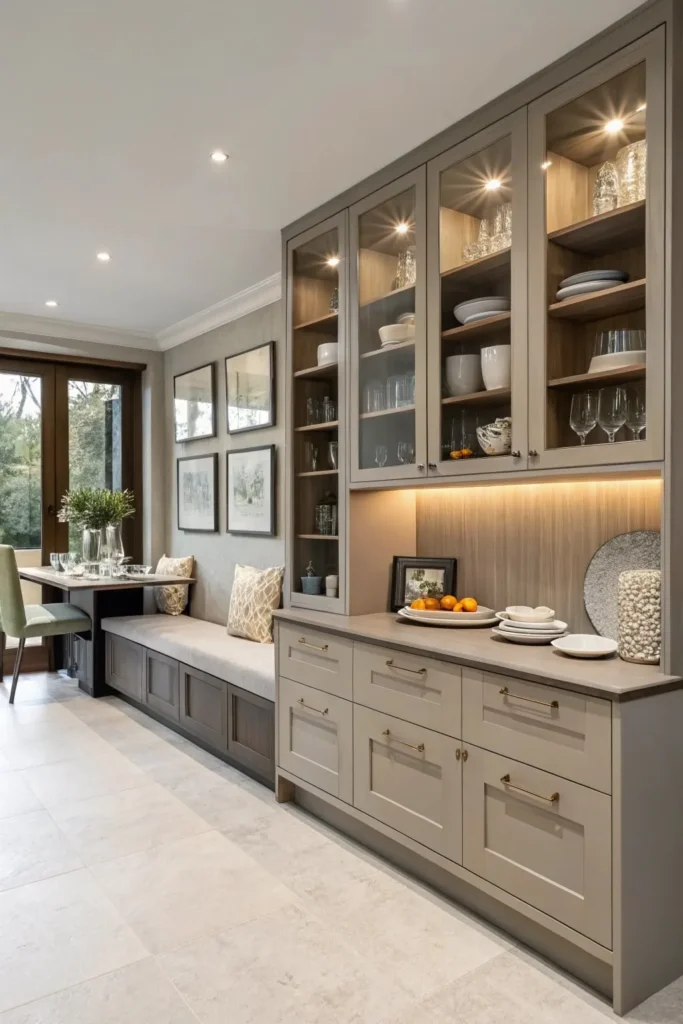
Divide the cabinet into practical zones. Keep everyday plates, bowls, and glasses in the most accessible areas. Store table linens, napkins, and runners together. Use one section for serving pieces. Place seasonal items, rarely used décor, or extra supplies higher up or farther back.
This makes the cabinet easier to maintain because each item has a logical home. Instead of searching through a random pile of objects, you know where each category belongs.
Use smart inserts
Drawer dividers, shelf risers, baskets, plate organizers, and small containers can dramatically improve the usability of the cabinet. They keep smaller items from shifting and make shelves feel structured rather than chaotic.
A well-organized cabinet saves time and reduces frustration. It also makes the room feel more polished because the storage system is working with you instead of against you.
Keep display and storage separate.
A common mistake is to mix decorative pieces with clutter. The result is visual confusion. A better approach is to keep the top lightly styled and the inside organized by category. If the cabinet has glass doors, only display items that are neat, useful, and visually consistent.
Restraint matters. A small number of attractive objects often looks better than a crowded display. The cabinet should feel curated, not overloaded.
Mistakes to Avoid When Buying Dining Room Storage Cabinets
Buying a cabinet can seem simple, but several common errors cause disappointment.
The first mistake is choosing for looks alone. A beautiful cabinet that cannot store what you need is not a good purchase. The second mistake is ignoring depth. A piece that is too deep can crowd the room and reduce movement. The third mistake is forgetting chair clearance and traffic flow. The fourth mistake is overdecorating the top so it feels messy rather than styled.
Another frequent error is mixing too many finishes in a small room. Too much contrast can make the space feel fragmented. A fifth mistake is choosing a cabinet style that clashes with the dining table. Furniture works best when it feels related, not random. A sixth mistake is failing to consider lighting, especially for glass-front pieces or dark finishes.
Scale is another major issue. A tiny cabinet on a long wall can feel stranded. A bulky cabinet in a compact room can feel oppressive. Proportion is one of the most important design principles in any dining room. When it is right, the room feels calm. When it is wrong, everything feels slightly off.
Pros and Cons of Dining Room Storage Cabinets
Every furniture choice has strengths and trade-offs. Knowing both sides helps you make a smarter decision.
Pros
They add storage without requiring a separate room.
They help reduce clutter and support a tidy dining area.
They can create a focal point and strengthen room design.
They work in small homes, large homes, and open-plan layouts.
They can support everyday use, hosting, and display all at once.
Cons
Poor sizing can interfere with movement.
Low-quality materials may wear out sooner.
Glass-front pieces require more styling discipline.
Large units can overwhelm a small dining room.
Trendy designs may feel dated sooner than classic shapes.
The benefits are strong, but only when the cabinet is chosen with real care. Function, scale, and maintenance all matter.
Maintenance, Care, and Durability Tips
A dining room cabinet should last for years, so basic maintenance is worth the effort. Dust it regularly, wipe spills quickly, and avoid letting moisture sit on the surface. Tighten handles and hinges from time to time so the hardware stays secure. Use felt pads under decorative items to prevent scratches.
Do not overload shelves beyond their intended weight. Store heavier items in stronger lower sections when possible. Keep the top lightly decorated so cleaning remains easy. Simple care habits preserve both the appearance and the function of the cabinet.
Material choice also affects maintenance. Solid wood and durable metal are often strong long-term options. Veneer and MDF can be perfectly workable if handled with care and kept away from excessive moisture. If you expect frequent use, invest in construction quality, not just visual appeal.
Smart, Modern, and Future-Ready Dining Storage Ideas
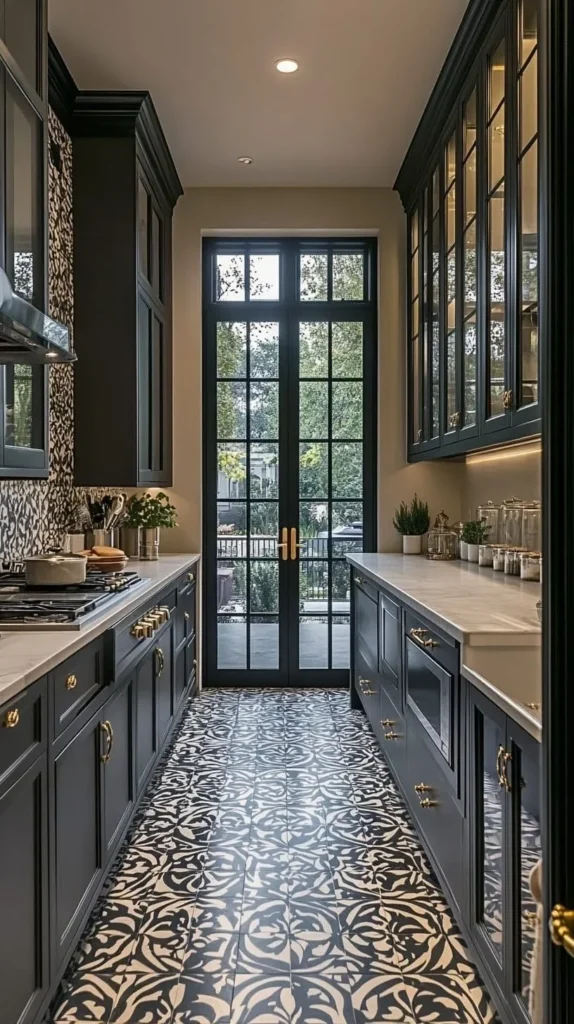
Smart storage does not have to mean technology-heavy storage. It can simply mean well-designed, adaptable, and Convenient storage. Adjustable shelves, soft-close hinges, built-in lighting, hidden cable channels, modular inserts, and multi-use tops all make a cabinet more responsive to daily life.
Future-ready furniture is valuable because household needs evolve. A cabinet that stores formal dinnerware today may need to hold school supplies, craft materials, or game accessories later. The more flexible the cabinet, the more useful it becomes over time. That is why adaptable storage tends to be a better long-term investment than a piece that looks impressive but has a narrow purpose.
In 2026, the strongest storage trends lean toward pieces that are visually calm, structurally useful, and capable of adapting to changing routines. A cabinet that balances design and flexibility is usually the smartest choice.
Best Dining Room Storage Cabinets by Use Case
Different buyers need different solutions. A good cabinet should reflect the way the room is actually used.
For everyday family use
Choose a sideboard with closed doors, easy-clean surfaces, and at least a few drawers. This gives you quick access to daily essentials while keeping the room tidy.
For entertaining
Choose a buffet or wide sideboard with a generous top surface. This supports serving platters, desserts, drinks, and decorative setups during gatherings.
For display lovers
Choose a hutch or a glass-front cabinet. This is ideal if you want to show off dishes, glassware, collectibles, or decor without making the space feel cluttered.
For modern minimal homes
Choose a credenza or a low cabinet with clean lines and closed storage. This keeps the dining room serene and visually quiet.
For custom or tricky rooms
Choose a built-in cabinet. It is the best option when the wall layout is awkward, the room is narrow, or you want the storage to feel integrated into the architecture.
Quick Pro Tips
Choose the cabinet after measuring the room, not before.
Let function guide the purchase as much as style.
Use closed storage for clutter and visible storage for curated display.
Match the cabinet finish with the table or floor for a calmer result.
In small rooms, lighter tones and slimmer silhouettes usually work best.
In larger rooms, longer cabinets can help anchor the wall visually.
FAQs
A sideboard is often the best all-round choice because it offers practical storage, suits many room sizes, and is easy to style. It works especially well for homeowners who want a balance of usefulness and visual simplicity.
A comfortable dining layout usually leaves 36 to 42 inches around the table, and the cabinet should never interfere with chair movement or traffic flow. It is best to measure the full room layout before buying so the piece fits naturally.
Yes. Hutches remain relevant because they combine display and storage in one piece, and that combination still appeals to homeowners who want furniture that is both attractive and functional. Their vertical form also makes them useful in rooms where floor space is limited.
You can store dishes, serving ware, glassware, table linens, trays, candles, and entertaining accessories. Many people also store books, board games, holiday items, and decorative objects inside.
Solid wood and durable metal are usually the strongest long-term choices. If budget matters more, veneer and MDF can still be suitable as long as the construction quality and finish are reliable.
Final Thoughts
Dining room storage cabinets are more than a place to put things. They are a design tool, an organization system, and a space-saving solution all at once. The best piece will not only store what you need but also improve how the room feels and functions every day. When you choose based on measurement, Lifestyle, material quality, scale, and room flow, the result is usually a more comfortable, attractive, and efficient dining space.
A well-chosen cabinet can make a dining room feel settled, organized, and complete. It can support hosting, simplify daily life, and add a refined visual anchor to the space. That is why this category deserves careful attention. The right choice will continue to pay off long after the purchase is made.
