
Introduction
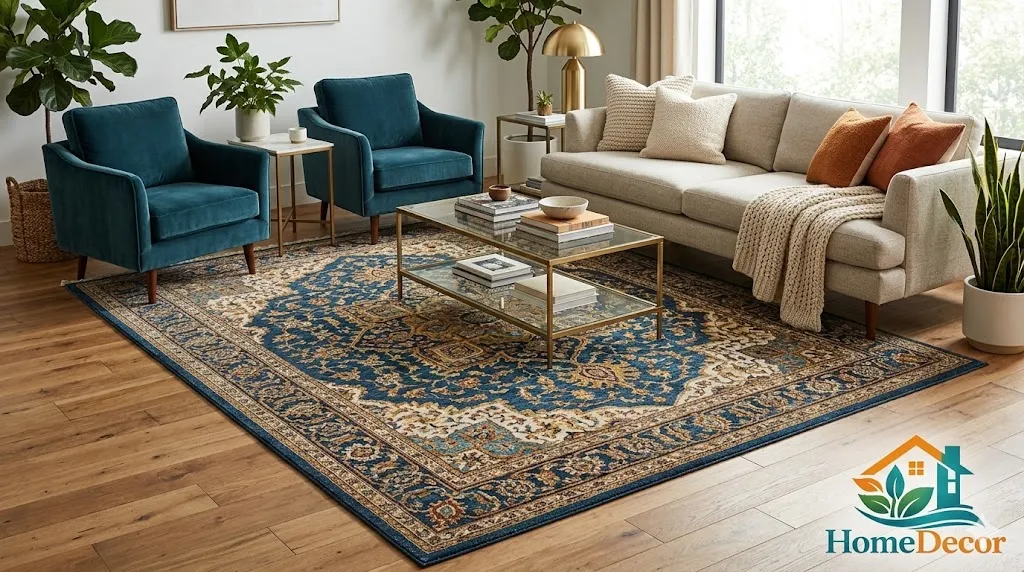
A living room can look finished on paper and still feel visually incomplete in real life. One of the most common reasons is the rug. When the rug is too small, the furniture feels scattered. When it is too large, the room can feel heavy or closed in. That is why 8×10 Living Room Rugs are such a practical and popular choice for many homes. This size often hits the sweet spot between proportion, comfort, and visual balance.
An 8×10 rug gives a seating area a clear foundation. It helps connect the sofa, chairs, and coffee table into one intentional arrangement, which improves the room’s overall spatial harmony. It also adds softness underfoot, introduces texture, and creates a stronger focal point without swallowing the floor. In interior design terms, it works as an anchor piece: a large visual element that organizes the rest of the room.
This guide breaks the topic down in simple English, but with enough detail to help you make a smart decision. You will learn what an 8×10 rug actually means in practical room layout terms, which room sizes it suits best, how far it should sit from the wall, which placement methods work well, what material choices make life easier, and how to avoid the most common sizing mistakes. You will also get style advice for modern, classic, cozy, and family-friendly spaces.
The goal is simple: help you choose an 8×10 living room rug that does more than fill space. A well-chosen rug should improve flow, create structure, support the furniture arrangement, and make the room feel calm, cohesive, and more polished.
What an 8×10 living room rug really does for a space
An 8×10 rug covers 80 square feet, which is enough surface area to create a real design presence in a living room. It is large enough to gather furniture into one seating zone, yet still flexible enough to leave visible flooring around the edges. That exposed border matters because it preserves openness and keeps the room from feeling boxed in.
In a living room, this rug size performs several jobs at once. It visually defines the conversation area, softens hard flooring, introduces color or pattern, and improves the feeling of warmth in the room. If the furniture is floating in a large space, an 8×10 rug gives the arrangement a center of gravity. If the room is medium-sized, it can make the layout feel deliberate rather than improvised.
Another important benefit is visual continuity. Many living rooms contain multiple elements: sofa, armchairs, coffee table, side tables, lamps, media console, artwork, and sometimes even a reading chair or ottoman. Without a strong base layer, those pieces can look disconnected. An 8×10 rug acts like a visual binder. It makes the space read as one complete composition instead of a collection of separate objects.
This is why 8×10 rugs are often recommended for standard living rooms and medium-sized family rooms. They are large enough to support common furniture groupings while still leaving enough room for circulation paths, door clearance, and breathing space around the perimeter.
Why 8×10 feels so balanced
The strength of an 8×10 rug comes from proportion. Interior design is highly dependent on scale, and the rug has to relate correctly to the sofa, chairs, table, and the size of the room itself. A rug that is too small creates visual tension. A rug that is too large can overpower the architecture. The 8×10 size often falls into the middle ground where balance is easiest to achieve.
It gives the eye a stable frame without creating visual pressure. That means the room feels grounded, but not dense. It supports the furniture without demanding all of the attention. In design language, that is a major advantage because it allows the rug to function as a foundation, not a distraction.
There is also a psychological effect. Rooms with properly scaled rugs tend to feel calmer and more organized. When furniture appears to be “floating” with no connection, the mind reads the space as less settled. A correctly sized rug creates coherence. It signals that the seating area belongs together. That sense of order can make even a simple living room feel more expensive and more thoughtfully designed.
Many people underestimate how much a rug’s size affects the mood of a room. An 8×10 rug can make a space feel more inviting, more complete, and more intentional without requiring a full redesign. That is why it remains one of the most dependable size choices for everyday living rooms.
How big is an 8×10 rug?
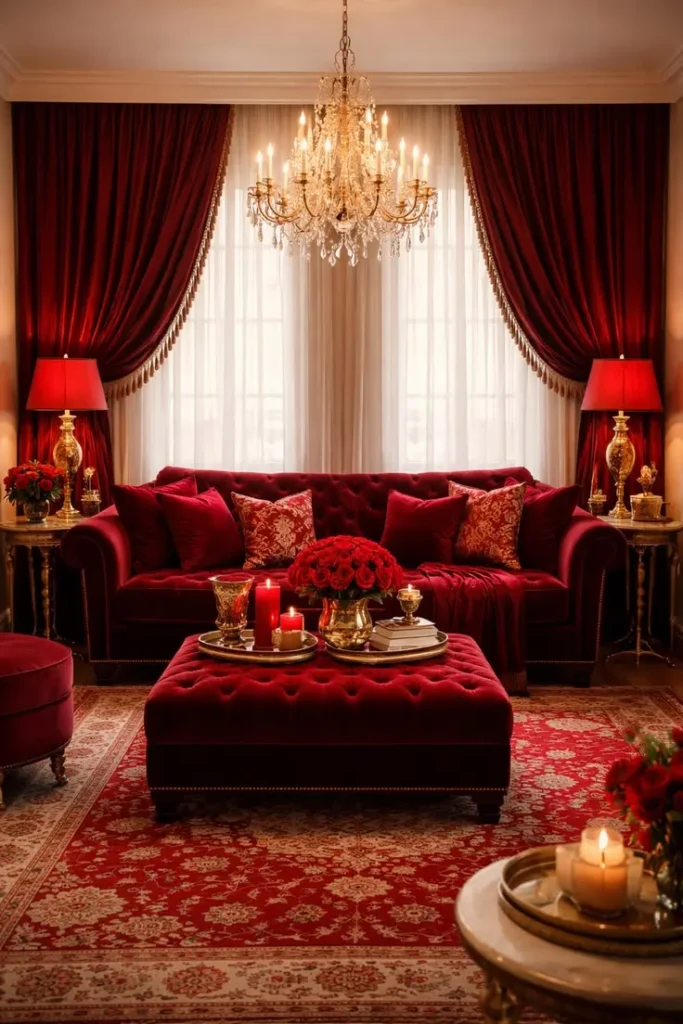
An 8×10 rug is not just a measurement. It is a usable footprint that affects traffic flow, furniture placement, and visual structure. Eight feet by ten feet is large enough to support a standard seating arrangement in many homes, but not so large that it dominates the room.
To visualize it, think of an 8×10 rug as a rectangle that can comfortably sit under part of a sofa, a central coffee table, and at least some of the surrounding seating. In many layouts, it can hold the front legs of a sofa and chairs, which creates a unified composition while still keeping the room open.
It is also helpful to compare the size to something familiar. An 8×10 rug is roughly the same footprint as a queen bed area, which makes it easier to imagine in a room. That mental comparison helps when you are trying to determine whether the rug will feel substantial enough or whether it will crowd the space.
One of the best things about this size is that it is big enough to matter, but still manageable. Very large rugs can be expensive and harder to work into a room with awkward walls, fireplaces, walkways, or entry points. The 8×10 size gives you a strong design surface without making the layout overly rigid.
In practical use, an 8×10 rug often supports a sofa, coffee table, and two accent chairs in a medium-sized room. It can also work with a sectional, especially a smaller one, as long as the proportions are carefully considered. That versatility is one reason it is so widely used in living rooms across different styles and budgets.
Best room sizes for an 8×10 living room rug
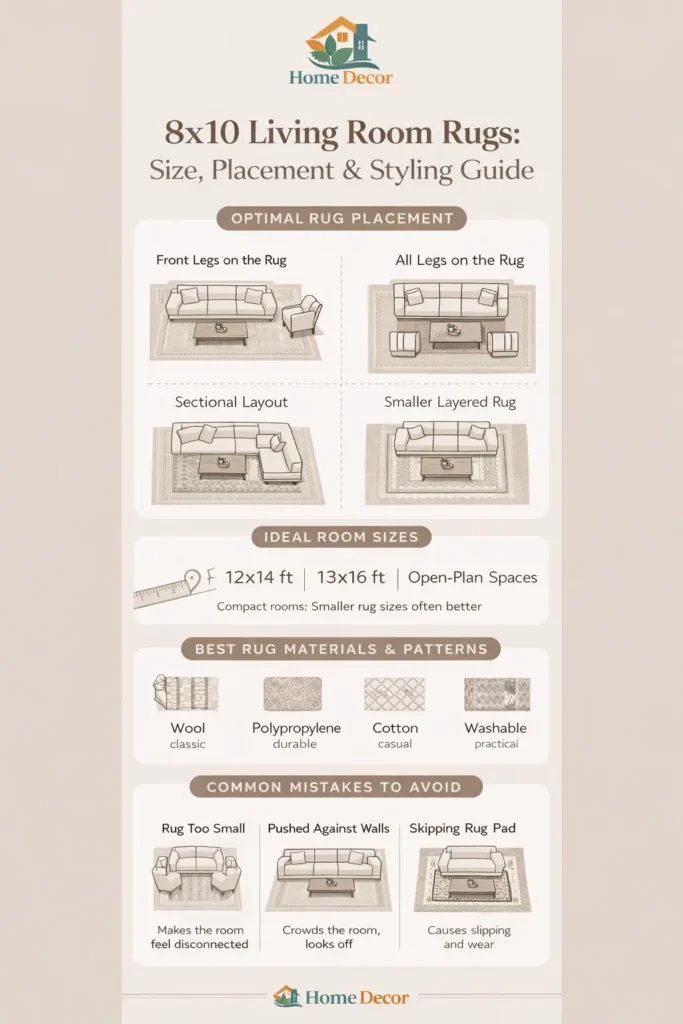
Not every living room needs an 8×10 rug, but many do. The best room for this size is usually a medium-sized living room with enough floor area to show a clean border around the rug. In general, rooms around 12×14 feet to 13×16 feet are often strong candidates, though shape, furniture depth, and circulation space can change the equation.
A rectangular room with a standard sofa and a pair of chairs is often ideal. The rug can sit beneath the main seating cluster and still leave visible floor around the outside. Open-plan spaces can also benefit because the rug helps define the living zone without building a wall of visual mass.
Smaller rooms may still work if the furniture is modest in scale and the rug placement is careful. But in compact rooms, an 8×10 rug can become too dominant, especially if it sits too close to the walls or leaves almost no flooring visible. In those cases, the room may feel tighter instead of more elegant.
Larger rooms can also use an 8×10 rug, but the layout must be deliberate. If the living room is expansive and the seating area floats in the center, the rug may look undersized. In that situation, moving up to 9×12 or larger may give the room a more anchored and luxurious presence.
The best way to think about room size is not as a rigid rule but as a proportion test. Does the rug create unity? Does it support the furniture? Does it preserve circulation? Does it leave enough floor visible to maintain openness? Those are the questions that matter more than the measurement alone.
Room fit at a glance
| Living room size | 8×10 rug fit | Best use case |
| 11×13 ft | Possible, but tight | Small seating group with careful placement |
| 12×14 ft | Excellent | Standard sofa arrangement |
| 13×16 ft | Excellent | Balanced seating zone with good flow |
| Open-plan space | Very good | Defines a living area clearly |
| Under 11×12 ft | Usually too large | A smaller rug size is often better |
When 8×10 works best
An 8×10 rug usually works best when the living room has a standard sofa, one or two accent chairs, and a coffee table at the center. It is especially effective when the rug can visually tie these pieces together into one seating unit. That is the core function of a good living room rug: it creates group identity.
This size is also a strong choice when you want the room to feel polished without becoming overly formal. The front legs of the sofa and chairs can rest on the rug while the back legs remain off, which creates a relaxed but organized layout. This is one of the most reliable arrangements because it balances anchoring and openness.
Another ideal scenario is the open-plan home. In a larger open room, an 8×10 rug helps define the living area without creating a hard boundary. It gives the eye a clear stopping point and prevents the furniture from feeling lost in a broad floor plan.
It is also a good fit when your style leans toward clean, modern, or transitional décor. These spaces often benefit from strong geometric organization and negative space. An 8×10 rug supports that by structuring the room while still allowing the surrounding floor and architecture to breathe.
The simple rule is this: choose 8×10 when you want the seating zone to feel connected, the room to stay visually open, and the rug to do real anchoring work without overwhelming the space.
When you should size up
There are times when an 8×10 rug is not enough. If the sectional is oversized, the living room is large, or the furniture floats far from the walls, a bigger rug may create a more elegant and stable layout. In those situations, 9×12 or even larger can be the better fit.
Sizing up is especially important when you want all furniture legs on the rug. That arrangement creates a more fully unified composition, but it also requires more surface area. If the rug is too small, the furniture appears cramped or only partly supported. That can make the entire room feel underplanned.
A larger rug can also improve visual flow in rooms with multiple seating pieces. When the sofa, chairs, and table all sit fully or mostly on the rug, the arrangement feels like a complete island rather than a partial cluster. This is particularly useful in luxury-inspired interiors where balance and scale matter as much as color and style.
The key point is not that bigger is always better. It is recommended that a larger rug be used when the room needs more visual mass to feel complete. If the 8×10 rug leaves too much empty floor inside the seating zone, or if it makes the furniture feel squeezed together, then increasing the size often improves both comfort and appearance.
When you should size down
There are also times when 8×10 is simply too much. In a smaller living room, a large rug can crowd the edges, reduce visible flooring, and make the room feel more compressed than calm. If the rug runs too close to the walls or interferes with circulation paths, a smaller size may create a better result.
Sizing down can also be useful when the room has a narrow shape or unusual architecture. A small room with a fireplace, a doorway, or a sharp walkway may need more negative space around the rug. In that case, forcing an 8×10 can disrupt traffic flow and make the layout feel awkward.
The goal of rug sizing is not to fill every available inch. It is to support the room’s composition. A smaller rug that preserves openness and clears obstacles is often more effective than a larger one that seems impressive in theory but works poorly in practice.
If the furniture is also compact, a smaller rug may look more proportional. For example, a modest sofa and two light chairs can sometimes be better served by a rug that gives the group a tighter visual frame. In that case, the room may feel more breathable and more precise.
Is an 8×10 rug right for your living room?
The best way to answer this question is to look at the room as a system. The rug is not a standalone object. It interacts with the sofa length, chair depth, table size, Wall Spacing, circulation path, and room geometry. The correct size is the one that improves the whole system.
Choose 8×10 if your sofa is standard-sized, your room is medium, and you want the furniture to connect clearly. This size works particularly well when the front legs of the seating can rest on the rug. That creates a stable composition without requiring wall-to-wall coverage.
Choose a larger rug if the room is wide, the sectional is large, or the furniture arrangement floats deep in the center of the floor. A larger rug will usually create a more generous and grounded feel in those conditions.
Choose a smaller rug if the room is compact, the layout is tight, or the rug would sit too close to walls and doorways. In that case, reducing the size can improve both comfort and proportion.
The smartest decision is usually the one that produces balance. A rug should make the room easier to read, not harder. It should enhance the architecture, not compete with it. If 8×10 helps the furniture feel united, and the room feel calm, it is a strong choice.
Best 8×10 living room rug placement ideas
Placement is just as important as size. Even a great rug can look wrong if it is positioned poorly. The rug should work with the furniture grouping, not against it. It should define the seating area and support traffic flow instead of interrupting it.
Front legs on the rug
This is the most common and flexible layout. The front legs of the sofa and chairs rest on the rug, while the back legs remain on the floor. This creates a connected look without requiring a huge rug.
Why does this work so well? It visually links the furniture pieces while still leaving enough floor exposed to keep the room feeling open. It also provides enough flexibility for medium rooms, which is one reason it is such a reliable default.
This placement is especially effective when the coffee table sits centered in the arrangement. The rug becomes the visual base of the conversation zone. The room feels coordinated, but not overstuffed.
All legs on the rug
This creates a more complete and polished appearance. Every major piece of furniture sits fully on the rug, turning the seating area into a true design island. It is a beautiful solution, but it usually requires more room than many homes have.
This layout works best in larger living rooms or open-plan spaces where the rug needs to hold the entire furniture group together. It also feels more luxurious because the seating zone appears fully deliberate from edge to edge.
Coffee table centered, seating partly off the rug
This is a middle-ground solution for rooms where spacing is limited. The rug anchors the coffee table and part of the seating area, but not every furniture leg needs to sit on it. It can be effective in long or narrow rooms where you need to preserve pathways.
Sectional placement
Sectionals require extra attention because their shape can quickly overwhelm a rug that is too small. An 8×10 rug may work with a smaller sectional, especially if the design is compact and the living room is medium-sized. But larger sectionals often benefit from more surface area.
The right approach is to make sure the rug connects enough of the sectional to feel intentional. If the rug only touches a tiny portion of the seating group, the layout will look unfinished. A larger rug often solves that problem.
Layered rug look
Layering creates depth, softness, and a more styled interior. A larger neutral rug underneath and a smaller patterned rug on top can create a curated, designer-like effect. This approach works especially well in eclectic, cozy, or textural living rooms.
Layering can also help if you love the size of the 8×10 rug but want a more custom look. The base layer keeps the layout grounded, while the top layer adds personality and contrast.
How far should an 8×10 rug sit from the wall?
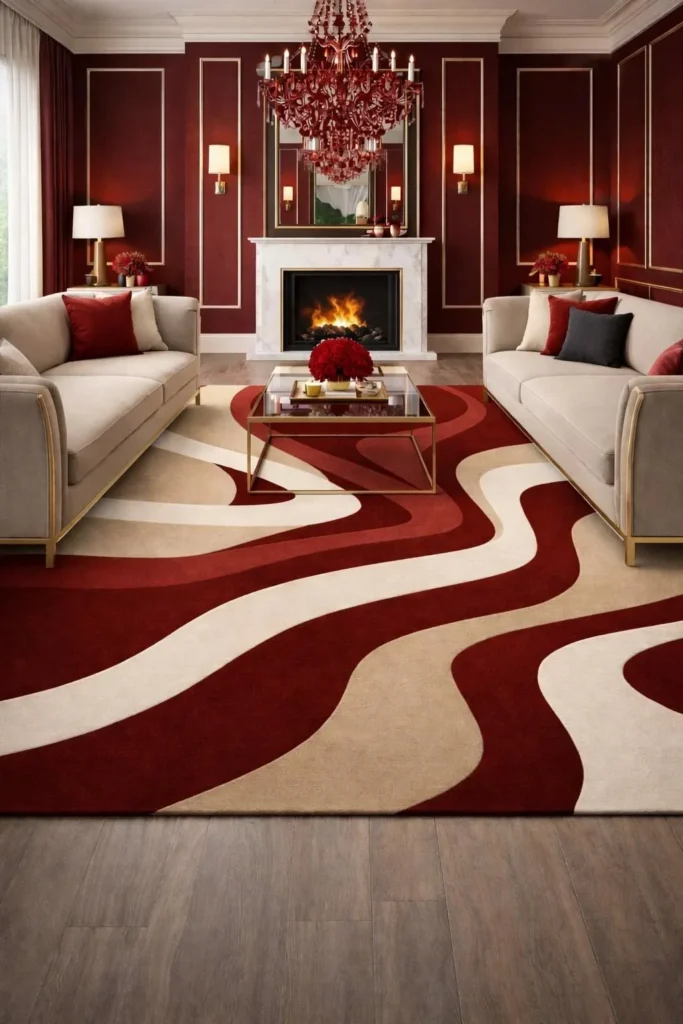
A rug should usually not press hard against the wall. Leaving visible floor around the edges makes the room feel more intentional, more open, and more balanced. That border acts like a visual breathing room.
In many rooms, a border of about 8 to 18 inches is a helpful target, though the exact spacing depends on the room size and furniture layout. In a tighter space, the border may be smaller, but the rug should still look like it belongs to the seating area rather than the wall.
The most useful principle is to prioritize the furniture first. Place the rug where it best supports the sofa and chairs. Then check the wall spacing. If the rug is close to the wall but still creates a strong seating zone, it may work. If the rug crowds the room and makes the perimeter feel compressed, it is too large for that space.
In larger rooms, more borders can look elegant. In smaller rooms, the border may need to be narrower to keep the furniture connected. The goal is not a perfect measurement. The goal is a balanced visual rhythm between rug, furniture, and room edges.
Best materials for 8×10 living room rugs
The material matters because an 8×10 rug covers a large area and will influence how the room feels every day. The right fiber affects comfort, Maintenance, durability, and the overall design finish.
Wool
Wool is a classic choice because it feels substantial, wears well, and has a naturally refined look. It is often associated with quality and long-term use. Wool rugs can be a strong fit for living rooms where you want softness, resilience, and a timeless aesthetic.
Polypropylene
Polypropylene is a practical choice for busy homes. It is known for durability and easier upkeep, which makes it appealing for families, pets, and high-traffic rooms. It can be a good option when you want style without too much maintenance pressure.
Cotton
Cotton rugs are typically casual, lightweight, and easy to live with. They can suit informal living rooms, especially when the design is relaxed, and the traffic level is moderate. They tend to feel softer and simpler, though they may not always offer the same longevity as denser materials.
Washable rugs
Washable rugs are increasingly popular because they combine style with practicality. In a living room where spills, kids, or pets are part of normal life, a washable rug can reduce stress and make the space easier to maintain. This is especially useful in larger 8×10 sizes because cleaning a big rug by hand can be difficult.
Flatweave
Flatweave rugs have a low profile and a neat, modern appearance. They are good for chair movement, easy vacuuming, and layered styling. They often work well in contemporary interiors where simplicity and clean lines are important.
Material comparison
| Material | Best for | Why it works |
| Wool | Classic, durable living rooms | Soft, strong, timeless |
| Polypropylene | Busy family homes | Practical and easy to maintain |
| Cotton | Casual, lighter-use rooms | Simple and relaxed |
| Washable rugs | Pets, kids, spills | Easy cleaning |
| Flatweave | Modern or layered rooms | Slim profile and easy movement |
Why low-pile often wins
Low-pile rugs are often ideal for living rooms because they are easier to maintain, easier to move furniture across, and less likely to trap debris. They also tend to look crisp and orderly in modern spaces.
A low-pile rug gives the room a cleaner silhouette. It does not overwhelm the furniture or create too much visual bulk. It is especially useful when the rug sits under a coffee table, because cups, trays, and decorative objects feel more stable on a flatter surface.
For homes with active daily use, low-pile rugs often provide the best mix of practicality and appearance. They are less fussy, less visually heavy, and easier to integrate into a polished living room layout.
Why are washable rugs so popular
Washable rugs solve a real-life problem: large rugs get used. They collect dust, crumbs, pet hair, and accidental spills. In a living room, that is not a rare event. It is normal life.
Washable rugs are appealing because they reduce the stress of maintenance while still giving the room a stylish base. That is especially helpful in family homes, rental spaces, and high-traffic areas where you want the room to look good without demanding fragile care.
They also fit modern design priorities. Many homeowners now want beauty plus convenience. A rug that can be cleaned more easily feels more sustainable for daily use. That means it is more likely to stay in good condition and continue looking intentional over time.
Best styles for 8×10 living room rugs
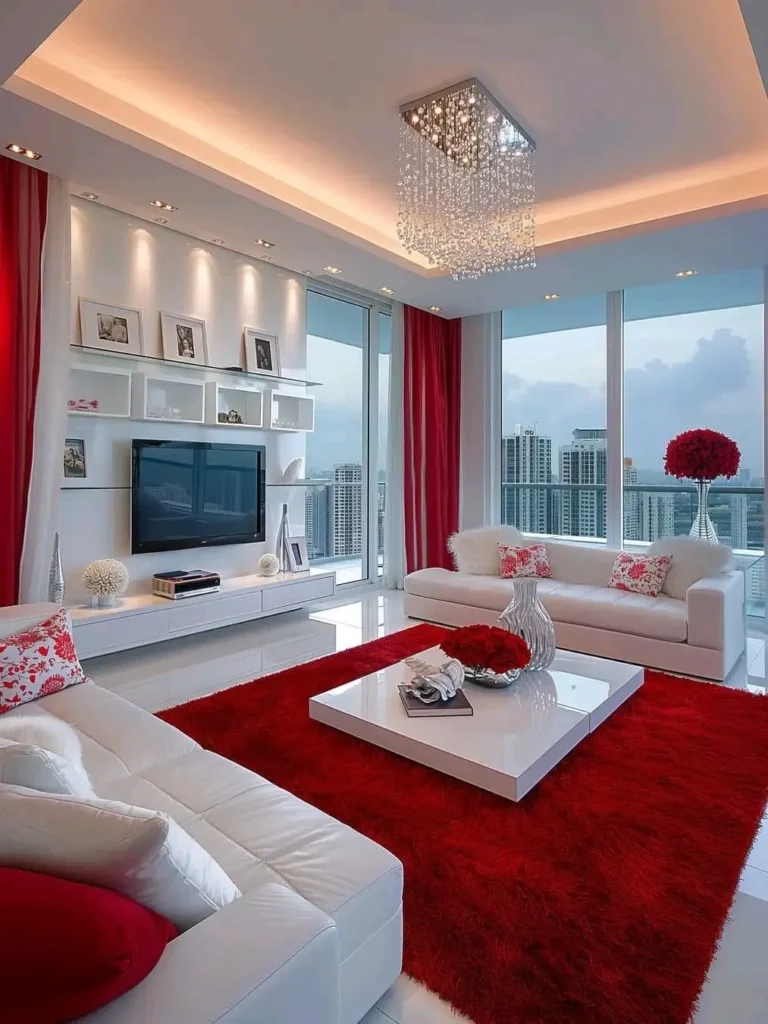
An 8×10 rug is large enough to show pattern, tone, and texture clearly. That means the style choice matters. The rug can quietly support the room or become the main visual statement. Both options can work, but they produce very different moods.
Neutral solids
Neutral rugs are ideal for minimalist, calm, or flexible rooms. They help the furniture and architecture take the lead. If the room already has bold artwork, Strong Upholstery, or colorful décor, a neutral rug can prevent visual overload.
Abstract patterns
Abstract rugs work well in modern homes because they add movement without feeling too traditional or too busy. They can create depth, softness, and a contemporary edge. This is a strong choice if you want the room to feel current but not cold.
Vintage or distressed looks
Vintage-inspired rugs bring warmth and character. They can soften a room that feels too new or too sharp. A distressed pattern often adds a lived-in, layered quality that works beautifully in cozy living rooms.
Geometric designs
Geometric rugs bring structure, rhythm, and a crisp modern feel. They are useful when you want the room to feel orderly and well-defined. This style often suits clean-lined furniture and contemporary architecture.
Textured rugs
Texture can be just as important as pattern. A textured rug adds depth to a room that might otherwise feel flat. This is especially effective in neutral interiors where the goal is richness rather than strong color contrast.
Matching the rug to the room
If the sofa is bold, choose a quieter rug. If the room is mostly neutral, the rug can introduce visual interest. If the space already contains many patterns, texture may be a better choice than another loud motif. The best rug is the one that completes the composition, not the one that competes with it.
Best styles by room type
| Room style | Best rug style |
| Minimalist | Neutral solid or soft texture |
| Modern | Abstract or geometric |
| Classic | Transitional or traditional |
| Family room | Washable or low-pile |
| Cozy room | Vintage, layered, soft-textured |
Budget-friendly 8×10 rug ideas
A budget-friendly rug can still look expensive if the size, texture, and color work well together. What usually makes a rug feel cheap is not the price itself. It is the visual mismatch between the rug and the room.
The smartest budget strategy is to prioritize proportion first. A properly sized 8×10 rug will almost always look better than a smaller rug that costs more but fails to anchor the room. After size, choose durability and maintenance ease. Then consider the pattern.
Low-pile synthetic rugs are often a strong value choice because they are practical, accessible, and easy to live with. Washable rugs are also a great option for homes that need flexibility. Flatweaves can offer a clean finish without a large price tag. Simple vintage-inspired patterns can help disguise wear and make the rug feel more refined.
A rug pad is also worth the investment. It improves stability, helps protect the floor, and can make even a budget rug feel more substantial underfoot. That kind of support often improves both comfort and appearance.
The best budget rug is one that feels deliberate. It should help the room look organized and balanced, not like a temporary placeholder.
Premium and luxury ideas for 8×10 living room rugs
If the goal is a more elevated look, an 8×10 rug can be a powerful design tool. Because the size is large enough to be visually dominant, the material and detailing become immediately noticeable. This makes it an excellent surface for luxury styling.
Luxury cues often include wool or wool-blend construction, richer pile quality, refined color variation, and thoughtful pattern work. Muted tones can feel particularly sophisticated because they allow the rug to blend into the room while still adding depth. Hand-finished edges and well-proportioned motifs also contribute to a more premium impression.
High-end styling is not just about the rug itself. The surrounding furniture should support the effect. Sofas and chairs should be proportionate. The rug should not feel tiny beneath oversized furniture, and the surrounding negative space should be intentional rather than accidental. Good lighting also matters because it reveals texture and gives the rug more presence in the room.
A luxury look often comes from restraint. The most beautiful spaces usually rely on balance, not excess. A refined 8×10 rug can make a room feel finished, calm, and expensive without needing dramatic color or flashy pattern.
Common mistakes to avoid with 8×10 living room rugs
Many rug problems are really layout problems. The rug may not be the issue by itself. Often, the issue is that the rug is the wrong size, in the wrong position, or paired with furniture that does not suit it.
Buying too small
This is the most common rug mistake. A small rug breaks up the seating group and makes the room feel fragmented. It can make even good furniture look awkward because nothing feels connected.
Pushing the rug too close to the wall
When a rug sits too near the edges, the room can feel cramped. It can also create the impression of wall-to-wall carpeting, which removes the clean border that helps the room breathe.
Ignoring sofa depth
A deep sofa needs more rug support than a shallow one. If the sofa is large and the rug barely reaches the front legs, the arrangement can feel incomplete.
Letting only one furniture piece touch the rug
The rug should support the seating group as a whole. If only one chair touches it and the rest float elsewhere, the room can appear disconnected.
Forgetting the rug pad
A rug pad improves grip, protects the floor, and helps the rug stay in place. Without it, even a good rug can shift, wrinkle, or feel less comfortable.
Choosing the wrong style for the room
A busy pattern in a busy room can feel chaotic. A plain rug in a room with very little else can feel flat. The style needs to match the room’s energy.
The best rug is not the one that looks nice in isolation. It is the one that improves the full visual field of the room.
Maintenance, care, and durability tips
A living room rug sees real use. It needs to handle foot traffic, furniture weight, dust, occasional spills, and daily life. That is why maintenance should be part of the buying decision from the start.
Vacuum regularly to keep dirt from settling into the fibers. Rotate the rug occasionally so wear distributes more evenly. Blot spills quickly rather than rubbing them, which helps protect the fibers and preserve the appearance. Use a rug pad underneath to improve stability and reduce friction.
Durability also depends on construction. Low or medium pile heights are often easier to maintain in living rooms. Stain resistance is useful in family spaces. A rug with a strong backing can improve safety and keep the rug from sliding. Colors and patterns that disguise everyday wear can also be helpful if the room gets heavy use.
A rug that is easy to care for is more likely to stay beautiful. And a rug that stays beautiful contributes more consistently to the atmosphere of the room. That is the real advantage of choosing well: the rug keeps performing visually long after the first day.
Pros and cons of 8×10 living room rugs
Pros
An 8×10 rug works well in many medium-sized living rooms. It helps anchor a sofa, coffee table, and chairs into one seating arrangement. It often creates a polished look without overwhelming the room. It can leave enough floor visible to preserve openness. It also comes in a wide variety of materials, patterns, and price points, which makes it a flexible choice for different homes.
Cons
An 8×10 rug can look too large in compact rooms. It may not be enough for oversized sectionals or very large open plans. Incorrect placement can make the room feel off balance. Lower-quality rugs may wear faster in busy homes. And a very plain design can look underwhelming if the rest of the room has little texture or visual interest.
The key takeaway is that the size itself is not good or bad. It is useful when the room, furniture, and style are aligned.
Quick tips for choosing the right 8×10 rug
Start with measurements. Measure the room first, not just the empty floor. Then measure the sofa, chairs, and coffee table so the rug can relate to real furniture dimensions.
Use the front-leg placement in most medium-sized living rooms because it is flexible, stable, and visually clean. Leave breathing room between the rug and the wall whenever possible. Choose a material that fits your lifestyle rather than just your aesthetic preference. A Beautiful rug that is impossible to maintain will become a source of frustration.
Think about traffic flow. The rug should not block common walking paths or compete with doors, fireplaces, or built-ins. It should support circulation, not interrupt it.
Finally, trust proportion over impulse. If the room feels open and the rug helps define the seating area clearly, you are probably on the right track.
FAQs about 8×10 living room rugs
An 8×10 rug usually works best in medium living rooms around 12×14 to 13×16 feet, though it can also fit slightly smaller or larger spaces depending on the furniture layout. It tends to perform well when the seating area needs a clear anchor, and there is still enough floor visible around the edges.
In most living rooms, yes, at least the front legs should be on the rug. That placement helps connect the sofa with the rest of the seating area and makes the layout feel more unified. It is one of the most reliable solutions for medium-sized living rooms.
A visible border is best. Leaving roughly 8 to 18 inches of floor around the rug often helps the room feel balanced and breathable. The exact amount depends on the size of the room, the furniture depth, and the overall layout.
Yes. An 8×10 rug can work very well in open floor plans because it helps define the living zone. In a larger open space, it can create a clear seating area without building a visual wall or making the room feel segmented.
It can be. If the rug crowds the walls, interrupts movement, or overwhelms the furniture, it is probably too large for that room. Smaller living rooms often look better with a more compact rug size that preserves breathing room.
Conclusion
Choosing the right 8×10 living room rug can instantly elevate your space—making it feel larger, more cohesive, and more beautifully styled. Whether your goal is to anchor the seating area, add warmth, balance colors, or introduce texture, an 8×10 rug offers the perfect blend of practicality and visual impact.
By understanding proper Placement, selecting the right materials, matching your décor style, and avoiding common mistakes, you can confidently choose a rug that not only fits your room but transforms it. With the right rug, your living room becomes more comfortable, more inviting, and undeniably more polished.
If you want a rug size that works in most living rooms and delivers a designer-finished look every time, 8×10 is the sweet spot.
