
Introduction
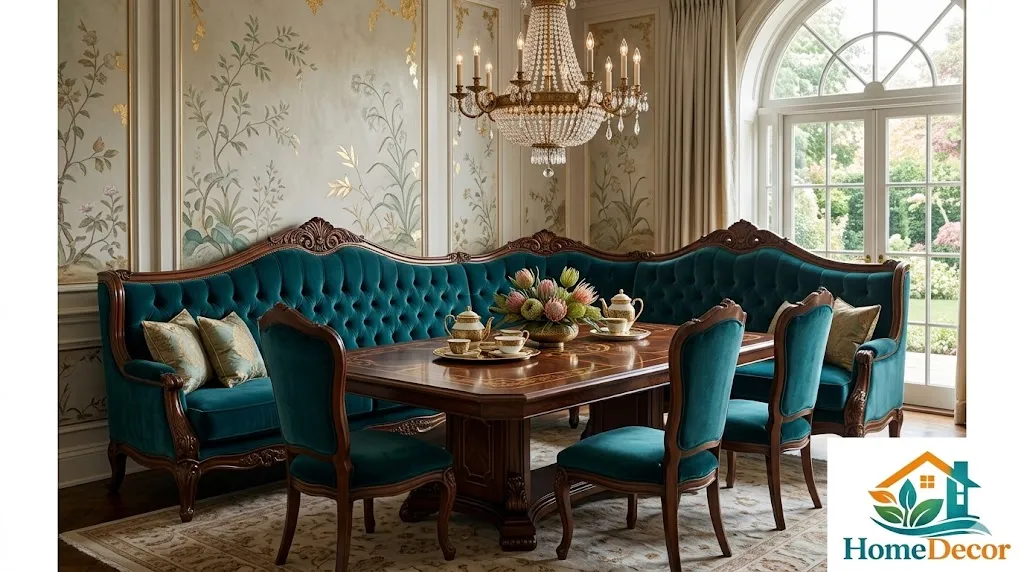
Dining room sets with corner bench seating are one of the most intelligent ways to transform a dining area into something that feels larger, calmer, and more purposeful. In many homes, the dining zone is not a grand formal room. It is a compact corner, a breakfast nook, a kitchen-diner, or a shared open-plan space that has to work hard every single day. That is exactly where a corner bench dining room set proves its value.
Instead of placing several separate chairs around a table and letting the room feel visually busy, a corner bench creates a unified seating line that looks cleaner and more intentional. It uses the architecture of the room instead of fighting against it. It turns underused corners into highly functional seating zones and helps the whole layout feel more organised. In a small room, that sense of order can make a dramatic difference.
This is one reason corner bench dining set ideas continue to rise in popularity across compact homes, family kitchens, modern apartment layouts, and open-plan interiors. Retailers frequently position them as versatile, space-efficient, and design-conscious solutions for homes where every square foot matters. Furniture Village highlights corner dining sets as a smart fit for small dining rooms and open-plan layouts, while Danetti offers left-hand and right-hand versions so the seating orientation can match the room properly. That level of flexibility is important because no two rooms are shaped the same way.
The appeal of this seating style is not only visual. It is practical, social, and highly adaptable. A well-chosen corner bench dining table set can support everyday family meals, homework sessions, coffee breaks, laptop work, weekend brunches, and casual hosting. It becomes a multipurpose station rather than a single-purpose piece of furniture. House Beautiful also notes that banquette-style seating can make a nook feel warmer, more intimate, and more comfortable for longer stays, which is exactly why so many people love it.
If you want a dining space that feels deliberate, elegant, and efficient, this guide will walk you through everything you need to know. You will learn how to choose the right set, how to size it accurately, how to style it beautifully, and how to avoid the common layout mistakes that make a dining room feel cramped instead of comfortable.
What Are Dining Room Sets With Corner Bench?
Dining room sets with corner benches are dining arrangements that use an L-shaped bench, a corner banquette, or a nook-style bench instead of relying only on individual chairs. The seating usually wraps around one corner of the room, often along two adjoining walls or along one wall and one open edge. This format creates a built-in feel, even when the furniture itself is not permanently installed.
A set may include any of the following:
a corner bench only
a corner bench plus dining chairs
a corner bench with a matching dining table
a storage bench with hidden internal space
a breakfast nook style bench with upholstered seating
In practical terms, this means you can choose a setup that suits your room, your routines, and your design preferences. Some homes need maximum efficiency. Others want more comfort. Some want a neat, integrated look. Others need a mix of bench seating and loose chairs for flexibility. The category is broad enough to cover all of these needs.
This layout works because it takes advantage of space that is often wasted. Instead of leaving a corner empty or filling it with mismatched chairs, the bench turns that area into purposeful seating. Furniture Village describes corner dining sets as a way to tuck seating neatly into corners and open up the room visually, while Danetti’s corner bench range includes left-hand and right-hand layouts, which proves how important orientation is in real homes.
Why does this seating style feel different?
A corner bench reduces visual clutter. Instead of multiple chair backs breaking up the sightline, you see a continuous seating form that feels smoother and more cohesive. That subtle simplification makes the room feel calmer. It also creates a cozy pocket within a larger environment, which is especially useful in open-plan living areas where the dining zone needs to feel defined without using walls or partitions.
Why Corner Bench Dining Room Set Designs Are So Popular Now
The rise of corner bench dining room sets is not just a styling trend. It reflects how people actually live now. Homes are more multifunctional, rooms are more compact, and furniture has to deliver more than one benefit at a time. This seating style answers those needs very effectively.
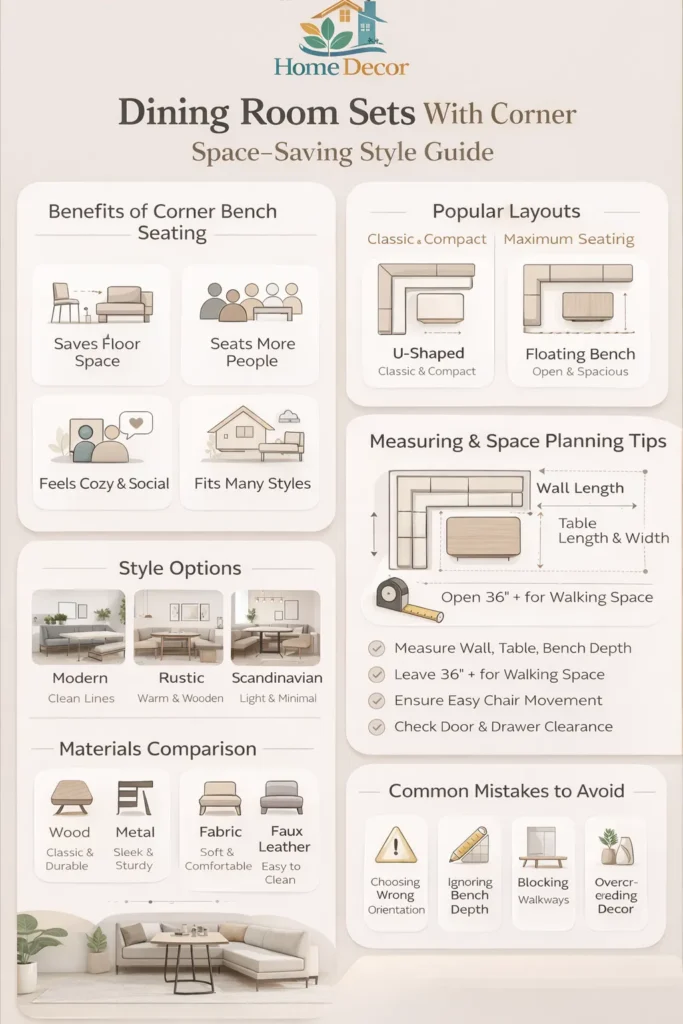
It saves floor space
A bench can slide tightly into a corner in a way that separate chairs often cannot. That means you preserve circulation space, reduce visual bulk, and leave more room for movement around the table. In smaller rooms, this can make the difference between a layout that feels tight and one that feels breathable.
It can seat more people
A bench often accommodates more people than a row of individual chairs, especially when the seating runs along a wall. James & James explain that bench length influences seating capacity directly, and many shoppers are surprised by how much usable seating a long bench can provide. For families and people who host occasionally, that is a meaningful advantage.
It feels warmer and more social
Bench seating naturally brings people closer together. It encourages a relaxed, communal atmosphere that feels friendly rather than formal. House Beautiful’s breakfast nook coverage points out that banquette seating can make people want to linger, which is exactly the kind of energy many households want in a dining area.
It works with many home styles
A corner bench dining table set is not locked into one aesthetic. It can look modern, rustic, Scandinavian, industrial, casual, or luxurious depending on the finish, material, and silhouette. Danetti and Furniture Village both show corner sets in faux leather, velvet, oak, ceramic, and metal-frame combinations, which demonstrates how adaptable this category has become.
It supports multi-use living
A dining corner is rarely just a place for dinner anymore. It may double as a homework desk, a laptop zone, a breakfast perch, a craft station, or a casual conversation spot. Corner bench seating is especially useful because it invites repeated use without making the room feel overloaded.
How to Choose the Perfect Dining Room Sets With Corner Bench
Choosing the right corner bench set is not only about aesthetics. It is about proportion, comfort, function, and how you move through the room every day. A beautiful design that blocks a walkway or feels awkward at the table will become frustrating very quickly.
Measure your space first
This is the foundation of a successful purchase. Before you look at fabrics, finishes, or decorative details, you need to understand the dimensions of the room. Measure the wall lengths, the table footprint, the depth of the bench, the clearance behind the seating, and any nearby doors, drawers, radiators, or cabinets.
James & James recommends measuring the room, the table, the walkway paths, and the wall clearances before choosing a bench. Their sizing guidance also gives helpful benchmarks: bench depth is often around 15–20 inches, bench height is usually around 18–20 inches, and common bench lengths include 48 inches, 60 inches, and 72 inches,s depending on seating requirements. Those figures are a practical starting point, not a rigid rule, but they help you shop with confidence.
BHG’s furniture-spacing advice reinforces the same principle: movement paths matter. Even if a set technically fits in the room, it still may not work well if the household cannot move around it comfortably. That is why the whole layout must be considered, not just the product dimensions.
Use a simple measuring method
Before buying, measure:
The wall length where the bench will sit
the full table length and width
The depth of the bench will extend into the room.
the walking path behind seated diners
nearby doors, cupboards, and drawers
That checklist sounds simple, but it prevents the most common furniture mistake: buying a piece that looks right online but feels wrong in real space. Corner bench seating should feel natural to use, not squeezed into place.
Check bench depth and height carefully
Bench depth and height are the two measurements most shoppers overlook. That is usually where comfort problems begin.
A bench that is too deep may feel bulky and make it harder to sit close to the table. A bench that is too shallow may feel unstable or unsupportive. James & James notes that most dining benches fall into the 15–20 inch depth range, with 18 inches often considered a comfortable midpoint. Bench height around 18–20 inches is also common because it aligns well with standard dining tables.
Match the bench length to the table
The bench and table should feel proportionally balanced. A bench that is too long can overpower the room. A bench that is too short can make the arrangement feel unfinished. James & James points out that:
48-inch benches suit intimate breakfast nooks
60-inch benches work well with standard 6-person tables
72-inch benches suit larger gatherings
These examples help you think in terms of scale rather than guesswork.
Choose a shape that suits the room
The table shape matters just as much as the seating shape.
Rectangular tables work well in most corner bench layouts.
Rounded-rectangle tables soften the look of a compact room
Pedestal tables are often easier in tight nooks because they reduce leg obstacles
Square tables can work in deeper corners or more balanced nook layouts
When the room is narrow, a simpler table base usually feels easier to live with. Pedestal or streamlined bases allow legs to move freely and reduce that crowded feeling around the seating zone.
Comparison Table: Which Seating Setup Fits Best?
| Seating Setup | Best For | Space Use | Comfort | Flexibility | Style Cue |
| Corner bench only | Small rooms, breakfast nooks | Excellent | Good | Medium | Clean, built-in feel |
| Corner bench + chairs | Family dining, mixed-use | Very good | Very good | High | Balanced, practical look |
| Full bench set with table | Compact homes | Excellent | Good | Medium | Simple, cohesive look |
| Bench with storage | Small homes need storage | Excellent | Good | Medium | Smart, clutter-free |
| Upholstered corner nook | Long meals, social dining | Very good | Excellent | Medium | Soft and inviting |
This table reflects the same general logic seen in the guidance from Furniture Village, Danetti, and James & James: the best choice depends on the room, the household, and the kind of everyday use you expect.
Best Materials for Dining Room Sets With Corner Bench
Material choice affects comfort, cleaning, durability, and overall mood. A corner bench can look completely different depending on whether it is made of wood, fabric, faux leather, or a mixed-material combination.
Wood
Wood is one of the most dependable options because it is durable, stable, and easy to coordinate with many interior styles. James & James highlights solid wood benches as practical, long-lasting choices. Wood can lean rustic, modern, classic, or Scandi, depending on the finish and silhouette.
Best for: daily family use, timeless styling, and straightforward care.
Upholstered fabric
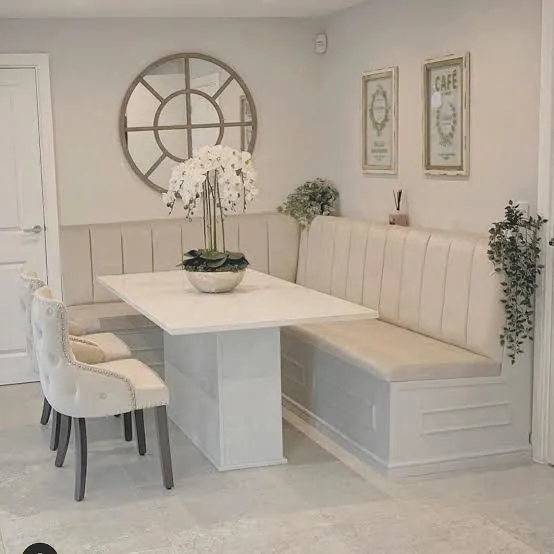
Upholstery adds softness, comfort, and a more relaxed atmosphere. It is a strong choice if you want the dining corner to feel inviting and cozy. Danetti’s Corner Bench Collections often use velvet and faux leather finishes to create a more premium look and improve seating comfort.
Best for: longer meals, cozy interiors, and a softer visual profile.
Faux leather
Faux leather offers a neat, polished appearance and is often simpler to wipe clean than fabric. It suits busy homes well because it can handle daily use without looking too delicate. Furniture Village and Danetti both show faux leather as a common option for corner bench seating, especially where practicality matters.
Best for: easy maintenance and a sleek, modern impression.
Mixed materials
Mixed materials are especially effective in contemporary interiors. You may see wood frames with upholstered cushions, metal legs with soft seating, or ceramic tops paired with cushioned benches. These combinations create balance and visual texture without making the room feel heavy. Furniture Village often combines ceramic tables with upholstered seating, while Danetti uses metal frames with softer surfaces.
Best for: modern homes that need both style and durability.
Space Planning and Layout Ideas That Actually Work
A corner bench looks best when it is supported by smart planning. The furniture itself matters, but so does how it interacts with the room. A strong layout makes the whole space feel intentional.
Small dining rooms
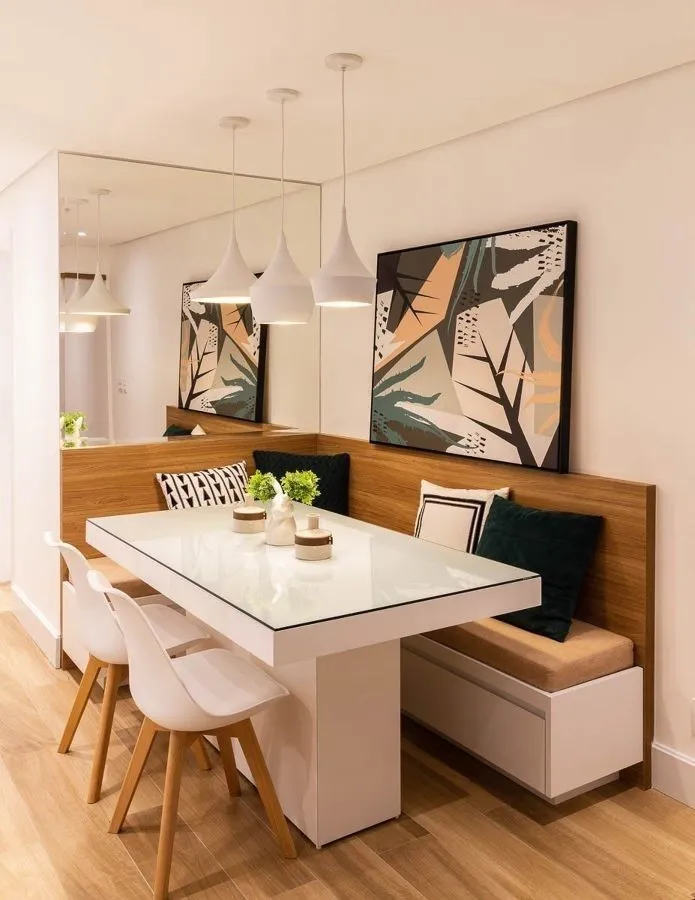
In a small dining room, place the bench along the longest wall and continue it around the adjoining corner. This helps the room feel grounded, organised, and efficient. Keep the table shape relatively simple so the space does not feel visually overworked. Rectangular or softened-rectangle tables often suit this type of layout best.
Furniture Village positions corner dining sets as a strong fit for compact dining rooms and kitchen-diners, which supports this approach.
Breakfast nook corners
Breakfast nooks are one of the most natural places for a corner bench dining table set. These areas often benefit from a relaxed, friendly feeling, and a bench immediately creates that mood. Natural light from a nearby window can make the zone feel especially welcoming.
James & James notes that 48-inch benches are often well-suited to intimate nook settings, while 60-inch and 72-inch versions work better for larger arrangements.
Open-plan homes
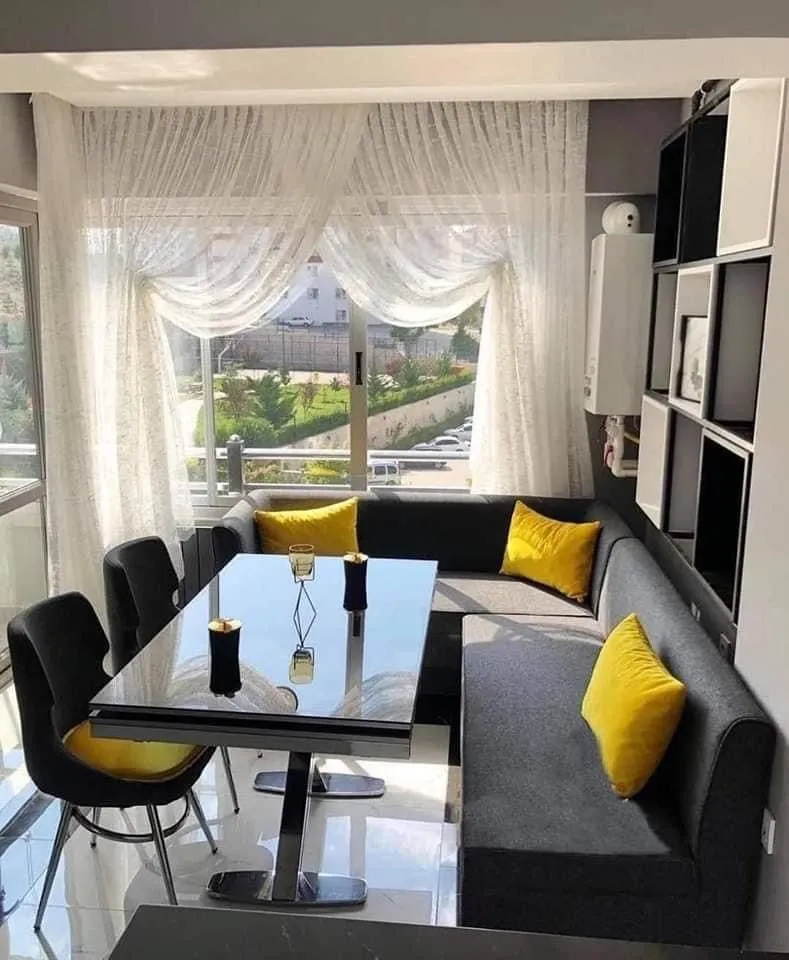
In open-plan interiors, a corner bench can help define the dining area without introducing visual barriers. The bench acts as a soft boundary between the kitchen and the living space. That allows the room to stay open while still feeling zoned. Furniture Village also notes that corner dining sets can work very well in open-plan living spaces, where the dining area often becomes a central social hub.
Awkward corners
Some corners are narrow, oddly shaped, or difficult to furnish. That does not mean they are unusable. It simply means the solution needs to be more considered.
Try these ideas:
Choose a left-hand or right-hand bench to suit the room
Use a pedestal table if leg room is tight.
Add a rug to visually define the dining zone.
hang lighting above the table to anchor the corner
Keep wall colours light if the area feels compressed
Danetti’s left-hand and right-hand corner bench options are a clear sign that orientation matters. One side may work beautifully while the other makes the room feel awkward. Measuring correctly is always worth the effort.
Best Dining Room Sets With Corner Bench Styles
The style of your corner bench set should align with your home and the atmosphere you want to create. Some homes benefit from clean minimalism. Others need warmth and texture. Others want a more luxurious or relaxed feel.
Modern minimal
Modern minimal sets use slim silhouettes, restrained detailing, and calm, neutral colors. They work especially well in apartments, new-build homes, and open-plan spaces where visual simplicity is Important.
Best features:
clean silhouette
light visual presence
soft neutral fabrics
simple table base
Rustic farmhouse
Rustic and farmhouse styles emphasize warmth, texture, and natural character. Wood is often the main material, and the overall feeling is sturdy, cozy, and welcoming.
Best features:
solid timber
visible grain
inviting finish
family-friendly atmosphere
James & James’ solid hardwood benches suit this aesthetic particularly well.
Upholstered comfort
These sets are ideal when the dining area also functions as a social zone. Soft seating encourages people to stay longer, relax, and enjoy the space.
Best features:
padded seats
supportive backs
velvet, boucle, or faux leather finishes
more luxurious appearance
Danetti’s upholstered corner benches are a strong example of this approach.
Compact and budget-friendly
Budget-friendly sets prioritize footprint, usefulness, and value. They may be visually simpler, but they can still look stylish if the proportions are correct and the layout is thoughtful.
Best features:
smaller footprint
easy-care finish
simple frame
good value for the space
Storage bench sets
Storage benches are particularly valuable in small homes. Hidden compartments can store placemats, cushions, napkins, seasonal décor, or other table-related items. That means your bench does double duty: seating plus organisation.
Best features:
dual-purpose design
clutter control
excellent for family homes
high space-saving value
Pros and Cons of Dining Room Sets With Corner Bench
Like any furniture type, corner bench dining sets have strengths and trade-offs. Understanding both sides helps you choose more wisely.
| Pros | Cons |
| Saves space in corners | Less flexible than loose chairs |
| Often seats more people | Can be harder to move in and out of |
| Creates a cozy dining zone | Upholstery may need more cleaning |
| Looks tidy and intentional | Fixed layouts limit rearranging |
| Works well in small homes | May feel too casual for formal dining |
Furniture Village and Danetti both show why this category is so popular, but they also reveal the trade-off: some designs prioritise a sleek, compact form, while others lean toward comfort and visual softness. James & James adds a similar balance by showing how wood offers easy maintenance while upholstery adds comfort.
When the pros are strongest
A corner bench is especially effective when you want:
warmth
efficiency
a relaxed social atmosphere
a practical family seating zone
When the cons matter most
The drawbacks become more noticeable when you rearrange furniture often
You need maximum flexibility.
. You prefer a formal dining look.
The room has a narrow circulation path.
A backless bench often looks lighter and is easier to slide into position, while a bench with a back offers extra support and comfort for longer sitting. Danetti’s product styling reflects this comfort-versus-visual-weight trade-off well.
Furniture Layout Tips for Better Comfort and Flow
The difference between a pleasant dining zone and a frustrating one can come down to a few inches. Layout is not just technical; it is experiential. It changes how the room feels and how easy it is to live in.
Keep clearance realistic
Do not judge the arrangement only by the product dimensions. Look at the whole room in context. A set that fits on paper can still create problems if the walkways are too tight or if the table blocks access to another part of the home.
BHG recommends leaving enough room between pieces for comfortable movement, and its banquette guidance suggests allowing at least 21 inches of table length and seating width per person. That helps you estimate practical comfort instead of relying on guesswork.
Balance bench size with table size
A bench should feel proportionate to the table. If the bench is too long, the setup can feel cramped and overbuilt. If it is too short, the space may feel incomplete. The visual relationship between the two pieces matters almost as much as the dimensions themselves.
Keep traffic paths open.
Avoid placing the bench where people must squeeze behind seated diners to pass through. If the dining area sits inside a regular traffic route, choose a layout that preserves movement and does not interrupt daily circulation.
This is one of the strongest reasons corner bench seating works so well in carefully measured corners. It can solve a spatial problem rather than create one.
Use the bench to anchor the roof.m
A corner bench acts like a visual anchor. It gives the dining area a clear shape and helps everything else in the room fall into place. Once the seating is defined, styling becomes easier because the zone already has an identity.
Styling Ideas to Make the Set Look More Expensive
A corner bench can look plain or polished depending on how it is styled. The right decorative choices do not need to be excessive. In fact, restraint usually looks more sophisticated.
Add layered lighting
A pendant light above the table helps the space feel deliberate and elevated. Warm lighting especially complements wood tones, textured upholstery, and cozy dining corners.
Use cushions carefully
If the bench is backless or lightly padded, a few well-chosen cushions can add comfort and softness. Keep the palette controlled. Too many cushions can make the seating look cluttered instead of curated.
Bring in a rug
A rug can help define the dining zone and make the corner feel finished. It also creates a sense of separation if the dining area is part of a larger room.
Keep the table décor simple
A small vase, a low bowl, or one understated centerpiece is usually enough. The bench already creates a strong visual statement, so the table does not need heavy decoration.
BHG’s styling guidance supports the idea of coordinated simplicity rather than over-accessorising a small space.
Coordinate with the wall
Light walls can make a compact dining room appear larger and more open. A subtle feature wall or a tone that echoes the wood finish can also make the corner feel more thoughtfully designed.
Budget-Friendly vs Premium Corner Bench Dining Table Set Ideas
The good news is that this furniture category can work across different budgets. A budget-friendly set can look excellent when the proportions are right, and a premium set can feel like a genuine interior design feature.
Budget-friendly ideas
If you are working within a tighter budget, focus on:
a simple frame
easy-care fabric
a table that matches the bench shape
removable cushions
solid basic construction
Budget sets work best when the layout is strong, and the accessories are restrained. Even a simple bench can look sophisticated if the Lighting is Good and the room is visually calm.
Premium and luxury ideas
For a more upscale result, choose:
deeper upholstery
stronger padding
ceramic, stone-effect, or thick wood table tops
curved edges
black metal, brass, or matte finishes
custom left-hand or right-hand layouts
Danetti’s premium corner bench collection and Furniture Village’s ceramic and upholstered options show how this seating style can shift from practical to design-led very easily.
Maintenance, Care, and Durability Tips
A dining set should not only look good when it is new. It should remain attractive and functional after years of regular use. That means care and durability should be part of the buying decision.
For wood benches
dust regularly
Wipe spills promptly
Use gentle cleaners
avoid standing water
James & James presents solid wood as a durable, dependable material, which is one reason it remains popular in this category.
For upholstered benches
Vacuum crumbs weekly,
spot-clean quickly
Use fabric-safe cleaning products.
Consider removable covers if the space is heavily used
Upholstery gives comfort, but it usually needs more attention than wood. That is a fair trade if softness and visual warmth matter to you.
For faux leather or easy-clean finishes,
wipe with a soft, damp cloth
, avoiding harsh scrubbers
Protect the surface from extreme heat when possible
These finishes are often a smart choice in busy family households because they combine style with ease of care.
For storage benches,
empty the storage space regularly. Avoid overloading hinges
Keep stored items clean and dry. This is one of the strongest choices for small homes because it solves two problems at once: seating and storage.
Smart, Modern, and Future-Ready Ideas
Dining room sets with corner bench seating are becoming more relevant because modern homes need furniture that can adapt. The best furniture is no longer just decorative. It has to support multiple routines and a constantly changing household rhythm.
Multipurpose seating
A bench can be used for:
meals
remote work
homework
crafts
casual hosting
That versatility makes it especially useful in compact homes where every piece of furniture has to earn its place.
Storage integration
Hidden storage is one of the smartest upgrades you can choose. It keeps the room tidy and makes the dining area more efficient. For homes that struggle with clutter, this feature can be a real game-changer.
Flexible combinations
A bench plus one or two chairs is often the most adaptable solution. The bench provides the fixed anchor, while chairs can be moved when guests arrive. This creates a practical balance between structure and flexibility.
Better materials for everyday life
Stain-resistant fabrics, wipeable surfaces, and durable frames matter much more than trendy details when the set is used daily. Furniture Village and Danetti both show how modern corner benches now come in practical finishes designed for real household use.
Common Mistakes to Avoid
Even a beautiful corner bench set can disappoint if it is chosen or placed poorly. These are the most common errors to avoid.
Choosing the wrong orientation
Left-hand and right-hand configurations matter enormously. If the bench is on the wrong side, the room flow can feel unnatural. Danetti highlights orientation for a reason: it changes how the entire set fits into the room.
Ignoring bench depth
A bench that is too deep can feel heavy and cumbersome. A bench that is too shallow can feel uncomfortable. James & James’ sizing advice makes it clear that depth should be planned carefully, not guessed.
Forgetting clearance
A set may fit physically but still fail functionally if there is not enough room to move around it. BHG’s spacing advice is useful here because it reminds you that usability is just as important as appearance.
Over-decorating the dining area
The bench already gives the room a strong structural presence. Too many accessories can make a small corner feel overloaded and visually chaotic.
Choosing style before function
It is easy to fall in love with a beautiful finish. But with corner bench seating, the practical details should come first: size, orientation, comfort, maintenance, and layout. Style should support those decisions, not override them.
Quick Tips for Buying the Right Set
Measure twice before you buy
Choose a bench length that suits the table.
Keep circulation space in mind.
Pick a material that fits your lifestyle.
Use the set to define the room, not the crowd.
In very small rooms, keep the design visually light.
For family use, comfort and easy cleaning matter as much as style
These ideas align with the general people-first Approach Promoted by Google and with the practical sizing and planning guidance from James & James, Furniture Village, Danetti, and BHG.
FAQs
Yes. They are often one of the best choices for small dining rooms because they make efficient use of corner space and can seat more people without adding the visual clutter of multiple separate chairs. Furniture Village presents corner dining sets as a compact solution for small dining rooms and kitchen-diners.
It depends on the table size, room shape, and bench depth, but you should always leave enough room for comfortable sitting and walking. James & James and BHG both stress measuring the room, the bench, the table, and the clearances before buying.
Wood is excellent for durability and easy cleaning. Upholstered options are better for comfort and a softer look. Mixed materials are a strong middle ground. The best choice depends on how often you use the space and how much maintenance you want to handle.
A backless bench usually looks lighter and tucks away more easily. A bench with a back gives more comfort and support, especially for longer meals. Danetti’s product descriptions make this trade-off especially clear.
Yes. In fact, a bench plus chairs setup is one of the most practical ways to create a flexible dining room. It works well for families and for rooms that need both comfort and adaptability.
Conclusion
Corner benches tucked into dining sets bring ease, look good, and fit tight spaces. A snug spot grows airier, odd angles find purpose, meals shift toward calm. Comfort lands where layout matters most.
Good outcomes start with precise measurements, picking suitable Materials, and then arranging things so daily routines flow smoothly. A thoughtfully designed eating area turns into something beyond just meals. Suddenly, it feels alive – serving many roles while looking inviting too.
A spot to eat should work well without fuss, so a booth in the corner often fits just right. Much like clear writing, usefulness comes before anything fancy.
