
Introduction
A wall-designed Sitting Room Wall Unit can do far more than hold a television. It can reduce clutter, create a strong focal point, improve storage efficiency, and bring the whole room together visually. In 2026, that matters even more because sitting rooms are rarely single-purpose spaces anymore. They often serve as entertainment zones, reading corners, work areas, and family gathering spots all at once. In that kind of setting, every square inch has to work harder, and the main wall becomes one of the most valuable design opportunities in the room.
This guide is written in simple, practical English and follows a clear path. It explains what sitting room wall units are, why they matter, how to choose the right one, which styles are trending in 2026, how much to spend, and how to avoid the most common mistakes. It also includes FAQs, comparison tables, and a clear conclusion, so the article is ready for publishing and useful to real readers.
What Are Sitting Room Wall Units?
A sitting room wall unit is a storage and display system installed on the main wall of the room. It can be built in, modular, floating, or designed as a media wall. In many homes, the wall unit is centered around the television, but it can also frame books, artwork, decorative pieces, speakers, or even a fireplace. The best wall units do not look like random furniture placed against a wall. They feel intentional, balanced, and connected to the architecture of the room.
At its core, a wall unit solves several problems at once. It keeps daily clutter under control, gives the room a central visual anchor, stores media accessories and household items, and improves the overall appearance of the space. That is why it works equally well in compact sitting rooms and larger family living spaces. A good wall unit is both a practical organizer and a design feature.
Main types of sitting room wall units
| Type | Best for | Main advantage | Main drawback |
| Built-in wall unit | Larger homes, premium interiors, custom layouts | Seamless appearance and strong visual impact | Higher cost and less flexibility |
| Modular wall unit | Renters, budget-conscious homes, changing needs | Flexible and easier to rearrange | Can look less integrated if poorly chosen |
| Floating wall unit | Small rooms and modern interiors | Keeps the floor visually open | Less storage than full-height systems |
| Media wall unit | TV-focused sitting rooms | Combines TV, storage, and display | Can overpower a small wall if oversized |
| Mixed storage wall unit | Family rooms and busy homes | Balances closed storage with open shelves | Needs careful styling to avoid clutter |
Built-in units are usually the most polished option. Modular and floating systems, however, make more sense when budget, flexibility, or room size matter more than a fully custom appearance. The right choice depends on how the room is used and how permanent you want the solution to be.
Why Sitting Room Wall Units Matter More Than Ever
A sitting room wall unit is no longer just a place for a television. It has become a hybrid feature: part storage system, part decorative framework, and part architectural statement. That shift fits how people live now. Many homes use the sitting room for relaxing, watching TV, hosting guests, working from home, or helping children with homework. Because of that, one wall often has to perform several functions at once.
There are three major reasons wall units matter so much today.
First, they reduce visual noise. Daily life creates a lot of small clutter: remotes, chargers, books, game controllers, cables, streaming devices, notebooks, and extra decor. A wall unit gives those things a place to live without leaving them exposed.
Second, they improve the mood of the room. The right wall unit can make a room feel warm, modern, classic, minimal, luxurious, or family-friendly, depending on the finish and structure.
Third, they make the room easier to use. A well-planned wall unit keeps the TV at a comfortable height, hides wiring, supports storage, and makes cleaning simpler. In practical terms, that means the room works better every day, not just when it looks good in photos.
Modern Sitting Room Wall Unit Trends for 2026
The strongest design direction in 2026 is not harsh minimalism. It is softer, warmer, and more tactile. The focus has shifted toward materials that feel livable rather than overly sterile. That means wood grains, muted colors, textured finishes, and a more natural balance between form and function.
1. Warm minimalism
Minimal design is still popular, but it has become gentler. Instead of sharp white surfaces and cold, shiny finishes, many 2026 interiors lean toward light oak, walnut, beige, greige, and matte textures. This creates a calmer, more welcoming room.
Warm minimalism works especially well in sitting room wall units because the unit often takes up a large visual area. When the finish is soft and the lines are simple, the room feels restful rather than crowded.
2. Integrated lighting
LED strips, niche lighting, shelf illumination, and backlighting are now key features in modern wall units. Lighting helps the unit feel more refined and also highlights decor without adding extra objects. It is one of the most effective upgrades because it improves both atmosphere and usability.
3. Balanced open and closed storage
Too many open shelves make the room look busy. Too many closed cabinets can make the wall feel heavy. The most practical and attractive wall units usually combine both. Closed storage hides clutter, while open shelving gives the room air and a place for decoration.
4. Floating and lifted designs
Wall-mounted consoles and floating cabinets continue to grow in popularity because they make the room feel lighter. Keeping the floor visually open is especially helpful in smaller sitting rooms, where heavy furniture can make the area feel tight.
5. Symmetry and structure
Many of the strongest wall units use a centered focal point with matching elements on both sides. This can mean shelves, cabinets, or display niches arranged symmetrically around a TV, fireplace, or artwork. The result feels stable, composed, and deliberate.
How to Choose the Right Sitting Room Wall Unit
The best wall unit is not the largest one or the most expensive one. It is the one that fits the wall, suits the room’s purpose, and matches your budget and lifestyle. A beautiful design can still fail if it blocks movement, overwhelms the room, or does not hold the things you actually need to store.
Measure the wall correctly
Before choosing a style, measure the full wall width, wall height, television size, sofa distance, and nearby doors or windows. These measurements are the foundation of a successful design. A wall unit should fit the room, not dominate it.
In a small sitting room, this step is especially important because even a good-looking unit can cause problems if it reduces circulation space or makes the room feel cramped.
Decide the main function
Ask what the wall unit must do first. Is it mainly for the TV? Is it for books, family items, consoles, or a combination of all of these? The answer should shape the layout.
When a design tries to serve every purpose without a clear plan, it often becomes visually confusing. A better approach is to assign zones: one area for display, one for closed storage, one for electronics, and one for decorative balance.
Choose the storage format
Open shelves are best for decorative pieces, books, and objects you want to show. Closed cabinets are best for hiding daily clutter. Drawers are ideal for remotes, chargers, cables, and smaller items.
For most households, mixed storage is the safest and smartest choice. It provides flexibility, keeps the room neat, and avoids the awkward look of shelves filled with too many miscellaneous objects.
Select the right material
Common material choices include MDF, plywood with veneer, laminate, and solid wood. MDF is often used for painted finishes. Plywood with veneer offers greater durability. Laminate is practical, easy to maintain, and usually more budget-friendly. Solid wood and premium veneer create a richer, more luxurious appearance but cost more.
The best material depends on how much wear the unit will get, how long you want it to last, and how high-end you want it to look.
Set a realistic budget
A wall unit budget should include the structure itself, installation, finish, lighting, cable management, and any support work needed for mounting. It is easy to focus only on the visible cabinet and forget the hidden costs that make the design functional.
Budget comparison table
| Budget level | What it usually includes | Best for |
| Budget | Modular shelves, basic cabinets, simple finish | First homes, renters, smaller rooms |
| Mid-range | Better hardware, integrated lighting, mixed storage | Most family sitting rooms |
| Premium | Custom joinery, full-height built-ins, premium veneer | Luxury homes and statement walls |
Best Sitting Room Wall Unit Design Ideas
Below are the most useful and current wall unit Directions if you want a design that looks modern but still supports everyday life.
Minimalist wall unit
A minimalist wall unit uses fewer visual elements, cleaner lines, and a lighter overall presence. This is a strong choice for small sitting rooms because it keeps the room feeling open and calm. Floating cabinets, slim shelves, and concealed wiring work especially well in this style.
Best features include smooth matte doors, handleless fronts or discreet handles, hidden cable routing, and one carefully chosen focal shelf or niche.
TV wall unit design
This is one of the most common formats. The television sits at the center, and storage or decorative components are arranged around it. The goal is to make the screen feel integrated into the room rather than simply placed on the wall.
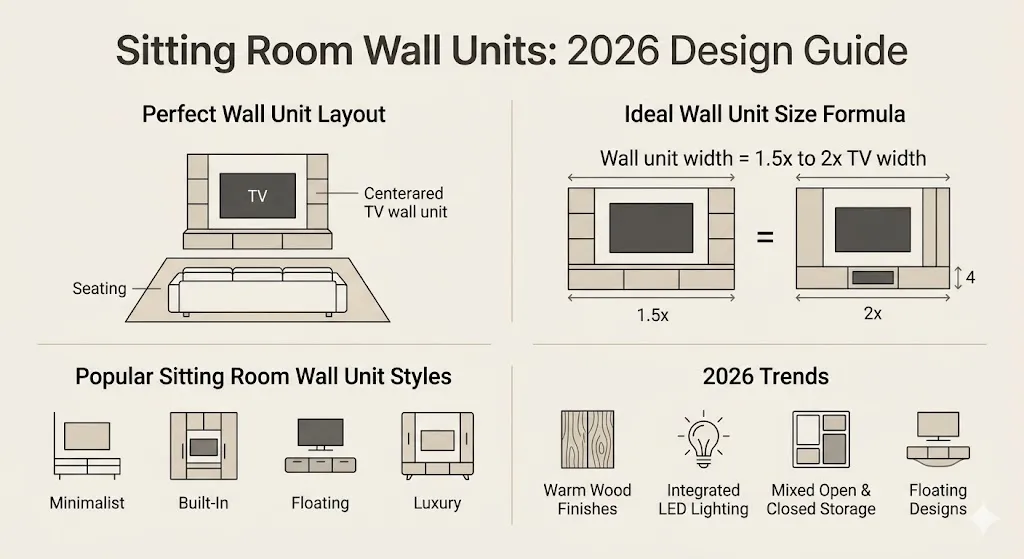
A strong TV wall unit usually includes a centered screen, side cabinets or niches, a lower console for devices, and proportions that extend beyond the width of the television. That extra width helps the entire arrangement feel balanced.
Built-in wall unit
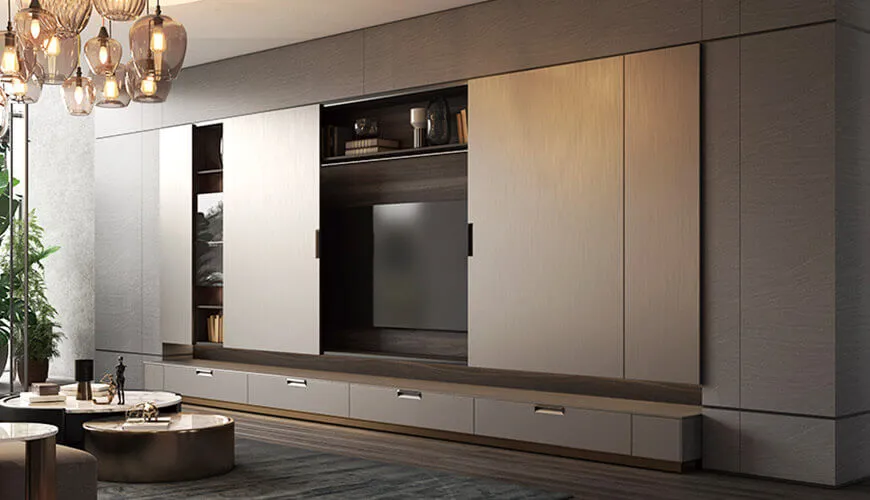
Built-ins provide the most architectural and polished result. They are excellent for homeowners who want a permanent feature and need serious storage capacity. Because they are customized, they can be tailored to the exact wall size and room layout.
The best built-ins usually align from floor to ceiling, use consistent panel spacing, and include thoughtful lighting and storage zones.
Wall unit for small sitting rooms
Small spaces need lighter visual treatment. Use shallow shelves, floating cabinets, and pale finishes so the wall unit does not feel bulky. The aim is to add function without creating visual weight.
Best features include low-profile storage, open floor space beneath floating sections, hidden compartments, and calm colors like white, beige, light oak, or soft greige.
Luxury wall unit
Luxury wall units use richer materials and more deliberate detailing. Think walnut veneer, fluted panels, stone-effect backdrops, brushed metal accents, and warm ambient lighting. These elements create depth and sophistication.
Luxury does not mean crowded. The best premium wall units still feel controlled, clean, and practical. They simply use better materials and more elegant proportions.
Quick style comparison table
| Style | Look | Best for | Main strength |
| Minimalist | Clean and light | Small rooms | Makes the room feel calm |
| TV wall unit | Functional and focused | Screen-led spaces | Organizes the main wall |
| Built-in | Seamless and custom | Permanent homes | Strong architectural feel |
| Small-room unit | Light and compact | Tight spaces | Saves visual and floor space |
| Luxury | Rich and layered | Premium interiors | High-end visual impact |
Built-In vs Modular vs Floating: Which One Should You Choose?
This choice matters because it affects cost, installation, storage, and long-term flexibility. Each option has a clear place.
| Feature | Built-In | Modular | Floating |
| Look | Most seamless | Clean but more visible joints | Light and modern |
| Flexibility | Low | High | Medium |
| Cost | Highest | Mid to lower | Lower to mid |
| Best for | Permanent homes, premium interiors | Renters, budget-conscious homes | Small rooms, minimalist layouts |
| Storage | Excellent | Good | Moderate |
| Installation | More complex | Easier | Easier |
| Visual impact | Very strong | Moderate | Light and subtle |
Built-in wall units
Pros: They look custom, elegant, and fully integrated. They provide excellent storage and can greatly improve the room’s architectural feel.
Cons: They are expensive, less flexible, and require careful planning before installation.
Modular wall units
Pros: They are easier to rearrange, expand, or replace. They work well for changing family needs and are usually more financially accessible.
Cons: They may not look as seamless as a built-in and can appear generic if the design is not carefully chosen.
Floating wall units
Pros: They create a light visual effect, work well in small rooms, and keep the floor area looking open.
Cons: They provide less storage than full-height units and may not suit every design style.
Room Layout and Space Planning Tips
A wall unit should always support the room’s layout rather than fight against it. That means space planning comes before styling. The location of the sofa, the viewing angle, the circulation paths, and the position of the TV all matter.
Simple layout rules
Keep the focal point clear. Do not allow large shelves or excessive decoration to compete with the television or primary display area. Leave breathing room around the wall unit. Make lower storage easy to access. Ensure doors and drawers can open without blocking movement. A beautiful unit is only useful if the room remains comfortable to use.
TV placement tips
Mount the TV at a height that is comfortable when seated. A screen placed too high can cause neck strain. Keep consoles, soundbars, and media devices aligned beneath the screen. Hide the cables as much as possible so the wall remains clean and finished.
Wall proportion rule
A good wall unit should feel substantial enough to look intentional but not so large that it overwhelms the wall. The design should be visually balanced with the sofa, the ceiling height, and the overall scale of the room. Proportion is one of the biggest factors separating a polished wall unit from an awkward one.
Best layout types
Centered media wall, asymmetrical feature wall, full-height book wall, low floating console wall, and recessed niche wall are all effective formats. They work because they create one clear visual story instead of several competing ones.
Color, Lighting, and Furniture Pairing
A wall unit looks best when it connects naturally to the rest of the room. Color, light, and surrounding furniture all play a role in making it feel integrated.
Best colors for sitting room wall units
Warm white, soft beige, greige, light oak, walnut brown, muted green, charcoal accents, and clay tones all work well. These colors are current, flexible, and easy to combine with other furniture pieces. They also support the warmer direction that interior design continues to follow in 2026.
Best lighting choices
LED strip lighting inside niches, shelf lights, soft downlights above the unit, and backlit panels all work well. Warm white lighting usually feels more inviting and comfortable in a sitting room. Cooler light can look sharper, but too much of it may reduce the cozy atmosphere.
Furniture pairing tips
Match the wall unit to the scale of the sofa. Keep side tables and accent chairs simple if the wall unit already has strong visual detail. Use a coffee table that complements rather than competes with the wall feature. Repeating one finish or material in other parts of the room also helps the whole interior feel connected.
Budget-Friendly Sitting Room Wall Unit Ideas
A stylish wall unit does not need to be expensive. Smart decisions matter more than high spending. If you simplify the design and focus the budget where it counts, you can achieve a polished result without overspending.
Smart budget ideas
Use modular cabinets instead of custom joinery. Choose painted MDF with quality hardware. Combine a few open shelves with closed storage. Add a simple floating console below the TV. Use LED tape only where it creates a visible impact. Paint the wall behind the unit in a soft contrasting color to create depth without extra carpentry.
Where to save
Save on decorative panels you do not need, unnecessary deep shelving, excessive detailing, and storage areas that you are unlikely to use.
Where to spend
Spend on hinges, drawer runners, the TV mounting zone, cable concealment, and one strong visible finish that will be seen daily. Those details make the biggest difference in how the unit performs and how long it lasts.
Premium and Luxury Wall Unit Ideas
Luxury wall units are not about being flashy. The strongest premium designs are elegant, restrained, and highly functional. They feel built into the room rather than attached to it.
Luxury features to consider
Full-height cabinetry, fluted or ribbed panels, walnut or oak veneer, stone-effect back panels, hidden lighting, bronze details, and display niches with carefully edited decor all help create a refined result.
Even in a luxury setup, practicality matters. A beautiful wall unit still needs easy cleaning, smooth access, and well-organized storage. When the design becomes difficult to maintain, it loses value quickly.
Common Mistakes to Avoid
A wall unit can improve a room dramatically, but poor planning can make the room feel smaller, heavier, or messier than before.
1. Making it too large for the room
If the unit fills every edge of the wall and pushes too far visually, the room can feel cramped.
2. Using too many open shelves
Open shelving only works when it is controlled and intentional. If everything is visible, the wall starts to look chaotic.
3. Ignoring cables
Loose or visible cables can ruin the appearance of even an expensive wall unit. Concealed wiring is essential.
4. Forgetting the walking space
A design that looks beautiful on paper may still fail if it blocks movement or makes the room awkward to enter and exit.
5. Choosing style before function
The room should determine the layout, not the other way around. The best wall units are designed around use first and appearance second.
6. Using harsh lighting
Too much brightness or the wrong color temperature can flatten the design and make the room feel cold.
Maintenance, Care, and Durability Tips
A wall unit should look good on day one and remain attractive for years. That depends on both material choice and regular care.
Simple care rules
Dust shelves regularly. Wipe fingerprints from glossy or lacquered surfaces quickly. Avoid Overloading shelves. Check hinges and runners every few months. Keep electronics ventilated so heat does not build up in enclosed areas. Use coasters or trays for items that could scratch the finish.
Durability tips by material
MDF works well for painted finishes, but it needs good sealing and quality hardware. Plywood with veneer is stronger for long-term use. Laminate is practical and easy to clean. Solid wood is beautiful and durable, but it costs more and often needs more care.
The right choice depends on budget, usage, and the level of refinement you want.
Smart, Modern, Future-Ready Wall Unit Ideas
Home design is moving toward quieter, more adaptable, and more intelligent spaces. Wall units fit that direction perfectly because they can combine storage, technology, and organization in one place.
Smart features worth considering
Hidden charging stations, cable channels, soft-close doors, touch-open cabinets, integrated LED controls, ventilated compartments for devices, space for routers or media boxes, and even fold-out work surfaces can make a wall unit much more functional.
Why this matters
A future-ready wall unit does more than look stylish. It adapts to changing routines, changing technology, and changing household needs. That is one reason these units remain so popular in modern homes.
Quick Design Checklist for Sitting Room Wall Units
Before you buy or build, use this checklist.
Keep the unit wider than the TV.
Mix open and closed storage.
Use lighter finishes in small rooms.
Choose durable hardware before decorative extras.
Plan lighting before installation.
Let the room layout lead the design.
Keep styling simple and edited.
These are small decisions, but they create a big difference in the final result.
Pros and Cons of Sitting Room Wall Units
| Pros | Cons |
| Adds storage without adding visual chaos | Can be expensive if fully custom |
| Creates a clear focal point | Poor planning can crowd the room |
| Makes a room feel more finished | Open shelves need regular styling |
| Works in small and large spaces | Installation may need professional help |
| Supports TV, decor, books, and organization | Bad proportions are hard to hide |
The biggest advantage is that one good wall unit can improve both form and function at the same time. The biggest risk is poor planning.
FAQs About Sitting Room Wall Units
The best wall unit is the one that matches your room size, storage needs, and overall style. For many homes, a mixed-storage or modular design works best because it balances display space with hidden storage.
Yes. Floating cabinets, shallow shelves, and light finishes can make a small sitting room feel more open and less crowded. A well-planned unit can actually make the room seem larger by reducing clutter.
Built-in units are best for a permanent, high-end look. Modular units are better if you want flexibility, easier installation, or lower cost. The right choice depends on how fixed your needs are.
In general, the wall unit should extend beyond the width of the TV so the composition feels balanced rather than compressed. A unit that is too narrow can make the screen look isolated.
Plywood with veneer, quality MDF, and laminate are all common choices. The best option depends on budget, style, and how much daily use the unit will receive.
Conclusion
Sitting room wall units do much more than hold a television or store a few items. They shape how the room functions, how organized it feels, and how polished it looks every day. The strongest designs are rarely the most complicated ones. They are the ones that fit the room, solve real storage problems, and stay visually calm.
In 2026, the best wall units are moving toward warm minimalism, Better Storage balance, richer textures, and smarter built-in features. That direction feels current now and practical for the long term. Whether you choose built-in, modular, or floating, the right wall unit should make the room easier to live in and better to look at. That is what turns a simple wall into the true center of the sitting room.
