
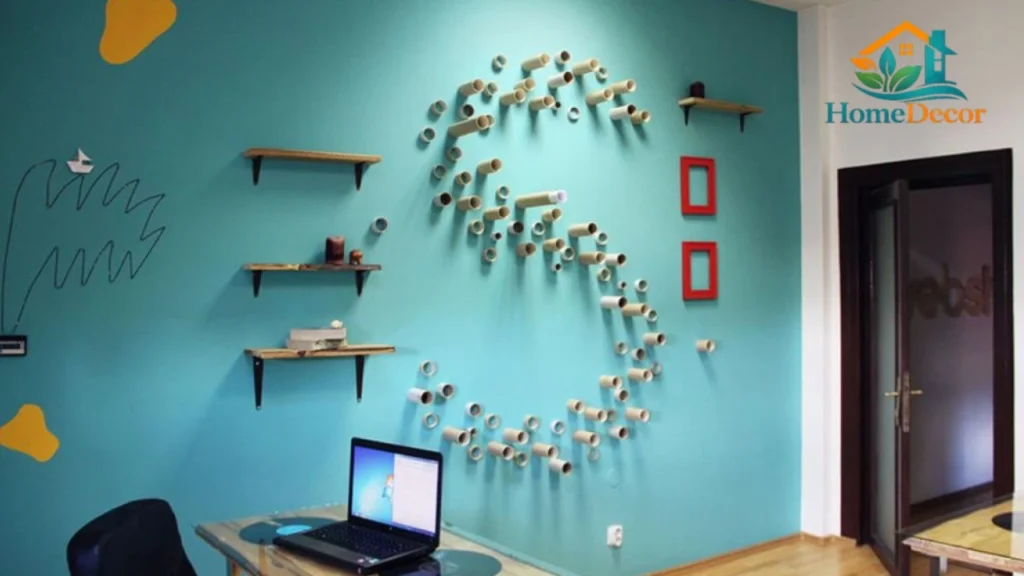
Introduction
Wall Decoration in the Office is not just about filling blank space. It is a design decision that can support branding, improve the feel of a room, and make a workspace more comfortable to use every day. Google’s guidance on helpful content, good titles, clear meta descriptions, and Crawlable internal links all point in the same direction: content should be useful, specific, and easy to navigate. That same principle applies to office walls. The best wall design is not random; it has a purpose.
In a modern office, walls can do far more than decorate. They can shape first impressions in reception areas, support concentration at workstations, reduce visual fatigue, reinforce brand identity, and make a room feel more human. Research on office environments suggests that visual connections to nature can reduce stress and improve concentration, while noise, lighting, and workspace design can influence performance and well-being.
Snippet-ready answer: The best office wall decoration combines beauty, function, and brand identity so the space looks professional and works better for the people inside it.
What Is Wall Decoration in an Office?
Wall decoration in the office means using color, art, materials, typography, graphics, panels, lighting, and functional surfaces to improve how a workplace looks and performs.
It can include:
- framed artwork
- branded feature walls
- murals
- acoustic panels
- notice boards and pin boards
- writable walls
- shelves and display systems
- biophilic elements like plants or nature-inspired graphics
The goal is not just to “make it pretty.” The goal is to make the office more useful, more welcoming, and more aligned with the company’s identity.
Mini summary:
Office wall decoration is a strategic design tool, not an afterthought.
Why Wall Decoration Matters in 2026
Office design in 2026 is more intentional than ever. Teams want spaces that feel professional, support focus, and still look good on camera. That matters for hybrid meetings, client visits, recruitment, and day-to-day morale.
A smart wall design can help with:
- Branding: Your walls can tell people who you are before you say a word.
- Productivity: Calm, clear visuals can reduce distraction.
- Comfort: Better-looking spaces often feel less harsh and more welcoming.
- Client trust: A polished office signals care and professionalism.
- Team culture: Wall graphics, values, and visual storytelling can make a workplace feel more connected.
Research on biophilic design points to beneficial connections with nature, while office studies connect noise, lighting, and workspace conditions with comfort and performance. That makes wall decoration a real workplace decision, not just a visual one.
Snippet-ready answer: Office wall decoration matters because it can improve branding, support focus, and make the workplace feel more comfortable and professional.
Best Types of Office Wall Decoration
Branded Walls
These are perfect for reception areas, meeting rooms, and client-facing zones. They can include logos, mission statements, taglines, or subtle brand graphics.
Accent Walls
One wall gets a different color, texture, or finish. This works well behind desks, sofas, or display furniture.
Art Walls
Curated art adds personality and makes a workplace feel less sterile. Keep the style aligned with the brand.
Biophilic Walls
These use plants, nature photography, wood textures, moss panels, or natural shapes to soften the space.
Functional Walls
These include whiteboards, pin boards, magnetic boards, shelving, or writable paint. They are ideal for collaboration areas.
Acoustic Walls
These combine style and sound control. They are especially useful in open offices, meeting rooms, and call-heavy spaces.
Mini summary:
The best wall type depends on the room’s purpose. A reception wall should impress. A workstation wall should support focus. A meeting room wall should help people think and talk clearly.
Top Office Wall Decoration Ideas That Work
| Office Zone | Best Wall Decoration Idea | Why It Works |
| Reception area | Logo wall or brand mural | Creates a strong first impression |
| Open workspace | Minimal accent wall | Reduces visual clutter |
| Meeting room | Writable wall or acoustic panels | Supports collaboration and focus |
| Executive office | Gallery wall or statement art | Feels polished and personal |
| Small office | Light colors + mirrors + slim art | Makes the room feel larger |
| Breakout space | Nature-inspired wall design | Feels calmer and more relaxed |
| Hallway | Timeline wall or achievement wall | Tells the brand story |
Best ideas by function
1. Logo Wall with Clean Typography
A logo wall is one of the fastest ways to make an office feel branded and finished. Keep it simple. Overdesign can look dated fast.
2. Abstract Art for Focus Areas
Abstract shapes and soft compositions work well in work zones because they add interest without becoming distracting.
3. Nature Wall Graphics
Greenery, leaf patterns, wood texture, and landscape art can help the office feel more balanced and human.
4. Mission Statement Wall
A short, well-designed statement wall can reinforce values without feeling cheesy.
5. Gallery Wall with Company Story
Use milestones, photos, awards, or curated visuals to show growth and credibility.
6. Writable Collaboration Wall
This is one of the most practical options for teams that brainstorm often.
7. Textured Panels
Panels made from wood slats, felt, fabric, or 3D materials create depth and improve acoustics.
Mini summary:
The strongest office walls do one clear job well: impress, guide, calm, support, or inspire.
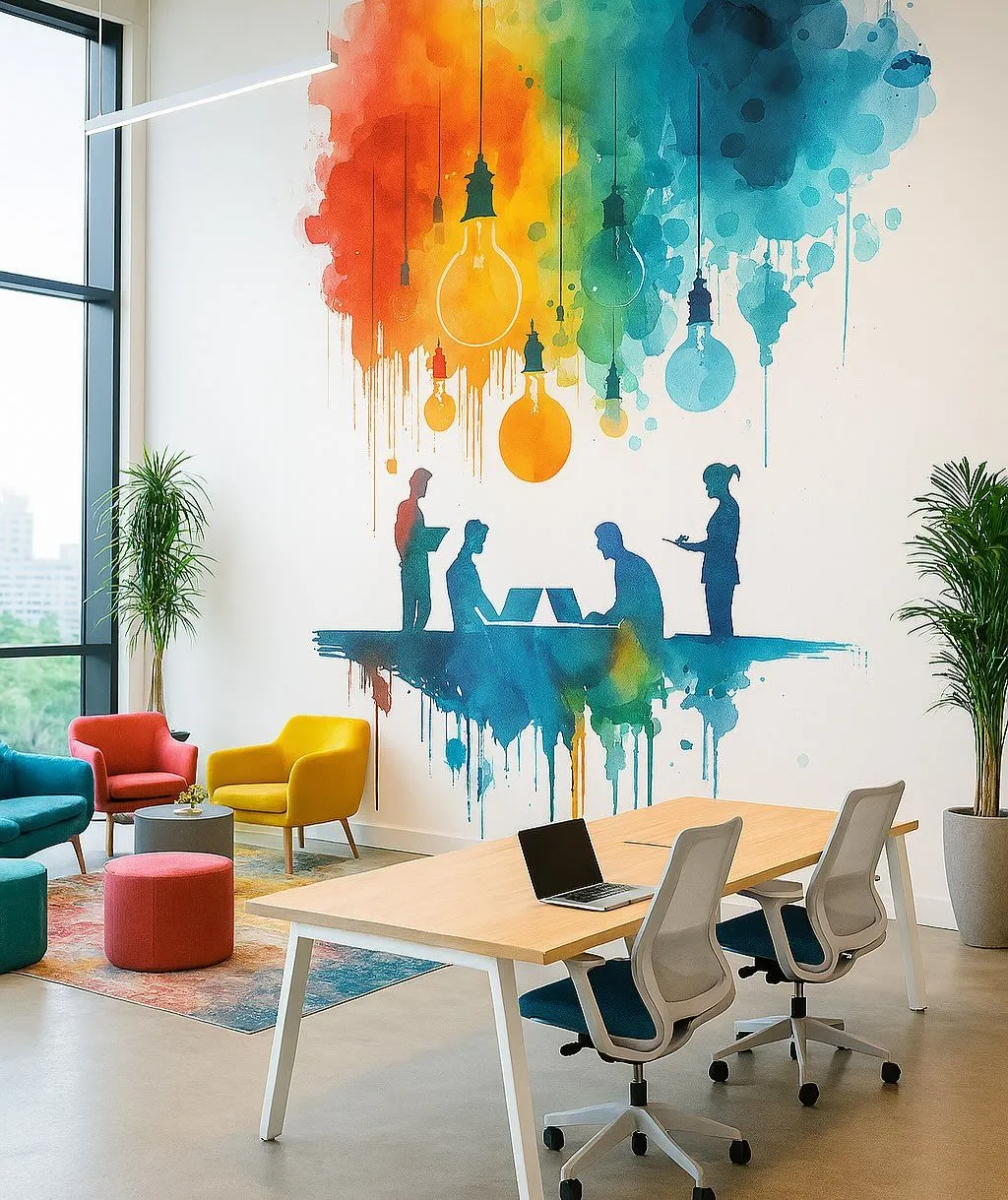
How to Choose the Right Wall Decoration for Your Office
Decide the wall’s purpose
Ask one question first: what should this wall do?
- impress clients
- support productivity
- help collaboration
- improve sound
- strengthen branding
- make a small room feel larger
Study the room
Look at:
- wall size
- natural light
- furniture placement
- traffic flow
- ceiling height
Match the design to the room type.
A quiet office and a creative studio should not look the same. A law firm reception wall will need a different tone from a design agency lounge.
Choose a visual style.
Pick one direction and stick to it:
- modern minimalist
- corporate refined
- warm natural
- creative bold
- luxury premium
- clean functional
Keep the wall consistent with the rest of the office
A beautiful wall can still look wrong if it clashes with the furniture, lighting, or brand colors.
Mini summary:
Good wall decoration starts with purpose, not decoration shopping.
Comparison: Which Wall Style Fits Which Office?
| Style | Best For | Strengths | Watch Out For |
| Minimalist | Corporate offices, small spaces | Clean, timeless, calm | Can feel too plain if overdone |
| Biophilic | Wellness-led, creative, modern offices | Softer mood, natural feel | Needs balance to avoid clutter |
| Branded | Reception, client areas | Strong identity, memorable | Can look too promotional |
| Functional | Meeting rooms, team areas | Useful and efficient | Must still look polished |
| Luxury | Executive offices, premium brands | High-end impression | Higher cost and maintenance |
| Artistic | Agencies, studios, creative teams | Personality and energy | Can distract if too busy |
Mini summary:
The right style depends on function, audience, and brand personality.
Wall Decoration Ideas by Budget
| Budget Level | Good Options | Why It’s Smart |
| Low budget | Framed prints, decals, paint accents, DIY grids | Fast, affordable, easy to change |
| Mid budget | Custom murals, acoustic art panels, shelving, brand signage | Better quality and stronger impact |
| Premium budget | Full feature walls, bespoke panels, lighting, and integrated branding | High-end finish with long-term value |
Budget-friendly office wall ideas
- Paint one accent wall
- Use framed posters or prints
- Install removable wall decals
- Add a simple plant shelf
- Create a company values wall
- Use a pinboard or grid wall for function and style
Premium office wall ideas
- Custom mural
- Wood slat or stone-look feature wall
- Bespoke reception logo wall
- Acoustic panels with a design finish
- Integrated LED lighting
- Gallery wall with curated art collection
Mini summary:
You do not need a big budget to improve an office wall. You need a clear plan.
Why Biophilic and Acoustic Wall Design Are Trending
Biophilic design remains strong because people respond well to natural textures, natural forms, and visual references to nature. Terrapin Bright Green’s biophilic design framework highlights visual connection with nature, material connection with nature, and biomorphic forms as key patterns. In office settings, those ideas are useful because they can make rooms feel calmer and more comfortable.
Acoustic design is also Important. Open offices often suffer from distraction, annoyance, and concentration problems, and research has linked office noise to lower performance and greater stress. That is why acoustic wall panels are one of the smartest wall decoration choices in modern workplaces.
Why this matters for design
- Better sound control helps people focus.
- Natural visuals help a room feel less harsh.
- Texture adds depth without visual chaos.
- Wall design can support both style and function.
Mini summary:
The best modern office walls are not only beautiful. They also help the room feel and work better.
Color Ideas for Office Wall Decoration
Color should support the kind of work happening in the room. Research on color and office environments suggests that color and brightness can affect attention, emotion, and work comfort, though results depend on context and task type. That means color choices should be thoughtful, not trendy for the sake of it.
Simple color guidance
- Blue: calm, focused, professional
- Green: balanced, natural, easy on the eyes
- Beige/greige/warm white: soft, flexible, clean
- Charcoal: strong, modern, premium
- Muted terracotta: warm and creative
- Soft yellow: energetic in small doses
Best color rules
- Use light colors in small rooms.
- Use dark accents to ground a large room.
- Avoid overly bright walls in focus-heavy spaces.
- Match the wall color with natural and artificial light.
Mini summary:
Color should support the room’s purpose, not fight it.
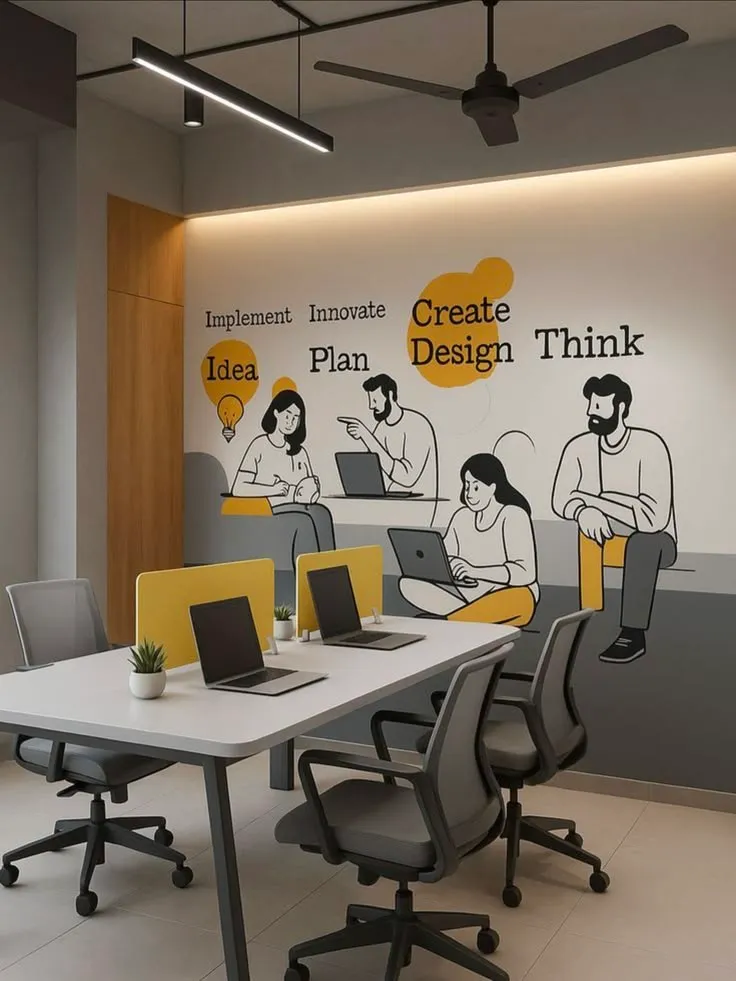
Decorating Office Walls
Audit the space
Stand in the room and ask:
- What is the wall for?
- Where will people sit or look?
- What is visible first?
- Where is the natural light?
Choose one design direction
Do not mix too many ideas. Select one main concept:
- brand wall
- art wall
- nature wall
- acoustic wall
- functional wall
Set the focal point
Every wall needs a focal point. This could be:
- a logo
- one large art piece
- a texture finish
- a central color block
- a display system
Build around the focal point
Add supporting elements only if they improve the wall:
- slim shelves
- small artwork
- lighting
- plant accents
- typography
Test the balance
Check for:
- symmetry
- alignment
- scale
- color balance
- negative space
Finish with lighting
Lighting can completely change how a wall looks. Use:
- wall washers
- spotlights
- Concealed LED Strips
- table lamps in lounge areas
Mini summary:
A strong office wall is designed in layers: purpose, focal point, support, and lighting.
Common Mistakes to Avoid
- decorating without a purpose
- using too many colors
- making the wall too busy
- ignoring room size
- using low-quality prints
- placing art too high or too low
- forgetting about lighting
- choosing decor that clashes with the brand
- overusing motivational quotes
- putting style before function
Most important mistake
The biggest mistake is treating office walls like home decor. A workplace needs better balance, clearer function, and stronger brand alignment.
Mini summary:
Avoid clutter, mismatch, and random decorating. Every wall should earn its place.
Expert Tips Most People Ignore
Design for the camera
In hybrid work, office walls appear on video calls. A neat, branded wall can make the whole business look more professional.
Use wall height wisely
Tall walls need taller art, vertical panels, or larger compositions. Small frames can disappear on big walls.
Repeat materials
Repeating one finish, such as oak, black metal, or felt, helps the office feel intentional.
Leave visual breathing room
Space is not wasted space. It helps premium interiors feel calm and expensive.
Think about sound before decoration
A wall can look great and still fail if the room is too noisy. Acoustic comfort matters.
Keep brand walls subtle in premium spaces
A luxury office wall should feel polished, not like a billboard.
Mini summary:
The smartest wall designs are subtle, balanced, and practical.
Maintenance and Long-Term Value
Office wall decor should be easy to maintain. Choose finishes that stay good-looking with normal cleaning and use.
Maintenance checklist
- Dust frames and panels regularly
- Check for fading from direct sunlight
- Clean textures with the right product
- Replace damaged prints quickly
- Keep decals and signage aligned
- Refresh outdated visuals every few years
Long-term value comes from:
- durable materials
- timeless colors
- flexible layouts
- brand consistency
- easy updates
A wall that is easy to refresh will save money over time.
Mini summary:
The best office wall decoration lasts, adapts, and still looks relevant later.
Snippet-Ready Answers
What is the best wall decoration in office spaces?
The best office wall decoration is the one that supports the room’s purpose, fits the brand, and improves the experience for employees and visitors.
How do you decorate office walls professionally?
Choose one clear style, use balanced colors, add a strong focal point, and keep the layout clean and aligned with the office function.
What wall decor works best for productivity?
Simple accent walls, acoustic panels, light colors, and low-clutter art usually work best in focus-heavy spaces.
What wall decor works best for branding?
Logo walls, mission walls, timeline walls, and custom murals are strong options for brand identity.
FAQs
Soft neutrals, muted blue, and green are safe choices for most workspaces because they feel calm and professional.
Use light colors, slim frames, vertical art, and one focal point. Avoid heavy clutter.
Yes. Murals work well in reception areas, meeting rooms, and creative spaces when the design matches the brand.
An office accent wall is one wall that uses a different color, texture, or material to create a focal point.
It can reduce visual stress, support focus, improve comfort, and make the space feel more organized.
Conclusion
Wall decoration in office design is not Decoration for decoration’s sake. It is a practical tool that can shape brand identity, improve comfort, support focus, and make a workplace feel more polished and human. The strongest results come from walls that are planned with purpose: one clear function, one clear style, and one clear message.
If you want better results in search and in real life, do not build your office walls around trends alone. Build them around people, purpose, and brand consistency. That is what makes a workspace memorable, useful, and worth keeping.
For more design-led content, explore more articles on theroomsart.com and build a stronger visual identity across every office space.
