
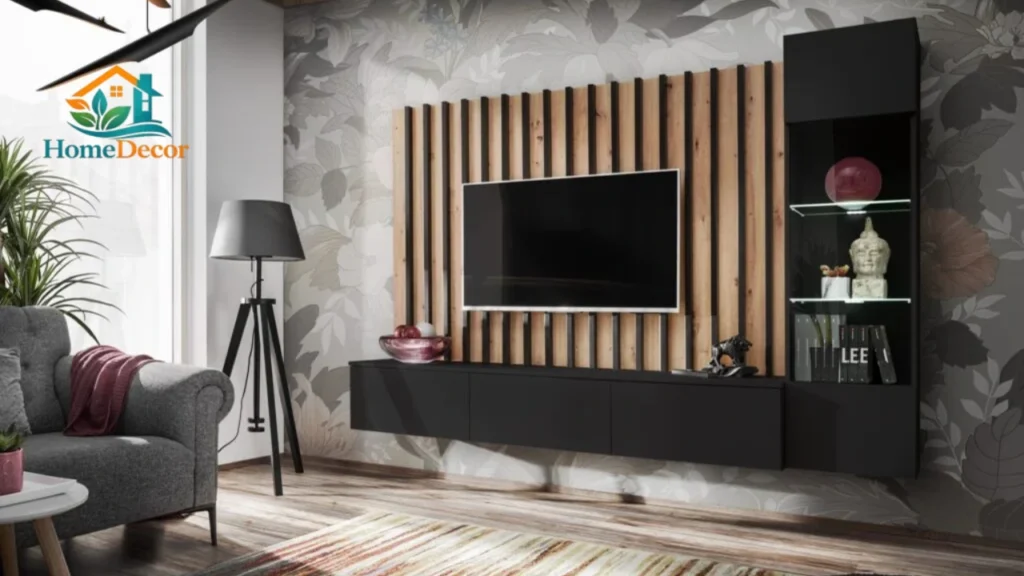
Introduction
A Wall Unit for the Drawing Room is no longer just a place to keep your TV. It is now one of the most important design features in a home because it can hide clutter, improve storage, and make the whole room look more polished. In modern homes, especially compact ones, people want furniture that does more than one job. That is exactly where a well-planned wall unit wins.
The problem is that many people choose a wall unit based only on looks. They forget about room size, viewing distance, material quality, cable management, and storage balance. The result is a unit that looks good for a week and then starts feeling crowded, awkward, or hard to maintain.
This guide solves that problem. You will see what a wall unit is, why it matters in 2026, which styles work best, how to choose the right size and material, how to plan for small rooms, and how to avoid common mistakes. By the end, you will know how to choose a wall unit that looks stylish and actually works in real life. Google’s current guidance still rewards helpful, reliable, people-first content, so this guide is built to answer the questions buyers actually ask.
What is a wall unit for a drawing room?
A wall unit for the drawing room is a built-in, wall-mounted, or modular furniture system designed to organize the main feature wall of your living space. It often includes a TV panel, shelves, drawers, display niches, closed cabinets, and sometimes lighting.
Snippet-ready answer
A wall unit for the drawing room is a furniture system that combines display, storage, and entertainment in one wall-focused design. It helps keep the room neat while making the TV wall look intentional and stylish.
Modern pages on TV units and living room wall designs usually show wall units as a mix of storage and style rather than a single cabinet. That is the right direction, but the best version is the one that fits your room and lifestyle, not just the photo.
Why wall units matter in 2026
Wall units matter more now because homes are expected to do more with less space. People want cleaner rooms, hidden storage, and a strong focal point without adding heavy furniture. Current design pages also show that buyers increasingly want multipurpose units, floating units, light wood finishes, hidden storage, and lighting accents.
A good wall unit helps you:
- Keep wires and devices out of sight
- reduce visual clutter
- Add display space for decor
- Balance the TV with the rest of the room
- make a small room feel more organized
Mini summary: In 2026, the best wall unit is not the biggest one. It is the one that gives you storage, clean lines, and the right visual weight for your room.
Types of wall units for the drawing room
1. TV wall unit
This is the most common type. It places the television at the center and builds the rest of the design around it.
Best for:
- family rooms
- media-focused spaces
- homes that want a strong entertainment wall
2. Modular wall unit
A modular wall unit uses separate parts that can be arranged or expanded later.
Best for:
- changing needs
- renters
- families who want flexibility
3. Floating wall unit
This design keeps the floor clear and uses wall-mounted cabinets or shelves.
Best for:
- small rooms
- modern interiors
- airy, minimal spaces
4. Full wall entertainment system
This is a larger design that covers most or all of the wall with storage, display, and sometimes decorative cladding.
Best for:
- large drawing rooms
- luxury interiors
- homeowners who want a dramatic feature wall
5. Storage-first wall unit
This type focuses more on cabinets and hidden storage than on display.
Best for:
- clutter-heavy homes
- apartment living
- families with kids
DesignCafe’s current content shows multipurpose units, hidden storage, low-lying units, and compact-home solutions, while Livspace highlights luxury cladding, floating shelves, and backlighting. Those patterns map well to the five types above.
Best wall unit styles for the drawing room in 2026
| Style | Best for | Visual effect | Notes |
| Floating wall unit | Small rooms, modern homes | Light, airy, clean | Keeps the floor open and easier to clean |
| Wooden slat wall unit | Warm, premium interiors | Rich and textured | Works well with beige, walnut, and oak tones |
| Minimal TV panel | Compact homes | Simple and uncluttered | Good when the room already has enough furniture |
| Full-height storage wall | Family homes | Strong and practical | Great for books, decor, and closed storage |
| Luxury marble-look wall unit | High-end spaces | Glamorous and bold | Often paired with metallic accents and lighting |
Floating shelves, bold dark finishes, gold accents, marble looks, and backlighting are all active design directions in current living-room and TV-unit inspiration pages.
How to choose the right wall unit for your drawing room
Choosing the right wall unit is mostly about fit. A Beautiful unit that is too large, too dark, or too deep can overpower the room.
Measure the wall
Measure:
- wall width
- wall height
- distance from the opposite seating
- available floor clearance
Check the TV size
Your TV should look balanced inside the unit. A very small unit around a large screen looks awkward. A very large unit around a small TV looks empty.
Decide on the storage needs
Ask yourself:
- Do you need space for remotes and consoles?
- Do you want open shelves for decor?
- Do you need closed storage for clutter?
Match the room style
- warm rooms: oak, walnut, beige, cream
- modern rooms: white, grey, black, glass accents
- luxury rooms: marble finish, gold trim, dark wood, LED lighting
Think about cleaning and maintenance
If you want low effort, use simple surfaces and fewer open shelves. If you love styling shelves, be ready to dust them more often.
Plan for cables and devices
A good wall unit should hide wires, set-top boxes, routers, and console cables cleanly. Current design pages repeatedly call out hidden storage and cable concealment as major advantages of well-planned TV units.
Mini summary: choose the wall unit after measuring the wall and deciding on the storage need. Style comes second; fit comes first.
Wall unit size guide for different drawing rooms
| Room type | Best wall unit size approach | What to avoid | Best format |
| Small drawing room | Compact, floating, wall-mounted | Heavy floor units | Slim TV panel with upper shelves |
| Medium drawing room | Balanced modular layout | Overcrowded wall coverage | TV wall unit with mixed storage |
| Large drawing room | Wider, fuller composition | Tiny standalone units | Full-wall entertainment system |
| Narrow room | Vertical design | Wide bulky cabinets | Tall shelves and slim side storage |
For compact homes, current design guidance often recommends multipurpose or floating solutions because they save space and keep the room visually lighter.
Best materials for wall units
Here is the practical material guide most buyers need.
| Material | Best for | Pros | Cons |
| MDF | Budget-friendly custom units | Smooth finish, easy shaping, affordable | Not the best for heavy moisture or rough handling |
| Solid wood | Premium, long-term use | Durable, rich texture, timeless look | More expensive and heavier |
| Laminate | Easy maintenance and modern looks | Wide finish options, low upkeep, good value | Can feel less premium than natural wood |
| Plywood | Balanced performance | Strong, versatile, good for custom work | Finish quality depends on surface treatment |
| Glass + metal | Modern luxury designs | Light visual feel, sleek appearance | Needs careful handling and regular cleaning |
DesignCafe’s material guide specifically notes that wooden units suit classic warmth, glass brings a lighter modern feel, and material choice changes durability, maintenance, style, and budget. It also states that engineered wood and laminates are generally more affordable, while solid wood and stone sit higher on the cost scale.
Material choice by goal
- Best value: laminate or MDF
- Best durability: solid wood or quality plywood
- Best modern look: glass, metal, or a matte laminate finish
- Best luxury look: solid wood, marble-look finishes, or mixed premium materials
Mini summary: if the unit will get daily use, do not pick material by looks alone. Pick it based on durability, maintenance, and budget.
Comparison section: Which wall unit works best?
| Need | Best choice | Why |
| Small room | Floating wall unit | Saves floor space and keeps the room light |
| Family storage | Modular wall unit | Gives closed cabinets and a flexible layout |
| TV-focused room | TV wall unit | Centers the screen and organizes the wall |
| Luxury look | Full wall system | Creates a strong statement wall |
| Easy cleaning | Minimal wall unit | Fewer shelves and less dust buildup |
This is where most pages stop short. They show the styles, but they rarely tell you which one is best for a specific room problem. That is the gap you can exploit.
Best wall unit ideas for small drawing rooms
Small rooms need smart restraint. The goal is to make the wall useful without making it heavy.
Best ideas for small spaces
- Choose a floating TV panel
- Use light colors like white, beige, oak, or soft grey
- keep shelves shallow
- Use closed storage for clutter
- Add one or two open display spots, not too many
- Use vertical lines to stretch the room visually
- Add soft backlighting rather than bulky decor
What to avoid
- deep cabinets that block movement
- oversized display shelves
- Too many finishes in one wall unit
- dark, bulky panels in a tiny room
- open shelves filled with too many small objects
Mini summary: for a small drawing room, the best wall unit is slim, light, and mostly closed. That gives you storage without visual noise.
Luxury wall unit ideas for the drawing room
Luxury wall units are usually not about size. They are about detail, finish, and proportion.
Strong luxury features
- marble-look panels
- matte black or deep walnut finishes
- brushed gold trims
- integrated LED backlighting
- mirror accents
- fluted or slatted textures
- hidden cabinets with clean lines
Current luxury inspiration pages frequently show white-and-gold combinations, marble finishes, dark tones with metallic trim, stone cladding, and backlighting as premium cues.
Luxury design rule
Luxury looks best when the layout is calm. Too many finishes cancel the premium effect. Use two main materials, one accent finish, and a clean storage plan.
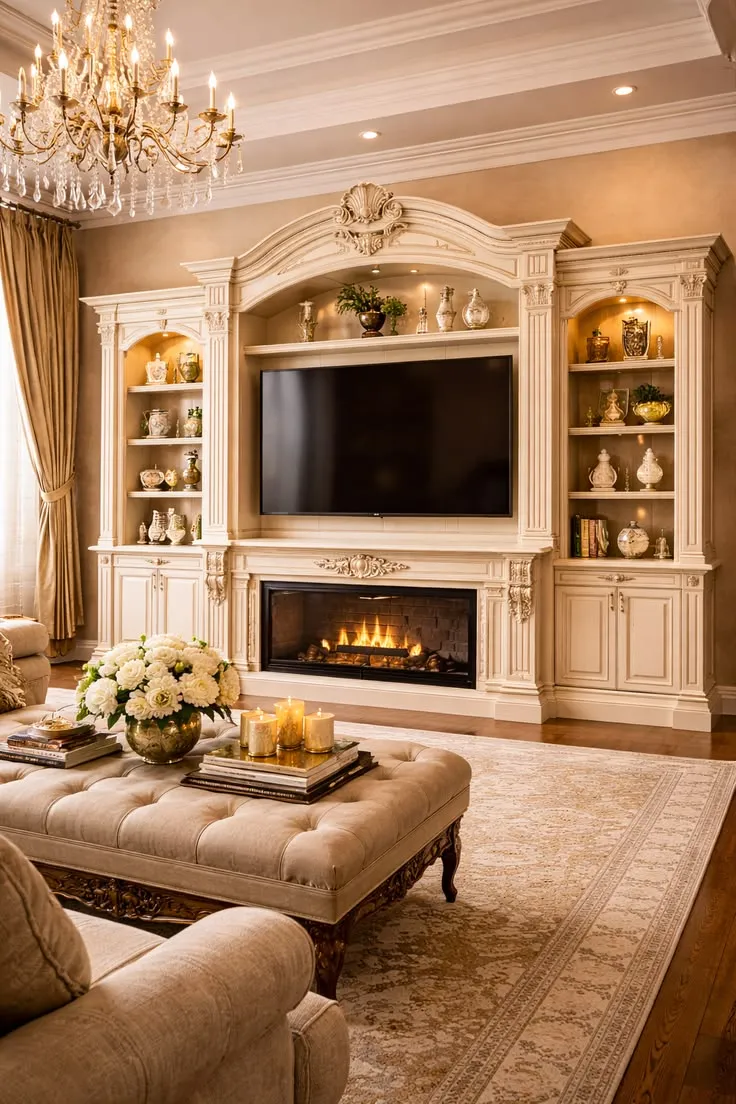
guide to design a wall unit for the drawing room
Define the purpose
Decide whether the wall unit is mainly for:
- TV viewing
- storage
- decor display
- all three
Measure the wall and TV
Write down:
- wall width
- Wall Height
- TV size
- seating distance
Choose the structure
Pick one:
- floating
- modular
- full-wall
- TV-centered
Decide storage split
A practical split is:
- 60% closed storage
- 30% display
- 10% open styling space
Pick the material
Match the material to use, budget, and cleaning preference.
Add lighting
Lighting can be:
- LED strips
- backlit panels
- spotlights
- shelf lighting
Finalize cable routing
Plan for:
- TV cable
- router
- power points
- gaming console
- sound system
Style the unit
Use only a few decor pieces:
- books
- one vase
- one sculpture
- one framed object
- one plant
DesignCafe and Livspace both show that hidden storage, shelf balance, and lighting are major parts of effective TV-wall planning, not afterthoughts.
Budget-friendly wall unit options
Budget-friendly does not mean boring. It means smart.
low-budget approaches
- MDF with laminate finish
- floating shelves instead of full cabinetry
- simple TV panel with one storage base
- fewer hardware details
- neutral colors with one accent texture
mid-range approaches
- plywood with laminate or veneer
- modular storage mix
- soft LED lighting
- partial wall cladding
- hidden cable channels
premium approaches
- solid wood
- custom joinery
- marble-look surfaces
- metal detailing
- integrated lighting and concealed storage
DesignCafe’s material coverage supports the idea that engineered wood and laminates are the more affordable route, while natural wood and stone-like finishes move into premium territory.
Mini summary: budget-friendly wall units work best when the layout is simple, the material is clean, and storage is planned carefully.
Smart and modern future trends
Modern wall units are moving toward quieter, smarter, and more integrated designs.
Trends to watch
- floating wall units
- hidden storage
- slim vertical shelving
- warm LED ambient lighting
- textured wood slats
- marble-look accents
- mixed-use TV walls
- backlit panels
Living-room inspiration pages from Livspace show white-and-gold looks, marble surfaces, dark opulent finishes, stone-clad walls, and floating storage as strong current directions, while DesignCafe continues to emphasize compact multipurpose layouts.
Why these trends work
They look good, yes, but they also solve real problems:
- less clutter
- better display
- cleaner cable hiding
- easier maintenance
- more visual space
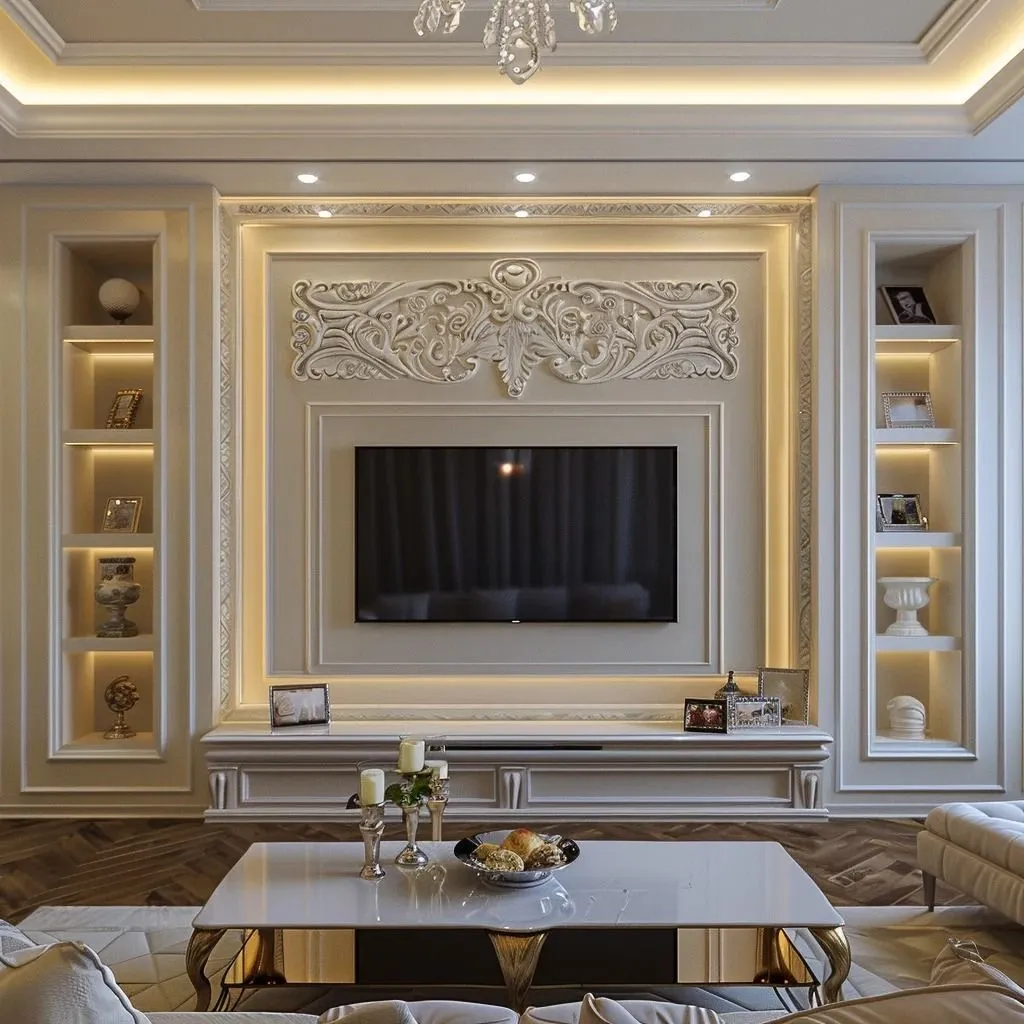
Common mistakes to avoid
This section matters because it saves money and regret.
Avoid these mistakes
- Buying before measuring the wall
- Choosing style before storage needs
- Using too many materials in one unit
- Ignoring cable management
- Making open shelves too deep
- Overcrowding the display area
- Using dark, heavy finishes in a small room
- Forgetting about cleaning access
Quick rule
If the wall unit looks impressive but is hard to use every day, it is the wrong design.
Expert tips most people ignore
Here are the details that make a wall unit feel professionally designed.
- Keep the TV at a comfortable eye level.
- Leave breathing space around the screen.
- Use asymmetry only if it feels intentional.
- Repeat one finish elsewhere in the room for visual harmony.
- Use lighting to highlight texture, not just to decorate.
- Keep one side slightly simpler if the other side carries more visual weight.
- Plan the unit with the sofa position in mind.
These are the kinds of design decisions that separate a generic wall unit from a room-defining one.
Maintenance and long-term value
A wall unit should still look good after years of use.
Maintenance tips
- dust shelves weekly
- clean laminate with a Soft Cloth
- Avoid harsh cleaners on wood veneer
- Check cable points regularly
- Do not overload open shelves
- Keep decor minimal on high-traffic units
Long-term value tips
- Choose timeless colors
- Avoid overly trendy shapes for the main structure
- Use flexible storage in case your needs may change
- Keep hardware simple and durable
- Prioritize materials that are easy to maintain
DesignCafe’s material guide is useful here because it emphasizes durability, maintenance, and long-term fit as important parts of the material decision, not just appearance.
Pros and cons of wall units for drawing rooms
Pros
- saves space
- adds storage
- hides cables
- improves room design
- creates a focal wall
- works well for compact homes
Cons
- It can look bulky if oversized
- Custom versions cost more
- open shelves collect dust
- Bad planning makes them feel cluttered
- hard to change once installed
Mini summary: The benefits are strongest when the wall unit is built around the room, not copied from a photo.
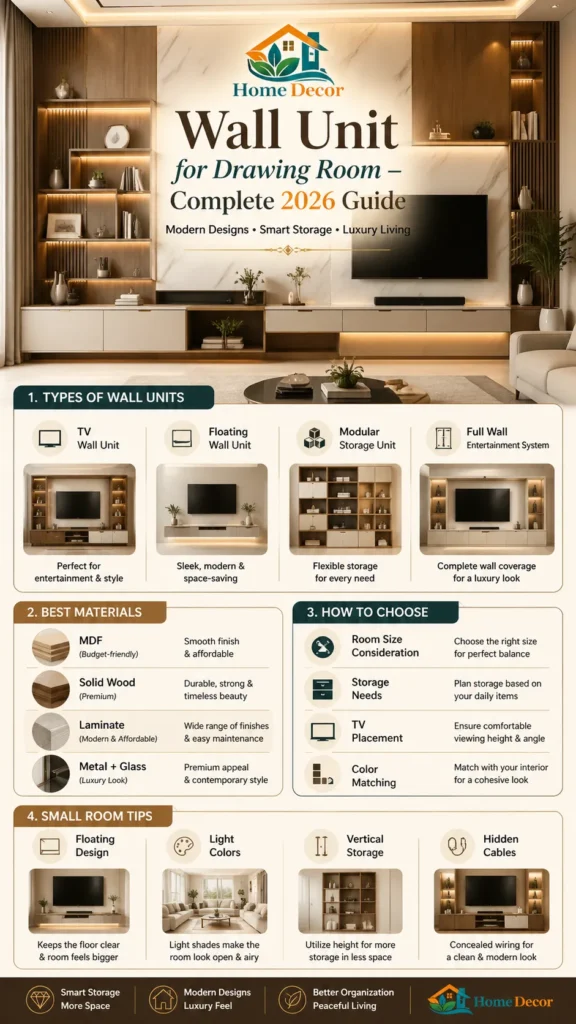
Discover the smartest wall unit ideas for your drawing room in 2026 — from space-saving floating designs to luxury full-wall storage systems.
FAQs
A floating or slim modular wall unit works best because it saves floor space and keeps the room visually light.
Solid wood is the most durable premium option, while plywood and quality laminate give strong everyday value.
Yes. Current design examples continue to favor floating shelves, hidden storage, LED lighting, wood textures, marble looks, and clean TV walls.
Use a concealed cable route behind the panel, add cutouts near power points, and plan the unit around your TV and device positions before installation.
Use both. Closed cabinets hide clutter, while open shelves let you display a few decor pieces. DesignCafe’s guidance also points to this mix as a balanced solution.
Conclusion
A wall unit for the drawing room is one of the smartest Upgrades you can make because it combines style, storage, and function in one design. The best wall units do not just look modern; they solve real problems like clutter, cable mess, and poor space use.
If you have a small room, keep the unit light and compact. If you want a luxury look, focus on texture, proportion, and restraint. And if you want long-term value, choose a material and layout that match how your family actually lives.
The pages ranking now are strong visually, but they leave room for a more complete guide. That is your opening. Use the structure, materials, room-size logic, and mistake-proof planning above to publish a page that answers the real buyer’s question: which wall unit will actually work in my drawing room?
