
Introduction
A great Wall Unit for Living Room use is more than furniture. It is a storage system, a design anchor, and often the most visible feature in the room. The best wall units combine beauty and function: they organize clutter, frame the TV or décor, and make the living room feel intentional instead of unfinished. That is why modular systems, media walls, floating units, and built-in arrangements continue to show up in current design coverage and brand collections.
In 2026, the smartest wall unit is not the biggest one. It is the one that fits the room, supports daily life, and still looks calm when the TV is off. This guide will help you choose the right style, compare options, avoid expensive mistakes, and plan a wall unit that feels balanced in a modern home. Google’s guidance on helpful content also supports this approach: answer the real question, give complete information, and place the main topic clearly in the page structure.
Snippet-ready answer
A wall unit for the living room is a storage and display system that usually combines shelves, cabinets, and a TV area into one organized feature wall. It can be built-in, modular, floating, or media-focused.
What Is a Wall Unit for a Living Room?
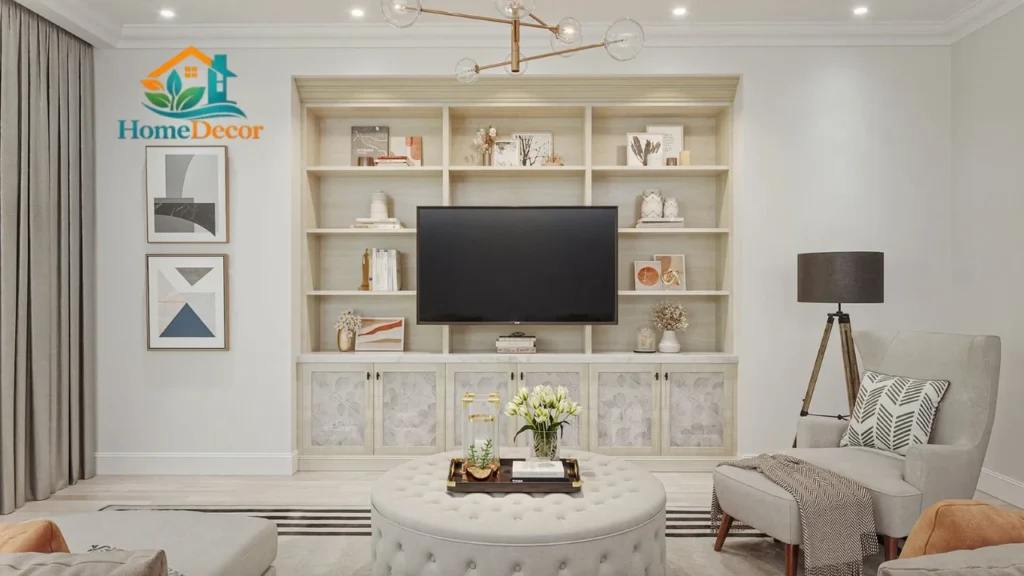
A wall unit is a furniture system placed along a living room wall to combine storage, display, and visual structure. It may include open shelves, closed cabinets, a TV niche, accent lighting, book storage, or decorative panels. Some systems are fully built-in, while others are modular and can be customized to the room size and layout.
Think of it as a living room “command center.” It can hide cables, support media equipment, display books or décor, and help define the room’s focal point. In current design examples, you will often see a mix of open and closed storage, vertical shelving, low media bases, and warm material finishes such as wood, glass, and matte surfaces.
Why Wall Units Matter in 2026
Wall units matter because modern living rooms need more from one wall than ever before. They must store devices, books, décor, game consoles, remotes, chargers, and daily clutter while still looking elegant. Modular and wall-mounted systems are popular because they save floor space and can be adapted to different room sizes and styles.
Another reason they matter is flexibility. Design coverage for 2026 shows media walls and wall units evolving into layered compositions rather than simple TV stands. These layouts often use open shelves, low storage, integrated lighting, and mixed materials to create a more architectural look.
Mini summary
A good wall unit improves storage, keeps the room cleaner, and turns one wall into a strong design feature. In smaller rooms, it can also make the space feel more organized and vertical.
Best Types of Wall Units for the Living Room
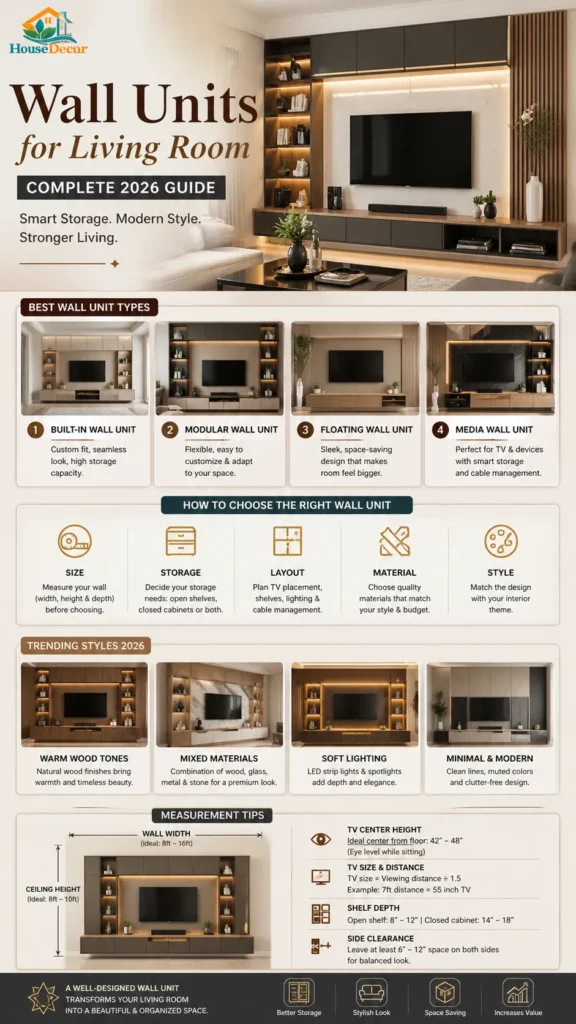
Built-In Wall Units
Built-in wall units are made to fit the room closely. They can look seamless, custom, and high-end. They are best when you want a permanent solution and have a clear layout in mind.
Modular Wall Units
Modular systems are flexible and easier to adapt. They are often the best choice when your room may change over time or when you want a more budget-aware approach. Modular wall systems are widely described as versatile because you can adjust shelves, doors, and the balance of full and empty space.
Floating Wall Units
Floating wall units keep the floor open, which helps a room feel lighter and less crowded. This style works well in small living rooms and modern apartments. Recent media wall examples also use low, linear forms to reduce visual bulk.
Media Wall Units
Media wall units are designed around the TV and related devices. They often include cable management, display shelves, hidden storage, and a back panel that frames the screen. Current design examples frequently mix a TV zone with shelving and closed storage to avoid a flat, boring wall.
Luxury Display Wall Systems
These are more decorative and furniture-led. They may use glass, accent lighting, marble, or premium finishes to make the wall unit feel like part of the architecture. Brand systems such as Poliform and LAGO show how a wall unit can become the visual focal point of the room.
Wall Units for Living Room: Comparison Table
| Type | Best For | Pros | Cons |
| Built-in | Premium custom look | Seamless fit, high-end finish, strong resale appeal | Higher cost, less flexible |
| Modular | Most homes | Flexible, easy to customize, scalable | May look less architectural |
| Floating | Small or modern rooms | Light visual feel, easier cleaning | Limited storage volume |
| Media wall | TV-focused rooms | Hides cables, organizes devices, strong focal point | Can look heavy if overdone |
| Luxury display system | Statement interiors | Elegant, polished, design-led | Usually, the most expensive |
How to Choose the Right Wall Unit
Measure the wall properly
Start with the full wall width, ceiling height, window position, door swing, and the size of the TV if one will be included. Good planning is the difference between a wall unit that looks intentional and one that feels squeezed into the room. Google also recommends using the words people search for in prominent places like the title and main heading, which is why precise planning terms matter in this topic.
Decide the main job of the unit
Ask one simple question: is this wall unit mainly for storage, display, media, or all three? A storage-first unit needs more closed cabinets. A display-first unit needs more open shelving. A media-first unit needs cable planning and screen placement. Modern examples usually balance those functions rather than using only one.
Match the unit to the room size
For small rooms, shallow depth, floating cabinets, and vertical shelving usually work better than bulky full-wall systems. For larger rooms, a more complete wall composition can look proportional and luxurious. Modular and wall-mounted systems are especially useful because they can scale up or down.
Choose the right balance of open and closed storage
Too many open shelves can create visual clutter. Too many closed doors can make the wall feel heavy. The best wall units usually mix both, so the room has a place for display and a place to hide everyday mess. This open/closed balance is a repeated theme in current wall-system examples.
Check the material and finish
Material affects durability, price, and style. Common choices include MDF, plywood, veneer, laminate, glass, and solid wood. Warm wood, matte finishes, and mixed materials are especially visible in current design trends.
Wall Unit Materials and Finishes Table
| Material / Finish | Best Use | Strengths | Trade-Offs |
| MDF | Painted modern units | Smooth finish, budget-friendly | Less premium than wood |
| Plywood | Everyday family use | Strong, stable, practical | Finish quality varies |
| Veneer | Warm modern look | Elegant grain, refined appearance | Needs careful maintenance |
| Laminate | Busy homes | Easy to clean, cost-effective | Can feel less luxurious |
| Solid wood | Luxury interiors | Durable, rich visual character | Higher cost |
| Glass / mixed finishes | Display-focused units | Light, modern, elegant | Fingerprints and care |
Best Wall Unit Ideas for Living Room
TV wall with hidden storage
This is one of the strongest options for modern homes. Keep the TV centered, add low cabinets below, and use side shelves or tall panels to frame the composition. This creates a cleaner look than a plain TV stand.
Floor-to-ceiling book and display wall
A floor-to-ceiling unit works best in rooms that need both storage and a statement feature. It brings vertical balance and can make the room feel taller. Poliform’s wall system concept and similar modular systems show how shelves, doors, and display zones can work together in one composition.
Floating base with open shelving above
This is a smart choice for compact living rooms. A floating base keeps the room airy, while upper shelves give space for books or décor. Recent media-wall examples use this low-and-light structure to avoid visual heaviness.
Asymmetrical wall unit
An asymmetrical design can feel more contemporary and less forced. You can offset shelves, vary cabinet sizes, and create visual movement. This style appears often in 2026 media-wall inspiration because it feels custom without needing a fully built-in solution.
Warm wood wall unit
Warm wood tones are one of the easiest ways to make a living room feel cozy and premium. Wood-layered media walls and warm-toned storage walls are common in current inspiration, especially when paired with soft lighting and matte finishes.
Luxury glass-and-light wall system
If the goal is a more refined, design-led room, Consider Glass Doors, subtle lighting, and a lighter suspended structure. LAGO’s wall unit highlights how glass panels and accent lighting can balance display and storage while keeping the wall visually refined.
Mini summary
The best idea is the one that solves your real problem. Need storage? Choose closed cabinets. Need a clean TV wall? Choose a media unit. Need a feature wall? Use mixed shelves, wood tones, and lighting.
Built-In vs Modular Wall Units
| Feature | Built-In Wall Unit | Modular Wall Unit |
| Custom fit | Excellent | Good |
| Flexibility | Low | High |
| Budget | Higher | Lower to mid |
| Installation | Professional | Easier |
| Best for | Long-term custom interiors | Changing needs and budgets |
Built-in units are ideal when you want a seamless architectural result. Modular units are better when you need flexibility, faster installation, or a more accessible price point. Brand and design sources repeatedly describe modular wall systems as versatile and adaptable, which is why they are often the safest recommendation for most homeowners.
Budget-Friendly Wall Unit Options
If you want a good wall unit without overspending, focus on smart simplification. Use laminate or quality MDF, reduce unnecessary decorative cutouts, and prioritize storage zones that solve real clutter. In current product collections, wall and TV storage items cover a wide price range, showing that living-room storage can be planned from accessible to premium levels.
Budget-friendly tips
- Choose modular instead of fully built-in
- Use fewer open shelves
- Keep the design symmetrical and simple
- Add lighting only where it matters
- Spend more on hardware and hinges than on decorative extras
Premium / Luxury Wall Unit Options
Premium wall units usually focus on proportion, material quality, and a very clean finish. Glass doors, veneer, integrated lighting, hidden openings, and custom shelving are common in luxury systems. Poliform and LAGO both show how a wall unit can feel architectural rather than simply functional.
Luxury works best when the wall unit does not feel crowded. Leave breathing space around the TV, keep shelf styling controlled, and use materials that look elegant even in daylight. Recent design coverage in 2026 also points toward warm, layered compositions rather than overly cold or overly busy entertainment walls.
Smart and Modern Future Trends
The biggest trend is not “more stuff on the wall.” It is a smarter wall organization. Future-facing wall units are cleaner, more modular, and more integrated with lighting and technology. Modern media walls increasingly combine open shelves, low storage, and design panels, making the TV area feel like part of the room rather than a black rectangle on the wall.
2026 trend directions
- Warmer wood tones
- Mixed open and closed storage
- Low-profile media bases
- Soft integrated lighting
- Modular systems that adapt over time
- More architectural wall compositions
- Less visual clutter around the TV zone
Wall Unit Planning Guide
- Measure the wall and note all obstructions.
- Decide whether the unit is storage-first, media-first, or display-first.
- Choose between built-in, modular, or floating construction.
- Select material and finish based on budget and usage.
- Plan cable management before installation.
- Balance open and closed storage.
- Style it last, after the main structure is correct.
Common Mistakes to Avoid
A wall unit usually fails for one of a few simple reasons: it is too large for the room, too shallow to be useful, too open to hide clutter, or too decorative to function well. Another common mistake is deciding the style first, and the storage needs second. That often leads to a beautiful wall that is awkward to live with.
Avoid these mistakes
- Filling the entire wall without proportion
- Ignoring cable routing
- Choosing open shelves only
- Making the TV the only focus
- Using weak lighting
- Forgetting daily storage needs
Expert Tips Most People Ignore
One of the most overlooked tips is to design the wall unit around how the living room is used at night. A unit that looks good only in daylight is incomplete. Add soft Lighting, closed storage for clutter, and enough visual calm that the room still feels relaxing after dark. That approach reflects how current design pages and brand systems combine display and storage rather than treating them separately.
Another often-missed point is to leave visual breathing space. Even a large wall unit should not feel like it is squeezing the room. In current examples, the strongest compositions usually rely on rhythm, negative space, and a controlled mix of materials.
Maintenance and Long-Term Value
A wall unit should be easy to live with for years. That means choosing finishes that are easy to clean, hinges and hardware that feel solid, and a layout that still works if your storage needs change. Modular systems have an advantage here because they can evolve. Built-ins offer the best long-term visual integration, but they should only be used when you are confident about the room layout.
Simple care tips
- Dust shelves weekly
- Keep cable routes accessible
- Use coasters and felt pads where needed
- Re-style open shelves seasonally
- Do not overload floating sections
FAQs:
The best wall unit is the one that fits your room size, storage needs, and style. For many homes, a modular mixed-storage system is the most practical choice.
Yes. Floating cabinets, shallow storage, and vertical shelving are especially useful in small rooms because they save floor space and keep the room feeling open.
Built-in is better for a custom, seamless finish. Modular is better for flexibility, easier installation, and a lower budget.
Plywood, MDF, veneer, laminate, and solid wood are all common. The best choice depends on budget, daily use, and the look you want.
Use fewer materials, cleaner lines, balanced proportions, hidden storage, and soft lighting. Luxury examples often rely on calm composition rather than excess decoration.
Conclusion
The strongest Wall Units for the Living Room content in 2026 should do more than show pretty pictures. It should help readers choose the right type, size, material, and layout for their actual room. That is where most current pages fall short, and that is the opportunity for The Rooms Art: to publish a complete, practical, trustworthy guide that answers the real planning questions while still feeling elegant and inspiring. Google’s guidance on helpful, Reliable, people-first content supports exactly this kind of complete resource.
