
Introduction: Why Wall Clocks Matter in Your Living Room
A Wall Clock For The Living Room is more than just a tool to tell time. A clock isn’t just something you glance at. It shapes how a space feels, standing quietly yet defining corners with its presence. By 2026, interiors lean toward pieces that matter – objects doing more than sitting still. A well-picked timepiece fits: useful without shouting about it. Style shifts – from sleek lines to warm clutter – but balance stays key. Proportion matters. So does timing. Even silence gains texture when framed by design. Personality slips in through form, not slogans.
What if most web guides just toss out items without explaining choices? Like how one dimension fits a space, why certain finishes match particular lights, or what kind of motion feels right near a muted screen. That gap is exactly where this resource steps in. Clear sizing logic appears early. Positioning follows naturally. Design forms link directly to room personalities. Movements get weighed side by side. Suggestions are split into focused categories. Styling moves arrive ready to test immediately.
A finished space comes together when the clock on the wall looks like it belongs there. Placement matters just as much as shape or size. Imagine stepping back and seeing how each piece fits without shouting for attention. A steady tick should blend into daily moments, not interrupt them. Choosing one becomes easier once you notice how light moves across its face during different hours. Height plays a quiet role – too high feels distant, too low seems awkward. Hold options up even if just in thought before settling. Let comfort guide more than trends do. The right match hums along quietly, part of the room’s rhythm.
Why Wall Clocks Are Essential in Living Rooms
A single tick marks hours, yet that piece on the wall holds weight. Beyond numbers, it shapes how a space feels – quietly setting rhythm without sound. Function slips into form when practicality meets design, each presence altering perception. Time becomes texture through its steady gaze across furniture lines
- A single tick-tock piece grabs attention where nothing else lives, breaking up blank space. Its presence pulls your gaze, quietly aligning what sits nearby – chairs, frames, corners. Instead of emptiness, there’s rhythm. Furniture feels steadier when sound has a shape. Art leans better into silence with something counting behind it.
- A clock’s look – its form, stuff it’s made of, how it feels to touch – tells what kind of person lives there. Could be sleek one minute, rough-hewn the next. Sometimes silly shapes show up. Other times, metal edges shout factory roots. What hangs on the wall whispers taste without speaking. Shape leans elegant, then veers into raw wood charm. Materials shift like mood rings. Finish decides if it fades back or stands out loud.
- What if checking the time meant glancing up instead of grabbing your phone? That small shift helps habits stick. Routines flow more easily when seconds aren’t lost scrolling. Eyes lift, mind stays focused. Time becomes visible, constant, right there on the wall – no pings required.
It happens now and then – a clock does nothing more than mark hours. Then again, it may sit still, shaping how a room feels without saying a word. Those who shape spaces often treat them as double-duty pieces. Sitting near novels on wood, one blends in like background noise. Hanging bare on plaster, another draws eyes like something meant to be noticed. Soft moments work best when timing feels natural, not forced. When calm meets intensity just right, things start flowing as they belong together. Smooth shifts keep everything moving without making a scene.
How to Choose the Perfect Wall Clock (Size, Style, Function)
The Most Important Decision
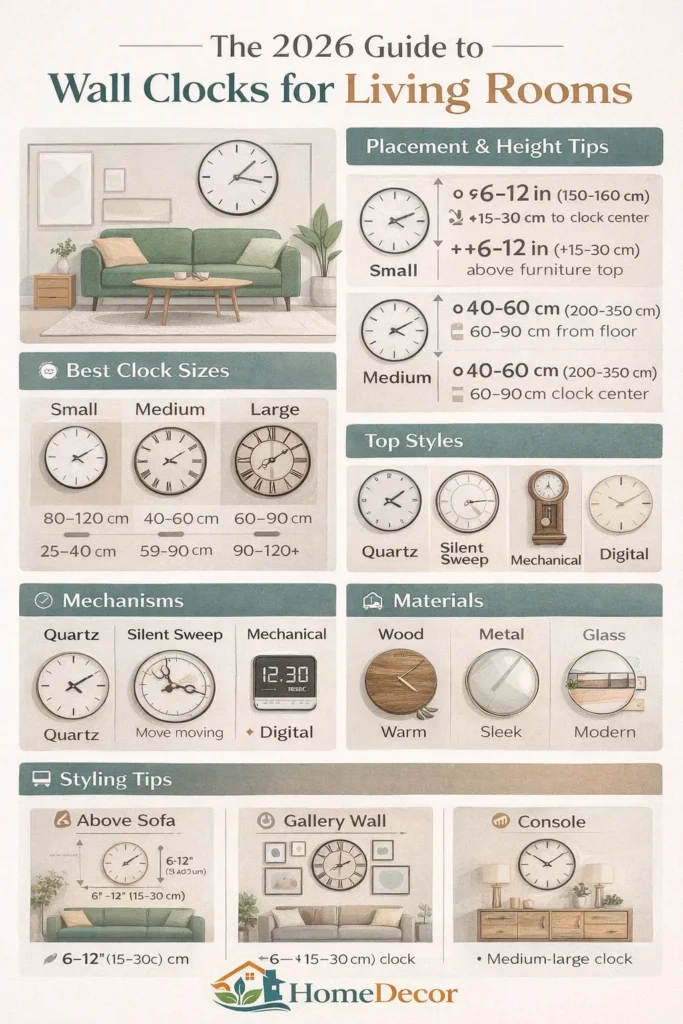
Size is the single biggest factor that determines whether a clock disappears, balances, or overwhelms a wall. Use the following guidelines to choose a diameter that matches your wall and furniture layout.
Size rules by wall width
- Wall width 80–120 cm: Clock diameter 25–40 cm, small accent above a console or narrow wall.
- Wall width 120–200 cm: Clock diameter 40–60 cm fits above a medium sofa or TV stand.
- Wall width 200–350 cm: Clock diameter 60–90 cm serves as the main living room feature.
- Wall width 350+ cm: Clock diameter 90–120+ cm statement piece or part of an oversized gallery.
Pro design tip: Aim for the clock to cover roughly 30–40% of the visible wall width when it’s intended as the main feature. For accent clocks, 10–20% is more appropriate.
Placement & Height (Ergonomics)
Where you hang the clock affects readability and the way the room feels.
- Eye level center: Aim for the center of the clock to sit at about 150–160 cm (59–63 in) above the floor. This is comfortable for most people.
- Above furniture: If placing the clock above a sofa or console, leave 15–30 cm (6–12 in) between the top of the furniture and the bottom edge of the clock.
- In open-plan rooms: Position the clock where it can be read from primary seating areas and main walkways. Consider sightlines from adjacent zones.
- As part of a composition: If the clock anchors a Gallery Wall, align its visual center with the overall grouping rather than the room’s center.
Practical tip: Cut out a cardboard circle at the intended diameter and temporarily tape it to the wall to preview the scale.
Style Match the Clock to Your Room’s Language
Your clock should speak the same design language as the room. Below are common styles and why they work.
Minimal & Modern
- Why it works: Clean lines and simple faces keep visual noise low.
- Best for: Scandinavian, mid-century, and modern apartments.
- Pros: Lightweight, easy to pair.
- Cons: Can feel cold in very traditional spaces.
Vintage & Rustic
- Why it works: Wood and aged metal add warmth and texture.
- Best for: Farmhouse, cottage, or eclectic interiors.
- Pros: Lots of character.
- Cons: Heavier and may look dated if overused.
Industrial & Metal
- Why it works: Bold metal frames and exposed numerals add structure and edge.
- Best for: Lofts and masculine, modern spaces.
- Pros: Durable and striking.
- Cons: Can feel cold if the rest of the room lacks warmth.
Oversized Statement
- Why it works: Acts as wall art and a focal anchor.
- Best for: High ceilings and large blank walls.
- Pros: Dramatic visual impact.
- Cons: Heavy and requires secure mounting.
Silent & Functional
- Why it works: Removes distracting ticking; practical and comfortable.
- Best for: TV Rooms and quiet reading corners.
- Pros: Comfort in noise-sensitive spaces.
- Cons: Some preferences favor audible ticks.
Mechanism & Features
The clock’s movement affects accuracy, maintenance, and the sensory experience.
- Quartz (Standard): Accurate and inexpensive; widely available.
- Silent Sweep / No–Tick: Ideal for quiet spaces; second hand moves smoothly.
- Mechanical / Pendulum: Decorative and classic; may require winding.
- Digital / Smart Clocks: Display date and temperature, and can sync with smart assistants; useful for multifunctional spaces.
Recommendation: For most living rooms, a silent quartz movement is the practical sweet spot, accurate, low-maintenance, and quiet.
Top Styles of Wall Clocks for Living Rooms

Minimal & Modern Clocks
These keep attention on proportion and space rather than ornamentation. They work by simplifying the face, slim hands, unadorned numerals, and thin rims, and therefore feel calm.
When to choose: If you want a light visual effect that supports other design elements.
Styling note: Pair with neutral textiles, a slim console, and small sculptural objects.
Vintage & Rustic Clocks
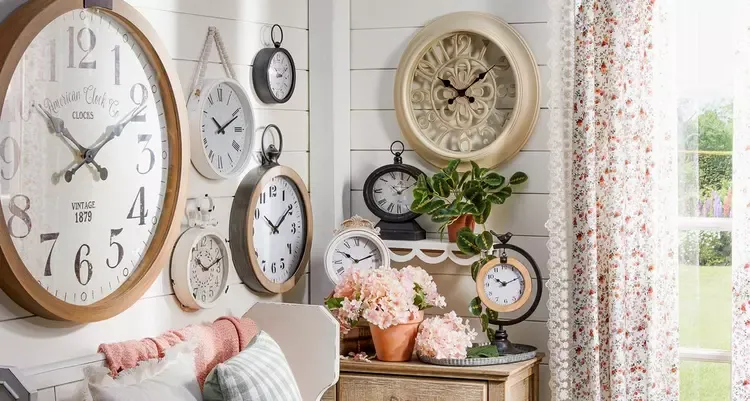
Wooden cases, distressed finishes, and classic numerals create warmth and nostalgia.
When to choose: Cozy, eclectic spaces that welcome layered textures.
Styling note: Anchor with wood furniture, woven fabrics, and warm metallic accents.
Oversized Statement Clocks
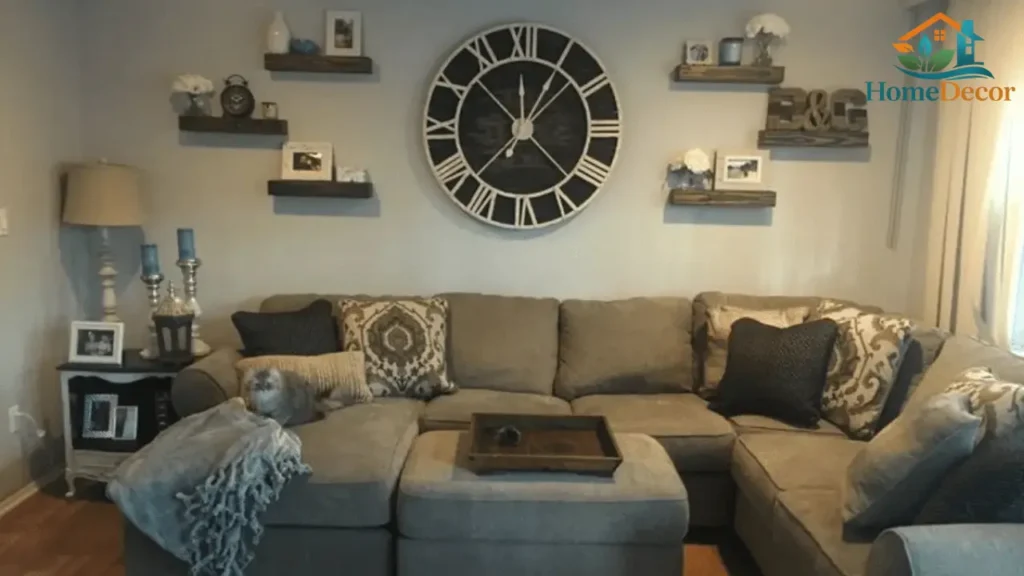
These are essentially clock–as–art: open-face metal frames, giant numerals, and bold silhouettes.
When to choose: Large walls, high ceilings, or rooms that need a single, simple focal point.
Styling note: Keep surrounding decor minimal to let the clock breathe.
Silent & Functional Clocks
Purely about user experience: legible faces, glare-reducing finishes, and movements that don’t tick.
When to choose: TV or media rooms, bedrooms that open to living areas, or households sensitive to sound.
Styling note: Opt for clear numerals and matt faces to avoid reflections.
Industrial & Metal Clocks
Open frameworks, strong geometry, and sometimes exposed rivets or gears create a bold look.
When to choose: Lofts and modern industrial schemes.
Styling note: Mix with concrete or brick textures and leather upholstery to balance metal’s coolness.
Best Wall Clock Materials & Mechanisms
Materials change the way a clock looks, ages, and interacts with the room.
- Wood: Warm, tactile, and traditional. Best for classic, rustic, or Scandinavian styles. Beware humidity and warping in inconsistent climates.
- Metal (Brass, Iron): Sleek and contemporary. Durable but heavier. Works well with industrial or mid-century styling.
- Glass / Acrylic: Lightweight And Modern. Acrylic is safer in family homes and is less reflective than glass in some finishes.
- Mixed Materials: Combine warmth (wood) and structure (metal) for a balanced, versatile piece.
Mechanism notes:
- Quartz is reliable and economical.
- Silent-sweep quartz is widely recommended for living rooms.
- Mechanical movements are charming but require maintenance and are usually heavier.
Curated Recommendation Types
Below are recommendation categories to help structure product selections and affiliate lists. For each category, select one or two exemplars you trust and test for build quality and movement accuracy.
- Best Overall: A medium-sized silent-sweep quartz clock that balances aesthetics and reliability.
- Best Modern: Minimal metal rim, no numerals, thin hands.
- Best Budget: Simple quartz with clear numerals — for renters or value buyers.
- Best Oversized: 36–48 in open-face feature clock for large walls.
- Best Silent: Explicit “no-tick” movements and matt faces for glare reduction.
How to Make Your Clock Feel Intentional
Above a Sofa
Center the clock above the sofa’s midpoint (not necessarily the room’s midpoint). If your sofa is symmetrical, a single large clock or a balanced pair works well. Leave 15–30 cm (6–12 in) between the top of the sofa and the clock’s bottom edge.
Example: A 48-inch clock above a 3-seat sofa fills the visual space and creates a natural focal point.
With a Gallery Wall
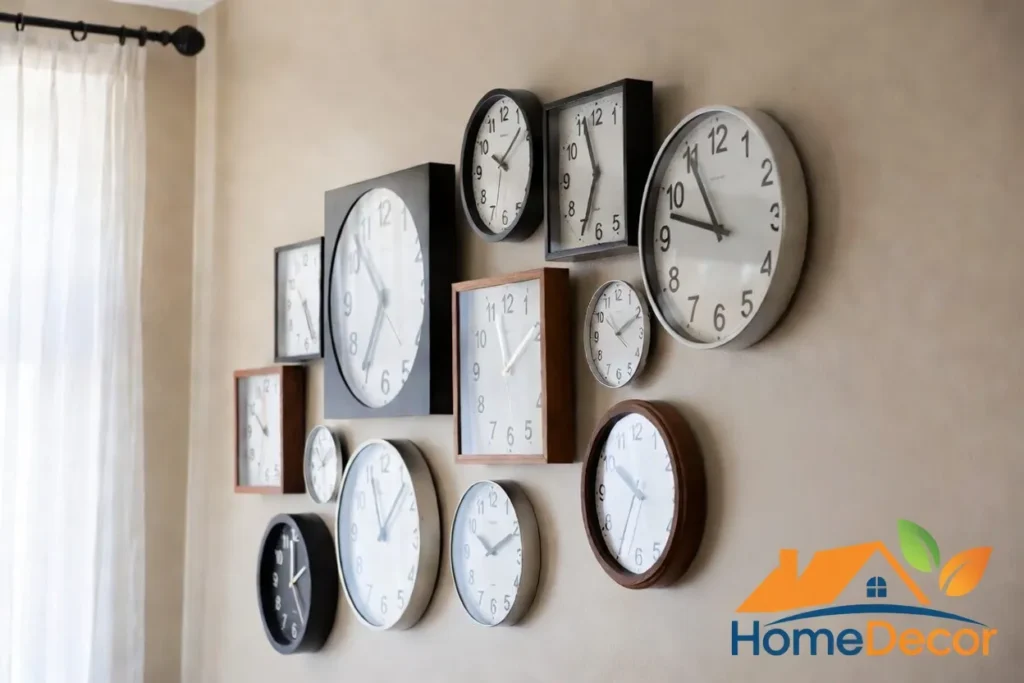
Use the clock as the anchor. Place it slightly off-center if you prefer an informal arrangement. Keep spacing consistent, typically 10–15 cm (4–6 in) between items, and limit color palettes so the grouping reads as a single composition.
Over a Console or Fireplace
Balance the console width with a medium-large clock. Avoid crowding: leave breathing room on either side and consider smaller accessories to echo the clock’s finish.
Color & Finish Tips
Color choices and finishes determine whether the clock acts as a contrast or a blend:
- Match one finish (e.g., brass) with a lamp or hardware to create cohesion.
- Use contrast (black clock on pale wall) for a strong visual impact.
- Mix textures (wood + metal) to add depth and avoid monotony.
- Matte faces reduce glare and improve readability.
Room Layout & Space Planning Tips
Quick methods to plan before drilling holes:
- Measure twice and use painter’s tape or cardboard mockups to test scale.
- Consider sightlines from seating and entry points.
- Mind vertical lines, tall furniture, and narrow walls change perceived scale.
- For rentals: Use command strips for lightweight clocks so you can reposition without damage.
Budget-Friendly Ideas
Style doesn’t require high spend:
- Buy an inexpensive clock and upgrade the frame (repaint, apply a stain, or add a rim).
- Refinish thrifted clocks, sand and recoat for a Fresh Look.
- Use vinyl numerals and a basic mechanism to create a custom face.
Premium / Luxury Ideas
For standout pieces and long-term investment:
- Commission a custom clock with a unique dial or sculptural frame.
- Select precision movements (higher-grade quartz or high beat mechanical).
- Add integrated backlighting or subtle LED accents for ambient glow.
Common Mistakes to Avoid
- Too high: Hanging the clock above eye-level reduces usability and disrupts balance.
- Too small: A visually insignificant clock can look like an afterthought.
- Ignoring movement noise: Ticking can be distracting in quiet rooms.
- Poor placement with glare: Avoid direct light reflections that make the face unreadable.
- Overcrowding small walls: Don’t cram multiple elements without breathing room.
Maintenance, Care & Durability Tips
To extend life and keep accuracy:
- Replace batteries yearly (or sooner if accuracy slips).
- Dust with a soft cloth; use a slightly damp cloth for stubborn grime on metal or glass.
- Keep wood clocks away from humidity and direct heat.
- Change the mechanism if seconds skip or hands stick; it’s often cheaper than replacing the whole clock.
Smart, Modern & Future-Ready Ideas
2026 brings practical smart features while keeping design priorities intact:
- Wi-Fi synced time avoids manual resetting during daylight savings or power outages.
- Integrated displays can show weather, date, or temperature in subtle ways.
- Voice assistant integration can let you check alarms and set timers through home systems.
Design caution: Keep information displays minimal so the clock still functions as decor, not a dashboard.
At-a-Glance: Styles vs Use Cases
- Quiet TV lounge: Silent minimalist no-tick movement.
- Large blank wall: Oversized statement 36–48 in.
- Cozy traditional room: Vintage rustic wood frame.
- Modern apartment: Minimal/modern thin rim.
- Family room with kids: Durable plastic/acrylic shatter-resistant.
Quick Pro Tips
- Use painter’s tape cutouts to preview clock size.
- If undecided, go larger; it’s easier to downsize the visual impact than to add it later.
- For rentals, choose strong command strips for lightweight clocks.
- Keep one dominant finish when mixing metals for cohesion.
Pros & Cons Summary
Pros
- Adds personality and depth.
- Doubles as functional art.
- Available at all price points.
- Silent options exist for noise-sensitive homes.
Cons
- The wrong size can unbalance a room.
- Heavy clocks need secure fixings.
- Cheap models may feel low quality.
FAQs
Choose a clock that covers ~30–40% of the visible wall width. Follow the size chart: small (12–18 in), medium (18–24 in), large (24–36 in), or statement (36+ in). Use cardboard mockups to preview scale.
Yes, silent sweep clocks remove ticking noise, ideal for TV rooms and quiet spaces. Look for “silent” or “no-tick” in descriptions.
Absolutely. Oversized or sculptural clocks are often used as focal art. Make sure scale and placement match your furniture.
Center it at about 150–160 cm (59–63 in) from the floor, or eye level for the main viewer. If the above furniture is left, leave 6–12 in between.
Quartz movements are the most reliable and low-maintenance. Choose silent quartz for noise-free performance.
Conclusion
A single tick can set the mood – size matters when picking what hangs where. Match it right, so it belongs instead of just showing up. Some like clean lines that whisper; others want something old with soul or big enough to stop conversation. This Helps Without Guessing. Each choice fits if it feels meant.
