

Introduction
An Area Rug Living Room setup can completely change how a home feels. The right rug does more than add softness underfoot. It anchors the seating area, defines the room, improves proportion, and makes even a simple space look more polished and intentional. In current design guidance, the most repeated mistake is still buying a rug that is too small, because it breaks the visual connection between the sofa, chairs, and coffee table.
That is why rug shopping should start with layout, not color. Once you understand how furniture placement, rug size, room scale, and traffic flow work together, choosing the right piece becomes much easier. Current design sources also show that 2026 is moving toward rugs that feel more expressive: larger formats, layered textures, bold colors, statement patterns, and materials that balance comfort with practicality.
This guide breaks the process into simple steps so you can choose a living room rug that looks good on day one and still feels right years later. Whether your space is small, open-plan, family-friendly, or luxury-focused, the goal is the same: create a room that feels grounded, comfortable, and beautifully finished.
What Is an Area Rug in a Living Room?
An area rug in a living room is the visual base layer that helps organize the seating zone. It sits beneath or partially beneath furniture and works like a frame for the conversation area. In design terms, it is less about decoration and more about structure, proportion, and flow. Houzz, AD, and Crate & Barrel all treat the rug as a tool for unifying furniture and making the room feel intentional.
A living room rug can also change how a space feels emotionally. A larger rug adds warmth and softness. A low-pile rug can make the room feel cleaner and more open. A patterned rug can add energy to a neutral space. A textured rug can make a minimal room feel richer without adding clutter. These are not just style choices; they affect how the room reads at a glance.
Snippet-ready answer: A living room area rug is a design anchor that defines the seating zone, adds comfort, and helps furniture feel connected. The best rug is usually large enough to support the main furniture group rather than sit awkwardly in the middle of it.
Why Area Rugs Matter More in 2026
In 2026, rugs are not just background pieces. Design coverage from Veranda shows that rugs are increasingly treated as statement-making foundations, with attention shifting toward layering, texture, bold color, oversized formats, and investment-worthy accents. That makes the rug one of the most important elements in a modern living room, especially if you want the space to feel current rather than copied from a generic catalog.
This matters because modern interiors are becoming more layered and less sterile. Even neutral rooms are using richer textures, warmer tones, and more personality. BHG also notes that rug mistakes can make a space feel smaller, while lighter colors, the right placement, and a more suitable pile height can make it feel more open. In other words, the rug is now doing more work than before: it affects style, scale, comfort, and perceived spaciousness all at once.
For readers, that means the “best” rug is not just the one they like visually. It is the one that matches room size, furniture scale, traffic level, cleaning needs, and the mood they want the room to create. That is the real 2026 mindset: more thoughtful, less random, and much more room-specific.
Best Area Rug Sizes for Living Rooms
The safest rule across leading design sources is simple: go larger than your instinct first suggests. AD says rugs should be proportional to the room and furnishings, with front legs on the rug at minimum; BHG repeats the front-legs rule; IKEA says the rug should be longer than the sofa and ideally extend under at least one-third of it; Wayfair recommends 8×10 for medium living rooms and 9×12 for large ones; and Crate & Barrel advises at least a foot of bare floor around the perimeter in larger rooms.
Living Room Rug Size Comparison
| Room Type | Common Rug Size | Best Use Case | Placement Rule |
| Small living room/apartment | 5×8 or 6×9 | Compact seating areas | Front legs on rug, or rug fully under coffee table and main chair group |
| Medium living room | 8×10 | Standard sofas + chairs | At least the front legs of the sofa and chairs are on the rug |
| Large living room | 9×12 | Bigger seating arrangements | More furniture on the rug, with a visible border around the edges |
| Open-plan space | 9×12, 10×14, or larger | Separate the seating zone | The rug should define the conversation area clearly |
| Sectional layout | 8×10 to 10×14, depending on the room | Anchors long seating shape | Rug should extend beyond the sectional’s main face |
A useful practical rule is this: when in doubt, choose the larger size if the rug still leaves comfortable breathing room around the perimeter. AD recommends roughly 12 to 24 inches of space depending on the room and effect desired, while Crate & Barrel recommends at least a foot of bare floor around the edge in larger layouts. That spacing helps the rug look deliberate instead of squeezed in.
Mini summary: If your rug feels “almost right” but slightly small, it is probably too small. The most consistent advice from top sources is to size up when the room allows it.

The Three Main Rug Placement Styles
1) All Furniture Legs on the Rug
This is the most polished and luxury-looking option when the room is large enough. It creates one unified zone and works especially well in spacious living rooms or open-plan layouts. Houzz notes that some designers prefer this for a more cohesive look, while AD says placing furniture fully on the rug is ideal when the room allows it.
2) Front Legs on the Rug
This is the most common and versatile arrangement. It visually links the sofa and chairs without requiring a very large rug. AD, BHG, Crate & Barrel, and Houzz all support this approach as a reliable standard. It is especially useful if your sofa is against a wall or your room is medium-sized.
3) Rug Floating Under the Coffee Table Only
This option is the least ideal for most living rooms because it often makes the rug feel too small. It can work in very tiny spaces, but the visual effect is usually weaker and less grounded. BHG specifically warns that rugs that are too small can make the room appear smaller and less cohesive.
Practical takeaway: If you are undecided, aim for the front-legs-on-rug layout first. It is the easiest balance of scale, comfort, and budget.
Best Living Room Rug Styles in 2026
2026 rug style direction is clearer than many people think. Veranda’s trend coverage points to layering, natural materials, antique influence, bold color, artful patterns, texture, oversized rugs, and performance fibers. That means the best living room rugs now feel more expressive, more tactile, and more tailored to the room’s personality.
Best Styles to Consider
1. Neutral textured rugs
These work well when your furniture already has strong color or pattern. BHG recommends textured options such as jute or wool when you want a brighter, cohesive room. Neutral rugs are especially useful in calm, modern, or Scandinavian-inspired spaces.
2. Patterned rugs
Crate & Barrel suggests patterned rugs can bring life to a neutral room, while solid rugs or subtle graphics work better if the upholstery is already busy. Pattern is one of the strongest ways to add character without adding more furniture.
3. Layered rugs
Veranda highlights layering as an underused but highly effective trend. It adds depth and a curated feel, especially in central seating areas. This works best when a base rug is larger and quieter, with a smaller statement layer on top.
4. Statement rugs
Bold color and artful pattern are no longer niche. In 2026, statement rugs are increasingly treated as the focal point of the room. This works especially well if the rest of the room is restrained.
5. Performance rugs
For busy households, performance fibers matter. BHG’s rug testing coverage shows that durability, stain resistance, washability, and easy maintenance remain key buyer concerns, especially in homes with kids or pets.
Style Pros and Cons
| Style | Pros | Cons |
| Neutral textured | Calm, flexible, timeless | Can feel plain without layered decor |
| Patterned | Adds personality and hides wear | Can overwhelm small or already busy rooms |
| Layered | Rich, curated, design-forward | Needs careful proportion and more planning |
| Statement | Strong focal point, trendy in 2026 | Easier to tire of if too bold |
| Performance | Practical and easy to live with | Sometimes less luxurious in texture |
How to Choose the Right Area Rug for Your Living Room
Measure the room and the seating zone.
Start with the furniture arrangement, not the wall-to-wall room dimensions. IKEA and Wayfair both stress that layout matters because the rug has to match how people actually use the space. In open-plan homes, you should measure the seating zone as its own zone rather than the whole floor area.
Decide how much furniture should sit on the ru.g
For most living rooms, the front legs rule is enough. For bigger spaces, more furniture on the rug creates a calmer and more upscale look. AD and Crate & Barrel both recommend at least the front legs of sofas and chairs on the rug, while AD also notes that larger rugs can create more breathing space and avoid a cramped look.
Match pile height to lifestyle.
Low-pile rugs work best when you want easier cleaning, a cleaner visual line, and better chair movement. BHG notes that high-pile or shag rugs can make a room feel warmer but may also make it feel smaller. That makes pile height an important design decision, not just a comfort choice.
Pick a material for traffic and maintenance.
Crate & Barrel recommends low-pile wool or jute for high-traffic living rooms, while IKEA and BHG both stress care, vacuuming, and material suitability. If your home needs easier cleanup, performance or washable options may be better; if you want warmth and long-term quality, wool remains a strong choice.
Check the border space.e
A rug that reaches too close to the walls can create a wall-to-wall effect. AD suggests leaving breathing space around the edges, and Crate & Barrel recommends at least a foot of bare floor around the perimeter for larger rooms. That border helps the rug look intentional and balanced.
Mini summary: The best rug is the one that fits the furniture group, leaves visual breathing room, and supports your lifestyle. Style matters, but scale and function matter first.
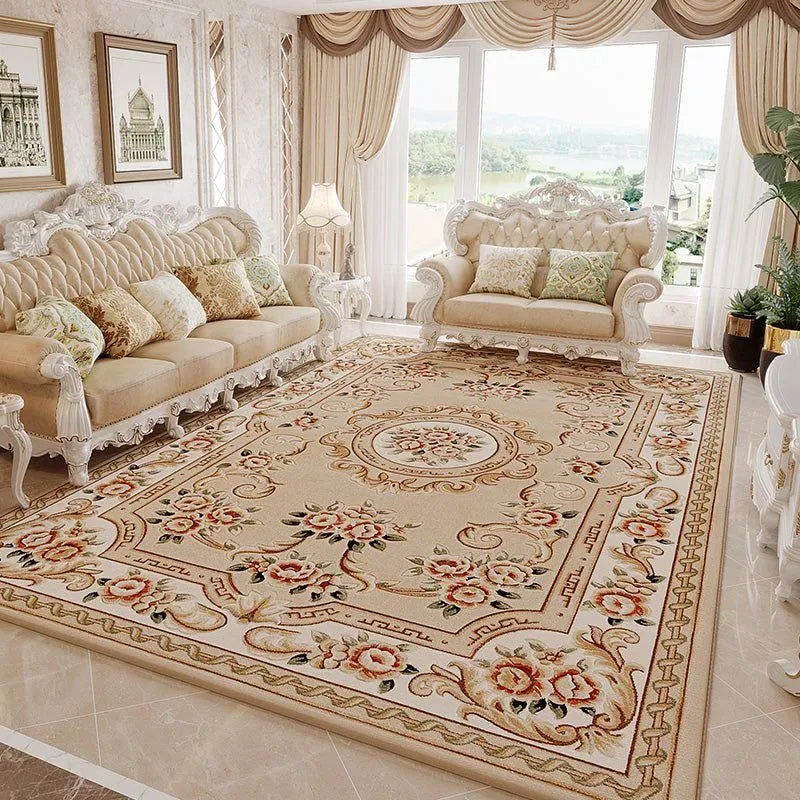
Rug Ideas and Inspirations for Different Living Room Types
Small Living Room
In small rooms, the goal is to avoid clutter and keep the space feeling open. BHG notes that dark colors, busy patterns, and rugs that are too small can make a room feel tighter. A lighter, low-pile rug that sits under the front legs of the main furniture pieces usually works best.
Apartment Living Room
For apartments, 5×8 and 6×9 rugs are often the starting point, but only if they still connect enough furniture. Wayfair’s sizing guidance and AD’s front-leg rules are useful here. The rug should make the seating area feel purposeful, not like a small island floating in the room.
Large Living Room
Large rooms need more visual weight. Wayfair and Crate & Barrel both point toward 9×12, 10×14, or 12×15 rugs in larger spaces. These sizes give the room a finished look and prevent the furniture from appearing disconnected.
Open-Plan Living Room
Open-plan spaces benefit from rugs that define zones. Houzz and IKEA both describe rugs as a way to separate seating areas and make the room feel organized. In these layouts, the rug should feel like a boundary line for the conversation area without blocking traffic flow.
Sectional Living Room
Sectionals need wider thinking. IKEA notes that the rug should be at least as wide as the sofa, and some layouts need even more coverage so the full seating area feels tied together. In practice, the rug should support the full visual width of the sectional, not just the coffee table.
Best Color Combinations for a Living Room Area Rug
The best rug color depends on the room’s lighting, wall tone, and furniture style. BHG recommends lighter colors when you want a space to feel more open, while Crate & Barrel suggests patterned rugs for neutral rooms and solid or subtle designs when upholstery is already patterned.
Reliable combinations that work well
- Beige rug with warm wood and cream upholstery
- Ivory or oatmeal rug with black accents and natural textures
- Taupe rug with greige walls and brass details
- Soft gray rug with white sofas and darker art
- Rust, burgundy, or terracotta rug with warm neutrals for a richer 2026 look
- Deep blue or green rug with natural oak and linen textures
2026 Trend coverage suggests bolder pigments are returning, but the smartest way to use them is to let the rug carry the color story while keeping the rest of the room balanced. That keeps the room expressive without feeling chaotic.
Best Materials for Living Room Rugs
Wool
Wool remains one of the strongest all-around choices. It is repeatedly positioned by major home sources as durable, comfortable, and suited to living rooms. BHG testing and product roundups also show wool rugs performing well for comfort and high-traffic use.
Jute
Jute adds texture and a natural feel. Crate & Barrel specifically recommends jute for high-traffic living rooms when you want a durable low-pile option. It is best in rooms that favor an earthy, relaxed style over plush comfort.
Low-pile synthetic / performance rugs
These are practical for families, pets, and busy households. BHG’s rug testing and buying guides repeatedly highlight washability, stain resistance, and easy care as important factors. Performance rugs are a smart choice when convenience matters more than heirloom texture.
High-pile or shag
High-pile rugs bring softness and visual coziness, but they are not always the best fit for a busy living room. BHG warns that they can make a room feel smaller, and they are usually harder to maintain. They work best when comfort is the top priority and traffic is moderate.
Material comparison table
| Material | Best For | Strengths | Limitations |
| Wool | Most living rooms | Durable, soft, premium feel | Can shed at first; often higher cost |
| Jute | Casual, natural interiors | Texture, durability, low-profile look | Can feel rougher underfoot |
| Performance fiber | Busy family homes | Easy care, stain resistance, practicality | Sometimes less luxurious feel |
| Cotton/flatweave | Lightweight layering | Easy styling and casual charm | Less plush and may shift more |
| High-pile / shag | Cozy lounging | Soft and inviting | Harder cleaning, can read smaller |

Budget-Friendly vs. Premium Area Rug Choices
A budget-friendly living room rug should prioritize size, proportion, and easy maintenance first. BHG’s and Wayfair’s guidance make it clear that the wrong size is more damaging to the room than a less expensive material. For budget buyers, a larger simple rug usually beats a small decorative one.
Premium rugs make sense when the living room is a major design focal point, when the layout is large, or when you want texture and craftsmanship to carry the room. AD’s coverage of high-end rug sizing and Crate & Barrel’s recommendations both suggest that larger, better-proportioned rugs create a stronger design impression and feel more intentional.
A smart middle ground is often the best choice: a durable wool or performance rug in the right size, with enough visual personality to elevate the room but not so much that it dominates every other element. That is the most balanced option for many modern homes.
Smart and Modern Design Trends for 2026
The 2026 rug conversation is centered on texture, scale, and personality. Veranda’s trend coverage highlights lots of layers, natural materials, antique and vintage influence, artful patterns, bold color, performance fibers, the “wrong rug” theory, touchable texture, oversize rugs, and investment-worthy accents.
This means modern living rooms are moving away from safe but forgettable floor coverings. A rug can now be the strongest design statement in the room. That does not mean every home needs a loud rug. It means the rug should be chosen with more confidence and with a clearer role in the room’s story.
2026 trend directions worth using
- Oversized rugs that better anchor seating zones
- Layered rugs with visible texture contrast
- Organic, natural-looking materials
- Bold pigments in otherwise restrained rooms
- Vintage-inspired or antique-look patterns
- Performance rugs for busy homes that still want style
Mini summary: The 2026 rug trend is not just “pretty.” It is purposeful, tactile, layered, and room-defining.
Common Mistakes to Avoid
The most common mistake is choosing a rug that is too small. AD, BHG, and Houzz all reinforce that this weakens the furniture arrangement and makes the room feel less grounded. A too-small rug can also make the room look tighter than it really is.
Other common mistakes include using a rug that is too dark for a small room, Selecting a high-pile rug in a high-traffic space, placing the rug too far from the furniture, and ignoring how much floor should remain visible around the edges. These issues affect both the look and the function of the room.
Mistake checklist
- Buying based on color before measuring
- Choosing a rug that stops short of the sofa legs
- Ignoring the room’s traffic pattern
- Picking a high-maintenance material for a busy home
- Forgetting a rug pad for stability and comfort
Expert Tips Most People Ignore
One helpful expert rule is to think of the rug as the base of the room, not an accessory. Veranda’s 2026 rug trend coverage and AD’s rug-sizing advice both support this mindset. When the rug is treated as a foundation, all other choices become easier.
Another overlooked tip is to test the layout before buying. IKEA and The Spruce both point toward measuring carefully and even marking the footprint before you commit. That is especially useful for awkward rooms, sectionals, or open-plan layouts where a few inches can change the whole result.
A final tip: a rug pad matters. Crate & Barrel and other home guidance note that rug pads help keep rugs in place and add cushioning. That improves comfort, safety, and longevity.

Maintenance, Care, and Long-Term Value
A rug should not only look good on installation day. It should still feel fresh after months of use. IKEA advises regular vacuuming, using the correct vacuum attachment, and rotating rugs to reduce uneven wear and sun fading. It also recommends flipping many rugs when the construction allows it.
BHG also recommends periodic deep cleaning and careful stain treatment, while noting that different rug types have different cleaning needs. Some rugs can be washed, but natural fibers like jute are generally not machine-wash-friendly. That means care instructions should be checked before purchase, not after stains happen.
Long-term value checklist
- Vacuum regularly
- Rotate the rug to balance wear
- Use a rug pad
- Match cleaning method to fiber type
- Buy for lifestyle, not just appearance
Who Should Choose an Area Rug for the Living Room Style?
This approach is ideal for homeowners and renters who want a room to feel more finished, warmer, and better organized. It is also a strong fit for people who have open-plan layouts, large sofas, or rooms that feel visually disconnected. Current design guidance from AD, Houzz, IKEA, and Crate & Barrel all shows that rugs are one of the easiest ways to improve proportion and define zones.
It is especially good for people who like flexible styling. Rugs can soften minimalist interiors, support bolder furniture, or bring unity to a mixed-decor room. Because rugs now play a stronger role in 2026 interiors, they are useful for almost every major style direction.
Who Should Avoid a Plush or High-Maintenance Rug Style?
A plush or high-maintenance rug is usually a poor choice for households that need easy cleaning, have high foot traffic, or expect frequent spills. BHG notes that high-pile rugs can make a room feel smaller and are not always ideal for busy spaces. IKEA and BHG also stress that material choice should match how the room is actually used.
If a household has pets, children, or constant movement, a low-pile or performance rug is usually the more practical choice. That keeps the room looking good longer and reduces frustration around cleaning and upkeep.

People Also Ask
A living room rug should usually be large enough to anchor the seating area, with at least the front legs of the sofa and chairs on the rug. Medium rooms often work well with 8×10 rugs, while large rooms often need 9×12 or bigger.
Usually yes, at least partially. Putting the front legs of the sofa on the rug helps connect the furniture and makes the room feel more finished. AD, BHG, and Crate & Barrel all support this approach as a standard rule.
A lighter, low-pile, less busy rug usually works best. BHG explains that dark colors, heavy patterns, and high-pile textures can make a small room feel tighter.
Yes. Wool is one of the strongest choices for living rooms because it balances comfort, durability, and a more premium look. It is widely recommended in home design guidance and product testing roundups.
Lighter rug colors generally make a room feel more open. BHG notes that lighter colors reflect more light and create more airiness, especially in smaller rooms.
Conclusion
The right area rug living room choice can make a room feel larger, warmer, and more intentional almost instantly. The most reliable approach is to size up when possible, place the rug so it anchors the seating area, and choose a material that matches how the room is actually used. That pattern is repeated across current guidance from AD, BHG, Houzz, IKEA, Crate & Barrel, Wayfair, and Veranda.
For most readers, the best rug is not the flashiest one. It is the one that fits the furniture, supports the room scale, and still feels good to live with every day. That makes this topic practical, high-value, and long-lasting for TheRoomsArt.com. Bookmark it, share it, and use it as the reference point before buying your next living room rug.
Legal Disclaimer: Prices, materials, trends, and product availability may change over time depending on region, suppliers, and brands. Always verify dimensions, materials, and compatibility before purchase or renovation.
