
Introduction
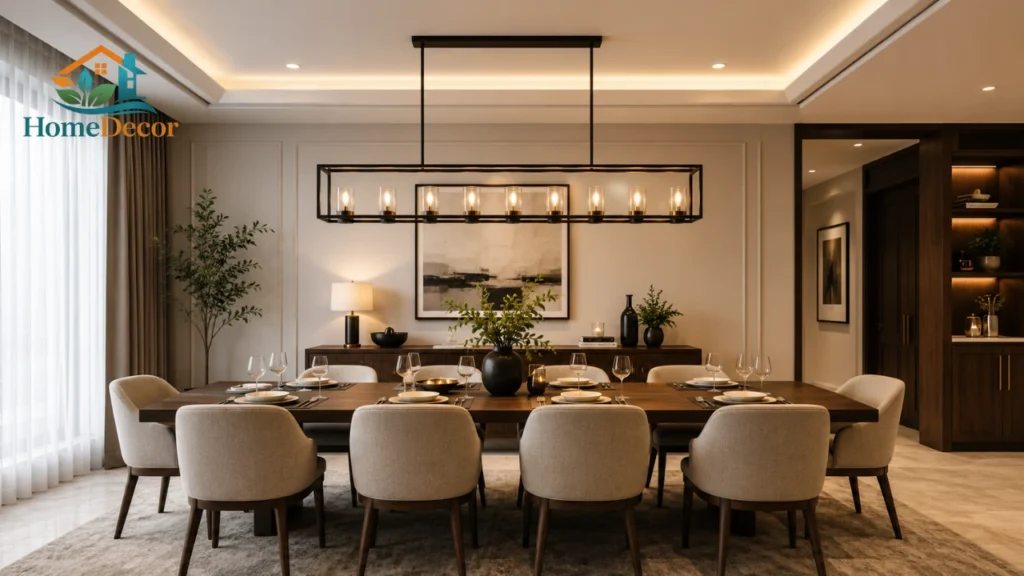
A Linear Chandelier Dining Room setup is one of the smartest lighting choices for a long or rectangular table because it follows the shape of the furniture, spreads light more evenly, and creates a clean visual line in the room. That matters even more in 2026, when dining rooms are expected to do more than one job. They are no longer just formal spaces. They are used for family meals, homework, remote work, hosting, and everyday living. A good linear chandelier should handle all of that without feeling harsh, oversized, or out of place.
The challenge is that many people choose a fixture by appearance alone and only later realize the light is too small, hung too high, too cool in tone, or wrong for the table shape. Current lighting guidance keeps repeating the same core ideas for a reason: proportion, sightlines, and comfort decide whether a dining room feels polished or awkward. This guide brings those ideas together in one practical pillar article so readers can choose the first time confidently.
What Is a Linear Chandelier for a Dining Room?
A linear chandelier is a long, narrow light fixture designed to run parallel to the table below it. It works especially well over rectangular dining tables, long banquettes, and open-plan dining zones where the fixture needs to define the space without crowding it. Bohemia Lighting explicitly notes that rectangular tables are a natural match for linear chandeliers, while Kichler recommends choosing a linear fixture at about one-third to one-half of the table length.
Unlike a round chandelier, which gathers attention at one center point, a linear chandelier stretches the eye across the full dining surface. That makes it especially useful when the table is long, the room is narrow, or the dining area sits inside a larger open-plan layout. The visual effect is calmer, more balanced, and usually more modern.
Mini summary: A linear chandelier is not just a style choice. It is a shape-and-proportion solution for rectangular tables and open dining layouts.
Why Linear Chandeliers Matter in 2026
Lighting trends in 2026 lean toward oversize silhouettes, layered materials, decorative shades, organic forms, and statement pieces that still feel livable. That is a strong match for linear chandeliers because they can be minimal or decorative, modern or transitional, slim or bold, while still doing a real job over the table. Houzz’s 2026 trend coverage shows that lighting is increasingly expected to work as both a source of illumination and a design anchor.
At the same time, dining-room lighting has become more comfort-focused. Houzz recommends thinking in layers rather than relying on a single overhead fixture, and Philips describes the dining area as a place where a dimmable warm-white light is especially useful because the room needs to adapt to different activities. That makes the linear chandelier a strong 2026 choice when it is paired with dimming and supported by other light sources.
Why does it work so well over rectangular tables?
A rectangular table needs a fixture that mirrors its shape. When the shape matches, the room feels intentional instead of improvised. Kichler’s guide reinforces this by recommending that linear chandelier length should be between one-third and one-half of the table length. Bohemia’s guide also emphasizes shape harmony, noting that rectangular tables pair naturally with linear fixtures or multiple fixtures in a row.
Why open-plan homes benefit most
In open-plan homes, the dining zone needs definition without visual clutter. A linear chandelier gives that definition because it creates a clean horizontal line that organizes the space. 1800Lighting specifically advises checking the fixture from multiple viewpoints in open-concept areas, which is exactly why a linear design is so effective there: it reads clearly from the kitchen, the dining table, and nearby living areas.
Mini summary: In 2026, the best dining room lights are not only decorative. They are flexible, layered, and proportional to the way people actually live.
What Size Linear Chandelier Should You Choose?
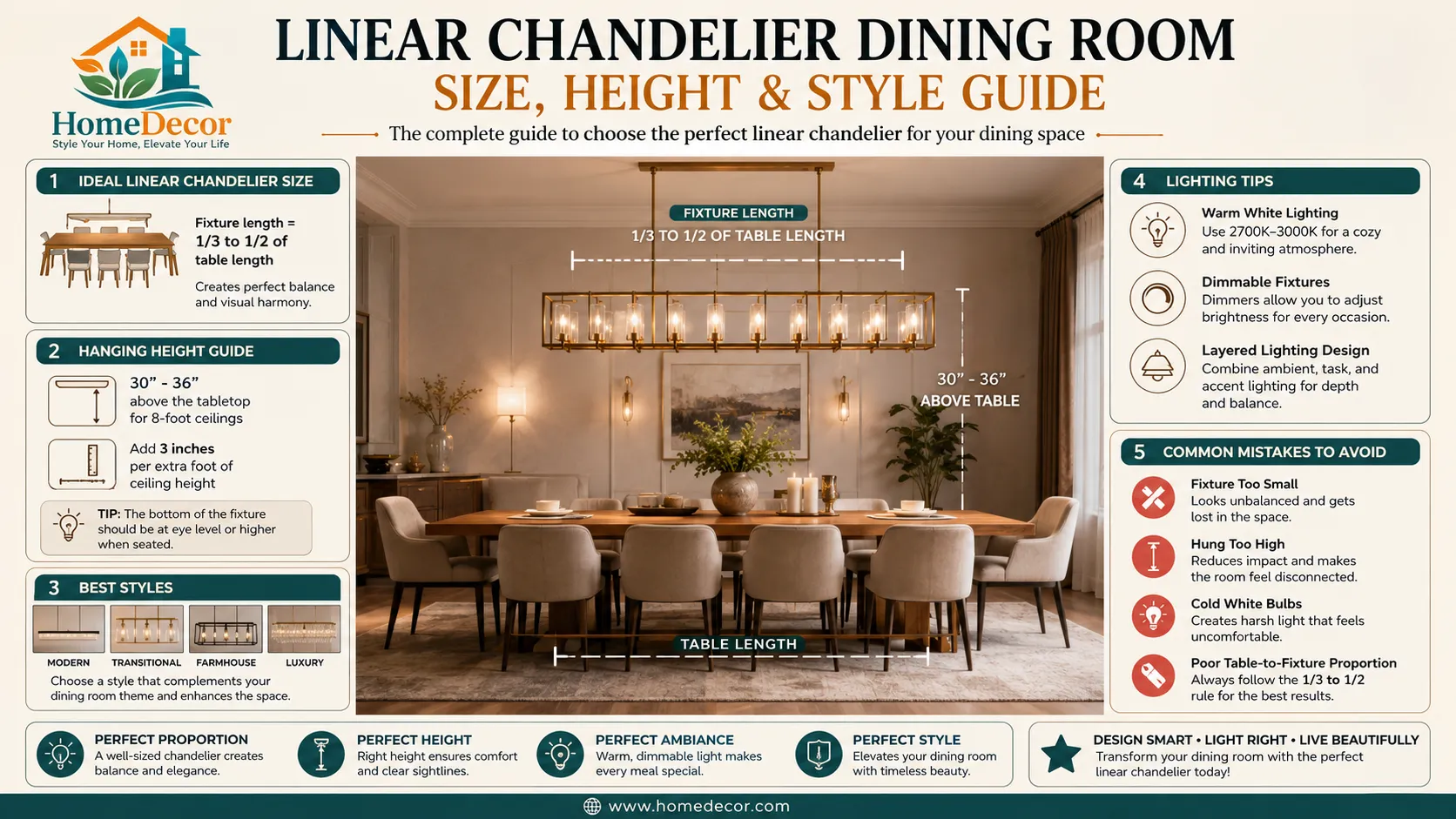
For a rectangular table, the most practical rule is to choose a linear chandelier that is about one-third to one-half the length of the table. That is the clearest linear-fixture sizing rule in current brand guidance, and it keeps the fixture visually balanced without overpowering the table. Kichler gives this exact range for linear chandeliers.
A useful real-world example: if your table is 72 inches long, a linear chandelier around 24 to 36 inches is a safe minimum-to-midrange choice. In a larger dining room or an open-plan home, many designers prefer the chandelier to sit closer to the upper end of that range so it feels substantial enough to anchor the table. That second point is an expert inference based on the proportion guidance in current sources, which consistently prioritize balance and visibility over choosing the smallest possible fixture.
Table 1: Quick size guide for a linear chandelier
| Table Length | Recommended Linear Chandelier Length | Best Use Case |
| 48 inches | 16–24 inches | Small dining nook, apartment dining area |
| 60 Inches | 20–30 inches | Standard small-to-medium dining room |
| 72 inches | 24–36 inches | The most common family dining table |
| 84 inches | 28–42 inches | Large rectangular table |
| 96 inches | 32–48 inches | Long table, open-plan dining area |
This table is a practical synthesis of the current sizing rules from Kichler, 1800Lighting, and Bohemia Lighting. Kichler’s linear-specific range is the main anchor, while the other sources reinforce the broader idea that the fixture should match the table rather than the whole room.
Common size mistakes
The most common mistake is buying a fixture that is too short and disappears above the table. Another mistake is choosing a design that is technically the right length but feels too delicate because the frame, shade count, or visual weight is too light for the room. BHG and Bohemia both stress scale and proportion, and 1800Lighting warns that room size, table size, and fixture output all matter, not just the raw dimensions.
Mini summary: For linear chandeliers, size is not about making a big statement first. It is about making the right proportion statement first.
How High Should a Linear Chandelier Hang?
For most dining rooms with an 8-foot ceiling, the bottom of the chandelier should hang 30 to 36 inches above the tabletop. That guideline appears repeatedly in major lighting sources. 1800Lighting uses 30–36 inches, while other guides give a slightly lower 24–30-inch range, which shows that hanging height can shift depending on fixture style, ceiling height, and the amount of visual openness you want.
A simple rule of thumb is this: as ceilings rise, the chandelier can hang a little lower so the room still feels visually anchored. 1800Lighting advises adding about three inches for every additional foot above an 8-foot ceiling. That same logic appears in older lighting guidance as well, and it remains the easiest way to keep the chandelier from floating awkwardly too high.
Table 2: Hanging-height guide by ceiling height
| Ceiling Height | Suggested Distance Above Table |
| 8 feet | 30–36 inches |
| 9 feet | 33–39 inches |
| 10 feet | 36–42 inches |
This table reflects the most common U.S. dining-room height guidance from 1800Lighting and related lighting references. Bohemia’s newer guide uses a slightly lower 24–30-inch recommendation, so the final placement should also account for sightlines, fixture thickness, and personal preference.
The sightline test
The chandelier should never block conversation or make guests feel boxed in. 1800Lighting recommends checking the view from multiple positions: seated at the table, entering the room, and sitting elsewhere in the space. That is especially important in open-plan homes where the fixture is visible from several angles.
Mini summary: Most dining-room chandeliers look best when they feel low enough to belong to the table, but high enough to preserve clear sightlines.
Best Linear Chandelier Styles for Different Dining Rooms
Linear chandeliers work across several design languages. The winning choice depends on the table, the room’s architecture, and the mood you want the dining area to create. BHG and Houzz both show that lighting is no longer only functional; it is part of the room’s personality.
Modern dining rooms
For a modern dining room, choose slim profiles, straight lines, minimal frames, and often integrated LED or clean bar designs. Current trend coverage from Houzz shows that decorative shades, layered materials, and organic forms are now common even in contemporary lighting, so modern no longer has to mean cold or severe. Warm brass, champagne bronze, and soft gold finishes can soften the room without losing the modern look.
Transitional dining rooms
Transitional rooms benefit from linear chandeliers with glass shades, mixed metals, softened geometry, or a frame that feels neither too ornate nor too bare. This is the safest style for homeowners who want a timeless look that can move between classic and modern furniture. BHG’s dining-room lighting coverage repeatedly shows how matching the fixture’s scale and material with the room helps the whole space feel intentional.
Farmhouse and warm rustic dining rooms
Farmhouse dining rooms usually look best with wood-and-metal combinations, black metal frames, seeded glass, lantern-inspired linear designs, or slightly more decorative silhouettes. BHG highlights rectangular lantern-style and rustic chandelier looks as strong dining-room choices when the scale is right. That same principle works well for linear chandeliers in farmhouse settings: the shape stays practical, while the finish supplies warmth.
Formal and luxury dining rooms
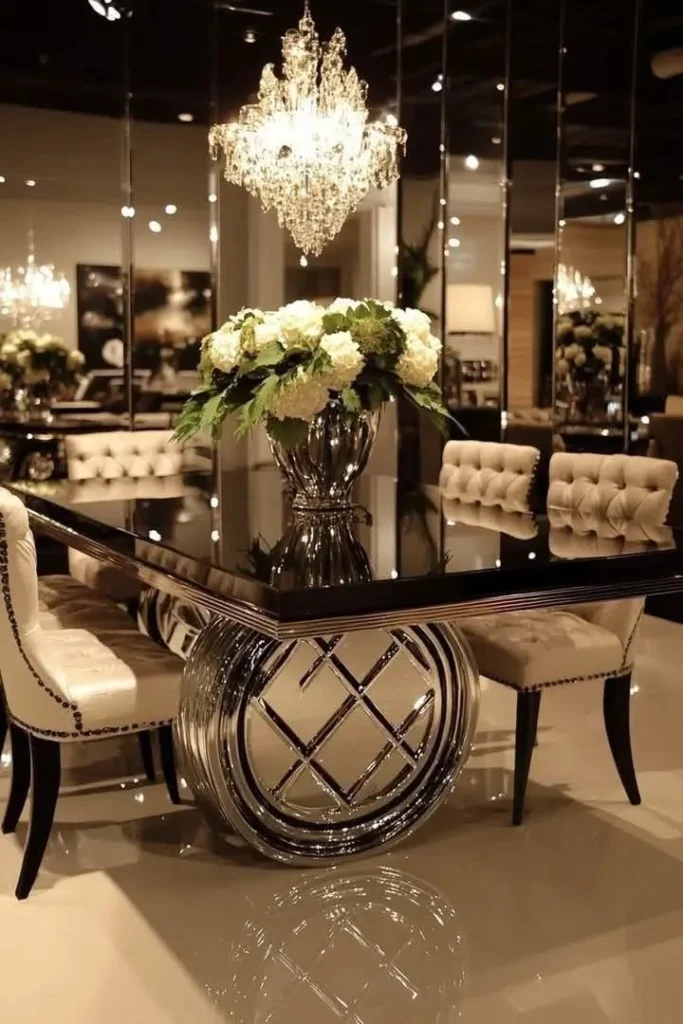
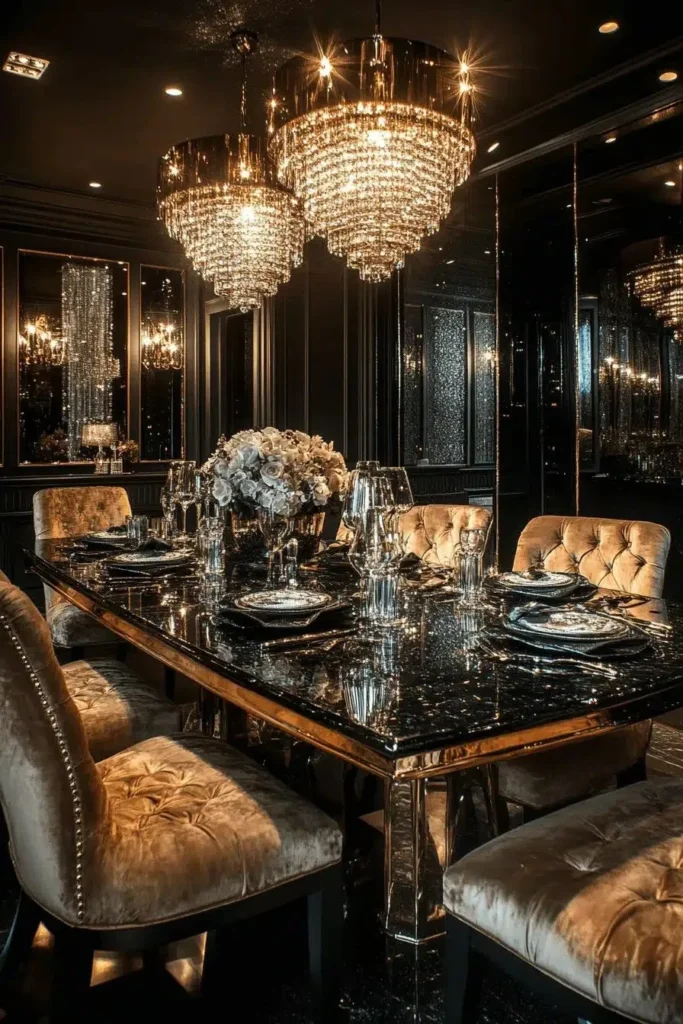
Formal rooms can carry more drama. A linear chandelier with crystal accents, polished metal, textural glass, or sculptural detailing can feel elegant without losing the usefulness of a straight-line fixture. Bohemia notes that the dining table can handle a bolder fixture than other rooms because it becomes the focal point of the interior.
Best style match by room type
| Dining Room Type | Best Linear Chandelier Look | Why It Works |
| Modern | Slim bar, LED, minimal frame | Clean and architectural |
| Transitional | Glass shades, mixed metal | Balanced and versatile |
| Farmhouse | Black metal, seeded glass, warm finishes | Cozy but structured |
| Formal | Crystal, textured glass, sculptural detail | Elegant focal point |
| Open-plan | Long, visually calm linear form | Defines the dining zone |
This comparison is a synthesis of current styling guidance from BHG, Houzz, Kichler, and Bohemia, all of which emphasize proportion, visibility, and room harmony over style alone.
Mini summary: The best style is not the trendiest one. It is the one that feels like it belongs to your table, ceiling height, and overall room mood.
Lighting Color, Dimming, and Comfort
Dining rooms should feel flattering, not clinical. Philips specifically recommends a dimmable warm-white Ceiling Light for dining areas because the room needs to flex between romantic dinners, family meals, and studying. That is a strong clue that the best linear chandelier is usually not just about shape; it is about light quality too.
Warm light is usually more comfortable than cold white light in a dining room. Bohemia explicitly lists cold white light as a common mistake, and Energy.gov materials identify 2700K as a warm-white reference point. You do not need to turn the dining room into a task workspace unless that is the room’s main role. The goal is pleasant, flattering light that supports conversation and makes food look appealing.
Why dimming matters
Dimming lets a dining room shift from bright and functional to soft and intimate. Philips WarmGlow materials describe how dimming can move a room from functional light to a cozy warm glow, which is exactly why dimmer-compatible linear chandeliers are so useful. Houzz also stresses that layered lighting creates a richer home environment, not just a brighter one.
What to look for
- warm-white output
- dimmer compatibility
- even distribution across the table
- low glare when seated
- enough brightness for real use, not just decoration
These priorities reflect the practical emphasis in current dining-room lighting sources, where function, comfort, and ambiance all matter together.
Mini summary: A beautiful fixture still fails if the light feels harsh. For dining rooms, comfort is part of good design.
Step-by-Step Guide to Choosing the Right Linear Chandelier
1. Measure the table first
Start with the table, not the room. For linear fixtures, the table length is the key number. Kichler’s rule of one-third to one-half of table length is the most useful starting point.
2. Check ceiling height
An 8-foot ceiling usually calls for a 30–36-inch drop above the table, with additional height added as ceilings rise. If the ceiling is much taller, you may want a fixture with more visual presence or a longer suspension.
3. Match the room style
Choose a fixture that feels right with your furniture, wall color, and finish palette. BHG’s dining-room examples and Houzz’s trend coverage both show that material and scale matter as much as shape.
4. Decide on the light mood
Ask whether you want ambient, cozy, or more decorative lighting. Houzz recommends layered lighting for the dining room, and Philips recommends warm, dimmable light for flexibility.
5. Check the sightlines
Sit at the table and imagine talking to someone across from you. The fixture should frame the space, not interrupt it. 1800Lighting’s advice to evaluate the chandelier from multiple viewpoints is especially useful here.
6. Think about the open-plan view
If the dining area is part of a larger open plan, the chandelier should coordinate with nearby fixtures without copying them exactly. The goal is visual harmony, not repetition. That idea is strongly supported by current open-plan lighting advice from 1800Lighting and Houzz.
Mini summary: The best choice comes from a sequence: measure, scale, style, light quality, and sightlines.
Pros and Cons of a Linear Chandelier in a Dining Room
Pros
- Excellent for rectangular tables
- Creates balanced light along the table length
- Helps define open-plan dining zones
- Works in modern, transitional, rustic, and formal rooms
- Can feel cleaner and more architectural than a round chandelier
Cons
- Can look too small if undersized
- Can feel visually flat if the finish is too plain for the room
- Can create glare if hung too low or fitted with harsh bulbs
- May look awkward if the table is round or the room is very compact
Common Mistakes to Avoid
The strongest current guides all circle back to the same avoidable mistakes. First, do not choose a fixture that is too small. Second, do not hang it too high. Third, do not use cold white light when the room is supposed to feel welcoming. Fourth, do not ignore the table shape. Bohemia lists those mistakes directly, and the other major guides reinforce the same logic in different words.
Other common mistakes include:
- choosing a finish that clashes with the dining table or chairs
- forgetting that open-plan rooms need to look good from multiple angles
- over-lighting the room so it feels more like an office than a dining space
- picking a decorative fixture that does not actually distribute light well across the table
Budget-Friendly vs Premium Linear Chandeliers
Budget-friendly options
Budget-friendly linear chandeliers usually keep the design simpler: black metal, basic glass, clean lines, and standard bulbs. They work best when the room already has strong furniture or wall color, because the chandelier does not need to do all the visual work by itself. This is a practical interpretation of the current market’s emphasis on scale, proportion, and finish rather than maximum ornament.
Premium options
Premium fixtures often use better materials, more refined detailing, sculptural geometry, textured glass, brass or bronze finishes, and more confident presence in the room. Houzz’s 2026 trend coverage shows that statement lighting is increasingly expected to be both decorative and atmospheric, which is where premium linear chandeliers often shine.
Which one should you choose?
Choose budget-friendly if the dining room is simple, compact, or already heavily decorated. Choose premium if the dining room is a central entertaining space, part of an open-plan layout, or a room where you want the lighting to act as a focal point. Bohemia’s observation that the chandelier can be the “crown” of the dining space captures that role well.
Maintenance, Care, and Long-Term Value
A linear chandelier has long-term value when it is easy to clean, simple to relamp or maintain, and compatible with the way the room will evolve. Fixtures with clear lines, accessible bulbs, and durable finishes usually age better than overly delicate designs. That idea fits the broader guidance from BHG and Houzz, both of which emphasize that lighting should serve the room for years, not just look good on installation day.
For care, dust the fixture regularly, wipe the finish according to the manufacturer’s instructions, and check the hanging hardware periodically if the fixture is heavy or long. The more sculptural the chandelier, the more attention it will need.
Best Color Combinations for a Linear Chandelier Dining Room
The safest and most timeless combinations are:
- black + warm wood
- brass + white walls
- bronze + cream upholstery
- matte black + oak table
- glass + neutral stone or plaster textures
These combinations work because they echo the current focus on layered materials, warm finishes, and visual balance. Houzz’s 2026 trend report and BHG’s dining-room examples both support the idea that lighting should connect with the room rather than float as a random object above the table.
Who Should Choose a Linear Chandelier?
A linear chandelier is ideal for:
- rectangular or oval tables
- open-plan dining spaces
- long narrow dining rooms
- modern, transitional, or warm-contemporary interiors
- homeowners who want a clean, structured focal point
Who Should Avoid It?
A linear chandelier may not be the best choice for:
- very round or very small tables
- rooms with almost no wall or ceiling clearance
- spaces where the fixture would block sightlines
- homeowners who want a more traditional center-point chandelier look
Future Interior Design Trends to Watch
The direction of current lighting trends suggests that linear chandeliers will keep moving toward:
- warmer finishes
- softer silhouettes
- layered materials
- subtle sculptural details
- better dimming and mood control
- more open-plan compatibility
That means the winning article for this keyword should not only explain what to buy today. It should also explain how to choose a fixture that still feels current in a few years.
People Also Ask
A strong starting point is around 24 to 36 inches long. That fits the one-third to one-half length rule used in current linear chandelier guidance.
For an 8-foot ceiling, the usual range is 30 to 36 inches above the tabletop. Taller ceilings usually need a slightly lower-hung fixture relative to the room height so the chandelier still feels connected to the table.
Yes. It helps define the dining zone without making the room feel heavy or crowded, and current lighting advice specifically recommends checking how the fixture looks from multiple viewpoints in open-concept spaces.
Warm, dimmable light is usually best because it feels more inviting and flexible than cold white light. Bohemia warns against cold white light, and Philips recommends warm-white dimmable lighting for dining areas.
Usually, a round table is better matched with a round or central chandelier. Linear fixtures are strongest when the table shape is long and rectangular.
Conclusion
A linear chandelier dining room setup works best when the fixture fits the table, respects the ceiling height, and creates a warm, comfortable atmosphere instead of harsh overhead brightness. The strongest current points to the same winning formula: choose the right proportion, hang it at the right height, and support it with warm, Dimmable Light. That is what makes the dining room feel polished in daily life, not just in photos.
This style is ideal for homeowners who want a clean, modern, or transitional focal point, especially in rooms with rectangular tables or open-plan layouts. It is less ideal for very small tables or spaces where a round central chandelier would feel more natural. For readers who want more room-styling inspiration, TheRoomsArt.com can build a powerful cluster focused on dining room decor, layered lighting, wall art, and open-plan styling.
Legal Disclaimer
Prices, materials, trends, and product availability may change over time depending on region, suppliers, and brands. Always verify dimensions, materials, and compatibility before purchase or renovation.
