
Valances for Living Room
A living room can look unfinished even when the furniture is beautiful. One of the fastest ways to fix that is with the right window treatment. Valances for Living Room Windows can soften hard edges, hide hardware, add height, and make the entire room feel more intentional. The catch is that many homeowners still picture old-fashioned ruffles, heavy swags, or dated floral tops. That is not what modern design is doing in 2026. Today’s best valances are tailored, clean-lined, and often made from linen, cotton blends, or structured fabric forms that feel architectural rather than fussy. Contemporary window treatment trends also lean toward lighter, layered looks and more natural materials.
This guide breaks down what valances are, when they work best, which styles suit different interiors, how to measure correctly, and how to avoid the mistakes that make window treatments look cheap or outdated. It is written to help readers make a real design decision, not just collect pretty ideas. That matters because Google’s current content guidance rewards helpful, reliable, people-first pages that clearly satisfy the searcher’s intent.
What Are Valances for Living Room Windows?
A valance is a decorative top treatment placed across the upper part of a window. It may stand alone or be paired with curtains, blinds, shades, or drapes. In practical terms, a valance helps hide hardware and gives the window a more finished look. A rigid version is usually called a cornice, while a soft fabric version is typically called a valance. That distinction matters because the two create very different visual effects: cornices are structured and architectural, while fabric valances feel softer and more flexible.
For living rooms, valances are most useful when the window area needs a polished top edge, when blinds or shades need a visual finish, or when the room would benefit from more height and texture. They are not a replacement for every window treatment, but they are excellent when the goal is to make the room feel designed rather than improvised.
Why Valances Matter in 2026
Valances are not “back” in the old sense; they never disappeared completely. What changed is the style language around them. Modern interiors now favor cleaner silhouettes, softer layering, and less visual weight at the window. Designers also continue to recommend natural fabrics, tailored headers, and more refined proportions, which give a modern opening for valances when they are done well.
They matter in 2026 for three reasons. First, people want homes that feel finished without looking overdecorated. Second, renters and homeowners alike need flexible treatments that can work with blinds, shades, or existing hardware. Third, AI search and modern SEO increasingly reward pages that answer complete questions in one place. A pillar article on valances can do both: help the reader and satisfy search intent more fully. Google’s documentation continues to emphasize helpful content, clear structure, and content that supports understanding.
Mini summary
Modern valances work best when they look intentional, simple, and proportionate. If a valance feels heavy, overly gathered, or too decorative, it can date the room fast. Designers specifically warn against ornate and balloon-style treatments, and they often recommend lighter fabrics, cleaner headers, and layered pairings instead.
Benefits of Using Valances in a Living Room
Valances can do more than decorate.
They can:
- Hide curtain rods, brackets, blind headrails, and other hardware.
- Make windows appear taller when mounted high enough.
- Add texture, color, or contrast without covering the whole wall.
- Help a room feel layered and custom.
- Bridge the gap between blinds and drapery for a more polished finish.
For living rooms, that last point is especially useful. Many homes use blinds or shades for privacy and function, but the top edge can look unfinished. A well-sized valance hides that mechanical line and turns a functional setup into a design feature.
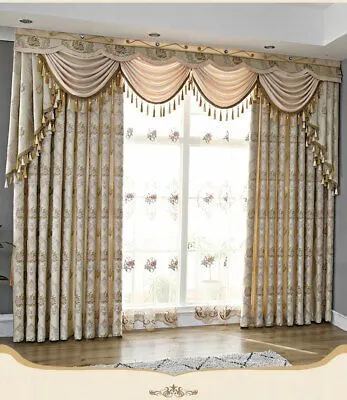
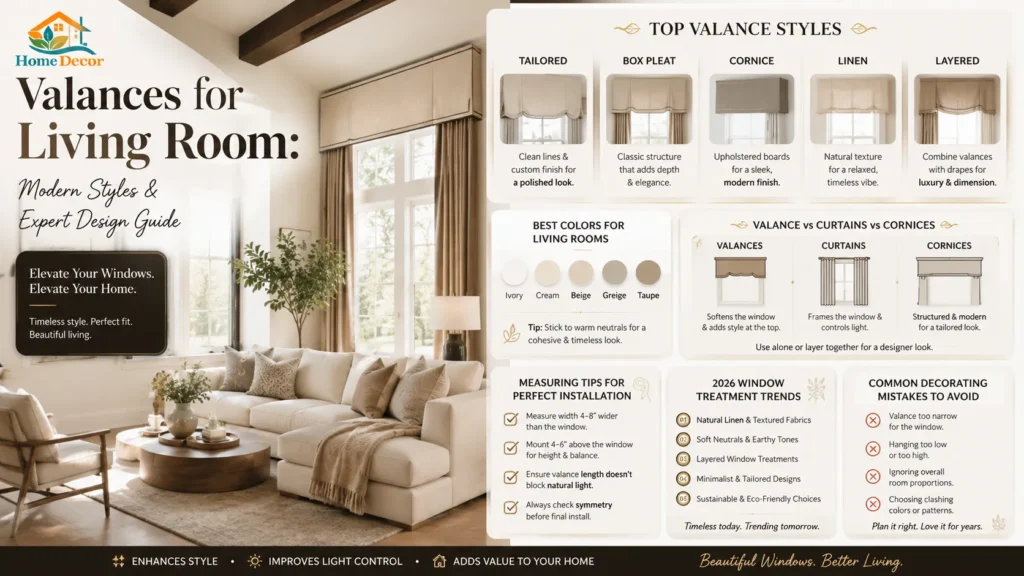
Popular Types of Living Room Valances
| Valance Type | Best For | Style Effect | Avoid If |
| Tailored valance | Modern and transitional rooms | Clean, crisp, minimal | You want a romantic or ornate look |
| Box pleat valance | Structured, upscale interiors | Polished and architectural | You want a relaxed, casual vibe |
| Cornice valance | Large windows and custom looks | Strong, finished, built-in feel | You want softness and movement |
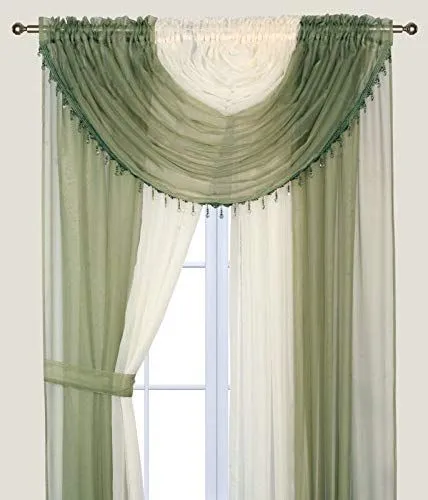
| Scarf valance | Traditional or formal rooms | Soft and draped | You prefer clean lines |
| Swag valance | Classic or vintage-inspired spaces | Decorative and dramatic | You want a contemporary look |
| Layered valance | Larger living rooms | Custom, dimensional, rich | You want a very minimal room |
| Linen valance | Coastal, organic, modern homes | Light, airy, natural | You want glossy or formal luxury |
| Balloon valance | Rarely recommended | Ornate and full | You want a modern room |
Modern design sources consistently favor tailored, soft, and natural looks over heavy ornamentation. They also note that ornate valances and balloon styles often read as dated, while clean silhouettes and simple fabrics feel current.
Tailored Valances
Tailored valances are one of the strongest options for a modern living room. They have straight lines, little to no gathering, and a neat finish that works in contemporary, transitional, and minimalist spaces. If the room already has a lot going on, this is the safest and smartest choice.
Box Pleat Valances
Box pleats add structure without becoming ornate. They are excellent when the window needs a custom feel or when the room leans transitional or upscale. Box pleats also work well over larger openings because the folds give the top treatment visual rhythm.
Cornice Valances
Cornices are rigid and architectural, so they suit rooms that need a stronger top line. They are especially useful over large windows, wide grouped windows, or spaces where hardware needs to disappear completely. Because they are more built-in in Appearance, they often make the whole room feel more intentional.
Linen Valances
Linen is one of the most modern-looking materials for window toppers. It feels relaxed but still refined, and it works across coastal, Scandinavian, organic modern, and transitional interiors. Designers also recommend lighter, natural fabrics because they keep the room from feeling heavy.
Swag and Balloon Valances
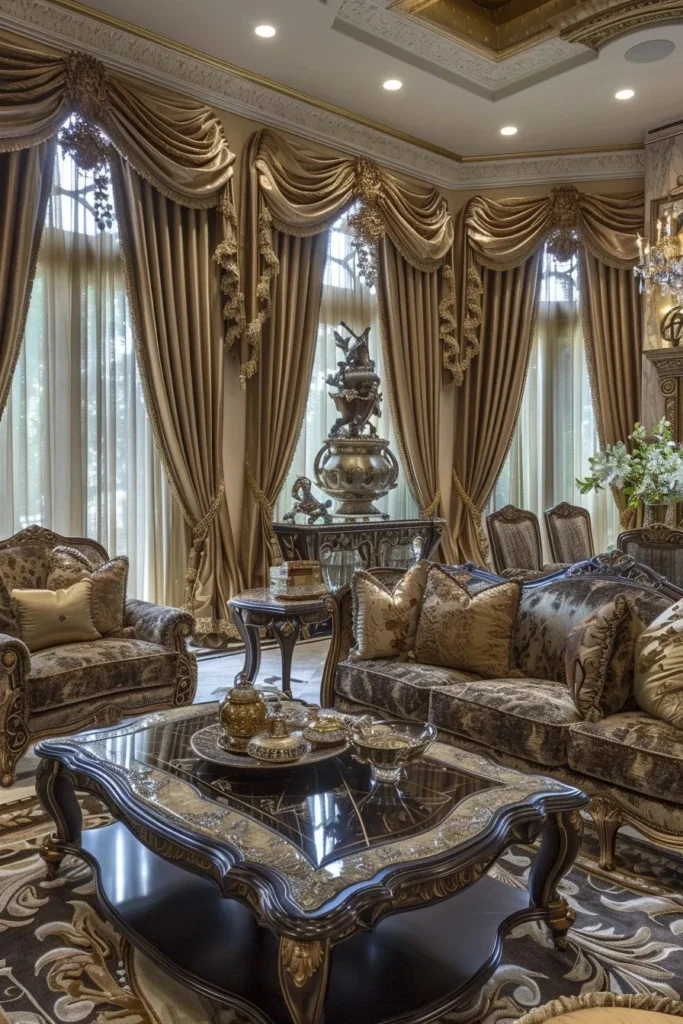
These can still work in a very specific traditional setting, but they are the easiest styles to make a room feel dated. Designers specifically call out ornate valances and balloon valances as outdated or risky in contemporary homes. Unless the room is deliberately classic, they are rarely the best strategic choice.
Best Valances for Different Interior Styles
| Interior Style | Best Valance Choice | Best Fabrics | Color Direction |
| Modern | Tailored, box pleat, cornice | Linen, cotton blend, textured solids | White, beige, greige, charcoal |
| Transitional | Tailored, box pleat | Linen, subtle weave, soft performance fabric | Muted neutrals, soft taupe, sage |
| Coastal | Linen, relaxed flat valance | Linen, cotton, woven textures | White, sand, pale blue |
| Farmhouse | Linen or simple layered valance | Natural fibers, matte finishes | Cream, oat, warm white |
| Traditional | Swag, scarf, pleated valance | Heavier woven fabric, but not overly ornate | Deep neutrals, muted patterns |
| Luxury | Cornice, layered custom valance | Premium textured fabric, velvet accents | Ivory, espresso, brass-friendly tones |
The current design direction across major home style coverage is clear: use cleaner forms, lighter textures, and less visual bulk. That is why tailored and linen-based options are so versatile right now.
Modern Valance Ideas for Living Rooms
Here are strong, current ideas that feel both practical and stylish:
- White linen valance with sheer drapery for soft daylight.
- Gray box-pleat valance over blackout panels for a calm, tailored room.
- Natural woven valance paired with Roman shades for texture.
- Minimal cornice wrapped in textured fabric for a built-in finish.
- Soft beige tailored valance for neutral interiors that need definition.
- Layered top treatment with shades below for privacy plus polish.
Best rule of thumb
If the room is already highly decorative, keep the valance simple. If the room is sparse, the valance can bring in texture or a little structure. That balance is what makes the treatment feel designed instead of crowded.
Valances for Large Living Room Windows
Large windows need proportion. An undersized valance can make the entire wall feel disconnected, while a properly scaled treatment can unify the room. Designers and measurement guides commonly recommend choosing a valance height around one-fifth to one-sixth of the window height, with full-width coverage that extends beyond the glass for proper balance.
Recommended options for large windows:
- Cornice valances for strong lines and broad coverage.
- Box pleat valances for tailored rhythm.
- Layered treatments that combine a valance with curtains or shades.
- Full-width tailored valances that cover the entire window group evenly.
The main mistake to avoid is going too small. Big windows need a treatment that looks intentional from across the room, not something that seems stuck on as an afterthought.
How to Choose the Right Fabric
Fabric choice affects both style and lifespan.
| Fabric | Look | Benefits | Best Use |
| Linen | Natural, airy, modern | Timeless, relaxed, elegant | Modern and transitional living rooms |
| Cotton | Clean and versatile | Affordable and easy to style | Everyday window treatments |
| Cotton blend | Smooth and practical | Better structure and durability | Family homes and rentals |
| Velvet | Rich and upscale | Adds depth and luxury | Formal living rooms |
| Performance fabric | Clean and tough | Better for high-traffic spaces | Homes with kids or pets |
| Woven texture | Organic and warm | Adds dimension without heaviness | Coastal, modern organic, farmhouse |
Designers and style editors increasingly steer readers toward lighter natural fabrics, linen blends, and textured materials rather than heavy brocade or tapestry styles. That shift is one reason modern valances feel much fresher than their older counterparts.
Choosing the Perfect Color
The safest colors for living room valances are still the ones that work with almost everything.
Best-performing shades:
- White
- Ivory
- Beige
- Taupe
- Greige
- Light Gray
- Sage green
- Navy
- Charcoal
Neutral palettes remain popular because they make it easier to layer with furniture, rugs, art, and wall color. But a valance can also be the place to introduce one controlled accent color. Design sources note that bold patterns and texture can add more life than overly flat neutral styling when used with restraint.
Valances vs Curtains vs Cornices
| Option | Best For | Privacy | Style Level | Main Tradeoff |
| Valance | Top finishing and hardware concealment | None by itself | Moderate to high | No privacy on its own |
| Curtains | Privacy, softness, and full coverage | High | High | Can look heavy if poorly sized |
| Cornice | Strong architectural finish | None by itself | High | Less flexible than fabric |
| Shades + valance | Function plus polish | Good | Very high | Needs careful proportion |
A strong modern room often uses more than one layer. The most successful combination is usually a blind or shade for function, plus a tailored valance or cornice for finish. That creates a polished look without forcing one treatment to do everything.
How to Measure for a Valance
This is where many people make mistakes.
Measure the window width.
Measure the full window, then decide how far beyond the frame you want the valance to extend. A little extra width helps the window feel larger and more balanced. Measurement guides commonly suggest building in some side extension rather than keeping the treatment exactly at the glass edge.
Decide the height
Many modern guides place valances around 12 to 18 inches in height, depending on the window and ceiling. Another practical rule says the valence height should be about one-fifth to one-sixth of the total window height.
Mount high
For standard ceilings, a high mount usually looks better than a low one. Practical style guides often recommend installing the valance close to the ceiling line or several inches above the window frame so the room feels taller.
Check depth and clearance.
If you are covering blinds, a shade headrail, or curtain hardware, make sure the valance has enough depth to conceal it cleanly. Pepper Home’s current measurement guide notes common depth options and stresses using a size that fully covers the hardware below.
Test the visual balance
Before ordering, step back and imagine the treatment in the room. The goal is not just to fit the window. The goal is to make the whole wall look intentional. That is the difference between “decorative” and “finished.”
Common Decorating Mistakes
- Hanging the valance too low.
- Choosing a style that is too ornate for the room.
- Using a fabric that is too heavy.
- Making the treatment too short for tall windows.
- Ignoring room scale and ceiling height.
- Over-layering with too many textures and trims.
Mini summary
A valance looks best when it respects proportion, stays visually calm, and supports the rest of the room. If it competes with your furniture or becomes the loudest object in the room, it is probably too much.
Budget-Friendly Options
Budget-conscious decorators can still get a high-end look.
Smart budget moves:
- Use a simple, tailored valance in cotton or cotton blend.
- Pair a valance with ready-made blinds instead of custom drapery.
- Choose one neutral fabric and let texture do the work.
- Keep trim minimal.
This is also the best option for renters or fast room refreshes. A good valance can hide a plain blind track and make the room feel more polished without a major renovation.
Premium / Luxury Options
Luxury valances are usually not about more decoration. They are about better proportion, better materials, and custom finish.
Luxury cues:
- Cornice or architectural pelmet shape.
- Custom sizing for the exact window.
- Premium linen, velvet, or textured fabric.
- Layered pairing with shears, shades, or drapery.
The most luxurious result often looks calm rather than busy. That is why refined hardware concealment and perfect proportions matter so much.
Smart & Modern Design Trends
The strongest current trends in living room window treatments include:
- Tailored silhouettes
- Natural linen textures
- Soft layering
- Architectural cornices
- Neutral-earth palettes
- Hidden hardware
- Clean pleats
- Light-filtering combinations
These trends line up with broader design reporting that favors lighter, more refined, less overbuilt window coverings. Designers continue to push away from heavy fabrics, ornate valances, and clunky visible hardware in favor of softer and more current finishes.
Step-by-Step Guide: How to Choose the Right Valance
- Look at the room style first. Modern, transitional, coastal, and traditional spaces need different valence shapes.
- Decide the function. Are you hiding hardware, adding softness, or finishing a shade?
- Measure the window carefully. Use width, height, and hardware clearance.
- Choose the right scale. Large windows need fuller, wider, more structured treatments.
- Pick the fabric. Linen and cotton blends are the safest modern choices.
- Mount high. The higher placement usually creates a better visual line.
- Keep the finish simple. Clean, tailored detail usually outperforms ornate trims.
Who Should Choose Valances
Valances are a good choice for:
- Homeowners who want a polished finish without full drapery.
- People with blinds or shades that look too plain on top.
- Larger living rooms that need more structure at the window.
- Modern, transitional, and layered interiors.
- Renters who want style without a major build-out.
Who Should Avoid Valances
Valances may not be ideal if:
- You want maximum privacy from a single treatment.
- Your room is very small and already visually busy.
- You strongly dislike decorative top treatments.
- The room needs a very modern, minimal wall-to-wall glass look.
Maintenance, Care & Long-Term Value
The best valence is one you can maintain easily. Lighter fabrics and simpler constructions are usually easier to keep looking fresh than heavy, ornate, dust-collecting treatments. Designers repeatedly warn that bulky, overly decorative treatments can age poorly, while clean, current fabrics and simple forms hold up better over time.
Care basics:
- Vacuum or dust gently on a regular schedule.
- Check mounting hardware every few months.
- Replace faded fabrics before the whole room starts to look tired.
- Keep patterns and trims aligned with the room’s current style direction.
Best Color Combinations
Strong combinations for living room valances include:
- White + warm wood
- Ivory + brass
- Greige + black accents
- Sage + cream upholstery
- Navy + light oak
- Taupe + natural linen textures
These combinations work because they support the rest of the room instead of competing with it. Neutral and softened color palettes also match the current preference for lighter, more breathable interiors.
Future Interior Design Trends
Looking ahead, living room valances are likely to remain relevant when they serve as architectural finishes rather than as decorative overload. Expect continued interest in:
- tailored forms,
- hidden hardware,
- natural textures,
- layered soft treatments,
- and custom-looking but practical solutions.
That is good news for this keyword. The future is “no valances.” The future is smarter valances.
People Also Ask
Are valances still in style?
Yes, but the modern version is very different from the old ornate look. Clean lines, natural fabrics, and simple shapes are the safest choices, while heavy ruffles and balloon styles are the quickest way to make a room feel dated.
What is the best valence style for a modern living room?
Tailored valances, box pleat valances, and simple linen valances are usually the best fit. They feel current, easy to style, and less visually heavy than traditional decorative toppers.
How high should a living room valance hang?
Most modern guidance favors a high mount, often close to the ceiling line or several inches above the window frame, because it helps the room feel taller and more open.
Can a valance be used without curtains?
Yes. A valance can stand alone or sit on top of blinds or shades. Just remember that a valance alone does not provide privacy or light control.
What fabric works best for living room valances?
Linen, cotton, cotton blends, and other textured natural-looking fabrics are the best modern choices because they feel lighter and more current.
Do valances make windows look bigger?
They can, especially when mounted high and sized correctly. The right proportion can visually lengthen the window and help the room feel more open.
What should I avoid with valances?
Avoid overly ornate gathers, balloon shapes, heavy fabrics, and poor proportions. Those are the details most likely to make the room feel dated or unfinished.
Conclusion
If your goal is a living room that feels polished, custom, and current, valances for living room windows still make sense in 2026, but only when the design is edited, proportional, and modern. The strongest options are tailored valances, box pleats, linen treatments, and structured cornices. They work especially well when you want to hide hardware, soften a window wall, or add height without overdecorating the room. The weakest choices are the ones that look heavy, overly ornate, or visually old-fashioned.
This topic is a strong fit for homeowners, renters, design lovers, and anyone trying to make a living room feel more finished without a full renovation. Explore more room styling and window treatment ideas on TheRoomsArt.com, and keep refining the space until every detail feels intentional.
Legal disclaimer: Prices, materials, trends, and product availability may change over time depending on region, suppliers, and brands. Always verify dimensions, materials, and compatibility before purchase or renovation.
