
Introduction
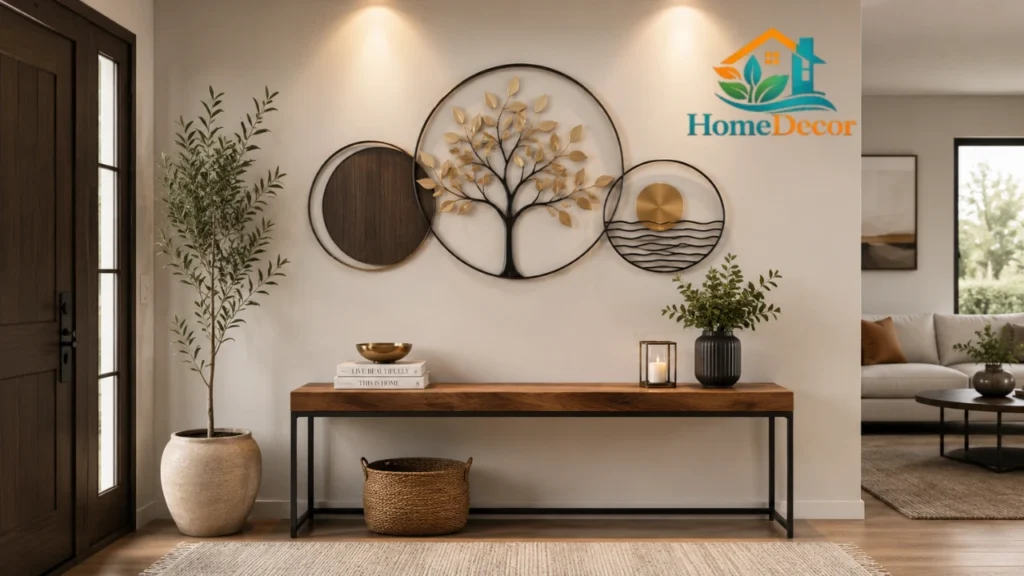
Your entryway is the first pause point in your home. It is where guests get a first impression, where you drop your bag after a long day, and where a blank wall can either feel forgotten or feel intentionally designed. The best Entryway Wall Decor does more than fill space. It helps the home feel welcoming, organized, and visually complete. That is exactly why the strongest current design coverage keeps returning to mirrors, art, wallpaper, paneling, shelves, hooks, and smart storage. The missing piece is a clear framework for choosing the right option for your wall size, budget, and lifestyle.
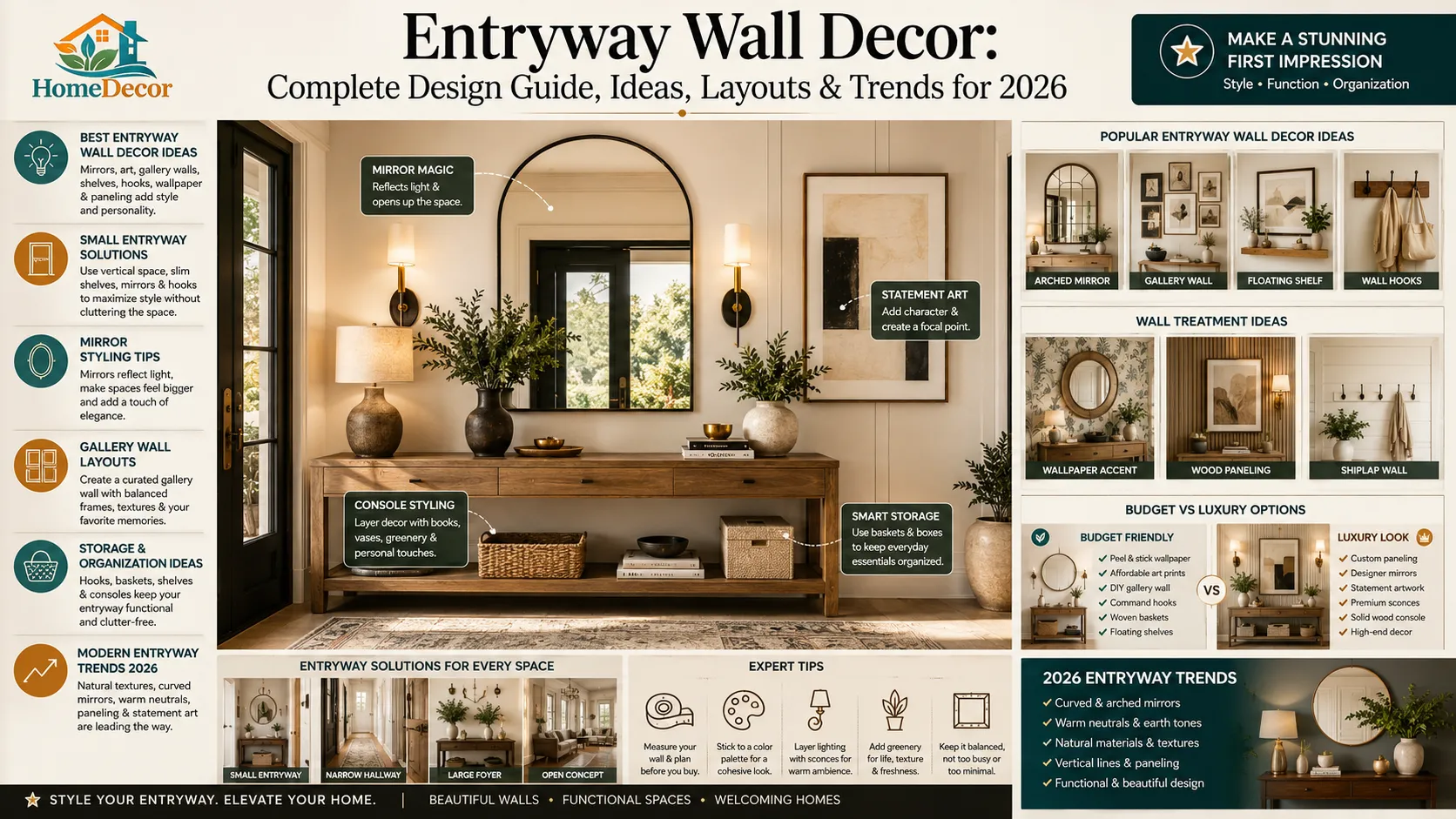
In 2026, entryway design is about more than styling a pretty wall. It is about making a transitional space work harder. The best-looking spaces in current editorials combine beauty with function: a mirror to reflect light, a shelf or console for daily drop-zone items, hooks or baskets for storage, and wall treatment that gives the space identity. That balance is what turns an entryway from a pass-through into a real design moment.
What Entryway Wall Decor Actually Does
Good entryway wall decor has three jobs. First, it creates a focal point. Second, it supports daily functions. Third, it sets the tone for the rest of the home. That is why mirrors, artwork, and statement wall finishes keep showing up in current home-design coverage: they add personality without making the space feel busy, and they can also improve light, organization, or visual structure.
A well-decorated entry wall should answer a simple question: “What should this space do for me?” If the answer is “make a small space feel bigger,” a mirror is usually the smartest move. If the answer is “hide clutter,” then shelves, hooks, baskets, or built-ins become more important. If the answer is “make a design statement,” then art, wallpaper, paneling, or a gallery wall will do more work. That practical logic appears repeatedly in the strongest current examples.
Snippet-ready answer: Entryway wall decor should welcome guests, add function, and make the entrance feel intentional. The best choices depend on wall size, storage needs, and whether you want a light-enhancing, decorative, or renter-friendly solution.
Why Entryway Wall Decor Matters in 2026
In current design coverage, entryways are being treated less like leftover space and more like a mini design room. That shift matters because modern homes often open directly into living areas, so the entry has to do more visual work with less square footage. The result is a stronger focus on pieces that shape the space quickly: mirrors, bold wall color, paneling, sconces, and wall-mounted storage.
There is also a stronger emphasis on homes that feel personal and edited. Houzz notes that successful entryway ideas often mix functional pieces with personalized touches, while ELLE Decor and House Beautiful keep highlighting art, bold statements, and one-piece focal points for small spaces. That is a clear sign that the best entry walls in 2026 are not overcrowded. They are selective.
Best Entryway Wall Decor Ideas by Wall Size
Small entryway wall decor
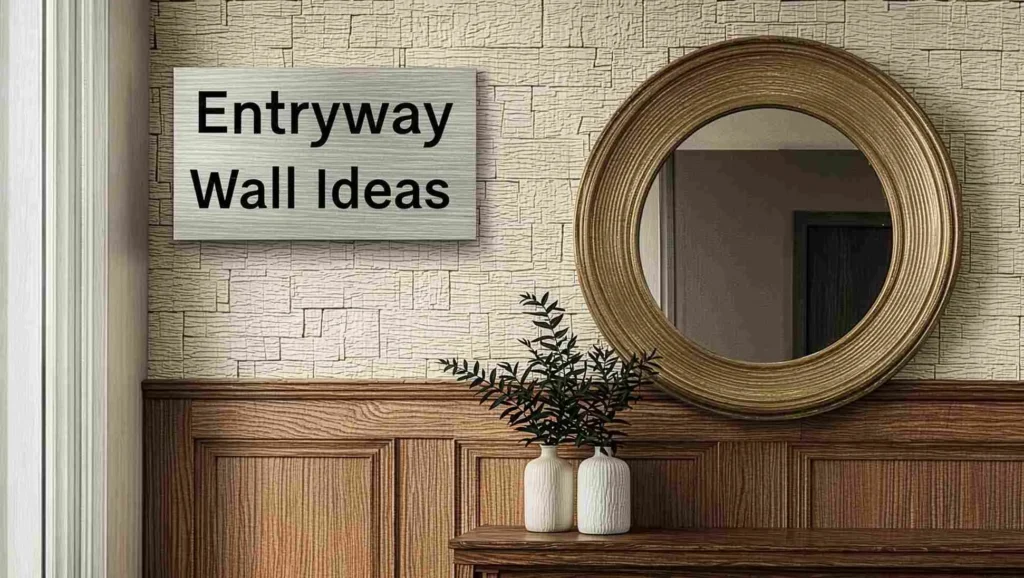
For a small entryway, one strong focal point usually works better than many small objects. A mirror, one oversized artwork, or a narrow vertical gallery wall can make the space feel polished without adding visual noise. House Beautiful and ELLE Decor both show that small entryways benefit from a single hero piece that does most of the work.
Narrow entryway wall decor
For a narrow entryway, think vertically. Tall mirrors, stacked frames, slim sconces, or a floating shelf keep the wall useful without crowding the walkway. The current editorial pattern is clear: narrow spaces need clean lines and wall-mounted solutions more than bulky decor.
Large entryway wall decor
For a larger wall, scale matters. Oversized art, a gallery wall, Paneling, Wallpaper, or a dramatic mirror can keep the wall from looking empty. The Spruce and House Beautiful both show that big entry spaces become more memorable when the wall treatment has real presence instead of a few small accents.
Open-plan entryway wall decor
When the entry opens directly into the living room, the wall needs to connect rather than compete. In that case, choose decor that repeats the home’s colors, materials, or shapes. A mirror with a matching finish, art that picks up the room palette, or paneling that echoes nearby trim can help the entry feel integrated.
Best Types of Entryway Wall Decor
1) Mirrors
Mirrors are the safest, most versatile choice because they add light, create depth, and give the entry a practical last-check function. Emily Henderson describes mirrors and entryways as a strong design pair because mirrors can visually open the space while staying highly functional.
2) Statement art
Art works best when it feels intentional and scaled correctly. One large piece can look cleaner than several small ones, especially in compact entryways. Current design sources repeatedly use art to create a focal point without clutter.
3) Gallery walls
Gallery walls are ideal when you want personality and flexibility. They work especially well for family photos, framed prints, or collected objects. The key is editing: a gallery wall should feel curated, not random. House Beautiful and Emily Henderson both show gallery walls as a strong option, especially in compact or transitional spaces.
4) Shelves and ledges
Floating shelves make entryways more useful. They can hold keys, small trays, candles, or a decorative bowl while still leaving the floor clear. House Beautiful’s small-entryway coverage and Emily Henderson’s formulas both reinforce the value of wall-mounted surfaces in tight spaces.
5) Wall hooks
Wall hooks are one of the most practical choices for real-life homes. They work especially well in family homes, rental spaces, and narrow entryways where coats and bags need a quick landing spot. Better Homes & Gardens and Houzz both highlight storage-led entry design as a core part of a successful layout.
6) Wallpaper and wall paneling
Wallpaper and paneling are best when the wall itself should become the feature. They are especially powerful in plain, awkward, or small entries because they create instant identity. The Spruce and House Beautiful both show wallpaper, mural-style prints, and paneling as high-impact ways to make the entry feel designed.
7) Sconces and wall lighting
Wall sconces help the entry look finished and also improve function. Lighting is one of the most overlooked elements in current entryway coverage, yet it appears across the most practical and luxurious examples.
Entryway Wall Decor by Style
Modern entryway wall decor
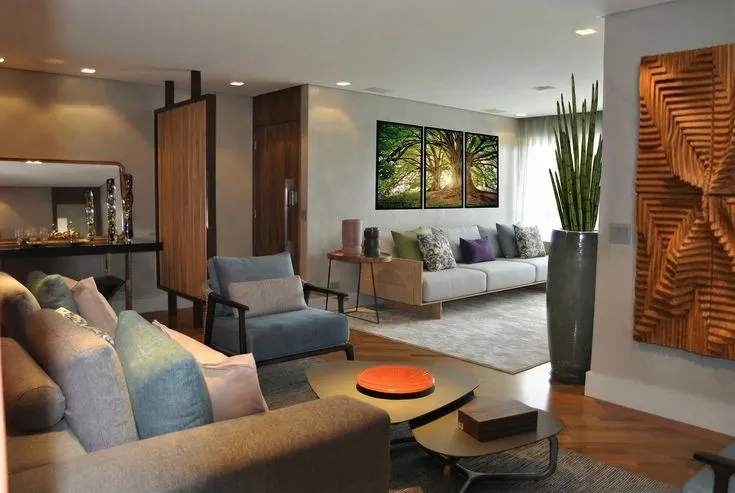
Modern entryways usually rely on clean lines, strong shapes, and a restrained palette. Think a round or arched mirror, minimal art, and a slim console or shelf. The mood should feel calm and edited, not decorated for the sake of decoration. Current modern-entryway coverage emphasizes natural materials, neutral tones, and simple but confident forms.
Traditional entryway wall decor
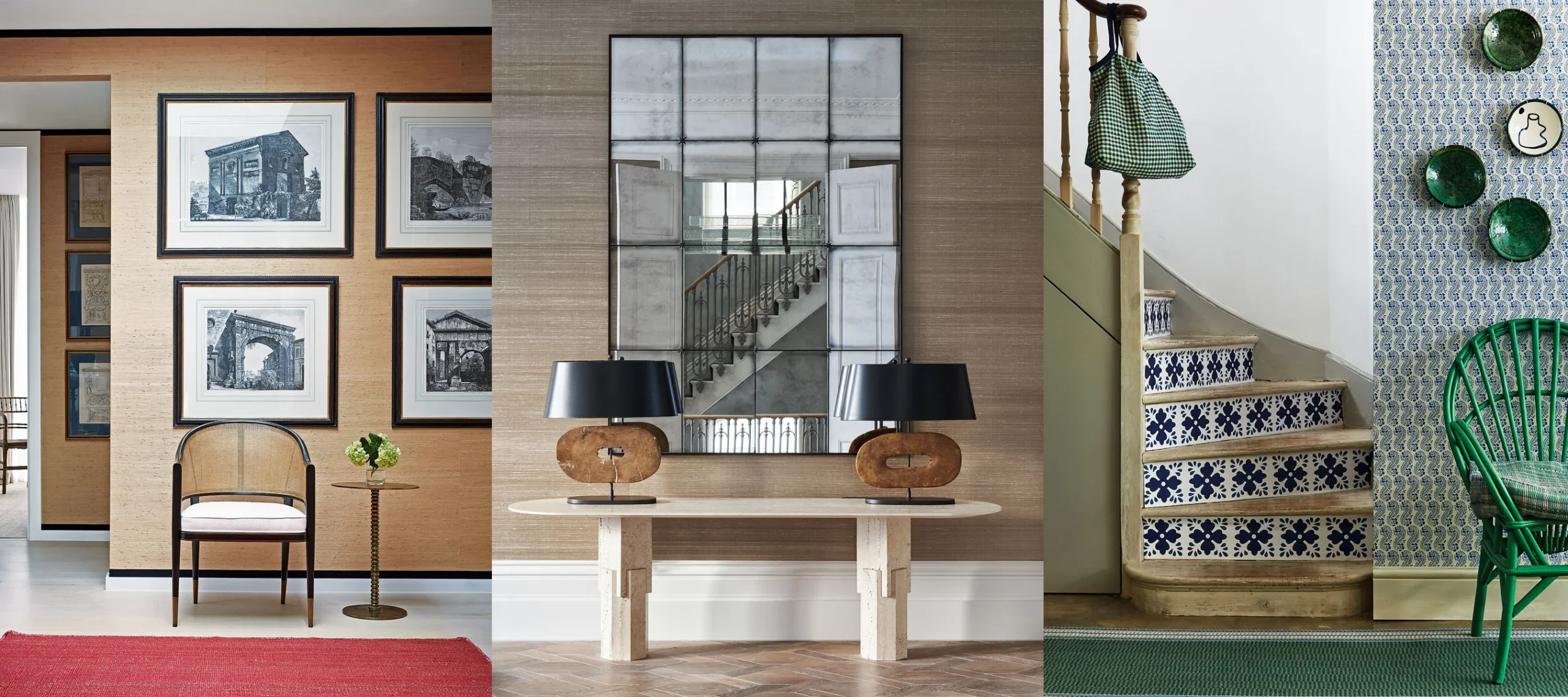
Traditional spaces often work best with symmetry. Matching lamps, centered art, refined mirrors, and classic molding or paneling help the entry feel established. This is where a gallery wall can still work, but the arrangement should feel orderly.
Organic or coastal entryway wall decor
Natural textures soften the wall and make the space feel warmer. Wood frames, woven baskets, rattan mirrors, greenery, and lighter wall colors fit this style well. Emily Henderson’s formulas and current entryway inspiration both show natural materials as a reliable way to make the space feel welcoming.
Maximalist entryway wall decor
Maximalist entryways can handle pattern, color, layered art, and bold wall treatments. The important part is discipline: even a rich look needs a clear focal point. ELLE Decor and House Beautiful both show that the strongest “more is more” entrances still have a point of view, not just a collection of objects.
How to Style a Small Entryway Wall Without Clutter
Start with one anchor piece. That could be a mirror, a large artwork, or a shelf with one or two objects. Small entryways usually look better when one item does the visual heavy lifting instead of spreading attention across too many small pieces.
Then add the function only where it is needed. If coats pile up, add hooks. If keys and mail collect near the door, add a bowl or narrow shelf. If the wall feels flat, add one layer of texture through wallpaper, paneling, or framed art. The strongest current guides consistently pair styling with utility.
Finally, keep the palette tight. A small entry looks larger when the colors are controlled. That does not mean boring. It means choosing one dominant tone, one accent, and one finish family so the wall feels intentional rather than crowded. House Beautiful’s small-entry coverage repeatedly uses this kind of visual editing.
Step-by-Step Entryway Wall Styling Formula
- Measure the wall first.
Know how much vertical and Horizontal space you actually have before buying anything. - Choose the main job of the wall.
Decide whether it should add light, storage, personality, or structure. - Pick one focal point.
Use a mirror, artwork, wallpaper, paneling, or a gallery wall. - Add the functional layer.
Add hooks, a shelf, a console, or a basket if clutter is a problem. - Edit the accessories.
Use only enough decor to finish the look. Small bowls, a vase, a candle, or a plant are usually enough. - Check the flow.
Make sure the wall decor does not interrupt walking space or the opening of doors. - Finish with lighting.
Wall sconces or a nearby lamp can dramatically improve the mood and polish.
Comparison Table: Which Entryway Wall Decor Should You Choose?
| Wall Decor Type | Best For | Main Benefit | Possible Drawback |
| Mirror | Small or dark entryways | Reflects light and opens the space | Can feel plain without styling support |
| Statement art | Clean, modern entrances | Strong focal point | Doesn’t solve storage |
| Gallery wall | Personality and family homes | Flexible and expressive | Can look busy if overfilled |
| Shelves | Tight entry walls | Adds display and drop-zone space | Needs careful styling |
| Hooks | Daily clutter control | Highly practical | Can look utilitarian if not styled well |
| Wallpaper/paneling | Blank or boring walls | High visual impact | More commitment and cost |
| Sconce lighting | Dark or formal entries | Finishes the wall and improves the light | Requires installation |
This comparison reflects the same recurring pattern across current entryway coverage: the best result usually combines one visual anchor with one practical layer.
Budget-Friendly vs Premium Entryway Wall Decor
| Budget Level | Best Choices | Why It Works |
| Low budget | Hooks, framed prints, DIY gallery wall, baskets, peel-and-stick wallpaper | High impact without major renovation |
| Mid-range | Larger mirror, floating shelf, wall sconces, quality art | Balanced look with better longevity |
| Premium | Custom paneling, built-ins, designer lighting, oversized art, statement wallpaper | Stronger visual identity and long-term value |
Budget-friendly entryways succeed when the design is edited. Premium entryways succeed when the wall feels architectural. The difference is usually not how many items are used, but how intentionally they are chosen. That distinction shows up clearly in current examples from The Spruce, House Beautiful, Houzz, and Emily Henderson.
Smart and Modern Design Trends
The strongest 2026 direction is toward multifunctional wall decor. People want walls that look good and solve problems at the same time. That is why mirrors with shelves, wall-mounted storage, hooks, and integrated display keep appearing in current ideas.
Another major trend is statement minimalism: one oversized piece that creates impact without crowding the wall. ELLE Decor’s small-entry coverage and House Beautiful’s edited visual approach both point toward fewer, stronger choices.
A third trend is texture. Paneling, wood tones, woven materials, and natural finishes help the entry feel warmer and more layered. The Spruce and current modern-entryway coverage both support that direction.
Common Entryway Wall Decor Mistakes to Avoid
Do not use too many small pieces on a small wall. That creates visual clutter and makes the entry feel even tighter.
Do not ignore storage if the entry is active. A beautiful wall that cannot handle coats, shoes, or bags will stop looking good quickly. Houzz and Better Homes & Gardens both frame entry spaces as places where function matters as much as style.
Do not choose decor that fights the room flow. Entryways are transition zones, so anything too deep, too bulky, or too low can create problems. Current design guidance repeatedly favors slim, wall-mounted, or double-duty solutions in compact spaces.
Expert Tips Most People Ignore
Choose the wall treatment before the accessories. A strong wall finish can make the entire entry feel finished, and then the decor can stay minimal.
Use vertical height to your advantage. Tall mirrors, stacked frames, and higher-mounted shelves create a better sense of proportion in small or narrow entries.
Repeat one finish at least twice. For example, if the mirror frame is black, repeat black in hooks, a lamp base, or an art frame. Repetition makes the wall feel designed rather than accidental. This is consistent with the edited look shown in the strongest current entryway examples.
Best Color Combinations for Entryway Walls
Soft neutral walls with black accents work well in modern homes because they feel clean and easy to style. Beige, ivory, taupe, and matte black are a safe, lasting combination.
Warm wood tones with cream or greige create a softer, more inviting feel. This works especially well with natural materials such as wicker, rattan, or oak.
Deep color with metallic accents can make the entry feel richer and more dramatic. House Beautiful and ELLE Decor both show that bold paint or moody wall treatment can turn a small entry into a memorable design moment.
Best Materials and Decor Choices
Wood brings warmth. Metal adds structure. Glass and mirrors help with light. Woven baskets and natural fibers soften the look and add texture. These material choices appear again and again in the current entryway coverage because they support both function and style.
For wall decor specifically, the most reliable combinations are mirror + wood, art + metal frame, shelf + basket, or paneling + sconces. Each pairing adds contrast without creating noise.
Styling Tips for Different Room Sizes
For a tiny apartment entry, choose a mirror, one shelf, and one storage hook rail. Keep the floor as clear as possible.
For a narrow hallway entry, use vertical symmetry or repeated shapes. A tall mirror and a slim wall light can feel polished without crowding the space.
For a large foyer, use scale. An oversized artwork, a gallery wall with breathing room, or statement paneling prevents the wall from feeling empty.
For a renter, removable wallpaper, command-style hooks, framed art, and freestanding shelves are the safest choices. The best renter-friendly approach is to focus on reversible styling rather than permanent changes. That logic aligns with the current small-space and practical-entryway coverage.
Who Should Choose This Style
This style is best for homeowners and renters who want the entry to feel organized, polished, and welcoming without turning it into a full renovation project. It also works well for apartment dwellers, small-space decorators, and families who need the wall to help with daily clutter. The current market clearly shows strong demand from people who want aesthetics and storage in the same solution.
Who Should Avoid This Style
If you want a very empty, ultra-minimal corridor with almost no visual intervention, a heavily styled entry wall may feel too finished. It may also not suit homes where the entry is so narrow that even slim wall elements interfere with movement. In those cases, one mirror or one art piece may be enough.
Maintenance, Care, and Long-Term Value
Entryway walls need regular editing because they sit at the busiest point in the home. Dust mirrors and frames, rotate art seasonally if needed, and keep hooks and baskets from overflowing. The long-term value of a good entry wall comes from consistency, not constant redecoration.
If you invest in quality pieces, choose items that will still make sense when the rest of the home evolves. That is why mirrors, classic art, paneling, and simple shelves are often safer long-term buys than trend-heavy decor that ages quickly.
People Also Ask
A mirror, artwork, shelves, hooks, or a gallery wall are the most useful options. The right choice depends on whether you need more light, more storage, or more personality.
Use one focal point, keep the palette simple, and add only the storage you truly need. Small spaces look better when the wall feels edited, not crowded.
A mirror is usually better when the space is dark, narrow, or small because it adds light and depth. Art is better when the wall already feels balanced, and you want more personality.
Removable wallpaper, framed art, floating shelves, and non-permanent hooks are the most renter-friendly choices. They create impact without requiring a full remodel.
Use scale, symmetry, texture, and one strong focal point. A large mirror, statement art, or paneling with good lighting often feels more luxurious than many small accessories.
Conclusion
The best entryway wall decor is not just decorative. It is intentional, scaled to the space, and useful in daily life. The current top pages already prove that people want Inspiration, but they also show a clear gap: readers still need a practical framework that tells them what to choose for a small wall, a narrow hallway, a renter-friendly space, or a larger foyer. That is the opportunity for TheRoomsArt.com.
For homeowners, renters, apartment dwellers, and design lovers, the smartest approach is simple: pick one focal point, add one functional layer, and keep the styling edited. That formula is timeless, easy to apply, and strong enough to rank because it solves the real problem behind the search.
Legal disclaimer: Prices, materials, trends, and product availability may change over time depending on region, suppliers, and brands. Always verify dimensions, materials, and compatibility before purchase or renovation.
