
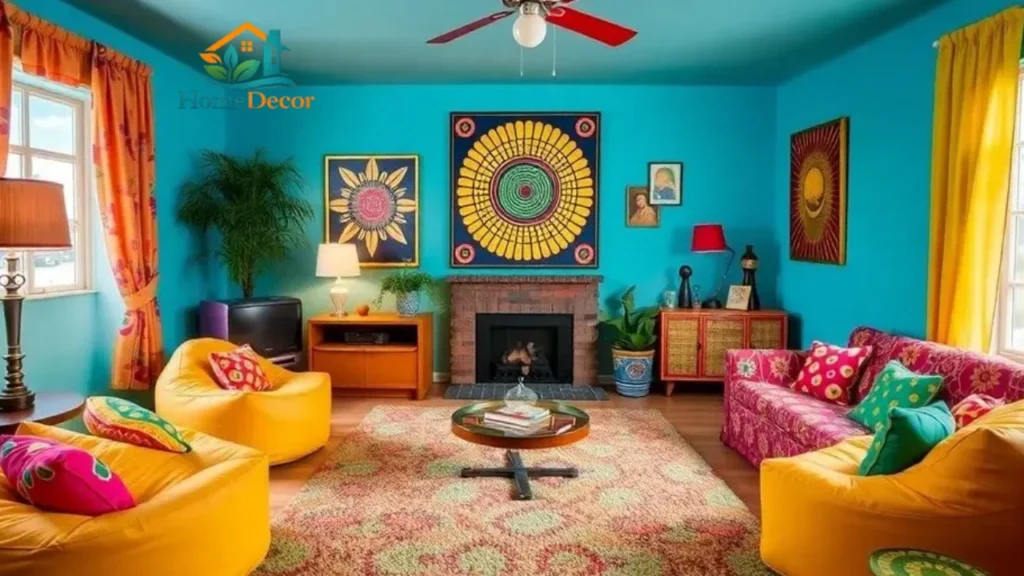
Introduction
The comeback of 70s Home Decor is not just a style trend; it is a reaction to years of cold minimalism, gray interiors, and rooms that looked polished but felt empty. In 2026, homeowners are leaning into warmth, texture, personality, and nostalgia again. Editors and designers are highlighting vintage decor, warm woods, earthy palettes, tactile fabrics, and retro details that feel more lived-in and human.
That is why the best 70s-inspired homes today do not look like museum recreations. They feel modern, functional, and emotionally comfortable. The smartest approach is to borrow the soul of the decade, then refine it with today’s cleaner layouts, better proportions, and more intentional styling. This guide shows exactly how to do that, room by room, without making your home feel dated.
What Is 70s Home Decor?
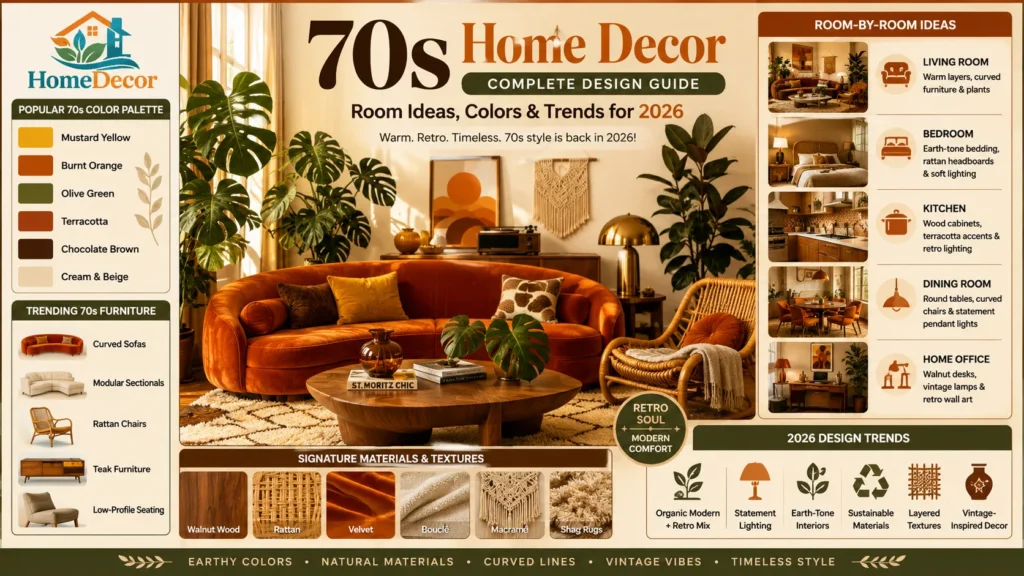
70s home decor refers to the interior design language that became popular in the 1970s, when homes embraced comfort, self-expression, and a stronger connection to nature. The look is known for earthy colors, natural materials, curved furniture, bold patterns, textured fabrics, and cozy lighting. Recent design coverage repeatedly points to rattan, wood paneling, velvet, macramé, shag textures, patterned wallpaper, conversation pits, smoked glass, and earthy colors as defining elements of the era.
Snippet-ready definition
70s home decor is a warm, textured, retro style built around earthy colors, curved furniture, natural materials, bold patterns, and cozy lighting. In 2026, it works best when mixed with modern layouts and restrained styling.
Why 70s Home Decor Matters in 2026
The 2026 revival is easy to explain: people want homes that feel personal, cozy, and emotionally grounding. Good Housekeeping’s 2026 vintage trend coverage says readers are moving away from “millennial gray and beige” and toward spaces with character and storied pieces. Homes & Gardens and Better Homes & Gardens also show that the 70s revival is happening through earthy colors, warm woods, rattan, macramé, fringe, and retro lighting.
There is also a practical reason. 70s design works well with today’s wellness-minded interiors because it supports tactile comfort, natural materials, and a warmer visual atmosphere. That is why designers are updating the decade rather than copying it literally. The modern version keeps the warmth and drops the clutter.
Mini summary
The 70s trend is strong in 2026 because it answers a real emotional need: homes should feel warm, expressive, and lived-in, not sterile or overdesigned.
The Core DNA of 70s Interior Design
| Design element | Classic 70s version | Best 2026 update |
| Color | Mustard yellow, burnt orange, avocado green, brown | Use muted earthy tones and one stronger accent color. |
| Furniture | Low, plush, curved seating | Choose curved silhouettes with cleaner lines. |
| Materials | Rattan, wood, velvet, shag | Mix real wood, rattan, bouclé, and linen for a fresher feel. |
| Walls | Paneling, wallpaper, bold pattern | Try wood accents, one feature wall, or layered art instead of an all-over pattern. |
| Lighting | Mushroom lamps, globe pendants, brass | Use statement lighting as a focal point, not clutter. |
| Mood | Cozy, social, expressive | Keep the room comfortable but edited. |
Best Types of 70s Home Decor for Today
| Style variation | Best for | What it looks like | Risk level |
| Pure Retro | Collectors, maximalists | Bold color, shag, pattern, vintage furniture | High |
| Modern Retro | Most homes | Retro shapes with cleaner layouts and fewer colors | Low |
| Boho Retro | Relaxed homes | Rattan, macramé, plants, woven textures | Low |
| Luxe Retro | Glamorous spaces | Velvet, smoked glass, brass, statement lighting | Medium |
| Minimal Retro | Small homes, renters | One or two 70s accents in a calm, neutral room | Very low |
Best choice for most readers: Modern Retro. It gives the mood of the decade without turning the space into a themed room.
The Ultimate 70s Color Palette
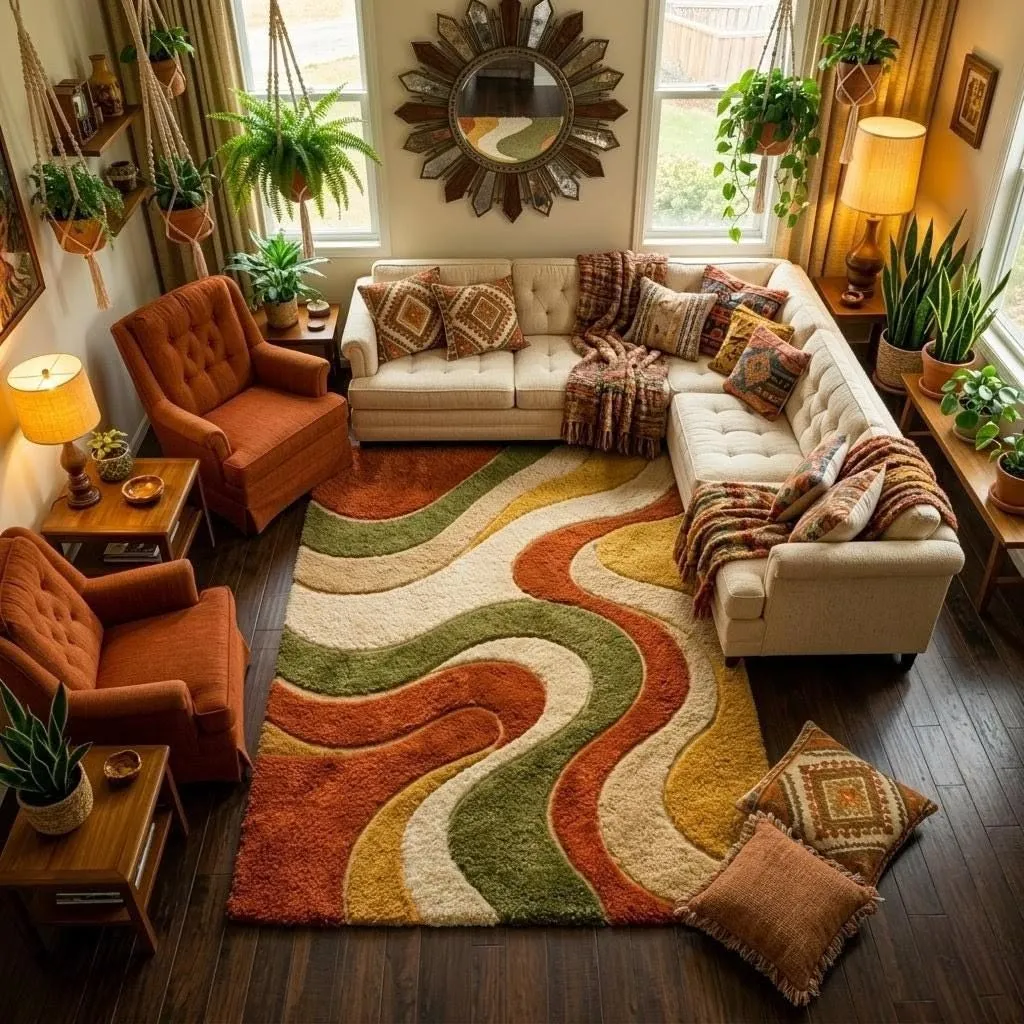
The right color palette is what makes 70s decor feel authentic. Recent trend coverage points to ochre, gray-green, earthy brown, moss green, terracotta, mustard yellow, soft green, and warm neutrals as the strongest 2026 versions of the palette.
| Color | Best use | Best pairings |
| Ochre | Walls, upholstery, large decor | White, espresso wood, matte black |
| Terracotta | Accent walls, pottery, textiles | Cream, walnut, olive |
| Moss green | Sofas, cabinetry, feature pieces | Beige, oak, brass |
| Burnt orange | Pillows, art, chairs | Brown, ivory, teak |
| Avocado green | Small accents, vintage finds | Cream, natural wood |
| Chocolate brown | Wood, leather, frames | Soft white, tan, brass |
Best 70s color combinations
- Mustard + walnut + cream
- Terracotta + beige + black accents
- Moss green + oak + warm white
- Burnt orange + camel + brass
- Olive + chocolate brown + linen
Mini summary
For 2026, the winning formula is not bright retro colors everywhere. It is one grounded vintage hue supported by warm neutrals and natural materials.
Best Furniture Styles for a 70s Home
70s furniture is all about comfort and shape. The decade brought in modular sofas, voluminous seating, curved forms, and low, lounge-like silhouettes. The Spruce specifically highlights modular sofas, chunky profiles, and bold upholstery as central to the era.
Best furniture choices
- Curved sofa or sectional
- Low lounge chair
- Rattan accent chair
- Walnut or teak coffee table
- Round dining table
- Mushroom stool or ottoman
- Modular seating for flexibility
What makes it work now
Choose furniture that feels soft and sculptural, not heavy and dark. That keeps the room grounded in the 70s while still looking current. Designers in 2026 are leaning into warmth and relaxed comfort, but they are updating the styling so the room still feels open and fresh.
70s Living Room Ideas
The living room is the easiest place to start because it can carry color, texture, and statement furniture without disrupting the rest of the home. The Spruce’s living-room examples and BHG’s retro tips both show how well rattan, wood paneling, velvet, bold color, and warm lighting work together when they are balanced properly.
A strong 70s living room formula
- Curved sofa in mustard, rust, olive, or camel
- Walnut or teak coffee table
- Shag or textured rug
- Brass or mushroom-style lamp
- One large plant
- One bold artwork
- A few woven or fringe pillows
Best layout rule
Do not overcrowd the room. A 70s living room should feel social and cozy, but it still needs breathing room. One statement sofa, one strong rug, and one retro lighting piece are usually enough.
Pro tip
If your sofa is modern, let the room become retro through the rug, lamp, pillows, and wall art instead. That keeps the overall look more sophisticated.
70s Bedroom Decor Ideas
Bedrooms work beautifully with 70s Styling because the decade naturally supports softness, warmth, and relaxation. Use earthy bedding, woven textures, and wood furniture to create a room that feels calm rather than loud.
Try this combination
- Linen or cotton bedding in cream, terracotta, olive, or rust
- Rattan or wood headboard
- Round bedside lamps
- Vintage-inspired wall art
- Woven baskets
- Bouclé throw or textured blanket
Best bedroom mood
Aim for soft retro, not full nostalgia. A bedroom should feel restful first. Keep the palette muted and let one or two retro pieces carry the story.
Small-bedroom tip
Use a light neutral base and add 70s warmth through pillows, a lamp, one accent chair, or framed vintage prints. That gives the room personality without making it feel smaller.
70s Dining Room Inspiration
Dining rooms are perfect for 70s design because the era loved entertaining, conversation, and expressive table settings. A good retro dining room uses warm wood, sculptural chairs, and lighting that feels slightly dramatic but still welcoming.
Great 70s dining room elements
- Tulip or round dining table
- Curved dining chairs
- Wood panel or wood-tone wall
- Globe pendant or sculptural chandelier
- Vintage ceramics
- Linen napkins and textured runner
Styling rule
Mix old and new. A modern dining table with retro chairs can look more expensive and less costume-like than a fully vintage set.
70s Kitchen Design Ideas
The modern 70s kitchen is less about copying old appliances and more about bringing back warmth, texture, and character. 2026 trend coverage shows designers embracing warm woods, earthy colors, and thoughtful retro touches in updated kitchens.
Easy kitchen updates
- Walnut or oak cabinetry
- Open shelving with ceramic and glass objects
- Earth-tone backsplash
- Retro-inspired pendant lights
- Brass hardware
- Textured stool seating
- A pop of terracotta or moss green
Best approach
Do not overload the kitchen with too many obvious retro details. One or two strong references, like a warm wood cabinet finish or a vintage-style lamp, usually do more than a room full of novelty pieces.
Budget tip
If replacing cabinets is not realistic, focus on handles, lighting, textiles, and countertop styling. Small changes can still create the mood.
70s Bathroom Decor
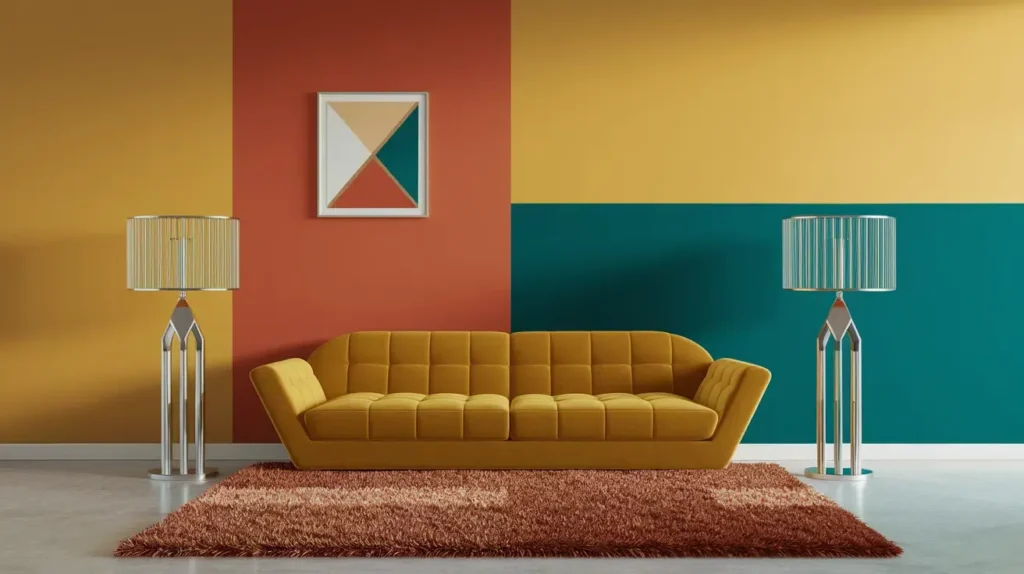
Bathrooms can take a subtle 70s look very well, especially when the design leans into earthy tile, arched mirrors, and warm metal finishes. Recent design conversations around colorful plumbing also show that bathrooms are one of the easiest places to reintroduce vintage personality in a modern way.
Try these details
- Arched or round mirror
- Brass or brushed gold fixtures
- Earth-tone tile
- Warm white walls
- Woven bath textiles
- One plant for softness
Best bathroom rule
Keep the room clean and calm. The 70s should be present in the materials and tone, not in clutter.
70s Home Office Ideas
A 70s home office should feel creative, not messy. This style works well for work-from-home spaces because it creates warmth and personality without sacrificing focus.
Good office pieces
- Walnut desk
- Comfortable curved chair
- Retro desk lamp
- Framed vintage print or poster
- Book storage with warm wood
- Woven rug to soften the room
Smart office tip
Use retro touches in the background, not on every surface. A strong desk, one good lamp, and one textured rug are enough to shape the mood.
Step-by-Step: How to Create a 70s Home Decor Look
- Choose your base mood.
Decide whether you want modern retro, boho retro, or luxe retro. - Pick one main 70s color.
Choose ochre, terracotta, moss green, mustard, or burnt orange, then support it with warm neutrals. - Add one statement furniture piece.
A curved sofa, rattan chair, or walnut table can anchor the room. - Layer texture.
Mix wood, linen, bouclé, wool, rattan, ceramic, or fringe. Texture is one of the easiest ways to make the style feel real. - Choose warm lighting.
Use globe pendants, mushroom lamps, brass fixtures, or smoked glass accents. - Style the walls.
Use one feature wall, wall art, a mirror, or a subtle paneling treatment instead of covering every surface. - Edit before you finish.
Remove anything that makes the room feel busy, dark, or overly themed.
Mini summary
The secret is not adding more retro items. It is choosing the right few pieces and giving them room to breathe.
Comparison: 70s Home Decor vs Mid-Century Modern vs Modern Organic
| Style | Look | Strength | Weakness |
| 70s Home Decor | Warm, textured, expressive, curved, earthy | Full of personality and comfort | Can look dated if overdone |
| Mid-Century Modern | Cleaner, slimmer, more architectural | Timeless and easy to mix | Can feel too polished or common |
| Modern Organic | Soft neutrals, natural textures, calm shapes | Very current and flexible | Sometimes lacks visual energy |
Best hybrid for 2026: Modern organic base + 70s accent pieces. That is the safest and most stylish formula for most homes.
Budget-Friendly 70s Decorating Tips
You do not need to buy expensive vintage originals to get the look.
Affordable updates
- Thrifted rattan or wood furniture
- Peel-and-stick retro wallpaper
- Secondhand lamps
- Vintage-style pillow covers
- DIY macramé
- Thrifted ceramic bowls and vases
- Used wood frames and mirrors
Best budget strategy
Spend on the one piece your eyes will land on first, such as the sofa, rug, or lighting. Save money on smaller decor items.
Smart budget rule
Choose fewer, better pieces instead of many cheap replicas. Cheap retro knockoffs can make the room feel fake very quickly.
Premium / Luxury 70s Decorating Ideas
If the budget is higher, the 70s look can become very sophisticated.
Luxury upgrades
- Custom upholstery
- Real walnut or teak furniture
- Artisan-made ceramic decor
- Smoked glass lighting
- Statement stone or wood wall treatment
- High-quality vintage pieces
- Bespoke built-ins with rounded details
Luxury styling note
The premium version of 70s decor should feel curated, not crowded. Think mood, material quality, and craftsmanship.
Smart & Modern 70s Design Trends for 2026
The strongest 2026 trend is not literal retro copying. It is a selective revival. Editors and designers are bringing back earthy colors, warm woods, rattan, and vintage textures in a more modern and edited way.
What is trending now
- Warm wood tones with visible patina
- Earth-tone color drenching
- Curved seating
- Rattan and wicker accents
- Mushroom and globe lighting
- Texture-rich fabrics like bouclé and fringe
- More personality, less beige sameness
What is not trending
Some 70s elements are still better left behind, especially faux wood paneling and overly matched sets. The Spruce specifically flags faux wood paneling as a 70s trend designers do not want back.
Best modern rule
Keep the room 80% modern, 20% retro. That ratio protects the room from looking dated while still giving it identity.
Best Materials and Textures for 70s Home Decor
Texture is one of the biggest reasons the style works. Better Homes & Gardens points to rattan, wicker, macramé, crochet, fringe, and bouclé as the kinds of tactile details bringing the era back into modern homes.
Best material choices
- Wood: walnut, teak, oak
- Rattan: for chairs, lamps, storage
- Bouclé: for chairs and sofas
- Velvet: for a richer, Dressier Look
- Wicker: for lighter accent pieces
- Ceramic: for vases and table styling
- Glass: especially smoked or colored glass
Texture rule
Use one soft texture, one hard texture, and one natural texture in each room. That mix gives the room depth.
Lighting and Wall Decor Ideas
Lighting does a lot of the heavy lifting in 70s decor. Mushroom lamps, globe pendants, brass finishes, and smoked glass were all part of the era’s visual language. BHG notes that switching to retro-inspired lighting is one of the easiest ways to add the look without overwhelming a room.
Great wall decor choices
- Macramé hangings
- Vintage posters
- Geometric art
- Sunburst mirror
- Framed album art
- Warm wood wall panels
- Gallery wall with retro colors
Best wall strategy
Use one strong wall moment instead of scattering too many tiny objects across the room. A single statement wall creates more impact and keeps the design cleaner.
Common 70s Decor Mistakes to Avoid
- Using too many dark colors at once
- Mixing every retro pattern
- Overcrowding the room with decor
- Buying cheap replicas that look costume-like
- Ignoring natural light
- Treating the room like a theme setup
- Using faux wood paneling instead of real warmth
Simple rule
If the room starts feeling heavy, reduce the pattern, raise the amount of light, and add a softer neutral.
Expert Tips Most People Ignore
1. Start with shape, not color
The curve of a sofa or chair can make a room feel more 70s than any accessory.
2. Use retro pieces in strategic zones
Put the strongest retro elements where the eye naturally lands: sofa, lamp, rug, mirror, or table.
3. Balance nostalgia with clean lines
The more vintage the decor, the cleaner the layout should be.
4. Use plants as a bridge
Houseplants soften retro shapes and help the room feel fresh.
5. Let materials do the work
A walnut table and a boucle chair can feel more authentic than many decorative objects.
Maintenance, Care & Long-Term Value
70s-inspired interiors can age beautifully if the materials are chosen well.
Care tips
- Protect wood from moisture and direct sun
- Vacuum-textured rugs often
- Rotate pillows and throws to reduce wear
- Dust rattan carefully with a soft brush
- Choose washable covers when possible
Long-term value tip
Invest in the items you will keep for years: sofa, dining table, lighting, and rug. Use smaller decor pieces for trend play.
Who Should Choose 70s Home Decor?
This style is a strong fit for:
- Homeowners who want warmth and personality
- Apartment renters who need easy, removable changes
- Design lovers who enjoy vintage character
- People who like layered textures and cozy rooms
- Anyone bored with sterile, gray interiors
Who Should Avoid It?
It may not suit:
- People who want very minimalist rooms
- Homes with no natural light and no desire to add warm balance
- Anyone who dislikes visual texture or pattern
- People who want a highly formal, traditional interior
People Also Ask
Yes. In 2026, the trend is strong, but it is being updated with modern layouts, warmer woods, earthy colors, and more restrained styling.
Mustard yellow, burnt orange, avocado green, terracotta, moss green, ochre, and warm brown are the key colors most associated with the style.
Use fewer colors, keep the layout open, mix vintage with contemporary pieces, and choose one or two retro anchors rather than filling the room with themed decor.
Curved sofas, modular seating, rattan chairs, low-profile lounge pieces, and warm wood tables are some of the most recognizable 70s furniture forms.
Avoid faux wood paneling, too many dark tones, crowded patterns, and rooms that look like complete recreations of the past.
Conclusion
70s home decor works in 2026 because it solves a modern problem: homes need warmth, personality, and comfort again. The strongest version of the style does not copy the past exactly. It borrows the best parts- earthy colors, curved furniture, natural wood, rattan, texture, and cozy lighting, then updates them with cleaner layouts and better balance.
For TheRoomsArt.com, this topic has real topical authority potential because it connects naturally to living room ideas, Bedroom Decor, wall art, small-space styling, and room makeovers. That makes it ideal as a pillar article that can keep expanding into supporting cluster posts over time.
Legal disclaimer: Prices, materials, trends, and product availability may change over time depending on region, suppliers, and brands. Always verify dimensions, materials, and compatibility before purchase or renovation.
