
Introduction
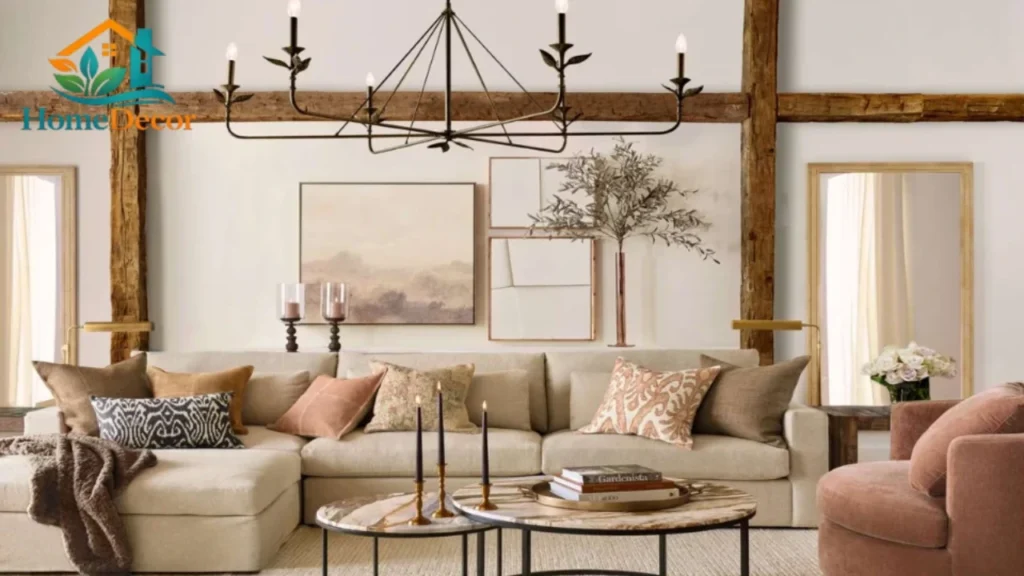
A Pottery Barn Living Room is not just a style. It is a design language built around comfort, restraint, texture, and timeless ease. Warmth settles in easily here, yet tension stays low – never tipping into chilly or stiff. This balance fits right at home in today’s houses, lofts, shared areas, and wide-open zones. Inside Pottery Barn’s examples of living spaces, ideas unfold through mood sketches, compact layouts, and visual guides, while offering practical ways to arrange things, revealing one truth quietly: humans crave more than nice views; they reach for setups that function fully.
By 2026, this look holds stronger appeal since people want spaces that sit quietly around them – rooms that breathe ease, reflect who they are. Not just neutral, but warmly so; think earth touched by sun, which is exactly where Sherwin-Williams lands with Universal Khaki – their pick for top hue next year. Magazines, blogs, social feeds – they’re all circling back to touch, depth, size play, softness when talking lounges. Instead of chasing trends, this piece treats the movement like something you can hold: clear on its core idea, step-by-step ways to shape it, product picks worth considering, traps that dull the effect, tweaks for small spots or wide-open floors.
What Is a Pottery Barn Living Room?
A Pottery Barn living room is usually built on five core ideas: neutral color, layered texture, classic furniture, functional layout, and cozy balance. The brand’s own styling pages and room collections point toward a family of looks that includes Coastal, Timeless Neutrals, High-Contrast Neutrals, and Rustic Lodge, among others. That mix shows that the brand is not one rigid aesthetic; it is a flexible framework centered on approachable comfort and refined simplicity.
In simple terms, the style usually feels like this:
- Warm, not stark
- Calm, not empty
- Classic, not dated
- Layered, not busy
- Comfortable, not sloppy
That balance is what looks like long-term appeal. It also explains why the style works for both casual homes and more polished interiors. Houzz and Real Simple’s design advice around balance, texture, scale, seating, and comfort lines up well with this approach.
Why It Matters in 2026
The 2026 living-room conversation is less about matching sets and more about creating rooms that feel lived-in, functional, and visually calm. Current design guidance emphasizes comfortable seating, correct scale, flexible furniture, layered texture, and enough negative space for a room to breathe. That is exactly where the Pottery Barn aesthetic fits in: it gives you a soft, polished baseline that can be adapted for apartments, family homes, small rooms, or premium designer spaces.
It also matters because buyers and readers are increasingly looking for rooms that solve real-life problems: storage, traffic flow, visual clutter, pet-friendly fabrics, and multi-use layouts. Pottery Barn’s own small-space content highlights smaller-footprint furniture and room-planning tools, while IKEA and Houzz continue to stress multifunctional pieces, good light, and scale-aware layouts.
Best Types of Pottery Barn Living Room Styles
| Style Type | Feel | Best For | Key Pieces |
| Timeless Neutrals | Soft, calm, classic | Family rooms, resale-friendly homes | Linen sofa, wood coffee table, neutral rug |
| Coastal / Beach House | Light, airy, relaxed | Bright homes, apartments, weekend houses | Slipcovered seating, natural fibers, pale woods |
| High-Contrast Neutrals | Crisp, polished, designer | Modern-traditional rooms | Light sofa, dark accent chair, black metal details |
| Rustic Lodge | Warm, grounded, textured | Larger rooms, cozy homes | Leather seating, chunky wood, woven accents |
| Organic Modern | Minimal but warm | Small or medium rooms | Curved sofa, soft beige palette, sculptural decor |
| Transitional Classic | Balanced and timeless | Most homes | Button-tufted or tailored seating, mixed materials |
These styles all sit comfortably inside the broader Pottery Barn world because the brand officially promotes style boards and room-by-room inspiration across multiple aesthetics.
Top Pottery Barn Living Room Ideas That Actually Work
The warm neutral layering room
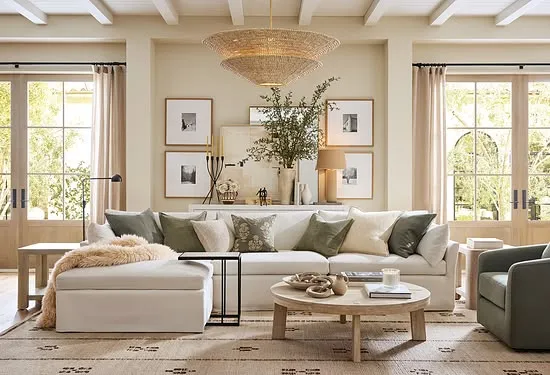
Use a cream or khaki sofa, a textured rug, a light wood coffee table, and a mix of pillows in linen, boucle, and cotton. The goal is subtle depth, not loud color. This approach aligns with 2026’s warm-neutral direction and works well in both compact and larger rooms.
The cozy family-room layout
Choose a sectional or deep sofa, add a durable ottoman, and keep the coffee table soft-edged or rounded if children are around. Real Simple and Houzz both stress comfort, scale, and movable pieces, especially when the room must work hard every day.
The elevated casual space
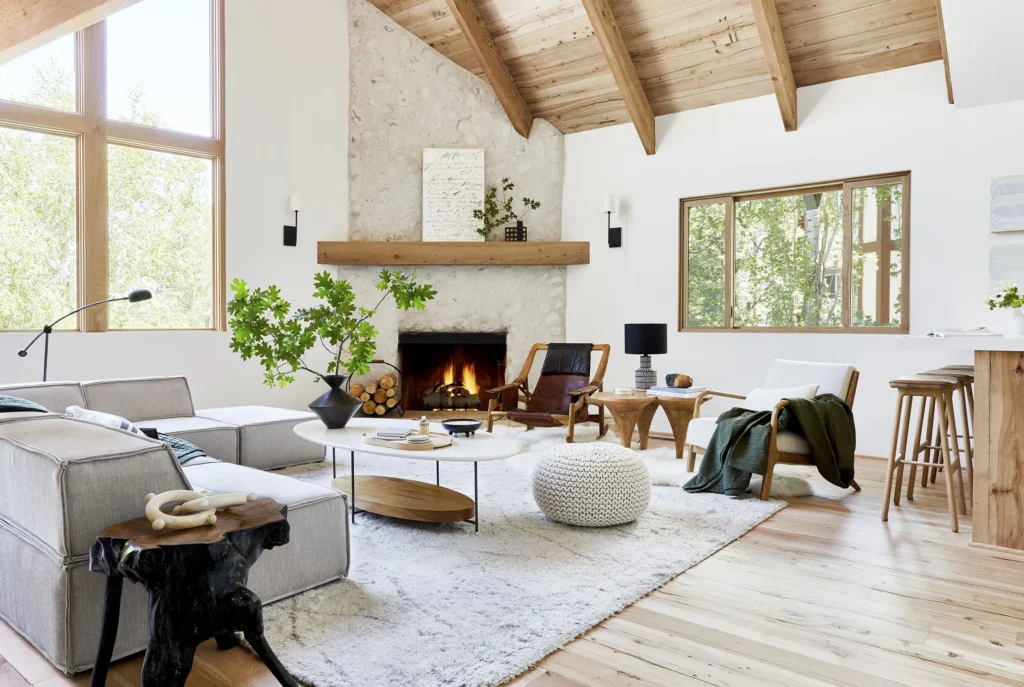
Mix one structured anchor piece with softer accents. For example, pair a tailored sofa with a woven chair, a stone or wood table, and a warm lamp. This stops the room from looking too showroom-perfect and gives it a more lived-in feel.
The small-space Pottery Barn room
Use a smaller-scale sofa, one accent chair instead of two, and a storage ottoman or nested side tables. Pottery Barn’s small-space guidance and IKEA’s multifunctional furniture advice both point toward the same principle: every item should earn its place.
The high-contrast designer room
Use a pale sofa, dark accent pieces, black-framed art, and a few bold accessories. Houzz’s living room advice shows that contrast is what keeps a neutral room from feeling flat.
Step-by-Step Guide: How to Create the Pottery Barn Look
Decide the room’s main job.
Ask whether the room is for Conversation, TV, reading, family time, or all four. That answer determines the layout. Houzz repeatedly emphasizes that layout and furniture scale should come before decoration.
Choose one foundation color.
Start with a warm neutral such as cream, khaki, soft beige, or greige. Sherwin-Williams’ 2026 Color of the Year reflects the broader move toward grounded, livable neutrals, which makes this a safe and modern starting point.
Pick one anchor furniture piece first.
Usually, that is the sofa. Real Simple and Houzz both highlight scale, comfort, and furniture proportion as major design success factors.
Build the layout around traffic flow
Leave enough room to move through the space comfortably. Houzz’s planning advice emphasizes walking space, conversation distance, and smart placement before styling details.
Add texture in layers
Use wood, linen, wool, rattan, stone, or boucle. Texture matters because a neutral room without texture can feel flat, while a textured room feels richer and warmer.
Finish with lighting and .art
Use multiple light sources and one or two strong visual focal points. Architectural Digest and Houzz both support layered lighting and purposeful focal points in living rooms, especially smaller ones.
Mini summary
The Pottery Barn look is not complicated. Start with layout, then sofa, then color, then texture, then lighting. That order gives the room a designer result without waste.
Comparison: Budget, Mid-Range, and Premium Pottery Barn-Style Rooms
| Tier | What to Spend On | What to Save On | Best Strategy |
| Budget | Sofa cover, rug, lighting | Side tables, wall decor, throws | Buy one anchor item and build around it |
| Mid-range | Sofa, coffee table, rug | Accent chairs, decor accessories | Mix durable basics with seasonal updates |
| Premium | Custom upholstery, solid wood, statement lighting | Smaller decorative items | Invest in fewer but stronger pieces |
Budget-friendly living-room design does not mean cheap-looking. Real Simple’s recent furniture and decorating coverage shows that smart swaps, performance fabrics, and better scale choices can make a room feel far more expensive than it is. IKEA’s guidance also reinforces the value of multipurpose furniture in compact spaces.
Budget-Friendly Pottery Barn Alternatives and Shopping Tips
Pottery Barn is known for a polished, durable look, but readers often want that style at a lower cost. The smartest route is to buy one “hero” piece in the Pottery Barn spirit and then use lower-cost supporting pieces around it. Real Simple has recently highlighted budget-friendly furniture that echoes Pottery Barn’s look, which shows how strong the market is for this style at different price points.
Smart ways to save:
- Choose a neutral sofa and refresh it with pillows and throws
- Use a budget coffee table with a more premium lamp
- Buy a simple rug, then add layered texture through textiles
- Shop outlet or sale sections for larger items
- Prioritize washable or performance fabrics for long-term value
Best budget trade-offs
Spend more on:
- Sofa
- Rug
- Main lighting
Save on:
- Decorative trays
- Books
- Baskets
- Seasonal accessories
That approach protects the room’s overall quality while keeping the project realistic.
Premium / Luxury Pottery Barn-Style Options
Luxury versions of this look depend on material quality, customization, and proportion rather than sparkle. Pottery Barn’s tools and services page shows options such as design boards, free fabric swatches, room planning, custom upholstery, and paint matching support, which are all useful signals for premium planning.
Premium choices that elevate the room:
- Custom slipcovered or upholstered sofa
- Solid wood coffee table
- Real wool or high-quality natural-fiber rug
- Linen drapery
- Sculptural lighting
- Larger-scale art or a statement mirror
Luxury does not mean crowded. In fact, the highest-end rooms often look calmer because every piece has room to breathe. That idea matches current advice about negative space, good scale, and restrained styling.
Best Color Combinations for a Pottery Barn Living Room
| Color Combo | Mood | Works Best In |
| Cream + Warm Taupe | Soft and timeless | Small to medium rooms |
| Khaki + White + Walnut | Warm and grounded | Transitional homes |
| Sage + Linen + Oak | Fresh and calm | Bright rooms |
| Charcoal + Beige + Brass | Sophisticated contrast | Modern classic spaces |
| Terracotta + Ivory + Natural Wood | Cozy and earthy | Warm, layered interiors |
| Navy + Sand + Light Oak | Balanced and polished | Family rooms |
The strongest 2026 direction is still toward warm, earthy neutrals with depth. Sherwin-Williams’ Universal Khaki points to exactly that movement, while broader design coverage shows growing interest in warmer, more immersive palettes and layered contrast.
Best rule to follow
Use one base neutral, one grounding wood tone, and one accent color. That formula keeps the room unified without making it feel one-dimensional.
Best Materials and Decor Choices
Best materials for this style:
A Pottery Barn living room usually feels rich because of the materials, not because of loud colors. Houzz’s design advice and Real Simple’s texture coverage both point to the same idea: layered materials create comfort and depth.
- Linen
- Cotton
- Wool
- Boucle
- Leather
- Rattan
- Oak or walnut wood
- Stone or stone-look surfaces
Best decor choices:
- Oversized throw pillows
- Woven baskets
- Neutral artwork
- Ceramic vases
- Simple candlesticks
- Books with warm covers
- Soft floor lamps
- Large mirrors
Use this 3-texture rule
- One soft texture
- One natural texture
- One smooth or polished finish
That combination stops the room from feeling too matchy or too flat.
Space-Saving and Functional Tips
Small living rooms are one of the biggest opportunity areas in this keyword space. Pottery Barn’s own small-space advice focuses on scale, lighter colors, and smart furniture sizing, while IKEA highlights multifunctional furniture, clever storage, and the importance of light.
Best space-saving ideas:
- Use a sofa with slimmer arms
- Choose an ottoman with storage
- Pick round or oval tables to improve movement
- Hang mirrors to reflect light
- Use wall-mounted lighting to save floor space
- Keep the rug large enough to unify the seating area
- Add one tall storage piece instead of many small ones
What not to do
- Do not overcrowd the room with too many side chairs
- Do not push everything to the walls by default
- Do not use tiny furniture that looks lost in the room
- Do not ignore visual clutter
Architectural Digest and Houzz both reinforce the value of good scale, Layered Lighting, and thoughtful negative space in compact rooms.
Styling Tips for Different Room Sizes
Small living room
Use light colors, compact furniture, and one strong focal point. Pottery Barn’s small-room guidance and Houzz’s compact-room advice both support lighter palettes, scale-aware furniture, and strategic mirrors.
Medium living room
Create a complete conversation zone with a sofa, two chairs, and a properly sized coffee table. This is the easiest room size for Pottery Barn styling because it gives you enough breathing room for texture and contrast.
Large living room
Divide the room into zones. One area can accommodate the main seating group, while another can serve as a reading nook, media area, or game zone. Houzz and AD both show that large rooms often need more structure, not more furniture.
Open-concept living room
Use rugs, lighting, and furniture orientation to separate zones without blocking flow. Pottery Barn’s room-planning tools and small-space guidance are especially relevant here.
Common Mistakes to Avoid
Real Simple’s recent design coverage is especially useful here because it highlights common mistakes that weaken a living room’s function and feel. The same logic applies strongly to Pottery Barn-style rooms.
Avoid these mistakes:
- Buying a matching set that feels too uniform
- Choosing furniture that is too large or too small
- Ignoring comfort in favor of appearance
- Skipping layered lighting
- Using too many focal points
- Overfilling every corner
- Forgetting storage
- Choosing fragile fabrics for a high-use room
Simple fix
Before buying, mark the layout with tape or use a room planner. Pottery Barn itself offers a room-planning tool, and Houzz strongly advises planning on paper or with a clear layout before moving heavy pieces.
Expert Tips Most People Ignore
- Start with the sofa, not the decor.
The sofa defines the room’s scale and tone. - Use one darker tone even in neutral rooms.
Contrast keeps the room from feeling washed out. - Layer light at different heights.
Table lamps, floor lamps, sconces, and overhead light make the room feel richer. - Treat storage as décor.
Baskets, cabinets, and consoles can look beautiful if chosen well. IKEA and Pottery Barn both push practical storage as part of good room design. - Leave some negative space.
A room needs breathing room to feel expensive and calm.
Maintenance, Care, and Long-Term Value
The Pottery Barn look works best when it is easy to live with. That means choosing materials you can care for, not just admire. Pottery Barn’s own content includes guidance on cleaning leather furniture and using swatches, which fits this practical approach.
Long-term value tips:
- Choose performance or washable fabrics in family rooms
- Test swatches in natural light
- Maintain rugs and upholstery regularly
- Rotate pillows and throws seasonally
- Keep décor edited so the room does not feel dated
A living room that stays attractive after real use is more valuable than one that only looks good on day one.
Best Living Room Directions for 2026 and Beyond
The next phase of interior design is likely to keep moving toward warm neutrals, natural materials, flexible furniture, and rooms that support multiple uses. Sherwin-Williams’ 2026 neutral direction, along with current coverage of cozy textures, layered lighting, and multifunctional layouts, all point in the same direction.
What will stay strong:
- Warm beige and khaki tones
- Organic, tactile materials
- Mixed finishes
- Family-friendly durability
- Comfortable, moveable layouts
- Calm, edited styling
What will fade:
- Overly matched rooms
- Harsh minimalism
- Fragile decor-first layouts
- Furniture that ignores scale
Who Should Choose This Style
This style is a strong fit for:
- Homeowners who want timeless comfort
- Apartment renters who need visual warmth
- Families who need durability and flexibility
- Design lovers who prefer neutral elegance
- People who want a polished but not flashy room
Pottery Barn’s room and style pages, plus its small-space and design-tool content, make this style especially suitable for readers seeking inspiration and a practical path to execution.
Who Should Avoid This Style
This style may not be ideal for:
- People who want bold, high-color drama
- Fans of ultra-modern or industrial interiors
- Minimalists who prefer very little texture
- Readers who want highly eclectic, maximalist rooms
That said, even those users can borrow pieces of the Pottery Barn look, especially the layout discipline, comfort-first seating, and material layering.
People Also Ask
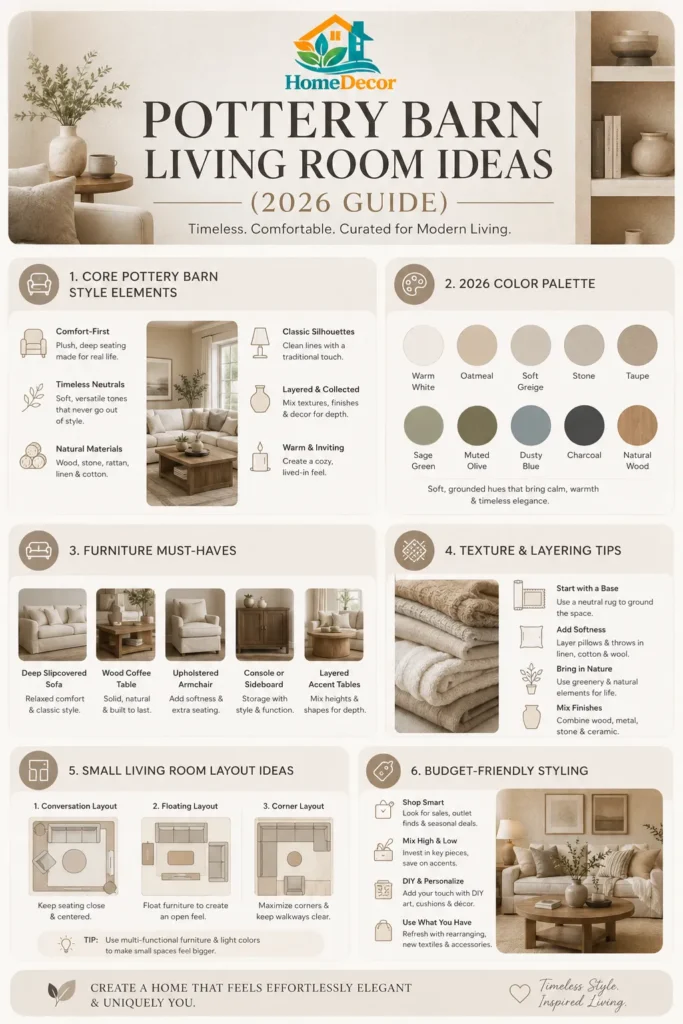
It usually has warm neutrals, layered textures, classic furniture shapes, and a calm, comfortable layout. The look is refined but still relaxed.
Use smaller-scale furniture, a light palette, mirrors, and multifunctional pieces like storage ottomans or nesting tables. Pottery Barn and IKEA both support this approach.
Warm neutrals such as khaki, cream, greige, sage, and soft taupe work especially well. Sherwin-Williams’ 2026 Color of the Year supports that direction.
It can be, but it does not have to be. The look works well when you invest in one or two anchor pieces and use simpler supporting items around them.
A slipcovered sofa, a tailored neutral sofa, or a comfortable sectional usually fits best, depending on room size and lifestyle. Comfort and scale matter more than a single exact model.
Conclusion
A strong Pottery Barn living room is built on comfort, balance, and timeless style, not on trendy clutter. The winning formula in 2026 is simple: start with a neutral foundation, choose properly scaled furniture, layer texture, add smart storage, and finish with warm lighting and a few well-edited accessories. Pottery Barn’s own room inspiration, style boards, small-space guidance, and design tools make this a natural style to build from, while Houzz, IKEA, Real Simple, Architectural Digest, and Sherwin-Williams all support the same deeper design principles.
This style is ideal for homeowners, renters, families, and anyone who wants a room that feels calm, welcoming, and easy to live in. For TheRoomsArt.com, this topic also creates a strong doorway into living-room inspiration, wall art, room makeovers, furniture styling, and small-space design. Bookmark it, share it, and use it as the foundation for your next room refresh.
Legal disclaimer: Prices, materials, trends, and product availability may change over time depending on region, suppliers, and brands. Always verify dimensions, materials, and compatibility before purchase or renovation.
