
Introduction
A Dining Room Bench With Back is one of the smartest seating choices for modern homes because it blends comfort, flexibility, and visual simplicity. It can make a dining space feel more relaxed than a row of chairs, while still giving your back the support you actually want during long meals, homework sessions, or everyday family life. In 2026, that matters more than ever, because dining spaces are doing double duty as gathering zones, work zones, and casual hangout spots.
The best backed benches do more than “save space.” They help define a room, soften the look of a dining table, and create a warmer, more intentional layout. In small rooms, a bench can visually open the space by reducing bulky chair volume, while in larger homes, it can add a polished banquette feel without a full built-in renovation. Current small-dining-room design guidance consistently points to benches, built-ins, mirrors, and proper scale as the key moves that make a room feel bigger and more useful.
If you are trying to choose the right bench, this guide will help you compare materials, understand sizing, avoid common buying mistakes, and style the bench so it looks like part of the room instead of an afterthought.
What Is a Dining Room Bench with Back?
A dining room bench with a back is a long seat designed for dining tables that includes a supportive backrest. It gives you the shared seating feel of a bench while adding the upright comfort of a chair or banquette. Unlike a backless bench, this style is better suited to longer meals and everyday use because it supports posture more naturally. IKEA’s dining-bench guidance also notes that benches are useful for small spaces and can create a slimmer, less cluttered look.
Snippet-ready answer:
A dining room bench with a back is a dining seat that combines bench-style seating with back support. It is ideal for small spaces, flexible seating layouts, and comfortable everyday dining.
Why It Matters in 2026
Dining rooms in 2026 are becoming more casual, more flexible, and more lived-in. Homeowners are moving away from rigid formal layouts and toward spaces that support real daily life. That is why benches, banquettes, and multifunctional seating are rising in relevance. Better Homes & Gardens reports that many homeowners are prioritizing social, flexible kitchen-dining spaces, while design coverage from 2026 points to warm colors, textured materials, and a more personal look.
A dining bench with a back fits that shift perfectly. It works in apartment kitchens, family dining rooms, breakfast nooks, and open-plan homes. It also gives you a softer look than a full set of chairs, which is useful when you want the room to feel welcoming rather than formal. AD’s small-dining-room coverage repeatedly shows that benches and banquettes can maximize seating without crowding circulation.
Mini summary:
In 2026, the backed dining bench is not a niche piece. It is a practical answer to how people really live now: fewer formal rooms, more multi-use spaces, and a stronger preference for comfort with style.
Best Types and Design Variations
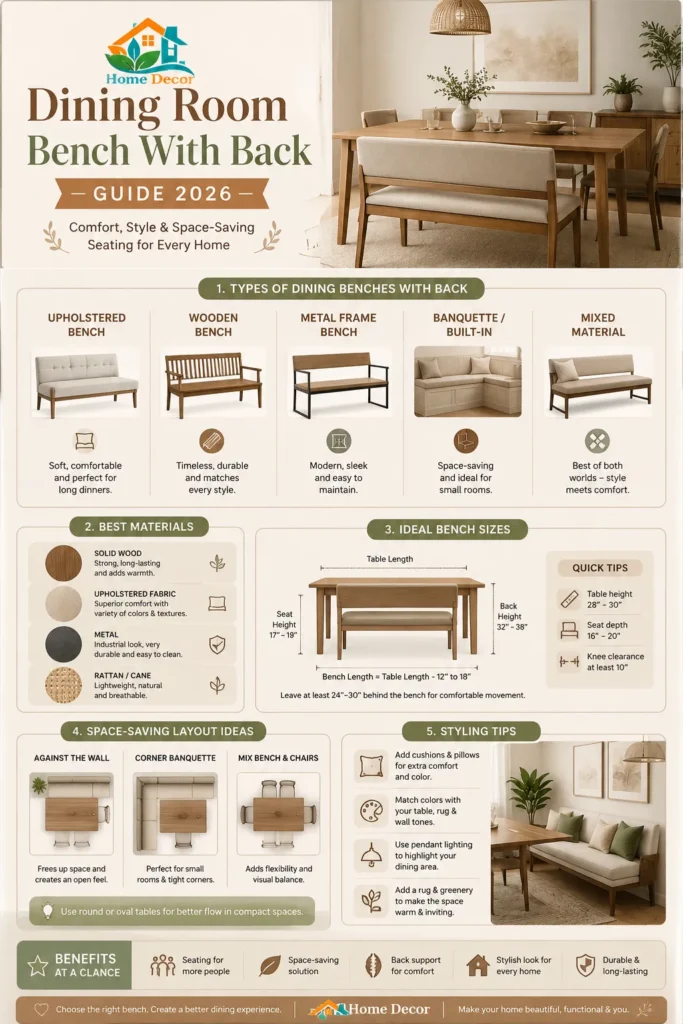
1. Upholstered dining bench with back
This is the most comfortable option for long meals, family use, and cozy interiors. Upholstery adds softness and makes the bench feel more like a custom banquette. It also fits modern, transitional, and luxury dining rooms well. Real Simple’s dining-chair coverage notes that upholstered seating is generally the most comfortable category, and the same logic applies to benches.
2. Wooden dining bench with back
Wood is the classic choice for farmhouse, rustic, traditional, and Scandinavian spaces. It is durable, timeless, and easy to coordinate with many table finishes. IKEA identifies wood as one of the most common bench materials and a solid choice for everyday use.
3. Metal-frame dining bench with back
Metal adds an industrial, contemporary, or urban feel. It can look sleek in minimalist homes and often pairs nicely with wood tops, leather-style upholstery, or monochrome palettes.
4. Banquette-style bench with back
This is the most space-efficient style when you want a custom, built-in look. It works especially well in corners and narrow rooms because it reduces visual clutter and can create a café-like dining zone. AD and BHG both show that built-ins and banquettes are strong solutions for compact dining areas.
5. Mixed-material bench
A wood base with upholstered seating or a metal frame with a padded back gives you the best of both worlds: structure and comfort. This is especially useful if your dining room needs to feel stylish but not stiff.
Comparison Table: Which Style Fits Which Home?
| Style | Best for | Main advantage | Watch out for |
| Upholstered bench | Cozy, modern, luxury interiors | Highest comfort | More care is needed for stains |
| Wooden bench | Farmhouse, rustic, classic rooms | Timeless and durable | Can feel hard without cushions |
| Metal-frame bench | Industrial, modern, minimalist homes | Light visual profile | May feel colder without upholstery |
| Banquette-style bench | Small dining rooms, corners | Space-saving and custom-looking | Usually less movable |
| Mixed-material bench | Transitional homes | Balanced comfort and style | Style must match the room carefully |
How to Choose the Right Dining Bench with Back
Measure your table first.
For a standard dining setup, the table is usually around 28 to 30 inches high, and the seat height typically pairs well with around 17 to 19 inches. Retail guides from Wayfair and Coleman Furniture both point to this standard pairing, which helps keep the dining experience comfortable.
Check seat-to-table clearance
A practical goal is enough room, so diners do not feel cramped at the knees or torso. Guides from Wayfair and The Spruce emphasize that correct clearance is essential for comfort and posture.
Decide whether you want one-sided or full bench seating
A bench on one side and chairs on the other is often the most flexible option. AD and Houzz both show this layout working well in smaller rooms because it preserves a cleaner visual line and often makes circulation easier.
Choose the right shape for your roof
A rectangular table usually works best with a straight bench. A round or oval table can soften a compact dining room and improve flow. AD specifically highlights round and oval tables as strong solutions in small dining areas.
Decide how much comfort you need
If the bench is for quick breakfasts, a simpler design may be enough. If it will be used for long dinners, work sessions, or family gatherings, upholstery and stronger back support are worth paying for.
Mini summary:
Choose based on three things: table height, Room Size, and how long people will actually sit there. The prettiest bench is not the best bench if it causes poor posture or makes the room feel tight.
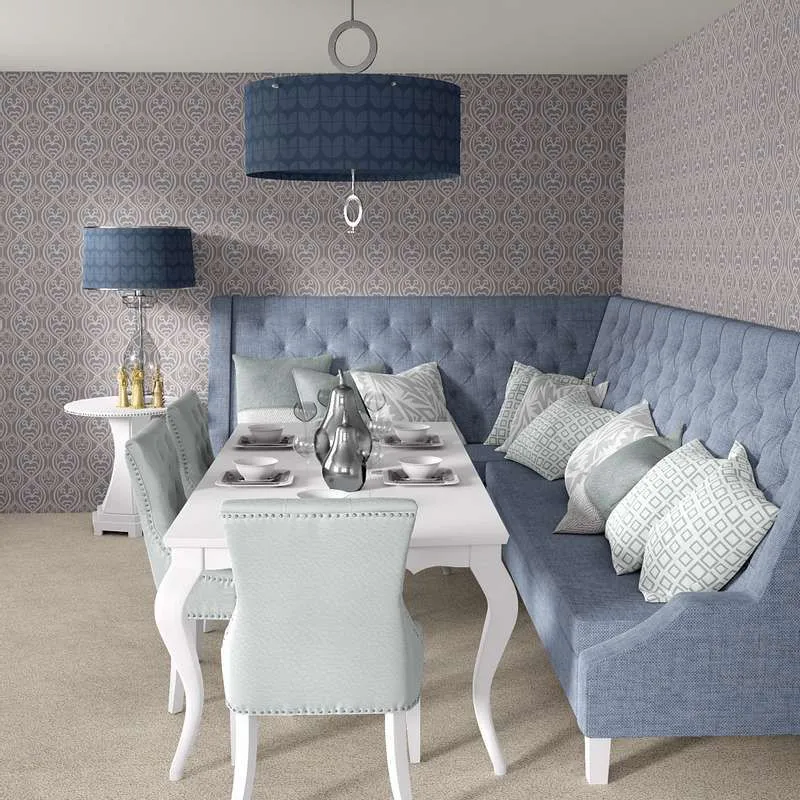
Materials Comparison: Wood vs Upholstery vs Metal
Material Guide
| Material | Comfort | Style feel | Maintenance | Best use case |
| Wood | Medium | Warm, classic, timeless | Easy to wipe, but harder surface | Farmhouse, traditional, rustic |
| Upholstery | High | Soft, cozy, refined | Needs more care | Family dining, contemporary, luxury |
| Metal | Medium | Sleek, modern, industrial | Very easy to clean | Minimalist, loft-style, modern homes |
| Mixed materials | High | Balanced and designer-like | Depends on fabric and finish | Transitional and custom-looking rooms |
Wood
Wood is strong, dependable, and easy to style with most tables. It works especially well if you want the bench to feel grounded and architectural. It also matches 2026’s movement toward natural, tactile materials and richer wood tones.
Upholstery
Upholstery is the best choice when comfort is a priority. It makes the bench feel more inviting and can visually soften a hard-edged dining room. This is especially useful in homes that want a warmer, more intimate atmosphere.
Metal
Metal is the easiest to keep visually light. It suits smaller rooms that need the bench to recede rather than dominate. It also plays well with contemporary interiors and mixed-material tables.
Comfort and Ergonomic Tips Most Shoppers Miss
A dining bench with a back should look good, but it also has to feel good after 20 or 30 minutes of sitting. That is where many shoppers get Disappointed. The back should support an upright posture without forcing you to lean too far back. The seat should feel supportive without pressing into the backs of the knees. Bench-depth guidance from furniture and ergonomics sources generally points to a mid-teens to around-20-inch depth zone as the range where comfort tends to work best, depending on the use case and body type.
Here is the simplest way to test comfort:
- Sit fully back against the backrest.
- Check whether your feet stay flat on the floor.
- Make sure the front edge of the seat does not press uncomfortably behind your knees.
- Confirm that the table edge does not feel too high or too low when eating.
- Stay seated for at least a few minutes before deciding.
If a bench feels fine for one minute but annoying after ten, it is not the right one. For dining furniture, small measurement mistakes create daily frustration. Standard dining setups work best when the table and seats are properly matched in height and spacing.
Best Dining Bench with Back for Small Spaces
Small spaces are where this category really shines. AD and Houzz repeatedly show benches and banquettes as smart moves for compact dining rooms because they help preserve circulation and reduce visual bulk. IKEA also highlights benches as a way to make a room feel lighter and less cluttered.
Smart layout ideas
A bench works especially well when placed against a wall. This frees up walking space on the open side of the table and makes the room feel more organized. Corner banquettes are another great option because they use awkward space efficiently. Built-in benches can also add hidden storage, which is one reason designers keep recommending them for compact homes.
Best companions for a small room
A round or oval table can improve flow. A pedestal base can also help because it reduces leg clutter beneath the table. Mirrors, simple wall art, and a statement pendant can make the dining zone feel intentional without adding visual weight. AD and Houzz both point to these exact strategies in small-dining-room design.
Space-saving tip
If your room is narrow, choose a slim-profile bench with a supportive back rather than a deep, overstuffed piece. That keeps the room open while still offering comfort.
Styling Ideas: How to Make a Dining Bench Look Expensive
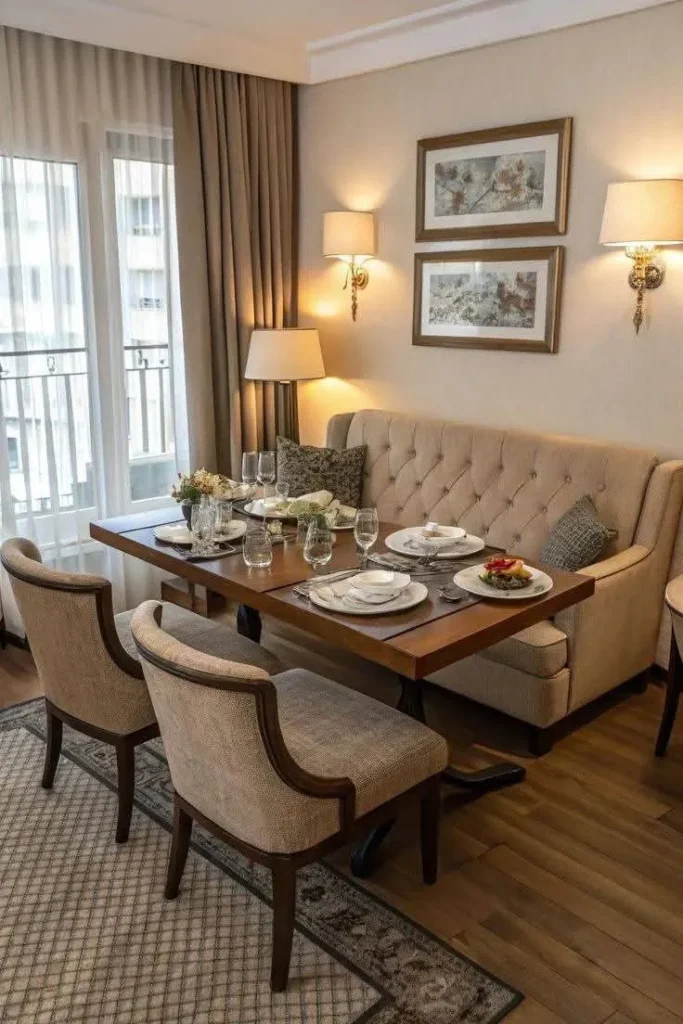
A backed bench can look casual, but it can also look very polished. The difference is in the styling.
Try these combinations
A soft neutral bench with a wood table creates a calm, timeless look. A velvet or textured upholstered bench adds richness and works well with brass lighting. A dark wood bench with a simple chair mix gives you contrast without visual noise. 2026 dining trends are leaning into warmth, texture, and more expressive materials, so layering is especially effective now.
Styling details that matter
Use cushions only if they improve comfort and still allow the bench to look tailored. Keep the color palette consistent with the rest of the Dining Room. Add art above the bench to anchor it visually. In smaller rooms, one mirror or one strong piece of art often works better than a crowded wall. AD and Houzz both support this more edited approach.
The easiest styling formula
Bench + pendant + rug + one focal wall = finished dining zone.
Common Mistakes to Avoid
1. Buying for looks only
A bench can photograph beautifully and still be uncomfortable for real use.
2. Ignoring table height
If the seat and table are mismatched, dining becomes awkward quickly. Standard-height tables and compatible seating remain the safest choice for most homes.
3. Choosing a bench that is too bulky
In a small room, the wrong scale can make everything feel tighter. AD repeatedly warns that oversized furniture can overpower a compact dining area.
4. Forgetting maintenance
Upholstered benches need more care than wood or metal. If the bench will see kids, pets, or frequent dining, choose materials that are easy to clean.
5. Skipping a layout plan
Many people buy the bench first, and the room suffers later. Measure the room, then design the seating layout around actual circulation. Houzz discussions and AD guides both stress the importance of counting every inch in small dining areas.
Maintenance and Long-Term Value
A dining room bench with a back is a long-term piece, so durability matters. Wood is the easiest to live with for routine wiping. Upholstery offers the best comfort, but it should be chosen carefully if spills are common. Metal is low-fuss and works well for a lighter visual footprint. IKEA’s material guidance and Real Simple’s seating recommendations both reinforce the idea that comfort, material, and use pattern should be matched honestly to the household.
For long-term value, consider these questions:
- Will the bench still fit if you change your table later?
- Is the fabric practical for your family?
- Can the bench move to another room if your layout changes?
- Does the style feel timeless enough for several years?
A good bench should survive both style changes and real life.
Best Color Combinations for a Dining Bench with Back
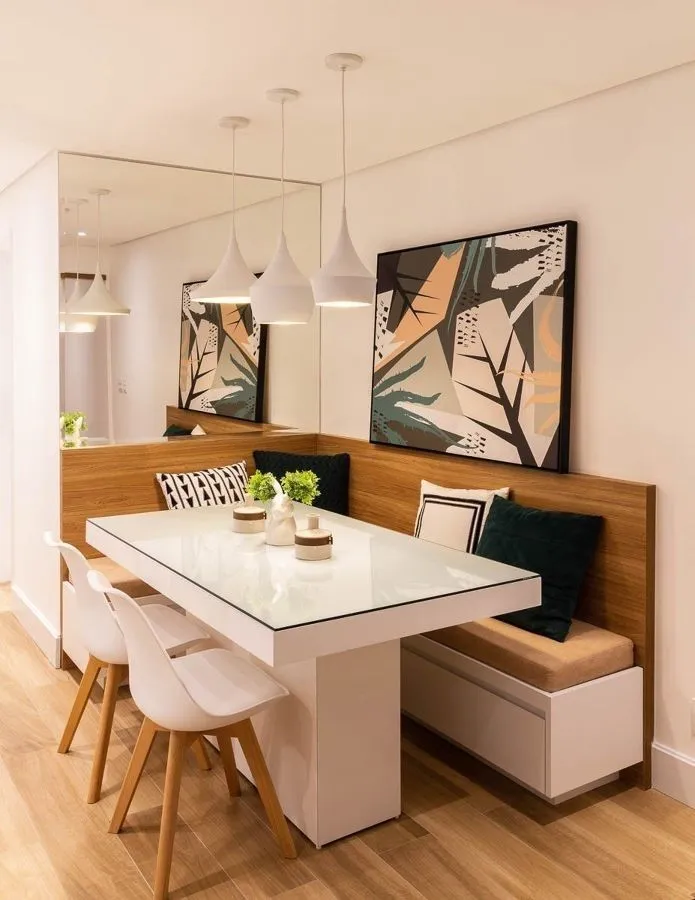
The strongest 2026 direction is warm and grounded rather than cold and stark. Earthy neutrals, rich browns, muted greens, terracotta, and soft beige work especially well in dining rooms right now. That matches broader 2026 interior directions toward texture, authenticity, and coziness.
Best combinations
- Beige upholstered bench + oak table + black accents
- Walnut bench + cream walls + brass lighting
- Sage bench + natural wood table + woven rug
- Charcoal bench + light floor + pale walls
- Taupe bench + warm neutral dining set
These combinations work because they feel grounded, layered, and easy to live with.
Who Should Choose a Dining Room Bench with Back
Choose this style if you:
- Need extra seating without crowding the room
- Want a softer, more relaxed dining look
- Use the dining table for meals, homework, or working from home
- Like a banquette-inspired feel without a built-in renovation
- Want to make a small dining room feel more open and intentional
Who Should Avoid It
A backed dining bench may not be ideal if you:
- Prefer everyone to have their own independent chair
- Need extremely flexible seating that moves often
- Have a household that values very formal dining symmetry
- Want the easiest possible cleaning with no upholstery care
- Have a room where the bench would block circulation or door movement
People Also Ask
Yes, especially compared with a backless bench. It is usually a better choice for long meals, families, and daily use because the backrest gives you more support and keeps your posture more upright. Comfort depends on seat height, seat depth, cushion quality, and table pairing.
The right size depends on your table and room, but most standard dining setups work best when the seat height matches a standard dining table, and the bench length suits the table without crowding the room. Standard dining tables are commonly around 28 to 30 inches high, with seating that keeps the table-to-seat relationship comfortable.
Yes, it can, especially in a banquette-style setup. That said, many homes look and function best with a mix of bench seating and chairs, because the combination improves flexibility and keeps the room from feeling too uniform.
Upholstered benches are usually better for comfort. Wooden benches are usually better for durability, easy cleaning, and a classic look. The right choice depends on how often the bench is used and how much maintenance you want.
The strongest 2026 direction is warm, tactile, and multifunctional. That means natural wood, textured upholstery, earthy neutrals, and pieces that feel lived-in rather than overly formal.
Conclusion
A dining room bench with back is one of the best furniture choices for 2026 because it solves three real problems at once: it improves comfort, supports better use of space, and helps a dining room feel more finished. The strongest version is not just stylish; it is sized correctly, matched to your table, and chosen for the way your household actually lives. Small rooms benefit from slim or banquette-style layouts, larger rooms benefit from a warm mixed-seating Arrangement, and both benefit from materials that feel current without becoming trendy too quickly.
For homeowners, renters, designers, and decor lovers, this style is especially useful because it balances beauty with daily function. It is the kind of piece that can make a room feel more intentional, more welcoming, and more usable at the same time. Explore more dining and room-styling ideas on TheRoomsArt.com, and build a space people actually want to sit in, stay in, and remember.
Legal disclaimer: Prices, materials, trends, and product availability may change over time depending on region, suppliers, and brands. Always verify dimensions, materials, and compatibility before purchase or renovation.
