
Introduction
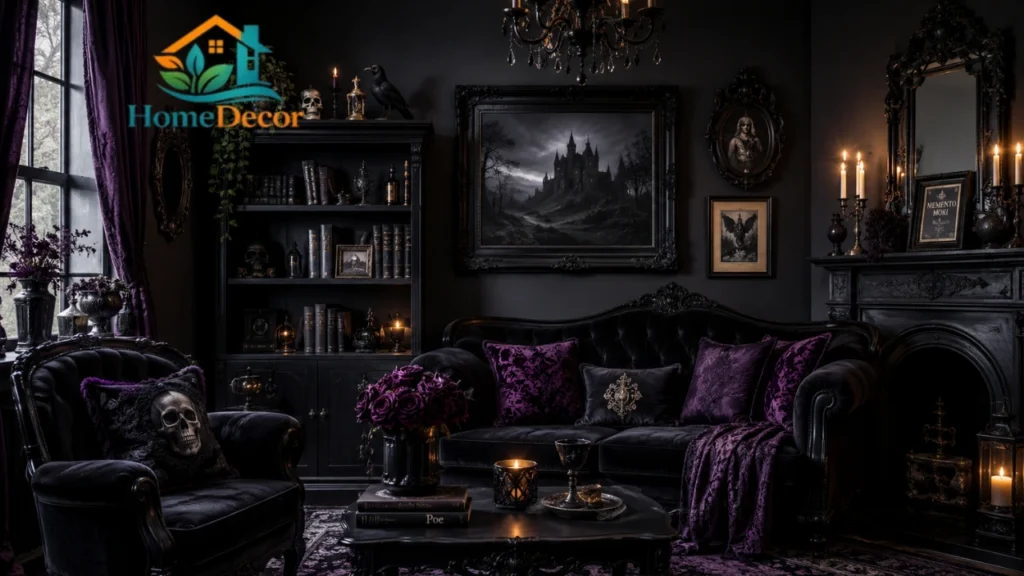
Goth Home Decor is no longer just about black walls and spooky accessories. In 2026, it is a full interior design language built on mood, texture, history, and personal expression. The style draws from Gothic architecture, Victorian elegance, dark academia, romantic interiors, and modern luxe design, which is why it can feel mysterious without feeling harsh.
That is also why this style keeps growing in popularity. People want homes that feel layered, creative, and emotionally rich. Darker interiors can look cozy and sophisticated when the colors, materials, and lighting are balanced correctly. Recent design coverage points to dark wood, rich saturation, dramatic drapery, mixed textures, and romantic moody styling as major signals for the current direction of interiors.
This guide breaks down everything you need to know about goth home decor: what it is, how to style it, what to buy, what to avoid, and how to make it work in real homes of every size.
What Is Goth Home Decor?
Goth home decor is an interior style inspired by Gothic architecture, Victorian design, dark romanticism, antique furnishings, and dramatic visual storytelling. Instead of relying on novelty Halloween pieces, it focuses on atmosphere, depth, and thoughtful layering. The goal is to create a space that feels elegant, emotional, and distinctive.
Snippet-ready answer
Goth home decor is a moody interior style that blends dark colors, ornate furniture, rich textures, antique details, and dramatic lighting to create a romantic, elegant, and mysterious space.
The key idea
Good Gothic design is not about making every room black. It is about building contrast, richness, and visual depth. That is why mirrors, metallic accents, velvet, carved wood, candle-style lighting, and art with history matter so much in this style.
Why Goth Home Decor Matters in 2026
Gothic interiors fit the mood of 2026 because they answer a bigger design shift: people want homes with personality, not generic “safe” spaces. Trend coverage this year continues to favor dark wood, richer color stories, tactile materials, dramatic drapery, and romantic moody design cues. Whimsigoth, vampire-inspired decor, and dark academia all sit in the same aesthetic family, which helps goth decor feel current instead of niche.
It also works well for modern living because it can be adapted. You can go full Victorian Gothic, or you can use just one or two Gothic layers in a contemporary home. That flexibility is part of why the style is useful for homeowners, renters, apartment dwellers, and anyone who wants a richer visual identity at home.
Mini summary
In 2026, goth home decor is not a costume look. It is a polished, adaptable design style built around mood, texture, history, and contrast.
Best Goth Home Decor Styles to Know
| Style | Main Feel | Best For | Key Elements |
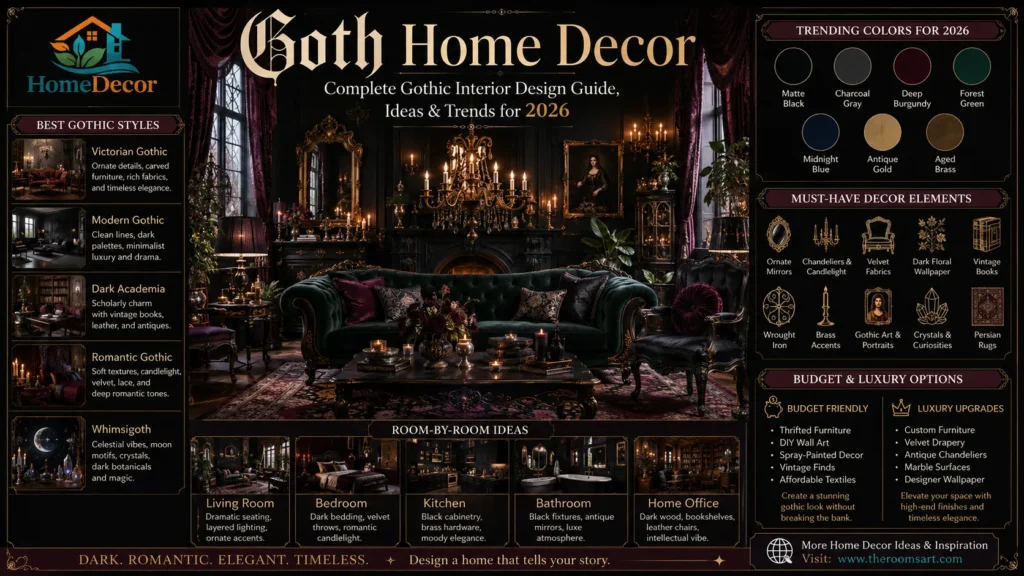
| Victorian Gothic | Ornate, historic, dramatic | Large homes, formal rooms | Carved wood, velvet, chandeliers, heavy drapery, antique mirrors |
| Modern Gothic | Clean, dark, minimal | Apartments, modern homes | Matte black, clean lines, sculptural lighting, simple but rich textures |
| Dark Academia | Intellectual, old-library mood | Offices, bedrooms, reading corners | Bookshelves, leather chairs, dark wood, vintage desk pieces |
| Romantic Gothic | Soft, candlelit, elegant | Bedrooms, dining rooms | Lace, deep red, floral motifs, satin, candlelight |
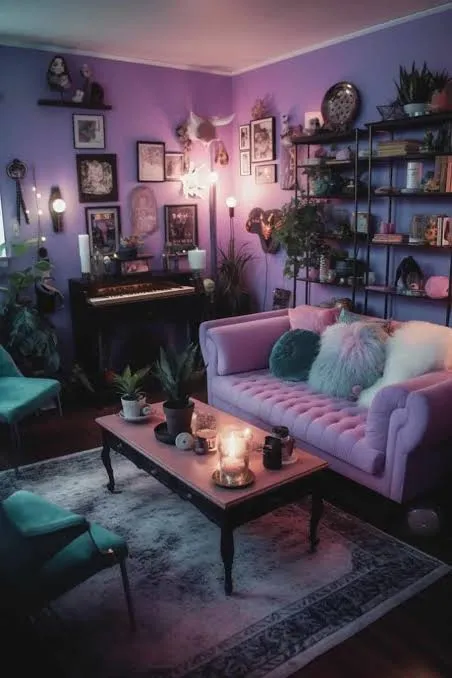
| Whimsigoth | Magical, moody, playful | Creative spaces, bedrooms | Celestial decor, crystals, dark florals, vintage pieces, magical accents |
| Industrial Gothic | Urban, raw, moody | Lofts, studios, media rooms | Exposed brick, black metal, reclaimed wood, vintage lighting |
These style families reflect the broader direction seen across current gothic, whimsigoth, dark academia, and dark-interior trend coverage.
Essential Elements of Goth Home Decor
1) Dark color palettes
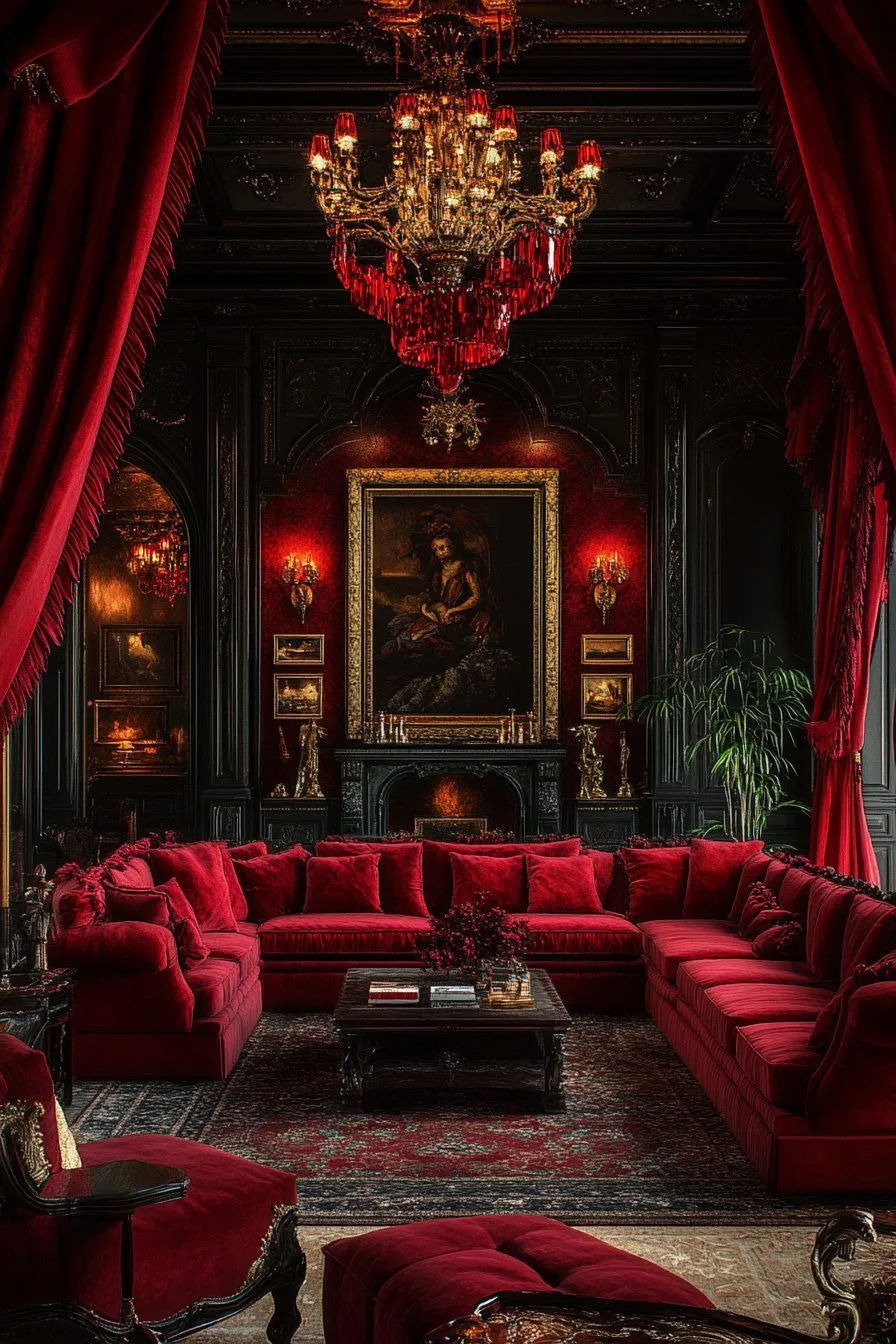
Black is the anchor, but it is not the only option. Deep Burgundy, charcoal, forest green, midnight blue, plum, wine red, aged brass, and antique gold all help build a richer gothic room. Dark bedrooms and living rooms work best when saturation stays consistent, because that keeps the room cohesive instead of visually noisy.
2) Substantial furniture
Gothic furniture should feel grounded and elegant. Think tufted sofas, carved tables, velvet armchairs, wrought-iron beds, high-back chairs, and antique cabinets. Dark woods such as walnut, mahogany, and smoked oak are especially strong choices in current interior trend coverage.
3) Luxurious textiles
Texture prevents dark rooms from feeling flat. Velvet, lace, damask, brocade, jacquard, faux fur, and heavy linen are all excellent choices because they create visual depth and warmth.
4) Layered lighting
Lighting is one of the most important parts of the style. Chandeliers, sconces, vintage lamps, lanterns, and candle-style lights create the atmosphere that gothic interiors are known for. Warm light matters more than bright white light here.
5) Statement wall decor
Mirrors, portraits, botanical prints, tapestries, ornate frames, and gallery walls give gothic rooms their storytelling quality. Mirrors are especially useful because they bounce light and make dark rooms feel more open.
Mini summary
The gothic look comes from a balance of dark color, rich texture, substantial furniture, and atmospheric light. Without all four, the room can feel unfinished.
Best Color Combinations for Goth Interiors
| Main Color | Best Pairing | Mood Created | Best Room Use |
| Black | Brass, ivory, walnut | Classic, dramatic, elegant | Living rooms, bedrooms |
| Charcoal | Silver, white, dark oak | Modern, smoky, refined | Apartments, offices |
| Burgundy | Gold, velvet, cream | Romantic, luxurious | Bedrooms, dining rooms |
| Forest green | Brass, brown, leather | Historic, earthy, rich | Libraries, living rooms |
| Midnight blue | Antique gold, gray, black | Regal, moody, calm | Bedrooms, studies |
| Plum | Black, blush, bronze | Soft gothic, feminine | Bedrooms, dressing rooms |
Dark rooms tend to work best when there is at least one warm metallic or reflective accent to break up the depth. That principle aligns with recent interior guidance on dark palettes, mirrors, and reflected light.
Best Materials and Decor Choices
| Material / Finish | Why It Works | Best Use |
| Velvet | Soft, rich, elegant | Sofas, pillows, curtains |
| Velvet-touch wallpaper | Adds depth and drama | Feature walls |
| Dark wood | Historic and grounding | Furniture, shelving, floors |
| Brass / aged gold | Warms the palette | Hardware, mirrors, lamps |
| Wrought iron | Strong gothic silhouette | Beds, candleholders, rail details |
| Lace | Romantic and delicate | Curtains, table accents |
| Marble | Adds contrast and luxury | Bathrooms, kitchen counters |
| Glass/crystal | Reflects light beautifully | Chandeliers, decor pieces |
Use a mix of matte, soft, and reflective finishes so the room never looks one-note. That layered approach is a major reason darker rooms can still feel inviting.
Goth Living Room Ideas
A goth living room should feel like a dramatic but comfortable retreat. Start with a dark sofa, then layer in velvet cushions, a vintage or carved coffee table, a textured rug, and an ornate mirror. Books, candles, framed art, and brass details will help the room feel lived-in instead of overly themed.
Strong living room combinations
- Black sofa + walnut table + brass lamp
- Forest green sofa + antique mirror + patterned rug
- Charcoal walls + velvet pillows + candle-style sconces
- Dark wood shelves + framed portraits + layered books
Pro tip
If the room is small, keep the wall color dark but add a lighter rug, a reflective mirror, and warm lamp lighting. That keeps the room dramatic without making it feel closed in. Mirrors and light bounces are especially useful in dark accent-wall settings.
Goth Bedroom Ideas
The bedroom is often the easiest room to goth-style beautifully because the mood should already feel intimate. Black bedding, deep jewel-tone throws, velvet cushions, dark floral patterns, iron or wood bed frames, and warm bedside lighting can transform the room quickly. Recent dark-bedroom coverage shows that navy, forest green, gray, and black all work well when the saturation stays coherent.
Easy goth bedroom formula
- Pick one main dark color.
- Add one soft contrast color such as cream or antique gold.
- Use one strong texture like velvet or lace.
- Add a statement headboard, mirror, or art piece.
- Finish with warm lighting.
Best bedroom accents
- Candelabra-style lamps
- Heavy curtains
- Dark floral wallpaper
- Ornate bedside mirrors
- Vintage-style rugs
- Statement headboards
Mini summary
A goth bedroom should feel romantic, not cold. Texture and warm light matter as much as the color palette.
Goth Kitchen Ideas
A goth kitchen works best when it balances drama with cleanliness and function. Black cabinets, brass hardware, dark tile, marble or stone counters, and vintage-inspired lighting create a strong gothic base. Dark green and burgundy accents can also make the kitchen feel more layered and less stark.
Practical goth kitchen ideas
- Matte black cabinets with brass pulls
- Dark stone backsplash
- Open shelves with antique-style dishes
- Vintage pendant lighting
- Black or deep green bar stools
- Glass jars and apothecary-style storage
Best rule
Do not make the kitchen too heavy. Since kitchens need clarity and usability, keep one or two surfaces brighter so the room stays functional.
Goth Bathroom Ideas
A goth bathroom can feel like a private little sanctuary. Black fixtures, antique mirrors, moody wallpaper, marble surfaces, candle-style light, and gold details create a luxurious effect without needing much space. Dark bathrooms also benefit from reflective materials because they prevent the room from feeling visually flat.
Strong bathroom touches
- Black tapware
- Gold-framed mirror
- Dark floral wallpaper
- Marble vanity
- Vintage light fixture
- Apothecary jars
Pro tip
If you cannot repaint, use Gothic styling through towels, mirror frames, art, and lighting. That gives you the mood without a permanent renovation.
Goth Home Office Ideas
A gothic office should feel focused, intelligent, and atmospheric. Dark wood desks, leather chairs, library-style shelving, antique clocks, and moody light all support that mood. This is where dark academia overlaps strongly with goth decor, especially for readers, writers, and anyone who wants a more introspective workspace.
Best office elements
- Desk in walnut or mahogany finish
- Leather or velvet desk chair
- Bookcases filled with books and objects
- Framed art or botanical prints
- Brass reading lamp
- Dark curtains for light control
Space psychology tip
A darker office can improve focus for some people because it reduces visual distraction. Pair it with warm task lighting so the room feels intentional instead of gloomy.xcc d
Step-by-Step Guide to Creating a Goth Home
Choose your gothic sub-style
Pick one direction first: Victorian Gothic, modern Gothic, dark academia, romantic Gothic, or whimsigoth. This keeps your room from feeling mixed up. The current trend landscape shows that these substyles are popular precisely because they each express the mood differently.
Build the color base.
Use one main dark shade and one or two supporting tones. For example, black + brass + cream, or forest green + walnut + antique gold.
Add texture
Bring in velvet, lace, wood grain, marble, or wrought iron. Texture is what keeps Gothic rooms from looking flat.
Light the room in layers.
Use overhead light, lamp light, and decorative light. Warm, layered lighting is essential.
Add statement pieces
Choose one focal point per room: a mirror, a chandelier, a bed frame, a gallery wall, or a dramatic shelf.
Edit
Do not overfill the space. Gothic decor gets stronger when every object feels chosen, not random.
Style for real life
Make sure the room works for daily use. Storage, cleaning access, and durable materials matter just as much as the aesthetic.
Comparison: Goth Decor vs Gothic Decor vs Dark Academia vs Whimsigoth
| Style | Main Focus | Best Trait | Main Risk |
| Goth Decor | Alternative, moody, expressive | Strong personality | Can turn themed if overdone |
| Gothic Decor | Historical, architectural, ornate | Timeless drama | Can feel heavy if unbalanced |
| Dark Academia | Scholarly, vintage, literary | Warm intellect | Can look cluttered |
| Whimsigoth | Magical, romantic, mystical | Soft, trendy mood | Can feel overly eclectic |
Gothic decor is more historically rooted, while goth decor is often broader and more personal. Dark academia and whimsigoth borrow from the same moody family but lean into books, magic, nostalgia, and softer romantic cues.
Budget-Friendly Goth Home Decor Ideas
You do not need expensive antiques to create this style. In fact, thrifting and DIY can make a gothic home feel more authentic. Current marketplace and niche-shop results also show how broad the gothic decor market is, from budget accessories to handmade artisan pieces.
Affordable ideas
- Thrifted dark wood furniture
- Spray-painted frames and candleholders
- DIY gallery wall with dark prints
- Faux candles and battery lights
- Secondhand mirrors
- Rich fabric throws and pillow covers
- Repurposed vintage books
- Peel-and-stick dark wallpaper
Budget tip
Spend money on the pieces that visually anchor the room: sofa, bed, mirror, or lighting. Save money on smaller decorative items.
Luxury Goth Home Decor Ideas
Luxury Gothic interiors are all about material quality and restraint. Think custom drapery, velvet or mohair upholstery, antique brass, dark wood with visible grain, marble, crystal lighting, and curated art. Darker woods and richer textures are especially aligned with the direction of current high-end interiors.
Premium upgrades
- Velvet drapes with lining
- Custom upholstery
- Hand-carved wood furniture
- Statement chandelier
- Marble or stone surfaces
- Museum-style art framing
- Boutique-quality wallpaper
Luxury rule
One exceptional piece is better than ten average ones. In Gothic interiors, quality reads as authenticity.
Smart and Modern Goth Design Trends for 2026
The 2026 gothic direction is less “haunted house” and more “romantic, layered, and stylish.” Current coverage points toward darker woods, dramatic drapery, moody greens, rich textures, crystal details, mixed metals, and gothic romance influences. Whimsigoth, vampire-inspired styling, and western gothic also show how the style is expanding beyond one look.
2026 trend directions
- Dark wood furniture
- Dramatic drapery
- Dark botanical motifs
- Mixed metals
- Celestial accents
- Romantic lace and velvet
- Moody layered lighting
- Antique-inspired silhouettes
What this means for your article
Do not frame goth decor as just black walls. Frame it as a high-design style with historical roots and modern luxury appeal.
Common Goth Decorating Mistakes to Avoid
- Using only black everywhere
Too much black without contrast can flatten the room. - Relying on Halloween decor
Gothic style should feel refined, not seasonal. - Ignoring lighting
Lighting is one of the main design tools in this style. - Forgetting texture
Dark rooms need velvet, wood, lace, stone, or metal to feel alive. - Overcrowding the room
The style is dramatic, but it still needs breathing space. - Mixing too many substyles at once
Choose one main direction first. - Buying low-quality themed decor
Cheap novelty pieces can make the room feel childish instead of elegant.
Mini summary
The goal is moody elegance, not a haunted attraction. That single idea should guide every styling choice.
Expert Tips Most People Ignore
- Use mirrors to bring light into dark rooms.
- Keep saturation consistent across walls, fabrics, and furniture.
- Let one material dominate the room, such as velvet or dark wood, so the space feels intentional.
- Use warm white bulbs, not harsh cool white light.
- Add at least one historical or vintage-looking object so the room feels collected over time.
- In smaller rooms, make the walls dark but keep the ceiling or rug lighter to prevent a boxed-in feel. This aligns with current advice on dark accent walls and reflected light.
Maintenance, Care, and Long-Term Value
Goth decor looks best when it is maintained thoughtfully. Dark fabrics show dust, velvet needs regular care, and metallic finishes need gentle cleaning. Antique and vintage pieces also require more attention than mass-produced decor. The long-term value of the style comes from durable materials, not from trend-only accessories.
Care tips
- Dust dark surfaces often
- Use fabric-safe brushes for velvet
- Avoid overly glossy finishes if fingerprints are a problem
- Protect wood from moisture
- Rotate decor seasonally to keep the room fresh
Why it pays off
A well-styled gothic room can age beautifully because it is built on materials and silhouettes that do not depend on one short trend cycle.
Styling Tips for Different Room Sizes
Small rooms
Use one dark wall, one mirror, and layered light. Keep the decor tight and purposeful. Dark accent-wall strategies and mirror placement are especially helpful here.
Medium rooms
You can add a stronger furniture story: a velvet sofa, a statement mirror, and a richer rug. Medium spaces are ideal for gothic layering.
Large rooms
Use the scale to your advantage. Tall curtains, bigger art, a chandelier, and substantial furniture will make the room feel cohesive rather than empty.
Apartments and rentals
Use removable wallpaper, dark textiles, art, lamps, and mirror frames. Do not rely only on paint.
Who Should Choose Goth Home Decor?
This style is a strong fit for people who love:
- dramatic interiors
- antique or vintage details
- dark academia or romantic aesthetics
- creative, artistic spaces
- cozy but elegant rooms
- self-expression through decor
It is also excellent for homeowners and renters who want a home that feels unique instead of overly minimal. The current interest in whimsigoth, vampire aesthetic, and dark academia shows how broad this audience has become.
Who Should Avoid This Style?
Goth decor may not suit people who:
- dislike darker rooms
- want a very bright, airy, all-white home
- prefer extremely minimal styling
- do not want to maintain textured fabrics and dark surfaces
That said, even if you do not want a full gothic home, you can still borrow a few elements like brass accents, dark art, a velvet pillow, or a dramatic lamp.
People Also Ask
Not necessarily. You can build a goth look on a budget by thrifting furniture, using dark textiles, and choosing a few strong statement pieces instead of buying everything new.
Yes. Small spaces often look great with goth styling when you use mirrors, layered lighting, dark accent colors, and compact furniture.
Black, charcoal, burgundy, forest green, midnight blue, plum, brass, and antique gold are the most reliable choices. Dark room guidance from current design coverage shows that consistent saturation helps the room feel cohesive.
Gothic decor is more directly tied to Gothic architecture and historical revival design, while goth decor is broader and often includes modern alternative, romantic, and artistic influences.
Use quality materials, warm lighting, antique-inspired shapes, and texture. Avoid themed Halloween items and overdecorating every surface.
Conclusion
Goth home decor works best when it feels intentional, not forced. The strongest Gothic interiors combine dark color, rich texture, historic details, Layered Lighting, and one or two standout focal points. That is what makes the style feel luxurious, inviting, and timeless instead of heavy or themed. Recent trend coverage shows that darker woods, dramatic drapery, romantic gothic styling, whimsigoth, and dark academia are all still moving strongly into 2026, which gives this topic real long-term content value.
This style is ideal for anyone who wants a home with atmosphere and identity. It also works beautifully for small apartments, bedrooms, offices, and living rooms when styled with balance. For TheRoomsArt.com, this is a strong pillar topic because it can support many connected articles across bedrooms, living rooms, wall decor, and modern styling.
