
Introduction
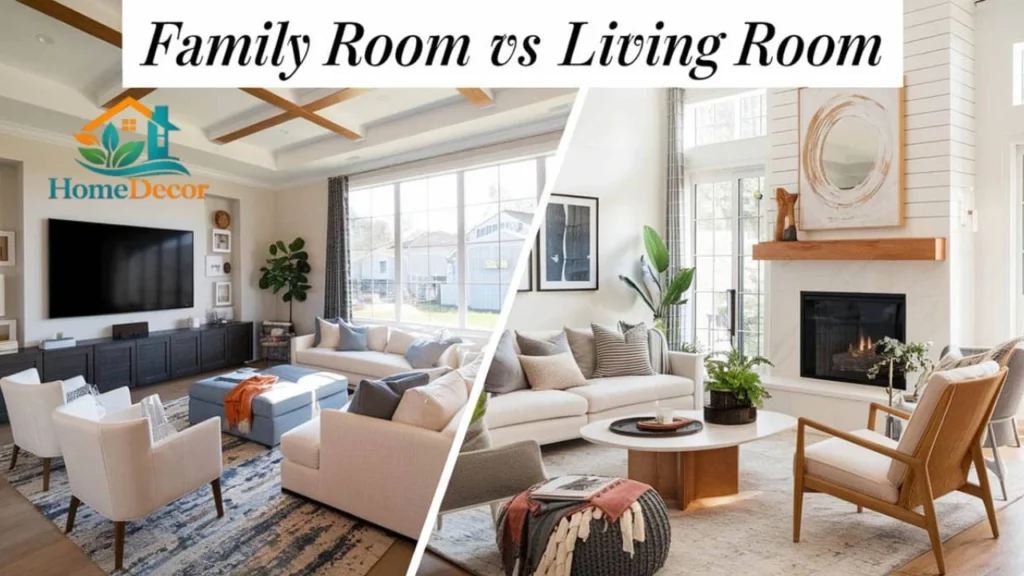
The phrase Family Room vs Living Room sounds simple, but in real homes, the choice changes how a space feels, how it is used, and even how buyers perceive your home. In most traditional layouts, the living room is more formal and often placed near the front of the house, while the family room is more casual and usually sits closer to the kitchen or main gathering area. That basic split still shows up in modern design, even as open-concept homes blur the lines.
This guide goes beyond the usual definition. You will get a practical explanation of each room, a clear comparison, furniture and layout tips, open-concept ideas, home-value advice, common mistakes, and FAQ answers people actually search for. The structure follows Google’s own guidance for helpful, people-first content, using the words readers search for in prominent places like the title and main heading.
Snippet-ready answer: A living room is usually the more formal front-of-house space for guests, while a family room is the casual everyday gathering space for relaxing, TV, games, and daily family life.
What Is a Living Room?
A living room is the more polished, formal gathering space in a home. It is typically used for welcoming guests, quiet conversation, holidays, and special occasions. In many homes, it sits near the entryway or front portion of the house, which makes it feel like the first impression room. Living rooms usually favor neat arrangements, coordinated seating, and decor that looks intentional and refined.
Think of the living room as the room that says, “This is the style of this home.” It is often less about the daily mess and more about presentation. That does not mean it has to feel stiff. A good living room can still feel warm, comfortable, and inviting. It just usually looks more curated than a family room.
Mini summary: Living room = formal, guest-friendly, polished, front-of-house.
Best uses for a living room
- Greeting guests
- Quiet conversation
- Reading or tea time
- Holiday hosting
- Displaying art, books, or special decor
Best furniture for a living room
- Sofa plus accent chairs
- Coffee table
- Side tables
- Console or display cabinet
- Statement lighting
- Elegant rug and artwork
Pros of a living room
- Creates a strong first impression
- Great for hosting
- Feels polished and organized
- Helps separate formal and casual living
Cons of a living room
- Can feel underused in busy households
- Often becomes a “no one sits here” room if designed too formally
- Needs more styling effort to stay neat
What Is a Family Room?
A family room is the casual, everyday living space where real life happens. It is used for relaxing, watching TV, playing games, talking, napping, and spending time together. This room is usually placed deeper in the house, often near the kitchen or other common areas, so it becomes the center of daily activity.
Compared with a living room, a family room is more relaxed, more durable, and more personal. It can hold blankets, books, toys, media consoles, and larger seating pieces that encourage lounging. It is less about display and more about comfort and function.
Mini summary: Family room = casual, everyday, comfortable, activity-focused.
Best uses for a family room
- TV watching
- Family movie nights
- Board games and card games
- Kids’ activities
- Relaxing after work
- Weekend lounging
Best furniture for a family room
- Sectional sofa
- Recliners or deep seating
- Storage ottoman
- Media console
- Durable side tables
- Washable, kid-friendly fabrics
Pros of a family room
- Very practical for daily use
- Encourages togetherness
- Easier to make cozy
- Flexible for kids, pets, and guests
Cons of a family room
- Can get cluttered quickly
- Needs durable materials and storage
- May look less formal for entertaining
Family Room vs Living Room: The Real Differences
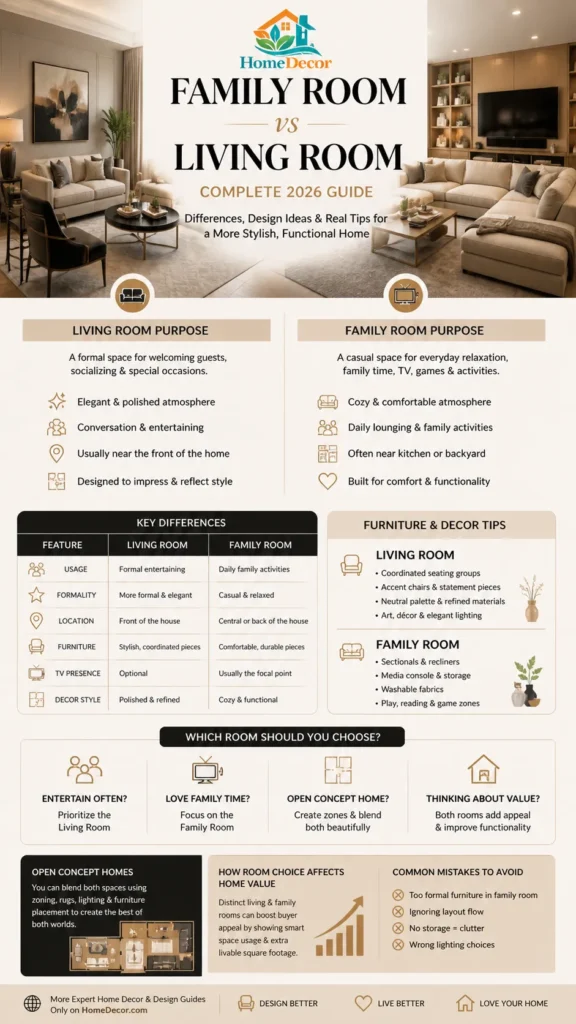
The biggest difference is not the name. It is the purpose. A living room is usually designed for social presentation, and a family room for everyday use. That difference affects the layout, furniture, location, and overall mood.
Side-by-side comparison table
| Feature | Living Room | Family Room |
| Main purpose | Formal entertaining | Everyday relaxation |
| Mood | Polished, elegant | Cozy, casual |
| Location | Usually, the front of the home | Usually near the kitchen/back |
| Furniture | Styled, coordinated | Comfortable, durable |
| TV | Optional | Common focal point |
| Decor | Curated and neat | Personal and lived-in |
| Best for | Guests, holidays, first impressions | Daily family life, lounging |
Function & daily use
Living rooms are usually for conversation, hosting, and occasional use. Family rooms are built for regular living, so they can handle more wear, more activity, and more movement.
Formality & social role
Living rooms tend to feel more formal and symmetrical. Family rooms are relaxed, fluid, and easier to sink into.
Location in the home
Traditionally, the living room sits near the front entrance. The family room is often farther back, closer to the kitchen or another shared zone. That layout helps define how each room is used.
Decor & furniture style
Living rooms often use cleaner lines, art pieces, and decorative accents. Family rooms lean toward soft seating, practical storage, and fabrics that can handle daily life.
Mini summary: If a room is meant to impress, it is usually a living room. If it is meant to be lived in every day, it is usually a family room.
Why This Difference Matters in 2026
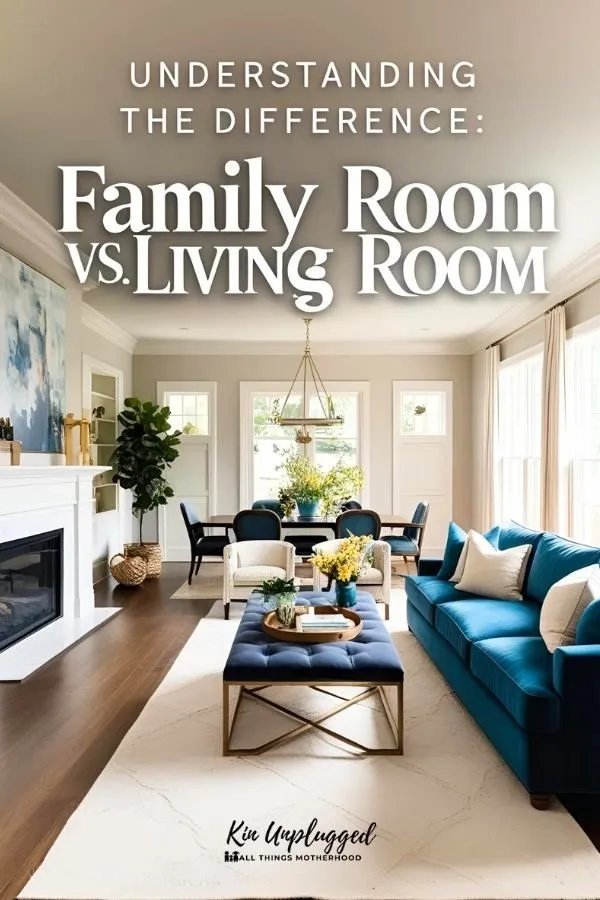
In 2026, the old “one big open room for everything” idea is not as dominant as it once was. Designers are leaning more toward micro-zoning: creating smaller functional pockets inside open spaces without adding walls. That makes the living room vs family room question more relevant, not less. Homeowners still want zones that feel purposeful, even in open layouts.
This matters because people now expect homes to do more. A single space may need to handle working, relaxing, entertaining, and family time. A clear room identity helps the space feel organized instead of chaotic.
Mini summary: In modern homes, the goal is not just more space. It is smarter zoning.
Which Room Should You Prioritize?
Not every home needs both. The right choice depends on your Lifestyle, your floor plan, and how you actually live.
living room-first plan if:
- You entertain often
- You want a more formal look
- You need a room near the entry
- You care about a polished first impression
family room-first plan if:
- Your household spends most of its time watching TV or relaxing together
- You have kids or pets
- You want one room to handle daily life
- You prefer comfort over formality
Use both if:
- Your home has the square footage
- You host both casual and formal visitors
- You want separate quiet and active zones
- You need one room for the show and another for living
Decision guide table
| Your priority | Better choice |
| Hosting guests | Living room |
| Daily lounging | Family room |
| Better style display | Living room |
| More comfort | Family room |
| Home with an open layout | Either, or both, with zoning |
| Small home | One flexible multi-use space |
Mini summary: Choose the room that matches your real routine, not the room name that sounds more impressive.
Family Room vs Living Room Furniture Ideas
The best furniture plan starts with the room’s job. That is the core rule.
Living room furniture ideas
A living room should feel balanced and intentional. Use seating that encourages conversation. Place chairs so people can face each other, not just the TV. Add one or two standout pieces that lift the room visually. A nice rug, artwork, and lamps can make the room feel finished.
Best choices
- Sofa with two armchairs
- Round coffee table for flow
- Console table behind the sofa
- Accent lighting
- Decorative pieces with clean lines
Family room furniture ideas
A family room should make people want to stay longer. Bigger seating, softer cushions, and storage matter more here. This room usually needs to survive more daily wear, so comfort and durability should come first.
Best choices
- Large sectional
- Recliner or lounge chair
- TV console
- Baskets for blankets and toys
- Washable rug
- Storage ottoman
Pros and cons of each furniture style
Living room style
- Pros: elegant, timeless, good for guests
- Cons: can feel fragile, not ideal for messy daily use
Family room style
- Pros: cozy, practical, flexible
- Cons: may look casual or clutter-prone
Layout Tips That Work in Real Homes
A good layout can make a small room feel bigger, and a large room feel more useful. The biggest mistake is treating both rooms the same.
Living room layout tips
- Create a clear conversation zone.
- Keep traffic paths open.
- Use symmetry when possible.
- Make the focal point feel intentional.
- Leave room for breathing space around furniture.
Family room layout tips
- Build around the TV or fireplace if it suits your home.
- Use a sectional to anchor the space.
- Add storage near the seating area.
- Keep everyday items easy to reach.
- Make the room feel soft, not stiff.
Snippet-ready layout advice
A living room should support conversation first, while a family room should support relaxation and daily use first.
Open Concept Homes: Do You Really Need Both?
Open concept changes the game. In many modern homes, one large shared area must serve more than one purpose. That is why zoning is so important. Designers now use rugs, lighting, furniture placement, and subtle visual cues to create clear pockets inside open layouts.
You do not always need a separate living room and family room in an open-plan home. What you need is a clear role for each area. One side can feel more polished for guests, while another can feel softer and more relaxed for daily life. Furniture and lighting can create those zones without walls.
Best zoning tools for open concept homes
- Area rugs
- Floor lamps and pendant lights
- Sofa placement
- Console tables
- Low shelving
- Color and texture changes
- Chairs arranged in conversation groupings
Mini summary: Open concept does not remove the need for room identity. It just changes how you create it.
Which Room Adds More Value to a Home?
This is where many articles get too vague. The honest answer is: neither room guarantees a higher sale price. But the way you present the space can affect buyer appeal.
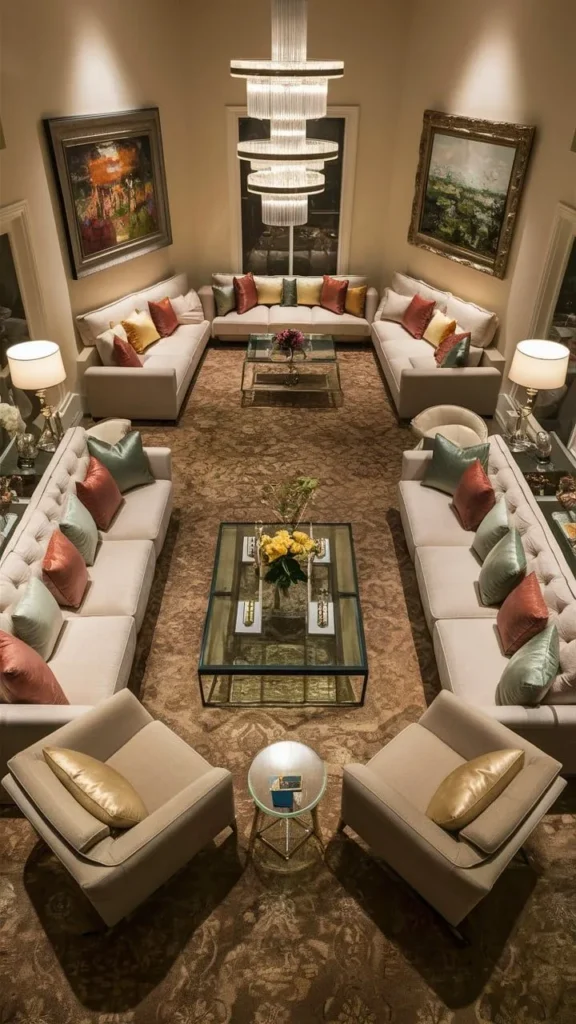
The living room is often important in staging. According to the National Association of Realtors data reported by Investopedia, 37% of buyer’s agents said the living room was the most important room to stage. That does not mean one room automatically adds value, but it does show the room matters in buyer perception.
There is also evidence that buyers often respond well to open, connected layouts. Homes & Gardens noted a real estate investor’s view that an open floor plan between the living room and kitchen can feel more modern and make the space seem larger. That is an appeal factor, not a guaranteed pricing formula.
Practical value advice
- Prioritize good flow
- Keep the main social room clean and bright
- Make the living room easy to stage
- Avoid over-personalized decor if selling
- Use furniture to make the room feel bigger and calmer
Mini summary: A well-designed living room can strengthen buyer appeal, but market value depends on many factors beyond room labels.
Budget-Friendly Options
You do not need a huge budget to make either room look better.
Budget-friendly living room ideas
- Use a one-statement rug
- Paint the walls a calm, neutral shade
- Swap mismatched lamps for one matching pair
- Frame one large piece of art instead of many small ones
- Keep surfaces uncluttered
Budget-friendly family room ideas
- Buy a durable slipcover
- Use storage baskets
- Pick one large,e comfortable sofa instead of multiple small pieces
- Add washable cushions
- Use layered lighting instead of expensive decor
Premium / Luxury Options
If you want a high-end look, the room should feel intentional from the first step inside.
living room ideas
- Sculptural lighting
- Tailored upholstery
- Large-scale artwork
- Natural stone or rich wood accents
- Balanced symmetry
family room ideas
- Oversized sectional in premium fabric
- Built-in media wall
- Hidden storage
- Soft layered lighting
- Custom millwork or shelving
Luxury is not only about expensive materials. It is about how well the room works and how calm it feels.
Smart and Modern Future Trends
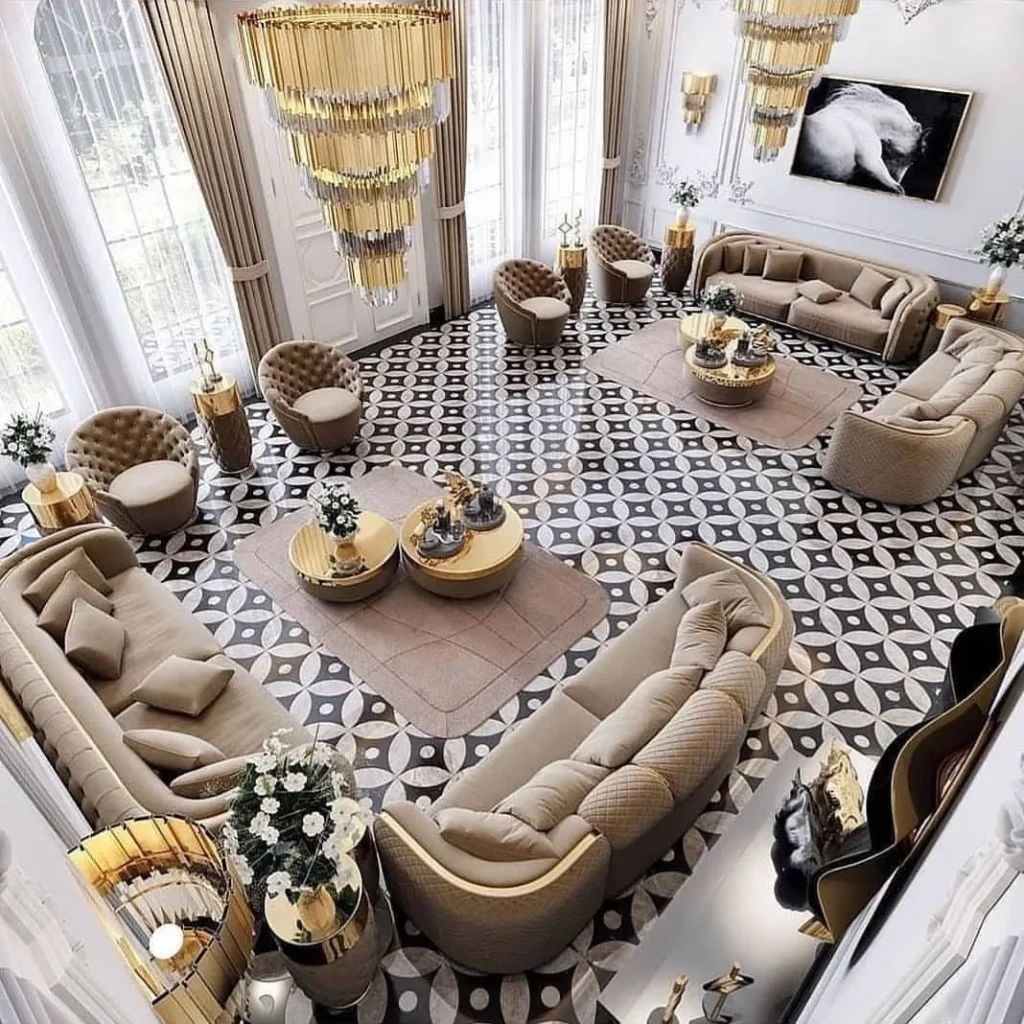
The biggest modern trend is flexibility. Homes are becoming more adaptable, and rooms are doing more jobs. Designers are moving toward multi-use zones, softer transitions, and layouts that support different Activities without making the home feel chopped up.
Trends to watch
- Micro-zoning in open spaces
- More hybrid rooms
- Durable luxury fabrics
- Better hidden storage
- Multi-purpose seating
- Smaller but smarter entertaining spaces
Mini summary: The future of living spaces is not rigid room labels. It is flexible zones with a clear purpose.
Common Mistakes to Avoid
- Making the living room too formal.
A room that looks beautiful but feels untouchable will not get used. - Treating the family room like a showroom.
It needs comfort, not perfection. - Ignoring traffic flow.
People should move through the room easily. - Forgetting storage.
Especially in family rooms, clutter will win if there is nowhere to put things. - Using one lighting layer only.
Good rooms need ambient, task, and accent light. - Choosing style over real life.
The best room is the one your household actually enjoys.
Expert Tips Most People Ignore
- Use the first 10 feet of the room carefully. That area creates the strongest impression.
- Decide the room’s main job before buying furniture.
- Keep one focal point only. Too many focal points create confusion.
- Repeat materials or colors across zones so the home feels connected.
- In open concept spaces, let rugs define the room before adding small decor.
- If you have both rooms, make them different in function but similar in style so the house feels cohesive.
Maintenance and Long-Term Value
A room stays beautiful when it is easy to maintain.
Living room maintenance
- Dust decor weekly
- Rotate cushions
- Keep surfaces edited
- Refresh art and pillows seasonally
Family room maintenance
- Choose washable fabrics
- Use stain-resistant rugs
- Store toys, remotes, and blankets in baskets
- Clean high-touch areas often
A low-maintenance room is easier to enjoy and easier to keep Looking Good for years.
FAQs
A living room is usually more formal and guest-focused, while a family room is more casual and used for everyday relaxation.
Not exactly. Many people use the terms loosely, but traditional design treats them as different spaces with different levels of formality and use.
The living room is typically near the front of the house, while the family room is often closer to the kitchen or back of the home.
Usually yes. The family room often centers around TV, movies, games, and casual family activities.
Not automatically, but a well-staged living room can improve buyer appeal, and staging the living room is often considered important in home sales.
Conclusion
The difference between a family room and a living room is more than just naming—it shapes how your home feels, functions, and flows. A living room is typically the more formal, guest-friendly space that creates a polished first impression, while a family room is the comfortable, everyday zone for relaxing, watching TV, and spending time together.
In modern homes—Especially open-concept layouts—the goal is not to choose one room over another but to define each space with purpose. When you use the right furniture, layout, and zoning, both rooms can support your lifestyle beautifully.
Whether you want elegance, comfort, or a smart blend of both, designing with intention will always give your home more balance, warmth, and long-term value.
