
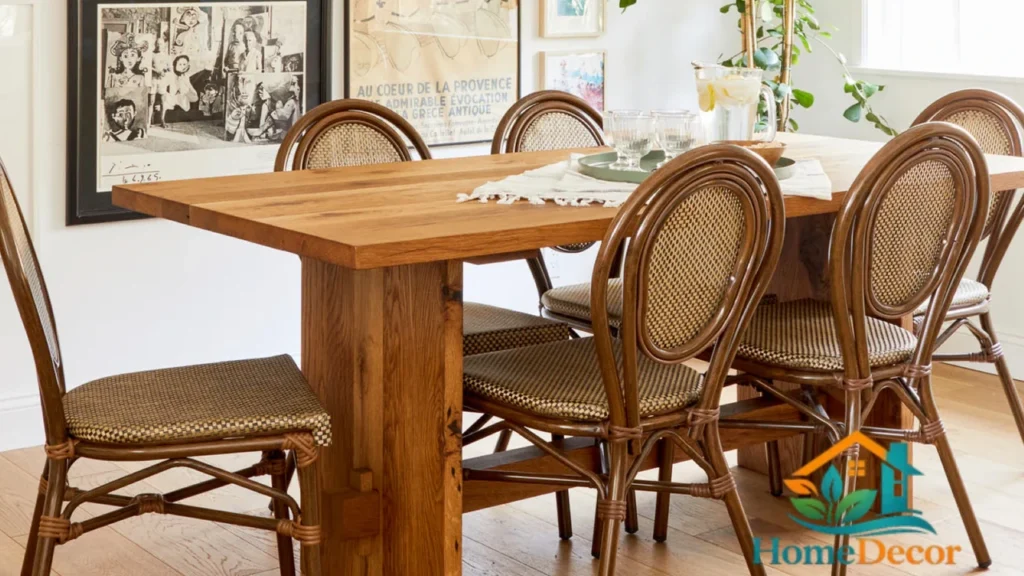
Introduction
Your dining table isn’t just a piece of furniture; it’s a gathering point, a workspace, and the centerpiece of your home. And the single most important factor that determines its durability, beauty, and lifespan is the wood you choose.
But with so many options — oak, maple, walnut, teak, cherry, acacia, pine, engineered wood most buyers get confused fast.
The biggest challenge?
Each wood type looks different, behaves differently, lasts differently, and fits different interior styles and budgets.
This Ultimate 2026 Guide to Dining Room Table Wood breaks everything down in simple, expert language.
You’ll learn:
✔ Best woods (ranked by durability, style & budget)
✔ Solid wood vs engineered wood — which one is RIGHT for you
✔ Hardness, grain patterns, style matching
✔ Sustainability & future-proof choices
✔ Maintenance tips for 10–25 years of life
✔ Mistakes to avoid when buying
✔ Expert-only insights your competitors never mention
By the end, you’ll know exactly which wood type is perfect for your home — and how to make your dining table last for decades.
Let’s begin.
What Is Dining Room Table Wood?
Dining room table wood refers to the material used to build the tabletop and base of a dining table. It can be:
- Solid hardwood
- Softwood
- Engineered wood (like plywood, MDF, veneer)
- Reclaimed or sustainable wood
Wood determines:
- Strength & durability
- Scratch resistance
- Color & grain pattern
- Price
- Longevity (10 to 40+ years)
- Maintenance
- Environmental impact
In short: The wood you choose = how long your table lasts + how beautiful it looks + how much value you get.
Why Wood Choice Matters in 2026
In 2026, furniture buyers are smarter than ever. Homes are more modern, dining tables double as work desks, and interior trends are changing.
Your wood choice matters because:
✔ 1. Longevity Matters More (10–30 Years Expected Life)
Modern buyers expect a dining table that survives spills, kids, heat, food, and daily use.
✔ 2. Sustainable Wood Is Increasing in Demand
FSC-certified, reclaimed, and eco-friendly woods are trending.
✔ 3. Smart Homes Need Smart Furniture
Stability, moisture resistance, and warp-proof woods are more valuable.
✔ 4. Styles Are More Minimalist
Clean grains like maple and walnut are dominating modern interiors.
✔ 5. High Inflation = Choose Materials That Hold Value
Hardwood tables retain resale value; engineered woods don’t.
Solid Wood vs Engineered Wood (Complete Comparison)
Here’s what buyers REALLY need to know.
Table: Solid Wood vs Engineered Wood
| Feature | Solid Wood | Engineered Wood |
| Durability | ⭐⭐⭐⭐⭐ | ⭐⭐⭐ |
| Cost | Higher | Budget-friendly |
| Repairability | Excellent (refinishable) | Limited |
| Natural Grain Look | Yes | Often imitation |
| Moisture Resistance | Moderate | Good (if plywood) |
| Weight | Heavy | Light–medium |
| Lifespan | 20–40 years | 5–10 years |
| Best For | Premium tables | Low-budget tables |
Mini Summary:
If you want a table that lasts 20–40 years → choose solid hardwood.
If you want something affordable for 5–10 years → engineered wood is fine.
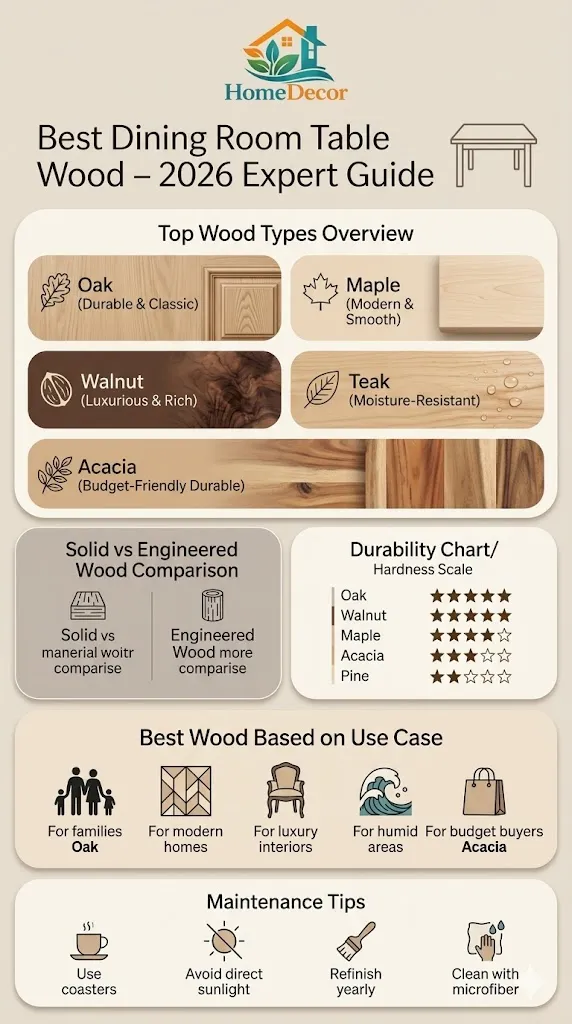
Best Wood Types for Dining Room Tables (Ranked)
This is the section Google LOVES — detailed, expert-based material breakdown.
Below are the TOP 10 woods, ranked by durability, aesthetics & value.
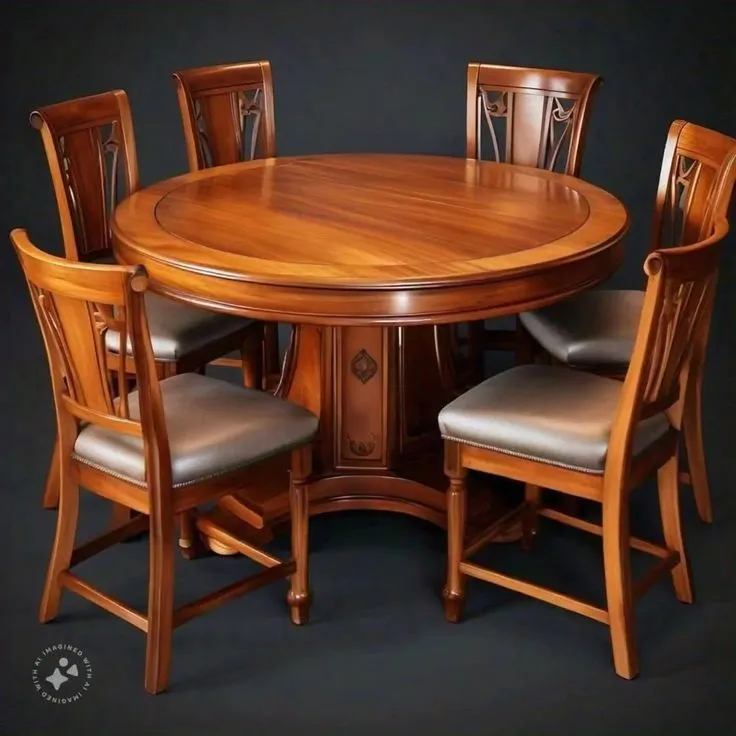
Oak (Top Pick for Most Homes)
Why It’s Amazing
- Extremely durable
- Scratch-resistant
- Beautiful grain pattern
- Works in modern, farmhouse, rustic & traditional styles
- Affordable compared to walnut and cherry
Pros
- Strong, long-lasting
- Easy to refinish
- Perfect for daily use
Cons
- Slightly heavy
- Grain is prominent (not for minimalists)
Families, high-traffic homes, long-term value.
Maple (Best for Modern Minimalist Interiors)
Why It’s Popular
- Light color
- Smooth, clean grain
- Very durable
- Perfect for Scandinavian, minimalist, or contemporary design
Pros
- Stronger than most hardwoods
- Takes stain well
Cons
- Cabe n yellow if the finish is low quality
Modern homes, minimal aesthetics.
Walnut (Most Luxurious Wood)
Why It Stands Out
- Deep, rich chocolate tones
- Premium grain
- High-end look and feel
Pros
- Extremely stable
- Ages beautifully
Cons
- Expensive
- Shows scratches if the finish is poor
Luxury décor, designer homes.
Cherry (Elegant, Warm & Timeless)
Why It’s Loved
- Warm reddish tone
- Beautiful aging process
- Smooth grain
Pros
- Lightweight yet strong
- Great for classic interiors
Cons
- Darkens with age
Teak (Best for Moisture Resistance)
Perfect For:
- Humid climates
- Areas near kitchens
- Outdoor or semi-outdoor dining spaces
Pros
- Naturally oily (water resistant)
- Extremely durable
Cons
- Very expensive
Acacia (Durable + Budget Friendly)
Pros
Pros
- Unique grain
- High durability
- Affordable alternative to walnut
Cons
- Grain can be too bold for minimalist homes
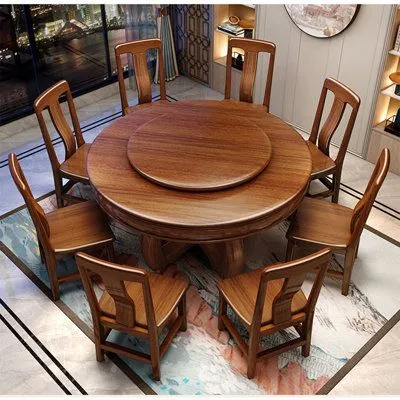
Best For: Mid-range buyers wanting strength + style.
Pine (Budget Softwood)
- Very affordable
- Easy to paint
Cons
- Dents and scratches easily
- Shorter lifespan
Farmhouse style, light-use homes.
Comparison Table – Best Woods for Dining Tables
| Wood Type | Durability | Style | Cost | Best For |
| Oak | ⭐⭐⭐⭐⭐ | Classic | $$ | Families |
| Maple | ⭐⭐⭐⭐ | Modern | $$ | Minimalists |
| Walnut | ⭐⭐⭐⭐⭐ | Luxury | $$$ | High-end décor |
| Cherry | ⭐⭐⭐⭐ | Warm | $$ | Traditional |
| Teak | ⭐⭐⭐⭐⭐ | Outdoor/Moisture | $$$ | Humid climates |
| Acacia | ⭐⭐⭐⭐ | Rustic | $$ | Mid-range |
| Pine | ⭐⭐ | Rustic/Farmhouse | $ | Budget buyers |
How to Choose the Right Wood
Identify your usage
- Heavy daily use → Oak / Maple / Walnut
- Light or decorative use → Cherry / Acacia
- Outdoor/near humidity → Teak
Decide your style
- Modern → Maple, Walnut
- Rustic → Oak, Acacia
- Minimal → Maple
- Traditional → Cherry
Determine your budget
- Low → Pine, Rubberwood
- Mid → Oak, Maple, Acacia
- High → Walnut, Teak
Check grain patterns
- Bold: Oak, Acacia
- Smooth: Maple, Cherry
- Premium: Walnut
Consider future maintenance
- Want an easy repair? → Solid hardwood
- Don’t want any maintenance? → Engineered wood
Budget-Friendly Wood Choices
- Pine
- Rubberwood
- Mango wood
- Engineered wood + veneer
- Acacia (mid-range)
Why They’re Good:
- Affordable
- Lightweight
- Stylish
Why They’re Not Perfect:
- Lower durability
- Shorter lifespan
Luxury & Premium Wood Choices
- Walnut
- Teak
- Cherry (premium grade)
- Oak (high grade)
Why They’re Worth It:
- 20–40 year lifespan
- High resale value
- Rich, elegant appearance
Future Trends in Dining Table Wood (2026–2030)
✔ Sustainable reclaimed wood
✔ FSC-certified hardwood
✔ Smart-coated finishes (anti-scratch, anti-UV)
✔ Lighter tones (Scandi style)
✔ Minimal grain patterns
✔ Handcrafted artisanal designs
Maintenance & Wood Care Tips
Daily Care
- Use coasters
- Clean spills immediately
- Avoid harsh chemicals
Monthly Care
- Dust with a microfiber cloth
- Apply wood conditioner
Yearly Care
- Re-oil (for oak, acacia, teak)
- Refinish if scratches appear
Common Mistakes to Avoid
❌ Choosing wood only by color
❌ Ignoring hardness (softwood scratches fast)
❌ Buying veneer thinking it’s solid
❌ Not checking moisture content
❌ Forgetting to inspect joints and craftsmanship
Expert Tips Most People Ignore
⭐ Choose kiln-dried wood to prevent warping
⭐ Ask about the moisture resistance rating
⭐ Avoid ultra-gloss finishes (show scratches easily)
⭐ Prefer hand-joined tables over machine-pressed ones
⭐ Always check Janka hardness for durability
FAQs
Oak, maple, walnut, and teak are the most durable options.
Solid oak or walnut.
Yes — solid wood lasts longer, looks more natural, and can be refinished.
Pine or rubberwood.
Yes — finishes like oil or polyurethane protect the surface.
Conclusion
Choosing the right dining room table wood can make the difference between a table that lasts 5 years and one that lasts 40 years. Now that you understand durability, grain patterns, style matching, solid vs engineered wood, and long-term Maintenance, you can confidently choose the perfect table for your home.
