
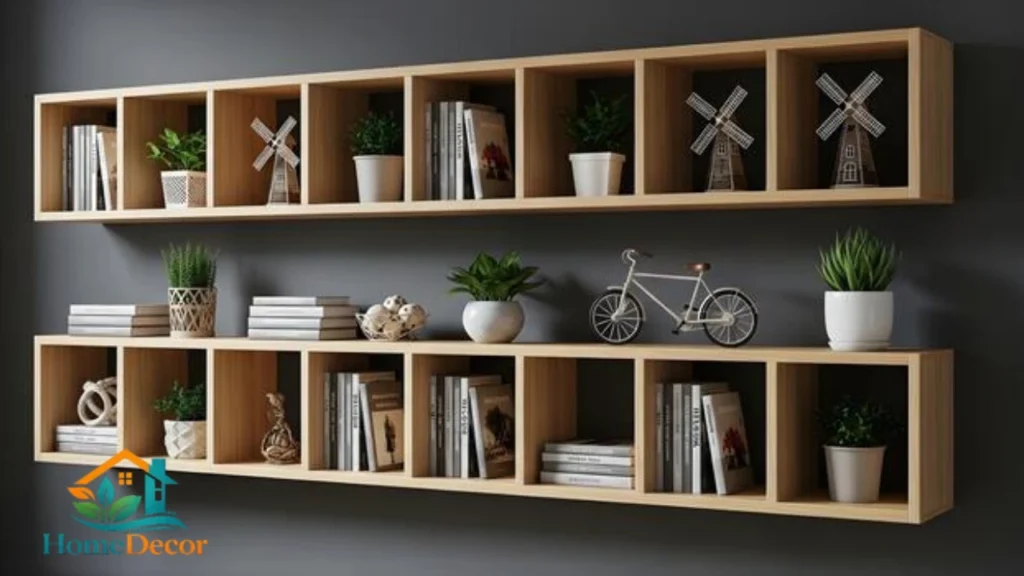
Introduction
Decorative Wall Shelves are one of the easiest ways to make a room feel more styled, more useful, and more intentional at the same time. A good shelf does more than hold objects. It can frame a wall, soften a blank corner, create display space in a small room, and make everyday storage feel like part of the decor. That is why floating shelves, open shelving, and wall-mounted ledges remain popular across modern interiors and small-space design. Design editors continue to feature shelves as both practical storage and visual support, not just decoration.
The challenge is that many shelf articles stop at pretty photos. They show what looks nice, but they do not explain how to choose the right shelf, where to place it, what to put on it, or how to keep it from looking cluttered. This guide fixes that. You will get shelf ideas, material advice, room-by-room examples, installation steps, styling rules, and the mistakes that make decorative shelves look messy instead of elegant. Current design coverage also shows a clear warning: open shelving can look dated or cluttered when it is overused or badly styled, especially in busy homes, so the best shelf designs are the ones that balance beauty with function.
What Are Decorative Wall Shelves?
Decorative wall shelves are shelves mounted to a wall for display, storage, or both. They are often used to show books, art, plants, candles, ceramics, framed photos, kitchenware, or everyday essentials. Unlike bulky storage furniture, wall shelves keep the floor open and help a room feel lighter.
They can be:
- floating shelves with hidden supports
- bracketed shelves with visible hardware
- corner shelves
- tiered or modular shelves
- sculptural shelves that act like wall art
Snippet-ready answer: Decorative wall shelves are wall-mounted shelves that combine storage and design. They help organize a room while adding visual interest.
Why Decorative Wall Shelves Matter in 2026
In 2026, home styling favors pieces that do double duty. Shelves work because they solve real storage problems while also supporting the room’s design story. Architectural Digest describes floating shelves as a design element that can work as decor and provide practical storage, while IKEA also frames shelving as both aesthetic and functional. That balance matters in modern homes where people want less clutter, more flexibility, and better use of vertical space.
They are especially useful in:
- apartments
- small living rooms
- compact bedrooms
- kitchens with limited cabinet space
- bathrooms with very little counter room
Designers also warn, however, that open shelving is not ideal in every home. It can collect dust, create visual clutter, and feel high-maintenance if you overcrowd it or choose the wrong style for the room.
Mini summary
Decorative wall shelves are popular because they save space, decorate blank walls, and make a room feel more curated. The best versions are stylish, practical, and easy to maintain.
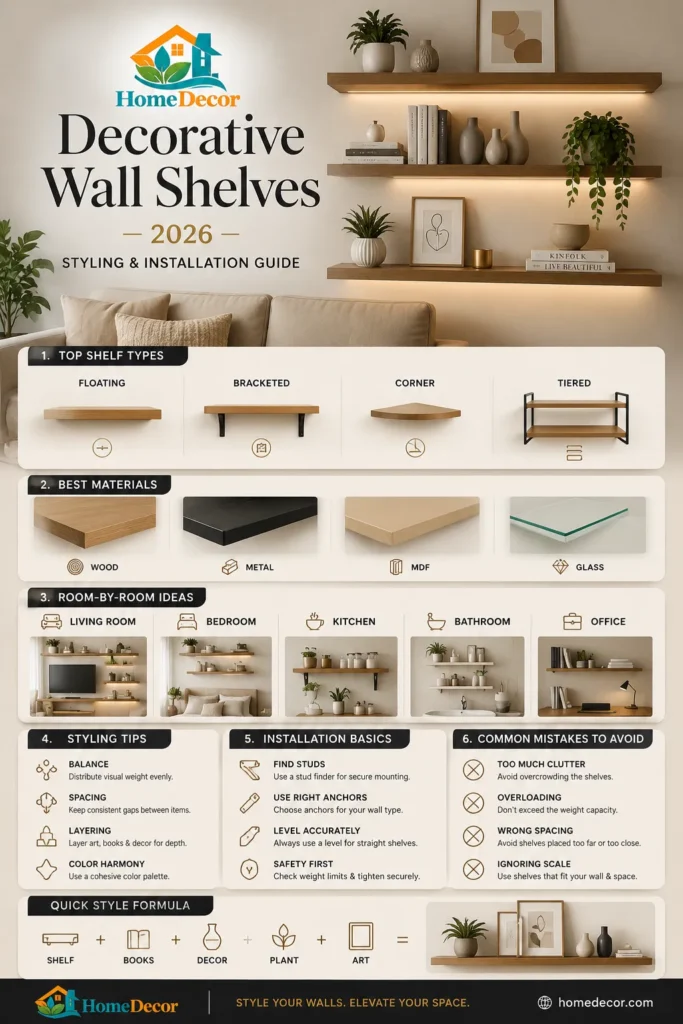
Best Types of Decorative Wall Shelves
| Shelf Type | Best For | Style Mood | Main Benefit | Main Limitation |
| Floating shelves | Living rooms, bedrooms, kitchens | Modern, minimal, clean | Sleek look with hidden supports | Usually less forgiving if overloaded |
| Bracketed shelves | Rustic, industrial, farmhouse rooms | Strong, visible, structured | More character and often stronger support | Hardware is visible |
| Corner shelves | Small rooms, awkward corners | Space-saving, practical | Uses wasted wall space | Limited display area |
| Tiered shelves | Display walls, offices, and bathrooms | Layered, decorative | Adds depth and movement | Can look busy if overfilled |
| Box shelves | Modern, geometric interiors | Bold, architectural | Creates framing and structure | Can feel heavy on small walls |
1. Floating Wall Shelves
Floating shelves are the most popular choice for modern wall shelf decor because they look clean and light. AD highlights floating shelves as both decorative and useful, and IKEA notes that floating wood shelves can be chosen in different finishes to match the room.
Use them when you want:
- a minimalist look
- a display ledge above a sofa, desk, bed, or console
- a shelf that does not visually crowd the wall
2. Bracketed Decorative Shelves
Bracketed shelves show off the hardware, which gives them a stronger design presence. They work well in rustic, industrial, traditional, and farmhouse interiors. If the hardware is attractive, it becomes part of the style.
Use them when you want:
- visible structure
- a handcrafted look
- a shelf with a little more personality
3. Corner Shelves
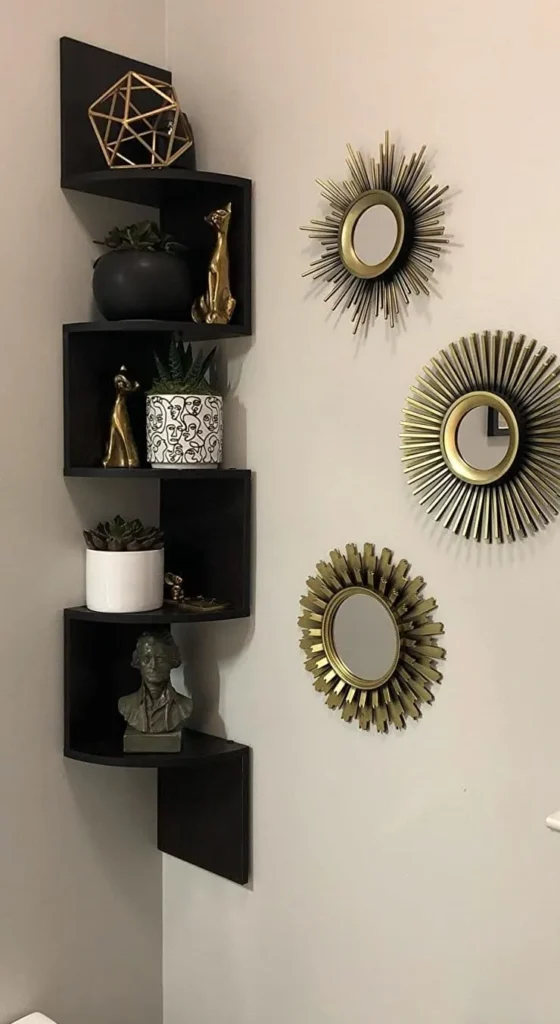
Corner shelves are underrated. They are one of the best solutions for small spaces because they turn dead corners into usable display zones.
Use them for:
- plants
- small books
- framed prints
- bathroom essentials
4. Tiered and Unique Designs
Geometric, staggered, and layered shelves are best when you want the wall itself to feel designed. Homedit’s current wall shelf ideas show a clear move toward sculptural, architectural shelving rather than plain straight lines. That makes the shelf feel like part of the room composition, not just an add-on.
Materials Guide: What Decorative Wall Shelves Should Be Made Of
| Material | Best Look | Pros | Cons | Best Rooms |
| Solid wood | Warm, timeless, natural | Durable, versatile, premium feel | Usually more expensive | Living room, bedroom, kitchen |
| MDF | Smooth, painted finish | Budget-friendly, easy to paint | Less durable than solid wood | Light decor areas |
| Metal | Industrial, modern | Strong, slim profile | Can feel cold if overused | Office, kitchen, modern interiors |
| Glass | Airy, elegant | Visually light, sleek | Shows fingerprints and dust | Bathrooms, display walls |
| Mixed materials | Layered, designer | Adds contrast and depth | Must be balanced carefully | Modern and luxury interiors |
IKEA’s shelf guidance and current editorial coverage both reinforce that wood remains a popular shelving material because it is strong, durable, and easy to finish in different tones. For a decorative shelf that also needs to work hard, wood is usually the safest all-round option.
Best material by room
- Living room: wood or mixed material
- Bedroom: wood, painted MDF, or soft metal
- Kitchen: hardwood or steel
- Bathroom: moisture-resistant materials
- Office: wood or metal for a crisp look
Mini summary
Choose the shelf material based on both style and function. The best-looking shelf is useless if it bends, warps, or becomes hard to clean.
Best Places to Install Decorative Wall Shelves
Living Room
Decorative wall shelves in the living room should feel curated, not crowded. Use them above a sofa, beside a TV, around a fireplace, or on a blank wall that needs height and rhythm. AD’s floating shelf coverage shows that shelves can act as supporting design elements while still carrying books or decor objects.
Good items for living room shelves:
- books
- framed photos
- vases
- candles
- sculptural objects
- small plants
Bedroom
Bedroom shelves work well as floating nightstands, above a headboard, or on empty side walls. This creates storage without adding bulky furniture. Homedit’s 2026 ideas also highlight shelves that frame the bed or replace the headboard wall, which is a strong direction for modern bedroom design.
Kitchen
Kitchen shelves are best when they make access easier and improve the room visually. IKEA’s kitchen shelf guide and BHG’s open shelf coverage both show that open shelving can work when it stays practical, tidy, and visually light.
Good kitchen shelf items:
- dishes
- jars
- mugs
- cookbooks
- plants
- baskets
Bathroom
Bathroom shelves should focus on organization first. BHG recommends using compact or floating shelves in smaller bathrooms and keeping them functional with coordinated containers, small art, and essentials in decorative jars.
Office
Wall shelves in an office should support focus. Keep the styling calm and useful. Use books, files, organizers, and one or two decorative objects, not a crowded display.
How to Style Wall Shelves Without Making Them Look Cluttered
Styling is where most shelves succeed or fail. Good shelf styling is not about filling every inch. It is about creating balance, rhythm, and visual breathing room.
BHG’s shelf-styling advice shows several useful rules: use coordinated containers, group similar items, keep a similar color story, and mix practical pieces with a few personal accents. Shelfology also shows how shelves can work in many different places when the decor stays purposeful instead of random.
Use this simple styling formula
- Start with one larger anchor item.
- Add one medium object.
- Finish with one smaller object or texture piece.
- Leave some space.
What to place on decorative shelves
- books
- framed art
- ceramic bowls
- woven baskets
- candles
- plants
- small lamps
- trays
- collectibles with meaning
What to avoid
- too many tiny objects
- random souvenir clutter
- oversized heavy pieces on weak shelves
- mixed styles that fight each other
- very bright objects on already busy walls
Styling rules that consistently work
- Use odd numbers for a relaxed look.
- Repeat one material across the shelf.
- Mix hard and soft textures.
- Keep taller pieces at the ends or back.
- Use books as structure, not filler.
- Leave one-third of the shelf visually open.
Snippet-ready answer
How do you style wall shelves? Start with one anchor item, add medium and small pieces, repeat a material or color, and leave breathing room so the shelf feels intentional.
How to Install Decorative Wall Shelves
Houzz’s shelf installation guidance is clear and practical: locate a stud, mark fastener positions, check with a level, and use anchors when you are not fastening directly into a stud. That is the safest baseline for most wall shelf installations.
Installation steps
- Choose the right wall.
Avoid weak, damaged, or overly busy walls. - Measure the layout.
Mark shelf height, width, and spacing before drilling. - Find studs.
Use a stud finder and try to secure at least one fastener into a stud. - Mark the drill points.
Use a pencil and level so the shelf is straight. - Choose the right anchors.
If you cannot hit a stud, use wall anchors rated for more weight than you plan to place on the shelf. - Mount the shelf.
Install brackets, hidden supports, or the floating shelf hardware carefully. - Test the load.
Place a light item first, then gradually add weight.
Safety tips
- Never guess on load capacity.
- Use stronger anchors for drywall.
- Do not overload shelves with books unless the shelf is built for it.
- Keep heavy decor lower and lighter Decor Higher.
Comparison: Which Shelf Style Should You Choose?
| Goal | Best Shelf Type | Why |
| Minimal, modern look | Floating shelf | Clean lines and hidden support |
| Rustic or farmhouse warmth | Bracketed shelf | Visible hardware adds character |
| Small room storage | Corner shelf | Makes use of unused space |
| Statement wall | Tiered or geometric shelf | Adds depth and movement |
| Practical display | Wide wood shelf | Balances style and function |
Budget-Friendly Decorative Wall Shelf Ideas
You do not need a luxury budget to make shelves look expensive. The key is restraint.
Budget-friendly wins
- one long wood shelf instead of many small ones
- painted MDF shelves in a wall-matching color
- simple black brackets for contrast
- a small grouped display instead of filling the whole wall
- baskets and books to create a structure affordably
BHG’s styling coverage also shows that even simple items like books can be transformed into a cohesive display when they are grouped intentionally.
Premium and Luxury Shelf Ideas
Luxury shelves usually look expensive because of finish quality, proportion, and restraint.
Premium shelf choices
- solid walnut or oak
- custom floating shelves
- integrated lighting
- mixed wood-and-metal shelving
- asymmetrical built-in wall systems
- sculptural geometric shelves
Homedit’s current examples show a shift toward shelves that feel architectural and integrated, which is a strong cue for high-end interiors.
Smart and Modern Design Trends for 2026
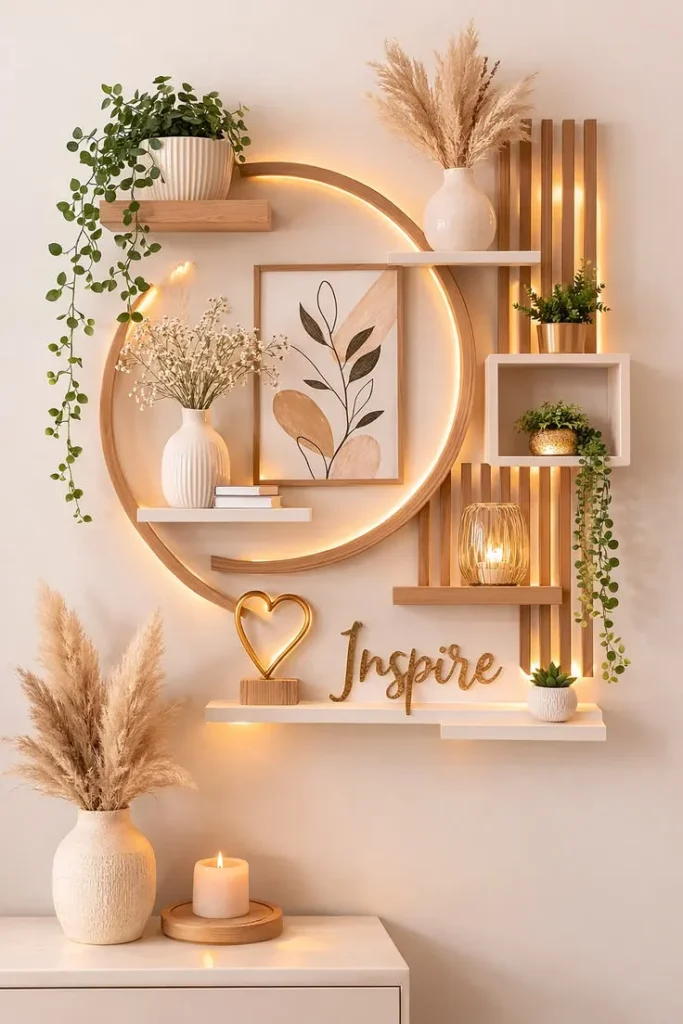
The main 2026 direction is clear: shelves are becoming more architectural, more integrated, and more room-specific. AD highlights sculptural floating shelf designs, while Homedit emphasizes shelf ideas that behave like part of the wall composition rather than simple add-ons.
Trends worth using
- warm wood tones
- asymmetrical arrangements
- sculptural or curved shelf forms
- mixed materials
- hidden-support floating shelves
- shelves used as part of a media wall or reading nook
Trends to use carefully
Open shelving can still be stylish, but BHG notes that in many kitchens it can feel cluttered, dusty, and high-maintenance if it is not handled well. That means the trend should be used with intention, not copied blindly.
Common Mistakes to Avoid
- Installing shelves too high to use
- Choosing the wrong anchor for the wall
- Overloading shelves with heavy decor
- Mixing too many colors and textures
- Making every Shelf Equally full
- Using shelf style that does not match the room
- Ignoring dust and maintenance
Mini summary
The most common shelf mistakes are not design mistakes first. They are balance mistakes, placement mistakes, and weight mistakes.
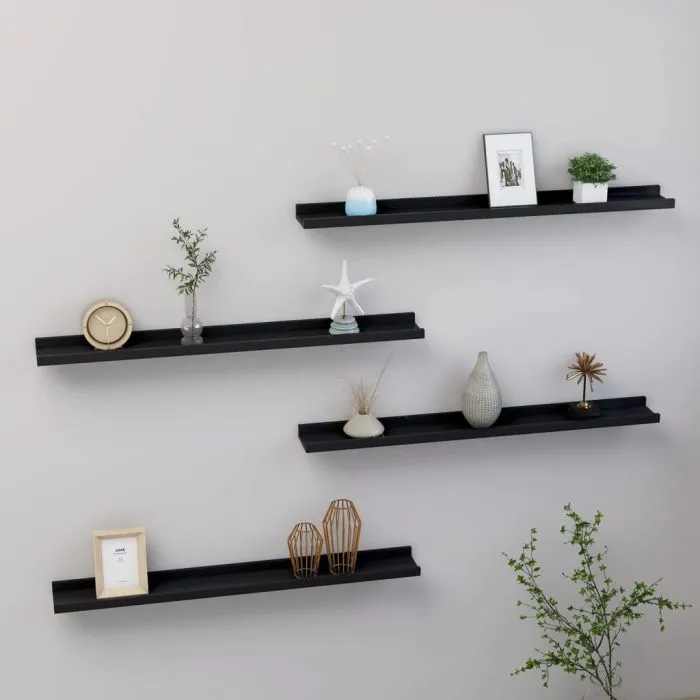
Expert Tips Most People Ignore
1. Edit before you style
Put down more items than you need, then remove one-third of them.
2. Treat shelves like a composition
Think of the shelf as a small visual scene, not a storage line.
3. Repeat one element
Repeat wood, ceramic, brass, black metal, or glass to create unity.
4. Mix useful and beautiful items
This keeps shelves from feeling staged.
5. Leave some silence
Space is part of the design.
Maintenance, Care & Long-Term Value
Decorative wall shelves last longer when they are treated as part of the room’s routine, not as a one-time decor project.
Care tips
- dust weekly
- Re-check mounting hardware periodically
- Keep moisture away from wood shelves
- rotate decor seasonally
- avoid overcrowding
- Use trays or baskets for tiny items
For open shelving in kitchens and bathrooms, maintenance matters even more. BHG’s open-shelf coverage repeatedly emphasizes keeping shelves clutter-free and using containers, bins, and coordinated groupings to make them both usable and attractive.
Best Color Combinations for Decorative Wall Shelves
- White wall + oak shelf + black accent
- Beige wall + walnut shelf + brass decor
- Greige wall + matte black shelf + ceramic white objects
- Soft gray wall + natural wood shelf + greenery
- Deep green wall + light wood shelf + warm metallics
Simple rule
Match the shelf finish to either the flooring, furniture, or one major accent in the room. That makes the shelf feel built in, not random.
Who Should Choose Decorative Wall Shelves?
Decorative wall shelves are ideal for:
- apartment dwellers
- small-space homeowners
- renters with flexible wall mounting
- people who like curated decor
- anyone who wants both storage and style
- modern, rustic, Scandinavian, and mixed-style interiors
Who Should Avoid Decorative Wall Shelves?
They may not be the best choice for:
- people who do not want visible dust
- households that prefer hidden storage
- very busy kitchens with little time for styling
- walls that cannot support proper installation
- rooms that already feel visually crowded
FAQs
A good height depends on the room and purpose. For display shelves, keep them at eye level or slightly above. For practical use, place them where items are easy to reach and not awkward to remove.
Spacing depends on item size and visual balance. In decorative displays, leave enough room so each shelf can breathe and the wall does not feel packed.
Yes, but only with the right wall anchors and a realistic weight limit. Houzz recommends using a stud whenever possible and using anchors rated for more weight than you expect to place on the shelf.
Books, plants, framed art, candles, ceramics, baskets, and a few personal pieces work well. Try to mix useful items with decorative ones so the shelf feels lived-in.
Not always. BHG notes that open shelving can feel cluttered and high-maintenance in many homes, but it can work well in the right style and when kept minimal and organized.
Conclusion
Decorative wall shelves are one of the smartest ways to add style and function at the same time. They can make a room look taller, lighter, and more Intentional, but only when the shelf type, material, placement, and styling all work together. The best approach is not to chase trends blindly. It is to choose shelves that suit the room, support the weight you need, and create a calm visual story that feels natural in daily life. For most homes, wood floating shelves, carefully styled open shelving, and simple bracketed designs are the safest and most timeless choices.
This is the kind of topic that can build long-term authority for TheRoomsArt.com because it sits at the intersection of decor inspiration, DIY guidance, and practical home styling. Add strong internal links, real room photos, and a few before-and-after examples, and this article can become a genuine pillar page for the site.
