
Introduction
Coastal Wall Decor is no longer about hanging a shell sign and calling it a day. In 2026, the style is more refined: softer color palettes, warmer neutrals, natural textures, and art that feels inspired by the sea without looking overly literal. That shift is important because the best coastal spaces now feel calm, layered, and elevated instead of themed.
If you are trying to style a room that feels airy, relaxed, and expensive without being cold, the wall art you choose matters more than almost anything else. The right piece can make a small room feel larger, a plain wall feel intentional, and a busy interior feel peaceful. This guide shows exactly how to do that with room-by-room strategies, material advice, placement rules, budget options, luxury ideas, and modern 2026 trends that match what top design editors are highlighting right now.
Snippet-ready answer: Coastal wall decor is wall art and wall styling inspired by the sea, using soft neutrals, natural textures, and calm ocean references to create a relaxed, airy room.
What Is Coastal Wall Decor?
Coastal wall decor is a design approach that brings the feeling of the shoreline indoors. It usually relies on light colors, natural textures, ocean-inspired art, and relaxed composition. The goal is not to copy a beach postcard. The goal is to create a room that feels open, fresh, and connected to nature. That is why current design sources emphasize materials like wood, linen, rattan, and woven textures, along with softer coastal palettes rather than loud nautical symbols.
A useful way to think about it is this: coastal decor is atmosphere, not costume. Nautical decor is more literal. Coastal decor is subtler and more livable. It uses movement, light, texture, and restraint to create a serene effect. In current design coverage, that difference is a big reason refined coastal style is replacing overly themed beach-house looks.
What makes it work
- Soft whites, sand tones, muted blues, and sea-glass hues
- Natural materials such as rattan, wood, linen, driftwood, and woven fibers
- Calm artwork: seascapes, abstract waves, shoreline photography, and minimal ocean forms
- Balanced spacing and size so the wall feels intentional, not crowded
Mini summary: Coastal wall decor works when it feels light, natural, and calm. The best pieces suggest the coast instead of shouting it.
Why Coastal Wall Decor Matters in 2026
The 2026 coastal look is shifting away from obvious shells, anchors, and striped novelty pieces. Leading design coverage now points toward a more mature version of the style: warmer whites, earthy neutrals, textural surfaces, refined artwork, and subtle seaside references. That means coastal wall decor is getting more sophisticated, more versatile, and easier to use in everyday homes rather than only beach houses.
This matters for SEO and for homeowners. Searchers want ideas that feel current, not dated. They want rooms that look intentional in photos, easy to live with, and flexible across living rooms, bedrooms, bathrooms, hallways, and outdoor spaces. They also want practical answers about sizing, moisture resistance, and how to avoid a kitschy look. That is where most competitor content is weak.
A second reason it matters now is that modern coastal design has merged with a larger trend toward quiet luxury and textural warmth. Editorial sources are showing more wood grain, layered materials, softened palettes, and less literal theme styling. Coastal wall decor fits that direction perfectly because it can be elegant, budget-friendly, and easy to adapt to many room styles.
Mini summary: In 2026, coastal wall decor is less about beach clichés and more about texture, restraint, and a serene, lived-in look.
Best Types, Styles, and Options
The most effective coastal wall decor types
- Seascape wall art
Best for: living rooms, bedrooms, and entryways
Why it works: it creates an immediate atmosphere without looking forced. - Abstract wave art
Best for: modern homes, apartments, and minimalist rooms
Why it works: it gives a coastal feeling through movement and color instead of literal imagery. - Photographic ocean prints
Best for: bathrooms, hallways, and guest rooms
Why it works: it feels calm, clear, and timeless. - Textured wall pieces
Best for: rooms that need warmth
Why it works: woven, wood, and mixed-media pieces bring in the tactile side of coastal style. - Metal wall art
Best for: modern interiors and covered outdoor walls
Why it works: it adds structure and keeps the look polished. - Driftwood and organic forms
Best for: rustic-coastal or organic-modern homes
Why it works: it adds authenticity and natural irregularity.
Materials that fit the coastal style best
| Material | Look and Feel | Best Room Use | Notes |
| Canvas | Soft, relaxed, airy | Living room, bedroom | Good for large art and calm visuals |
| Framed print | Clean and versatile | Hallway, entry, bedroom | Easy to match with furniture |
| Metal | Sleek and modern | Living room, outdoor covered areas | Best for crisp lines |
| Wood/driftwood | Warm and organic | Entry, hallway, casual rooms | Adds natural texture |
| Woven fiber/rattan | Textural and earthy | Boho-coastal, relaxed spaces | Use sparingly for balance |
| Sealed or moisture-aware prints | Practical for humidity | Bathroom, laundry, coastal climate homes | Helps protect the artwork over time |
Pros and cons of popular coastal wall decor styles
| Style | Pros | Cons |
| Literal nautical decor | Easy to recognize, fun for themed spaces | Can look dated or childish fast |
| Modern coastal art | Stylish, flexible, current | Needs good sizing and spacing |
| Textured coastal decor | Rich, layered, premium look | Can feel heavy if overused |
| Minimalist coastal decor | Clean, calm, apartment-friendly | Can look too plain without texture |
| Beach photography | Timeless and emotional | Needs strong print quality and framing |
Mini summary: The best coastal wall decor usually combines one calm image, one natural texture, and one clean framing decision. That mix feels modern and expensive.
Top Ideas That Actually Work in Real Homes
Oversized seascape above the sofa
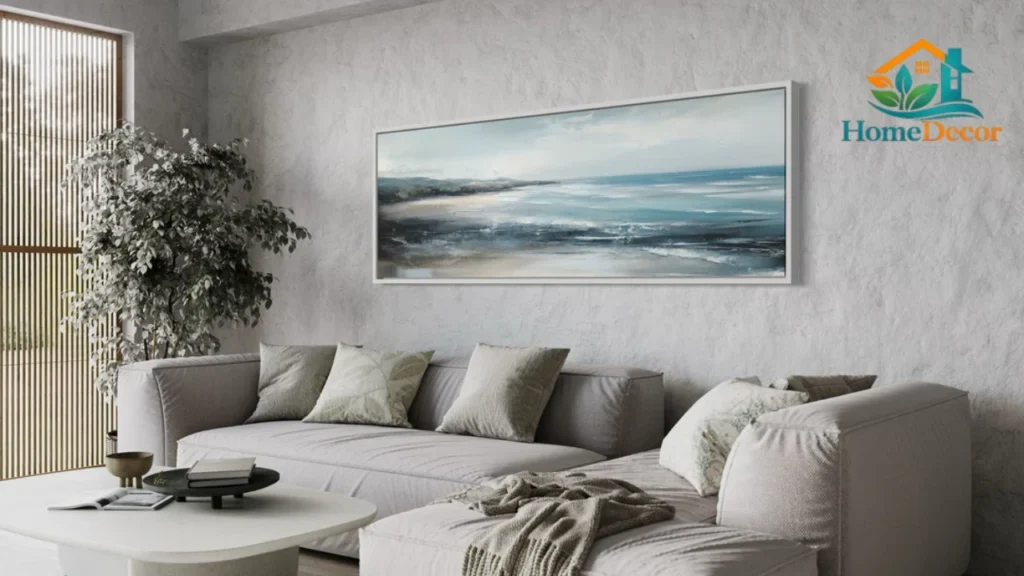
This is one of the easiest ways to create a strong coastal focal point. A single large piece feels cleaner than a cluster of tiny themed items, especially in living rooms with open space. Current design guidance also favors larger-scale pieces when you want a room to feel intentional.
Abstract wave art in a neutral palette
This is a great choice if you want a coastal look without literal beach imagery. Use cream, fog blue, sea glass, sand, or muted grey-blue. The result is calm and modern. Editorial trend coverage shows that the coastal look in 2026 is becoming more abstract and textural, which makes this one of the safest long-term choices.
Gallery wall with a coastal rhythm
A gallery wall works well when the pieces share a palette or subject matter. The key is to keep spacing consistent and avoid random filler pieces. Interior design sources recommend measuring first and using even spacing, often around two inches between frames, so the wall feels curated rather than cluttered.
Texture-first wall styling
Not every coastal wall needs a picture. Woven baskets, grasscloth-inspired panels, carved wood, or textured sculptural pieces can deliver the same mood with more depth. This is especially useful in rooms that already have a lot of color or furniture.
Bathroom-safe coastal art
Bathrooms need special attention because moisture and steam can damage artwork. Moisture-aware choices such as sealed canvas, acrylic glazing, metal, or protected prints are a better fit than untreated paper art.
Long panoramic art for hallways
Hallways and entry zones benefit from horizontal art because it supports movement and flow. Coastal photography or horizon-based imagery works especially well here because it visually stretches the space. This is a simple way to make narrow areas feel wider and calmer.
Mini summary: The strongest coastal wall decor ideas are the ones that solve a room problem: scale, calm, flow, or texture.
Room-by-Room Coastal Wall Decor Guide
Living Room
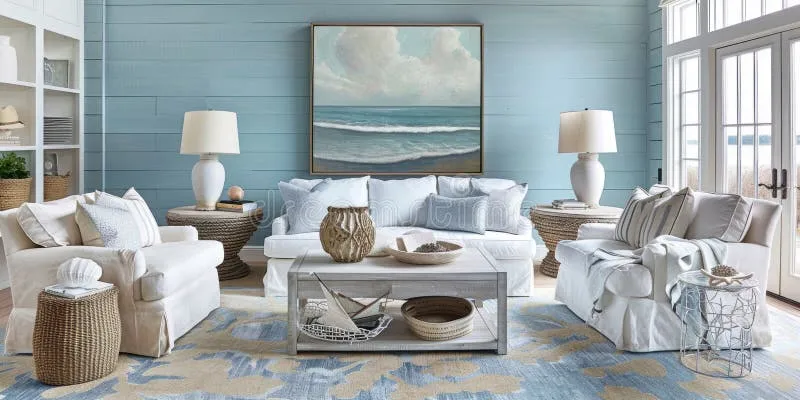
The living room is the best place for a statement coastal piece. Choose one large seascape, an abstract ocean work, or a wide gallery wall with clean spacing. Keep the palette soft and let Natural Materials do some of the work. Coastal interiors are commonly built from light tones, wood, woven textures, and open-feeling compositions.
Best choices:
- Oversized canvas above the sofa
- Framed coastal photography over a console
- Two- or three-panel artwork with horizon lines
- Textured wall sculpture for modern coastal rooms
Bedroom
Bedrooms need quiet visuals. Avoid busy patterns and overly bright blues. Soft seascapes, misty shore images, or abstract coastal artwork work well because they support rest and softness. Modern coastal design coverage consistently leans toward calm neutrals and a less-is-more mood.
Best choices:
- Pale abstract art
- Calm beach photography
- Matching frames with linen, oak, or matte white finishes
Bathroom
Bathrooms are the room where practicality matters most. Use moisture-resistant materials, protected prints, or framed work with acrylic or sealed finishes. Keep the art away from direct splash zones and prioritize ventilation. That balance lets you enjoy coastal style without warping or fading.
Best choices:
- Metal wall art
- Sealed canvas
- Acrylic-protected prints
- Simple ocean imagery with clean white framing
Hallway and Entry
These spaces need momentum. Coastal wall decor here should guide the eye forward, not stop it. Long art, repeated frames, or a neat gallery wall can make the transition area feel smoother and brighter. Entry spaces also benefit from mirrors because mirrors bounce light and make a room feel larger.
Best choices:
- Panoramic seascape
- Small coordinated gallery wall
- Mirror paired with one coastal print
Outdoor or Covered Patio Walls
Outdoor spaces should use durable, weather-aware materials. Coastal style works naturally here because it already draws from outdoor life, but the art must survive exposure. Consider metal, outdoor-rated prints, or covered-wall installations with humidity and weather in mind. Recent coverage of outdoor living shows that textured, pattern-rich, coastal-adjacent spaces are especially relevant for 2026.
Mini summary: Match the room to the function. Living rooms can be bold, bedrooms should be softer, bathrooms must be protected, and hallways should keep visual flow.
Placement Rules That Instantly Improve the Look
The fastest way to make coastal wall decor look expensive is to hang it at the right scale.
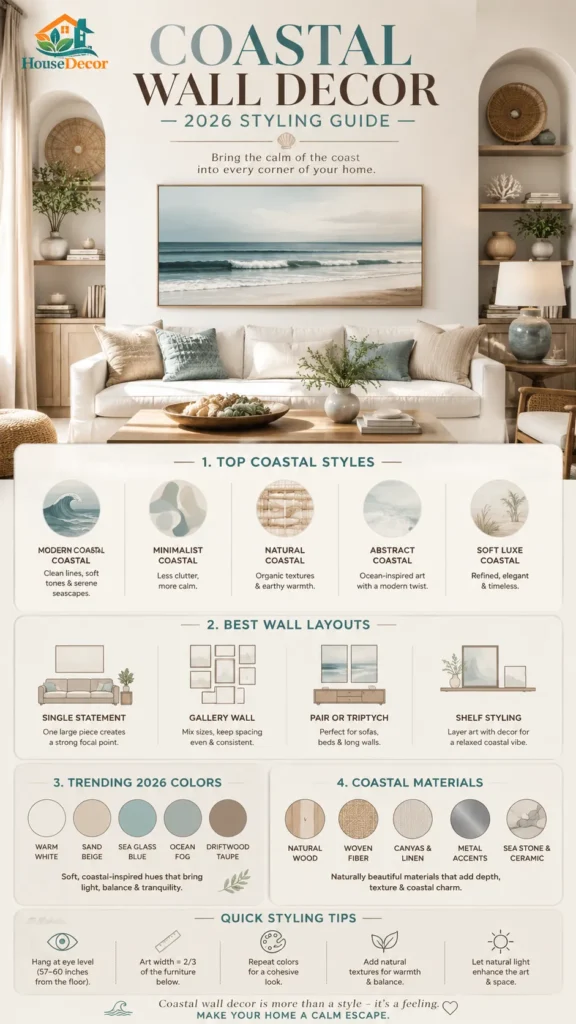
A common decorating rule is to place the center of the artwork around 57 to 60 inches from the floor, which usually aligns with eye level. When art hangs above furniture, it should sit close enough to connect with the furniture below instead of floating alone. Better Homes & Gardens also notes that art above sofas or consoles is usually best when it sits about 6 to 12 inches above the furniture.
Easy sizing rule
- Above a sofa: aim for artwork about two-thirds the sofa width
- Above a bed: use a wide horizontal piece or a balanced pair
- Above a console: keep the art centered and proportional
- In a gallery wall: measure first, then keep gaps even
Expert tips people forget
- Use painter’s tape to test the layout before hanging
- Match the frame finish to the room’s hardware or wood tones
- Repeat one color at least twice in the room for cohesion
- Keep the overall look airy; coastal decor should breathe, not crowd the wall
Snippet-ready answer: Hang coastal wall decor so it feels connected to the furniture, centered around eye level, and sized to the wall instead of the object alone.
Coastal vs Nautical: What Is the Difference?
| Feature | Coastal | Nautical |
| Mood | Calm, airy, relaxed | Literal, themed, maritime |
| Palette | Soft white, sand, sea glass, muted blue | Navy, white, red accents |
| Materials | Wood, linen, rattan, driftwood | Rope, anchors, ship motifs |
| Artwork | Seascapes, abstraction, texture | Lighthouses, anchors, boats |
| Best use | Everyday elegant homes | Theme rooms, children’s spaces, casual beach houses |
This difference is one of the biggest content gaps in competitor pages. Many pages mix the two styles together, which makes the advice less useful. Coastal is the more modern, long-lasting choice because it uses the feeling of the sea instead of the symbols of the sea.
Mini summary: Coastal is subtle and atmosphere-driven. Nautical is more literal and theme-based.
Color Palettes That Feel Coastal Without Looking Cliché
The classic coastal palette is still useful, but 2026 has made it softer and more layered. Design coverage now favors warmer whites, earthy neutrals, sand, foggy blue, muted green-blue, and natural wood tones instead of cold bright blues alone. That shift creates a more livable look and helps coastal decor feel current rather than dated.
Best palette formulas
- Soft neutral coastal: white + cream + sand + oak
- Airy sea-glass coastal: off-white + pale blue-green + linen + light wood
- Modern coastal: warm white + muted navy + charcoal + natural fiber
- Refined luxury coastal: ivory + taupe + driftwood + brushed metal
What to avoid
- Bright carnival blues
- Overly dark navy walls with no light balance
- Red, white, and anchor-heavy combinations unless you truly want nautical style
- Too many competing textures in the same wall area
Snippet-ready answer
The best coastal wall decor colors in 2026 are warm whites, sandy neutrals, muted blues, sea-glass greens, and natural wood tones.
Budget-Friendly Coastal Wall Decor Options
You do not need expensive art to get the look. The cheapest path is often the smartest one.
Smart budget ideas
- Print one large coastal image and frame it simply
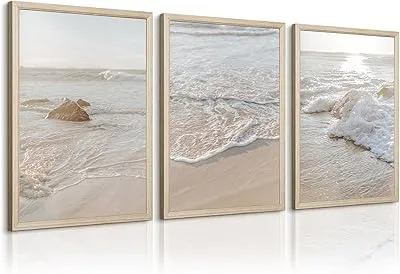
- Use a pair of smaller prints instead of many tiny pieces
- Shop for neutral frames and switch the artwork seasonally
- Use mirrors to reflect natural light
- Mix one textured piece with one flat print for balance
- Choose digital downloads for easy refreshes
Why budget coastal decor works
Coastal style is built on restraint. That means the style often looks better when the room is not overloaded with objects. A simple framed print, a soft palette, and one texture can be enough. Design sources repeatedly show that clean compositions and natural materials carry the coastal mood more strongly than novelty accessories do.
Budget pros and cons
Pros
- Easy to change
- Good for renters
- Let’s test the style before going bigger
Cons
- Cheap printing can look flat
- Thin frames may feel less premium
- Too many small pieces can create visual clutter
Mini summary: Budget coastal decor works best when you spend on scale and simplicity, not on quantity.
Premium and Luxury Coastal Wall Decor Ideas
Luxury coastal decor is not louder. It is calmer, richer, and more precise.
Premium choices
- Oversized framed canvas with textured finish
- Artist-made seascapes or abstract ocean pieces
- Wood Paneling with subtle coastal art
- Mixed-media wall pieces using linen, plaster, or carved wood
- Custom gallery walls with museum-like spacing
Current high-end design coverage shows that coastal style is getting more architectural and more textural. Instead of obvious beach signs, the luxury version uses layered materials, craftsmanship, and strong art direction. That is why large-format art and elevated finishes work so well.
Premium pros and cons
Pros
- Longer lasting
- Better visual impact
- Feels tailored and sophisticated
Cons
- Higher cost
- Needs careful placement
- Can overwhelm small rooms if oversized
Where luxury coastal works best
- Formal living rooms
- Primary bedrooms
- Designer entryways
- Large open-plan spaces
Mini summary: Luxury coastal wall decor is about craftsmanship, scale, and subtlety. It should look collected, not decorated.
Smart Modern Trends to Watch in 2026
These are the trends worth using if you want the article to feel fresh in 2026:
- Refined, not literal coastal motifs
Fewer anchors and shells. More atmosphere and texture. - Warm neutrals replacing cold blue-white schemes
White still matters, but it is now warmer and softer. - More texture in wall decor
Linen, woven surfaces, wood grain, limewash, and layered materials are trending. - Art that feels architectural
Large pieces and clean composition matter more than small themed objects. - Indoor-outdoor continuity
Coastal style now overlaps with outdoor living and performance materials. - Quiet luxury coastal
Design coverage is moving toward restraint, craftsmanship, and timeless color.
Common Mistakes to Avoid
Being too literal
Anchors, signs, lobsters, and “beach house” slogans can make the room feel dated fast.
Using too much blue
Blue is useful, but the room still needs neutral balance. Without it, the space can feel cold or obvious.
Hanging art too high
This makes the room feel disconnected and reduces the cozy effect.
Choosing art that is too small
Small art on a large wall usually looks accidental.
Ignoring humidity
Bathrooms and outdoor walls need smarter materials.
Mixing too many coastal substyles
Do not combine nautical, tropical, rustic beach, and modern coastal in one wall unless you have a very clear plan.
Snippet-ready answer: The biggest coastal wall decor mistakes are being too literal, using art that is too small, and ignoring proportion or moisture needs.
Expert Tips Most People Ignore
Let the wall art repeat one room color
This creates harmony without making the room feel too matched.
Use the frame to control the mood
Thin black frames feel modern. Light wood feels relaxed. White frames feel airy. Brass feels a bit more polished.
Choose calm, not busy
The more open the composition, the more coastal it feels.
Use texture even when the image is simple
A plain seascape can still feel premium if the canvas, print finish, or frame is rich.
Think in layers
The best coastal walls often combine art, mirrors, shelves, lighting, and natural materials rather than just one object.
In humid rooms, protect the art first
A beautiful print is not useful if steam ruins it in six months.
Mini summary: The detail people miss most is not the artwork itself. It is the spacing, Frame Choice, and finish.
Maintenance and Long-Term Value
Coastal wall decor lasts longer when you choose the right material for the room.
Care basics
- Dust frames and canvases regularly
- Keep paper art away from direct steam and splash zones
- Use UV-aware placement in bright rooms
- Rotate lighter pieces seasonally if you like freshness
- Check hanging hardware for heavier art
Long-term value tips
- Buy larger pieces that can move from room to room
- Choose neutral frames so the art stays useful as trends change
- Favor timeless imagery over trend-heavy slogans
- Invest in one strong statement piece rather than many disposable ones
The long-term winners in coastal decor are the pieces that stay useful if your home changes style later. That is why natural materials, soft palettes, and simple compositions are smarter than highly themed wall decor.
FAQs
Art with seascapes, abstract waves, shoreline photography, soft blues, sand tones, and natural textures creates a coastal feel without looking too themed.
Use restraint. Choose subtle ocean references, soft neutrals, natural materials, and one strong focal piece instead of many beach symbols.
Yes. It works especially well in apartments because the style makes rooms feel brighter, larger, and less crowded when you use light palettes and scaled artwork.
Canvas, framed prints, metal, driftwood, wood, woven textures, and moisture-aware options for bathrooms are the best choices.
Warm whites, sand, muted blue, sea-glass green, soft grey, and natural wood tones are the best current choices.
Conclusion
Coastal wall decor works best when it feels calm, Natural, and quietly elevated. The strongest pages in this space will not just show pretty art; they will solve real problems like scale, room fit, humidity, and style confusion. That is exactly why the modern version of coastal design is winning in 2026. It is softer, warmer, more textural, and much easier to live with than old-school beach clichés.
For theroomsart.com, this keyword is a strong opportunity because it supports both inspiration and product-led intent. A pillar page like this can capture readers looking for coastal wall art ideas, room-by-room styling, size guidance, and purchasing confidence in one place. Build around the same calm, refined tone across your supporting articles, and the topic cluster can become a real ranking asset.
Explore more home styling guides on theroomsart.com and keep the look cohesive from wall to wall.
