

Introduction
Modern Wall Art For Living Room spaces can do much more than cover an empty wall. The right piece can set the mood, build a focal point, improve balance, and make a room feel finished. Google’s guidance on helpful content also makes one thing clear: content should be useful, reliable, and written for people first, not search engines first. That means the best article is not just full of pretty ideas. It also gives real help with choosing size, placement, style, and buying decisions.
This one walks you through every step. Get clear on what counts as modern wall art, pick a look that fits your space, figure out the ideal size, decide placement smartly, match colors and textures wisely – skip errors others make too often. Even if your place feels cramped, open, basic, fancy, or built for kids, choices become easier here. Pieces from makers such as CB2 reveal bold simplicity – think sharp-edged frames, abstract shots, canvas works, metal cutouts – all carrying today’s vibe without clutter.
What Is Modern Wall Art?
Art on walls today tends toward fresh, uncluttered designs. Abstract pieces appear alongside sharp geometry. Black-and-white images sit next to delicate single-line drawings. Canvas works show up in frames, sometimes leaning into space as small sculptures. Simplicity guides most choices – shapes stay clear, lines do not wander. Color stays calm, never shouting. Balance matters more than busyness.
A single painting might just hold everything together, right where the eye lands first. Instead of clashing, bold lines on canvas settle beside clean furniture as they belong there naturally. Think sleek couch, quiet-colored floor covering – then that one vivid frame steps in quietly but firmly. Spaces shaped by simplicity tend to welcome this kind of balance: cool gray tones meet sharp edges without noise. Even high-end rooms with bare walls find peace in a well-placed print. So do lofts built from steel and glass, or homes chasing light through wide windows.
Why modern wall art feels so effective
It is flexible. It can look calm, bold, soft, or dramatic.It can also help a simple room feel more personal without changing the furniture or paint. That is one reason modern living room wall art remains such a popular decor choice.
Why Modern Wall Art Matters in a Living Room
Most homes show off their living room right away. People unwind there, host friends, and sometimes pause mid-step when they spot something interesting on the walls. Art placed just so gives visitors a hint about what kind of space this is meant to be. Instead of changing furniture or paint, a single piece can shift how everything feels, like turning down a light switch slowly. Experts on home shows talk less about big changes, more about small things, lining up – how one item plays with another, why empty spots matter as much as filled ones.
Art today finds its place by shifting roles from one room to another. Where you stand changes what it offers. Each space unlocks a separate function. This kind of work adapts without announcement. Its value grows through quiet shifts in setting.
How to Choose the Best Modern Wall Art for Your Living Room
Choosing the best piece is easier when you think like a designer. The right artwork should fit the wall, suit the room, match the color palette, and work with the furniture below it. Google’s own Search Central guidance rewards content that helps people make decisions clearly, so this section is built to solve the real buying question: what should go on my wall?
Measure the wall before you buy
Picture the wall first, then what sits beneath it. Too tiny a picture over a big couch might vanish from view. On the flip side, huge art on a slim stretch of wall could feel smothering. Many go by this: let the frame span roughly two out of three parts of the width of the furniture underneath. Balance follows that way naturally. The space feels thought through.
Match the art to the room style
A fresh piece of wall decor usually fits best when it speaks the same visual language as the space around it. Minimalist living areas tend to pair well with clean-lined prints, grayscale compositions, or gentle abstract forms. Rooms leaning toward luxury might handle oversized pieces that bring in surface depth or hints of gold, silver, or copper. Spaces with an industrial vibe? Try bold black borders, graphic line work, or actual metal elements mounted on the wall. At CB2, you’ll find their entire collection built around matching artwork to these distinct interior moods – offering painted works, photographic shots, printed media, and three-dimensional wall objects.
Decide whether you want harmony or contrast.
Some living rooms look best when the art repeats the room’s colors. Others need contrast to feel alive. If your sofa, rug, and curtains are quiet and neutral, a bold abstract canvas can create energy. If your room already has a strong color, a calm neutral artwork can restore balance. This is a smart way to make modern wall art decor feel planned instead of random.
Choose the right format.
Not all modern wall art is the same. A large framed print gives a crisp look. A canvas feels softer. Metal art adds dimension. A set of smaller frames creates rhythm. Mixed-media or 3D art brings texture and a more curated feel. CB2 highlights paintings, photography, art prints, and wall sculptures as distinct modern options.
Modern Wall Art Sizes for Living Room Walls
Art size matters a lot when picking pieces for walls – yet people overlook it constantly. Most advice boils down to two ideas: position the middle of the piece near average eye height, while matching the width to the furniture beneath. Around 57 inches from the ground usually works for centering, though tweaks happen depending on the room shape or how tall the ceilings are.
Here is a simple living room wall art size guide.
| Furniture or wall situation | Recommended art size | Best visual result |
| Above a standard sofa | About 2/3 of the sofa width | Balanced focal point |
| Above a console table | About 2/3 of the console width | Clean and proportional |
| Large blank accent wall | Oversized single piece or 2–3 panel set | Strong statement |
| Small living room wall | Medium art or vertical piece | Open and uncluttered |
| Gallery wall | Grouped frames are treated as one unit | Curated and layered |
This table follows the same proportional thinking used by hanging guides and Gallery-Wall Advice. In smaller rooms, too many tiny pieces can make the wall feel busy. In larger rooms, bigger formats or taller arrangements help the eye travel upward.
Easy size rule to remember
The safest rule is simple: art should support the furniture, not compete with it. If the sofa is wide, the art should feel wide too. If the wall is tall, the artwork should feel tall enough to hold the space. That is one of the easiest ways to make modern wall art for living room spaces look polished.
Best Modern Wall Art Types for Living Rooms
Modern living room art ideas usually fall into a few strong categories. Each one creates a different mood and works best in slightly different interiors.
| Type of modern wall art | Best for | Main effect |
| Abstract canvas wall art | Contemporary, luxe, minimalist rooms | Adds color, emotion, energy |
| Minimalist wall prints | Small spaces, Scandinavian interiors | Keeps the room calm and airy |
| Modern metal wall art | Industrial or textural rooms | Adds depth and dimension |
| Black-and-white photography | Neutral or elegant rooms | Feels timeless and refined |
| Geometric wall art | Clean-lined rooms | Adds rhythm and modern order |
| Mixed-media / 3D art | Statement walls | Creates texture and interest |
CB2’s modern wall art category and gallery-wall inspiration also show how well paintings, photography, prints, and wall sculptures work in contemporary homes.
Abstract modern wall art
Something quiet yet striking often fits best where words aren’t needed. A splash of color might drift across the surface, while another piece leans into stillness with muted tones. Above a couch, one with depth draws eyes gently, pulling the room together. Near a fireplace, contrast does the work – sharp edges against soft textures. Blank spaces on big walls find balance through shapes that don’t explain themselves. The moment it feels like part of the air in the room, it belongs.
Modern canvas wall art
A single big canvas might fit just right, especially if the wall has extra space. Sometimes two panels tell a better story, other times three spread out nicely across wide areas. Painted fabric stretched tight gives rooms an updated look, yet stays relaxed. Framing feels unnecessary here since the edges do their own job quietly. The whole thing lands between styled and easygoing, which helps it blend instead of shouting. Size shifts what makes sense – narrow spots need less, broad ones open up room to group.
Modern metal wall art
A splash of texture comes through when metal takes shape on your wall. Instead of flat paint, imagine light catching curves and edges in shadow and shine. Matte black brings depth, while brass warms up cooler rooms – each finish sets its own mood. Contrast lives where smooth surfaces meet sharp lines. Some makers group these forms under modern design, though they stand out by stepping away from the expected. Dimension hides in plain sight, changing how space feels without saying a word.
Minimalist wall art for the living room
Open walls often carry just a hint of color, thin strokes, or quiet gaps between forms. Small spaces breathe more easily when decoration steps back quietly. Instead of crowding the eye, some arrangements lean on balance – black frames beside angular designs, photographs stripped down to gray tones. Shapes repeat without shouting, while empty areas do their own work. A line here, a corner there, nothing extra fights for attention.
Geometric and line-based art
Geometric modern living room art prints create structure. They work well when the furniture is simple, and the room needs a bit more rhythm. These pieces look especially good with Scandinavian furniture, modular sofas, or rooms that use repeated shapes and clean edges.
Photography and cityscape prints
Photography gives a living room a more grounded, editorial feel. Black-and-white cityscapes, architectural photos, or atmospheric travel images can all work beautifully above a sofa or console. CB2 treats photography as a major modern wall-art category, which makes it a reliable choice for current interiors.
Modern Living Room Wall Art Ideas by Interior Style
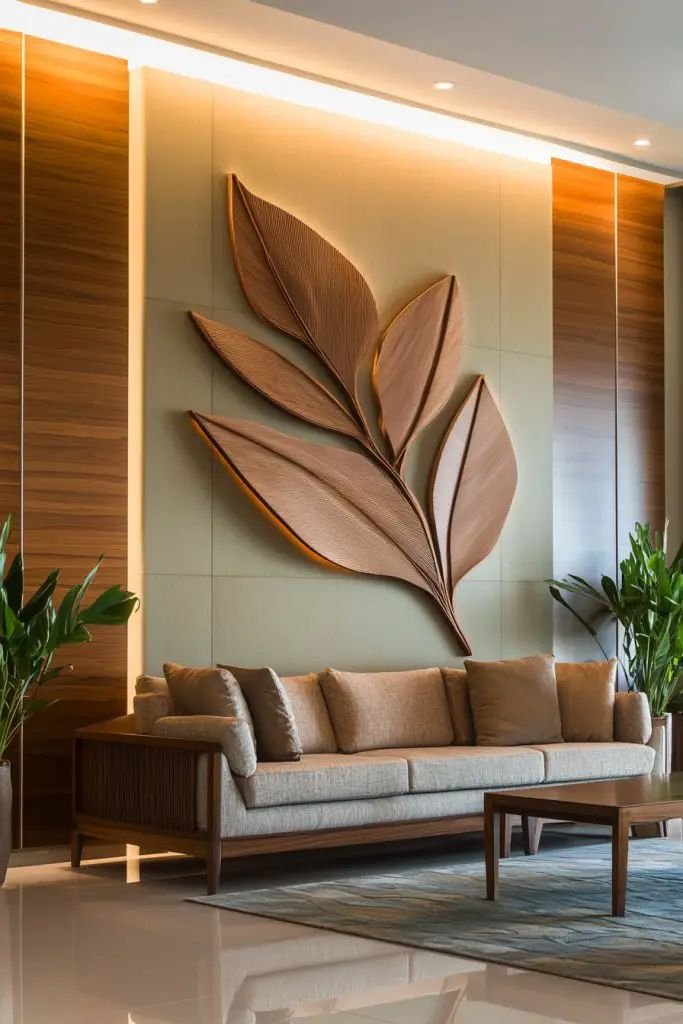
One of the easiest ways to get modern wall art for living room spaces right is to match it to the room’s style. The same artwork can feel perfect in one home and wrong in another, so style context matters.
Minimalist living room
Choose one large neutral print, a simple Monochrome Piece, or a soft abstract composition. Keep the frame slim and the palette quiet. Minimalist rooms benefit from art that adds presence without visual noise.
Scandinavian living room
Look for soft organic shapes, muted tones, nature-inspired abstracts, or simple landscapes. Scandinavian design usually favors light, airy, and calm visuals, so avoid compositions that feel too busy.
Industrial living room
Industrial spaces often suit black frames, metal art, monochrome prints, graphic artwork, and strong contrast. The rough textures of brick, concrete, and wood pair nicely with modern metal wall art and geometric forms.
Contemporary luxe living room
This style can handle larger pieces, richer colors, and textured finishes. Think oversized abstract art, metallic accents, layered neutrals, or bold photography. CB2’s modern wall art collection leans into this polished contemporary direction.
Eclectic contemporary living room
If your room mixes patterns, textures, and furniture styles, use art to unite the space. A gallery wall can work very well here, especially when the frames share one color or finish. Better Homes & Gardens recommends keeping the spacing even so the whole wall feels intentional.
Color and Material Guide for Modern Living Room Walls
Color is one of the most powerful tools in modern wall art decor. The best choice depends on whether you want the art to blend in or stand out. In modern interiors, neutral palettes remain very popular because they are easy to live with and easy to style. Black, white, beige, gray, greige, and soft, earthy tones usually work well.
Materials matter too. Canvas feels warm and soft. Framed prints feel crisp and finished. Metal feels bold and dimensional. Mixed-media pieces feel artistic and layered. Tactile materials can make a room feel more premium, even when the budget is moderate. That is one reason modern wall sculptures and textured artwork are becoming more common.
Best color directions for modern wall art
- Black and white for timeless modern appeal
- Beige, cream, and taupe for calm minimalism
- Muted blues and greens for a fresh, relaxing feel
- Brass, gold, or warm metallic accents for luxe rooms
- One bold accent, such as rust, navy, or emerald, for visual focus
These choices work especially well because they can repeat colors already used in the furniture, rug, or cushions. That creates a more complete room.
Where to Hang Modern Wall Art in the Living Room
Placement is just as important as the artwork itself. Design sources commonly recommend hanging art at eye level, with the center of the piece around 57 inches from the floor. Over furniture, the artwork should also connect visually with the piece below it instead of floating too far above it.
Best places to hang modern wall art
The most useful spots are usually the main Sofa Wall, an accent wall, the space above a console table, the wall opposite the entry, or a tall blank wall that needs vertical emphasis. These placements help create a clear focal point and make the room feel more finished.
Easy placement rules
- Above a sofa: keep the bottom of the artwork about 6–10 inches above the sofa back.
- Above a console: keep a similar gap so the two pieces feel connected.
- Gallery wall: treat the whole set as one unit, not as separate tiny pictures.
- Tall wall: Use a vertical piece or stacked arrangement to add height.
The Spruce and Better Homes & Gardens both support this kind of practical hanging advice, especially the 57-inch eye-level rule and the need for even spacing in gallery walls.
A simple rule for living rooms
Do not let the art feel lost. Do not let it float too high. And do not let it look squeezed. Modern wall art for living room walls works best when it feels connected to the furniture and sized for the wall.
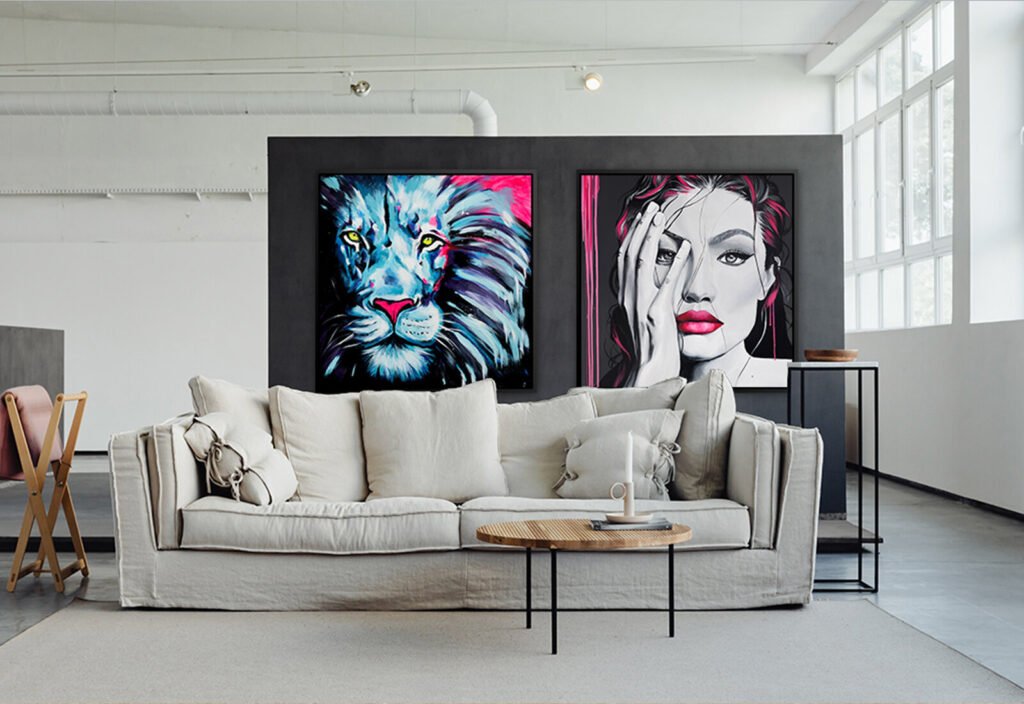
Budget-Friendly Modern Wall Art Ideas
Modern wall art does not have to be expensive. Some of the best-looking living rooms combine one strong statement piece with a few simple supporting pieces. HGTV often highlights practical decorating choices and finishing touches that make rooms look polished without needing a full renovation.
Affordable options include
- downloadable art prints in matching frames
- black-and-white photography prints
- simple line art
- one large canvas instead of many small pieces
- framed posters with a clean matte border
- DIY gallery walls using the same frame color
A smart budget strategy is to spend more on one centerpiece and save on secondary pieces. For example, one large modern canvas wall art piece above the sofa can do most of the visual work, while a smaller console arrangement can balance the room. That creates a more expensive look without a designer-level budget.
Premium and Luxury Modern Wall Art Ideas
If you want a more elevated look, focus on scale, texture, and finish. Luxury modern wall art often uses larger formats, thicker frames, richer surfaces, or sculptural depth. CB2’s wall-art range shows how paintings, photography prints, and wall sculptures can all feel modern when they are cleanly presented and properly sized.
Premium ideas include
- oversized abstract canvas art
- hand-finished textured artwork
- framed limited-edition photography
- brushed-metal wall sculpture
- art with gold or brass detailing
- custom commissions sized to the wall
Luxury wall art works best when the room has breathing space. A large piece on a clean wall looks more expensive than a crowded arrangement. In many modern homes, the best luxury effect comes from restraint, not excess.
Common Mistakes to Avoid
Many living rooms look almost right because of a few avoidable mistakes. The most common issue is scale: the art is too small, too high, or too far from the furniture below it. Another frequent mistake is using too many tiny pieces on a wall that really needs one strong statement. The Spruce specifically warns against hanging art too high, and gallery-wall sources emphasize spacing and planning.
Avoid these mistakes
- choosing art that is too small for the wall
- hanging it too high above the sofa
- mixing styles without a unifying color or frame choice
- Overcrowding a wall with too many pieces
- using art that clashes with the furniture scale or finish
The safest rule is simple: modern art should feel intentional. It should either finish the room or gently challenge it in a controlled way. Anything that feels random usually weakens the design.
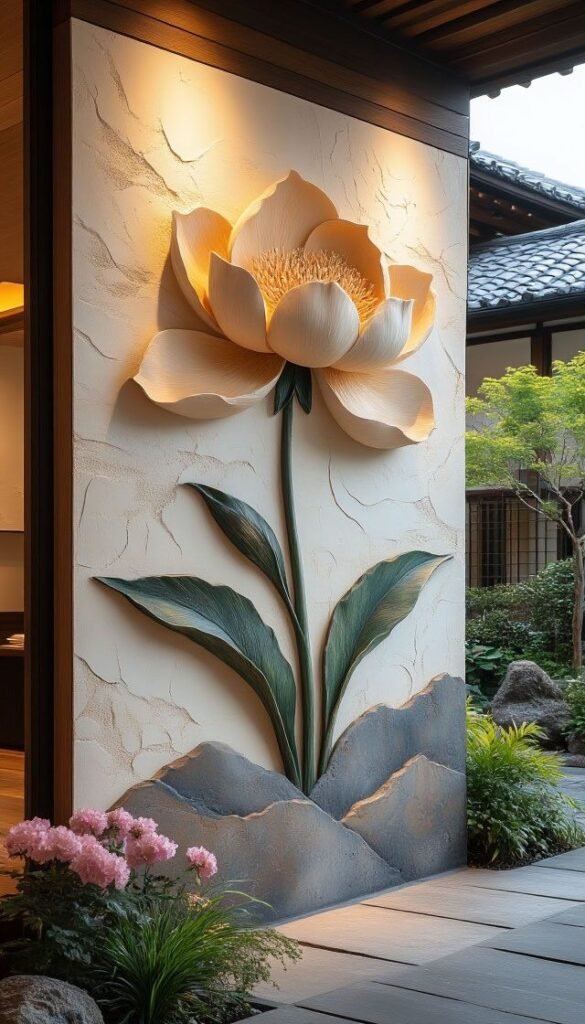
Pros and Cons of Modern Wall Art for the Living Room
Pros
- Creates an instant focal point
- Works in many interior styles
- Can make a room feel more complete
- Offers flexible budget options
- Helps add personality without heavy renovation
- Can suit small and large living rooms alike
Cons
- Wrong sizing can make the room look unbalanced
- Too many small pieces can feel cluttered
- Poor placement can make art feel disconnected
- Very bold pieces may clash with busy furniture
- Cheap framing can reduce the overall effect
This is why size, balance, and placement matter so much. Great art in the wrong spot still looks wrong. Good placement often matters as much as the piece itself.
Maintenance, Care, and Durability Tips
Modern wall art should stay beautiful for years, so choose materials that fit your home. Canvas prints, framed art, and metal pieces each need slightly different care. Keep wall art away from direct sunlight, moisture, and heavy dust buildup. For framed pieces, use a soft dry cloth on the frame and gentle cleaning on the glass if needed. For canvas and textured pieces, avoid harsh cleaners and strong scrubbing. Spruce also notes that durable materials can matter in tougher environments, and safe hanging hardware is important for the weight of the piece.
For homes with children or pets, choose sturdy frames, secure hanging hardware, and finishes that are easy to dust. If your living room changes seasonally, lightweight art and simple frames make updates easier without major cost or effort.
Smart, Modern, and Future-Ready Ideas
Modern wall art trends now favor flexible and personal choices. Gallery walls, mixed media, sculptural pieces, and large-format prints all work well because they can be rearranged or refreshed without redesigning the whole room. Google’s recent guidance also stresses that Useful Content should feel unique and satisfying, and that same idea applies to home decor: the best room is one that reflects the people who live there, not just a trend.
Future-ready living room art ideas
- modular frames that can be rearranged
- one anchor artwork plus smaller rotating pieces
- lighting that highlights wall art at night
- texture-forward pieces for more depth
- neutral foundations with seasonal accent art changes
These ideas work because they keep the room fresh while still feeling calm and controlled.
Quick Pro Tips
- Measure before you buy.
- Keep art around two-thirds the width of the furniture below it.
- Hang the center of the piece near eye level.
- Use one strong artwork instead of many weak ones.
- Match the frame finish to the room’s hardware and furniture tones.
- In small rooms, go vertical to create height.
These small choices make a big difference in how modern wall art for living room spaces feel.
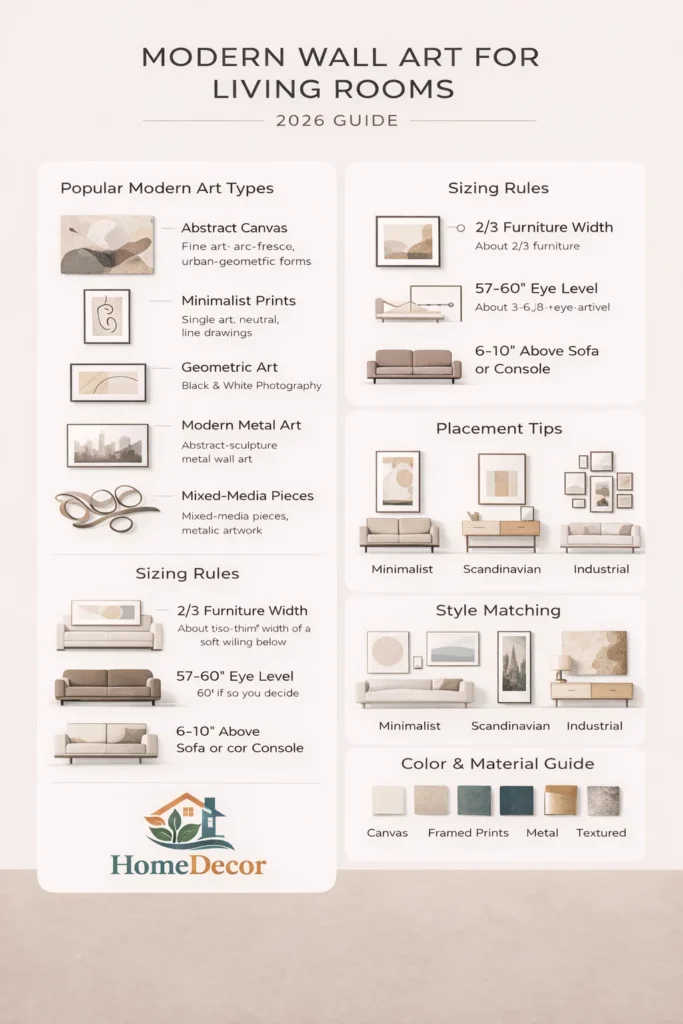
FAQs About Modern Wall Art for the Living Room
A good rule is to choose art that is about two-thirds the width of the furniture below it, such as a sofa or console. This keeps the arrangement balanced and helps the artwork feel connected to the room.
The best spots are usually above the sofa, above a console table, on the main focal wall, or on a tall wall that needs vertical interest. The center of the art is often placed around 57 inches from the floor, with small adjustments for ceiling height and furniture layout.
Yes. Abstract art is one of the strongest choices for modern spaces because it adds visual interest without being too literal. It works especially well in contemporary, minimalist, and eclectic interiors.
Neutral colors like black, white, beige, gray, and muted earthy tones are very reliable. If you want a stronger statement, use one accent color that already appears in the room, such as navy, rust, green, or gold.
Yes, and it often works very well. In a small room, choose one medium or large piece, or a vertical arrangement, instead of many tiny frames. That keeps the wall from feeling cluttered and can make the space feel taller.
Conclusion
A single artwork on the wall might speak louder than words, setting tones without sound. It changes how light feels, how silence sits, even how time moves through a room. One strong image turns blank walls into moments of thought. Abstract shapes pull Attention Gently, while clean lines offer calm without asking much. Metal pieces catch shadows like memories catching up. Canvas works bring warmth where there was none before. Each choice adjusts not just sight but sensation. Space begins to breathe differently when filled with purposeful visuals.
Start by seeing how big a piece feels in a space, then see where it sits matters just as much. When one element balances another, without crowding or leaving gaps, things settle naturally. Pick colors that speak to the mood you already feel in the room. Once those basics click, selecting artwork shifts from uncertain to clear. It is less about chance, more about intention. Size fits, shapes agree, style matches what surrounds it. Arranged with care, each piece stops looking stuck on and starts belonging there.
