
Introduction
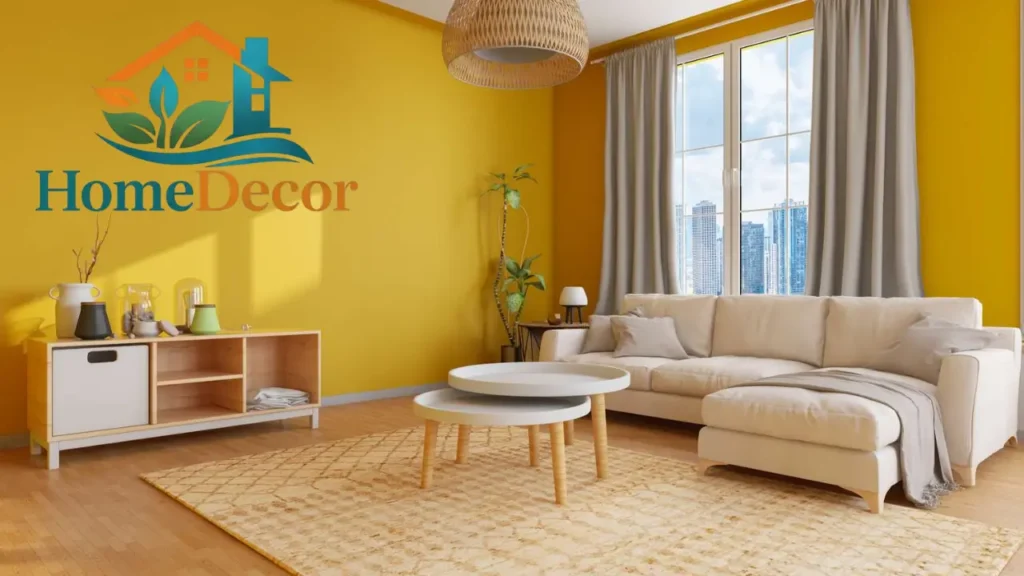
Picture picking paint colors for the living room by thinking how words shape meaning each choice builds clarity. Start here: see trends not as rules but signals, much like patterns in speech. Step through decisions slowly, letting each factor adjust the next, similar to feedback refining output. Pull palettes that behave like filters, removing noise while highlighting what matters. Use accents not for flair, but for function; they mark zones like punctuation marks in sentences. Skip common errors by treating walls as context carriers; mismatched tones confuse the message. Keep upkeep simple because fading or chipping disrupts continuity over time. Think ahead using flexible bases, allowing changes without full rewrites later on. Grab short summaries when needed—snapshots help reset direction fast. Treat Paint Colors For Living Room selection like decoding language: gather examples, spot features, test fits, refine until it flows.
Executive Summary
Treat color selection like an NLP pipeline:
- Data collection gathers lighting, room dimensions, furniture/flooring images, and use-case intent.
- Feature extraction identifies dominant tones (warm/cool), material textures, and contrast vectors.
- Candidate generation pick 6–10 palettes (main, secondary, accent).
- Evaluation & sampling apply mockups and 3–4 sample swatches under multiple lighting conditions.
- Optimization & deployment refine finish (matte/satin), finalize paint type, paint, and stage.
Outcome: a living room that reads as coherent and emotionally aligned with your goals (calm, cozy, dramatic, minimal, luxe).
Why Paint Color Matters Reframed with NLP Terminology
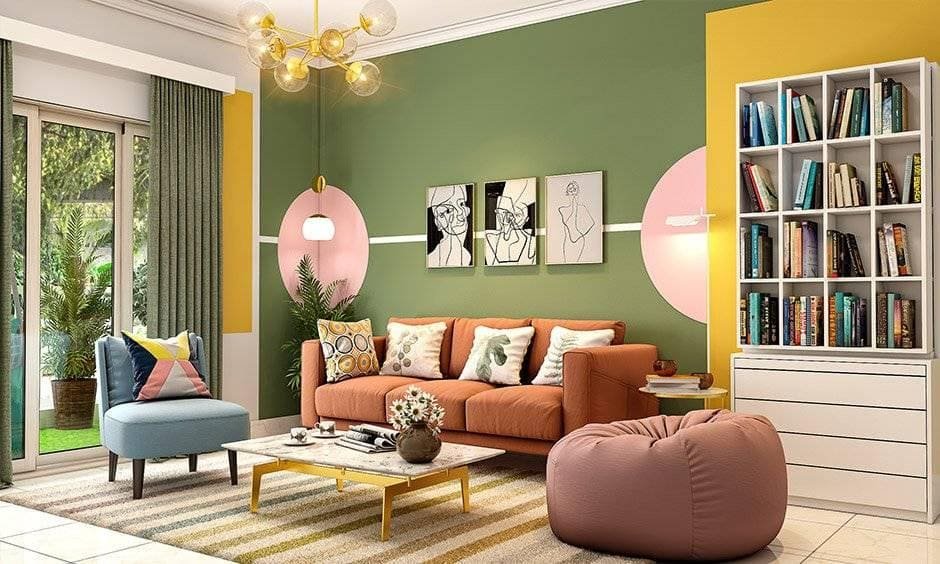
A shade in a living area shifts how people feel, how big it seems, and how well things fit together. From an NLP angle, that shade acts like context within the room’s overall message. Much like phrasing or pitch can twist what words mean, tint and intensity reshape how space feels emotionally.
- A shade on the surface acts much like a signal in conversation – shaping mood, guiding feel. Whether peaceful or lively depends on that choice. Tone emerges before a word is spoken.
- Your space wants calm. So maybe cool tones work better here. Because mood matters when picking shades. Not just how it looks, but how it feels when you walk in. That chair by the window? It waits for quiet moments. A bold wall might distract. While soft gray keeps things grounded. Each hue either helps or fights what happens in the room. Watch how light shifts at different times. Morning brings one truth, evening another. Pick colors that stay honest across hours.
- Early light shifts how paint looks, while noon changes it again. Nearby spaces matter just as much as sunlight does. What sits next to a wall can twist its tone completely.
- Most folks feel calm around warm tones and soft greens – they just seem to fit like an old sweater. On the flip side, sharp white shades might read too clean, almost empty, especially where warmth matters. A beige wall here, a mossy corner there – these often land as welcoming. But icy brightness? That sometimes feels shut off, distant when closeness is what people want.
Paint grabs attention today, stepping into the spotlight instead of fading behind. A room’s mood shifts before a single chair arrives, shaped by what coats the walls first. Choices about fabrics, furnishings, even where light falls – they follow the lead handed down at the start. Pick hues with purpose, because they speak before anyone says a word upon walking in.
2026 Living Room Paint Trends: What the Dataset Shows
Warmth pulls focus by 2026, along with how materials feel in real life. Color choices start reflecting mood more than ever before. Picture the pattern like waves smoothing past older cycles. What stands out lately are moments where softness meets texture again
- Mossy tones sit quietly, wrapping spaces in calm through flat or softly reflective surfaces. Instead of bold shine, these hues lean into warmth when paired with untreated timber and woven fibers. A backdrop of aged green becomes a stage for organic textures to speak gently.
- Brown shades that feel cozy go nicely alongside brass, along with soft leather in earthy hues. Terracotta brings a sunbaked touch while clay adds depth without sharpness. These colors hold space gently instead of shouting for attention.
- Muted blue tones – like powder and slate – step in where stark white once stood, bringing calm minus the chill. Instead of grey’s distant cool, these shades settle softly, almost like quiet light through a dusty window.
- Starting with greige, then slipping into warm cream, the tones build quietly. Soft taupe steps in where light Shifts Subtly. Depth forms not by chance but through quiet layers. Instead of one dull gray, these hues sit close, lean on each other. A flat tone never lands here – variation holds the space.
- Start deep inside one shade, let it climb the walls, slip into fabrics, then settle on certain chairs. A single hue wraps everything, room after quiet room. Not loud, just steady – like light staying put. This is how space breathes slowly, tied together without words. Each object nods to the next through tone alone. Nothing shouts. It simply belongs.
Fade out those sharp white shades. Cold grays – totally lacking warmth – are stepping back. So are blazing primary colors, too harsh now. They don’t build layers. Spaces start feeling stiff, harder to settle into.
The NLP Pipeline for Choosing Paint
Think of this as a production-ready workflow.
Data Collection
Collect:
- Photos at 3 times of day (morning, midday, evening) with lights on/off.
- Room dimensions and ceiling height.
- Flooring close-ups and main furniture textile samples.
- Usage intents: relaxation, entertaining, work-from-home, multi-use.
Why? This gives you the full context window and prevents overfitting to a single snapshot.
Feature Extraction
Extract features from your data:
- Light vector: direction (north/south/east/west), intensity, and color temperature.
- Material palette: dominant wood tones, metal finishes, upholstery hues.
- Scale features: small room vs large room, ceiling height.
- Contrast requirements: do you want high contrast (dramatic) or low contrast (calm)?
Candidate Generation
Generate 6 candidate palettes:
- 2 neutral-driven
- 2 nature-driven (greens/blues)
- 2 bold/dramatic (deep teal, charcoal, navy)
For each, pick main (60%), secondary (30%), accent (10%) colors, and finishes.
Evaluate with Sample Patches
Apply 3×3-inch sample patches on different walls and observe:
- Morning natural light
- Afternoon sun
- Artificial evening light (warm LED)
Record notes: perception shift, clash with furniture, reading comfort.
Hyperparameter Tuning
Tweak:
- Saturation (desaturate for subtlety)
- Value (lighter or darker)
- Finish (matte hides imperfections, satin is washable)
Deploy
Finalize paint type (low-VOC, finish), schedule paint, and stage the room.
Lighting and Perception: The Feature That Changes Everything
Color appearance is highly dependent on lighting; treat light as a translation function over color tokens.
- North light: cool, indirect. Adds blue bias. Counter with warm neutrals or soft, earthy greens to rebalance.
- South light: warm and strong; cooler pastels perform well.
- East light: bright,t warm mornings, morning-dependent tones (fresh, luminous).
- West light: warm, golden evenings, icher, warmer paints are flattering.
Practical test: Place large samples on both the wall that faces your main window and on a perpendicular wall. Observe in real-world hours and under artificial light.
Size, Scale, and Contrast Spatial Embeddings
- Small rooms: increase perceived volume with light-reflecting neutrals, ceiling slightly lighter than walls. Low-contrast schemes expand perceived space.
- Large rooms: can handle deeper main colors and bold accent walls. Use color to create zones.
- Low ceilings: Avoid dark ceilings; a lightly tinted ceiling can be cozier, but keep it lighter than the walls.
Use contrast intentionally: define seating zones with a darker backdrop or create visual articulation with trim in a slightly lighter/darker shade.
The 60-30-10 Rule Reinterpreted as a Balancing Loss Function.
Treat 60-30-10 as a loss-minimizing constraint for visual balance:
- 60% main walls ground the room with a core shade.
- 30% large furniture/soft furnishings id-tone scale.
- 10% accents small pops that steer attention.
If the “loss” (visual disharmony) is high, adjust the 10% accents first, as they are easiest to change.
Palette Libraries Recommended Main + Supporting Combinations
Timeless Neutrals
- Warm Cream (main) + Greige sofa (secondary) + Matte black/wood accents (10%) Works for: modern transitional, Scandinavian, cottage.
- Soft Taupe (main) + Warm white trim (secondary) + Muted terracotta (10%). Designer note: adds depth and warmth while remaining flexible.
Soft & Calming Hues
- Sage Green (main) + Oatmeal textiles (secondary) + Burnt umber accents (10%) Works for organic, biophilic interiors.
- Powder Blue (main) + Light oak furniture (secondary) + Soft brass (10%)
Bold & Dramatic
- Deep Teal (accent wall) + Warm beige (surrounding) + Brass & velvet accents (10%)
- Charcoal Brown (accent) + Cream walls + Leather/wood accents
Accent Walls & Feature Color Strategies: How to Signal Focal Points
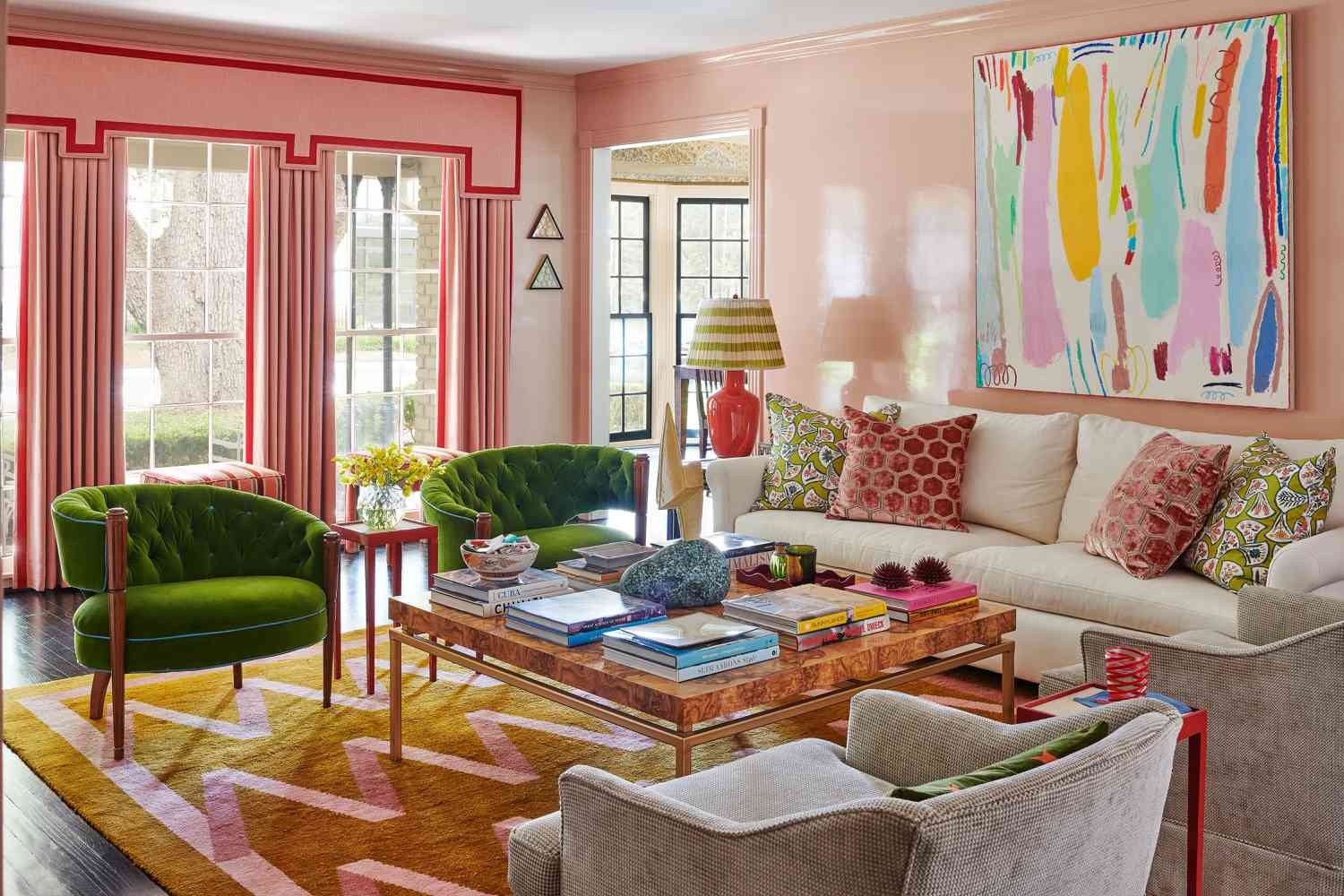
Use an accent wall to:
- Highlight architectural niches
- Frame a fireplace or media center
- Ground a seating area
Rules of thumb:
- Don’t paint all four walls a bold color unless you intentionally want an enveloping drench.
- Accent wall color should be ~2–3 shades darker (or more saturated) than the surrounding walls for depth.
- Consider vertical stripes or textured finishes for drama without over-saturation.
Common Mistakes
- Over-relying on paint chips seen under store lighting.
- Choosing colors without testing at home in context.
- Using very dark colors on all walls in small rooms leads to claustrophobia.
- Ignoring undertones, some whites/greiges carry pink, yellow, green, or blue undertones that clash.
- Failing to consider finish (matte vs sati, sheen changes perceived depth.
Fixes: test, record, and retest. If unsure, choose layered neutrals and introduce bolder hues in textiles.
Finishes, Durability, and Maintenance: The Operational Layer
- Matte/flat: best for hiding wall imperfections, low-traffic areas. Not highly washable.
- Eggshell/satin: good for living rooms, forgiving and cleanable.
- Semi-gloss: for trims & doors, durable and shows less wear.
- Washability: Choose washable finishes near high-touch areas (entryways, behind sofas).
Tip: darker paints show dust and scratches more; balance bold colors with practical finishes.
Budget vs Luxury Options System-Level Tradeoffs
- Budget path: reputable off-the-shelf paints, careful sampling, DIY accent wall, good prep work. Achieve great results with smart Color Choices and staging.
- Luxury path: color-matched custom mixes, advanced finishes (textured paints, layered sheens), professional application, curated trims, and bespoke accents.
Optimization: spend more on preparation (surface prep, priming) than on the cost per liter; a well-applied,d cheaper paint can outperform a poorly applied, premium paint.
Smart & Future-Ready Ideas
- Low-VOC and eco-friendly paints are the standard choose low-odor paints for occupied homes.
- Smart lighting integration: programmable lighting that shifts color temperature influences how your paint reads; consider tunable white LEDs and scene presets aligned to your color choice.
- Textured and micro-finish layers: designers use subtle texturing to add depth
Case Studies & Applied Examples
Small North-Facing Urban Living Room (11×14 ft)
Goal: feel larger + cozy
Pipeline: light warm greige main, pale cream ceiling, sage accent in textiles, satin finish. Result: perceived increased warmth and brightness.
Open Plan Modern Living/Dining
Goal: cohesive but zoned
Pipeline: color drenching with a single palette of soft taupe across both, but deeper clay accent behind the sofa to define seating. Result: seamless flow with clear zones.
Luxe Media Room
Goal: immersive cinematic feel
Pipeline: broad teal accent Wall Behind Screen, charcoal side walls, layered lighting, velvet upholstery. Result: focused, rich, high-contrast drama.
Quick Pro Tips and Designer Heuristics
- Test more than one wall; light direction changes perception.
- Use ceiling slightly lighter than walls to feel more open.
- Use trims in a slightly lighter or darker tone, not necessarily stark white.
- Use texture (rugs, throws, woven baskets) to bridge color palettes.
- When in doubt, warm neutrals are the safest investment for resale.
FAQs
A: Use light neutrals or pastels, account for natural light, and avoid very dark colors on all walls.
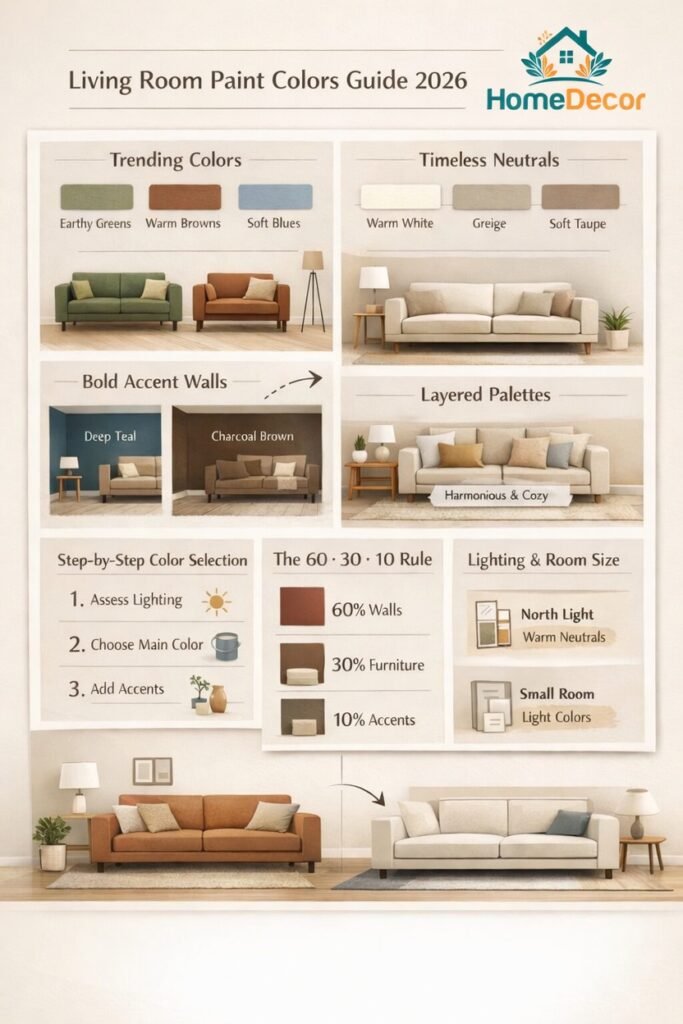
A: Earthy greens, warm browns, soft blues, and layered neutrals are top in 2026.
A: No. Bold colors work best as accents. Balance with softer main walls.
A: Natural vs artificial light changes appearance. Always view paint at different times of day.
A: 60% main walls, 30% furniture/colors, 10% accents for balanced color harmony.
Additional Resources & Quick Recipe Palettes
Calm Cove
- Main: Soft Powder Blue (60%)
- Secondary: Warm White / Light Oak (30%)
- Accent: Burnished Brass & Deep Slate (10%)
Earth & Hearth
- Main: Warm Taupe (60%)
- Secondary: Olive / Natural Linen (30%)
- Accent: Clay Terracotta & Dark Walnut (10%)
Modern Dramatic
- Main: Warm Beige (60%)
- Secondary: Charcoal Accent Wall (30%)
- Accent: Velvet Teal & Polished Brass (10%)
(Use sample jars for each; test for at least 48 hours.)
Final Notes
What color you pick sits on a line between facts and feelings. Light behaves one way, shades another – yet how it lands in your gut matters just as much. Run Choices through the steps outlined earlier to clear out the static. Comfort isn’t optional; go for what settles right when you’re inside the room. What’s popular gives clues, never orders – take only what sticks to your skin
