
Introduction
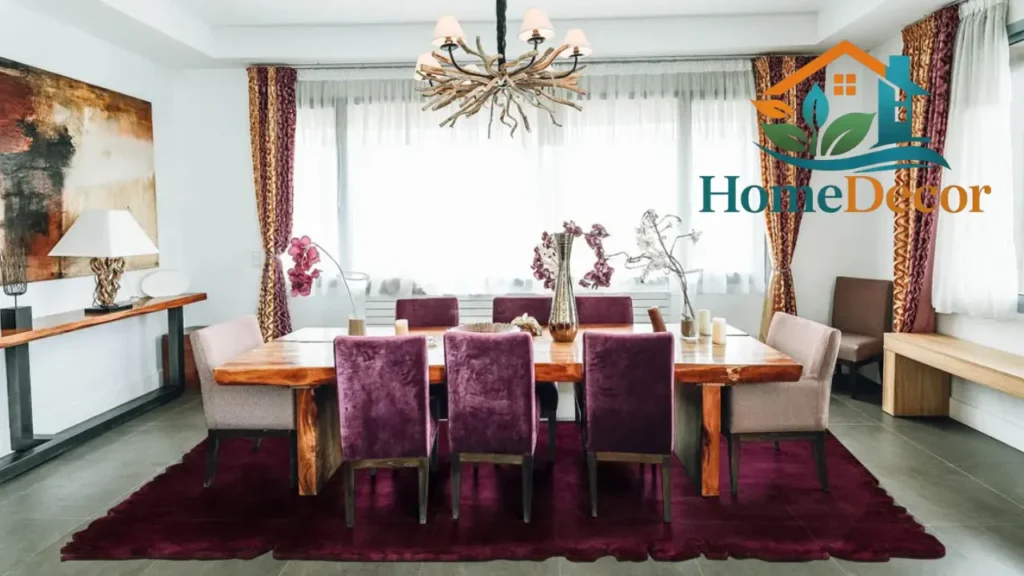
A Dining Room Carpet is much more than a simple floor covering. It’s the piece that brings your eating area to life, adds warmth, softens footsteps, reduces noise, protects your flooring, and makes every meal feel cozy and inviting. Whether you enjoy quiet family dinners or frequently host guests, the right carpet can transform your dining space from plain to polished instantly.
Picking a rug for the dining area? Looks simple – find one that catches the eye, slide it beneath the table. Truth shifts when spills soak in fast because fabric fails. Chairs drag awkwardly if the texture fights the wheels or legs. Tough use defines this space: meals drip, feet wander, furniture scrapes daily. Tables weigh down edges over time. Crumbs slip through fibers like tiny invaders. Pets charge across without warning. A poor pick shows wear before the seasons change.
A Practical Guide to Dining Room Carpets
Picture this – years spent watching carpets live their lives across real dining rooms. Mistakes? Seen plenty. Materials that quit early? Too many. That experience shaped everything here. Trust comes from knowing what survives spills and scuffs, because it has been tested, not promised. Details matter when chairs drag daily. This isn’t theory. Real floors taught these lessons. You get clear steps without guesswork. Think of it like notes from someone who’s cleaned up enough messes to know better.
You might think picking a rug is simple – yet it ties into how you eat, where you sit, what spills happen nightly, and whether your place feels cozy or wide open. After these words settle, clarity arrives – not through rules, but through fit. Your space could be tight, stretched across floors, or blend the kitchen into the living room without walls. Still, one thing matches how you move, clean, choose colors, handle messes, and arrange furniture. Lifestyle shapes texture, size decides reach, design whispers tone. Even tiny apartments carry big decisions underfoot.
What Is a Dining Room Carpet & Why It Matters
A dining room carpet (or dining rug) is placed under your dining table to define the eating zone, protect the floor, soften the area, and pull together your décor. Dining room carpets must endure:
- Constant chair pulling
- Frequent foot movement
- Food and drink spills
- Table and chair weight
- Kids dropping crumbs
- Pets wandering around
A great dining carpet doesn’t just “look nice.” It makes your dining area:
- More comfortable
- More stylish
- More defined
- More peaceful
- More coordinated
- Easier to clean
It enhances the entire dining experience by creating a warm, welcoming environment that feels complete and visually balanced.
Why Choose a Dining Room Carpet?
Many homeowners hesitate to put a rug under the dining table because of one fear: stains. But if you choose the right material and size, a dining carpet can become your best friend, not a cleaning headache.
Here’s why:
Improves Comfort & Warmth
Bare floors, whether tile, marble, laminate, or hardwood, often feel cold, hard, and incomplete. A carpet adds softness, absorbs sound, and creates a cozy environment that invites people to sit longer and enjoy meals comfortably.
Anchors the Dining Area
In open-concept layouts, the furniture can feel like it’s floating randomly. A carpet clearly defines the dining zone, making it feel separate yet connected, structured, and visually pleasing.
Reduces Noise & Echo
Without a rug, dining rooms tend to sound loud and echoey because chairs scrape, plates clink, and voices bounce off hard surfaces. A carpet absorbs these sounds, making the space quieter and more relaxing.
Protects the Floor
Chairs sliding in and out can Scratch Wooden Floors, leave marks on tiles, and wear down polished surfaces. A carpet creates a protective layer so your floor stays in great shape for years.
Enhances Interior Design Effortlessly
A single carpet can add personality, character, color, texture, and charm. Even a simple dining table looks beautiful when paired with a stylish rug that complements your décor.
Best Materials for Dining Room Carpets
Choosing the right carpet material is the most important step because it affects durability, stain resistance, maintenance, softness, texture, and longevity.
Below are the top dining carpet materials, ranked from premium to budget-friendly.
Wool Carpet (Premium Choice)
Wool is the classic, high-end, luxurious option. It’s naturally strong, beautifully soft, and naturally stain-resistant thanks to natural oils in the fibers.
Why Wool Works
- Naturally stain-resistant
- Extremely durable
- Soft, plush, and luxurious
- Eco-friendly & sustainable
- Holds shape for years
- Great insulating properties
Downsides
- Higher cost
- Needs professional deep cleaning occasionally
Best For
Formal dining rooms, elegant spaces, and homeowners who want long-term quality.
Nylon Carpet (Most Practical & Popular)
Nylon is one of the best choices for busy families. It’s durable, flexible, resilient, and excellent at resisting stains.
Benefits
- Extremely durable
- Great stain resistance
- Long-lasting
- Ideal for kids and pets
- Easy to vacuum
- Lots of colors and patterns
Downsides
- Slightly more expensive than polyester
Best For
Everyday dining, active households, high-traffic rooms.
Polyester & Olefin Carpets (Budget-Friendly Heroes)
Both polyester and olefin offer great value at affordable prices.
Benefits
- Very affordable
- Moisture-resistant
- Lightweight
- Many colors & prints
- Easy to move and replace
Downsides
- Not as durable as nylon or wool
- Fibers can flatten with heavy use
Best For
Renters, budget settings, casual dining spaces.
Natural Fiber Carpets (Eco-Friendly & Stylish)
Includes jute, sisal, and seagrass earthy, textured, organic rugs that bring nature indoors.
Benefits
- Beautiful natural texture
- Sustainable & eco-friendly
- Stylish & trendy
- Great for minimalist homes
Downsides
- Harder to clean
- Not great with heavy spills
- Can feel rough
Best For
Low-traffic dining rooms, eco-friendly décor lovers.
Carpet Pile Types: Which Is Best for Dining Rooms?
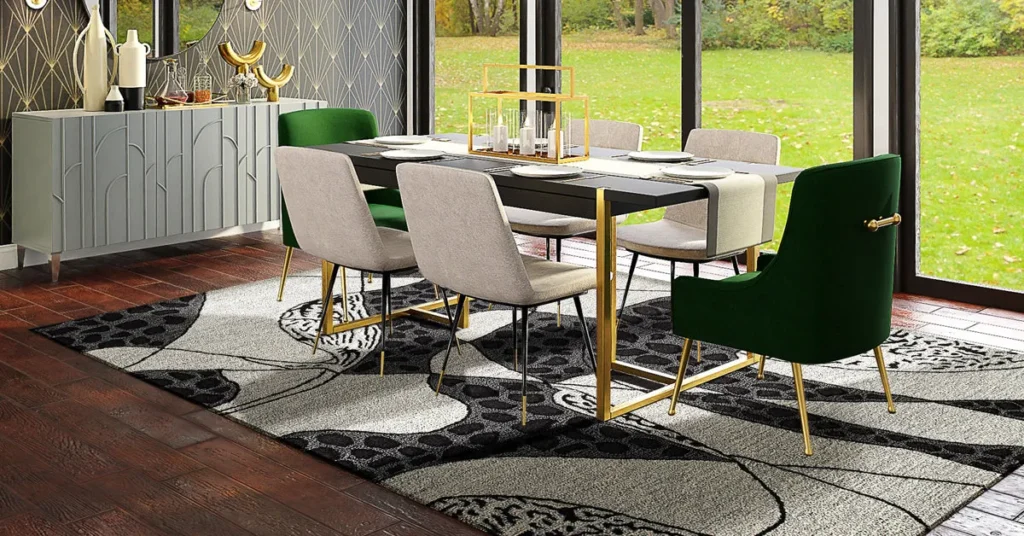
The pile type affects chair movement, vacuuming, cleaning, comfort, and appearance.
Low Pile Carpet (Best Overall Choice)
Low pile is the clear winner for dining rooms.
Why?
- Chairs move smoothly
- Doesn’t trap crumbs
- Easy to vacuum
- Low maintenance
- Best for kids or pets
Overall Verdict:
Best choice for almost every dining room.
Medium Pile Carpet
Offers a bit more softness but comes with cleaning challenges.
Pros
- Comfortable
- Attractive texture
Cons
- Harder to clean
- Collects crumbs
- Less ideal for daily use
Best For
Formal dining rooms are used less frequently.
High Pile / Shag Carpet
Super soft but extremely impractical in dining areas.
Why Avoid?
- Traps crumbs
- Hard to vacuum
- Stains easily
- Collects dust
Avoid completely for dining rooms.
Loop Pile vs Cut Pile: Quick Comparison
Loop Pile
- Durable
- Hides footprints
- Great for high traffic
Cut Pile
- Softer
- Shows marks
- Better for low-traffic dining
Winner: Loop Pile for most homes.
Dining Room Carpet Size & Placement Guide
Choosing the right size is more important than choosing the right color. A poorly sized carpet will make the entire room feel unbalanced.
Golden Rule:
Your dining carpet must extend 24–30 inches beyond the table on ALL sides.
Why?
- Chairs remain stable
- No wobbling off edges
- Smooth sliding
- Balanced appearance
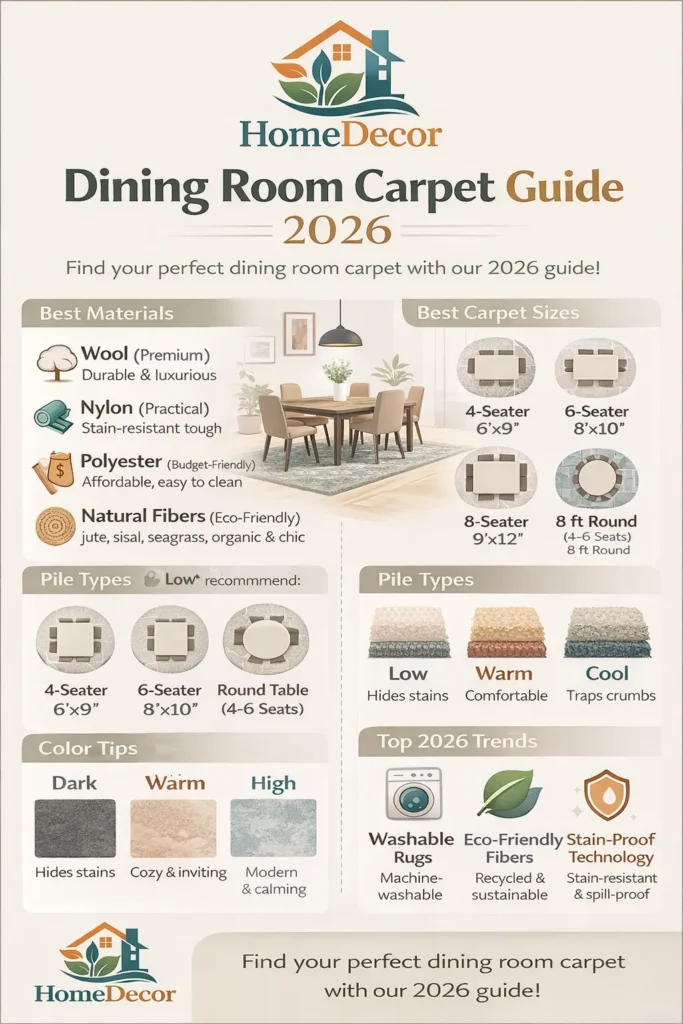
Dining Room Carpet Size Chart
| Table Size | Recommended Carpet Size |
| 4-Seater | 6×9 ft |
| 6-Seater | 8×10 ft |
| 8-Seater | 9×12 ft |
| Round Table (4–6 seats) | 8 ft round rug |
Shape Guide
Rectangle Carpet
- Best for rectangular tables
- Fits most dining rooms
Round Carpet
- Ideal for round tables
- Creates symmetry
Oval Carpet
- Works beautifully with long tables
Dining Room Carpet Colors & Patterns
Color and pattern affect mood, maintenance, and overall style.
Best Colors for Dining Rooms
- Charcoal
- Navy
- Beige
- Gray
- Soft brown
- Taupe
These hide stains and look timeless.
Best Patterns for Dining Rooms
Patterns are lifesavers in busy households.
Recommended:
- Geometric
- Abstract
- Traditional
- Vintage
- Striped
- Distressed
Patterns camouflage stains better than solid colors.
Color Psychology Tips
- Dark colors: Elegant, hides stains
- Light colors: Bright, but show mess
- Warm tones: Cozy and inviting
- Cool tones: Modern and calming
Dining Room Carpet Design Ideas (2026 Edition)
Here are the top trending dining carpet looks for 2026:
Modern Dining Room Carpet Ideas
- Neutral shades
- Simple geometric patterns
- Low pile
- Minimalist textures
Luxury Dining Room Carpet Ideas
- Wool or premium nylon
- Deep rich tones (navy, emerald, charcoal)
- Large rug sizes
- Elegant patterns
Small Dining Room Carpet Ideas
- Light shades to open the space
- Slightly oversized rugs
- Thin, low pile
- Round shapes for small rooms
Budget-Friendly Dining Room Carpet Ideas
- Polyester / Olefin
- Printed designs
- Flatweave rugs
- Machine-washable options
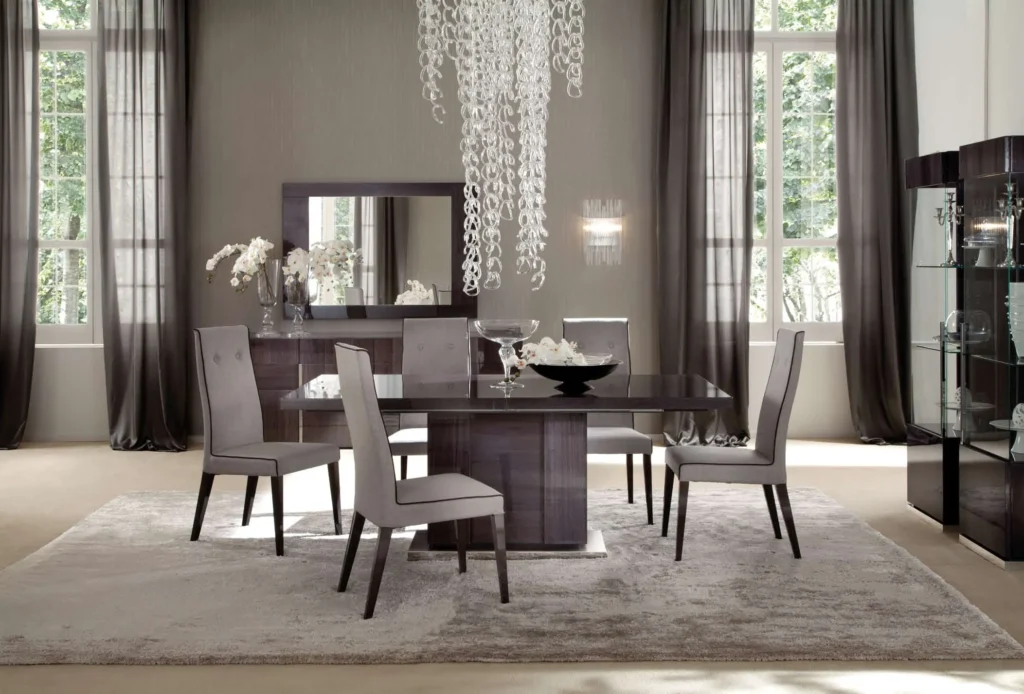
Rugs vs Wall-to-Wall Carpeting in Dining Rooms
| Feature | Area Rug | Wall-to-Wall Carpet |
| Cost | Affordable | More expensive |
| Maintenance | Easy | Harder |
| Flexibility | Replace anytime | Permanent |
| Best For | Daily dining | Formal dining |
Common Mistakes to Avoid
- Choosing a rug too small
- Selecting high-pile carpeting
- Ignoring stain resistance
- Forgetting a rug pad
- Picking light colors when you have kids
- Not measuring properly
- Using mismatched shapes
Maintenance & Cleaning Tips
Daily Cleaning
- Light vacuum
- Blot spills immediately
Weekly Cleaning
- Shake the rug
- Spot clean stains
Monthly Cleaning
- Deep vacuum
- Use fabric-safe solutions
Yearly Cleaning
- Professional steam cleaning
Smart & Future-Ready Dining Room Carpet Trends (2026)
- Nanotech stain-proof carpets
- Eco-friendly recycled fibers
- Machine-washable dining rugs
- Waterproof rugs
- Anti-slip smart rug pads
Pros & Cons of Dining Room Carpets
Pros
- Stylish
- Comfortable
- Floor protection
- Sound absorption
- Defines space
- Adds warmth
Cons
- Needs cleaning
- Light colors stain
- Not ideal for messy eaters
Quick Tips & Pro Tips
- Low pile is best for chairs
- Always use a rug pad
- Patterns hide stains
- Choose a rug bigger than the table
- Nylon is the top all-rounder
FAQs
Yes, as long as you choose a low-pile, durable, stain-resistant carpet.
Nylon most durable, easiest to clean, and best for everyday use.
Your carpet should extend 24–30 inches beyond your table on all sides.
Not recommended shapes should match for the best look.
Dark tones like charcoal, navy, or multi-patterned rugs.
Conclusion
A dining room rug sets the mood without trying too hard. Warmth sneaks in through texture, style shows up in color, and comfort matters underfoot. Wool brings softness that lasts, nylon handles spills like a pro, and polyester keeps things light on the budget. Each fiber fits a different rhythm of life. Your table talks louder when the floor listens well.
Start with the sizing rules – then mix in pile choices based on how much traffic your space gets. Layer those with pattern advice that suits your taste, yet still hides everyday spills. Toss in cleaning methods that actually fit real life, not just perfect conditions. Wrap it up with design touches that feel right for your home. End up with a dining area that Looks Good, works well, stays cozy, and holds up over time.
A well-chosen rug under the table does more than protect the wood beneath it.
Fresh moments come alive when life slows down enough to taste each bite. Meals stretch into shared stories under warm lights. People drift together without planning it that way. Laughter sticks more than the recipes do.
