
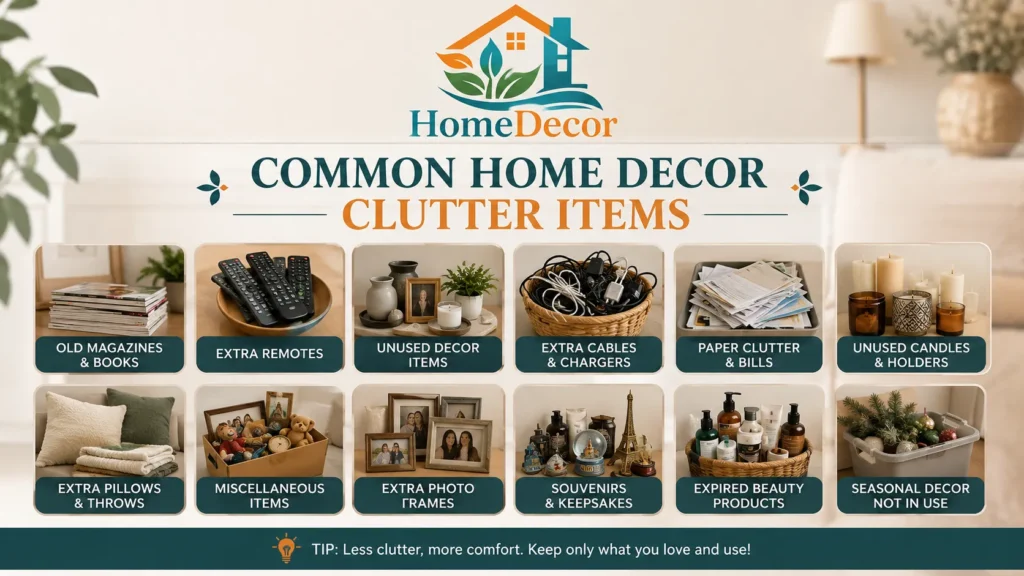
Introduction
A beautiful home should feel calm, welcoming, and intentional. But many rooms slowly drift into visual chaos because of décor that seemed harmless at first: one extra pillow, a candle collection, a shelf full of tiny objects, or a few seasonal items that never got put away. Over time, these pieces stop adding charm and start creating visual noise. That is why Common Home Decor Clutter Items matter so much. They may not be “messy” in the traditional sense, but they can make a clean room feel crowded, restless, and harder to enjoy.
In 2026, the best-looking homes are not packed with more things. They are edited with more care. Designers increasingly lean on negative space, clear sightlines, and fewer but stronger pieces so that the room can breathe. That approach is not only prettier; it also supports a sense of calm and well-being.
This guide breaks down the most common décor clutter items, why they create visual overload, and how to style your home in a way that feels polished, personal, and easy to maintain.
What Are Common Home Decor Clutter Items?
Common home décor clutter items are decorative objects that add more visual weight than value. They may be beautiful on their own, but when they multiply, they compete for attention instead of supporting the room. That is why a space can look “clean” yet still feel messy. Visual clutter is not always about dirt or disorganization; it is often about too many objects asking the eye to stop.
The best test is simple: if an item does not improve function, comfort, or focal-point beauty, it needs a clear reason to stay. Without that reason, it becomes clutter.
Why Decorative Clutter Matters in 2026
Today’s home design trend is moving toward balance, breathing room, and intentional styling. Negative space is now treated as a design tool, not an empty mistake. Designers use it to highlight favorite pieces, improve flow, and make rooms feel more refined.
That matters because clutter can affect more than appearance. Research has linked home clutter with lower well-being, while greater home beauty is associated with better well-being. In simple terms: a more curated room often feels better to live in.
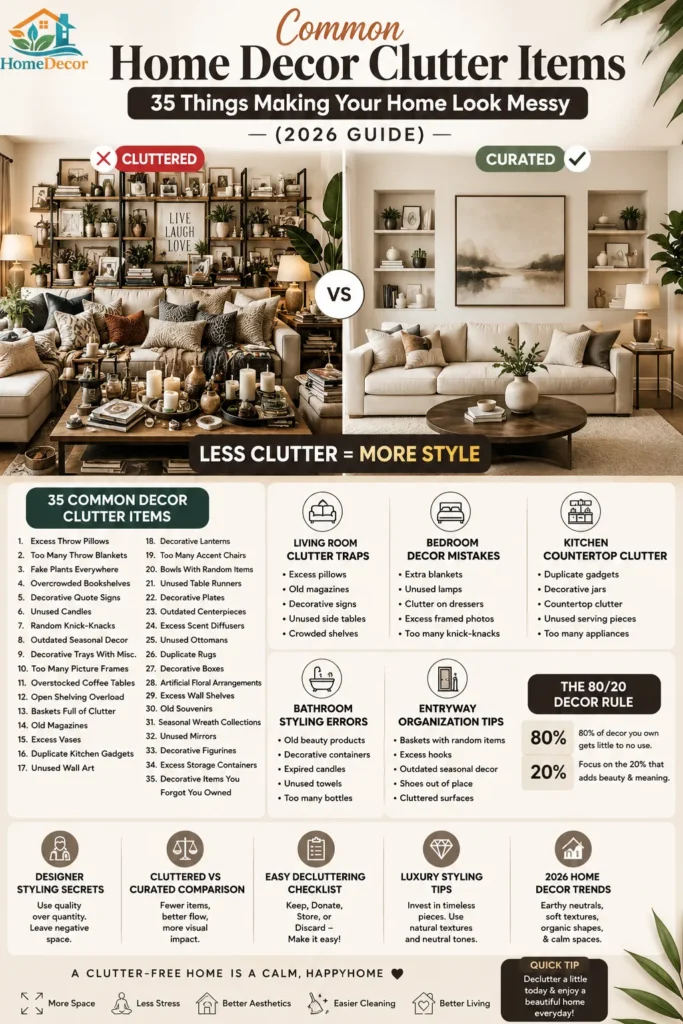
35 Common Home Decor Clutter Items To Remove or Edit
1. Throw pillows that no longer match
Too many pillows, mixed patterns, or mismatched colors can make a sofa look crowded. Keep only the ones that support the room’s palette and comfort level. Designers often recommend just a few well-chosen pillows instead of a pile.
2. Excess throw blankets
A single folded throw adds warmth. Three or four throws tossed over every seat start to look sloppy.
3. Fake plants everywhere
Artificial greenery can work in moderation, but too many faux plants make the room feel busy instead of fresh.
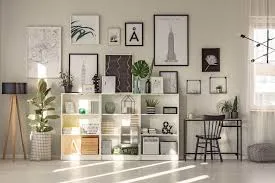
4. Overcrowded bookshelves
Bookshelves need breathing room. Leave some open space so the books and objects can stand out.
5. Decorative quote signs
A meaningful sign can feel personal. Too many “live, laugh, love” style pieces become visual noise.
6. Half-burned candles
Candles are one of the most common clutter traps because they are small, affordable, and easy to accumulate. One or two per room is usually enough.
7. Random knick-knacks
Tiny décor items collect dust and attention. Keep only the pieces that truly mean something or complete the styling.
8. Outdated seasonal decorations
Holiday décor that no longer matches your taste should be sorted, donated, or recycled.
9. Decorative trays packed with misc items
A tray should organize a small group of objects, not hide a mess.
10. Too many picture frames
Small scattered frames can feel visually choppy. A more curated gallery or fewer larger frames usually looks better.
11. Coffee table clutter
A coffee table works best with a few intentional items. When every inch is covered, the surface loses function and elegance.
12. Open shelving overload
Open shelves look polished when they are edited. Too much stuff turns them into display storage.
13. Decorative baskets filled with hidden clutter
A basket is useful only if it has a purpose. Otherwise, it becomes a prettier version of a pile.
14. Old magazines
Stacks of outdated magazines make a room feel unfinished. Recycle them or keep only current issues.
15. Too many vases
Keep the most versatile shapes and materials. Duplicate vases often do the same job.
16. Duplicate kitchen gadgets on display
Even in a beautiful kitchen, visible duplicates make the room feel crowded. Store anything not used often.
17. Unused wall art
A room should not be a storage wall for art you no longer love. Rotate pieces or donate the rest.
18. Decorative lanterns
Lanterns can look elegant in small doses. Too many make shelves and corners feel heavy.
19. Too many accent chairs
Extra chairs only help if they serve a real purpose. Otherwise, they create crowded corners.
20. Decorative bowls filled with random objects
A bowl is a container, not a dumping ground. Keep it simple and intentional.
21. Unused table runners
Table runners that never match your current look should be removed from active décor.
22. Decorative plates on every wall
Plate walls can feel charming in the right setting, but too many create old-fashioned clutter.
23. Outdated centerpieces
A centerpiece should elevate the room, not sit there collecting dust.
24. Excessive scent diffusers
Fragrance is subtle when used well. Too many diffusers add visual and sensory overload.
25. Unused ottomans
An ottoman should earn its space through comfort, storage, or function. Decorative extras can crowd the room.
26. Duplicate rugs
Layering can work, but duplicate or competing rugs often make a room feel busy and mismatched.
27. Decorative boxes
Boxes are handy, but a shelf full of decorative boxes often signals hidden clutter.
28. Artificial floral arrangements
A few realistic stems can look beautiful. Too many Arrangements can feel dated and fake.
29. Excess wall shelves
Every shelf invites more objects. Too many shelves can make a wall feel crowded.
30. Old souvenirs
Travel keepsakes should be curated, not scattered everywhere.
31. Seasonal wreath collections
One seasonal wreath at a time is enough for most homes.
32. Unused mirrors
Mirrors can expand light and space, but too many create a fragmented look.
33. Decorative figurines
Figurines can be charming. A cluster of them can quickly look dusty and dated.
34. Excess storage containers
If every room depends on more bins, baskets, and boxes, the real problem is often too much stuff.
35. Décor you forgot you owned
If an item disappeared for months and you never missed it, it is probably not supporting your space.
Mini summary: The strongest clutter culprits are usually the smallest ones. They do not take up much physical space, but they take up a lot of visual attention. That is why edited styling almost always looks more expensive than crowded styling.
Room-by-Room Home Decor Clutter Checklist
Living room
The living room gets cluttered fastest because it is both public and personal. Start with extra pillows, too many candles, crowded coffee tables, overloaded shelves, and decorative signs that do not add anything meaningful. Designers also warn that prints, patterns, and visible cords can make the room feel messier than it really is.
Bedroom
The bedroom should feel restful, not overstimulating. Remove excess throws, unused lamps, too many framed photos, and décor on dressers that competes with sleep and calm. Clutter in bedrooms tends to feel more stressful because the room is meant for rest.
Kitchen
Kitchen counters quickly become visual clutter zones. Clear away duplicate gadgets, decorative jars without purpose, and any object that stays out only because it “looks nice.” Clear surfaces support better function and a cleaner look.
Bathroom
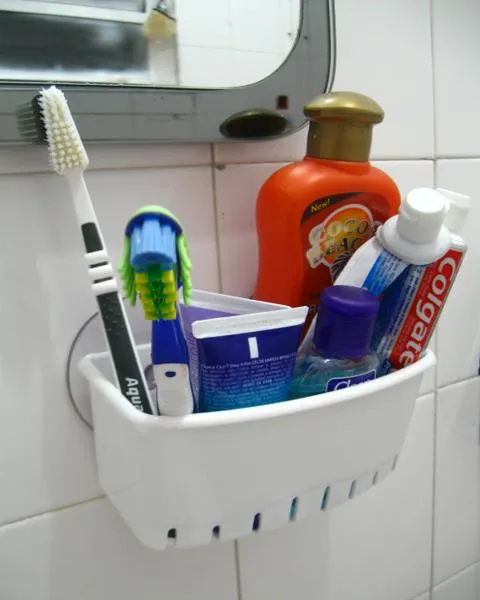
Bathrooms feel untidy fast when toiletries, decorative containers, expired candles, and unused towels are left on display. Keep daily items contained and remove anything expired or unused.
Entryway
The entryway is often the first place clutter shows up. Decorative baskets, seasonal pieces, too many hooks, and random drop-zone items make the home feel busy before you even walk in. A better system is more important than more décor.
A Simple 5-Step Method to Declutter Decor Without Making the Home Feel Empty
Clear one surface at a time
Do not try to fix the whole house in one afternoon. Start with a coffee table, dresser, shelf, or vanity.
Group similar items together
Put all candles, frames, or figurines in one place. Seeing the full collection makes overbuying obvious.
Keep only what supports the room’s purpose
Ask: Does this item make the room more useful, more beautiful, or more meaningful?
Leave breathing room
Negative space helps important pieces stand out and keeps the room feeling calm.
Create a maintenance habit
Once a month, remove one thing from each room that no longer earns its place. Small edits keep clutter from coming back.
Comparison: Cluttered Styling vs Curated Styling
| Area | Cluttered styling | Curated styling |
| Surfaces | Many small objects with no clear purpose | A few intentional pieces with open space |
| Shelves | Filled edge to edge | Balanced with books, décor, and space |
| Soft furnishings | Too many pillows and throws | Limited, coordinated layers |
| Wall décor | Random signs, tiny frames, mixed art | One focal wall or a few larger pieces |
| Fragrance and candles | Multiple diffusers and half-used candles | One scent story per room |
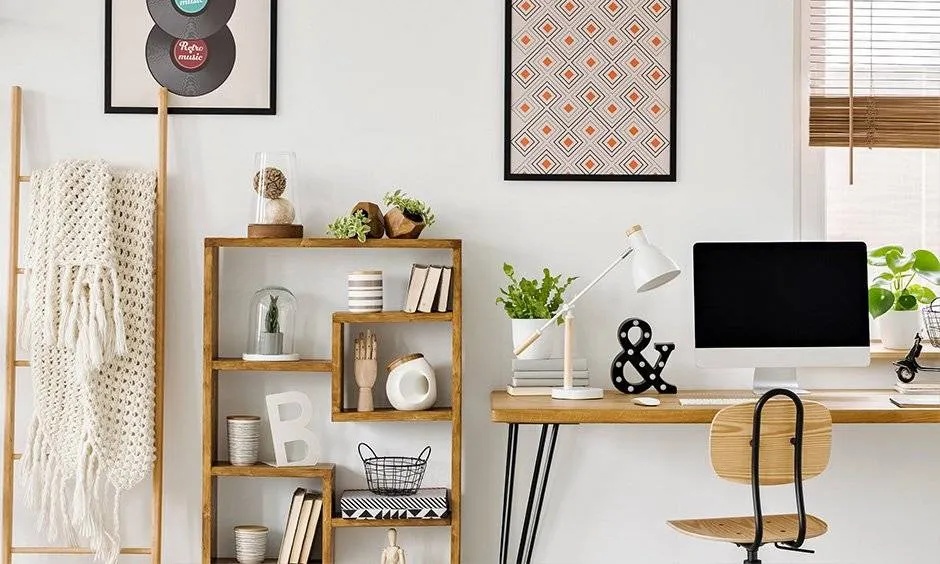
The main difference is not the number of items alone. It is the level of intention. Designers repeatedly emphasize that a room feels more refined when the eye has room to rest.
Budget-Friendly Ways To Reduce Décor Clutter
You do not need to buy new décor to make a home look better. In fact, the cheapest fix is usually editing. Keep what you already own, remove duplicates, and style with fewer pieces. This is the most budget-friendly path because it costs nothing.
Other low-cost wins include:
- folding and storing extra throws,
- rotating pillow covers instead of buying more pillows,
- removing old art instead of adding new art,
- and using one tray to organize a Small Surface.
Premium and Luxury Styling Options
Luxury homes often look calm because they are edited, not because they are full. A premium look usually comes from quality materials, larger statement pieces, and open space around them. Natural textures, tailored curtains, and fewer accessories often create a more expensive feel than a room packed with small décor.
A luxury approach can include:
- one sculptural vase instead of five small ones,
- one large artwork instead of a wall of tiny frames,
- one beautiful tray instead of many loose objects,
- and fewer, better-made textiles.
Best Color Combinations for a Clutter-Free Look
The best colors for a calm room are the ones that reduce contrast and visual noise. Soft neutrals, warm whites, beige, greige, taupe, muted greens, and muted blues tend to feel quieter and easier to style. The Spruce and Martha Stewart both point toward more cohesive palettes and restrained pattern use when a room starts to feel busy.
Good combinations include:
- ivory + oak + soft black
- warm white + beige + linen
- greige + natural wood + brass
- soft sage + cream + stone
- muted navy + off-white + walnut
Best Materials and Decor Choices
If you want a room to feel less cluttered, lean into materials that read as calm and timeless:
- linen
- cotton
- wood
- stone
- ceramic
- glass
- Matte Metal
These materials help a room feel grounded and intentional. They also look better with fewer items, which is exactly the point of curated styling.
Common Mistakes To Avoid
- Styling every surface.
A decorated surface is not always a better surface. - Keeping décor just because it was a gift.
Personalized or sentimental items can become hard to release, which is one reason they linger too long. - Mixing too many prints and patterns.
Pattern can be beautiful, but too much pattern overwhelms the eye. - Hiding clutter in “pretty” containers.
Baskets and boxes are not a solution if they are only hiding excess. - Forgetting function.
When a room stops working well, even beautiful décor starts to feel annoying.
Expert Tips Most People Ignore
1. Give the eye a place to rest
A room needs quiet areas as much as it needs décor. Negative space is what makes focal pieces feel special.
2. Use fewer small objects
Many small objects create more visual friction than one larger piece. That is why tiny frames, mini candles, and small trinkets often look cluttered faster than people expect.
3. Edit shelves like a designer
Books, décor, and space should be mixed with care. Overstyling shelves is one of the most common mistakes in modern homes.
4. Fix the room’s flow
A clean room can still feel chaotic if movement is blocked or surfaces are overcrowded. Good layout is part of good décor.
5. Keep the best, not the most
The most stylish homes usually have fewer, better pieces that are easier to notice and appreciate.
Maintenance, Care, and Long-Term Value
The real goal is not to declutter once. It is to keep the room from drifting back into clutter. That means making a few easy rules:
- one in, one out for décor,
- rotate seasonal items instead of displaying them all,
- review shelves and surfaces every month,
- And store backup décor in one clearly labeled place.
This matters because clutter is not only a style problem; it can affect how a home feels to live in over time. Research links clutter with reduced well-being, while more beautiful homes are linked with better well-being.
Who Should Choose This Style
A clutter-free décor approach is ideal for:
- homeowners who want a calmer home,
- renters who need easy, flexible styling,
- small-space residents,
- families who want easier cleaning,
- and anyone who likes a modern, refined look.
It also works well for people who love décor but want their favorite pieces to stand out more.
Who Should Avoid This Style
This style may not suit you if you love highly layered, maximalist interiors and do not enjoy editing. Even then, the best maximalist rooms still need breathing room to avoid feeling chaotic. Negative space works in traditional, contemporary, and maximalist homes alike.
People Also Ask
Usually, it is not dirt. It is surface clutter, too many small objects, visible piles, and décor that competes for attention. Even when a space is technically clean, the eye may still feel overwhelmed.
Start with the easiest wins: extra pillows, half-used candles, tiny frames, crowded trays, and anything you forgot you owned. Those items often create the fastest visual change.
Yes. Personality comes through in the right pieces, not more pieces. A few meaningful objects, better spacing, and a stronger focal point usually say more than a crowded display.
No. You do not need a bare room. You need intentional spacing, fewer duplicates, and décor that supports the room’s purpose. Negative space works in many styles, not just minimal ones.
Because they are inexpensive, easy to buy, and easy to multiply. That makes them one of the fastest categories to drift from styled to crowded.
Conclusion
The most common home décor clutter items are often the ones people stop noticing: extra pillows, candles, crowded shelves, decorative signs, tiny frames, and all the little accents that slowly take over a room. The fix is not to remove personality. It is to make room for it. When you edit with intention, your favorite pieces stand out, the room feels calmer, and the whole home reads as more beautiful and more Expensive.
This approach is ideal for homeowners, renters, small-space dwellers, and anyone who wants a home that feels polished without feeling empty. Keep the pieces that support your lifestyle, rotate what you love seasonally, and let the rest go. The most stylish rooms are rarely the fullest ones; they are the most thoughtfully edited.
Legal disclaimer: Prices, materials, trends, and product availability may change over time depending on region, suppliers, and brands. Always verify dimensions, materials, and compatibility before purchase or renovation.
