
Introduction
A Transitional Living Room is one of the easiest ways to create a home that feels elegant, comfortable, and current without chasing short-lived trends. It blends the warmth of traditional design with the clean lines of modern interiors, which is why it remains so appealing to homeowners, renters, and design lovers alike. Editorial coverage from major design publishers consistently describes transitional style as a balance of classic and contemporary elements, often grounded in neutral colors, comfortable furniture, texture, and statement lighting.
In 2026, that balance matters more than ever. Current trend coverage is moving toward livable luxury, warm texture, color confidence, and personality, but people still want rooms that age well. Transitional style sits right in the center of that demand. It is flexible enough to feel fresh, yet restrained enough to remain timeless. That makes it one of the smartest living room directions for long-term value, visual calm, and daily comfort.
This guide breaks down exactly what transitional style is, how to design it step by step, which colors and materials work best, how to adapt it for small rooms or luxury spaces, and the mistakes that keep transitional rooms from looking polished. By the end, you will have a full blueprint for creating a living room that feels curated, inviting, and easy to live in.
What Is a Transitional Living Room?
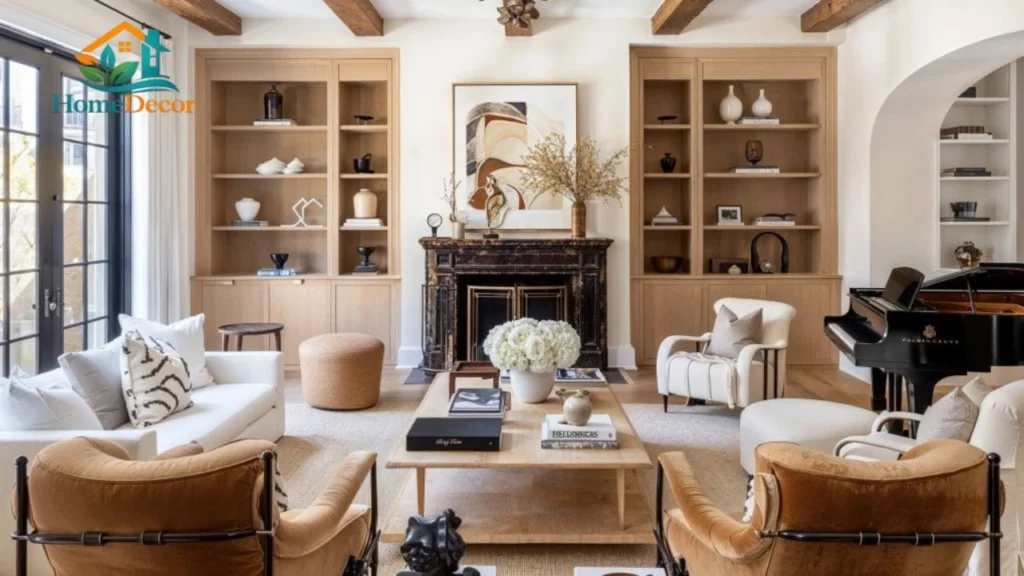
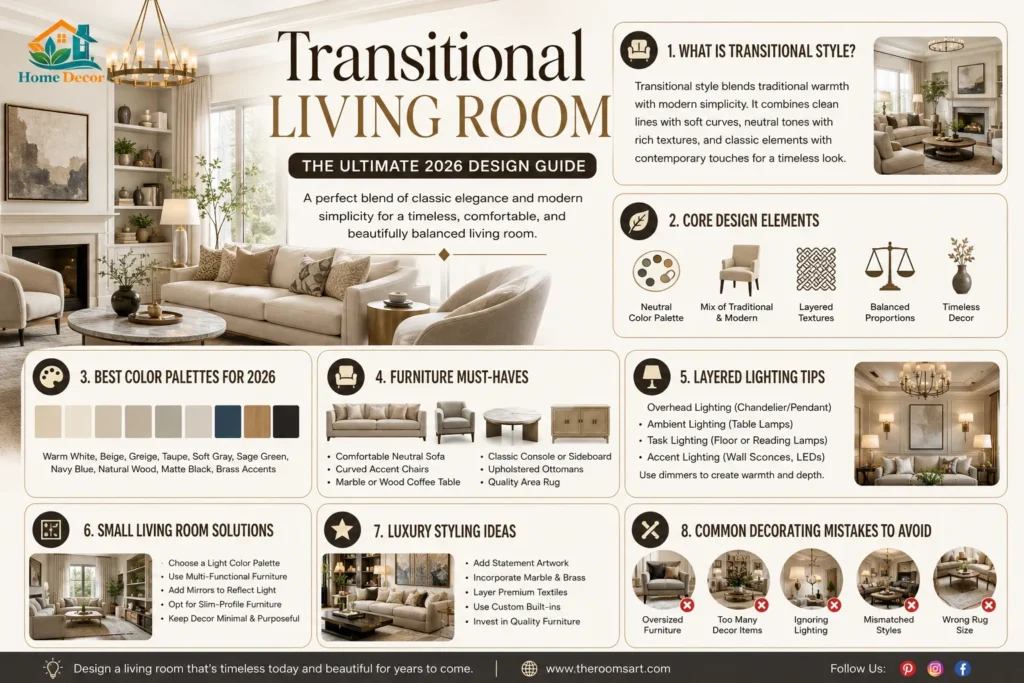
A transitional living room is a space that blends traditional elegance and modern simplicity in one balanced design language. It does not lean heavily into ornate detailing, and it does not go fully minimalist either. Instead, it sits in the middle, using clean lines, comfortable furnishings, neutral tones, and layered textures to create a room that feels both fresh and familiar.
Designers often describe transitional style as a “best of both worlds” approach. You may see a classic fireplace paired with a contemporary sofa, traditional millwork combined with sleek lighting, or a neutral room warmed up with textured fabrics and a sculptural coffee table. The style works because it avoids extremes.
Snippet-ready answer
A transitional living room blends traditional and modern design to create a space that feels timeless, comfortable, and balanced. It usually uses neutral colors, mixed materials, clean-lined furniture, and layered textures.
Why Transitional Style Matters in 2026
Transitional style remains relevant because people want homes that feel calm, flexible, and long-lasting. Trend reporting heading into 2026 shows strong interest in livable luxury, texture, rich materials, and more expressive interiors, but not everyone wants a room that changes with every passing trend. Transitional design gives you a stable base that can absorb new accents over time.
Another reason it matters is practicality. Living rooms serve many functions now: relaxing, entertaining, reading, working, and sometimes even dining. Houzz and IKEA both highlight the need for layouts, storage, and multifunctional furniture in real homes, not just styled showrooms. Transitional design is naturally suited to that kind of life.
Why readers love it
- It looks polished without feeling stiff.
- It is easy to update over time.
- It supports both classic and modern furniture.
- It works in apartments, family homes, and luxury spaces.
- It has long-term visual staying power.
The Core Principles of Transitional Design
1) Balance
The most important rule is balance. Transitional rooms mix traditional and contemporary elements so neither side overwhelms the room. AD describes this style as a blend of classic and Modern with clean lines, neutral palettes, and practical furniture.
2) Comfort
A transitional room should feel lived-in and welcoming. Soft seating, supportive cushions, layered rugs, and warm materials all help the room feel human, not staged. BHG repeatedly shows transitional rooms using approachable fabrics and inviting silhouettes.
3) Restraint
Transitional style does not rely on visual clutter. You can use decorative pieces, but each one should earn its place. This is why the style feels calm even when it uses multiple textures and eras.
4) Cohesion
Every material, color, and accessory should connect to the same story. Warm wood, matte metal, soft upholstery, and neutral walls often work best because they feel related instead of competing.
Mini summary:
Transitional design succeeds when the room feels balanced, comfortable, restrained, and visually connected.
Essential Elements of a Transitional Living Room
Neutral Color Palettes
Neutral color palettes are the starting point for most transitional rooms. Whites, creams, beige, taupe, greige, gray, and soft brown tones create the calm foundation this style needs. AD and BHG both emphasize neutral tones as a key characteristic of transitional spaces.
Mixed Traditional and Modern Furniture
The furniture should feel familiar but not old-fashioned. You might combine a roll-arm sofa with a contemporary coffee table, or a clean-lined sectional with a more classic accent chair. BHG highlights this old-and-new pairing repeatedly, and AD notes that transitional furniture often combines curved and straight lines.
Balanced Textures
Texture keeps transitional rooms from looking flat. Use linen, bouclé, velvet, wool, leather, natural wood, stone, woven fibers, and subtle metallics. AD and BHG both stress layering materials as a key part of the look.
Layered Lighting
Lighting should be functional and atmospheric. Current design coverage strongly favors layered lighting, dimmers, wall lights, floor lamps, and statement fixtures because they add depth and comfort while helping the room feel larger and more flexible.
Architectural Details
Millwork, crown molding, fireplace surrounds, built-ins, and wainscoting help transitional rooms feel more refined. BHG specifically notes that architectural details can anchor the style and make modern furnishings feel at home.
Best Transitional Living Room Color Schemes
| Color Scheme | Best For | Why It Works |
| Warm White + Beige + Natural Wood | Classic, bright rooms | Feels airy, soft, and timeless. |
| Greige + Charcoal + Brass | Modern transitional spaces | Gives contrast without feeling cold. |
| Cream + Sage + Oak | Calm, organic homes | Adds warmth and a gentle natural feel. |
| Taupe + Navy + Warm Metal | Elegant, upscale rooms | Creates depth and a polished finish. |
| Soft Gray + White + Black Accents | Clean, balanced interiors | Feels crisp while staying easy to live with. |
These combinations reflect the neutral foundations and subtle accent colors repeatedly seen across transitional design coverage. BHG, AD, and Livingetc all point to neutrals, warm contrasts, and small but meaningful color accents as part of the style.
Best accent colors for 2026
Sage green, dusty blue, charcoal, navy, terracotta, and muted brown are the easiest ways to make a transitional living room feel current without losing its timeless character. This aligns well with 2026 trend coverage that favors warm, livable, personality-rich interiors over stark minimalism.
Furniture Guide for a Transitional Living Room
Sofa
Choose a sofa with a comfortable seat depth, clean shape, and soft but structured lines. Roll arms, track arms, and lightly curved profiles work well. Avoid pieces that are either too ornate or too severe.
Accent Chairs
Accent chairs are where transitional style can become more interesting. Curved silhouettes, wood arms, textured upholstery, or subtle tailoring add visual balance. BHG shows that chairs often act as the bridge between traditional and modern pieces.
Coffee Table
A coffee table should support the overall mood of the room. Wood, glass, stone, marble, and mixed-material tables all work, especially when the shape is simple and proportionate to the seating.
Storage Pieces
Storage should look as good as it functions. Think low cabinets, built-ins, closed storage, and shelving that does not dominate the room. IKEA and Houzz both stress smart storage and room-specific furniture choices for real living rooms, especially smaller ones.
Rug
A transitional rug should add softness and help unify the seating area. Wool, jute blends, vintage-inspired patterns, or low-contrast geometric designs all fit the style well. This is especially helpful in open layouts where zoning matters.
Transitional Living Room Layout Ideas
1) Symmetrical layout
This works beautifully in formal or fireplace-centered rooms. Place matching chairs or lamps on both sides of the focal point for a composed look. Houzz’s layout guidance shows that furniture arrangement matters as much as the furniture itself.
2) Conversation layout
A conversation layout is perfect for family living rooms and entertaining. Seat furniture should face inward enough to encourage connection, not just the TV. Houzz emphasizes that living rooms need furniture plans that take full advantage of the space and its architectural features.
3) Open-concept layout
Use rugs, lamps, and furniture placement to define zones. Transitional style works very well here because its neutral palette prevents visual chaos.
4) Small-space layout
In a smaller room, choose a slim sofa, a round or narrow coffee table, wall-mounted lighting, and concealed storage. IKEA and Houzz both highlight multifunctional furniture, smart storage, and dividing space as essential in compact homes.
Mini summary:
The best transitional layouts are balanced, open, and practical. The room should support conversation, circulation, and storage without looking crowded.
Step-by-Step Guide: How to Design a Transitional Living Room
- Start with the room’s function.
Decide whether the space is mostly for relaxing, hosting, reading, TV time, or all of the above. Living rooms often serve multiple purposes, so planning matters. - Choose a neutral base.
Pick wall color, sofa upholstery, and a major rug in soft neutrals first. This keeps the room flexible and grounded. - Add one traditional anchor and one modern anchor.
For example, pair a classic fireplace or millwork with a streamlined coffee table or contemporary art. - Layer texture.
Mix soft fabrics, wood, metal, and one natural element such as plants or woven pieces. BHG specifically highlights natural elements and mixed textures as transitional essentials. - Plan the lighting.
Use ambient, task, and accent lighting together. Dimmers and wall lights can make a living room feel larger and more polished. - Style with restraint.
Keep decor edited. Choose art, books, vases, throws, and pillows that support the room instead of competing with it. - Add one current detail.
Curved furniture, richer material finishes, or a more expressive accent color can make the room feel fresh for 2026 without breaking the transitional base.
Transitional Living Room Ideas by Style Variation
Modern transitional living room
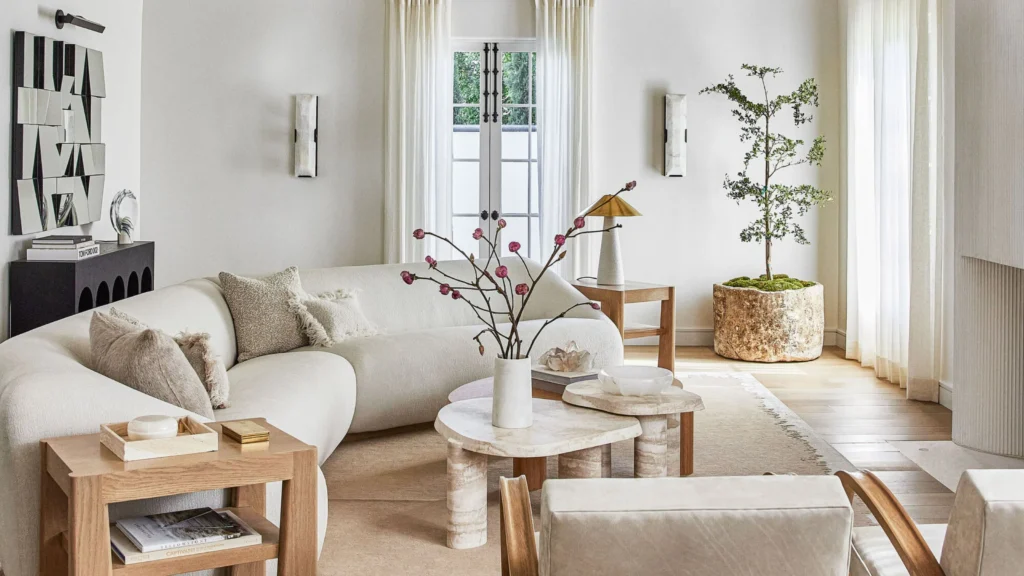
This version uses more streamlined silhouettes, cleaner surfaces, and fewer ornamental touches. It still keeps warmth through texture and soft neutrals.
Luxury transitional living room
For a higher-end look, use marble accents, custom millwork, premium upholstery, oversized art, and stronger lighting choices. AD’s trend coverage supports richer materials and visible personality as a 2026 direction.
Small transitional living room
Keep the palette light, use slim seating, and rely on concealed storage, wall lights, mirrors, and a few large pieces instead of many small ones. IKEA and Houzz both support this kind of space-saving logic.
Family-friendly transitional living room
Choose performance fabrics, rounded edges, durable rugs, and storage that hides toys, books, and everyday clutter. Transitional style works well here because comfort and clean lines can coexist.
Comparison Section: Transitional vs Other Popular Styles
| Style | Main Feel | Best For | Risk |
| Transitional | Balanced, timeless, warm | Most homes | Can feel too safe without texture or contrast |
| Modern | Clean, minimal, sleek | People who love simplicity | Can feel cold or sparse |
| Traditional | Formal, classic, detailed | Homes with strong architectural character | Can feel heavy or dated |
| Contemporary | Current, evolving, trend-aware | Design-forward homes | Can age quickly if overdone |
Transitional is often the easiest style for long-term living because it borrows from both tradition and modern design without becoming extreme. AD’s definition and BHG’s examples both show that it is intentionally flexible, not rigid.
Budget-Friendly Transitional Living Room Ideas
- Keep walls and big upholstery pieces neutral.
- Shop for one statement piece instead of many small decor items.
- Use framed prints, thrifted art, and simple ceramics.
- Layer throw pillows and blankets for warmth instead of expensive furniture swaps.
- Add plants for softness and color.
This approach is smart because BHG shows that smaller accessories can refresh the room affordably, and Houzz notes that budget-friendly styling often begins with smart layout and fewer, better-placed pieces.
Premium / Luxury Transitional Living Room Ideas
A luxury transitional room usually depends on three things: better materials, stronger scale, and more disciplined styling. Think custom built-ins, high-quality upholstery, stone or marble surfaces, tailored drapery, and sculptural lighting. AD’s 2026 trend coverage also points toward richer materials, more contrast, and livable luxury, which pairs naturally with transitional design.
Luxury does not have to mean heavy ornament. In transitional design, it often looks like calm confidence: better proportions, better fabric, and a room that feels collected rather than crowded.
Smart & Modern Design Trends for 2026
1) More texture, less flatness
Design coverage for 2026 keeps emphasizing tactile materials, layered surfaces, and warmth. Transitional rooms should lean into that through boucle, wool, wood grain, stone, and matte metal.
2) Livable luxury
The goal is not just to look expensive. It is to feel comfortable, flexible, and usable. That is exactly where transitional style already excels.
3) Better lighting design
Layered lighting is becoming even more important. Dimmers, wall lights, table lamps, and softly diffused fixtures make rooms feel finished and practical.
4) More personality in the details
Subtle art, a stronger accent color, or a single sculptural chair can keep transitional rooms from feeling bland. AD’s trend reporting suggests that personality and contrast are becoming more valued.
Common Decorating Mistakes to Avoid
Mixing too many styles
If you add modern, farmhouse, rustic, boho, and traditional all at once, the room can lose its identity. Transitional works best when the mix stays controlled.
Overusing gray
Gray can work, but too much of it can make the room feel flat. Warm woods, brass, cream, and natural texture help balance it out.
Ignoring scale
A beautiful room can still feel wrong if the sofa is too large, the rug too small, or the coffee table awkwardly sized. Houzz’s layout guidance makes clear that proportional planning matters.
Adding too much decor
Transitional design is curated, not crowded. Edit your accessories so the room feels calm and intentional.
Forgetting the lighting layer
A room with one overhead fixture often feels unfinished. Transitional living rooms benefit from layered light that supports mood and function.
Expert Tips Most People Ignore
- Use one “old” material and one “new” material in every major zone.
- Let the room breathe. Space is part of the design.
- Repeat shapes quietly, such as curved chairs and rounded lamps.
- Choose art that adds contrast but still matches the room’s tone.
- Keep visible storage low and intentional.
These small choices are what separate a room that merely resembles transitional style from one that actually feels designer-made.
Maintenance, Care, and Long-Term Value
Transitional living rooms are easier to maintain than trend-heavy rooms because the foundation stays stable. Neutral furniture, timeless silhouettes, and quality materials age better than novelty-driven choices. That makes the style especially practical for households that do not want to redesign every few years.
Maintenance is mostly about protecting the things that create the look in the first place: upholstery care, rug rotation, dust management on millwork and shelving, and keeping accessories edited rather than overgrown. Smart storage also helps preserve the calm look over time.
Who Should Choose Transitional Style?
Transitional style is ideal for:
- homeowners who want timeless design,
- renters who need flexibility,
- families who want comfort and durability,
- people who like both modern and classic pieces,
- Anyone building a room they do not want to redo every year.
It is also a strong choice for readers who like polished interiors but dislike spaces that feel too formal or too cold.
Who Should Avoid Transitional Style?
This style may not be the best fit for people who want:
- very ornate traditional interiors,
- stark minimalism,
- dramatic maximalism,
- Highly eclectic, mixed-era styling without restraint.
That does not mean transitional style is boring. It just means it is built around balance, not extremes.
People Also Ask
A transitional living room blends traditional and modern design so the room feels timeless, comfortable, and balanced. It usually includes neutral colors, layered textures, and furniture that is stylish but easy to live with.
Neutral colors like cream, beige, taupe, greige, white, and soft gray work best. You can then add a restrained accent color such as sage, navy, or charcoal.
Yes. The style remains relevant because it matches current demand for livable luxury, flexibility, and timeless design that can still feel modern.
Use soft fabrics, warm lighting, layered rugs, wood accents, and a few meaningful decor pieces. Avoid making the room too sparse.
Yes. It works well in small spaces because it relies on visual calm, smart storage, and clean furniture shapes rather than visual clutter.
Conclusion
A great transitional living room is not about following a strict formula. It is about creating a room that feels balanced, inviting, and lasting. When you combine a neutral base, comfortable furniture, layered lighting, thoughtful texture, and a few well-chosen modern touches, you get a space that looks polished today and still feels right years from now. That is why transitional design continues to resonate in 2026: it delivers the calm and flexibility people want, while still allowing Personality, warmth, and style to shine.
This style is especially ideal for homeowners, renters, small-space decorators, and anyone who wants a living room that feels elegant without trying too hard. If you are building content authority on TheRoomsArt.com, this is also a strong cornerstone topic for related articles on lighting, furniture, color palettes, and small-space decorating.
Explore more room styling guides on TheRoomsArt.com, bookmark this guide for later, and use it as your blueprint whenever you refresh your space. Thoughtful design lasts longer than trends, and transitional style is one of the best examples of that truth.
Legal disclaimer: Prices, materials, trends, and product availability may change over time depending on region, suppliers, and brands. Always verify dimensions, materials, and compatibility before purchase or renovation.
