

Introduction
Choosing the right Dining Room Table Height looks simple, but it affects comfort, posture, chair choice, and how your whole room feels. Most people focus on style first and measurements later. Which is why many dining spaces end up looking good but feeling awkward.
The usual standard is around 30 inches high, and that height is popular because it works for most people and can even double as a desk in many homes. Pairing the table with the right chair height matters too: a common comfort rule is about 10 to 12 inches of space between the chair seat and the underside of the tabletop.
This guide gives you the exact sizing logic, clear comparisons, and practical tips to help you pick a dining table that fits your room, your lifestyle, and your long-term needs.
What Is the Standard Dining Room Table Height?
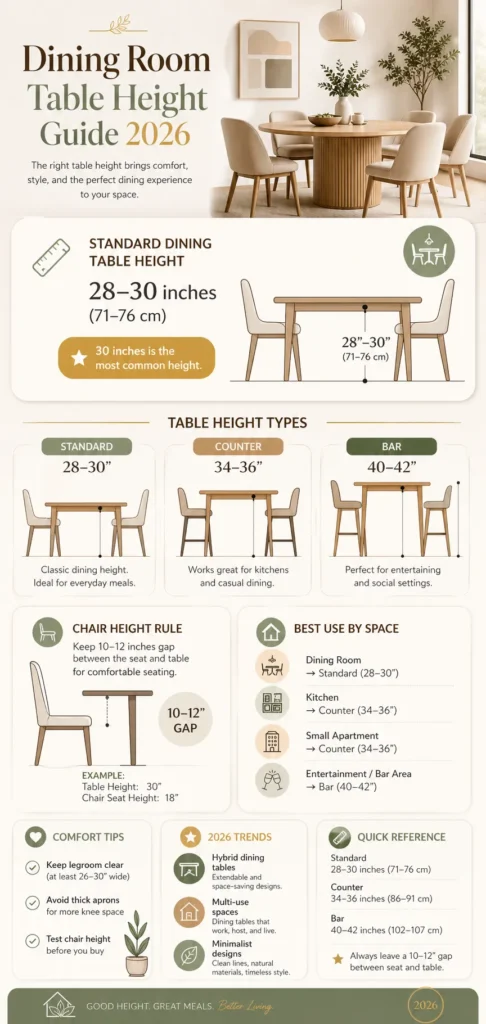
The standard dining table height is usually 28 to 30 inches, with 30 inches being the most common modern benchmark. That height is widely used because it works with most dining chairs and supports a natural seated posture for everyday meals. Furniture guides also note that this height is versatile enough that many dining tables can pull double duty as work surfaces in modern homes.
Snippet-ready answer
The standard dining room table height is 28 to 30 inches, with 30 inches being the most common choice.
Why this height works
A standard-height table usually feels right because it places the tabletop high enough for comfortable eating, but not so high that your shoulders lift or your elbows feel cramped. It also matches the most common dining chair seat heights, which makes shopping and styling much easier.
Mini summary
If you want one safe choice for most homes, 30 inches is the default answer.
Why Dining Table Height Matters More Than Most People Think
A table that is too low can make people hunch forward. A table that is too high can make meals feel stiff and uncomfortable. The issue is not just visual balance; it is also about how your body sits during daily use. Comfortable dining usually depends on the relationship between the tabletop, the chair seat, and the amount of clearance under the table.
The right height improves:
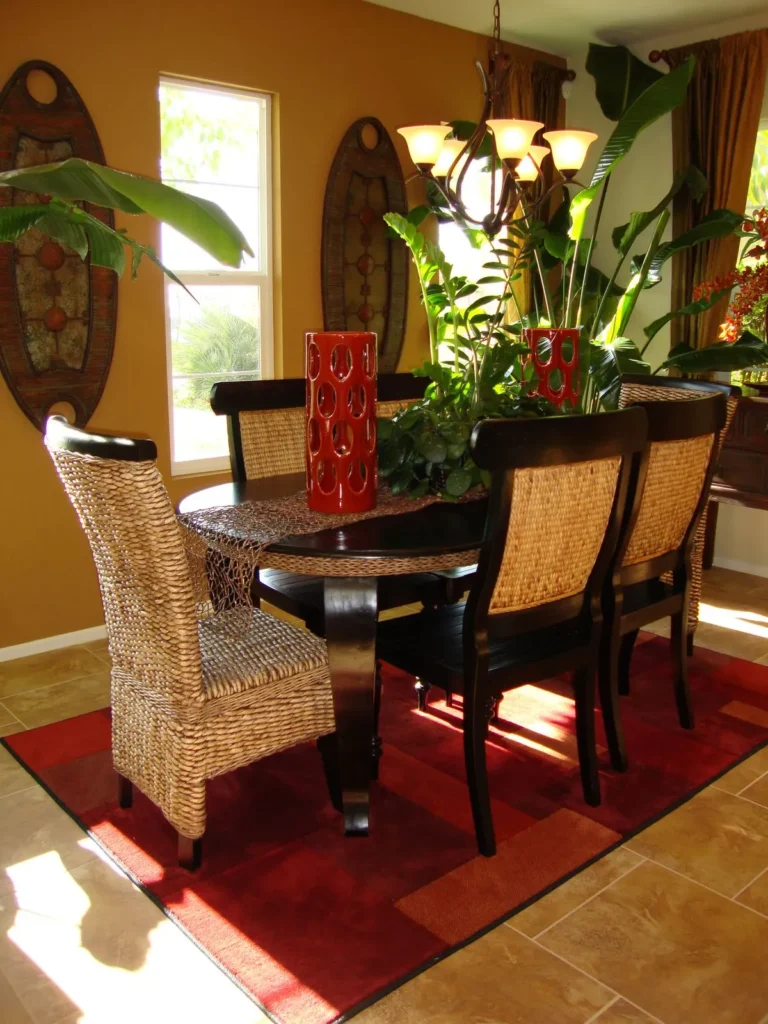
- posture during meals
- leg comfort
- ease of getting in and out of the chair
- How relaxed the room feels
- how well the table works for dining, homework, and work-from-home use
Why this matters in 2026
Modern homes are more flexible than before. Dining rooms often do more than one job, and current design coverage points to more multifunctional, experience-driven spaces rather than strictly formal rooms. That makes table height a design decision, not just a measurement decision.
Mini summary
Height affects both comfort and function. The best table is the one that fits the way people actually live.
Dining Table Height Types Compared
| Table Type | Typical Height | Best For | Main Benefit | Main Watchout |
| Standard height | 28–30 in | Family dining, formal dining, and everyday meals | Most comfortable and versatile | Less “casual bar” style |
| Counter height | 34–36 in | Small apartments, casual breakfast spaces, and modern kitchens | Feels relaxed and space-smart | Can feel tiring for long dinners |
| Bar height | 40–42 in | Entertaining, lounge-style setups, social spaces | Stylish and elevated | Not ideal for daily comfort |
Standard dining tables are commonly around 30 inches high, while counter stools are typically suited to lower seat-clearance setups, and bar stools are designed for higher surfaces.
Standard height tables
These are the most balanced options for most homes. They are the easiest to pair with common dining chairs and usually offer the most natural long-meal comfort.
Counter height tables
Counter height tables create a more casual, kitchen-friendly feel. They are common in compact homes because they can visually open a room and fit well in multi-use spaces. Counter-height stool guidance typically starts around the mid-20-inch seat range.
Bar height tables
Bar height tables feel social and trendy, but they are not the best choice for every day, every person, or every home. They work best for entertaining and quick, relaxed gatherings. Barstools are usually around 30 inches high for high pub tables and bars.
Mini summary
Choose standard for comfort, counter for a casual modern look, and bar height for entertainment-first spaces.
Dining Table Height vs Chair Height: The Perfect Ratio
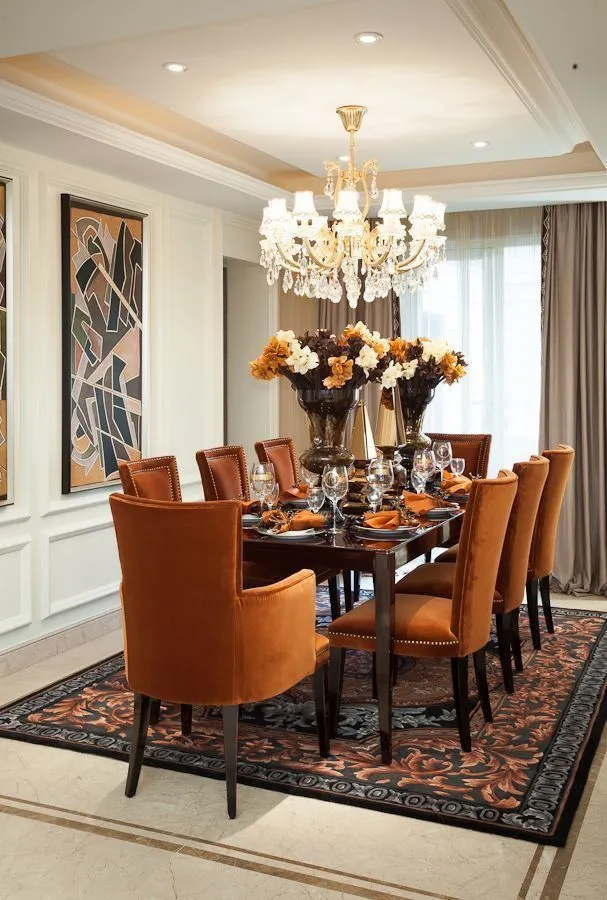
This is the part many shoppers ignore. A Beautiful Table can still feel wrong if the chair is too tall or too short. A common comfort rule is to leave about 10 to 12 inches between the top of the chair seat and the underside of the table. Recent buying guides and furniture references consistently repeat that range.
The usual pairing
For a 30-inch table, many dining chairs land around 17 to 20 inches in seat height, with 18 inches often used as a safe middle point.
| Table Height | Common Chair Seat Height | Ideal Gap |
| 28–30 in | 17–20 in | 10–12 in |
| 34–36 in | 24–26 in stools | about 10–12 in |
| 40–42 in | about 30 in bar stools | about 10–12 in |
What to check before buying
- seat height
- table underside clearance
- table apron depth
- chair arm height
- cushion compression, if the chair is upholstered
Common mistake
A thick table apron can reduce legroom even when the overall table height looks correct. That is why you should never shop by table height alone. Under-table clearance matters too. Some 28-inch tables advertise generous clearance, which helps seating feel less cramped.
Mini summary
The safest comfort range is still 10 to 12 inches of clearance between the seat and the tabletop underside.
How to Choose the Right Dining Table Height
The best table height depends on how you use the room, not just how the room looks.
Decide how the room will be used
- Daily family meals: standard height
- Quick breakfasts or casual snacks: counter height
- Social entertaining: bar height
- Work + dining combined: standard height usually wins
Match the table to the chairs you already have
If you already own chairs, measure the seat height first. Then compare that to the table underside so you can keep the right amount of clearance.
Think about who uses the table most
Families with children often prefer the predictability of standard-height dining tables. Taller tables may look trendy, but standard seating is usually easier for mixed-age use.
Consider how long people stay seated
For long dinners, homework, or Cnversations, standard height is usually more comfortable than counter or bar height.
Measure the room, not just the table
A good table can still fail in a small room if it blocks movement. Furniture guides commonly recommend leaving about 36 inches of space around the table for comfortable movement.
Mini summary
The right height is the one that fits your chairs, your room, and your real routine.
Dining Table Height by Room Type
| Room Type | Best Table Height | Why It Works |
| Formal dining room | Standard height | Looks balanced and feels comfortable |
| Kitchen dining area | Counter height or standard | Casual and practical |
| Small apartment | Counter height or compact standard | Saves visual space |
| Open-plan home | Standard or extendable standard | Flexible and timeless |
| Entertaining space | Bar height | Social, relaxed, and stylish |
West Elm notes that 30-inch dining tables are also commonly used as desk-height surfaces, which is useful in homes where the dining area must multitask. Their size guidance also shows how different shapes and sizes suit different room types, from compact nooks to larger entertaining spaces.
Best choice for lifestyle
- Family-first home: standard height
- Apartment living: counter height or a small standard table
- Hybrid workspace: standard height
- Entertainer’s home: standard or bar height, depending on the mood you want
Mini summary
Room type matters because the table should support the way the room is used every day.
Comparison: Standard vs Counter Height vs Bar Height
Standard height
Pros
- easiest to sit at for longer periods
- most versatile
- easiest to match with common chairs
- best for mixed-age households
Cons
- less trendy than taller styles
- may feel too traditional for some modern interiors
Counter height
Pros
- casual and modern
- works well in smaller spaces
- good for breakfast and quick meals
Cons
- not always ideal for long dinners
- Stool choice becomes more important
- can feel less relaxed for older adults or kids
Bar height
Pros
- stylish and social
- good for lounge-like entertaining
- strong visual presence
Cons
- less comfortable for daily use
- can feel less accessible
- not ideal for every household
Best fit in one line
- Comfort: standard
- Casual modern look: counter
- Entertaining vibe: bar
Best Dining Table Ideas and Solutions for 2026
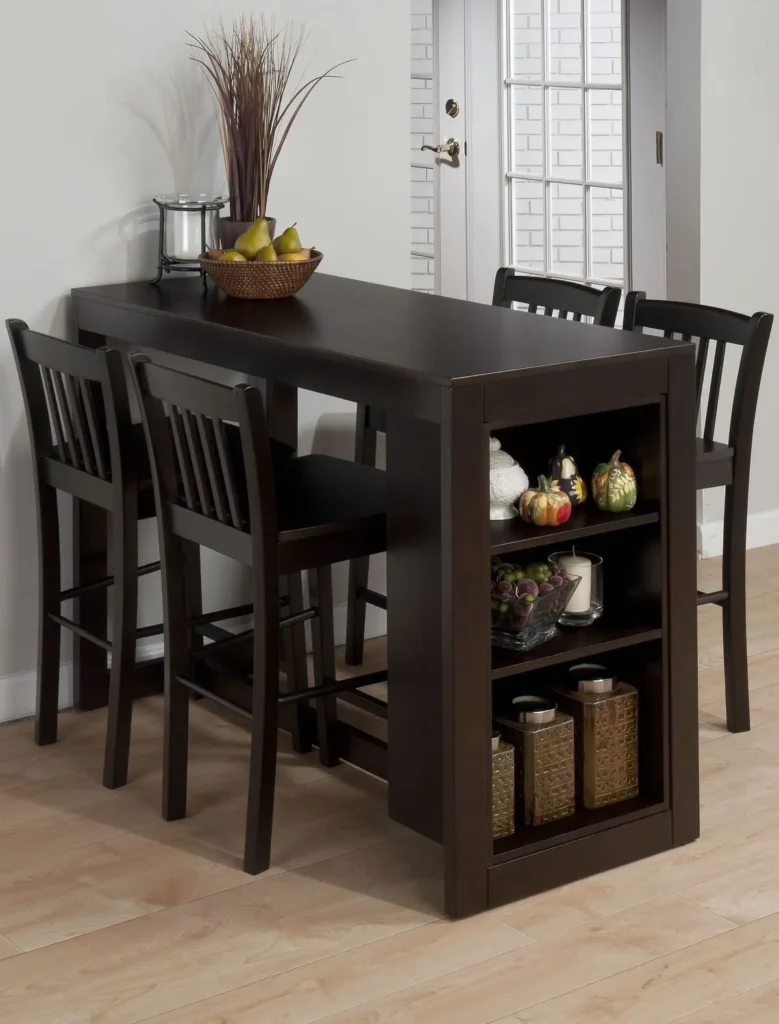
2026 dining spaces are moving toward rooms that feel warmer, more personal, and more flexible. Design coverage points to a stronger focus on Multifunctional Spaces, more defined rooms, and interiors that balance comfort with character. Dining rooms are also seeing more statement materials and a shift toward pieces that feel more sculptural and lived-in.
Hybrid dining tables
These are tables that support dining, laptop use, homework, and hosting. Standard height is usually the safest choice for this kind of multitasking.
Extendable tables
Extendable tables are smart for people who want everyday compactness with guest-ready flexibility. They are especially useful when the room needs to stay practical most of the week. West Elm and Crate & Barrel both emphasize size flexibility and room fit as key buying factors.
Stone and statement surfaces
Recent design coverage shows more interest in stone dining tables as bold, character-rich pieces. This trend favors tables that feel more like furniture-art than purely functional surfaces.
Minimal standard-height tables
Clean, simple standard-height tables remain the most future-proof choice because they work with many styles, from modern to farmhouse to transitional.
Mixed seating setups
A bench on one side and chairs on the other can make a dining room feel more flexible, especially in smaller or open-plan homes.
Mini summary
In 2026, the smartest dining tables are flexible, comfortable, and visually strong without losing everyday usability.
Budget-Friendly Options
You do not need a luxury table to get the height right.
Smart budget tips
- Choose standard height first, then style second
- Spend more on chair comfort than on trend pieces
- Use a smaller table that fits your room better
- Pick extendable designs if guests come often
- Avoid oversized tables that overwhelm the room
Best low-cost strategy
A well-made 30-inch standard table with decent chairs often beats a trendy but awkward counter-height setup.
Snippet-ready answer
The most budget-friendly and safest dining table height is usually the standard 30-inch height, because it works with many chair styles and room sizes.
Premium and Luxury Options
Luxury does not just mean expensive materials. It also means comfort, proportion, and long-term usability.
Premium table qualities
- solid wood or stone surfaces
- strong joinery
- comfortable leg clearance
- balanced base design
- extension leaves or flexible sizing
What luxury buyers often prioritize
- dining comfort for long meals
- statement design
- better room flow
- materials that age well
Best premium choice
For most homes, a premium standard-height table is the best blend of elegance and usability. Counter and bar heights may look stylish, but standard height is usually more timeless.
Expert Tips Most People Ignore
Test the seat, not just the table
A table can be the right height and still feel wrong if the chair pitch or seat cushion is off.
Watch the apron
The apron can steal legroom even when the table height looks ideal.
Measure with shoes off
Seat testing becomes more accurate when you sit naturally at home.
Think about everyday behavior
If people linger at the table, use a standard height. If they mostly grab quick meals, counter height may be enough.
Do not over-style the room
A dining table should be easy to use before it is easy to photograph.
Mini summary
The best dining setup is built around real comfort, not showroom style.
Common Mistakes to Avoid
Choosing style over comfort
A high table can look impressive but feel tiring.
Ignoring chair height
The wrong chair makes the whole setup feel off.
Forgetting legroom
A beautiful table with poor clearance is still a bad table.
Buying without measuring the room
You need movement space, not just furniture space. A common rule is about 36 inches of clearance around the dining table.
Assuming all “standard” tables are identical
Even within the standard category, thickness, base shape, and apron depth change how the table feels.
Maintenance and Long-Term Value
The right dining table height also helps with long-term value. A comfortable, versatile table is easier to keep, easier to style again later, and easier to resell if your home changes. Standard-height tables offer the greatest long-term flexibility because they accommodate the widest range of chairs and layouts.
Long-term care tips
- clean the surface regularly
- Protect the top from heat and moisture
- Check chair glides so floors do not scratch
- Keep the seating ratio consistent
- Re-evaluate chair comfort if cushions compress over time
Mini summary
A good table is not just attractive on day one. It should stay comfortable for years.
Quick Decision Guide
standard height if you want:
- the most comfortable setup
- easier chair matching
- a timeless look
- a table that can also work as a desk or multi-use surface
counter height if you want:
- a casual kitchen feel
- a modern look
- a more relaxed visual profile
bar height if you want:
- a social entertaining zone
- a stylish, elevated look
- a less formal dining experience
FAQs
The most common and comfortable choice is 28 to 30 inches, with 30 inches being the standard benchmark.
A good comfort range is 10 to 12 inches between the chair seat and the underside of the tabletop.
Dining chair seat heights commonly fall around 17 to 20 inches, depending on design and cushion thickness.
Counter height is better for a casual, modern look, but standard height is usually better for comfort and long meals.
A common planning rule is about 36 inches of space around the table for comfortable movement.
Conclusion
The best dining room table height is the one that fits your body, your chairs, and your lifestyle. For most homes, a standard height of around 30 inches is the safest and Smartest Choice because it gives you the best mix of comfort, flexibility, and timeless design. Counter height works well for casual spaces, and bar height can be great for entertaining, but standard height still wins for daily use and long-term value.
