
Introduction
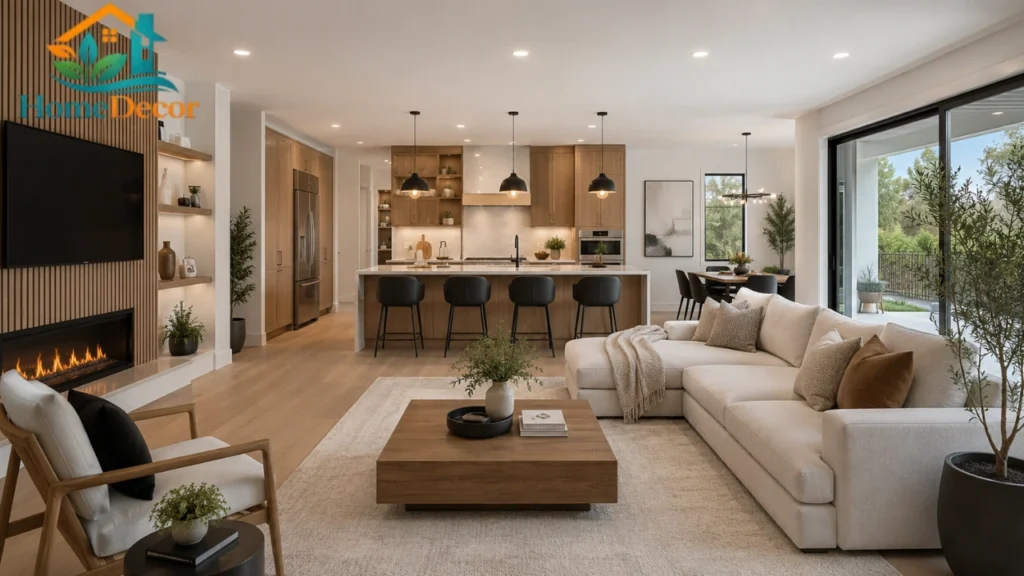
An Open Concept Kitchen and Living Room can feel incredible when it works well. It brings light, makes a home feel bigger, and creates a social space where cooking, relaxing, and entertaining blend together naturally. But it can also go wrong fast.Without layered lighting, it feels flat. Without the right furniture scale, the whole space loses balance. In 2026, the best open-plan homes are not just “open.” They are carefully planned, sensory, and highly functional. Designers are leaning into tactile materials, layered lighting, natural finishes, sound-softening textiles, and built-in storage that keeps the space calm without making it boring.
That is exactly why this guide exists. If you are planning an open concept kitchen living room, this article will walk you through layouts, zoning rules, color ideas, lighting strategy, material choices, budget options, and the mistakes that make open spaces feel chaotic instead of beautiful. It is written to help you make confident decisions, whether you live in a small apartment, a family home, or a larger modern layout.
What Is an Open Concept Kitchen Living Room?
An open concept kitchen living room is a shared space where the kitchen and living area flow into each other without full walls dividing them. In many homes, dining also joins the same zone. The goal is not just openness. The goal is to create a room that feels connected, practical, and easy to live in. Current design guidance consistently treats this kind of layout as a zoning challenge, not just a visual style choice.
In simple terms, the best open concept spaces do three things well:
They make it easy to move through the room.
They keep the whole space visually calm and cohesive.
Snippet-ready answer
An open concept kitchen-living room is a shared layout where cooking and lounging areas flow together without full walls. The best versions use zoning, lighting, and furniture placement to keep the space organized.
Mini summary:
An open concept is not only about removing walls. It is about designing a room that feels bigger, brighter, and easier to use every day.
Why It Matters in 2026
Open-plan living is still relevant because modern homes need spaces that do more than one job. In 2026, interior design is moving toward spaces that feel emotionally comfortable, not just visually clean. BHG’s 2026 coverage highlights sensory design, tactile materials, sound-softening elements, nature-aligned lighting, and warmer, more expressive materials. Houzz also points to zoned built-ins, patterned textures, and multifunctional storage as major 2026 directions.
That matters a lot in open concept rooms because these layouts tend to amplify everything: noise, clutter, smell, light, and movement. When the room is designed well, the effect is beautiful. When it is designed poorly, the problems are obvious because there is nowhere to hide them. Houzz specifically notes that open floor plans can be noisy, hard to decorate, and difficult to divide without zoning; it also points to traffic flow and smell control as core concerns.
What 2026 design trends mean for open plan homes
- Warmer neutrals are replacing cold, clinical palettes.
- Natural textures and honest materials are becoming more desirable.
- Soft acoustics matter more in open layouts.
- Built-ins and concealed storage are rising because they reduce visual noise.
Mini summary:
In 2026, open concept design is less about showing everything and more about making the room feel calm, layered, and useful.
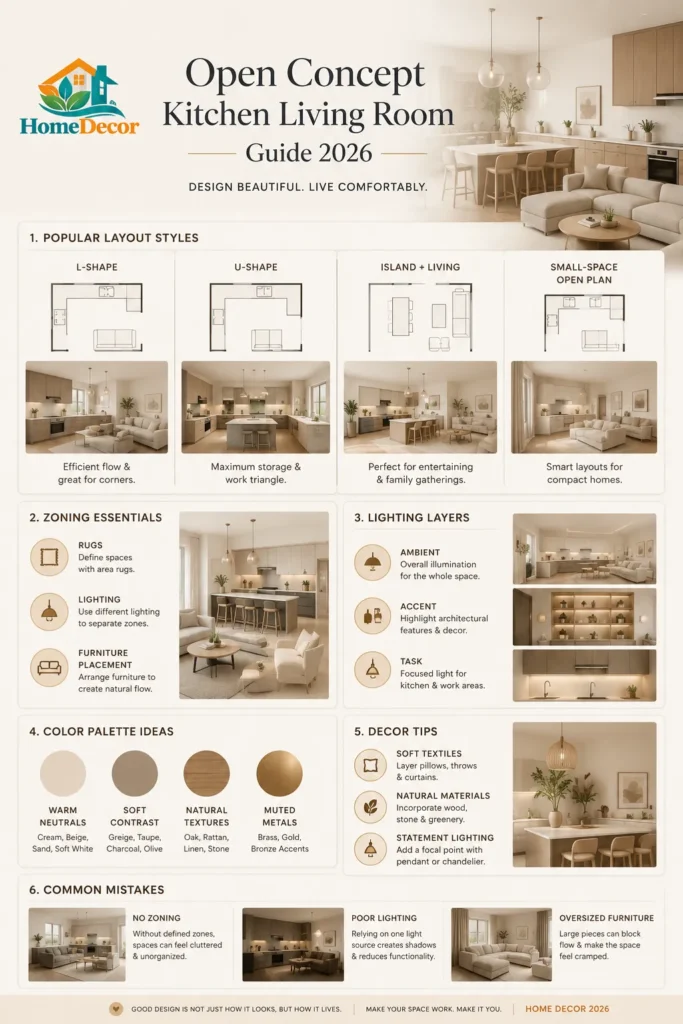
Best Open Concept Kitchen Living Room Layouts
| Layout type | Best for | Why it works |
| Classic layout | Medium to large rooms | Clear room sequencing and easy flow |
| L-shaped layout | Narrow or small rooms | Keeps circulation open and creates one strong anchor wall |
| Island-centered layout | Entertaining spaces | The island becomes the social and visual divider |
| Parallel layout | Rectangular rooms | Keeps kitchen and living areas distinct without walls |
| Broken-plan layout | Families and shared homes | Adds separation while keeping openness and light |
These layout choices align with current open-plan guidance around zoning, flow, and the placement of fixed elements like doors, windows, and cooking zones. Houzz stresses that room shape and traffic flow should guide where each zone goes, and that some spaces work better when they are divided visually rather than physically.
1) Classic layout
This is the easiest to understand. The kitchen usually sits on one side, the living area on the other, and the middle becomes the transition zone. It is clean, balanced, and easy to decorate.
2) L-shaped layout
This is strong for smaller homes because it keeps one edge of the room open. It also helps avoid blocking sightlines.
3) Island-centered layout
This is one of the best choices if you want the kitchen to feel social. The island becomes the anchor point, which makes the space feel intentional instead of empty.
4) Parallel layout
This works especially well in long rooms. It lets you keep the kitchen and living area visually separate while still connected.
5) Broken-plan layout
This is the newer, more flexible version of open concept. Instead of full walls, it uses partial dividers, shelving, changes in flooring, or furniture placement to create light separation. Houzz points to partial or glass walls and other subtle barriers as useful ways to keep sightlines open while reducing sound travel.
Mini summary:
The best layout is not the prettiest one on Pinterest. It is the one that matches the room shape, the household’s habits, and the traffic patterns.
Top Ideas and Inspirations That Actually Work
A lot of open concept inspiration looks beautiful but is not practical. The best ideas are simple, repeatable, and easy to live with.
1. Float the sofa
Placing the sofa away from the wall helps divide the living zone from the kitchen without adding a partition. AD and Houzz both highlight floating seating as a strong open-plan tool.
2. Use one large rug to ground the living area
A big rug visually anchors the lounge zone and makes it feel like its own room. Real Homes and Houzz both support rug use as a simple way to define space.
3. Pick one dominant palette
A shared color story keeps the whole room coherent. AD notes that monochromatic or very simple palettes can make small spaces feel larger, while Real Homes also recommends adaptable palettes in open-plan living.
4. Use the island as a social anchor
If the kitchen has an island, it can act as the “bridge” between cooking and lounging. Houzz and AD both treat islands and compact dining setups as major space-defining elements.
5. Keep the room visually light
Low-profile sofas, open-backed chairs, and furniture with visible legs help preserve the sense of space. Real Homes explicitly recommends low furniture and leggy pieces for small open-plan spaces, and AD similarly warns that clunky seating can ruin a graceful small room.
Mini summary:
The strongest open concept rooms do not rely on dramatic tricks. They rely on scale, rhythm, and simple visual order.
Guide to Designing an Open Concept Kitchen Living Room
Start with the room shape
Before choosing furniture or finishes, map the room. Mark doors, windows, fireplaces, radiators, and fixed plumbing. Houzz recommends starting with the existing structure so zoning decisions make sense from the beginning.
Decide what each zone must do.
Ask what the room really needs. Cooking only? Family TV time? Homework space? Entertaining? Once you know the job of each zone, layout decisions get easier. Houzz recommends zoning the room into subspaces based on function.
Protect the traffic path.
Traffic flow should move naturally between zones without cutting through the active cooking area. This is one of the most important rules in open concept design.
Anchor each zone
Use a rug, pendant light, console, island, or sofa placement to make each area feel intentional. A room that has no anchor looks unfinished, even if the furniture is expensive. Houzz and AD both support visual anchoring through rugs, lighting, banquettes, and careful arrangement.
Build the lighting in layers.
Use ambient, task, and accent lighting together. Houzz says layered and separately controlled lighting is crucial for defining zones, and BHG’s sensory design coverage reinforces the move toward layered lighting in 2026.
Choose materials that repeat across zones.
Open concept homes look better when finishes repeat. Match wood tones, keep metal finishes consistent, and avoid too many competing surface styles. BHG’s 2026 trend coverage emphasizes natural materials, warm metals, and honest finishes.
Edit hard
Too many decor objects make an open concept room feel busy. Built-ins, concealed storage, and fewer but better pieces usually create a stronger result. Houzz’s 2026 built-in trend supports exactly that direction.
Mini summary:
Open concept design becomes much easier when you treat it like a planning problem first and a styling project second.
Comparison: Open Concept vs Broken-Plan Living
| Feature | Open concept | Broken-plan |
| Visual openness | Highest | High, but more controlled |
| Privacy | Lower | Better |
| Noise control | Harder | Easier |
| Zoning | Must be created carefully | Built into the design |
| Best for | Light, social living | Families, hybrid use, larger households |
Houzz points out that open layouts can be noisy and hard to define, while broken-plan solutions like partial walls, glass dividers, and flexible separation can preserve openness while improving comfort. That makes broken-plan a smart middle ground for many modern homes.
Mini summary:
If full openness feels too exposed, broken-plan living gives you the best parts of open concept without all the downsides.
Budget-Friendly Open Concept Kitchen Living Room Ideas
| Budget tier | What to change | Best results |
| Low budget | Paint, rugs, lamps, curtains, and décor editing | Immediate visual improvement |
| Mid budget | New lighting, storage, seating, shelving, and minor finishes | Stronger function and better zoning |
| High budget | Flooring, cabinetry, island, built-ins, lighting plan | Full transformation |
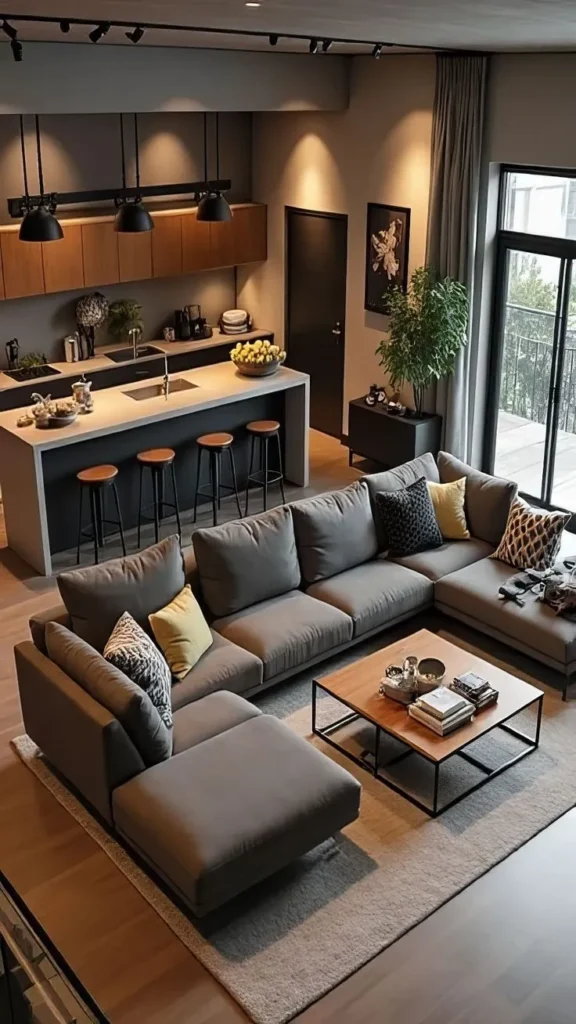
IKEA’s open-plan and small-space ideas emphasize storage, organizing, dividing spaces, and creating calm through smart furniture choices, which means even low-budget improvements can make a big difference. AD also shows how small-scale changes like banquettes, mirrors, and better lighting can dramatically improve a room without a full renovation.
Premium and Luxury Open Concept Options
Luxury in open concept design does not mean more stuff. It means better materials, Better Proportions, and better restraint.
Premium features that work well
- Waterfall island
- Integrated appliances
- Concealed storage
- Unlacquered brass or aged metal details
- Custom-built-in wall units
- Sculptural lighting
- Natural stone and wood combinations
BHG’s 2026 trend coverage specifically points to metals that age beautifully, natural wall treatments, and tactile materials, while Houzz highlights zoned built-ins as a major way to make living rooms feel more open and refined.
Why does luxury work in open concept homes
Because the room is visible all at once, every detail matters. A single weak finish can affect the whole space. A consistent, high-quality material palette creates calm and makes the room feel expensive even when it is simple.
Smart and Modern Design Trends for 2026
1. Warm, livable neutrals
The 2026 direction is moving toward soft cream, taupe, oak, warm white, and grounded earthy accents rather than cold gray spaces.
2. Natural and tactile materials
Wood grain, woven textiles, hand-finished surfaces, and visible texture are all stronger in 2026 than flat, sterile finishes.
3. Sound-softening design
Rugs, drapery, upholstered pieces, and acoustic treatments are more important in open layouts because they reduce echo and make the room feel calmer.
4. Zoned built-ins
Built-in walls that combine storage, display, seating, and media functions are becoming a strong way to control open-plan clutter.
5. Curated personality
The 2026 design is not only minimal. Patterned textiles, collected objects, and more expressive details are returning, as long as they feel intentional and not chaotic.
Mini summary:
The best 2026 open concept rooms feel warm, layered, and personal, not overly staged or empty.
Common Mistakes to Avoid
Houzz and BHG are very clear: open concept homes fail when they ignore comfort, sound, and structure.
No zoning
If everything blends with no clear purpose, the room feels messy.
Blocking traffic flow
A beautiful sofa is useless if people keep bumping into it.
Oversized furniture
AD warns that clunky or oversized pieces can overwhelm a small room.
Ignoring sound
Hard floors, large windows, and high ceilings can amplify echo. BHG recommends rugs, drapery, and acoustic softening in open layouts.
Forgetting odors
An open kitchen needs good ventilation because cooking smells spread into the whole shared area. Houzz specifically calls out the need for a properly sized exhaust hood and regular cleaning.
Using too many finishes
Too many colors, metals, and materials make the room feel visually noisy.
Poor lighting planning
A single ceiling light is not enough in a room with multiple uses. Houzz recommends layered and separately controlled lighting.
Mini summary:
Most open concept problems come from poor planning, not from the layout itself.
Expert Tips Most People Ignore
Use furniture to create architecture
A sofa, bench, console table, or banquette can act like a wall without actually closing the room off. AD and Houzz both show this as a smart way to define zones.
Keep the view line clean.
When you stand at the entrance, the room should feel controlled. A clear focal point helps the whole space feel composed.
Let lighting do some of the zoning.
Use a pendant over the island, a softer lamp in the lounge, and maybe a separate light over a dining nook. Houzz says lighting is a major zone-defining tool.
Mix hard and soft surfaces.
A room with only hard materials can feel harsh. A room with only soft materials can feel vague. The best open concept spaces balance both.
Store more than you display
IKEA’s compact-room guidance repeatedly emphasizes smart storage, flexible shelving, and calm through organization. That principle matters even more in open concept homes.
Maintenance, Care, and Long-Term Value
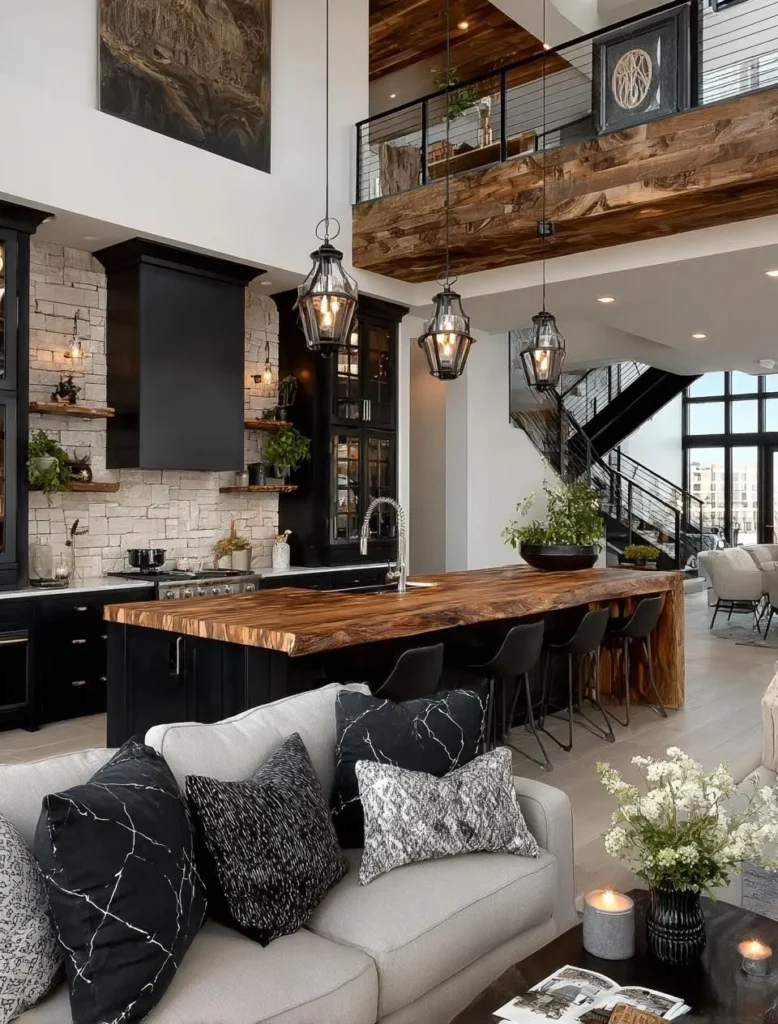
An open concept room stays beautiful only if it is easy to maintain.
Keep the flow clean
Because everything is visible, clutter travels fast. A tray for remotes, a basket for throws, and closed storage for everyday items make a big difference.
Respect the materials
BHG’s 2026 trend coverage highlights materials that age well rather than trying to stay perfect forever. That means choosing finishes that can handle everyday use, not just photos.
Clean the kitchen like it is part of the living room
Because it is. Houzz notes that regular kitchen cleaning matters even more in open-plan spaces because you cannot simply shut the door on smells.
Watch the acoustics over time.
Add rugs, curtains, and soft textures if the room feels too echoey. BHG specifically recommends these in open layouts.
Mini summary:
The easier the space is to maintain, the more luxurious it feels in daily life.
Best Color Combinations for an Open Concept Kitchen Living Room
1. Warm white + oak + matte black
A timeless modern mix that feels clean but not cold.
2. Cream + taupe + brass
Soft, elegant, and very strong for 2026 interiors. BHG’s trend reporting supports warm metals and natural materials.
3. Greige + walnut + soft bronze
Good for homes that need warmth and depth.
4. Sand + stone + black accents
A grounded palette that works especially well in airy, Bright Spaces.
5. Olive + oak + off-white
A natural, quiet palette that feels more organic and less polished.
Best rule for color
Use one dominant tone, one supporting tone, and one accent tone across the whole room. That keeps the zones connected while still letting each area feel distinct.
For small spaces
AD notes that a simple or monochromatic palette can help a compact room feel larger.
Best Materials and Decor Choices
| Category | Best choices | Why they work |
| Flooring | Wood, LVT, large-format tile | Visual continuity and easier flow |
| Upholstery | Linen, performance fabric, boucle, soft wool blends | Comfort plus texture |
| Metals | Brass, bronze, matte black, chrome | Pick one family and repeat it |
| Wood tones | Oak, walnut, light ash | Warmth and natural continuity |
| Decor | Baskets, ceramics, art, mirrors, plants | Adds personality without clutter |
BHG’s 2026 coverage emphasizes natural wall treatments, visible texture, and materials that age beautifully. Houzz’s built-in trend also shows that wood, glass, stone, and metal combinations can create warmth and structure in open spaces.
Space-Saving and Functional Tips
For small open concept homes
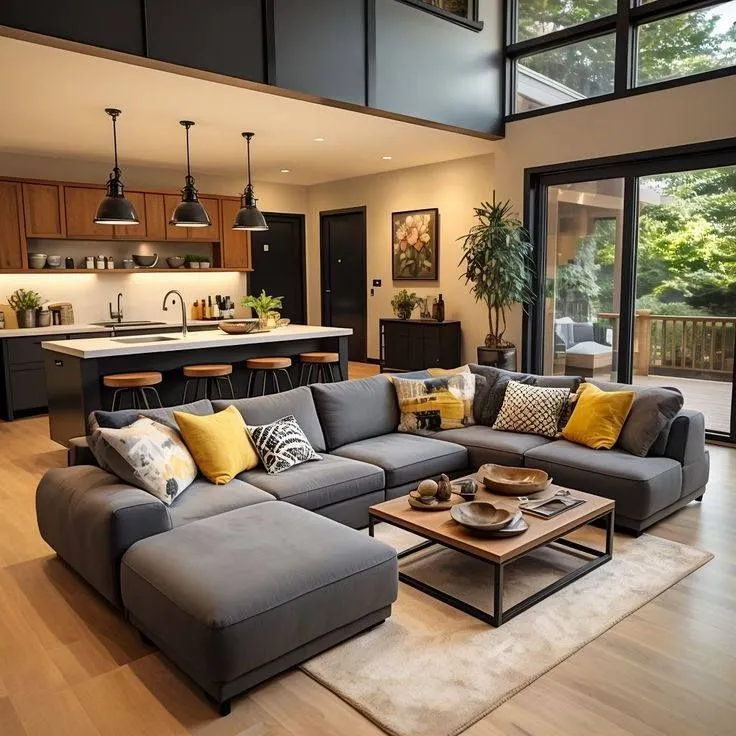
- Choose low furniture to keep the space feeling tall and open.
- Use leggy pieces instead of bulky furniture.
- Go for a round table if the room is tight. AD notes that round and pedestal tables help flow and reduce awkward movement.
- Add storage that goes up the wall instead of out into the room. IKEA strongly supports vertical and flexible storage in compact living areas.
- Use mirrors carefully to add depth. AD highlights mirrors as a way to visually open small rooms.
For larger open concept homes
- Use bigger rugs and bigger lighting fixtures so the room does not feel underfurnished.
- Add a stronger zone definition so the room does not feel like one giant hall.
- Consider built-ins or partial dividers to keep the scale comfortable.
Styling Tips for Different Room Sizes
Small open concept kitchen living room
Go light, slim, and functional. Keep the palette soft, keep furniture visually light, and use storage aggressively. AD and IKEA both support this approach.
Medium-sized open concept room
This is the easiest size to design well. You have enough room for distinct zones, but not so much space that the layout feels empty. Use clear anchors and repeat materials consistently.
Large open concept room
Big rooms need a stronger visual structure. Use rugs, lighting, built-ins, or ceiling details to stop the room from feeling like a warehouse. Houzz specifically mentions that large rooms often need architectural reinforcement to feel smaller and more livable.
Future Interior Design Trends for Open Concept Homes
The next wave of open concept design will likely lean even more toward comfort, flexibility, and sensory calm.
Expect more:
- warmer color palettes
- textured fabrics and natural surfaces
- quieter kitchens with better storage and ventilation
- flexible work and family zones
- built-ins that reduce the need for extra furniture
- more broken-plan solutions instead of fully exposed rooms
This direction fits how people actually live now. Homes need to support cooking, relaxing, working, storing, and entertaining without feeling overloaded.
Who Should Choose This Style?
An open concept kitchen living room is a strong choice for:
- homeowners who like social, connected living
- families who need visibility across zones
- apartment dwellers who want a larger visual feel
- people who love a modern, airy aesthetic
- Anyone willing to plan lighting, storage, and acoustics properly
It works best when you value:
- light
- flow
- entertaining
- easy supervision
- flexible furniture arrangement
Who Should Avoid This Style?
An open concept is not ideal for everyone. You may want a broken plan or a more divided layout if you:
- need frequent privacy
- cook strong-smelling meals often and dislike lingering odors
- want quiet, separate rooms for different activities
- do not want to think carefully about storage and visual clutter
- prefer a formal, highly separated home layout
Houzz’s coverage of open-plan dilemmas makes it clear that noise, smell, and lack of privacy are real tradeoffs, not small inconveniences.
People Also Ask
Use a rug, sofa placement, console table, island, shelving, or a lighting change to define each zone without closing the room off. Houzz and AD both support furniture-based separation as a practical open-plan tool.
Continuous flooring works best because it helps the space feel larger and more connected. Wood, LVT, and large-format tile are common choices depending on budget and lifestyle.
Add layered lighting, soft textures, rugs, curtains, and warm materials. BHG’s sensory design coverage specifically recommends sound-softening textiles and tactile finishes for open layouts.
Choose a rug large enough to hold the main seating group together. A too-small rug makes the living zone feel disconnected.
Yes. In small rooms, use low furniture, light colors, smart storage, and a simple layout. AD and IKEA both show that compact spaces can feel calm and open when furniture scale and storage are handled well.
Layered lighting works best: ambient for overall brightness, task lighting for the kitchen, and accent lighting for the living area. Houzz says lighting should be layered and separately controlled to define zones effectively.
Conclusion
A great open concept kitchen living room is not about removing walls and hoping for the best. It is about designing a room with clear zones, good flow, strong lighting, Comfortable Acoustics, and a color palette that feels calm from every angle. The strongest 2026 designs are warm, sensory, and practical, with natural textures, built-ins, and materials that look better with real everyday use.
If you are writing for TheRoomsArt.com, this topic is perfect for a pillar page because it sits at the center of home decor, living room styling, kitchen design, small-space planning, and modern interior trends. It can attract readers who want ideas, answers, and purchase-ready guidance all in one place. Bookmark this guide, adapt it to your brand voice, and link it into your wider interior design cluster so it becomes a real authority page.
Legal disclaimer: Prices, materials, trends, and product availability may change over time depending on region, suppliers, and brands. Always verify dimensions, materials, and compatibility before purchase or renovation.
