
Introduction
Families come together here, not just to eat but to share stories and mark moments that matter. Where laughter rises after dinner, light shapes how warm a room feels. Though often overlooked, the glow overhead decides whether evenings linger or fade too soon.
The right Dining Room Ceiling Lights can dramatically transform a plain dining area into a sophisticated, comfortable, and inviting environment. A thoughtfully selected fixture illuminates the dining table, improves visibility while eating, and introduces character and visual interest to the room.
However, homeowners frequently struggle with several important lighting questions, such as:
- What type of light works best above a dining table?
- How high should a pendant or chandelier hang?
- Which lighting style suits modern or small dining rooms?
- How bright should dining room lighting be?
Selecting the perfect fixture is not simply about picking something attractive. The process involves balancing design style, brightness level, scale, proportion, and placement to create the ideal atmosphere.
In this comprehensive dining room ceiling lights guide, you will learn:
- The most effective types of dining room ceiling lighting
- Proper sizing and hanging height rules
- Strategic lighting placement tips
- Modern lighting ideas and interior trends
- Affordable lighting options for every budget
- Common lighting mistakes to avoid
Whether you are designing a new dining room or upgrading an existing lighting fixture, this guide will help you create a space that feels both functional and visually impressive.
Why Dining Room Ceiling Lights Matter
What you see isn’t just about brightness. For eating areas, how light fills the space quietly sets the tone, affects ease of movement, and influences what feels balanced to the eye.
A dull glow might drain life from an otherwise lovely dining space. Yet light arranged with care lifts every detail – wood tones deepen, walls brighten, textures step forward.
Key Reasons Dining Room Lighting Is Important
1. Creates the Mood and Ambience
A soft yellow shine can shift how a space feels, almost right away. Because it hums quietly, voices tend to lower, and shoulders drop. Yet when the ceiling burns too hard, shadows vanish – walls feel distant. Cold bulbs create places where feet hurry past, heads down.
Breakfast light should feel soft, almost like morning itself spills in. When people come by later, that same glow must tighten up – cleaner, sharper. A fixture does more than shine; it bends the air in the room one way or another. Skip heavy details on walls because the bulb above already speaks. Mood lives in brightness you never planned.
2. Highlights the Dining Table
Beneath the glow above, eyes land on the table first. Light spills down just right because the placement guides the sight where it should go.
Above the table, a thoughtfully placed light sets the scene while quietly shaping how things feel. The arrangement draws your eye just enough without shouting for attention.
3. Improves Visibility During Meals
Light spills across the table, revealing plates, forks, and every detail. When brightness hits just right, sitting down to eat feels easier, somehow calmer. Shadows stay away, leaving room for relaxed conversation. Seeing what’s in front of you changes how it feels to be there.
Flickering light might leave corners too dark, making it hard on the eyes during dinner. Shadows creep in where brightness should be, shifting how food looks on plates.
4. Complements Interior Design
Lighting fixtures serve as decorative elements as well as practical tools. The style of your dining room ceiling lights should complement the interior design theme of the room.
Examples include:
- Crystal chandeliers for elegant interiors
- Matte black pendants for contemporary spaces
- Wooden fixtures for rustic environments
- Minimalist LED lights for modern homes
Choosing the right lighting style strengthens the visual identity of the dining room.
5. Adds Visual Balance
Pools of light from above keep the air around the table from swallowing the space whole. Well-placed fixtures tie the legs of chairs to corners and walls without shouting about it.
Lights that work well also look good, shaping the feel of a dining area without trying too hard. A room comes alive when each fixture serves a purpose beyond just giving light.
Types of Dining Room Ceiling Lights
There are several different types of dining room ceiling lights available today. Each option offers a unique visual style, brightness level, and design impact.
Selecting the right fixture depends on several factors, including:
- Ceiling height
- Dining table size
- Room dimensions
- Interior design theme
- Lighting preferences
Below are the most popular types of ceiling lighting for dining rooms.
Chandeliers
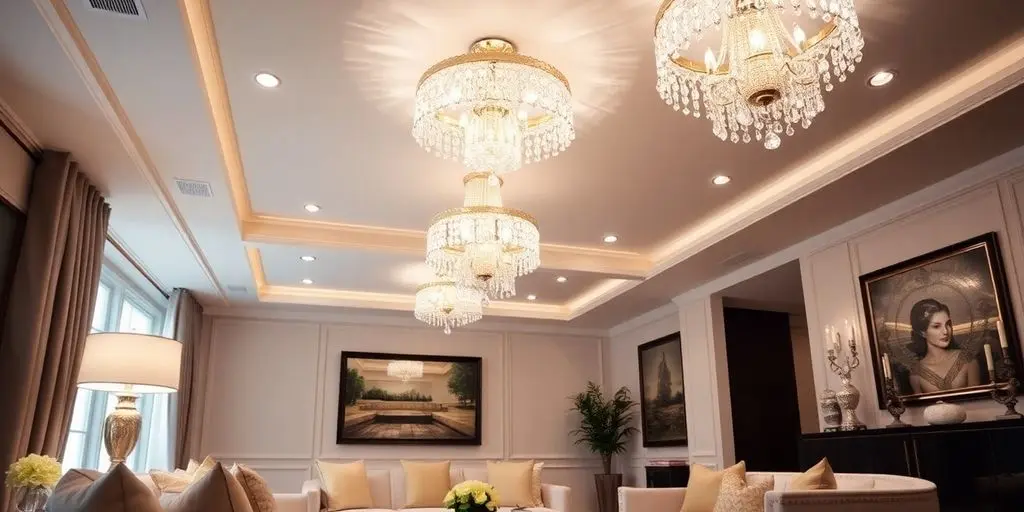
Above many dining spaces, a chandelier often takes center stage – hanging down with flair. Instead of just one bulb, it branches into several lights shaped by ornate designs.
Lights spread out widely when they come from chandeliers, spreading a glow evenly over the dinner table, even as eyes keep drifting toward their bold shape. A central fixture like that does more than brighten – it holds attention without trying too hard.
Best For
- Formal Dining Rooms
- Traditional interiors
- Luxury dining environments
- Large dining areas
Popular Chandelier Styles
Several chandelier designs are widely used in modern homes:
- Crystal chandeliers
- Geometric contemporary chandeliers
- Rustic farmhouse chandeliers
- Industrial metal chandeliers
Advantages
- Creates a strong visual centerpiece
- Provides even and widespread lighting
- Available in countless designs and finishes
Considerations
- Requires sufficient ceiling height
- Must be sized properly for the dining table
A carefully selected chandelier instantly elevates the elegance of a dining room.
Pendant Lights
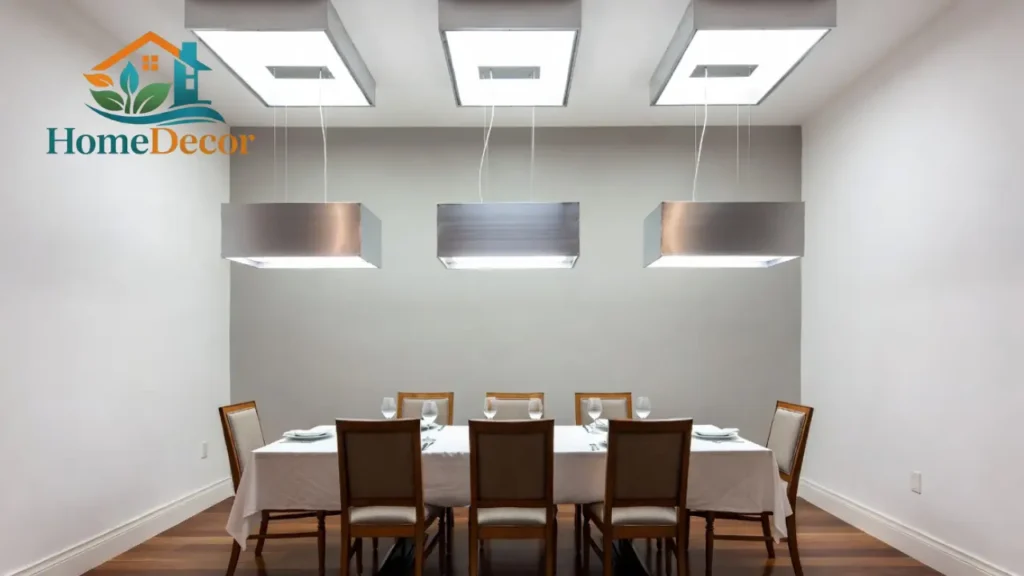
Pendant lighting has become extremely popular in contemporary dining rooms. These fixtures hang from the ceiling using cords, chains, or rods and are available in many shapes and materials.
Pendant lights offer versatility and work well in both modern and casual dining spaces.
Best For
- Modern dining rooms
- Minimalist interiors
- Small or medium dining spaces
Popular Pendant Layouts
Single Pendant
A large pendant fixture is positioned directly above the center of the table.
Three Pendant Lights
Three evenly spaced lights are installed above rectangular dining tables.
Cluster Pendants
Multiple pendants are arranged in artistic groupings to create a decorative effect.
Common Materials
Pendant lights are available in various materials, including:
- Glass
- Metal
- Wood
- Woven fibers
- Brass or gold finishes
These lighting fixtures provide flexibility in both design and functionality.
Flush Mount Ceiling Lights
Flush-mount lights attach directly to the ceiling surface and do not hang down. Because of their compact profile, they are ideal for rooms with lower ceilings.
Best For
- Small dining rooms
- Apartments or condominiums
- Rooms with limited ceiling height
Benefits
- Space-saving design
- Clean and minimal appearance
- Easy installation
Flush-mount fixtures are practical while still providing modern visual appeal.
Semi-Flush Mount Lights
Semi-flush mount fixtures hang slightly below the ceiling but not as low as pendants or chandeliers.
They combine the compact design of flush-mount lights with improved light distribution and decorative appeal.
Best For
- Medium ceiling heights
- Casual dining rooms
- Transitional interiors
These fixtures add visual interest while maintaining space efficiency.
LED Ceiling Lights
LED technology has revolutionized modern lighting. Many dining room ceiling lights now incorporate built-in LED modules for greater efficiency and performance.
Benefits of LED Lighting
- Extremely energy efficient
- Long lifespan (20,000–50,000 hours)
- Available in dimmable versions
- Compatible with smart home systems
LED lighting solutions are perfect for homeowners seeking modern and eco-friendly options.
Recessed Lighting
Recessed lights are installed inside the ceiling, creating a seamless appearance with no visible fixtures.
They provide subtle illumination and are often used alongside chandeliers or pendant lights to enhance overall brightness.
Best For
- Modern homes
- Minimalist interiors
- Layered lighting designs
Recessed lights help eliminate dark corners and improve ambient lighting throughout the room.
Comparison Table of Dining Room Ceiling Light Types
| Lighting Type | Best For | Style Impact | Ceiling Height Needed | Cost Range |
| Chandelier | Formal dining rooms | High visual impact | Medium to high | $$–$$$$ |
| Pendant Lights | Modern dining spaces | Stylish focal point | Medium | $$–$$$ |
| Flush Mount | Small rooms | Minimalist | Low | $–$$ |
| Semi-Flush | Medium ceilings | Balanced design | Medium | $$ |
| LED Fixtures | Energy efficiency | Modern | Any | $$ |
| Recessed Lighting | Layered lighting | Subtle | Any | $$ |
Design Rules: Size, Height & Placement
Selecting the proper fixture size and installation height is essential for achieving balanced lighting.
Improper sizing can make the room appear awkward or disproportionate.
Correct Hanging Height
Most interior design professionals recommend hanging dining room ceiling lights at:
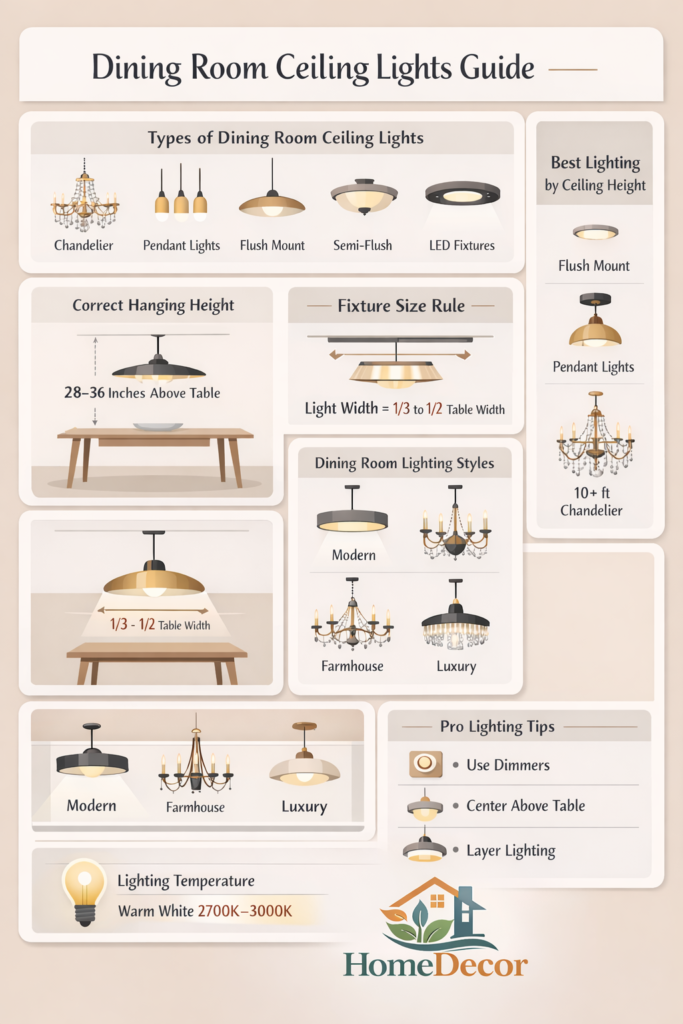
28–36 inches above the dining table
This height ensures that the light illuminates the table without obstructing sightlines between guests.
Why This Height Works
- Prevents glare in the eyes
- Keeps the light close enough to illuminate food
- Maintains comfortable eye contact during conversation
Fixture Width Formula
A simple guideline helps determine the correct width for your light fixture.
Fixture width = one-third to one-half of the table width
Example Table
| Table Width | Ideal Fixture Size |
| 36 inches | 12–18 inch fixture |
| 48 inches | 16–24 inch fixture |
| 60 inches | 20–30 inch fixture |
Following this guideline ensures the fixture remains proportional to the table.
Ceiling Height Consideration
| Ceiling Height | Recommended Fixture |
| 8 ft | Flush or semi-flush lights |
| 9–10 ft | Pendants or small chandeliers |
| 10+ ft | Large chandeliers or multi-pendant layouts |
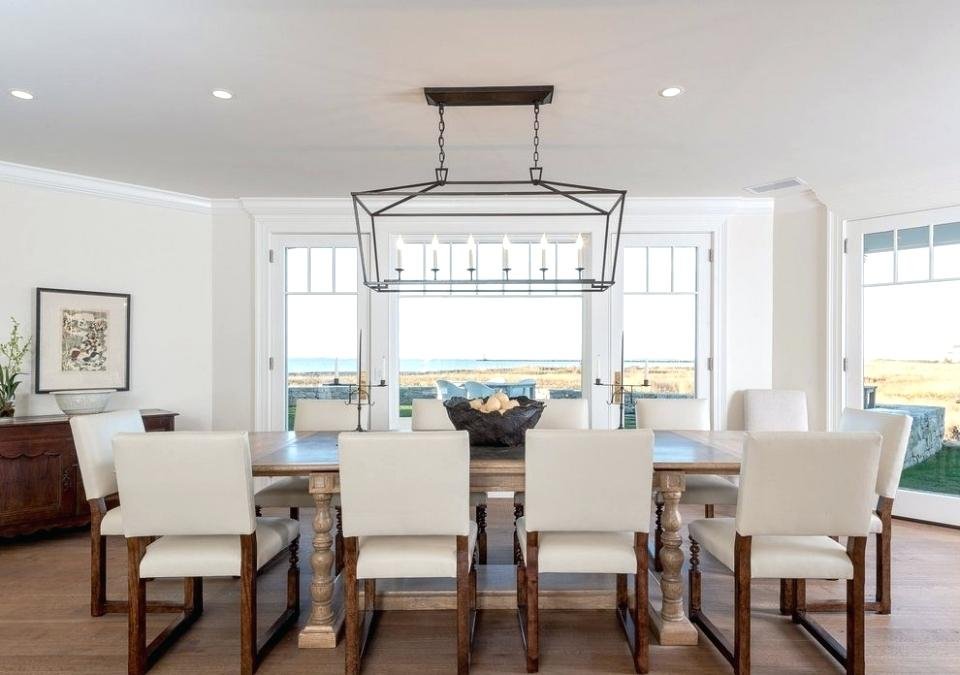
Higher ceilings allow for more dramatic and sculptural lighting fixtures.
Dining Room Lighting Ideas by Style
Lighting should complement the overall interior design of the room. Choosing the right fixture ensures harmony between furniture, décor, and architecture.
Modern Dining Room Lighting
Modern interiors emphasize clean lines, Simplicity, and geometric shapes.
Popular Modern Lighting Ideas
- Linear LED chandeliers
- Globe pendant lights
- Matte black fixtures
- Minimalist geometric lighting
These fixtures often incorporate materials such as glass, steel, brushed brass, or matte finishes.
Modern lighting creates a sleek and contemporary atmosphere.
Luxury Dining Room Lighting
Luxury dining spaces frequently feature statement lighting that becomes the centerpiece of the room.
Lighting Ideas
- Crystal chandeliers
- Multi-tier glass fixtures
- Gold or brass finishes
- Sculptural designer lighting
These lighting pieces combine artistry with functionality.
Farmhouse Dining Room Lighting
Farmhouse interiors prioritize warmth, texture, and rustic charm.
Lighting Ideas
- Wooden chandeliers
- Black iron fixtures
- Lantern-style pendants
- Rope or distressed metal designs
These fixtures create a cozy and inviting ambience.
Small Dining Room Lighting Ideas
Compact spaces require lighting that enhances brightness without overwhelming the room.
Best Options for Small Dining Rooms
- Compact pendant lights
- Flush mount fixtures
- Glass globe lights
Helpful Tips
- Use mirrors to reflect light
- Choose brighter bulbs
- Avoid oversized fixtures
These strategies help maintain a sense of openness.
Budget-Friendly Dining Room Lighting Ideas
Creating beautiful dining room lighting does not always require expensive fixtures.
Many stylish dining room ceiling lights are affordable and widely available.
Affordable Lighting Ideas
- Simple metal pendant lights
- LED panel fixtures
- Minimalist flush mounts
- DIY woven pendant shades
Shopping during seasonal sales or clearance events can help homeowners find high-quality fixtures at lower prices.
Layered Lighting for Dining Rooms
Professional interior designers rarely rely on a single light source. Instead, they use layered lighting, which combines multiple illumination types.
Ambient Lighting
Ambient lighting provides the general brightness for the room.
Examples include:
- Chandeliers
- Flush mount fixtures
- LED ceiling lights
Task Lighting
Task lighting focuses illumination directly on the dining table.
Examples include:
- Pendant lights
- Adjustable spotlights
Accent Lighting
Accent lighting highlights decorative elements such as artwork or architectural features.
Examples include:
- Wall sconces
- Picture lights
- Recessed lighting
Layered lighting allows homeowners to control the mood and brightness of the space easily.
Smart Dining Room Lighting
Smart lighting technology is becoming increasingly popular in modern homes.
Dining room ceiling lights can be controlled using voice commands, smartphones, or automation systems.
Smart Lighting Features
- Voice control through smart assistants
- Mobile app brightness control
- Adjustable color temperature
- Automated lighting schedules
Smart lighting allows homeowners to instantly switch between bright dinner lighting and relaxed evening ambience.
Pros and Cons of Dining Room Ceiling Lights
Pros
- Enhances dining room aesthetics
- Improves Visibility during meals
- Creates a striking focal point
- Supports layered lighting strategies
- Available in endless styles and finishes
Cons
- Incorrect sizing can disrupt design balance
- Some fixtures require professional installation
- Poor placement may produce shadows
Common Dining Room Lighting Mistakes to Avoid
Even beautiful fixtures can appear awkward if installed incorrectly.
1. Choosing a Fixture That Is Too Small
Small fixtures often look disproportionate above large dining tables. Always follow the fixture width guideline.
2. Hanging Lights Too High
Lights installed too high lose both brightness and design impact. Stick to the 28–36 inch rule above the table.
3. Ignoring Dimmer Switches
Dimmer switches allow homeowners to adjust brightness for different occasions.
Without dimmers, lighting may feel too harsh.
4. Using Overly Bright Bulbs
Extremely bright bulbs can make the dining room uncomfortable. Warm lighting generally works best.
Maintenance & Care Tips
Lighting fixtures require regular maintenance to maintain both appearance and brightness.
Cleaning Tips
- Dust fixtures weekly
- Clean glass shades monthly
- Replace dim or burnt-out bulbs promptly
Recommended Bulb Temperature
Experts recommend Warm White Lighting between 2700K and 3000K for dining rooms.
This temperature creates a comfortable and inviting atmosphere.
Pro Tips for Perfect Dining Room Lighting
Follow these professional design tips to achieve the best results.
Always center lights above the dining table
Use dimmer switches for adjustable ambience
Match fixture finishes with furniture hardware
Choose warm lighting tones
Combine multiple lighting layers
Small details can dramatically improve your dining room design.
FAQs About Dining Room Ceiling Lights
Dining rooms typically require 300–500 lumens per square meter for comfortable lighting.
Yes. Dimmers allow you to adjust brightness for meals, gatherings, or relaxed evenings.
Yes. Three pendants evenly spaced above a rectangular table create balanced lighting.
Warm white lighting between 2700K and 3000K is ideal for dining spaces.
Yes. LED lights are energy-efficient, long-lasting, and available in many styles.
Conclusion
The right dining room ceiling lights can completely transform the atmosphere and functionality of your dining space.
From elegant chandeliers to sleek modern pendants, the ideal lighting fixture balances style, Brightness, proportion, and placement.
By following the design rules outlined in this guide, you can:
- Choose the correct fixture size
- Install lights at the proper height
- Create layered lighting for flexibility
- Avoid common lighting mistakes
Whether you are decorating a small apartment dining area or designing a luxurious dining room, selecting the right lighting will enhance both the visual appeal and overall dining experience.
