

Introduction of Laundry Room Wall Cabinets
Laundry Room Wall Cabinets are one of the most practical upgrades you can add to a home. They take advantage of vertical space, reduce clutter, keep everyday supplies neatly stored, and give the room a cleaner, more finished appearance. Now it counts extra, since laundry areas aren’t just tucked-away service zones anymore. People expect order, ease, good looks, and practicality when using the space daily. With fresh ideas shaping how these rooms take form, hidden cabinets pop up often, along with tailored shelves and plans that make tight spots work harder. What fills the walls fits better, simply because wasted gaps fade out of favor.
Start by thinking about what kind of look fits your home when setting up cabinets on laundry walls. Picking the right fit means considering height, depth, and how much stuff needs storing. Instead of guessing, measure twice – mistakes often come from rushing early steps. Some layouts work better if shelves go high, others leave room for baskets below. Hardwood Lasts Long, but laminate can be easier to clean after spills. A spot near the washer might need vented sections, while upper zones hold less-used items. Small spaces shine when every inch pulls double duty without feeling cluttered. Even big rooms get messy without clear spots for sorting or folding. Installation goes smoother if the anchors match the wall type behind the surface. Style matters, sure – but daily comfort wins over trends each time.
What Are Laundry Room Wall Cabinets?
Laundry room wall cabinets are upper cabinets mounted on the wall to hold laundry products and household supplies. They are usually installed above the washer and dryer, over a counter, or beside a utility sink. Their purpose is to keep detergent, stain remover, cloths, towels, and other essentials close at hand while leaving the floor area open and easy to move through. That open floor space is important because it helps the room feel less cramped and makes cleaning easier.
In plain terms, wall cabinets transform unused wall space into functional storage. In a larger room, it can create a more built-in, polished look. Either way, the benefit is the same: more storage, less mess, and a smoother daily workflow.
Why they matter
Laundry room wall cabinets can help you:
- Store detergents and cleaning products higher up and out of the way
- clear counter space for folding and sorting
- hide visual clutter behind closed doors
- make a small laundry room feel more open
- create a cleaner, more finished appearance that adds design value
Why Laundry Room Wall Cabinets Are a Smart Investment
A laundry room is a high-use space. It gets opened, closed, loaded, unloaded, sorted, folded, and cleaned constantly. It needs storage that supports real routines, not just attractive photos. Good cabinets make the room faster to use, easier to maintain, and less stressful to manage. That is why so many laundry room designs now focus on built-in storage, pull-outs, hidden compartments, and a smoother overall flow.
Laundry rooms are also being designed to connect more naturally with nearby spaces. In open-concept homes, designers often try to make the laundry room feel coordinated with the kitchen, mudroom, or hallway so it blends into the home instead of standing out as a purely utilitarian zone. The trend is clear: people want laundry areas that feel integrated, organized, and visually calm.
Main benefits at a glance
| Benefit | Why it matters | Best for |
| Vertical storage | Uses wall space that often goes unused | Small laundry rooms |
| Cleaner appearance | Hides bottles, baskets, and cleaners | Open-plan homes |
| Better workflow | Keep supplies near the washer and dryer | Busy family homes |
| Safer storage | Helps keep chemicals out of easy reach | Homes with children |
| Higher design value | Makes the laundry room feel finished | Renovations and resale |
These benefits are practical, but they also affect how the room feels. A well-organized laundry room simply functions better every day.
Best Laundry Room Wall Cabinet Styles
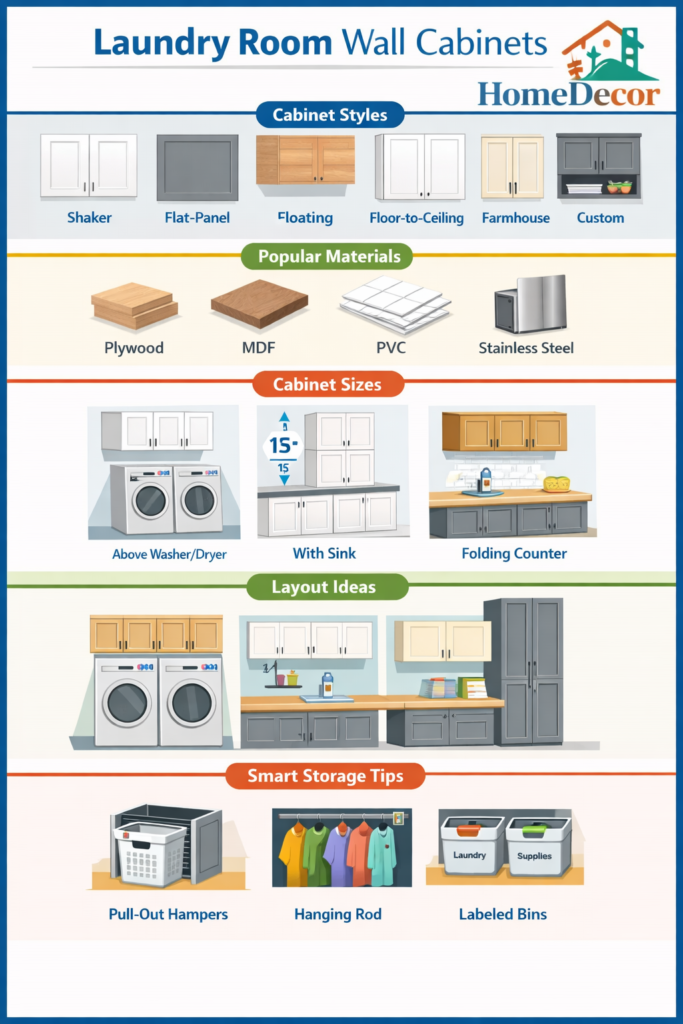
There is no single best style for every laundry room. The right choice depends on your space, budget, and design taste. Below are the most common laundry room wall cabinet styles and the types of rooms they suit best.
1. Shaker wall cabinets
Built to last, Shaker cabinets fit naturally into nearly every kind of house. Time passes, yet their clean door frames never seem out of place. Modern spaces embrace them just as much as old-style kitchens do. Because they adapt so easily, decorating around them rarely becomes a struggle. Styling stays simple when the structure itself holds steady through changing trends.
2. Flat-panel wall cabinets
Built to last, Shaker cabinets fit naturally into nearly every kind of house. Time passes, yet their clean door frames never seem out of place. Modern spaces embrace them just as much as old-style kitchens do. Because they adapt so easily, decorating around them rarely becomes a struggle. Styling stays simple when the structure itself holds steady through changing trends.
3. Floating wall cabinets
Up above the floor, floating cabinets create extra breathing room by showing more wall beneath. Since they hover rather than touch down, eyes move freely instead of getting stopped at bulky bases. In tight laundry spaces, that openness matters – it keeps walls from closing in. Air flows more easily when there’s space underfoot, making everything seem stretched out just a bit.
4. Floor-to-ceiling cabinet systems
Start high, go all the way down – floor-to-ceiling setups handle big storage needs without fuss. Wall-mounted boxes link up with vertical lockers and tucked-away trays in these designs. Large laundry areas benefit, so do busy households and shared back-of-house zones. Because they slot into walls, these units give rooms a clean, built-in look.
5. Farmhouse-style wall cabinets
Farmhouse cabinets often feature warm painted finishes, shaker fronts, beadboard accents, or natural wood tones. They pair nicely with apron sinks, neutral walls, and simple hardware. This style feels warm, welcoming, and practical at the same time.
6. Custom wall cabinets
Custom cabinets are ideal when the room has unusual dimensions, awkward plumbing, vents, tight corners, or very specific storage needs. If you want the laundry room to fit your actual routine, a custom design gives you the most control. It is also the best option if you want pull-outs, hanging rods, hidden bins, or appliance fronts that blend into the cabinetry.
Laundry Room Wall Cabinets Comparison Table
| Cabinet Type | Best For | Advantages | Limitations |
| Shaker | Most homes | Timeless, flexible, easy to style | Can look plain without hardware |
| Flat-panel | Modern interiors | Sleek, simple, easy to clean | Less decorative detail |
| Floating | Small spaces | Open feel, less visual bulk | Less storage than full systems |
| Floor-to-ceiling | Large or family laundry rooms | Maximum storage, built-in look | Can feel heavy in tiny rooms |
| Farmhouse | Cozy and classic homes | Warm, inviting, stylish | Less minimal than modern styles |
| Custom | Unique layouts | Best fit and best use of space | Higher cost |
How to Choose the Right Size for Laundry Room Wall Cabinets
Cabinet size matters more than many homeowners realize. If the cabinets are too deep, the room can feel tight and hard to move through. If they are too high, they become difficult to access. Careful planning makes the laundry room easier to use every day.
In most layouts, wall cabinets are commonly around 12 inches deep, while base cabinets are often about 24 inches deep. Wall cabinets frequently come in widths that increase in small increments, and their height can vary depending on the room and ceiling height. A common planning rule is to leave about 18 inches of space above a countertop.
Practical sizing guide
| Element | Common measurement | Why it matters |
| Wall cabinet depth | 12–15 inches | Keeps items reachable without bulk |
| Base cabinet depth | About 24 inches | Matches counters and work surfaces |
| Counter height | About 36 inches | Comfortable folding height |
| Clearance above the counter | About 18 inches | Helps reach and keep the room open |
| Clearance above the machines | About 18 inches or as required | Supports access and ventilation |
These measurements are planning guidelines, not hard rules. Always account for your appliances, ceiling height, and the cabinet manufacturer’s instructions before finalizing the layout. The safest approach is to measure carefully and design for the real room, not just a generic standard.
Reach and usability tips.
Keep daily items easy to access
Store detergent, softener, stain remover, and dryer sheets where you can reach them comfortably without stretching too much. In most rooms, the most-used items are between eye level and shoulder level.
Keep heavier items lower.
If you store bulk supplies, extra towels, or large baskets, place them lower so they are safer and easier to lift.
Protect appliance access
Do not let the cabinet layout interfere with washer lids, dryer doors, outlets, cords, vents, or hoses. Good planning prevents costly problems later.
Best Materials for Laundry Room Wall Cabinets
Laundry rooms are active, humid spaces. They deal with steam, detergent spills, appliance heat, and regular movement. That means the cabinet material matters a great deal. Materials that perform well in dry rooms may not hold up as well in a laundry environment. A good laundry cabinet should resist moisture, stay stable, and be easy to clean.
Material comparison table
| Material | Strengths | Weaknesses | Best use |
| Plywood | Strong, durable, widely used | Needs sealing | Mid-range to premium laundry rooms |
| Moisture-resistant MDF | Smooth finish, good for painted doors | Less durable if edges are exposed | Painted cabinets on a budget |
| Solid wood | Attractive and classic | Can move with humidity | High-end custom cabinetry |
| Laminate/melamine | Easy to clean, moisture-friendly | Edge quality matters | Budget-friendly modern rooms |
| PVC / thermofoil | Moisture-resistant, easy to maintain | Can feel less premium | Busy family laundry rooms |
| Stainless steel | Very durable, modern | More industrial look | Utility-heavy or modern spaces |
Moisture-resistant MDF and sealed plywood both work well in laundry rooms when properly finished. Moisture-resistant MDF is better than standard MDF in humid conditions, but it is still not fully waterproof. That is why sealed edges and protective coatings are so important. In higher-humidity spaces, stainless steel and PVC can be strong alternatives when moisture resistance is a top priority.
Best choice by budget
Budget-friendly: moisture-resistant MDF with sealed edges
Balanced value: plywood with a quality painted finish
Premium: marine-grade plywood, sealed solid wood, or custom laminated construction
Ultra-durable: stainless steel or PVC systems for humid spaces
Simple material advice
If your laundry room is small, warm, or often damp, do not choose cheap cabinets just because they look attractive on day one. Focus on finish quality, sealed edges, and hardware that can handle regular use. That is what helps the cabinets last.
Smart Laundry Room Storage Solutions That Actually Help
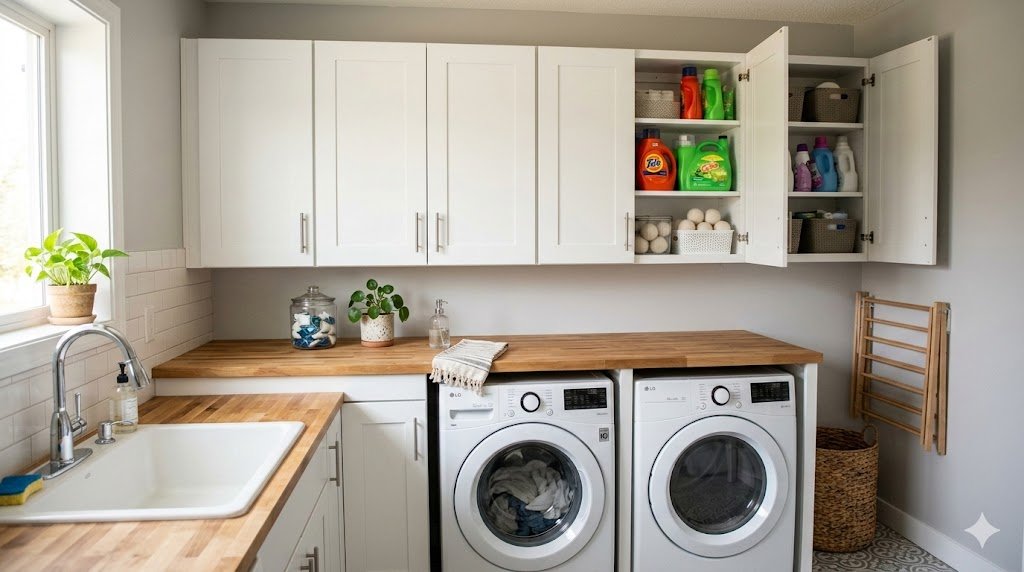
The biggest problem in many laundry rooms is not style. It is poorly organized. Good laundry room storage solutions should make the room easier to use, not simply hide clutter. The best cabinets support your actual laundry routine.
Storage ideas that work
1. Group supplies by task
Keep Detergent, softener, and stain remover together. Put ironing supplies in one place. Store clothes, sponges, and cleaning items in another zone. This makes the room much easier to use.
2. Add adjustable shelves
Adjustable shelves are useful because bottle sizes and storage needs change over time. They give you flexibility without requiring a remodel.
3. Use labeled bins
Small bins are great for dryer sheets, clothespins, mesh bags, and loose items. Labels help the room stay organized.
4. Add a hanging rod
A short rod under the Wall Cabinets can be useful for air-drying delicate clothes or hanging shirts after ironing. It is a simple upgrade with real value.
5. Include pull-out hampers
Pull-out hampers help sort clothes before laundry day and keep dirty clothes off the floor. They are a practical addition to many laundry room layouts.
6. Use hidden storage
Closed cabinets reduce visual clutter and make the room feel calmer. That matters especially in open-plan homes where the laundry area is visible from a hallway, kitchen, or mudroom.
Laundry Room Wall Cabinets Ideas for Different Spaces
Every laundry room has different needs. A layout that works beautifully in one space may feel awkward in another. The best design always fits the room size and the way the household uses it.
Small laundry rooms
In a small laundry room, the goal is to preserve openness. Use narrow cabinet runs, light colors, and shallow wall cabinets so the room does not feel crowded. Compact laundry rooms work best when storage is vertical and visually light.
Best ideas for small spaces
- Use 12-inch-deep upper cabinets
- Choose white, cream, soft gray, or pale wood finishes
- Use one long cabinet run instead of several small boxes
- keep the floor visible whenever possible
- Add vertical storage rather than wide, heavy-looking units
Large laundry rooms
A larger laundry room gives you more flexibility. You can combine wall cabinets, base cabinets, countertops, hanging areas, and even a folding island. This type of room can function more like a work station than a small utility corner.
Good ideas for large rooms
- build cabinets around a sink or a folding counter
- Add a tall utility cabinet for bulk items
- Create separate zones for washing, folding, and storage
- Use two-tone cabinetry for visual depth
- Add stronger lighting over work areas
Budget laundry rooms
A budget-friendly laundry room can still look polished. You do not need luxury materials throughout the room. Standard cabinet sizes, simple finishes, and smart layout planning can produce a strong result without a large spend. Durability is usually the best place to invest.
Budget ideas
- ready-to-assemble wall cabinets
- moisture-resistant MDF with sealed edges
- standard cabinet widths instead of custom sizing
- simple hardware and hidden hinges
- One open shelf combined with closed storage
Premium laundry rooms
Premium laundry rooms focus on built-in detail and a calm, elevated appearance. Custom cabinets, hidden storage, and durable materials make the biggest difference in these spaces. When designed well, a laundry room can feel more like part of the home than a separate utility area.
Luxury ideas
- custom wall cabinets matched to the home’s style
- hidden laundry zones behind panel fronts
- integrated lighting inside cabinets
- quartz or stone countertops
- tall storage towers
- pull-out bins and accessory drawers
- decorative molding for a furniture-like finish
Step-by-Step: How to Plan Laundry Room Wall Cabinets
A strong laundry cabinet plan starts with measurements, not shopping. Good installation and planning depend on the room’s real dimensions, the appliance sizes, and the space required for safe movement and access.
Measure the room carefully.
Measure wall width, ceiling height, appliance width, appliance height, and the distance from doors, windows, vents, and outlets.
Decide what the cabinets must store
Write down everything you want to keep inside the cabinets. That may include detergent, towels, baskets, dryer sheets, cleaning chemicals, and even household items if the room doubles as a utility space.
Choose cabinet depth
For most laundry rooms, upper cabinets around 12 inches deep are a reliable starting point. If the room is narrow, go shallower. If you need more storage, add a taller cabinet instead of making the wall units too deep.
Plan the clearance
Make sure doors open fully, and appliances still work comfortably. Many Cabinet Guides place wall cabinets about 18 inches above counters, but the final height depends on ceiling height, reach, and the appliance layout.
Pick a moisture-safe material.
Choose sealed plywood, moisture-resistant MDF, laminate, melamine, PVC, or another suitable material. Laundry rooms can be humid, so the edge finish matters just as much as the board itself.
Choose the layout
Decide whether you want:
- wall cabinets only
- wall cabinets plus base cabinets
- a tall pantry-Style Cabinet
- open shelves paired with closed storage
- a full laundry wall system
Install with safety in mind
Cabinets should be anchored properly into studs or installed according to the product instructions. Correct leveling and secure fastening are essential for safety and long-term performance.
Common Layout Options for Laundry Room Wall Cabinets
Above the washer and dryer
This is one of the most practical layouts. It keeps detergent close to the machines and leaves the rest of the room freer for movement. It is a simple, efficient arrangement that works in many homes.
Wall cabinets with sink base
If your laundry room includes a utility sink, wall cabinets above it help make the area more complete and useful. This layout works well for stain treatment, handwashing, and cleanup tasks.
Wall cabinets plus a folding counter
This is one of the strongest workflow layouts. You can wash, dry, fold, and store clothes in one zone without carrying them all over the house. A folding station adds major convenience.
Tall cabinet plus upper cabinets
This option is especially helpful for families and multipurpose rooms. A tall cabinet handles bulk storage, while upper cabinets keep daily-use items close at hand.
Hidden appliance wall
This is the most design-focused layout. The washer and dryer are concealed behind cabinet-style fronts or panel-ready faces, creating a cleaner and more seamless look. It is a strong fit for homeowners who want a polished, integrated result.
Color, Lighting, and Hardware Ideas
Best colors for laundry room wall cabinets
Light colors help small laundry rooms feel bigger and brighter. Dark colors create a mood and can feel luxurious in a room with enough light. Today, many homeowners are moving beyond plain white and exploring warmer and richer finishes.
Popular choices include:
- white
- warm cream
- soft gray
- light oak
- navy
- matte black
- natural wood tones
Two-tone cabinetry also works well because it creates depth without making the room feel heavy.
Lighting ideas
Good lighting makes the room feel cleaner and makes the cabinets more usable. Use bright overhead lighting, under-cabinet lighting over counters, and warm white bulbs if you prefer a softer home feel. Lighting has become a bigger part of modern laundry-room planning because it improves both function and atmosphere.
Budget-Friendly Laundry Room Wall Cabinet Ideas
A laundry room does not need to be expensive to look polished. Many successful designs rely on thoughtful planning rather than luxury finishes. The key is to spend where durability matters most.
Affordable ideas
- Choose standard cabinet sizes
- mix closed storage with one open shelf
- Use painted MDF with sealed edges
- Keep the layout simple
- Add storage bins instead of custom inserts
- Reuse existing plumbing and appliance positions where possible
A simple room can still look stylish if the proportions are right and the finish is clean. In many cases, that creates a better result than filling the room with too many decorative details.
Premium Laundry Room Wall Cabinet Ideas
If you want a more upscale result, focus on built-in detail, coordinated finishes, and hidden functionality. This is where laundry room wall cabinets can really transform the feel of the home.
Premium upgrades
- Custom Cabinets matched to the room
- hidden laundry zones behind panel fronts
- integrated lighting inside cabinets
- quartz or stone countertops
- tall storage towers
- specialized pull-outs for hampers and supplies
- decorative molding for a furniture-like finish
When cabinets feel built into the architecture, the room appears calmer and more intentional. That is a major reason premium laundry spaces are becoming increasingly popular.
Pros and Cons of Laundry Room Wall Cabinets
Pros
- Make the Room Look organized
- Save floor space
- improve storage efficiency
- keep supplies accessible
- work in small and large rooms
- can increase design value
Cons
- Poor installation can make them unsafe
- Deep cabinets can feel bulky in small spaces
- Cheap materials may warp in humid rooms
- High-mounted storage can be difficult to reach
- Bad planning can block appliance access
The advantages are strong, but the drawbacks matter too. That is why measurements, moisture resistance, and secure installation should always come first.
Common Mistakes to Avoid
1. Making cabinets too deep
Deep cabinets store more, but they can make a small room feel tighter and harder to use. Standard wall cabinet depth is popular because it offers a balanced solution.
2. Ignoring humidity
Laundry rooms need moisture-resistant materials and good sealing. Skipping this step can lead to swelling, warping, and finish damage.
3. Forgetting appliance clearance
Never design only around the cabinets. You also need to account for lids, doors, hoses, vents, and service access.
4. Overcrowding the wall
Too many cabinets can make a narrow laundry room feel heavy and closed in. Leave some visual breathing room, especially in compact rooms.
5. Using the wrong hardware
Cheap hinges and slides wear out quickly in a high-use space. Better hardware lasts longer and feels smoother.
6. Failing to plan the workflow
A strong laundry room follows a simple order: sort, wash, dry, fold, store. Cabinets should support that flow, not interrupt it.
Maintenance and Care Tips
Laundry room cabinets last longer when they are treated as active storage rather than decorative furniture. Moisture control matters too, because damp conditions can affect finishes over time.
Easy care routine
- Wipe Surfaces regularly with a soft cloth
- clean detergent spills quickly
- Avoid standing water near cabinet bases
- Check hinges and handles every few months
- Re-seal vulnerable edges when needed
- Keep the room ventilated to reduce humidity buildup
A dry, clean room is much easier on cabinets than a damp one. That simple habit can extend the life of the whole setup.
Smart, Modern, and Future-Ready Laundry Room Ideas
Laundry rooms are becoming smarter and more connected to the rest of the home. Modern appliance trends show continued innovation, while design trends point toward Hidden Storage, cohesive finishes, and multifunctional spaces.
Future-ready ideas
- built-in charging shelf for a small smart display or phone
- sensor lighting inside cabinets
- hidden outlets inside a cabinet niche
- stackable units with storage above
- pull-out drying rack systems
- recycling and sorting drawers
- closed cabinetry that matches the home’s main interior style
This section gives the article a more current, forward-looking angle and helps the overall piece feel more complete.
Quick Pro Tips
- Keep daily-use items at eye level
- Store heavy items lower or in base cabinets
- Use closed cabinets to reduce visual clutter
- Choose moisture-safe finishes every time
- Add at least one flexible shelf instead of making everything fixed
- Leave room for service access behind and around appliances
These simple habits can make the room much easier to live with.
FAQ: Laundry Room Wall Cabinets
Most laundry room wall cabinets work well at about 12 to 15 inches deep. That gives useful storage without making the room feel crowded. Standard wall cabinet depth is commonly around 12 inches.
A common planning rule is to leave about 18 inches above countertops or work surfaces, but the final height depends on ceiling height, reach, and appliance clearance. Installation should always follow the cabinet manufacturer’s instructions.
Moisture-resistant plywood, sealed MDF, laminate, melamine, PVC, and stainless steel are all strong options. The best choice depends on your budget, humidity level, and the style you want.
Yes. Floating cabinets work especially well in small laundry rooms because they create a lighter visual feel while still adding storage.
Yes, many kitchen-style cabinets can be used in a laundry room if they are properly sealed and suited to moisture. The key is choosing materials and finishes that handle humidity.
Conclusion
Every time clutter vanishes behind closed doors, the space breathes easier. A cabinet built to fit just right changes how the eye moves across walls. Smooth fronts or open shelves – each Choice Shapes what happens inside the room. Size matters only when it matches real habits. Materials take daily wear differently; some handle damp air better than others. Function grows quiet when everything has its spot. Hidden bottles, stacked towels, Extra Baskets – they fade into order. Less searching means fewer small frustrations piling up like undone socks. Design works best when noticed least.
A space that fits just right often begins with knowing exactly what will go where. When size matters – be it for tight corners or shared spaces – getting the dimensions correct makes all the difference. Pick surfaces that handle damp without failing. Allow breathing room around machines, so they last longer. Think about how things flow when chores pile up. Build it as you live, not like a showroom model suggests. Done well, it stays useful long after trends fade.
