
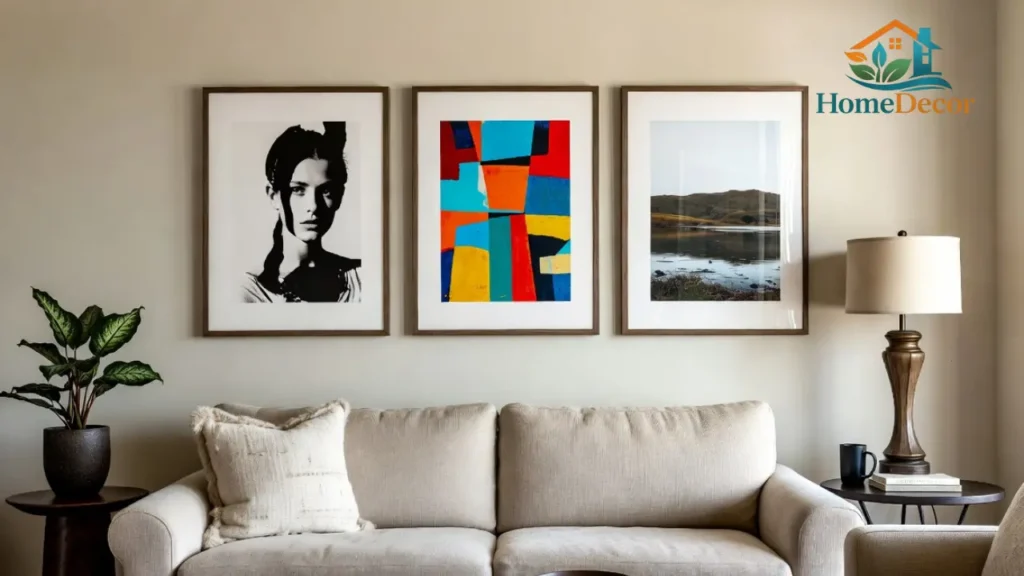
Introduction of Living Room Wall Art
The living room is, like, the heart of a home. It’s where families chill after a day. It’s where guests hang out, talk, etc. This space is super important, so it should be cozy, inviting, and nice-looking. A living room with fancy furniture, nice floors, and nice lighting can still not be nice if it doesn’t have any decorations on its walls. A room with bare walls looks like it’s not quite done. It looks like something’s missing; it looks like it doesn’t have its personality. The living room needs walls that will make it look complete. It needs walls that will add to its charm. This is whereLiving Room Wall Art becomes a crucial design element.
Artwork can completely transform a room’s appearance and atmosphere. A carefully chosen piece of wall art can turn a blank surface into a striking focal point, introduce color and texture into the interior, and reflect the homeowner’s personality and taste.
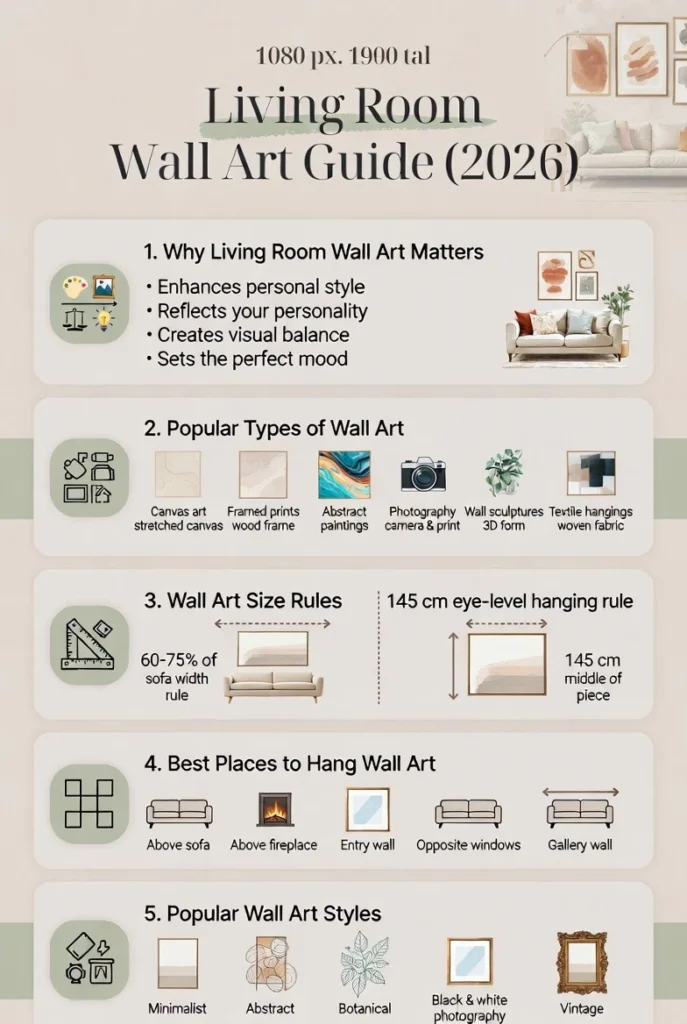
Complete Living Room Wall Art Guide: Tips, Trends & Placement Advice (2026)
- A large abstract canvas placed above the sofa can create a bold modern statement.
- A gallery wall filled with family photographs can make the room feel warm and sentimental.
- A minimalist black-and-white print can create a calm, sophisticated mood in the space.
However, many homeowners struggle when selecting artwork for their living room. They often feel unsure about which styles, sizes, or placements will look best in their space.
Some of the most common questions people ask include:
- What size wall art should go above a sofa?
- Should wall art match furniture?
- Is a gallery wall better than one large artwork?
- How high should living room wall art be hung?
This complete living room wall art guide will answer these questions and provide professional interior design tips to help you decorate your walls confidently.
In this guide, you will discover:
How to select the perfect living room wall art
Professional sizing rules used by interior designers
The best wall art placement strategies
Popular decor styles and artistic themes
The newest wall art trends for 2026
Budget-friendly and luxury artwork options
By the end of this guide, you will know exactly how to turn an empty wall into a beautiful design statement that enhances your entire living room.
Why Living Room Wall Art Matters in Interior Design
Many people believe that wall art is simply decoration. In reality, artwork is one of the most powerful tools used in interior design.
Interior designers frequently use artwork to balance spaces, create visual harmony, and add personality to a room. Without art, even expensive furniture and luxurious decor can make a living room feel empty or uninspiring.
A thoughtfully decorated wall can make a living room feel:
- warm and welcoming
- stylish and modern
- personal and expressive
- visually complete
Artwork adds a layer of emotional depth and aesthetic richness to a room that furniture alone cannot achieve.
Key Benefits of Living Room Wall Art
Creates a Focal Point
Every well-designed living room should have a Visual Centerpiece that draws attention. Interior designers often refer to this as a focal point.
Large artwork placed strategically in the room naturally captures attention and organizes the layout of the space.
For example:
- an oversized canvas above the sofa
- statement artwork above a fireplace
- a large framed photograph on the main wall
These pieces guide the viewer’s eye and help establish a sense of structure within the room.
Without a focal point, a living room may appear scattered or visually unbalanced.
Expresses Personality and Lifestyle
Your home should represent your personal taste and lifestyle. Wall art allows homeowners to express their identity through visual storytelling.
Different types of artwork can reveal:
- cultural influences
- travel experiences
- artistic preferences
- family memories
For instance:
- travel photography from your favorite destinations
- abstract paintings for contemporary personalities
- vintage posters for nostalgic interiors
- family portrait galleries for sentimental spaces
This personal connection makes the living room feel more meaningful and unique.
Adds Color and Visual Harmony
A successful interior design scheme often requires color coordination between different elements in a room.
Wall art helps connect colors used in:
- sofas and armchairs
- rugs and carpets
- throw pillows
- curtains and drapes
- decorative accessories
For example, a painting with blue, beige, and gold tones could visually connect:
- blue cushions
- a neutral beige sofa
- warm metallic decor accents
This creates a balanced and harmonious interior.
Influences Mood and Atmosphere
Artwork also plays an important psychological role in interior spaces. Colors and imagery can influence how people feel inside a room.
Different artistic themes evoke different emotions.
| Color | Mood Effect |
| Blue | Calm and relaxing |
| Yellow | Energetic and cheerful |
| Green | Fresh and natural |
| Black & White | Elegant and timeless |
By choosing artwork intentionally, homeowners can create a living room atmosphere that feels peaceful, vibrant, Inspiring, or sophisticated.
Types of Living Room Wall Art
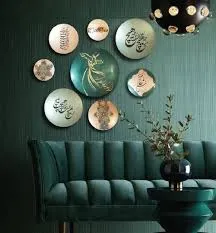
There are many forms of wall art available today. Each type brings a unique texture, style, and visual effect to a living room.
Understanding these categories can help you select artwork that fits your interior design vision.
Canvas Wall Art
Canvas artwork is one of the most popular choices for contemporary homes.
Key features include:
- lightweight structure
- frameless modern appearance
- availability in large sizes
- relatively affordable price
Canvas art works particularly well in:
- modern apartments
- minimalist interiors
- contemporary living rooms
For example, a large abstract canvas placed above a neutral sofa can create a bold visual centerpiece.
Framed Prints
Framed prints offer a polished and traditional aesthetic. They consist of artwork printed on paper and placed inside decorative frames.
They are commonly used for:
- photography prints
- vintage posters
- typography artwork
- classic illustrations
Frames can be selected to match furniture finishes, such as:
- wooden frames for warm interiors
- black metal frames for modern spaces
- gold frames for luxurious decor
This helps maintain visual consistency throughout the room.
Abstract Paintings
Abstract wall art emphasizes color, shape, and creative expression rather than realistic imagery.
These paintings often feature:
- bold brush strokes
- layered textures
- geometric patterns
- expressive color combinations
Abstract art is particularly popular in:
- modern living rooms
- luxury interiors
- minimalist design environments
Large abstract paintings frequently become the main attraction in a living room.
Photography Wall Art
Photography artwork adds storytelling and emotional depth to interior spaces.
Popular photography themes include:
- nature landscapes
- mountain scenery
- ocean views
- city architecture
- travel destinations
Black-and-white photography is especially timeless because it adds elegance without overwhelming the color palette of the room.
Wall Sculptures
Unlike traditional flat artwork, wall sculptures introduce three-dimensional depth.
Examples include:
- metal wall sculptures
- carved wooden panels
- ceramic wall installations
- geometric metal structures
These pieces add texture and visual interest to a room.
They are particularly effective in:
- contemporary interiors
- luxury living rooms
- industrial-style homes
Textile Wall Hangings
Textile wall decor introduces softness and warmth.
Examples include:
- macramé wall hangings
- woven tapestries
- fabric art panels
These materials create a cozy and relaxed atmosphere.
Textile wall art works best in:
- bohemian interiors
- Scandinavian homes
- cozy modern spaces
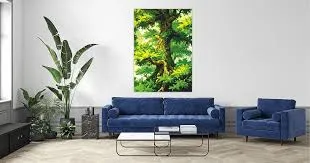
How to Choose the Right Wall Art for Your Living Room
Selecting wall art should not be random. Professional designers follow several fundamental principles when choosing artwork.
Match Your Interior Design Style
The style of your wall art should complement the overall design theme of your living room.
| Interior Style | Ideal Wall Art |
| Modern | Abstract or minimalist art |
| Scandinavian | Neutral nature prints |
| Bohemian | Textile wall hangings |
| Traditional | Classic framed paintings |
| Industrial | Black & white photography |
Matching artwork with your design theme helps maintain visual coherence.
Consider the Existing Color Palette
Before choosing artwork, analyze the colors already present in the room.
Look at:
- sofa upholstery
- rugs and carpets
- pillows and throws
- wall paint
- curtains
A common interior design rule suggests choosing artwork that includes at least one color already present in the room.
This ensures visual continuity.
Think About the Desired Mood
Different art styles influence how a space feels.
Examples include:
- calming landscapes for peaceful rooms
- vibrant abstract art for energetic spaces
- neutral minimalist prints for serene interiors
Your living room should reflect the emotional environment you want to create.
Living Room Wall Art Size Guide (Interior Designer Rules)
One of the biggest decorating mistakes homeowners make is choosing artwork that is too small for the wall.
Interior designers use specific sizing rules to maintain proportion.
The 60–75% Sofa Rule
Artwork placed above a sofa should measure 60–75% of the sofa’s width.
Example:
| Sofa Width | Ideal Artwork Width |
| 180 cm sofa | 108 – 135 cm art |
| 220 cm sofa | 132 – 165 cm art |
Following this rule ensures the artwork looks balanced.
Ideal Hanging Height
Most museums and galleries follow a universal hanging guideline:
The center of the artwork should be approximately 145 cm from the floor.
This height aligns with the natural eye level of most viewers.
Strategies for Large Walls
Large walls require a strong visual impact.
Effective options include:
- oversized canvas artwork
- Large Gallery Walls
- triptych (three-panel artwork)
These arrangements prevent the wall from looking empty.
Strategies for Small Walls
Small walls require careful planning.
Good solutions include:
- vertical artwork
- stacked frames
- narrow gallery walls
These approaches maximize visual interest without overcrowding.
Best Places to Hang Living Room Wall Art
Placement plays a crucial role in how artwork is perceived.
Above the Sofa
This is the most popular placement location.
Tips include:
- follow the 60–75% size rule
- Leave 15–25 cm of space above the sofa
This arrangement naturally creates a focal point.
Above the Fireplace
Fireplaces already draw attention.
Artwork above the mantel should:
- be centered
- match the mantel width
- complement the room’s symmetry
Entry Wall
If the living room connects to the entryway, artwork can create a strong first impression.
Large statement pieces work best here.
Opposite Windows
Placing art across from windows allows natural light to enhance the artwork’s colors.
This makes the piece appear more vibrant.
Gallery Feature Wall
Gallery walls combine multiple artworks into a creative display.
Popular layouts include:
- grid layout
- organic layout
- symmetrical arrangement
Popular Living Room Wall Art Styles
Certain artistic styles remain consistently popular in interior design.
Minimalist Wall Art
Minimalist art emphasizes:
- simple lines
- neutral tones
- large negative space
It works perfectly in modern homes.
Abstract Wall Art
Abstract pieces add energy and creativity to interiors.
They often serve as the centerpiece of the living room.
Botanical Prints
Nature-inspired artwork has become extremely popular.
Common themes include:
- leaves
- flowers
- forest landscapes
These prints create a calming, natural atmosphere.
Black & White Photography
This style remains timeless.
It complements:
- modern interiors
- industrial spaces
- minimalist designs
Vintage Artwork
Vintage posters and classic paintings introduce nostalgic charm.
They are ideal for traditional interiors.
Modern Living Room Wall Art Trends (2026)
Interior design trends evolve every year. The following trends are expected to dominate in 2026.
Oversized Canvas Art
Large-scale artwork is replacing many smaller pieces.
It creates a dramatic focal point.
Textured Plaster Art
Handmade plaster wall art is gaining popularity in luxury interiors because of its sculptural texture.
Sustainable Art Materials
Eco-friendly art is becoming increasingly important.
Examples include:
- reclaimed wood art
- recycled metal sculptures
- natural fiber textiles
AI Generated Art
Artificial intelligence is transforming art creation.
Homeowners can now generate unique digital artwork tailored to their interior design.
Minimalist Gallery Walls
Instead of cluttered arrangements, designers now prefer clean, balanced gallery layouts.
Gallery Wall Ideas for Living Rooms
Gallery walls provide an opportunity to showcase multiple artworks.
Grid Layout
Frames are arranged evenly in rows and columns.
This layout creates a clean and structured look.
Organic Layout
Frames of various sizes are arranged freely.
This style feels relaxed and artistic.
Symmetrical Layout
Frames are balanced around a central piece.
Ideal for formal living rooms.
Vertical Gallery Wall
Perfect for narrow walls or small spaces.
Wall Art Ideas for Small Living Rooms
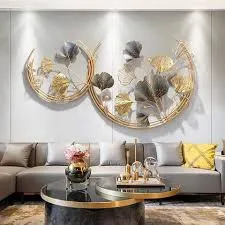
Small living rooms require thoughtful design decisions.
Effective solutions include:
- Using Mirrors to reflect light
- choosing vertical artwork
- limiting the number of frames
- selecting light-colored art
Mirrors especially make a room appear larger and brighter.
Budget-Friendly Living Room Wall Art Ideas
Decorating your walls does not need to be expensive.
Affordable ideas include:
- printable digital artwork
- DIY canvas paintings
- thrift store frames
- poster prints
- family photography displays
Many homeowners create beautiful gallery walls for less than $100.
Luxury Living Room Wall Art Ideas
High-end homes often feature statement artwork.
Luxury options include:
- original paintings
- commissioned artwork
- sculptural metal installations
- large abstract canvases
Luxury interiors typically focus on one powerful statement piece.
Lighting Your Wall Art
Lighting enhances artwork dramatically.
| Lighting Type | Benefit |
| Picture Lights | Highlight artwork |
| Wall Sconces | Add warm ambiance |
| LED Strips | Modern aesthetic |
| Spotlights | Gallery-style lighting |
Proper lighting makes artwork appear more vibrant.
Common Living Room Wall Art Mistakes
Avoid these common decorating errors.
Hanging Artwork Too High
Always follow the eye-level guideline.
Choosing Art That Is Too Small
Small pieces can look insignificant on large walls.
Ignoring Color Harmony
Artwork should connect with the room’s palette.
Overcrowding Walls
Too many frames create visual clutter.
Maintenance and Care Tips
To keep artwork looking beautiful for years:
- avoid direct sunlight
- dust frames regularly
- maintain stable humidity levels
- Use protective glass for valuable artwork.
Proper care preserves both appearance and value.
Smart & Future-Ready Wall Art Ideas
Technology is influencing home decor.
Modern solutions include:
- digital art frames
- rotating artwork displays
- LED illuminated canvases
- smart gallery frames
These allow homeowners to change artwork instantly.
Quick Pro Tips for Perfect Living Room Wall Art
Choose art that reflects your personality
Follow the 60–75% sofa rule.
Keep gallery walls balanced.d
Use lighting to highlightartworko.rk
Combine textures for visual interest.
Transform Your Living Room Today
Your walls are more than empty surfaces. They are an opportunity to express creativity and personality.
Whether you prefer a bold abstract canvas, a curated gallery wall, or calming nature prints, the right living room wall art can completely transform your space.
Start with one meaningful artwork, follow the design principles in this guide, and gradually build a living room that feels stylish, welcoming, and inspiring.
Frequently Asked Questions
The center of the artwork should be around 145 cm from the floor, which is considered eye level.
There is no strict rule. Many designers recommend one large artwork or a balanced gallery wall.
Wall art does not need to match exactly, but it should complement the room’s color palette and style.
Large art creates a strong focal point, while multiple pieces work well for gallery walls.
Vertical artwork, mirrors, and light-colored artwork are best.
Conclusion
Living room wall art is far more than simple decoration; it is a powerful design element that can completely transform the atmosphere of your home. The right artwork adds personality, balance, color, and visual interest, turning empty walls into meaningful design features.
By understanding a few essential interior design principles, such as choosing the correct art size, placement, style, and color harmony, you can create a living room that feels both stylish and welcoming. Whether you prefer a bold oversized canvas, an elegant framed print, A Curated Gallery Wall, or textured sculptural art, the key is selecting pieces that complement your space and reflect your personal taste.
Modern design trends in 2026 are also encouraging homeowners to experiment with oversized statement pieces, minimalist gallery walls, sustainable materials, and AI-generated artwork, making it easier than ever to personalize your living space.
Remember, decorating your walls does not require a large budget. With thoughtful planning, creativity, and the right design rules, even simple artwork can make a big impact.
Start with one beautiful piece, follow the expert tips from this guide, and gradually build a collection that tells your story. The result will be a living room that feels complete, inspiring, and uniquely yours.
