
Introduction
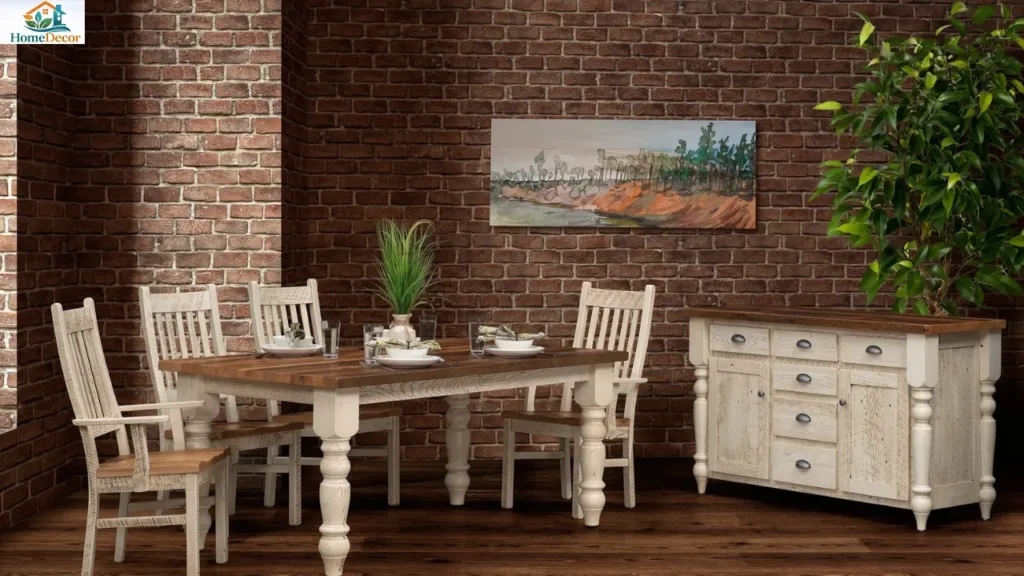
Farmhouse Dining Room Tables remain one of the most coveted, admired, and widely adopted furniture pieces in 2026, beloved for their cozy warmth, high durability, timeless appeal, and naturally welcoming aura. Whether someone resides in a compact urban apartment, a contemporary residential home, a traditional rural cottage, or a modern loft, the farmhouse dining table effortlessly blends into nearly every kind of interior style. Its universal charm comes from the solid wooden craftsmanship, raw organic texture, and inviting, communal ambiance that make everyday meals, meet, conversations, and celebrations feel more intimate and meaningful.
These tables carry a nostalgic yet modern vibe, combining the strength of handcrafted construction with the visual beauty of sustainable materials. However, the wide variety of designs available today, with opposed shapes, diverse materials, a spectrum of finishes, numerous leg structures, multiple sizes, and distinct construction types, can make the buying decision confusing for many homeowners. Should you choose a rectangular table or a round one? Is oak better than reclaimed wood? Is a trestle base ideal, or should you consider pedestal legs? How do you accurately measure your dining space to avoid choosing a table that overwhelms the room or feels too small?
This Ultimate 2026 Farmhouse Dining Room Table Guide answers all these questions in detail. Here, you will find detailed explanations, comparisons, charts, measurements, expert advice, interior design direction, buying checklists, and practical tips all written using NLP-friendly keywords, long-tail phrases, semantically related terms, and synonyms to improve search performance and ranking potential.
Whether you’re a homeowner, designer, renter, blogger, or beginner in interior styling, this guide will help you make confident, smart, and long-lasting decisions. Now, let’s explore everything necessary before selecting your farmhouse dining table.
What Is a Farmhouse Dining Room Table?
Definition & History
A farmhouse dining room table is a rustic-inspired, countryside-themed, heritage-style table originating from traditional rural homes. Historically, farmers built these tables by hand using available timber, creating durable, practical, and multi-purpose surfaces suitable for daily cooking, food preparation, family meals, gatherings, and large feast occasions.
Key characteristics include
- Thick, sturdy, solid-wood tabletops (robust, heavy-duty, dense surfaces)
- Strong trestle or pedestal bases (stabilized foundations, reinforced legs)
- Visible natural wood grain, knots, and texture (organic patterns, earthy designs)
- Bigger, broader dimensions (oversized proportions, generous measurements)
- Warm, rustic, cozy, and inviting aesthetic (homey, comfortable, farmhouse charm)
Farmhouse tables were created out of necessity, but today, they’ve become a statement of style, personality, and warmth in modern interiors.
What Makes It Popular in 2026?
Farmhouse dining tables are exceptionally popular in 2026 because they blend seamlessly with a wide variety of decorating styles, including:
- Modern
- Rustic
- Scandinavian
- Industrial
- Minimalist
- Transitional
- Coastal
- Boho chic
Reasons for their continued popularity:
- Extremely durable and ideal for families
- Highly customizable in stains, finishes, colors, and materials
- Serve as a bold centerpiece that elevates the room
- Pair well with modern lighting, upholstered chairs, and layered décor
- Complement both small and large dining rooms
These tables strike the perfect balance between timeless tradition and modern-day comfort.
Types of Farmhouse Dining Tables With Pros & Cons
Below are the leading farmhouse table styles in 2026, rewritten and expanded with NLP terms and synonyms.
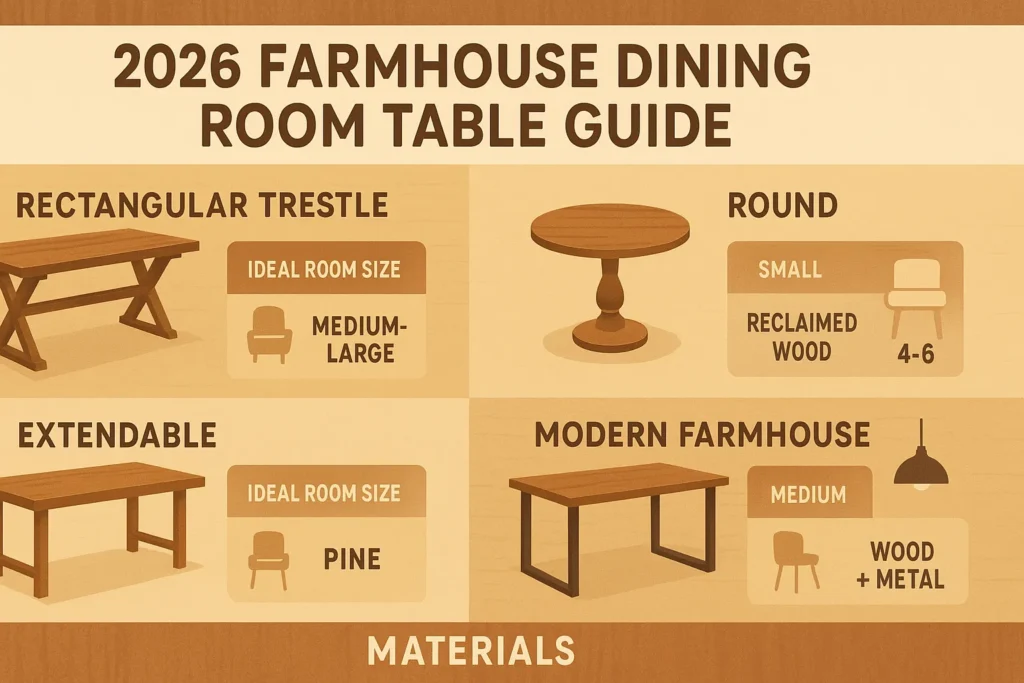
Classic Rectangular Farmhouse Table
Best For:
- Medium To Large Dining Rooms
- Growing families
- Seating 6–10 people
- Spaces requiring symmetrical arrangement
Pros
- Highly stable, steady, well-balanced
- Timeless, iconic, universally appealing shape
- Works in most room layouts
- Perfect for traditional and modern spaces
- Easy to decorate with runners, centerpieces, and bowls
Cons:
- Not ideal for tiny rooms
- Heavy to move (bulky, weighty)
- Requires proportionate room space
Round Farmhouse Dining Table
Best For:
- Small dining areas
- Apartments
- Tight floor plans
- Cozy conversational environments
Pros
- Smooth traffic flow around the table
- Perfect for smaller spaces
- Encourages warm, intimate, face-to-face conversations
- Softer look n, no sharp edges
Cons:
- Limited seating capacity (generally 4–6)
- Not suitable for long, narrow rooms
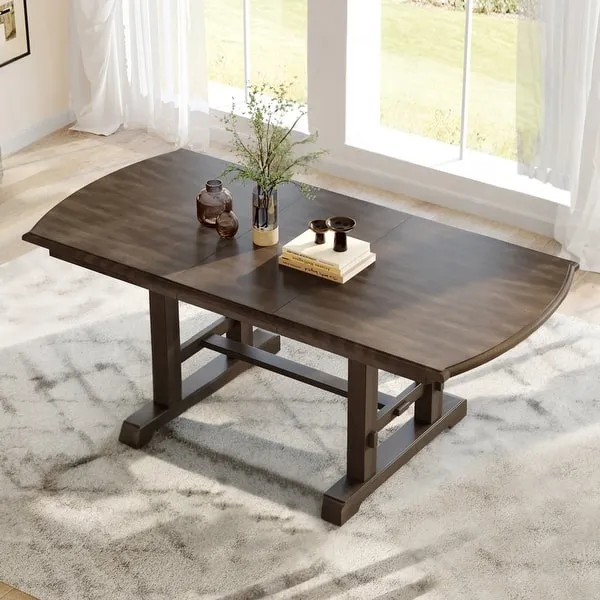
Extendable Farmhouse Tables
Best For:
- Large families
- Entertaining guests
- Homes hosting events or gatherings
Pros
- Space-saving when closed
- Easily expands for more guests
- Great for holidays, celebrations, dinner parties
Cons:
- The leaf mechanism requires periodic maintenance
- Often more expensive than fixed tables
Modern Farmhouse Tables
Best For:
- Trendy homes
- Modern, contemporary interiors
Pros:
- Stylish, updated, design-forward
- Pairs beautifully with metal or upholstered chairs
- Adds an industrial or transitional touch
Cons:
- Less “traditional farmhouse.”
- Slightly higher cost depending on material mix
Comparison Table: Seating Capacity & Room Size Guide
| Table Shape | Ideal Room Size | Seats | Best For |
| Rectangular | Medium–Large | 6–10 | Family dining |
| Round | Small | 4–6 | Apartments |
| Oval | Medium | 6–8 | Curved layouts |
| Extendable | Flexible | 4–12 | Entertainers |
Farmhouse Table Material Breakdown
Below is a detailed material comparison enriched with synonyms and NLP-oriented expressions.
| Material | Durability | Look & Feel | Cost | Maintenance |
| Solid Oak | ⭐⭐⭐⭐⭐ | Classic, warm, rich | High | Medium |
| Reclaimed Wood | ⭐⭐⭐ | Rustic, aged, antique style | Medium | High |
| Pine | ⭐⭐ | Casual, bright, lightweight | Low | Medium |
| Wood + Metal | ⭐⭐⭐ | Modern farmhouse, industrial | Medium | Low |
Material Buying Tips
- Solid oak → Best long-term investment
- Reclaimed wood → Eco-friendly but needs more care
- Pine → Affordable but dents easily
- Wood + metal → Strong, modern, stylish
Farmhouse Dining Table Sizes & Layout Guide
How to Measure Your Space
Always leave 36 inches (90 cm) of clearance around the table to ensure comfortable movement, smooth traffic flow, and accessibility.
Ideal Seating Space Per Person:
➡ 24–26 inches per seat
(also called personal eating space, shoulder width clearance)
Table Length & Seating Capacity Chart
| Table Length | Seats | Best Use |
| 60” (5 ft) | 4–6 | Small rooms |
| 72” (6 ft) | 6–8 | Medium rooms |
| 84” (7 ft) | 8–10 | Large rooms |
| 96” (8 ft) | 10–12 | Big families |
Farmhouse Table Buying Checklist
Measure your room + 36″ clearance
Check the durability of the wood material.
Choose leg style (trestle, pedestal, straight, turned legs)
Read customer feedback and review.s
Inspect extendable leaf mechanism (if applicable)
Compare warranties, guarantees, and return polici.es
Evaluate finish type (matte, gloss, distressed, natural)
Check tabletop thickness
Confirm delivery, shipping, and assembly options.
Styling Your Farmhouse Dining Table 2026
Best Centerpiece Ideas
- Oversized ceramic vases (stoneware, clay, pottery)
- Wooden Trays with candles or seasonal décor
- Seasonal greenery, eucalyptus, olive branches
- Linen runners, cotton runners
- Metallic accent bowls
Mixing Seating Styles
- Chairs + bench combination
- Upholstered end chairs
- Metal cross-back chairs
- Woven or rattan seating for a boho look
Lighting Tips
- Hang pendant lights 30–36 inches above the table
- Choose warm bulbs (2700K)
- Black, brass, or mixed-metal fixtures enhance farmhouse style
- Chandeliers with rustic wood or iron look perfect
Common Mistakes to Avoid
Buying without measuring clearance
Choosing oversized plank tops
Ignoring wood care needs
Low-quality construction or weak joinery
Not checking legroom for trestle bases.
Selecting poor-quality reclaimed wood
Over-staining or mismatching finishes
Care & Maintenance Guide
Daily Cleaning:
- Wipe with a microfiber cloth
- Avoid harsh chemical cleaners
- Clean spills immediately
Seasonal Maintenance:
- Oil the wooden tabletop every 6–12 months
- Tighten bolts, screws, and hardware
- Rotate table accessories to avoid uneven fading
Avoid:
- Direct sunlight exposure
- Standing water
- Extreme humidity
- Placing hot pots or pans directly on wood
FAQs
Use 24–26 inches per person plus 36 inches of room clearance rule.
Yes, reclaimed wood is eco-friendly, rustic, and unique, but it requires higher maintenance.
Use coasters, placemats, annual oiling, and wipe spills immediately.
Round farmhouse tables are ideal for compact dining spaces.
Absolutely, they remain highly popular due to their rustic charm and modern versatility.
Best Farmhouse Dining Table Ideas for 2026
- Whitewashed oak
- Two-tone farmhouse tables
- Live-edge slabs
- Reclaimed barn wood
- Industrial wood-and-metal mix
- Rustic trestle tables
- Vintage walnut farmhouse tables
- Curved pedestal farmhouse tables
- French farmhouse distressed finishes
- Scandinavian-inspired minimalist farmhouse tables
Conclusion
A farmhouse dining table is much more than a uninvolved furniture piece; it is the Heart Of The Home, a gathering point, a gossip hub, and a lasting investment. By understanding materials, finishes, sizes, room layouts, leg styles, maintenance needs, and styling options, you can confidently select a table that adds character, charm, and personality to your dining room.
Use the detailed measurements, buying checklist, style recommendations, and maintenance tips in this guide to choose a farmhouse dining table that will elevate your space and last for years.
