
Introduction
Built-In Cabinets can completely change a living room. They do more than store things. They frame a fireplace, organize a TV wall, turn awkward alcoves into useful space, and make a room feel calm instead of cluttered. The best part is that built-ins do all of this while looking intentional, architectural, and custom.
If your living room feels unfinished, overloaded, or difficult to style, built-in cabinets may be the upgrade that fixes several problems at once. They give you hidden storage for the everyday mess, open shelves for books and decor, and a polished look that freestanding furniture rarely matches. Inspiration sources across Houzz and Architectural Digest show the same pattern: the strongest built-ins are designed around what you need to hide, what you want to display, and what the room’s focal point already is.
This guide covers the best built-in cabinets living room ideas, the smartest layouts, practical dimensions, style choices, cost ranges, and the mistakes that can make a beautiful concept feel awkward in real life.
What Are Built-In Cabinets in a Living Room?
Built-in cabinets are storage units designed to fit the exact wall, niche, or focal point of your living room. Unlike standalone bookcases or TV consoles, they are made to look like part of the architecture.
In living rooms, they usually serve one or more of these jobs:
- hide clutter behind closed doors
- display books, art, and collections
- frame a fireplace or TV
- add symmetry to a wall
- fill alcoves or awkward spaces
- make the room feel more custom and finished
That mix of storage and display is why built-ins stay so popular. They solve a practical problem while also improving the way the room feels.
Why Built-In Cabinets Matter in 2026
In 2026, readers do not just want pretty living rooms. They want living rooms that work.
The strongest built-in designs now do three things at once: they store more, hide more, and display better. That matters because modern living rooms often need to function as entertainment spaces, reading areas, play zones, and casual gathering rooms all in one. Houzz’s living room guidance and built-in galleries both point in that direction: the room should feel functional first, with storage tailored to how the space is actually used.
What readers are really searching for now is not only “what looks nice,” but:
- How deep should cabinets be
- where built-ins should go
- What to store behind doors
- How to make a TV wall look elegant
- How to avoid bulky, kitchen-like proportions
- Whether built-ins are worth the cost
That is the exact gap your content can fill.
35 Built-In Cabinets Living Room Ideas to Copy
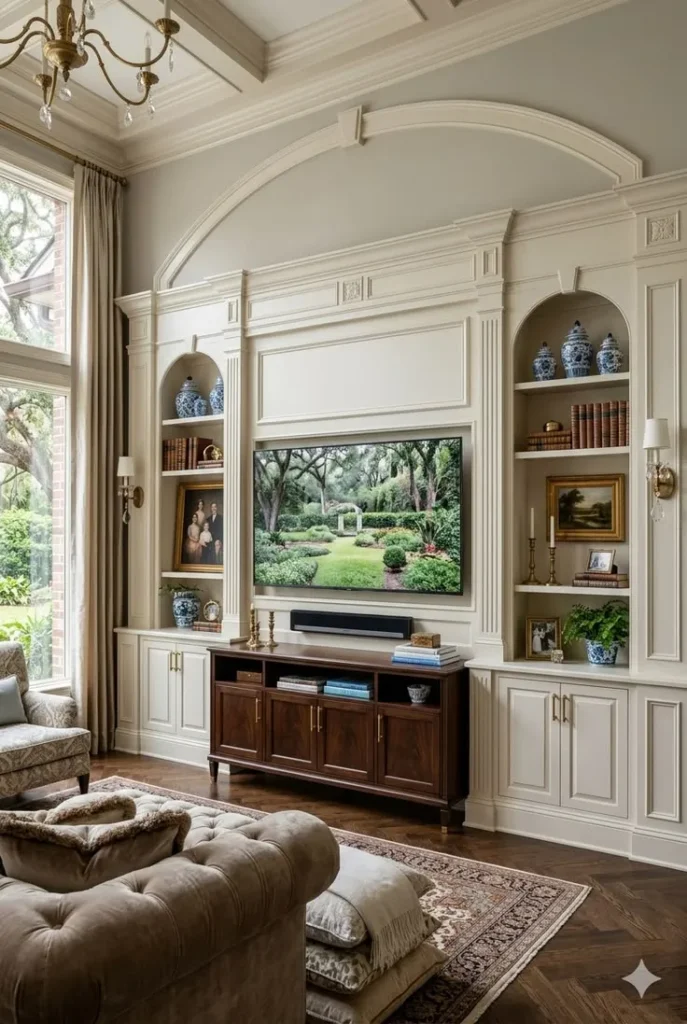
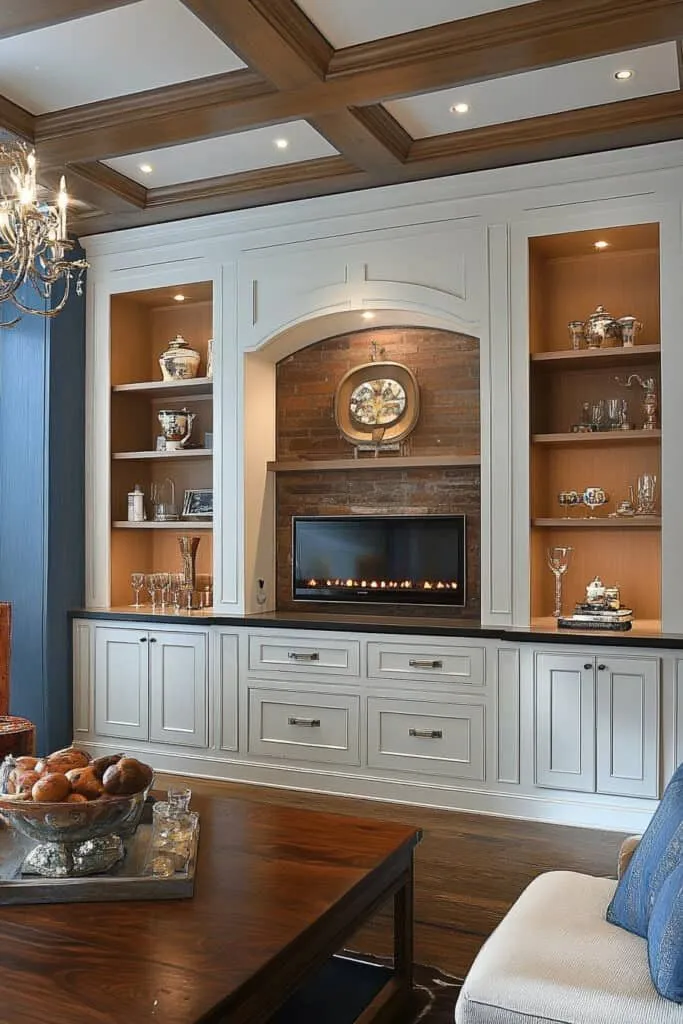
1. Fireplace built-ins with lower cabinets and open shelves
A classic symmetrical layout that feels timeless and polished.
2. Full-wall media cabinets
Turn one wall into a Complete TV and storage feature.
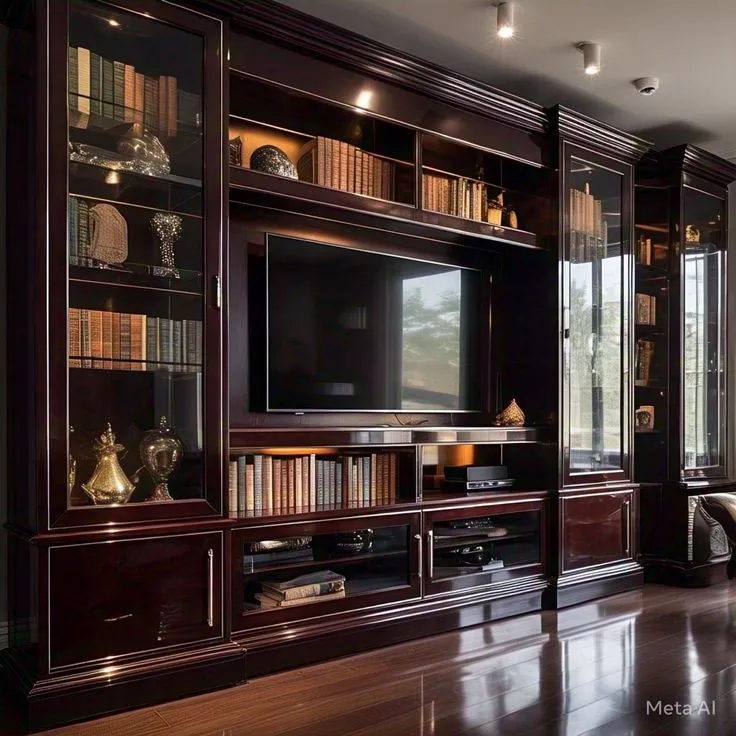
3. Floor-to-ceiling library built-ins
Perfect for book lovers and formal living rooms.
4. Built-ins around a mounted TV
Makes the screen feel integrated instead of floating on a blank wall.
5. Low built-in cabinets with art above
A lighter look that still gives you hidden storage.
6. Window seat built-ins
Great for a reading nook or cozy family room corner.
7. Alcove built-in cabinets
Ideal for recesses and awkward wall pockets.
8. White shaker built-ins
A timeless choice that works in many design styles.
9. Modern flat-panel built-ins
Clean, sleek, and minimal.
10. Built-ins painted the same color as the walls
Makes storage feel softer and more architectural.
11. Warm oak built-ins
Adds warmth and furniture-like character.
12. Built-ins with glass doors
Great for display without visual heaviness.
13. Black or charcoal built-ins
Creates contrast and drama.
14. Fireplace and TV combination wall
Useful when both focal points share one wall.
15. Narrow vertical built-ins
Smart for slim walls and small living rooms.
16. Built-ins under windows
A good way to gain storage without blocking light.
17. Floating built-ins
Lighter, more contemporary, and less bulky.
18. Built-in bar cabinets
Perfect for entertaining and open-plan homes.
19. Toy storage built-ins
A family-room favorite because clutter disappears fast.
20. Reading nook built-ins
Combine shelves, cabinets, and a bench seat.
21. Symmetrical built-ins around a focal point
Balances the room instantly.
22. Asymmetrical built-ins
Better for modern layouts and off-center focal points.
23. Built-ins with integrated lighting
Adds depth and makes the design feel expensive.
24. Built-ins with hidden charging and media storage
Best for devices, cords, routers, and gaming gear.
25. Built-ins with bench seating
A smart multifunctional solution.
26. Arched built-in cabinets
Softens the wall and adds custom character.
27. Fluted or reeded fronts
A current, designer-looking detail.
28. Mixed wood and painted built-ins
Adds contrast and warmth.
29. Built-ins framing a sofa wall
Makes an ordinary wall feel designed.
30. No-TV living room built-ins
Perfect for formal spaces and conversation areas.
31. Corner built-ins
Turns wasted corners into useful storage.
32. Display built-ins for collections
Great for ceramics, records, art books, and travel objects.
33. Built-ins with crown molding
Creates a more finished millwork look.
34. IKEA hack built-ins
A budget-friendly way to get the custom look.
35. Minimal built-ins
Low-key, simple, and best for smaller rooms or strong architecture.
How to Choose the Right Built-In Cabinet Layout
The best layout depends on three things: the room’s focal point, how much storage you need, and how much visual weight the wall can handle.
| Room situation | Best layout | Why it works |
| Fireplace Wall | Symmetrical built-ins or low cabinets with shelves | Keeps the fireplace balanced and intentional |
| TV is the focal point | Full media wall | Hides wires and electronics while looking finished |
| Small living room | Shallow cabinets in the wall color | Saves space and keeps the room feeling open |
| Alcoves or niches | Custom alcove cabinets | Uses existing architecture efficiently |
| Lots of windows | Lower cabinets only or side-wall storage | Preserves natural light |
| Formal no-TV room | Library wall or display cabinets | Makes the room feel elegant and purposeful |
Houzz and AD both show that the strongest built-ins are designed around function first, then styled to match the room. That is why the layout decision matters more than the decorative finish.
A simple rule
If the room already has a strong focal point, reinforce it.
If the room has none, create one with built-ins.
Built-In Cabinets Living Room Dimensions: What Size Works Best?
This is where many projects go wrong. Great built-ins feel built into the room. Bad ones feel too deep, too tall, or too much like kitchen cabinetry.
| Feature | Recommended range | Why it works |
| Base cabinet depth | 16–20 inches | Good balance of storage and proportion |
| Shelf depth | 10–14 inches | Works for books, decor, and baskets |
| Lower cabinet height | 30–36 inches | Comfortable and visually balanced |
| Shelf spacing | 10–14 inches | Fits books and decor without wasted space |
| Deep storage zones | 20+ inches only when needed | Best for media gear or oversized items |
This Old House recommends thinking first about what you need to store and notes that standard bookshelf depth usually falls around 10–12 inches, while deeper shelves may be needed for larger books, art, or display items. It also advises anchoring bookcases securely and adding support so shelves do not sag.
Best practice
- Use shallower shelves for display
- Use deeper cabinets for hidden storage
- Avoid making every section the same depth if the room is small
- Measure your largest books, baskets, or devices before finalizing the plan
Best Balance of Open Shelves vs Closed Cabinets
Open shelves look beautiful in photos. Closed cabinets work better in real life.
That is why the strongest living room built-ins usually mix both. Closed storage hides clutter, while open shelves keep the wall from feeling too heavy. Houzz explicitly recommends thinking about what should be hidden and what should be displayed before meeting with a designer.
Store behind cabinet doors
- board games
- toys
- blankets
- cables and chargers
- routers and modems
- remotes
- gaming equipment
- paperwork
Display on open shelves
- books
- framed art
- ceramics
- baskets
- plants
- candlesticks
- coffee table books
- sculptural decor
Easy rule to follow
Use more closed storage than open storage in family rooms.
Use more display than storage only in formal rooms or library-style spaces.
Best Materials for Living Room Built-Ins
| Material | Best for | Pros | Watch out for |
| MDF | Painted built-ins | Smooth finish, budget-friendly | Not ideal for wet areas |
| Plywood | Cabinet boxes and shelves | Stronger and more durable | Costs more than basic MDF |
| Solid wood | High-end details | Warm, rich, furniture-like | More expensive |
| Veneer / engineered wood | Wood-look projects | Good middle ground | Quality Varies |
This Old House notes that material choice should match the load and purpose of the shelves, and HomeAdvisor’s cost data shows that materials and customization strongly affect the total price.
Best Cabinet Door Styles for Living Room Built-Ins
| Door style | Best for | Look |
| Shaker | Traditional, transitional, modern farmhouse | Timeless and versatile |
| Flat-panel / slab | Contemporary spaces | Clean and minimal |
| Glass-front | Display zones and bars | Lighter and more open |
| Reeded/fluted | Designer-style built-ins | Textured and current |
The door style should match the architecture of the room. A simple wall in a modern home usually looks better with flat-panel cabinets. A classic fireplace wall often suits Shaker fronts or a more detailed millwork look.
Built-In Cabinets Living Room Color Ideas
1. White built-ins
Bright, classic, and easy to style.
2. Warm greige or taupe
Softens the room without looking stark.
3. Same color as the walls
Helps built-ins blend into the architecture.
4. Deep green, navy, charcoal, or black
Adds drama and depth.
5. Natural wood
Warm, calm, and furniture-like.
AD and Houzz examples both show that color can completely change how built-ins feel: light finishes keep the room airy, while darker tones create drama and focus.
Simple paint rule
- Small room: match built-ins to wall color
- Large room: contrast is usually safer
- Dark room: choose lighter finishes to avoid heaviness
- Bright room: dark or wood tones can look rich and grounded
35 Ideas, Organized by Style Direction
Classic and timeless
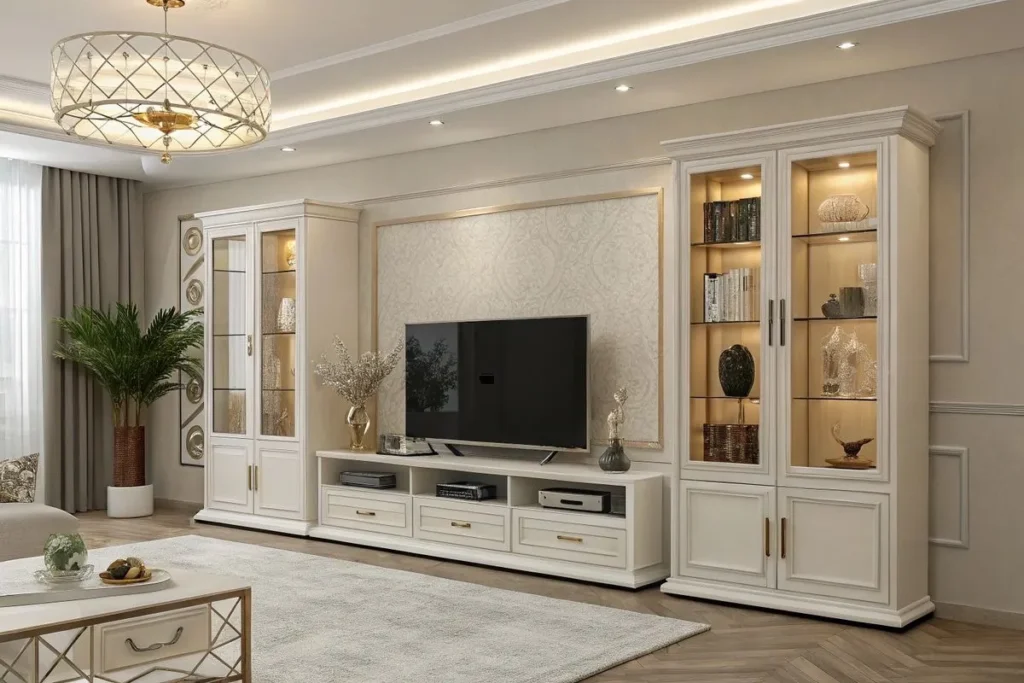
- White shaker fireplace built-ins
- Glass-door display cabinets
- Crown-molded full-height shelves
- Window-seat built-ins
- Library walls with lower cabinets
Modern and minimal
- Flat-panel media walls
- Floating cabinets
- Same-color wall and cabinet treatment
- Minimal handleless fronts
- Asymmetrical storage layouts
Warm and organic
- Oak built-ins
- Mixed wood and painted finishes
- Reeded cabinet fronts
- Natural-tone shelves
- Soft taupe cabinetry
Family-friendly and practical
- Toy-storage built-ins
- Charging drawers
- Hidden media storage
- Bench seating
- Under-window cabinets
High-impact statement looks
- Black or charcoal built-ins
- Arched niches
- Full-wall floor-to-ceiling cabinets
- Fireplace plus TV walls
- Built-ins with integrated lighting
Budget-conscious ideas
- IKEA hack built-ins
- Low cabinets with art above
- Narrow vertical units
- Corner built-ins
- Simple painted shelves
Flexible display ideas
- Built-ins for books and collections
- Built-ins with a bar section
- Built-ins framing a sofa wall
- No-TV conversational walls
- Minimal built-ins with edited styling
How to Make Built-Ins Look Expensive
The most expensive-looking built-ins are usually not the most decorated ones. They are the most controlled ones.
Details that elevate the design
- extend cabinets to the ceiling
- Add crown molding or a clean top detail
- hide cords and equipment
- Use consistent hardware
- add shelf lighting
- Repeat the wall color on the cabinetry
- Keep styling edited and balanced
- Mix open and closed storage with purpose
AD’s styling guidance also shows that built-ins look better when the shelves have a clear palette and a restrained display strategy rather than being filled randomly.
Mini summary
If you want a premium result, focus on proportion, finish, and restraint before decor.
Common Built-In Cabinet Mistakes to Avoid
1. Making the base too deep
Deep cabinets can feel bulky and more like kitchen units.
2. Forgetting the storage plan
Build around what will actually go inside.
3. Using too much open shelving
It can become visual clutter fast.
4. Ignoring cable management
A beautiful wall becomes frustrating if wires are exposed.
5. Mounting the TV too high
Comfort matters more than symmetry.
6. Choosing the wrong style for the room
Modern built-ins in a traditional room can feel disconnected, and vice versa.
7. Underestimating room scale
A big wall of cabinetry needs breathing room.
This Old House stresses measuring carefully, supporting shelves properly, and planning around the actual items you will store. Those basics prevent many of the most common failures.
Built-In Cabinets Living Room Cost
Here is a practical planning guide.
| Project type | Typical range | Best for |
| DIY / IKEA hack | $800–$3,500+ | Budget-friendly custom look |
| Semi-custom built-ins | $3,000–$8,000+ | Better fit and finish |
| Fully custom built-ins | $8,000–$20,000+ | Fireplace walls, media walls, premium millwork |
HomeAdvisor reports that built-in bookshelves commonly land in the low thousands depending on size and materials, while Angi also notes that cost changes significantly with customization, region, and installation complexity. Add-ons such as crown molding, drawers, doors, and lighting can raise the total.
What increases the price
- full-height cabinetry
- real wood or stain-grade finishes
- lighting
- specialty hardware
- electrical work
- stone or thick wood tops
- fluted or arched details
- custom trim
Mini summary
The more your built-ins behave like architecture, the more they cost.
Built-In Cabinets vs Freestanding Furniture
| Factor | Built-in cabinets | Freestanding furniture |
| Fit | Custom to the wall | Standard sizes |
| Storage | Usually higher | Usually lower |
| Flexibility | Permanent | Easy to move |
| Cost | Higher upfront | Lower upfront |
| Look | More architectural | More casual |
| Best for | Long-term homes, awkward walls, media storage | Renters, changing layouts, flexible rooms |
Houzz notes that built-ins are especially useful when a room needs more storage and a more customized fit, even though they can be more expensive.
Who Should Choose Built-Ins?
Built-ins are a great choice if you:
- Need serious storage
- have a fireplace wall to frame
- want to organize a TV wall
- have alcoves or awkward spaces
- plan to stay in the home for years
- want a polished, custom look
Who Should Avoid Them?
Built-ins may not be the best choice if you:
- rent
- change layouts often
- Need very flexible furniture
- have a limited budget
- may sell soon and want a neutral, easily changed layout
People Also Ask
For many living rooms, base cabinets around 16 to 20 inches deep work well, while open shelves are often best at about 10 to 14 inches. This Old House recommends keeping most shelves around 10 to 12 inches for typical bookcase use, with deeper options only where needed.
They can. Built-ins reduce visual clutter and use vertical space efficiently, which often makes a room feel more organized and intentional.
Yes. They remain one of the most practical ways to add storage and architecture to a living room, especially when the design is clean, well-proportioned, and tailored to the room.
IKEA hacks and stock-cabinet built-ins are usually much cheaper. DIY guides show that a budget build can be done for far less than custom millwork, though the finish and fit will not be the same as fully custom work.
Often yes, because ceiling-height units look more finished and give you more storage. In smaller or lower rooms, a lighter design may feel better.
Conclusion
Built-in cabinets are one of the smartest living room upgrades because they solve two problems at once: storage and style. The best designs feel like part of the Architecture, not furniture pushed against the wall. Whether you want a fireplace surround, a media wall, a library look, or a simple low-cabinet layout, the right built-ins can make your living room feel more finished, more organized, and more expensive.
For TheRoomsArt.com, this keyword is strong because it supports inspiration, Practical planning, and purchase intent in a single article. That makes it ideal for long dwell time, strong internal linking, and future topical authority.
Final recommendation: publish this as a pillar page, then support it with smaller cluster posts on fireplace decor, TV wall decor, living room shelving, small living room ideas, and cabinet color ideas.
Disclaimer: Prices, materials, trends, and product availability may change over time depending on region, suppliers, and brands. Always verify dimensions, materials, and compatibility before purchase or renovation.
