
Introduction
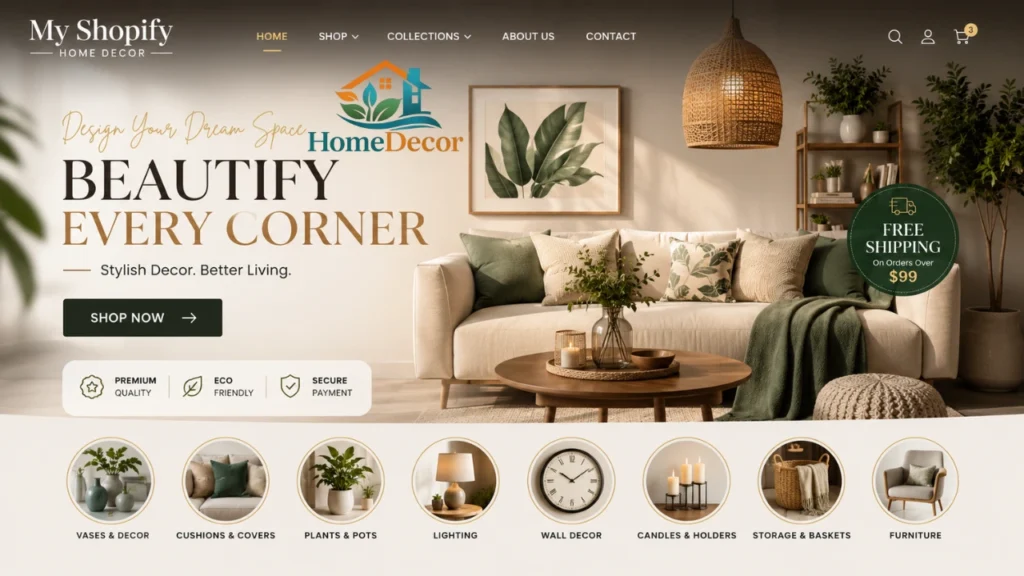
Home decor is one of the most emotional e-commerce categories. People do not buy a cushion, mirror, wall print, or table lamp only because they need it. They buy it because it changes how a room feels. That is why a My Shopify Home Decor store must do more than look beautiful. It must make shoppers feel confident, inspired, and ready to buy.
The strongest home decor brands on Shopify understand this balance. They use clean design, strong product photography, clear collections, and trust signals that reduce hesitation. They also treat SEO, Pinterest, and email as growth engines, not afterthoughts. Shopify’s own home decor e-commerce guidance shows that this category is driven by visuals, shipping expectations, product detail, and consumer trend shifts such as sustainability and smart-home interest. Will learn how to build a home decor Shopify store that is useful, search-friendly, and conversion-ready. You will also see how to structure content, choose the right theme, avoid common mistakes, and turn your store into a long-term brand asset for TheRoomsArt.com.
What Is a Shopify Home Decor Store?
A Shopify home decor store is an online shop built on Shopify that sells decor and styling products for homes, rooms, and lifestyle spaces. This can include wall art, mirrors, rugs, lighting, pillows, baskets, furniture, and seasonal accents.
The key difference is that home decor is not a “quick buy” category. Shoppers often compare styles, room fit, dimensions, finishes, and color combinations. That is why your store has to act like a visual showroom, not just a product catalog.
Typical product categories include
- Wall art and framed prints
- Mirrors
- Rugs
- Cushions and throws
- Lamps and lighting
- Decorative trays and vases
- Storage baskets
- Furniture pieces
- Seasonal decor
Why Shopify works well here
Shopify gives you the flexibility to:
- build collection pages for different styles
- manage variants and inventory cleanly
- connect apps for reviews, bundles, email, and upsells
- create a fast mobile shopping experience
- scale from small decor launches to a full brand store
Shopify’s theme ecosystem also includes designs suited to home and visual businesses, and its theme marketplace explicitly supports home as a top industry category. ecor Ecommerce Matters in 2026
Home decor e-commerce keeps growing because people want more personalized rooms, better home experiences, and easier online discovery. Shopify’s 2026 home decor guide notes that the category spans furniture, textiles, wall art, lighting, and accents, and that buyers rely heavily on digital visuals and detailed descriptions. Thanks for your content
If your article only shows pretty stores, it misses the real business opportunity. Readers also want:
- What products to sell
- How to position the brand
- How to get discovered
- How to convert browser traffic
- How to build trust in a crowded category
What changed in buyer behavior
Home decor shoppers now expect:
- styled room images
- precise dimensions
- material and finish details
- room context
- clear shipping and returns info
- mobile-friendly browsing
- social proof and reviews
That means your store should answer practical questions before the customer has to ask them.
Best Types of Shopify Home Decor Stores
| Store Type | Best For | Strength | Risk |
| Minimalist decor store | Clean, modern brands | Easy to understand, premium feel | Can feel too generic |
| Luxury decor store | Higher AOV and aspirational buyers | Strong margins, elegant branding | Needs excellent photography |
| Boho decor store | Trend-driven styling fans | Very visual and Pinterest-friendly | Can become cluttered |
| Farmhouse decor store | Cozy, lifestyle-focused shoppers | Clear emotional appeal | The trend may feel saturated |
| Wall Art Store | Easy shipping and strong SEO | Great for content marketing | Product differentiation matters |
| Sustainable decor store | Conscious consumers | Strong brand story | Must prove sourcing claims |
| Seasonal decor store | Holiday and event buyers | Repeated sales spikes | Sales can be uneven |
Mini summary
The best niche is usually the one you can describe clearly in one sentence. If your store feels like it sells “everything,” buyers often feel nothing.
Best Shopify Home Decor Store Examples: What They Do Right
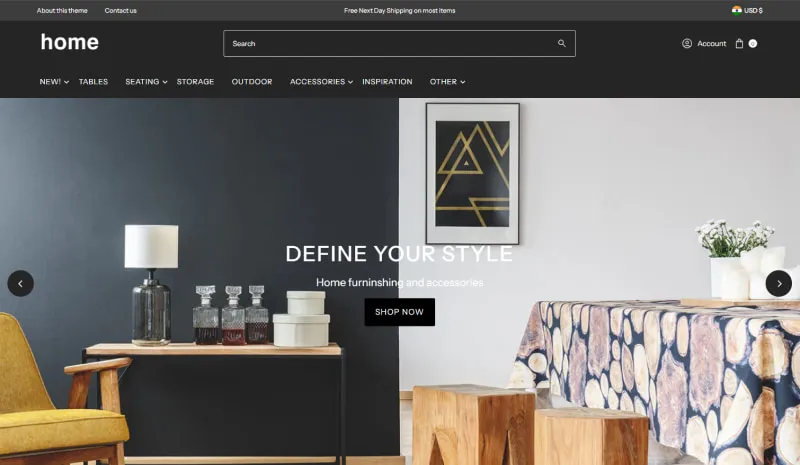
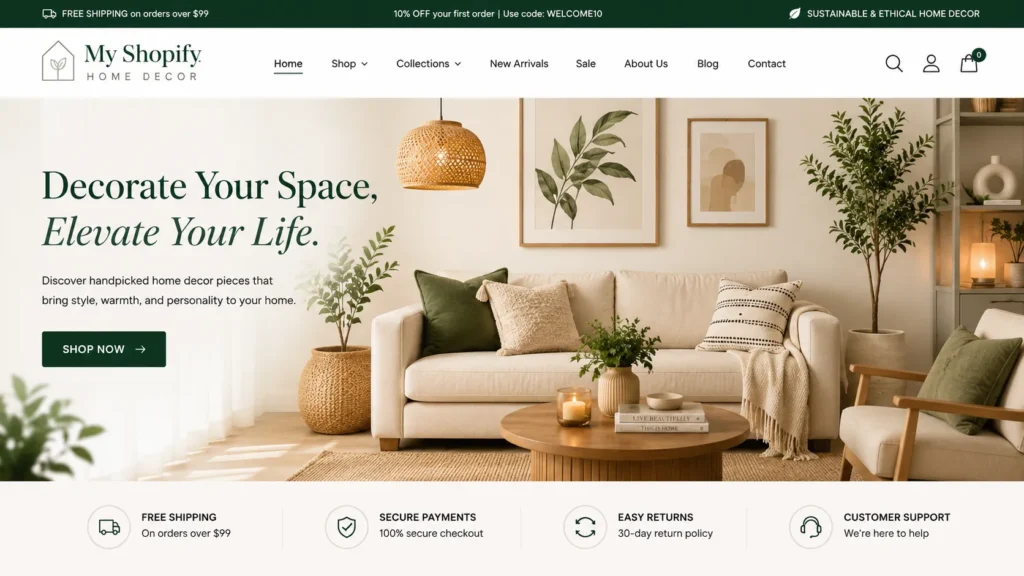
Current example-heavy pages are useful for inspiration, but the real value comes from understanding the pattern behind them. Shopify’s own example pages and other roundups mostly focus on attractive storefronts, layouts, and product displays. HS among strong home decor stores
- strong first impression
- room-style photography
- simple navigation
- curated collections
- visual storytelling
- consistent branding
- clear value proposition
- easy product browsing
What to learn from them
Do not copy the design. Copy the logic:
- one clear style
- one clear target customer
- one clear visual system
- one clear buying path
A beautiful store without a clear buying path does not scale.
How to Start Your Own Shopify Home Decor Store
Choose a profitable niche
Do not start with “home decor” as a whole. Choose a sharper angle.
Examples:
- wall art for modern apartments
- luxury bedroom decor
- boho living room accents
- small-space storage decor
- seasonal table styling
Research demand
Check:
- Google search demand
- Pinterest trends
- Shopify competitor stores
- Social media saves and shares
- product search volume by category
Define your audience
Be specific about who you are serving:
- renters
- homeowners
- apartment decorators
- interior design lovers
- budget decorators
- luxury buyers
Build the brand identity
Decide:
- tone of voice
- color palette
- room style
- product style
- photography style
- packaging style
Set up Shopify
Structure your site around:
- home page
- collection pages
- product pages
- blog
- about page
- contact page
- FAQ page
Launch with a content plan
Do not wait for perfect inventory. Start with:
- core collection pages
- 5–10 SEO blog posts
- 20–30 strong product pages
- Pinterest pin templates
- email welcome flow
Choosing the Best Shopify Theme for Home Decor
Shopify’s theme library includes options built for home, visual storytelling, and premium presentation. The official theme marketplace shows both free and paid themes, with home listed as a major industry category. or in a home decor theme
- large image sections
- fast loading speed
- elegant typography
- collection filters
- mobile responsiveness
- slideshow and gallery support
- editorial-style storytelling
- strong product pages
Theme comparison table
| Theme | Best Use | Why It Works |
| Dawn | Fast, flexible starter store | Clean base and simple customization |
| Prestige | Luxury and premium brands | Elegant look, strong presentation |
| Craft | Handmade, artisan, lifestyle decor | Refined storytelling and generous spacing |
| Studio | Visual brands and collections | Good for collection-based browsing |
| Impulse | Promotions and larger catalogs | Strong merchandising and campaign tools |
Shopify describes Prestige as performance-focused and highly configurable, Craft as a refined, storytelling-driven theme, and Studio as collection-based with creator and gallery-friendly navigation. Pick a theme based on your brand story, not just design taste. A luxury decor brand needs a different structure from a playful wall art shop.
Designing a High-Converting Home Decor Store
A home decor store should feel like a styled room, but it must also behave like a sales page.
Homepage essentials
Your homepage should include:
- a clear hero message
- one primary style promise
- featured collections
- best sellers
- room inspiration images
- trust signals
- reviews
- email capture
Collection page essentials
Collection pages should show:
- short intro copy
- style or room relevance
- filters by color, size, price, material
- bestsellers first
- clear product cards
- internal links to guides
Product page essentials
Product pages should include:
- lifestyle image
- close-up image
- size/dimension image
- material and finish details
- delivery info
- return policy
- Reviews
- suggested bundles
- room-styling suggestions
Trust elements that matter
- real reviews
- secure checkout
- shipping clarity
- returns clarity
- social proof
- customer photos
- clear contact details
Common conversion blocker
Many decor stores look beautiful but make shopping harder than it should be. That is expensive.
Product Photography Tips for Home Decor Stores
Shopify’s home decor guide emphasizes that buyers need visuals, lifestyle imagery, and material detail to feel confident purchasing online. es
- lifestyle room shot
- close-up detail shot
- scale reference shot
- styled flat lay
- product in a real room
- short video demonstration
Why this matters
Home decor products can look very different once placed in a room. Photography should answer:
- What size is it?
- What does the texture look like?
- What room style does it match?
- How does the color look in natural light?
- How does it feel in context?
Expert tip
Use at least one image that shows the product next to a common object so customers can judge scale properly.
Mini summary
In home decor, photography is not decoration. It is decision support.
Comparison Table: What to Sell vs. What to Prioritize
| Product Type | SEO Difficulty | Visual Need | Conversion Challenge | Best Channel |
| Wall art | Medium | High | Style fit | Pinterest, Google |
| Rugs | High | Very high | Size and texture | Google, Instagram |
| Mirrors | Medium | High | Reflection and scale | Google, Pinterest |
| Pillows and throws | Lower | Medium | Differentiation | Email, bundles |
| Lighting | High | Very high | Finish and room fit | Google, video |
| Furniture | Highest | Extremely high | Delivery and trust | SEO, retargeting |
Practical takeaway
Start with products that are easier to ship, easier to explain, and easier to photograph. Then expand into bigger-ticket decor once your brand has trust.
Content Marketing for Home Decor Brands
The best home decor stores do not rely on product pages alone. They build a content engine.
Blog content ideas
- How to style a living room
- best wall art for small spaces
- boho bedroom decor ideas
- How to decorate rental rooms
- seasonal home styling tips
- How to mix textures in modern interiors
- best color combinations for cozy rooms
Why blog content works
It helps you:
- capture informational traffic
- build trust
- answer pre-purchase questions
- create internal links
- support Pinterest and social distribution
Content formats that perform well
- guides
- checklists
- room makeovers
- seasonal trend posts
- before-and-after styling posts
- buying guides
Pinterest Marketing for Home Decor Stores
Pinterest is a natural fit for home decor because the category is visual, aspirational, and idea-driven.
Why Pinterest works
People use Pinterest to:
- plan rooms
- save ideas
- compare styles
- discover products
- Prepare purchases later
What to pin
- room inspiration images
- styled product shots
- blog graphics
- before-and-after rooms
- seasonal decor boards
- style guides
Pinterest SEO tips
- Use keyword-rich board titles
- Write clear pin descriptions
- create multiple pins per post
- Match the pin design to the page content
- Include room and style terms naturally
Best board examples
- modern living room ideas
- luxury bedroom decor
- wall art inspiration
- boho home styling
- small apartment decor
- seasonal decorating ideas
Social Media and Influencer Strategy
Use it for:
- room reels
- product close-ups
- styling tips
- customer photos
- carousel guides
TikTok
Use it for:
- room makeovers
- styling before-and-after videos
- product demo clips
- decor trend commentary
YouTube Shorts
Use it for:
- quick styling hacks
- product features
- room refresh inspiration
Influencer outreach
Focus on:
- home styling creators
- small-space decorators
- interior designers
- DIY content creators
- lifestyle creators with room makeover content
Mini summary
Decor brands win when content feels like inspiration first and sales second.
Email Marketing for Home Decor Brands
Email is one of the easiest ways to increase repeat sales in home decor.
Core flows
- welcome series
- abandoned cart
- browse abandonment
- post-purchase follow-up
- seasonal campaign
- win-back flow
Great email ideas
- “How to style your new wall art”
- “3 ways to refresh your bedroom this weekend”
- “Best sellers for cozy living rooms”
- “Seasonal decor you can switch in minutes”
Why email matters
Home decor shoppers often buy more than once. They may start with a print and later add pillows, Lighting, or accessories.
Conversion Rate Optimization for Shopify Home Decor
What improves conversion
- faster load speed
- better images
- stronger product copy
- reviews and UGC
- clear sizing info
- bundles
- free shipping thresholds
- exit-intent offers
- simple navigation
Bundle ideas
- wall art + frame
- pillow + throw
- lamp + side table decor
- basket + shelf decor
- mirror + console styling set
Upsell ideas
- matching decor pieces
- room collection sets
- seasonal add-ons
- premium framing or finishing options
Common CRO mistake
Do not make shoppers do the styling work alone. Show them the finished look.
Home Decor Dropshipping vs. Private Label
| Model | Pros | Cons | Best For |
| Dropshipping | Low upfront cost, fast testing | Lower control, weaker branding | Beginners |
| Private label | Stronger brand, better margins | More inventory risk | Long-term brands |
| Hybrid model | Flexible growth path | Requires planning | Growing stores |
Recommendation
If the goal is brand authority, private label or a hybrid model is usually stronger. If the goal is fast market testing, dropshipping can work as a starting point.
Common Mistakes Shopify Home Decor Stores Make
- poor photography
- generic branding
- unclear niche
- weak collection structure
- no SEO content
- No email marketing
- slow mobile experience
- missing trust signals
- no styling guidance
- No clear differentiator
Biggest mistake of all
Trying to look like every other decor store.
Expert Tips Most People Ignore
1. Sell a room outcome, not a product
People do not want “a vase.” They want a warmer shelf, a softer room, or a more finished corner.
2. Add dimension context everywhere
Size matters more in decor than in many categories.
3. Build collections by mood
Examples:
- calm neutrals
- bold luxury
- cozy textures
- modern minimal
- seasonal refresh
4. Use editorial copy on collection pages
This helps both SEO and brand perception.
5. Create “shop the room” experiences
This reduces decision fatigue and increases average order value.
Best Color Combinations for Home Decor Stores
- ivory + beige + warm wood
- black + white + brass
- sage + cream + oak
- terracotta + sand + stone
- navy + gold + charcoal
- blush + taupe + gold
Why color matters
Color is not just a visual style. It signals mood, price position, and audience fit.
Best Materials and Decor Choices
A premium feel
- glass
- marble
- brass
- velvet
- linen
- oak
- ceramic
For a cozy feel
- cotton
- woven textures
- wood
- rattan
- wool
- natural fiber blends
For an eco-conscious brand
- bamboo
- reclaimed wood
- recycled glass
- organic cotton
- low-waste packaging
Shopify’s 2026 home decor guide notes growing consumer interest in sustainable materials and smart-home integration. ng and Functional Styling Tips
Home decor content performs better when it solves real room problems.
Good topics to include
- small-space storage
- renter-friendly styling
- multi-use furniture
- entryway organization
- bedroom clutter solutions
- compact living room styling
Why this helps
It expands your audience beyond pure inspiration seekers and brings in practical search intent too.
Styling Tips for Different Room Sizes
Small rooms
- Use light colors
- Keep furniture proportionate
- Add mirrors carefully
- Choose fewer but stronger decor pieces
Medium rooms
- create a focal point
- mix textures
- Use layered lighting
Large rooms
- zone the space
- Use oversized art
- balance furniture with decor density
Future Interior Design Trends
Shopify notes that consumer trends in home decor are shaped by sustainability, smart-home products, and changing at-home lifestyles. atching
- AI-powered personalization
- augmented reality previews
- sustainable decor
- smart lighting and accessories
- personalized decor products
- shoppable room design experiences
What this means for your store
Future-ready decor brands will sell:
- style confidence
- convenience
- customization
- room compatibility
Who Should Choose This Style?
This strategy is ideal for:
- home decor entrepreneurs
- Shopify store owners
- interior design brands
- wall art sellers
- small-space decor brands
- lifestyle ecommerce founders
- content-led eCommerce sites
Who Should Avoid This Style?
This approach may not fit if:
- Your brand cannot produce strong visuals
- Your catalog is extremely broad with no clear niche
- You cannot create helpful content regularly
- Your product margins are too thin to support branding and traffic growth
People Also Ask
Yes. Shopify is a strong fit for home decor because it supports visual storefronts, collection-based browsing, product variants, and marketing integrations. It works especially well when the brand relies on room images, storytelling, and clear merchandising.
Wall art, pillows, mirrors, lighting, rugs, and decorative accessories often perform well because they are easy to style, easy to browse visually, and simple to build around content.
Yes, but the best long-term brands usually move beyond pure dropshipping. Home decor buyers care about quality, scale, and trust, so branding and product consistency matter a lot.
It depends on your brand. Prestige works well for luxury brands, Craft suits artisan or storytelling-led brands, Studio works well for collection browsing, and Dawn is a strong, flexible starter.
Use a mix of SEO, Pinterest, Instagram, email, and influencer partnerships. Home decor is highly visual, so content that shows rooms, styling ideas, and before-and-after transformations often performs best.
Use better photography, clearer dimensions, reviews, room-context imagery, bundles, and strong collection page navigation. Shoppers buy faster when they can imagine the product in their own space.
Conclusion
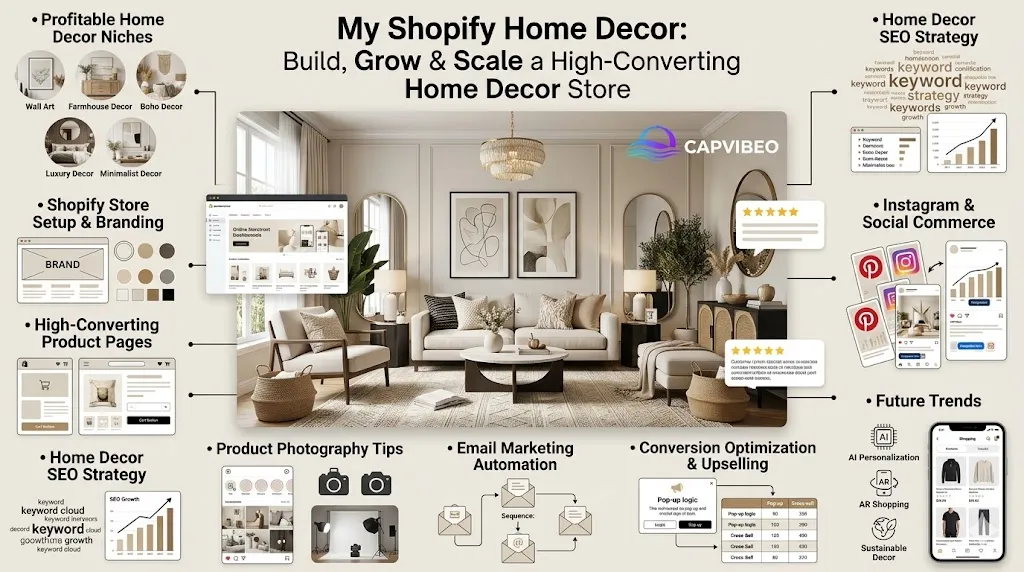
A strong My Shopify Home Decor article should not just show beautiful stores. It should teach readers how to build one, rank one, and grow one. The best way to beat inspiration-only competitor pages is to give readers a complete system: niche selection, design strategy, SEO, content marketing, conversion optimization, and long-term brand building.
That is exactly the kind of resource that helps homeowners, Decorators, Shopify founders, and design lovers all at once. It also creates strong internal linking opportunities for TheRoomsArt.com, especially across wall art, living room ideas, bedroom styling, and small-space decor.
If you publish this as a pillar page, it can become the core hub for your home decor topical cluster and support future articles, collections, and product guides.
Legal disclaimer: Prices, materials, trends, and product availability may change over time depending on region, suppliers, and brands. Always verify dimensions, materials, and compatibility before purchase or renovation.
