
Introduction
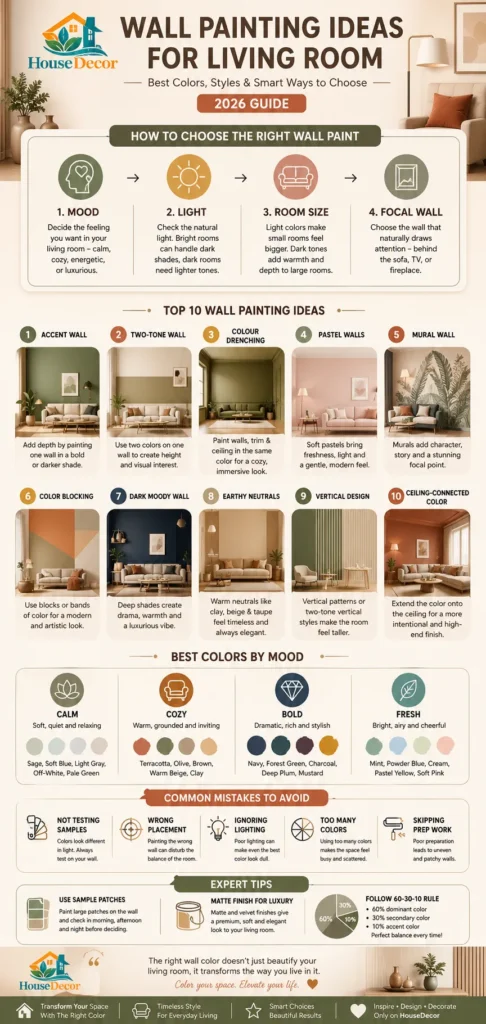
Your living room wall is not just a background. It is the first thing people notice when they walk in, and it has a big impact on how the whole room feels. The right wall Painting Ideas for Living Room spaces can make a room look bigger, warmer, brighter, more elegant, or more modern without changing the furniture.
That is why this topic matters so much in 2026. People no longer want plain walls that do nothing. They want a room that feels intentional. They want paint ideas that fit the size of the room, the amount of daylight, the furniture they already own, and the mood they want at home.
The mistake most people make is choosing a color because it looks nice in a photo. Real living rooms need more than that. They need balance, scale, and smart placement. A deep accent wall can create drama. A soft neutral can calm the space. Two-tone paint can raise the ceiling visually. Colour drenching can make the room feel rich and designer-led.
In this guide, you will find practical, stylish, and easy-to-use living room wall painting ideas that actually work in real homes. You will also learn how to choose the best option for your room, avoid common mistakes, and create a look that feels polished instead of random.
What Are Wall Painting Ideas for the living room?
Wall painting ideas for the living room are design approaches that use paint to improve the look, mood, and function of the main family or sitting room. These ideas can be simple, like repainting one wall in a stronger shade, or more advanced, like using colour blocking, two-tone layouts, or colour drenching.
They are not only about color. They are also about placement, finish, proportion, and style. For example, a soft beige wall in matte finish feels very different from a deep olive wall in a velvet-matte look. A painted arch behind a sofa gives a different effect than a full accent wall behind a TV.
Snippet-ready answer:
Wall painting ideas for the living room are paint-based design styles used to improve the mood, scale, and visual appeal of the space. They include accent walls, two-tone walls, colour drenching, murals, neutral palettes, and colour blocking.
Why Living Room Wall Paint Matters in 2026
Living rooms are doing more jobs now than before. They are used for relaxing, hosting guests, watching TV, working sometimes, and spending family time. Because of that, wall color needs to do more than “look nice.” It needs to support the way the room is used.
Here is why wall paint matters more than ever:
- It changes the mood instantly.
- It can make a small room feel larger.
- It can make a large room feel cozier.
- It helps define the focal point.
- It connects the sofa, rug, curtains, and art.
- It can make a simple room look more expensive.
In 2026, people are leaning toward more thoughtful walls. That means richer earth tones, softer neutrals, color drenching, and painted architectural details. The goal is not to fill the wall with random colors. The goal is to make the room feel complete.
Mini summary
If your living room feels flat, cold, unfinished, or too plain, the right wall paint choice can solve a lot of those problems without a major renovation.
How to Choose the Right Wall Paint for Your Living Room
Before you pick a color, study the room itself. A great wall color in one room may look wrong in another.
1. Look at the natural light
- North-facing rooms often need warmer shades.
- South-facing rooms can handle cooler or deeper colors.
- Dark rooms usually benefit from lighter, reflective tones.
- Bright rooms can carry richer, more saturated shades.
2. Check the room size
- Small rooms usually look better with lighter tones or selective accent walls.
- Large rooms can support moody colors, dark walls, and bold contrasts.
3. Notice the ceiling height
- Low ceilings can benefit from vertical color division or lighter upper walls.
- Higher ceilings can handle darker paint or colour drenching.
4. Study your furniture
Your paint should support the sofa, rug, coffee table, curtains, and artwork. If the furniture is bold, keep the wall calmer. If the furniture is plain, the wall can carry more personality.
5. Decide the mood first
Ask one question: what should this room feel like?
- Calm
- Cozy
- Bright
- Elegant
- Dramatic
- Creative
- Family-friendly
Once you know the mood, the paint choice becomes much easier.
Best Types, Styles, and Options for Living Room Walls
Here is a useful comparison of the most effective living room wall painting ideas.
| Style | Best For | Effect | Difficulty | Best Color Direction |
| Accent Wall | Beginners, focal points | Strong visual impact | Easy | Deep green, navy, terracotta, charcoal |
| Two-Tone Wall | Modern, small rooms | Adds height and depth | Medium | Neutral + contrasting tone |
| Colour Drenching | Designer look | Immersive and elegant | Medium | Olive, taupe, clay, soft gray |
| Neutral Wall | Calm rooms | Clean, bright, flexible | Easy | Beige, greige, cream, soft white |
| Moody Dark Wall | Cozy spaces | Dramatic and intimate | Medium | Navy, forest green, brown, charcoal |
| Color Block Wall | Creative homes | Modern and artistic | Medium | Muted pink, beige, rust, white |
| Mural Wall | Statement rooms | Custom and expressive | Hard | Earth tones, line art, soft color stories |
| Painted Panels | Formal or transitional rooms | Structured and upscale | Medium | Warm white, sage, muted blue |
Mini summary
If you want the safest option, choose a neutral wall or accent wall. If you want a stronger design statement, go for colour drenching, two-tone paint, or a moody dark wall.
Best Wall Painting Ideas for Living Room Walls
Classic Accent Wall
Paint one wall in a deeper or more colorful shade to create an instant focal point. This is one of the easiest and most effective wall paint ideas for living room spaces.
Best for: Behind the sofa, TV unit, fireplace, or main seating wall
Works well with: Beige, cream, wood, black accents, gold decor
Why it works:
It gives the room character without overpowering the whole space.
Two-Tone Wall Paint
Use two colors on one wall to create depth and visual structure. This is especially useful when you want a more modern and layered look.
Example pairings:
- Warm white + olive
- Greige + charcoal
- Cream + terracotta
- Sage + soft beige
Pro tip:
Keep the upper section lighter if you want the room to feel taller.
Colour Drenching
Colour drenching means painting the walls, trim, and sometimes the ceiling in the same colour. It creates a unified, designer-style finish.
Best colors for drenching:
- Olive
- Taupe
- Clay
- Dusty blue
- Soft gray
- Deep beige
Why people love it:
It feels expensive, calm, and immersive.
Cons:
It can feel too dark in a room without enough natural light.
Soft Pastel Living Room Walls
Pastels are not only for bedrooms or kids’ rooms. A soft blush, pale blue, muted mint, or light lavender can work beautifully in a living room.
Best use:
For airy, cheerful, and gentle spaces
Good pairings:
Wood tones, white trim, linen curtains, light oak furniture
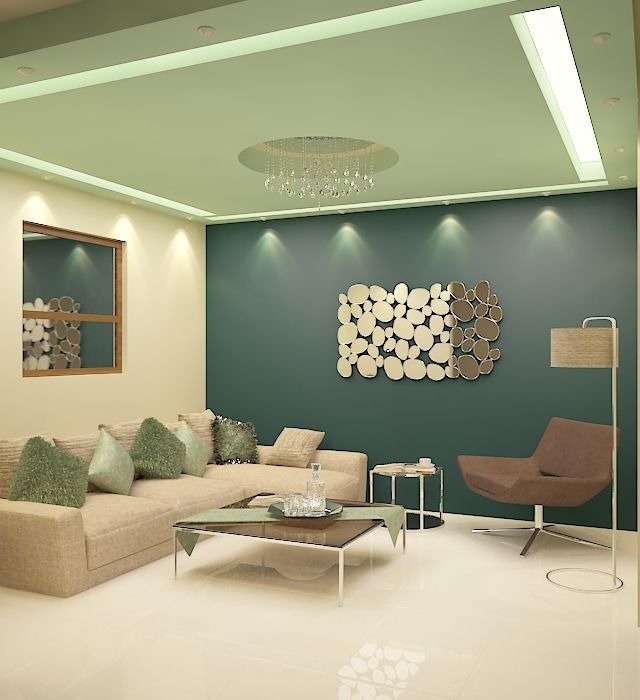
Moody Dark Wall
Dark walls can make a room feel rich and intimate instead of gloomy. The key is using the right balance of light furniture, mirrors, and texture.
Good dark shades:
- Charcoal
- Navy
- Forest green
- Espresso brown
- Deep burgundy
Best for:
Large living rooms or rooms with strong light sources
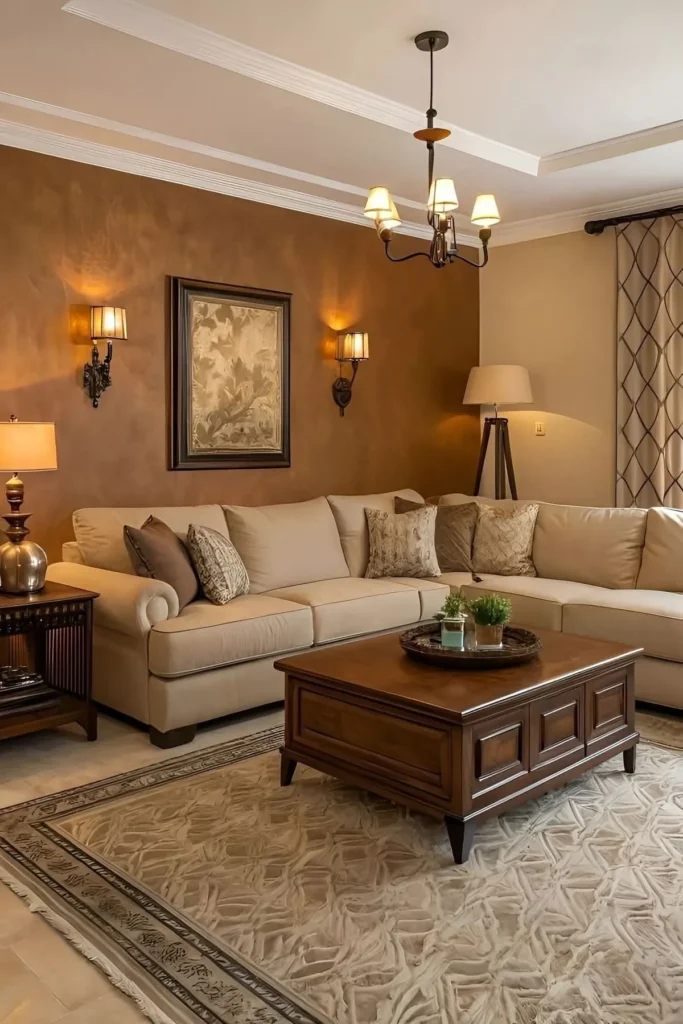
Earthy Warm-Neutral Wall
This is one of the strongest modern trends. Think clay, sand, camel, mushroom, taupe, and warm beige.
Why it works:
It feels calm, timeless, and easy to decorate around.
This style is ideal for:
Minimal homes, Scandinavian interiors, and cozy family rooms
Painted Arch Behind the Sofa
A painted arch adds shape and focus without needing a full accent wall. It works especially well in small living rooms or rental-friendly styling.
Use it for:
Artwork zones, reading corners, or sofa backdrops
Style tip:
Choose a tone slightly darker than the main wall for a subtle effect.
Color Block Wall
Color blocking uses geometric sections of paint to create a bold,d modern effect. It can be subtle or dramatic depending on the colors you choose.
Examples:
- A vertical block behind the sofa
- A band of color across one wall
- A corner block to frame furniture
Why it works:
It adds movement and style without expensive materials.
Painted Panels
If your living room has wall molding or panel framing, paint can highlight that structure beautifully. This creates a refined, classic, and elegant look.
Best paint choices:
Muted green, smoky blue, Soft Cream, dusty taupe
Best for:
Formal living rooms, transitional homes, and traditional interiors
Statement Art Wall with Paint
Sometimes the wall color should support the art, not compete with it. A strong painting or large-scale print can become the main feature.
Ideal approach:
Use a calm wall color and let the artwork provide personality.
Good colors:
Warm white, greige, pale olive, soft clay
Ceiling-Connected Color
Extend the wall color onto the ceiling for a more enveloping and polished feel. This makes the room feel intentionally designed.
Works best with:
Deep colors and small to medium rooms
Important:
Use carefully if the ceiling is already low.
Vertical Two-Tone Design
This is a clever way to make a room feel taller. Instead of splitting the wall horizontally, use vertical color placement or tall painted sections.
Best for:
Rooms with low ceilings or narrow walls
Minimal Neutral Wall with Matte Finish
A soft neutral wall in matte finish can look very elegant when the rest of the room has texture, art, and layered furniture.
Good shades:
- Off-white
- Greige
- Cream
- Mushroom
- Pale beige
Why it works:
It gives a quiet, expensive look without drawing too much attention.
Subtle Color-Pop Wall
Not every bold wall has to be loud. A muted blue, soft mustard, dusty rose, or sage can add just enough personality.
Best for:
People who want color but do not want a dramatic look
Geometric Wall Painting
Geometric lines, blocks, circles, or angled shapes create a modern artistic finish. This is a strong choice for contemporary homes.
Use it when:
You want the wall to feel creative, youthful, and fresh
Tone-on-Tone Painting
Use several shades from the same color family for a layered look. For example, cream, sand, and beige together can feel very rich when used well.
Why it works:
It adds depth without visual noise.
Soft Gray and White Combo
This is one of the safest and most adaptable living room combinations. It works in almost any style and can be warmed up with natural wood and fabric textures.
Best for:
Modern, minimal, or rental-friendly homes
Clay and Beige Warm Mix
Clay and beige together create warmth, softness, and personality. This palette looks especially good with woven decor and natural materials.
Best paired with:
Rattan, jute, oak, linen, brass
Olive Green Wall
Olive is one of the most versatile modern wall colors. It feels grounded, stylish, and calm without becoming boring.
Why people choose it:
It works well with both warm and cool furnishings.
Navy Blue Feature Wall
The Navy gives a room structure and depth. It can feel formal, elegant, and timeless.
Great for:
Living rooms with strong daylight or crisp white trim
Terracotta Statement Wall
Terracotta adds warmth and energy. It is especially strong in homes that want a slightly global, artisan, or earthy feel.
Works well with:
Cream, tan, natural wood, black decor
Painted Half Wall
A half wall can create a modern, practical finish. It is also useful when you want to protect the lower wall visually in busy family spaces.
Tip:
Use a darker lower half and lighter upper half for a balanced look.
Monochrome Living Room Wall
Use one color family across walls, trim, art, and accessories for a controlled, stylish result. This creates a strong visual identity.
Best for:
Design-led homes and minimalist interiors
Textured Paint Look
Even without wallpaper, you can choose a finish that adds depth. A matte, limewash-style, or chalky look can make the wall feel soft and tactile.
Best for:
Earthy, rustic, Mediterranean, and modern organic interiors
Gallery Wall with Painted Backdrop
A gallery wall looks more refined when the paint color supports it. Use a deep, calm, or mid-tone wall so the frames stand out clearly.
Good choices:
Charcoal, olive, greige, soft taupe, navy
Comparison: Which Living Room Wall Painting Idea Should You Choose?
| Goal | Best Choice | Why |
| Make the room feel larger | Light neutral wall or two-tone layout | Reflects light and opens the space |
| Add drama | Moody dark wall or colour-drenching | Creates a strong mood and depth |
| Keep it safe and timeless | Accent wall or neutral matte wall | Easy to live with and easy to style |
| Make it feel modern | Color block or geometric wall | Fresh, graphic, and trend-aware |
| Add luxury | Painted panels or colour drenching | Feels layered and designer-led |
| Make it cozy | Olive, brown, terracotta, or deep beige | Warm, grounded, and inviting |
Mini summary
The best choice depends on the problem you want to solve. A small room needs a different solution than a large formal room. Always choose the wall treatment based on function first, then style.
Best Living Room Colors by Mood
For a calm living room
Choose:
- Soft white
- Beige
- Greige
- Sage
- Pale blue
- Warm gray
For a cozy living room
Choose:
- Olive
- Terracotta
- Brown
- Deep beige
- Dusty burgundy
- Mushroom
For a fresh and airy living room
Choose:
- Cream
- Powder blue
- Soft pastel green
- Light gray
- Off-white
For a bold and stylish living room
Choose:
- Navy
- Forest green
- Charcoal
- Clay
- Mustard
- Deep plum
Snippet-ready answer:
The best living room wall color depends on the mood you want. Light neutrals feel calm and airy, warm, earthy tones feel cozy, and dark,k rich shades feel dramatic and elegant.
Guide to Choosing the Right Living Room Wall Paint
Decide the room’s main job
Ask whether the room is for relaxing, entertaining, family time, or all three.
Pick the focal wall
Common focal walls include:
- Behind the sofa
- Behind the TV
- Behind the fireplace
- The wall facing the entrance
Test color samples
Do not judge a color from a tiny chip. Paint samples on the wall and watch them in morning, Afternoon, and evening light.
Match the finish
- Matte finish: soft, modern, elegant
- Eggshell finish: practical and slightly reflective
- Satin finish: easier to clean, better for active spaces
Balance the furniture
If the wall is bold, keep the furniture simple. If the furniture is bold, keep the wall quieter.
Add texture
Paint works better when the room also has texture through rugs, cushions, curtains, wood, metal, or art.
Budget-Friendly Wall Painting Ideas for the Living Room
You do not need a big budget to improve a wall. In fact, some of the most effective ideas are low-cost.
Best budget options:
- Accent wall
- Half wall paint
- Painted arch
- Two-tone wall
- Soft neutral repaint
- Gallery wall with painted backdrop
Budget tips:
- Use one strong wall instead of painting the whole room.
- Choose simple patterns instead of custom murals.
- Buy sample pots before full-size paint.
- Use good prep work so the finish looks neat.
- Stick to fewer colors for a cleaner result.
Pros of budget-friendly options
- Lower cost
- Faster project
- Easy to update later
- Good for renters and first-time homeowners
Cons
- Less dramatic than a full-room design
- May need stronger styling to feel complete
Premium and Luxury Wall Painting Options
If you want the room to feel high-end, go beyond a simple color change.
Premium ideas:
- Colour drenching
- Painted wall panels
- Matte designer finishes
- Custom murals
- Architectural color blocking
- Full-height tonal wall treatment
Why do these feel luxurious
They show intention. They make the room feel like it was designed, not just painted.
Best luxury color directions
- Warm taupe
- Deep olive
- Soft stone
- Smoke gray
- Dark Navy
- Earthy clay
- Cocoa brown
Pros
- Strong visual identity
- Elegant and modern
- Works well in curated interiors
Cons
- Needs better planning
- Color mistakes are harder to hide
- May require professional painting for clean lines
Smart Future Trends in Living Room Wall Paint
Living room paint trends in 2026 are moving toward comfort, depth, and personality.
Key trends:
- Warmer neutrals
- Earth-inspired tones
- Colour drenching
- Two-tone layouts
- Soft contrast instead of harsh contrast
- Painted architecture
- Art-led focal walls
- Calm, livable luxury
What this means for homeowners
The future is not about loud color for the sake of it. It is about paint that supports the way the room feels and functions. The best walls now look thoughtful, not trendy for one season only.
Common Mistakes to Avoid
1. Choosing color from a tiny sample only
A small chip cannot show how a color will look in real light.
2. Ignoring undertones
Some beige shades look pink. Some gray shades look blue. Always test carefully.
3. Making the room too dark
Dark walls can be beautiful, but only if the room has enough light and balance.
4. Using too many focal points
If the wall is bold, the rest of the room should stay calmer.
5. Forgetting the finish
A color can look very different in matte versus satin.
6. Painting without prep
Bad prep leads to uneven edges, rough patches, and a cheap-looking result.
Mini summary
The most expensive-looking wall is not always the most colorful one. It is usually the one with the best planning, balance, and finish.
Expert Tips Most People Ignore
- Test at night, not just in daylight.
Artificial light can change everything. - Use the wall to correct a room problem.
A narrow room, low ceiling, or weak focal point can often be improved with paint alone. - Let one material lead.
If the wall is strong, keep the rug or curtains calmer. - Choose the wall after placing furniture.
The sofa and TV often decide the best focal wall. - Think in layers, not just color.
Paint, fabric, wood, art, lighting, and texture should work together.
Maintenance and Long-Term Value
A good wall paint choice should still look nice years later. That is why long-term value matters.
How to maintain painted living room walls:
- Dust walls lightly when needed.
- Clean marks carefully with a soft, damp cloth if the finish allows it.
- Keep leftover paint for touch-ups.
- Avoid harsh cleaners on matte walls.
- Reassess wall color when you change furniture or curtains.
Long-term value tips:
- Choose flexible colors that work with different decor styles.
- Avoid overly trendy shades if you want a timeless room.
- Pick finishes that are practical for your lifestyle.
- Use quality paint for better coverage and durability.
FAQs
The best wall is usually the one behind the sofa, TV, fireplace, or main seating area because it naturally becomes the focal point.
Light colors such as white, cream, soft beige, pale gray, and light sage usually make a living room feel more open.
Yes. Accent walls are still effective, especially when used with modern colors, art, painted panels, or two-tone layouts.
Matte finishes look soft and elegant, while eggshell finishes offer a small amount of sheen and are easier to maintain.
Yes, but only if the room has enough light and the rest of the decor is balanced with lighter or reflective elements.
Conclusion
The best wall painting ideas for living room spaces are the ones that make the room feel better to live in, not just prettier in a photo. A smart wall color can solve real design problems. It can brighten a dark room, calm a busy room, add depth to a plain room, or give a focal point to an open space.
If you want a safe choice, go with a neutral Accent Wall or a warm matte finish. If you want something more stylish, try two-tone paint, colour drenching, or a moody dark wall with strong balance.
The key is to choose with purpose. Do not pick a color randomly. Pick it based on light, room size, furniture, and mood. That is how a living room becomes memorable, comfortable, and well-designed.
