
Introduction
A Halloween Stone Wall Room Roll is one of the fastest, most cost-effective ways to turn a plain room into a haunted castle, dungeon corridor, crypt, fortress hallway, or eerie photo zone. Instead of repainting a wall, building scenery from scratch, or spending heavily on permanent décor, you can create a dramatic visual shift with a lightweight printed backdrop that changes the atmosphere almost instantly.
That is the main appeal of this decoration: it delivers a high-impact transformation with low effort. A flat wall becomes textured, aged, mysterious, and spooky. The room suddenly feels like part of a story. The ordinary becomes theatrical. The simple becomes immersive.
This guide explains what a Halloween Stone Wall Room Roll is, why it works so well, how to measure your space, how to install it cleanly, how to style it for different themes, and how to avoid common mistakes. It also includes practical advice on reuse, outdoor use, lighting, props, and room-specific setups. The goal is to give you a complete, easy-to-follow resource that helps you create a polished display rather than a rushed one.
The keyword clusters around this topic are broad, and that is exactly why the subject performs well in search. People may search for a stone wall backdrop, a Halloween room roll, scene setter, a stone wall scene setter, a haunted house backdrop, a medieval castle backdrop, a dungeon backdrop, Halloween wall decor, a plastic backdrop, a party backdrop, a photo backdrop, indoor/outdoor use, Sticky Tack, Velcro dots, or even a room transformation. All of these phrases describe the same overall buying intent: the searcher wants a temporary scenic surface that can create a themed environment quickly.
What Is a Halloween Stone Wall Room Roll?
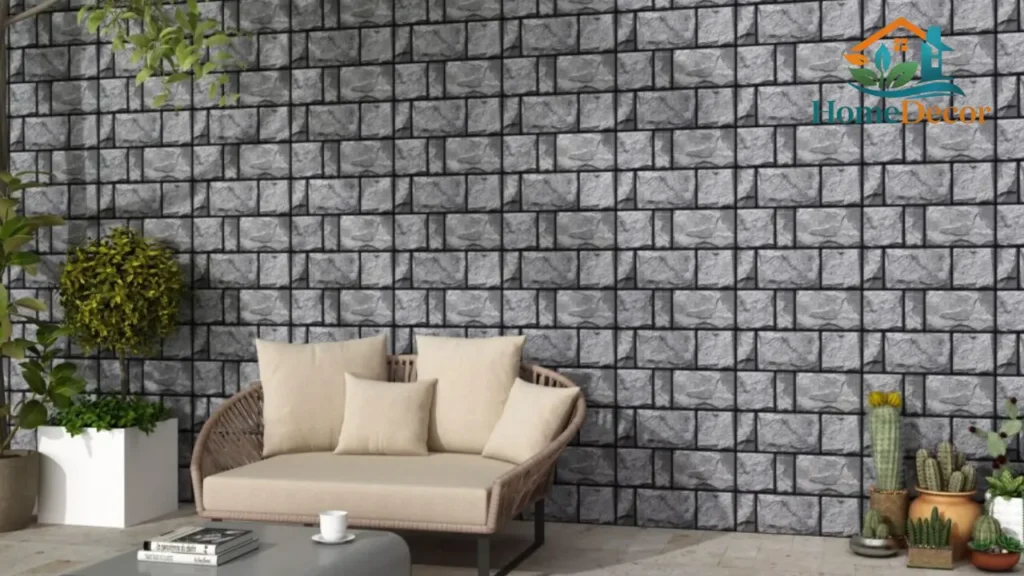
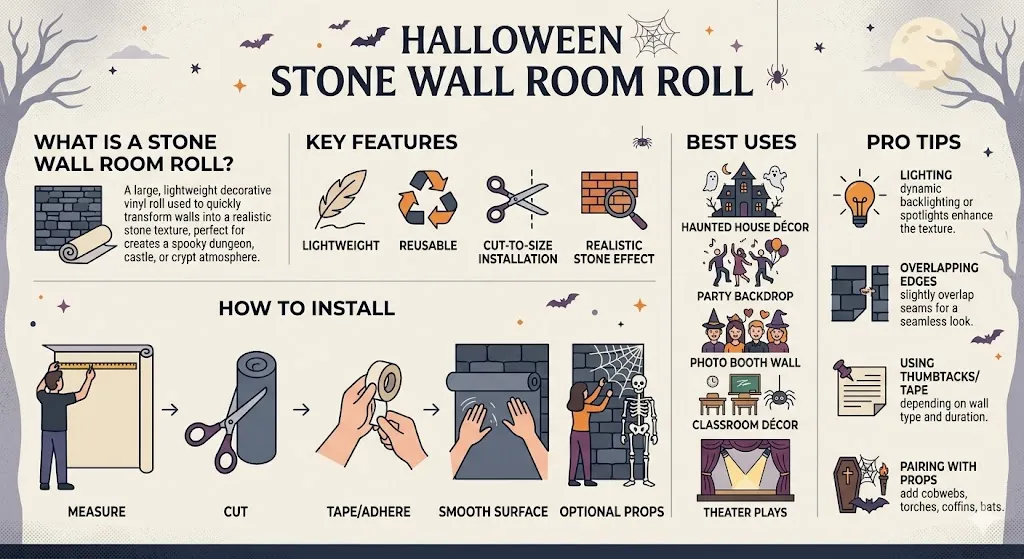
A Halloween Stone Wall Room Roll is a printed decorative sheet designed to look like stone blocks, castle masonry, or old fortress walls. It is typically made from thin plastic and sold as a temporary backdrop for Halloween events, haunted house scenes, themed parties, classrooms, entryways, and photo spaces.
In practical terms, it is a visual illusion tool. It does not build an actual wall. It creates the appearance of one. That is important because the product is usually lightweight, portable, and easy to handle. You can roll it out, attach it to a wall, and instantly change the mood of the space.
This kind of backdrop is often used as a scene setter because it works across several themes:
a haunted house hallway
a medieval castle room
a dungeon cell
a spooky crypt
a fantasy party wall
a dramatic photo background
The printed stone texture gives the eye a sense of age, structure, and atmosphere. Even when the sheet is thin, the printed design can make a room feel heavier, darker, and more cinematic. That is why the product is so common in seasonal decorating.
A Halloween Stone Wall Room Roll is also useful because it is temporary. Renters, event planners, teachers, small business owners, and homeowners all benefit from décor that can be installed quickly and removed later without major damage or permanent change. It is a flexible seasonal layer rather than a structural commitment.
Why This Decoration Works So Well
The power of a stone wall backdrop comes from perception. Human beings respond quickly to pattern, texture, scale, and context. A wall that looks like stone blocks immediately triggers associations with age, castles, dungeons, ruins, and haunted architecture.
It changes the scale of the room
When a large section of a wall is covered, the entire room feels transformed. The eye no longer sees a plain interior surface. Instead, it sees a set, a stage, or a themed environment. That shift is especially useful for Halloween because the holiday thrives on atmosphere.
It supports multiple themes
A stone wall design is versatile. It can support a creepy theme, a medieval theme, a fantasy theme, or a gothic party theme without clashing with the room. The same printed surface can feel spooky in one setup and regal in another, depending on the props and lighting around it.
It is simple to use
The convenience factor is huge. Most people want décor that looks impressive without demanding too much time or skill. A room roll answers that need. It does not require paint, tools, carpentry, or a permanent remodel. You can apply it, style it, enjoy the effect, and remove it later.
It creates visual consistency
One of the most overlooked strengths of a backdrop is that it unifies a space. Instead of random decorations floating in a plain room, the stone wall gives everything a shared background. That consistency makes candles, skulls, lanterns, webs, banners, and props feel more intentional.
It is strong for photos and events
Photo corners work better when the background looks deliberate. A stone wall backdrop gives guests something visually interesting behind them. It also helps event spaces feel curated rather than improvised. That makes it valuable for haunted houses, party rooms, schools, pop-up activations, and seasonal displays.
Quick Product Facts at a Glance
The exact specifications vary by brand, but the common setup is similar across most listings:
Material: thin plastic or lightweight printed backdrop
Common size: often 4′ x 30′
Attachment methods: tape, Sticky Tack, Velcro dots, removable fasteners
Best themes: Halloween, haunted house, medieval castle, dungeon, crypt, fantasy
Typical use: indoor spaces, party rooms, entryways, photo walls, and sheltered outdoor areas
The recurring size matters because it helps buyers estimate how much coverage they will get. A roll may look much larger in a product photo than it feels once it is actually hung on a wall. That is why measurement matters before purchase.
How Much Coverage Do You Need?
Before buying any roll of wallpaper, measure the wall. This is one of the most important steps in the entire process because backdrop coverage is easy to misjudge.
A Halloween Stone Wall Room Roll may be long, but your room may still need more than one roll depending on the wall width, ceiling height, and number of openings.
Measure in three steps
First, measure the width of the wall or walls you want to cover.
Second, measure the height of the wall from floor to ceiling.
Third, decide whether you want full coverage or only a feature wall.
If you only need a photo corner or a small haunted section, one roll may be enough. If you want a full haunted house effect, you may need several rolls. Hallways, large living spaces, and event rooms often use more material than people expect.
What affects the number of rolls?
Wall width
Ceiling height
Doors and windows
Overlap needed between sheets
Whether you want full-room or partial coverage
How much of the upper wall do you plan to leave exposed
Planning idea
A single roll often works well for one feature wall or a small display zone. Two or three rolls may be enough for a modest room transformation. Larger setups, long hallways, or haunted-house-style spaces may require additional rolls.
The safest approach is always to buy based on measurement, not guesswork.
How to Install a Halloween Stone Wall Room Roll
Installing a stone wall backdrop is usually simple, but a careful method makes the final result look much better. The difference between a rushed installation and a polished scene often comes down to spacing, alignment, and attachment.
Measure first
Do not open the roll and start attaching it immediately. Measure the wall, note the height, and decide where the roll should begin and end. If there are doors, windows, corners, or furniture pieces that affect placement, map those out first.
Gather your tools
You do not need many supplies. Most setups use some combination of:
Sticky Tack
Velcro dots
tape
scissors
a ruler or measuring tape
The best tool depends on the wall surface, the type of paint, and whether you want the backdrop to come down cleanly later.
Start in a hidden corner
It is usually smarter to begin where the edge is least visible. That way, if the first section is slightly uneven, the imperfection is hidden rather than obvious. This matters because the first seam often sets the tone for the rest of the wall.
Attach the top edge first
Work from the top down. Hold the sheet in place and secure the upper edge before moving to the lower. This helps the roll stay flatter and makes the sheet easier to align as you go.
Add fasteners at regular intervals
A backdrop looks better when it sits close to the wall. Use enough attachment points to prevent sagging, curling, or drifting. Thin plastic can shift over time, especially in warmer rooms or during long events.
Cut carefully around doors or windows
If your wall has openings, cut the material cleanly around them rather than forcing the sheet to bend awkwardly. Reattach loose edges with additional fasteners so the cut looks intentional and neat.
Overlap additional sheets
If you need more than one roll, do not leave an obvious gap between them. Slight overlap creates a better visual blend. A clean join keeps the illusion intact and prevents the wall from looking pieced together.
Finish the scene
The backdrop is the base layer, not the whole design. Once it is up, add lighting and props so the wall becomes part of an actual environment rather than just a printed sheet.
Best Tools for Hanging the Backdrop
Different projects call for different fastening methods.
Velcro dots
Velcro dots are a Good Choice when you want a more removable option. They are useful for renters, reusable setups, and walls where you want to minimize damage. They also help when you need the backdrop to be taken down and put back up later.
Sticky Tack
Sticky Tack is a common solution for lightweight plastic sheets. It works well for temporary décor and is often selected because it is easy to apply. It is especially useful when the goal is quick installation and simple removal.
Tape
Tape is the fastest and cheapest option. It can work well for short-term displays, but it is not always the best choice for delicate painted walls or long-duration use.
What to avoid
Avoid using a fastening method that is too weak for the plastic. Also, avoid methods that may harm the surface underneath. The ideal setup holds the sheet flat while still allowing removal later without unnecessary residue or paint damage.
Styling Ideas That Make the Wall Look Better
The room roll is only the beginning. What makes the backdrop feel believable is the styling around it. A few carefully selected props can make a huge difference.
Haunted and messy style
Use dim lighting, darker tones, spider webs, chains, and rough-looking props. This approach feels abandoned, spooky, and atmospheric. It works well when you want the wall to feel like part of a ruined fortress or haunted corridor.
Clean and dramatic style
Let the stone pattern breathe. Keep the number of props lower and use strong visual anchors instead of clutter. This style is excellent for photo walls because guests can see the backdrop clearly.
Medieval and elegant style
Add gold, brass, dark wood, velvet, and candlelight. This turns the stone wall into a castle interior rather than a haunted ruin. It works especially well for fantasy parties, costume events, and themed dinners.
Compact-space style
In a small room, less is often more. Cover one wall or one corner rather than trying to transform the entire space. A focused design can still create a strong visual impact without overwhelming the room.
Budget style
Use affordable accessories such as paper bats, battery candles, faux cobwebs, plastic spiders, and one or two larger accent items. The stone wall backdrop does most of the visual work, so you do not need an expensive collection of props to make the space feel complete.
Best Color Pairings
A stone wall backdrop usually looks strongest when paired with tones that feel old, dramatic, or shadowy.
Good pairings include black, deep red, dark green, purple, bronze, gold, antique brown, and warm gray.
These colors reinforce the illusion of a haunted, ancient, or medieval environment. They also help the wall feel layered rather than flat.
Strong combinations
Stone gray with black candles and amber lighting
Stone gray with dark red fabric and brass lanterns
Stone gray with purple accents and skeleton props
Stone gray with dark wood and spider webbing
The key is balance. Too much bright white light can flatten the printed surface and reduce the depth effect. Warm, moody, or directional light is usually better.
Best Lighting Ideas
Lighting is one of the most important tools in the entire setup. A backdrop can be visually strong on its own, but lighting can transform it from “decorated” to “immersive.”
Warm lighting
Warm bulbs make the wall feel older and more atmospheric. They soften the printed stone and create a more believable haunted or castle-like tone.
Flickering candles
Battery Candles or LED candles add movement and warmth without the fire risk of real flames. The subtle flicker helps the scene feel alive.
Uplights
A low-positioned light aimed upward can emphasize texture and shadow. This is especially effective on stone-style prints because it gives the wall more dimensional contrast.
Shadowed corners
A little darkness around the edges of the room increases the theatrical effect. Bright, even lighting can make the backdrop look flat, while shadow helps it feel deeper and more realistic.
Furniture and Prop Pairing Ideas
The furniture in the room should support the backdrop, not fight it. A stone wall scene feels more believable when the surrounding pieces match the theme.
Good furniture choices include a small wooden table, a dark chair, a narrow console, an old-looking stool, a side table with candles, or a prop chest.
Avoid bright modern furniture if you want the illusion to remain strong. A sleek white table can look out of place against a medieval or haunted background, while dark or rustic pieces blend in more naturally.
Example scene setups
Haunted entry:
Stone wall on the main wall, one lantern, one old chair, spider webs in the corners.
Castle photo corner:
Stone wall behind the photo spot, velvet cloth on a table, candle cluster, banner, or crest.
The more coherent the scene, the stronger the illusion.
Creative Ways to Use a Halloween Stone Wall Room Roll
This product is more flexible than many people realize. It can serve several decorative purposes beyond a simple wall cover.
Haunted house hallway
A hallway is one of the best places to use a stone wall backdrop because the narrow shape naturally creates a tunnel-like feeling. With dim lighting and a few horror elements, a hallway can start to resemble a dungeon passage or castle corridor.
Halloween photo backdrop
This is one of the strongest use cases. People love taking photos in front of a wall that looks like an actual set piece. A stone wall gives the images structure and mood.
Medieval castle theme
If the event leans toward fantasy rather than horror, the same printed wall can become the background for knights, queens, dragons, wizards, and royal-style décor. Add banners, gold accents, and candlelight to push the castle look further.
Dungeon or crypt scene
For a darker aesthetic, pair the backdrop with chains, deep shadows, and ominous accessories. The wall can then suggest a prison, tomb, basement chamber, or hidden crypt.
Front porch or entry area
Covered entry areas and sheltered porches can also benefit from a stone wall backdrop, especially when the goal is to create a strong first impression for trick-or-treaters or party guests.
Classroom, office, or retail display
Temporary seasonal décor works especially well in spaces that change themes often. Teachers, office managers, and business owners can use a room roll to create a themed corner without altering the room permanently.
Outdoor Use: What to Know
Some listings describe these backdrops as suitable for indoor and outdoor use. In practice, outdoor performance depends on shelter, wind, sunlight, and how long the backdrop remains exposed.
A thin plastic sheet can shift in the wind, stretch in strong heat, or become difficult to secure on open surfaces. That means a sheltered space is generally safer than a completely exposed area.
Better outdoor locations
Covered Porch
patio with little wind
sheltered entryway
protected event wall
Riskier outdoor locations
open yard
direct hot sunlight
windy corner
rain-exposed surface
The product may technically work outside, but conditions matter. For reliable visual results, sheltered areas are usually the smarter choice.
Maintenance, Care, and Reuse Tips
A Halloween Stone Wall Room Roll can often be reused if it is removed and stored carefully.
Remove slowly
Do not yank the sheet off the wall. Pull it down slowly so the plastic does not tear or crease unnecessarily.
Use gentle adhesives
Removable options such as Velcro dots are often easier to manage than harsher tape, especially when reuse matters.
Store it rolled or flat.
Avoid folding the material too tightly. Heavy folds may create visible crease lines later.
Keep it dry
Moisture can damage the sheet or weaken the surface over time, so dry storage is best.
Check it before the next use.e
Inspect the edges, corners, and seams before re-hanging. Small tears can be repaired or hidden, but it is easier to address them early.
Common Mistakes to Avoid
Even a good backdrop can look weak if the installation is careless. These are the most common mistakes.
Buying before measuring
This is the biggest error. A backdrop may look huge in a product image, but still be insufficient for your wall.
Using too few fasteners
If the sheet sags or curls, the illusion breaks. Secure placement matters.
Ignoring windows and doors
Openings need to be planned. A clean cut around them improves the final look.
Forgetting overlap
A visible seam between sheets can destroy the effect. Slight overlap keeps the wall believable.
Leaving the backdrop unsupported
The printed wall is stronger when it has help from props, lighting, and a few well-chosen accessories.
Overusing bright light
Strong white light can flatten the printed texture and make the backdrop look less realistic.
Trusting outdoor use too much
Outdoor conditions can undermine even a good product. Wind, moisture, and sunlight are real factors.
Design Ideas by Room Type
Living room
Use one wall behind a sofa, console, or side table. Add candles, a lantern, and one or two strong props.
Hallway
A hallway can become a dramatic passageway with wall coverage on both sides. This is one of the most immersive uses of the backdrop.
Entryway
An entry wall immediately sets the mood when guests arrive. Pair the backdrop with a welcome table or themed sign.
Classroom
Create a seasonal reading nook, photo corner, or Halloween display wall that feels fun rather than overwhelming.
Party room
Place the backdrop behind the snack table, gift table, or photo station so it becomes one of the first things guests notice.
Shop display
A stone wall can give a store a themed seasonal feature wall and help merchandise feel more event-driven.
Smart Modern Ideas
A stone wall backdrop does not have to feel old-fashioned. It can also be used in a more current, experience-driven way.
LED accents
Battery-operated LED strips or small uplights can modernize the display while still preserving the eerie or castle-like mood.
QR code signs
A small QR code sign can link guests to a playlist, photo album, contest entry, or event information.
Branding corner
Businesses can place a logo sign or call-to-action graphic in front of the stone wall to blend décor with promotion.
Dedicated photo station
A simple chair, prop table, or standing marker can guide guests to the best photo position and make the scene more usable.
These modern touches turn the backdrop into more than decoration. They make it part of an experience.
FAQs
Most current listings describe it as a lightweight plastic backdrop or thin plastic sheet. Halloween.com even confirms in its Q&A that the material is a thin plastic sheet.
The most common size shown by the major listings I checked is 4 feet by 30 feet. Beistle, Halloween.com, and Windy City Novelties all show that format.
Some retailers list indoor/outdoor use, but sheltered outdoor areas are safer. Thin plastic can move in the wind and stretch in the sun.
Velcro dots, Sticky Tack, and tape are common choices. Windy City Novelties recommends Sticky Tack, and Entertaining Diva says Velcro dots work best for many setups.
Measure the wall lengths, add them together, and compare that total to the roll length. Entertaining Diva gives a simple room-measuring method that works well for planning.
Conclusion
A Halloween Stone Wall Room Roll is one of the most practical and visually rewarding ways to create a Halloween or fantasy atmosphere. It works because it transforms a blank surface into a believable environment. It is lightweight, temporary, adaptable, and strong enough to support a wide range of themes.
The best results come from a combination of careful Measurement, neat installation, smart lighting, and just enough props to complete the illusion. Whether you are building a haunted hallway, a castle photo corner, a dungeon scene, or a seasonal party wall, the backdrop gives you a foundation that can be styled in many different ways.
The real value of this decoration is not only that it covers a wall. It changes how the room feels. It creates mood, depth, story, and visual focus. That is why this simple printed roll remains one of the most.
