
Introduction
Dining Room Chair Slipcovers are one of the easiest ways to upgrade a dining space without replacing the chairs. Worn fabric hides beneath their cover. Spills slide off without soaking through. A stiff room warms up when these soft layers appear. Even ordinary dinners gain a quiet kind of grace. Parents find them handy. Renters appreciate the quick fix. Hosts like how things stay neat. Design lovers keep style intact. Function never takes a back seat. Chairs remain easy to wipe, sit on, and live with. The balance stays clear – better looking does not mean less useful.
People want more than just slipcovers when they search online. What fits their couch matters a lot. So does how big the chair is. Cleaning ease shows up often – like machine-washable material. Stretchy versions come up again and again. Some look for something dressier, others need durability. Ideas on how to match decor pop into queries, too. Each detail connects to actual choices at purchase time. Covering every angle in one spot makes sense. Real questions deserve full answers.
This piece dives deeper than just pretty pictures. Picture this: knowing exactly what slipcovers do, not guessing. Measuring chairs becomes simple when the steps are clear. Each home needs something different – fabric choices follow suit. Getting them on without wrinkles? Technique matters. Style should blend, never clash. A fresh dining space can be sensible, nice to see, and last longer, too. Look into covers closely if money matters.
What Are Dining Room Chair Slipcovers?
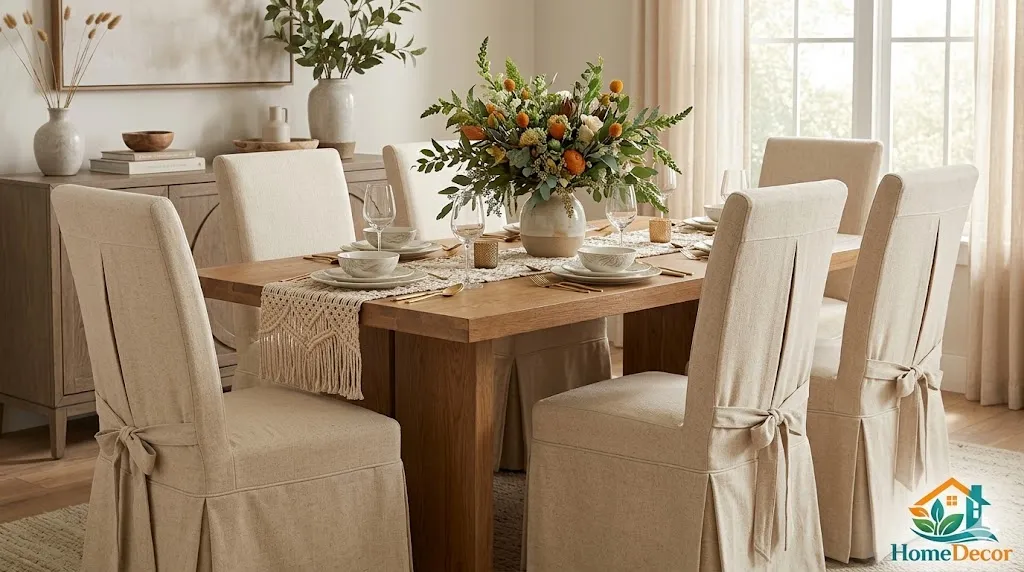
Dining room chair slipcovers are removable fabric covers designed to fit over dining chairs for decoration, protection, or both. Some are made from stretchy fabrics that hug the chair closely. Others use tailored seams, ties, pleats, or skirts to create a more traditional or formal appearance.
At the simplest level, a slipcover does three jobs:
It shields the original chair surface from stains, wear, and fading.
It gives the room an updated appearance without buying new chairs.
That is why slipcovers remain popular in homes where dining chairs are used every day. They are not only decorative accessories. They are also utility pieces that improve function, help preserve furniture, and support a more flexible interior design.
Why do people use them?
Most people buy chair slipcovers when they want to:
Refresh older dining chairs
Cover discoloration, stains, or tired fabric.
Coordinate-mismatched chairs
Match a new table or updated room palette. te
Protect furniture from children, pets, and heavy .use
Prepare for seasonal decorating, parties, or formal gatherings
So, in practical terms, slipcovers sit at the intersection of style and utility. They are both design decisions and household solutions.
Why Dining Room Chair Slipcovers Matter
A dining room is one of the busiest spaces in a home. Chairs are moved constantly, food spills are inevitable, guests have different habits, and the room often needs to look presentable with minimal effort. Slipcovers help because they create a removable layer that can be washed, swapped, and refreshed without major expense.
Here are the main reasons they stay relevant:
They protect dining chairs from daily wear, stains, and fading.
They help homes with kids and pets stay cleaner.
For style-conscious homeowners, the biggest advantage is adaptability. One set of slipcovers can make a room feel casual in the summer, layered in winter, and more refined for special occasions. That flexibility is one of the strongest semantic themes around this keyword: protection, transformation, convenience, and visual harmony.
Real-world value in everyday homes
A good slipcover is not just a cover. It is a small upgrade that changes the visual tone of the whole dining area. It can also delay the need for replacement furniture, which saves money and reduces waste.
Top Dining Room Chair Slipcover Types
Different slipcover styles solve different needs. Many articles mention the types, but do not explain when each one actually makes sense. That is where a more useful guide helps.
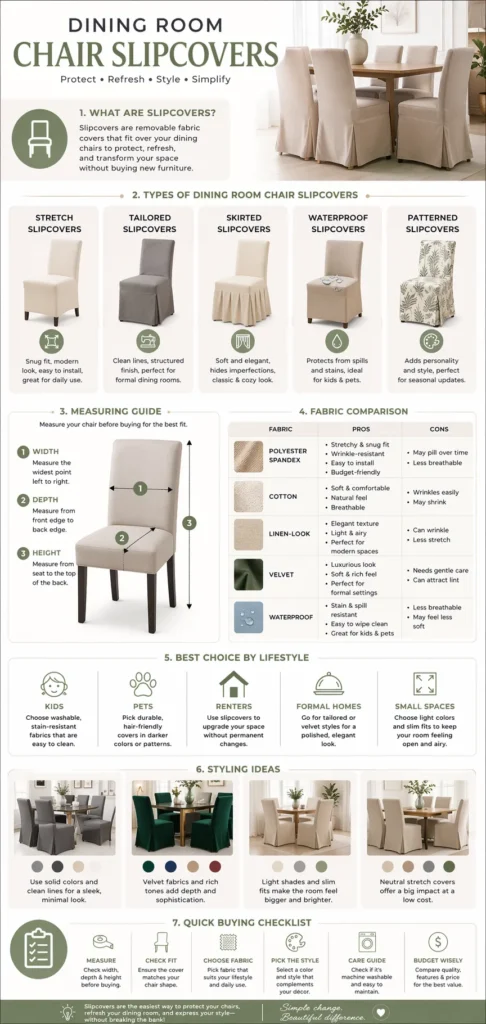
| Slipcover Type | Best For | Main Look | Main Advantage | Watch Out For |
| Stretch slipcovers | Everyday dining, modern homes, rentals | Smooth and fitted | Easy to install and versatile | May not suit highly detailed chair shapes |
| Tailored/fitted slipcovers | Formal dining rooms, events, and polished interiors | Clean and structured | Elegant, custom-like finish | Fit needs to be accurate |
| Loose/skirted slipcovers | Traditional, farmhouse, cottage, classic rooms | Soft and relaxed | Hides older chairs very well | Can look bulky if poorly sized |
| Water-resistant slipcovers | Kids, pets, high-use kitchens | Practical and clean | Better stain protection | May feel less decorative |
| Patterned slipcovers | Seasonal updates, design-led homes | Bold or decorative | Adds personality quickly | Patterns can date faster |
Stretch slipcovers
Stretch slipcovers are the most common Modern Choice. They are usually made from polyester-spandex or similar blended fabrics, which allow the cover to contour around the chair and deliver a tidy silhouette.
They are a strong fit for:
Busy households
Rental homes
Everyday dining spaces
People who want a quick installation
Homes that prefer a neat, low-fuss look
Stretch covers are often the best answer for practical search intent because they combine convenience, affordability, and visual simplicity.
Tailored slipcovers
Tailored slipcovers are designed to look more structured. They work especially well when the dining room is part of a polished interior rather than a casual family zone.
They are a strong choice for:
Formal dining rooms
Dinner parties
Special occasions
Elegant or traditional décor schemes
Tailored styles often appeal to people looking for sophistication, order, and a more custom-made appearance.
Loose or skirted slipcovers
Loose or skirted slipcovers have a softer profile and typically drape more freely over the chair. They are excellent for masking older frames, minor damage, or chairs that do not have a sleek design.
They are a strong fit for:
Farmhouse interiors
Cottage-style rooms
Traditional dining spaces
Homes that have a relaxed visual texture
When properly sized, skirted styles can create warmth and charm. When poorly fitted, they can appear oversized or heavy, especially in a smaller room.
Water-resistant slipcovers
Water-resistant slipcovers are the practical option for families with children, pets, or frequent entertaining. These are built to handle messes more easily and often clean up faster than delicate decorative fabrics.
They are especially helpful in:
High-traffic homes
Busy kitchens
Homes with young children
Households where spills are common
Patterned slipcovers
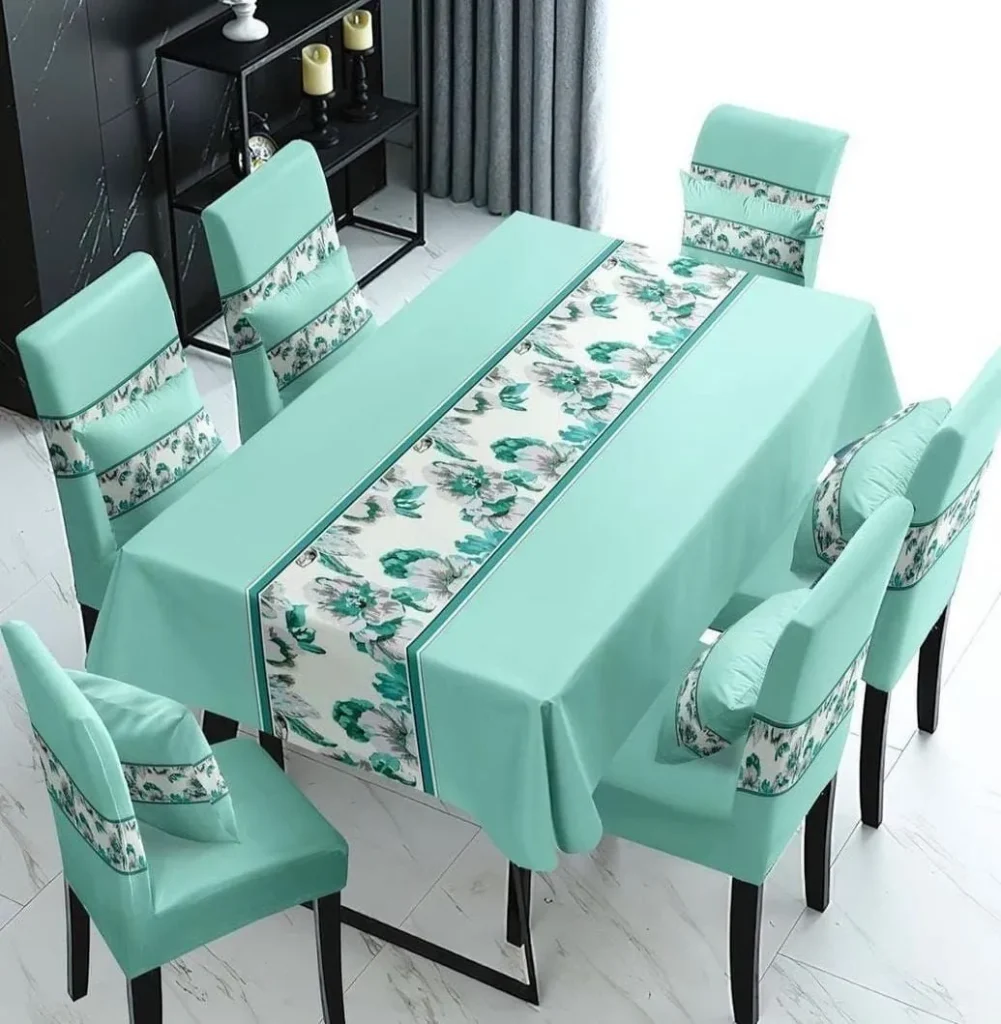
Patterned covers add energy, rhythm, and personality. They can be used to make a dining room feel seasonal, lively, or more expressive.
They work well for:
Accent-driven interiors
Holiday updates
Rooms that need a strong focal point
People who want their décor to feel less plain
The only caution is that patterns are more trend-sensitive. A bold print may look great now, but feel dated sooner than a solid neutral.
How to Measure Dining Room Chairs for a Better Fit
Fit is the biggest factor separating a beautiful slipcover from a frustrating one. A well-fitted cover looks intentional, structured, and polished. A poorly chosen one can look wrinkled, saggy, or constantly out of place.
Measuring before buying reduces the risk of returns and disappointment. Most retailer guides recommend checking the chair’s width, depth, and height before selecting a slipcover.
Step-by-step measuring guide
Measure the widest part of the chair from left to right.
Measure the seat width if the slipcover is designed for a tighter fit.
Compare all measurements against the product’s size chart before ordering.
| Measurement | How to Measure | Why It Matters |
| Width | Measure the widest left-to-right point | Prevents the cover from being too tight or too loose |
| Depth | Measure from the front to the deepest back point | Helps the cover sit correctly on the seat |
| Height | Measure from the seat to the top of the back | Important for back coverage |
| Seat width | Measure the sitting area across the seat | Useful for fitted or tailored covers |
| Back style | Note whether the chair is armless, curved, or detailed | Determines whether stretch or tailored styles work best |
Simple fit rule
A useful rule is to compare your chair measurements with the manufacturer’s size guide before purchase. “Universal” slipcovers still have size limits. The best result comes from matching the product to the chair type, not just the room style.
What to check before buying
Is the chair armless or armed?
Is the back straight, curved, or ornate?
Does the chair have a wide base?
Is the cover designed for your exact chair shape?
These small details can make a major difference in the final appearance and in everyday usability.
How to Choose the Best Fabric for Dining Room Chair Slipcovers
Fabric choice influences comfort, durability, maintenance, and style. It also changes the emotional tone of the room. A room with crisp stretch fabric feels different from one with velvet, linen-look material, or a soft cotton blend.
Polyester-spandex blends
This is one of the most common modern options. It stretches well, is easy to remove, and creates a smooth, fitted appearance. It works especially well for busy homes that need low-maintenance practicality.
Best for:
Everyday dining
Families
Fast installation
Clean, modern interiors
Cotton and cotton blends
Cotton feels natural, breathable, and comfortable. It suits casual dining rooms and relaxed décor styles. The main trade-off is wrinkle resistance, since cotton can crease more easily than synthetic blends.
Best for:
Casual homes
Soft interior styles
People who prefer a natural fabric feel
Linen-look fabrics
Linen-look covers offer a light, airy, and refined appearance. They are a great fit for coastal, Farmhouse, European-inspired, and minimalist spaces.
Best for:
Bright interiors
Calm color schemes
Light, elegant dining rooms
Velvet or velvet-look fabrics
Velvet delivers a richer, more luxurious visual effect. It suits formal dining spaces, holiday tables, and homes that want a more elevated atmosphere.
Best for:
Formal rooms
Special events
Warm, sophisticated décor
Water-resistant or wipe-clean materials
These are the practical winners for households with pets, toddlers, or heavy entertaining. They may not feel as soft as textile-only options, but they are often superior for handling accidents and quick cleanups.
Best for:
Kids and pets
Busy kitchens
High-traffic dining rooms
The easiest fabric rule
Choose the most durable fabric you can realistically live with visually. A cover that looks beautiful but is too delicate for your lifestyle will rarely stay beautiful for long. In other words, the best choice balances aesthetics, functionality, and maintenance.
Best Dining Room Chair Slipcovers by Lifestyle
There is no single “best” slipcover for every home. The right product depends on use case, room size, interior tone, and cleaning habits.
For families with kids
Choose washable, stretchy, stain-friendly covers. Easy removal matters more than decorative details. In family settings, resilience and cleanup speed are more valuable than intricate styling.
For homes with pets
Look for thicker fabric, secure edges, and darker or patterned colors that help disguise fur, paw marks, and small smudges. A pet-friendly slipcover should feel stable and remain presentable between washes.
For renters
Slipcovers are ideal for transforming older chairs without making permanent changes. Neutral tones are often the safest choice because they blend into different rental interiors and personal styles.
For formal dining rooms
Tailored or pleated slipcovers create a more refined appearance for special dinners, celebrations, and gatherings. These styles work best where presentation matters as much as protection.
For small dining spaces
Pick light colors and slim-fitting covers so the room feels open rather than crowded. Avoid oversized skirts or bulky textures if the dining area is already compact.
For premium interiors
Velvet, tailored lines, and refined neutral shades create a high-end finish. In these spaces, slipcovers should complement the furniture rather than hide it completely.
| Lifestyle | Best Choice | Why It Works |
| Kids | Washable stretch covers | Easy care and fast cleaning |
| Pets | Darker, stronger fabrics | Better for fur and daily use |
| Renters | Neutral slipcovers | Easy update with no permanent change |
| Formal homes | Tailored or pleated styles | More polished look |
| Small spaces | Light, slim-fitting covers | Keeps the room open |
| Luxury interiors | Velvet or tailored fabric | Rich and refined style |
Styling Ideas for Modern, Luxury, Small, and Budget Homes
Dining room chair slipcovers are not only practical. They are also a styling tool that can shift the mood of the entire space.
Modern style
Use solid colors, crisp stretch fabric, and simple silhouettes. White, beige, taupe, grey, charcoal, and muted olive all work well in modern rooms because they create visual clarity and continuity.
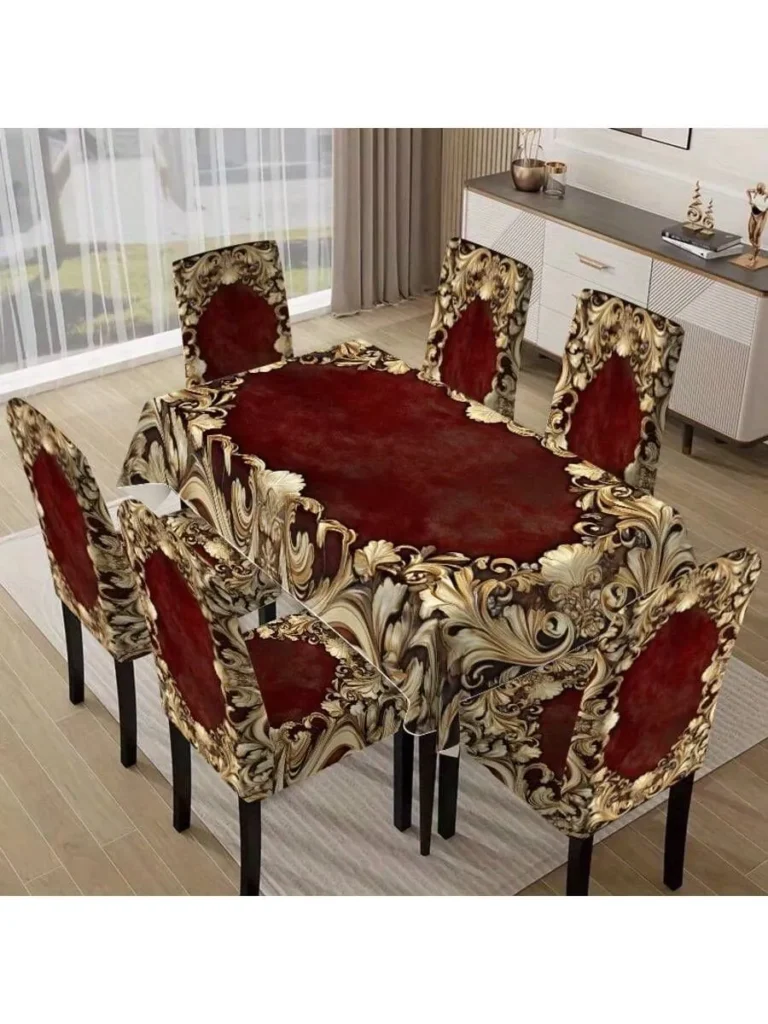
Luxury style
Choose velvet, deep jewel tones, or well-tailored finishes. Pair them with statement lighting, elegant tableware, and a coordinated runner or centerpiece to build a more layered look.
Small-space style
In a compact dining area, slim-fitting covers and lighter shades help preserve openness. Heavy skirts, dark, bulky fabrics, and large patterns can make the room feel visually dense.
Budget style
A set of neutral stretch slipcovers can transform a room more dramatically than many smaller décor purchases. The key is consistency. Repeating one cohesive shade helps the space feel intentional and upgraded.
Seasonal style
Swap lighter fabrics in spring and summer, then switch to richer textures in autumn and winter. This creates a refreshed look without major spending or Permanent Changes.
Simple color ideas
Modern: grey, beige, white, black
Warm and cozy: taupe, cream, soft brown
Elegant: navy, emerald, deep wine
Fresh and bright: ivory, light grey, soft sage
How to Install Dining Room Chair Slipcovers Properly
Installation may seem simple, but the method matters. The right sequence helps the slipcover sit flat, look centered, and stay in place longer.
Simple installation process
Clean the chair before covering it.
Start from the top of the chair back.
Pull the fabric evenly over the seat.
Smooth the sides gradually, rather than all at once.
Tuck extra fabric into the corners of the seat.
Check the hem and adjust until the cover hangs straight.
Sit down once, then smooth it again if needed.
Installation tips
Work from top to bottom
Use both hands so the fabric stays even.
Check the slipcover again after the first few uses
For stretch covers, keep the seams centered
For tailored covers, align the back seam before smoothing the seat
Why installation matters
A well-installed slipcover can make a mid-range product look more premium. A sloppy installation can make even a quality cover look cheap. That is why fit and placement both matter. In SEO terms, this is a high-value informational subtopic because it answers a real user problem, not just a product definition.
Common Mistakes to Avoid
Many slipcover problems come from a few repeated mistakes.
Buying without measuring
This is the most common mistake. Even a stylish cover will fail if the dimensions are wrong.
Choosing style over function
A beautiful fabric is not useful if it wrinkles badly, stains easily, or is too fragile for daily use.
Ignoring chair shape
Some covers work beautifully on basic armless chairs but fail on chairs with curves, arms, or detailed backs.
Picking the wrong color
A shade that clashes with the table, flooring, or walls can make the entire room feel visually disconnected.
Treating “universal” as an exact fit
Universal fit does not mean a perfect fit. It still has size boundaries.
Forgetting care instructions
Always check whether the cover can be machine-washed, hand-washed, or spot-cleaned.
Using heavy styles in small rooms
Bulky skirts and thick fabrics can make a compact dining room feel crowded.
A simple rule to remember
Measure first. Match the chair shape. Choose fabric for real life, not only for photos.
Care, Cleaning, and Durability Tips
A slipcover should make life easier, not more complicated.
Care basics
Wash on a gentle cycle when the label allows it.
Use mild detergent.
Avoid harsh bleach unless the care label says it is safe.
Air-dry whenever possible to reduce shrinkage risk.
Refit the cover while it is slightly damp if the fabric allows it.
Durability tips
Rotate covers if you own more than one set
Keep one set for everyday use and one for special occasions.
Choose darker shades or textured materials for a high-traffic dining room.s
Inspect seams and elastic after washi.ng
The easiest habit that helps most
Gentle washing and careful refitting preserve the shape and finish over time. That small routine extends the life of the cover and helps it keep a cleaner, more polished look.
Smart, Modern, and Future-Ready Slipcover Ideas
Home design is moving toward flexible, adaptable, lower-waste living. That makes dining chair slipcovers even more relevant.
Useful future-ready ideas
Keep one neutral set for daily .use
Add one seasonal set for holidays or events
Choose washable fabrics to reduce replacement waste.
Use slipcovers to extend chair life instead of replacing furniture too early.
In open-plan homes, match slipcover colors to nearby décor for a more connected look
This also aligns with modern user intent. Searchers increasingly ask longer, more specific questions s, such as which fabric works best, how to measure, how to wash, and which style suits a small room. A complete guide is better positioned to satisfy that full query set than a short, shallow article.
Pros and Cons of Dining Room Chair Slipcovers
Pros
Quick and Affordable room refresh
Protects original chair upholstery
Easy to swap for seasons or events
Often machine washable
Helpful for renters, families, and hosts
Available in many styles and colors
Cons
Poor sizing can ruin the look
Some fabrics wrinkle more easily.
Low-quality covers may slip or lose shape.
Heavy detailing can feel bulky in small rooms.
Not every chair shape works with every style
Simple takeaway
The advantages usually outweigh the disadvantages when the slipcover is measured correctly and matched to the right chair type, fabric, and room style.
How to Choose the Right Dining Room Chair Slipcovers Before You Buy
A smart purchase starts with a simple evaluation process.
Ask these questions
What is my chair shape?
What are my exact measurements?
Do I want a stretch, tailored, or skirted?
Do I need washable fabric?
Is this for daily use or special occasions?
What color works best with my room?
Will the cover fit my lifestyle?
Best buying rule
Start with fit, then fabric, then style.
That sequence saves the most money and produces the strongest result.
| Goal | Best Choice |
| Easy everyday use | Stretch slipcovers |
| Formal look | Tailored slipcovers |
| Family and pets | Washable, stain-friendly fabric |
| Small room | Slim, light-colored covers |
| Elegant space | Velvet or linen-look fabric |
| Budget update | Neutral stretch covers |
FAQs
They are used to protect chairs, improve the look of the dining room, and give old or mismatched chairs a fresh finish without replacing them.
Many modern slipcovers are washable, but always check the care label first. Gentle washing and air-drying usually help the cover last longer.
Measure the chair width, depth, and back height, then compare those measurements with the product size guide before buying. Retail measuring guides recommend checking the full chair size before choosing a cover.
Stretch slipcovers are usually the easiest choice for everyday use because they are simple to install, flexible, and visually neat.
Yes. Tailored or pleated styles can look polished enough for formal rooms, dinner parties, and special occasions.
Conclusion
Start with a chair cover if you want to change, but not cost. These fits slip on fast, bring new life to old seats. Pick one that matches how you live – messy homes, calm dinners, busy mornings. Some handle spills better than others do. Fabric choice matters more than color when things get rough. A snug fit keeps edges tight and avoids slipping down during meals. Looks shift with texture, not just shade or pattern. Find one built for real days, not staged photos. Change begins where sitting Happens, often overlooked.
Start by checking the size chart, then look at how each fabric feels next to the others. Mix in the advice about design choices you saw earlier. That way, picking what works becomes clear. The table setting will stay sharp, match well, and hold its look day after day. Enjoying it happens naturally when everything fits just right.
