
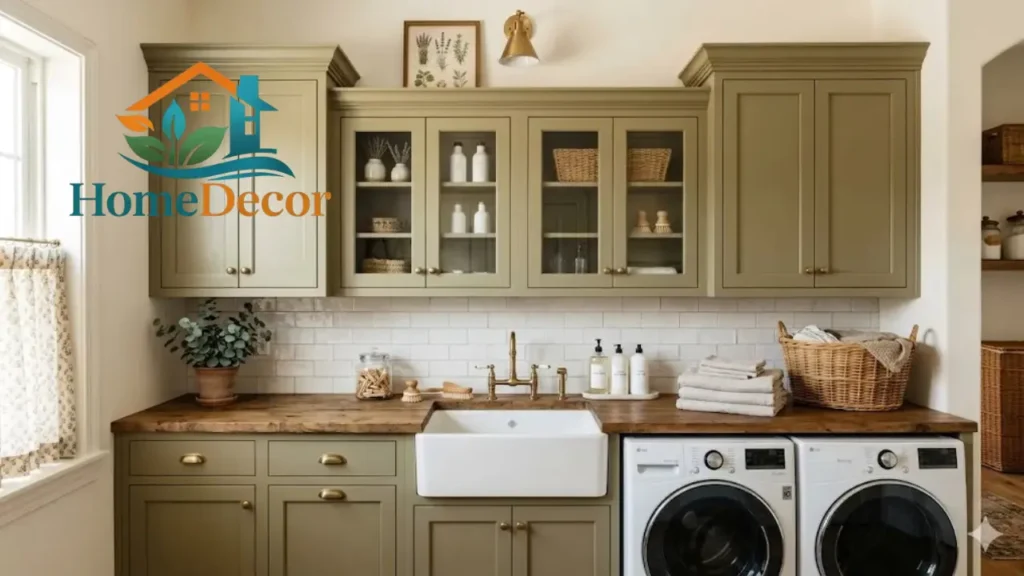
Introduction
When people think about a laundry room, they often picture a washer, a dryer, and maybe a basket or two. In reality, the best laundry rooms do much more than hold machines. They organize a busy part of the home, reduce visual clutter, protect everyday supplies, and make a routine task feel smoother. That is why Wall Cabinets for Laundry Room spaces have become such an important design feature. They turn empty vertical space into functional storage and help the room feel cleaner, more intentional, and easier to use.
A laundry room is not a decorative afterthought. It is a practical work zone. It needs a place for detergent, stain remover, dryer sheets, towels, baskets, clothespins, cleaning tools, folding supplies, and often extra household items that have nowhere else to go. Without smart storage, those things end up scattered on counters, tucked into corners, or stacked on the floor. That creates stress, wastes time, and makes the room look untidy.
Wall cabinets solve that problem by moving storage upward. They free the floor, keep essentials within reach, and give the room a more polished appearance. They are useful in tiny laundry closets, narrow utility rooms, mudroom-laundry combos, and large dedicated laundry spaces alike. Whether the style is modern, classic, minimal, or luxury, wall cabinets can be adapted to the room and the household’s needs.
This guide explains how to plan the right layout, choose the best materials, avoid common mistakes, and design a laundry room that works beautifully every day.
Why Wall Cabinets for Laundry Room Spaces Matter
A laundry room can become cluttered quickly. Bottles collect on counters, dirty laundry piles up, baskets drift into walkways, and small items disappear into drawers or corners. Wall cabinets help bring order to that chaos. By storing supplies above the washer, dryer, sink, or folding counter, they keep the work area open and the room easier to clean.
One of the biggest benefits of wall-mounted storage is that it uses vertical space. Most laundry rooms have limited floor area, but the walls are often underused. Cabinets convert that unused height into storage that does not interfere with movement. This matters even more in compact homes, apartments, and utility closets where every inch counts.
Safety is another major reason to use wall cabinets. Detergents, bleach, stain removers, and other chemical products should not be left where children or pets can reach them. Higher cabinet placement helps keep hazardous items out of the way while still making them easy for adults to access. That is a simple improvement with a real, practical benefit.
Wall cabinets also improve the overall look of the room. Instead of feeling like a temporary corner for chores, the space starts to feel designed. The room looks finished, organized, and cleaner. That emotional effect matters because people use laundry rooms often, and a more attractive space makes routine tasks feel less irritating.
Even in larger laundry rooms, cabinets matter. Big rooms can feel empty or unfinished if the walls are bare. Well-planned storage adds structure, visual balance, and a sense of purpose. In other words, wall cabinets are not just about storage. They are about making the room more livable, more efficient, and more pleasant.
How to Plan the Right Laundry Room Cabinet Layout
The best laundry room cabinet design starts with planning, not shopping. Many homeowners choose a cabinet style first and only later realize the doors interfere with appliance lids, the cabinets are mounted too low, or the room becomes awkward to move through. A better method is to measure the space, define what the cabinets must store, and then build the layout around real use.
Measure the room carefully
Before choosing any cabinet, measure the wall width, ceiling height, washer height, dryer height, appliance depth, and all nearby clearance areas. Check door swings, window locations, vents, power outlets, water lines, and shutoff valves. These details determine what can fit and where it can safely go.
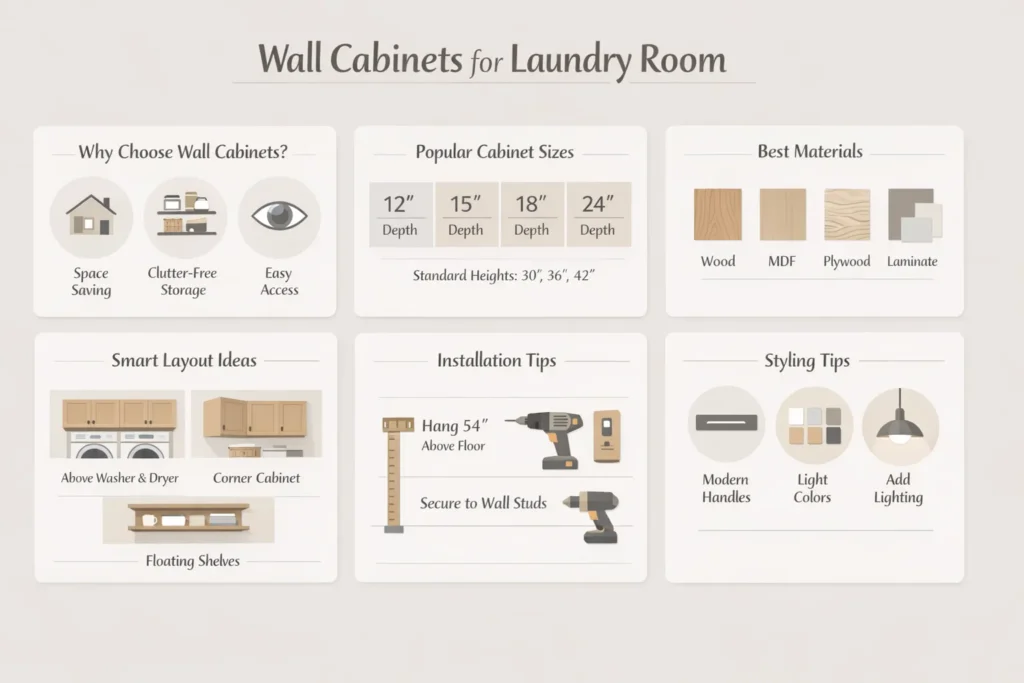
If the floor is uneven, start from the highest point so the cabinet line stays level. A level reference line is essential because even a slight tilt becomes obvious once cabinets are mounted across a wall. Standard installation guides often use a base reference around 54 inches from the floor for wall cabinets, but that number is only a starting point. Laundry rooms are not one-size-fits-all spaces. The final height depends on appliances, ceiling height, cabinet depth, and the way the room will be used.
Decide what the cabinets need to hold
A cabinet design is only successful if it supports the items that live inside it. Before choosing materials or dimensions, list everything the room must store. That may include detergent, pods, dryer sheets, softener, stain remover, microfiber cloths, towels, linens, ironing tools, spare paper products, and cleaning sprays.
This step matters because different items need different storage conditions. Tall bottles need vertical clearance. Folded towels need broader shelves. Small supplies are easier to keep in bins or baskets. Bulk backup items may need deeper shelves. When you know what goes inside, you can choose the right cabinet size instead of forcing the wrong storage into the room.
Plan cabinet height around appliance clearance
A good laundry room layout leaves enough room above the washer and dryer for easy access and comfortable reach. Cabinets should not feel too low, too heavy, or too close to the tops of the machines. If the cabinet is mounted too low, it can make loading, unloading, and maintenance more difficult. If it is too high, it becomes inconvenient to use.
A practical design balances reachability and appearance. You want the cabinets to be useful every day, not just visually pleasing. That means opening doors easily, retrieving supplies without stretching too much, and still keeping the room proportionate.
Keep service access in mind
Laundry rooms are service spaces. The cabinets should not block machine lids, hose connections, outlets, vents, or shutoff valves. A room may look neat on paper, but if the cabinets make repairs or maintenance difficult, the design fails in real life. Access is not a minor detail; it is central to good planning.
Organize the room into zones
The simplest way to create a functional layout is to divide the laundry room into use zones:
- washing zone
- folding zone
- storage zone
- hanging or drying zone
When the room follows this logic, it becomes easier to move through. Supplies are placed where they are used, laundry tasks flow more naturally, and clutter is less likely to spread. This zoning method is one of the most effective planning tools for a tidy and efficient laundry room.
Best Wall Cabinet Sizes and Placement Ideas
There is no universal cabinet size that works for every laundry room, but certain formats appear again and again because they solve common storage problems well. The key is to match cabinet type to task.
| Cabinet Type | Best Use | Practical Notes |
| Shallow wall cabinet | Detergent, dryer sheets, small cleaners | Great above the washer or dryer |
| Standard wall cabinet | Towels, baskets, bulk items | Works well in medium and large rooms |
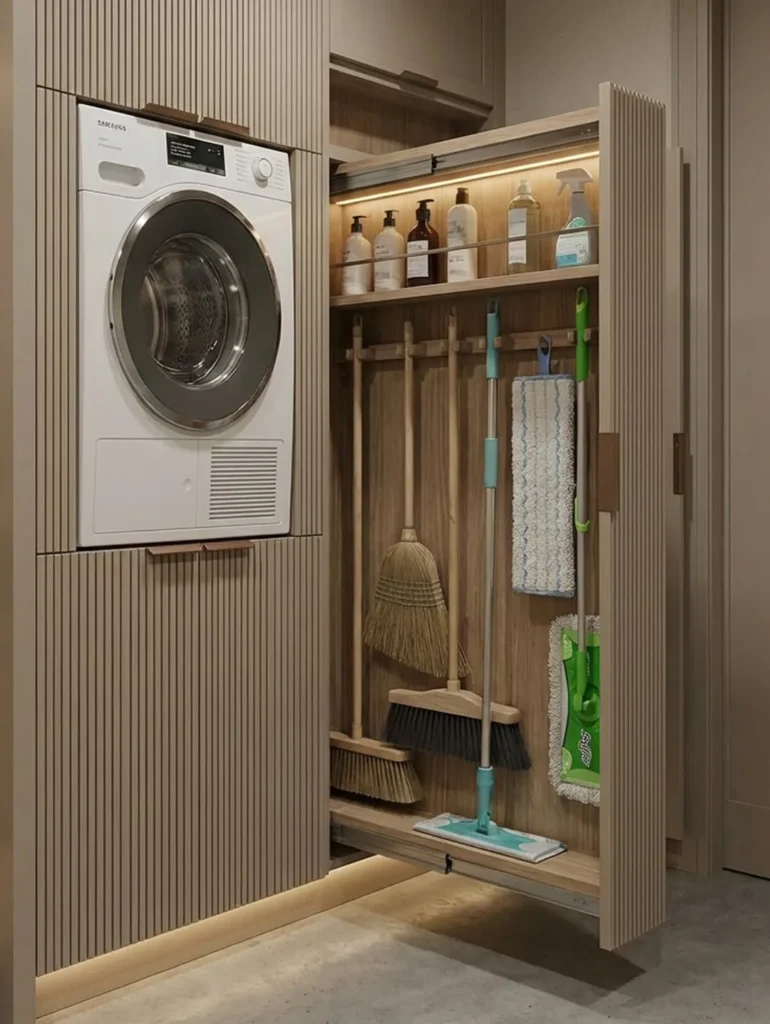
| Tall utility cabinet | Mops, brooms, ironing board | Best for corners or larger rooms |
| Over-appliance cabinet | Storage above the machines | Needs careful height planning |
| Open shelf plus cabinets | Display and daily access | Creates a lighter visual feel |
Smart placement options
One of the most effective placements is above side-by-side machines. This creates a long storage run and keeps everyday supplies close to the work area. It also makes use of wall space that would otherwise remain empty.
Another strong option is above a folding counter. This arrangement keeps supplies near the folding surface, making it easy to sort clothes, store laundry baskets, and put away finished loads.
If the room is narrow, a single wall of cabinets may be the best solution. This keeps the space visually open and avoids making the room feel cramped. In larger laundry rooms, floor-to-ceiling storage can be especially effective because it holds bulk supplies, linens, seasonal items, and less frequently used tools.
For rooms with a utility sink, surrounding the sink with cabinets can improve both storage and workflow. The room then feels more complete, and the sink area becomes part of a larger organizational system rather than an isolated feature.
Best Materials for Laundry Room Wall Cabinets
Material choice is one of the most important decisions in the process. Laundry rooms experience humidity, steam, occasional splashes, and frequent contact with hands, bottles, and cleaning products. Because of that, the cabinet material must be durable, stable, and easy to maintain.
Wood-based products react to moisture. That does not mean they should be avoided entirely, but it does mean they need to be chosen carefully. A laundry room is not the same as a dry bedroom closet. It is a working environment with a higher moisture risk, so the cabinet material should reflect that reality.
| Material | Strengths | Weaknesses | Best For |
| Sealed plywood | Strong, stable, moisture-friendly | Higher cost | Premium long-lasting setups |
| Melamine-faced board | Easy to clean, smooth finish | Edge sealing matters | Budget to mid-range storage |
| MDF with laminate | Attractive and affordable | Less tolerant of moisture if unsealed | Dry or moderately humid rooms |
| Solid wood with a good finish | Classic, durable look | More expensive, needs upkeep | Traditional or custom rooms |
| Particleboard | Low cost | Weak moisture performance unless protected | Limited use in very dry rooms |
What usually works best
For most laundry rooms, the most dependable choice is a moisture-aware engineered material with sealed edges and a tough finish. Sealed plywood is often an excellent option because it combines strength and good performance in more demanding conditions. Melamine and laminate-faced products also work well when they are properly edged and protected.
The most important point is not just the base material. Finish quality matters just as much. A poor finish or weak edge sealing can cause swelling, peeling, or wear much sooner than expected. In a laundry room, durability depends on the full cabinet system, not just what the cabinet is made from.
What to avoid
Bare particleboard is usually the weakest choice in a humid laundry space unless it is extremely well protected and kept far from direct moisture. If the room has poor ventilation, a sink, or frequent spills, low-grade board products are more likely to fail early. That does not mean every low-cost material is bad. It means the material must match the room’s conditions.
Design Ideas for Every Laundry Room Style
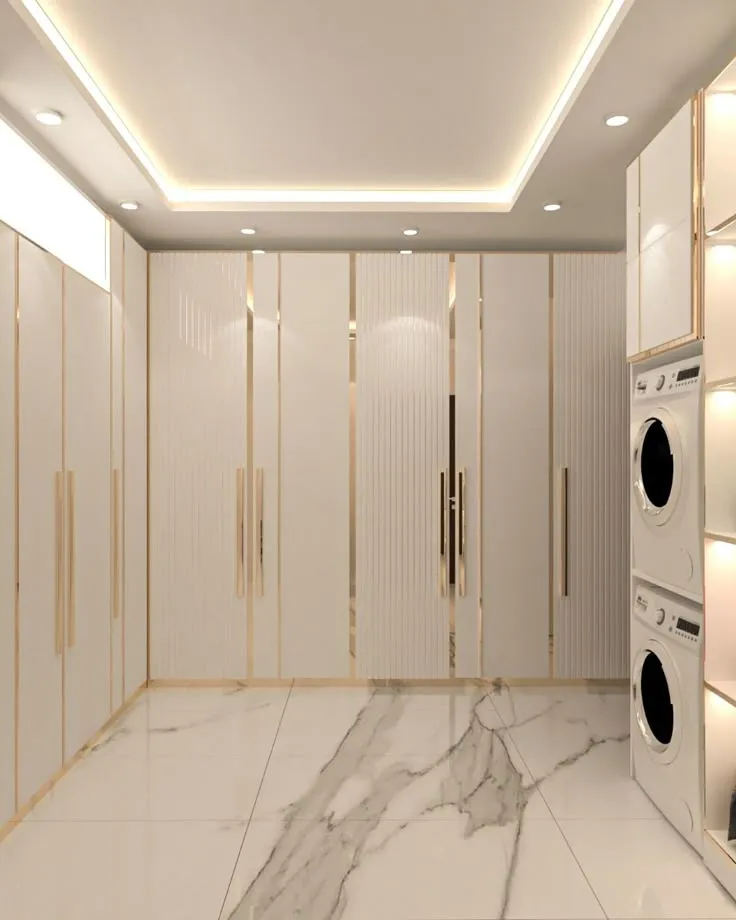
Wall cabinets for laundry room spaces do not have to be plain or dull. In fact, laundry storage can be one of the easiest places to introduce Style without sacrificing function. The room still needs to be practical, but practical does not have to mean boring.
Modern minimal style
Flat-panel cabinet doors, soft matte finishes, and simple hardware create a calm, streamlined appearance. This style works especially well in small rooms because it reduces visual noise. The space feels neater and less crowded.
Classic shaker style
Shaker cabinets remain popular because they are timeless and versatile. They work well in homes with traditional, transitional, or farmhouse-inspired interiors. If you want the laundry room to feel connected to the rest of the home, shaker cabinets are a reliable choice.
Two-tone design
Two-tone cabinetry adds depth and character. Light upper cabinets can keep the room bright, while darker accents or lower elements create contrast. This is a smart way to make the laundry room look custom without making the design feel too heavy.
Floor-to-ceiling cabinets
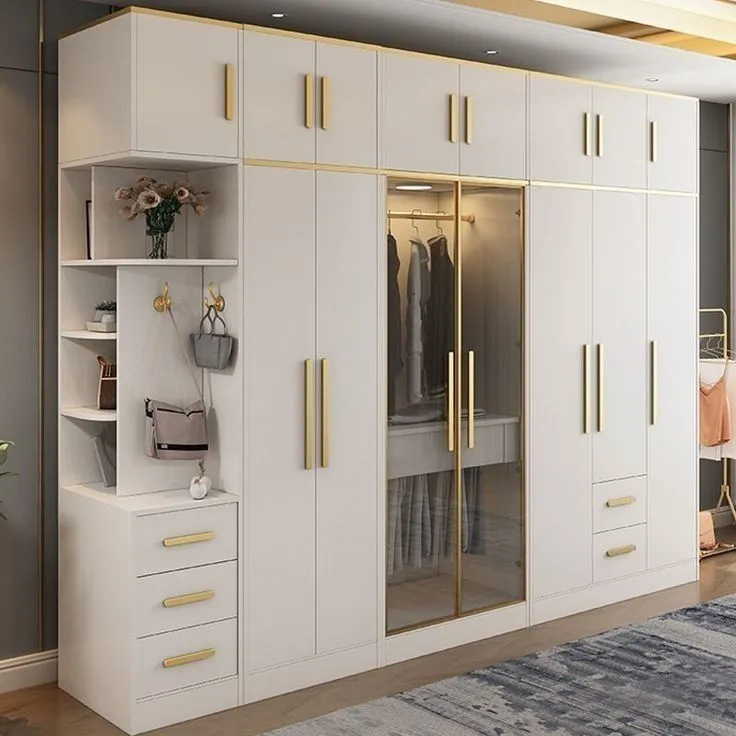
This option provides maximum storage and a built-in look. It is ideal for families that store bedding, cleaning products, backup supplies, or seasonal items in the laundry room. In larger rooms, tall cabinets also make the wall feel intentionally designed.
Open-and-closed combination
A mix of closed cabinets and open shelving often gives the best balance. Closed storage hides clutter and unattractive items, while open shelves can display baskets, folded towels, or decorative containers. This creates a room that feels both useful and visually lighter.
Built-in drying features
Adding a hanging rod, drying rail, pull-out rack, or fold-down ironing board can make the laundry room much more efficient. These details save time and make the room feel like a thoughtfully designed work area rather than just a storage spot.
Small Laundry Room Cabinet Ideas That Save Space
Small laundry rooms require smarter planning rather than bigger furniture. The main goal is to keep the room open while still making every inch useful. Vertical storage is the best friend of a compact laundry space.
Space-saving ideas that work well
Use shallow cabinets instead of deep ones so the room does not feel bulky. Install cabinets on only one wall if the room is narrow. Choose sliding or lift-up doors where clearance is tight. Add shelves above the cabinet line for infrequently used items. Use labeled storage bins inside the cabinets to keep small products organized. Keep the color palette light so the room looks more spacious.
Best cabinet types for small rooms
- shallow upper cabinets
- narrow tall cabinets
- corner cabinets
- adjustable shelf cabinets
- cabinets with hooks or rod space
Small rooms work best when storage is simple, vertical, and visually light. Avoid overfilling the wall. Every extra object makes the room feel tighter. Instead, focus on clean lines, practical storage, and a layout that supports movement.
Luxury Wall Cabinet Ideas for Laundry Rooms
A luxury laundry room is not only about expensive finishes. It is about ease of use, thoughtful details, and a coordinated interior that feels intentional from top to bottom.
Premium ideas worth considering
Custom full-height cabinetry creates a seamless, built-in appearance. Soft-close hinges and drawers improve the feel of the room. Integrated LED lighting inside or under the cabinets adds both convenience and polish. Quartz or solid-surface counters pair well with high-end cabinetry. Hidden hampers, pull-out sorting baskets, and concealed storage can make the room feel exceptionally well-organized. Minimal hardware or handleless doors can create a sleek, refined look.
Luxury laundry rooms work best when the cabinets, counters, lighting, flooring, and wall color all support one another. The result should feel like a calm, coordinated space rather than a collection of fancy objects. Real luxury is not just visual. It is functional.
Budget-Friendly Laundry Room Cabinet Ideas
A polished laundry room does not have to require a full custom remodel. There are many affordable ways to improve storage and appearance without overspending.
Budget ideas that still look good
Ready-to-assemble wall cabinets are often a cost-effective solution. Standard cabinet sizes are usually cheaper than custom dimensions. A long shelf with a few smaller cabinets can create a useful and attractive wall at a lower price. Repainting existing cabinets is another smart way to refresh the room without replacing everything. Simple hardware can look clean and modern. Labeled bins inside the cabinets help make the most of limited space. Open shelving can also be an inexpensive way to add function and style.
A budget makeover should focus on the most visible frustrations: clutter, lack of storage, and poor organization. Once those are improved, the room usually feels dramatically better even without expensive finishes.
Step-by-Step Installation Basics
Installing wall cabinets is a serious project, but it is manageable for experienced DIYers who have the right tools, patience, and planning. The most important rules are to find the studs, keep everything level, and fasten the cabinets securely to the wall.
Basic installation flow
Start by finding the highest point of the floor and marking a level reference line. Decide on the cabinet height based on the room, the appliances, and the clearance you need. Locate the wall studs before drilling. Use a level line so the cabinets align properly. A ledger board or temporary support rail can help hold the cabinets in place during installation. After that, attach the cabinets securely to the studs, check alignment, and only tighten Everything once you are sure the layout is correct. Finish by reinstalling shelves, doors, and hardware.
Why this matters
Wall cabinets must be anchored securely. Drywall alone is not enough. Laundry room cabinets hold weight, and that weight grows once you add bottles, supplies, and baskets. A secure anchor protects both the cabinet and the people using the room.
When to hire a professional
A professional installer is the safer choice if the wall is uneven, damaged, or unusual. It is also a better option for very heavy cabinets, custom-built units, or projects that involve plumbing or electrical changes. Sometimes the smartest DIY decision is knowing when to hand the job over to an expert.
Pros and Cons of Wall Cabinets for Laundry Rooms
Pros
Wall cabinets for laundry room spaces maximize vertical storage, free up floor space, keep supplies organized, help store chemicals higher up, and create a cleaner, more finished appearance. They work well in both small and large rooms and can be adapted to many design styles.
Cons
Poor installation can make them unsafe. Deep cabinets can interrupt movement. Lower-quality materials may warp in humidity. High shelves can be hard to reach. Custom versions can also be expensive.
The advantages are strong, but only when layout, materials, and installation are all handled properly.
Common Mistakes to Avoid
Many laundry room storage problems happen because the room was treated like a closet instead of a working utility zone. That often leads to cabinets that look fine at first but cause daily frustration later.
Avoid these mistakes:
Do not choose cabinets that are too deep. Do not ignore appliance door clearance. Do not use materials that are not suitable for moisture. Do not mount cabinets without locating studs. Do not place storage too high to reach comfortably. Do not fill the room with unnecessary decorative clutter. Do not use weak hardware that loosens over time.
Good laundry room design is about clarity and usability. The room should support the task, not make it harder.
Maintenance, Care, and Durability Tips
The best laundry cabinets are easy to wipe down and easy to keep in good condition. Since moisture is the main long-term threat, simple maintenance habits can greatly extend cabinet life.
Simple care habits
Wipe spills quickly. Keep detergent lids closed. Clean handles and edges regularly. Check hinges and screws every few months. Avoid storing wet cloths directly inside cabinets. Use moisture-resistant liners if needed. Ventilate the room when possible.
Moisture control is one of the most important habits in a laundry room. The less humidity sits on surfaces, the longer the cabinets will last and the better they will continue to look.
Smart and Future-Ready Laundry Room Ideas
Laundry rooms are becoming more intelligent and more specialized. They are no longer just places to hide appliances. They are evolving into efficient work areas with better organization, better lighting, and more helpful built-in features.
Future-ready ideas
Motion-sensor lighting inside cabinets makes it easier to find items quickly. Hidden charging spots can support steamers or handheld devices. Pull-out sorting systems improve workflow. Integrated drying rods help manage delicate clothing. Labeled zones for washing, drying, and folding keep the room easier to use. Concealed waste bins cut down on visual clutter. Minimal cabinetry creates a more modern, calm environment.
These features are not just trendy. They make the room function better every day, which is exactly what a laundry room should do.
Quick Pro Tips
Keep everyday items between waist and eye level. Use closed cabinets for clutter and open shelves for display. Choose light Colors if the room feels narrow. Match the cabinet style to the rest of the house for a more unified feel. Design the storage around how your household actually does laundry instead of focusing only on appearance.
FAQs
A practical target is usually around 18 to 24 inches above the appliance top, depending on cabinet depth, ceiling height, and how easy you want the shelves to reach. General cabinet-installation references also use a 54-inch wall-cabinet line in standard layouts.
Moisture-aware engineered materials with sealed edges are usually the safest choice. Sealed plywood, melamine-faced boards, and well-finished laminate options often handle humidity better than low-grade boards. Wood products can expand and shrink with humidity, so finishing and sealing matter.
Yes. In small rooms, wall cabinets are often one of the best storage solutions because they use vertical wall space and help keep the floor open.
They can, especially in larger rooms or when maximum storage is needed. Floor-to-ceiling cabinets are great for bulk items and seasonal storage, but the top sections should be used for less-frequent items.
Yes, if you have good measuring skills, proper tools, and strong wall studs to anchor into. Installation guides stress leveling, stud attachment, and secure fastening. For uneven walls or heavy custom units, a professional is the safer choice.
Conclusion
Wall cabinets for the laundry room are one of the smartest upgrades you can make for a clean, organized, and efficient space. With the right cabinet size, durable materials, and a layout that fits your daily routine, you can easily transform even a small laundry area into a Functional and stylish zone. Whether you choose ready-made cabinets, floating shelves with doors, or custom built-ins, the key is to balance storage, accessibility, and design. By planning smartly and investing in quality cabinetry, your laundry room becomes clutter-free, visually appealing, and far easier to use—every single day.
