
Introduction
A Living Room Carpet is far more than a simple floor covering. It is one of the most influential design elements in the home because it shapes the mood, comfort, warmth, and visual balance of the main gathering space. A well-chosen rug changes how light moves across tight spaces, offering a sense of openness. Floor coverings mute footfall sounds where tiles or wood echo too much. One piece underfoot connects chairs, walls, and accents without effort. Softness arrives before you touch it – just seeing fabric pile hints at comfort. Layouts gain balance when hues in the weave answer those on shelves or sofas. Texture shifts beneath bare feet, grounding the space in quiet warmth.
Picking a carpet for the living room trips up plenty of people. Wool or nylon might seem fine, yet polyester and polypropylene bring different feels – then there’s jute or sisal, rougher but earthy. Wall-to-wall coverage changes a space completely compared to a single rug just sitting there. A tight fit matters in tiny lounges; bigger areas swallow smaller pieces unless sized right. Hues shift the mood instantly, while short piles stay tidy and long ones gather dust. Where it lands in the room shapes how eyes move across the floor. Texture underfoot surprises some, smooth versus prickly making all the difference.
A Practical Guide to Selecting the Best Living Room Carpet
This guide walks through living room carpets without confusion. Picking one that fits your daily routine matters most – size of space shapes what works. Style preferences steer color and texture choices. High foot traffic? Tougher fibers handle it better. Budget plays a role, yet durability often saves money later. Layout tricks help small areas feel larger. Pairing patterns with furniture changes the mood. Wool feels rich but demands more upkeep than synthetics. Light shades show spills fast; dark tones hide wear longer. Cleaning habits decide how fresh it stays over time.
Most modern search tools favor helpful, thoughtful writing made for humans first. So instead of only naming rug options, a strong piece on living room carpets digs into actual concerns. A good example walks through everyday challenges, weighs layout choices plainly, then shows how poor picks lead to frustration. Every part here aims at that kind of clarity – nothing more, nothing less.
Why a Living Room Carpet Matters
Home life usually spins around the living room. Where evenings unwind with pages turned, shows watched, voices shared. This spot holds feet, laughter, spilled drinks, quiet mornings. Flooring here must carry weight without showing wear too soon. Comfort matters just as much as how clean it stays. Looks count, sure – yet stepping barefoot should feel right each time. Style cannot come at the cost of lasting use. A place built for motion asks materials to keep up, quietly.
Beneath bare feet, a thoughtfully picked rug brings comfort – this matters most where floors are cool like tile or wood. Sound moves differently when it hits fabric instead of stone, so rooms seem quieter, almost hushed. Open layouts find shape through rugs; one on the floor tells the eye where lounging ends and eating begins. Walls stay absent, yet space feels sorted. Small areas gain harmony as bulky chairs and low tables appear to belong together, avoiding a scattered look.
A rug in the living space shapes how things feel overall. Because it connects the look of sofas, low tables, chairs, drapes, pillows, even painted walls. With quiet tones, it settles everything into calm. When busy with design, it brings spark and character instead. A bump here, a groove there – suddenly the floor feels alive. Briefly put, that rug beneath the chair shapes how the space breathes.
Pictures catch eyes in many competing posts, yet quiet details get overlooked. What hides beneath matters just as much – think padding types or careful measuring. Stain shields matter if spills happen often at home. How planks line up across rooms changes everything too. Daily sweeping keeps shine longer than chemicals ever could. Style lasts when choices start before the first cut. A good floor grows from questions most forget to ask.
Living Room Carpet vs Rug: What’s the Difference?
What looks similar might still serve different purposes. A carpet usually covers the entire floor, while a rug stops short of the walls. One stays put, the other can move. Size isn’t the only factor – how it fits into your space matters too. Picking the correct one changes how a room feels underfoot.
Most times, a carpet stretches wide – maybe even edge to edge across the floor. This kind of spread forms one smooth layer underfoot, almost like it belongs there for good. Where comfort matters, where surfaces should flow without breaks, carpet fits right in. Its presence gives the space a finished depth, woven into how the room feels as much as how it looks.
A space feels different when a small piece lies flat over what’s already there. That piece can shift position anytime, sliding where needed most. Layer it for depth, set it down to redefine a corner. Change comes easily since nothing stays fixed. Swapping one in brings something fresh – just like that. Style turns anew each time the mood shifts.
Which one should you choose?
| Choice | Best for | Why it works |
| Carpet | Large rooms, warm interiors, connected layouts | Creates a unified, cozy, polished foundation |
| Rug | Flexible styling, easy updates, budget refreshes | Gives colour and texture without permanent commitment |
| Both | Layered interiors | A carpet base with a decorative rug creates depth and personality |
Designers often recommend a neutral carpet base paired with a patterned or textured rug layered on top. That approach gives the room a grounded feel while still allowing some visual expression.
How to Choose the Right Living Room Carpet
Choosing the right carpet becomes much easier when you follow a step-by-step process instead of relying on impulse or trend alone.
Study the way the room is used
Before looking at. colours or samples, think about how the room functions in daily life. Is it a formal sitting room or a busy family room? Do children use the space often? Are there pets? Is the room used every day or only for guests? Do you need maximum durability, easy cleaning, or a luxurious finish?
A busy living room with kids, pets, and constant foot traffic needs a carpet that is sturdy, practical, and easy to maintain. A formal lounge that is used less often can prioritize softness, texture, and elegance.
Select the correct size
Size is one of th.e most important decisions in the entire process. A carpet that is too small can make the room feel disconnected and awkward. A carpet that is too large can overwhelm the furniture or reduce the visual lightness of the space.
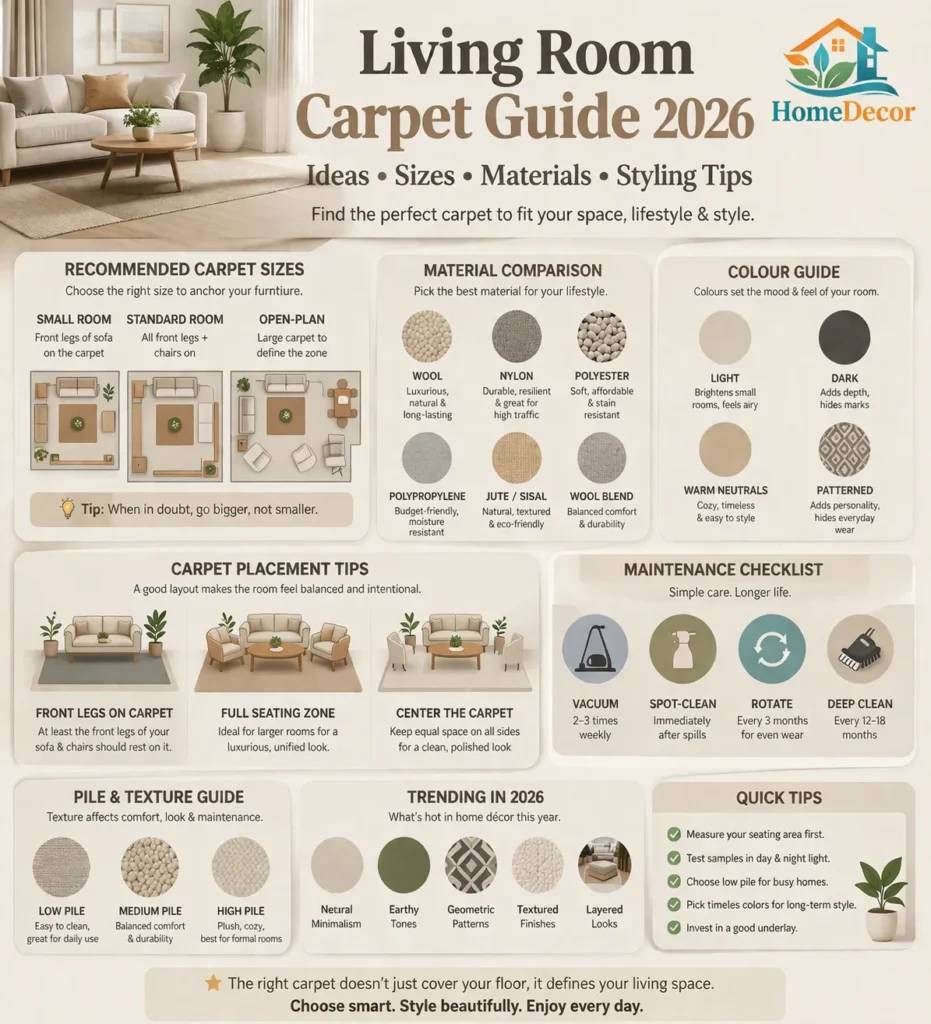
The most reliable rule is simple: the carpet should connect the key seating items. At least the front legs of the sofa and chairs should rest on the carpet so the arrangement feels intentional and anchored.
Choose the right material
Material influen.ces nearly everything: comfort, cost, maintenance, appearance, lifespan, and stain resistance. Some fibres feel soft and luxurious. Others are built for resilience and practicality. Material choice should match your real lifestyle, not just your inspiration board.
Decide on the colour
Colour affects h.ow large a room feels, how light moves through it, and how easy the carpet is to coordinate with the rest of the décor. It should work with the wall paint, sofa upholstery, curtains, accent pieces, and both natural and artificial lighting.
Consider pile, texture, and shape
Pile height and. texture affect both look and usability. Low pile is easier to clean and better for daily use. High pile feels plusher but requires more care. Loop pile is durable. Cut pile is softer. Cut-and-loop textures add pattern and dimension.
Shape matters too. Rectangular carpets are the safest and most common option, but round, oval, and irregular shapes can be effective in small rooms or modern interiors where softer lines are needed.
Living Room Carpet Size Guide
Getting the carpet size right can transform the entire room. It affects balance, proportion, movement, and the way the furniture feels connected.
A small carpet that only sits under the coffee table usually creates a disconnected look. It can make the space feel unfinished, which is one of the most common interior design mistakes. A larger carpet usually looks more elegant because it helps the furniture appear deliberate and visually united.
Recommended carpet sizes by room type
| Room Type | Best Carpet Approach | Why it works |
| Small living room | Medium-sized carpet under the front legs of the sofa | Makes the room feel connected without crowding it |
| Standard living room | Large carpet beneath the main seating arrangement | Creates balance and a polished layout |
| Open-plan living room | Oversized carpet that defines the lounge area | Separates the sitting zone from dining or kitchen areas |
| Formal sitting room | Carpet with all seating fully on it | Gives a luxurious and composed appearance |
| Compact apartment | Slightly larger light-coloured carpet | Makes the room appear brighter and more spacious |
Practical placement guidance
Leave a visible border of Flooring around the carpet so the room can breathe visually. Centre the carpet around the main seating area. Keep it aligned with the walls whenever possible. Avoid tiny rugs under a coffee table unless you are layering intentionally. When in doubt, choose a bigger size rather than a smaller one.
A larger carpet often looks more expensive, even if the material is simple. A tiny carpet, by contrast, can weaken the room’s entire visual structure.
Best Materials for Living Room Carpet
Material selection is one of the most practical and long-lasting decisions in the buying process. Each fibre offers a different balance of softness, durability, price, and maintenance.
| Material | Best for | Strengths | Drawbacks |
| Wool | Luxury rooms, long-term use | Natural, soft, insulating, durable | Higher cost, more care needed |
| Nylon | High-traffic family rooms | Highly durable, resilient, dependable | Less natural feel than wool |
| Polyester | Budget-friendly comfort | Soft, affordable, stain-resistant | Can flatten over time |
| Polypropylene | Value-focused or busy homes | Moisture-resistant, low-cost, practical | Less premium appearance |
| Jute / Sisal | Natural, earthy interiors | Organic texture, stylish, eco-friendly look | Harder to clean |
| Wool blends | Balanced performance and softness | Mixes comfort with durability | Quality varies by blend |
What to choose based on lifestyle
For luxury interiors, wool and wool blends are often the best options because they offer a rich finish and a timeless feel. For families with pets or children, nylon and stain-resistant polyester are usually more practical because they handle daily life more easily. For eco-conscious homes, jute and sisal bring natural beauty and texture. For budget-conscious households, polyester and polypropylene provide solid value. For heavy-traffic spaces, nylon remains one of the strongest and most dependable choices.
Many modern designers favour low-pile carpets made from natural or engineered fibres because they are easier to maintain and work well across a wide variety of design styles.
Living Room Carpet Colour Guide
Colour shapes emotion, spatial perception, and interior harmony. The right shade can make the room feel larger, warmer, calmer, or more dramatic.
Light colours
Examples include beige, ivory, cream, soft grey, and off-white. These colours are ideal for small living rooms, low-light spaces, minimalist interiors, and rooms that need a brighter, airier feeling. Light carpets reflect light well and create a fresh, spacious impression. They are timeless and pair easily with most furniture styles.
Dark colours
Examples include charcoal, navy, deep brown, and forest green. These tones work well in large living rooms, bold contemporary interiors, or rooms where you want strong contrast and visual depth. Dark carpets can hide minor marks more effectively, but they may make a compact room feel smaller if overused.
Warm neutrals
Examples include taupe, oat, greige, and warm beige. These are some of the most versatile shades for family homes because they feel cozy, calm, and easy to style. They suit Scandinavian, transitional, modern classic, and organic-inspired spaces very well.
Patterned carpets
Patterns can be helpful when you want personality, visual interest, or better camouflage for everyday wear. A subtle pattern can hide small stains and marks while still feeling refined. Strong patterns can become a feature of the room, especially if the furniture is simple.
A useful colour strategy is to choose a carpet that is one or two shades lighter or darker than the sofa. This creates harmony without making the furniture and floor disappear into each other. Matching the carpet and sofa exactly is usually less effective because it can flatten the room visually.
Carpet Pile, Texture & Shape
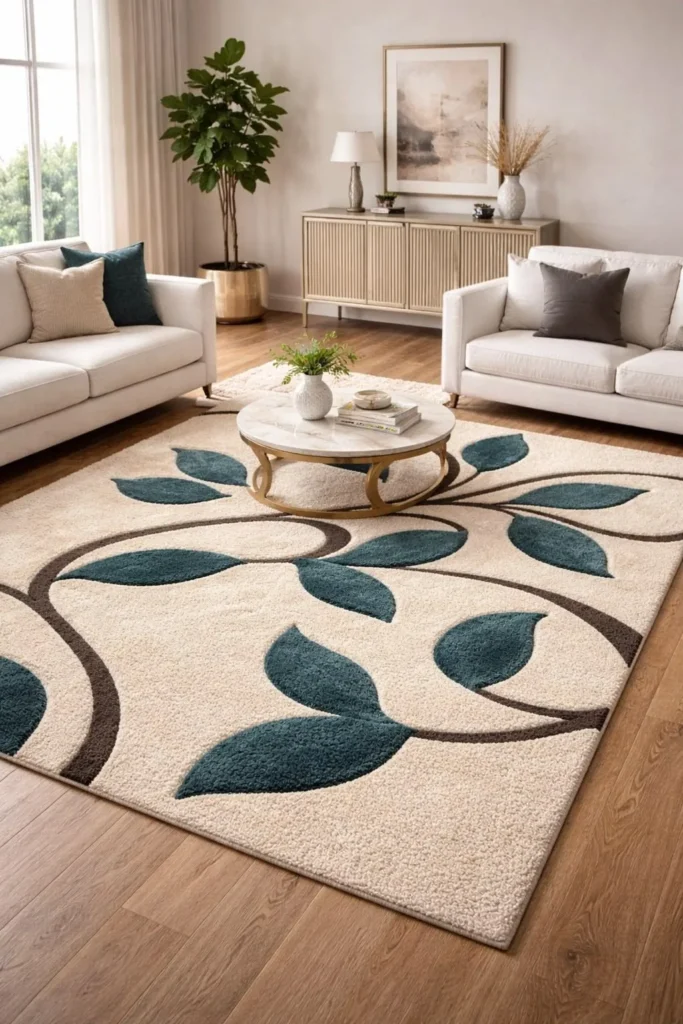
Carpet performance depends not only on colour and material but also on surface structure.
Low pile
Low-pile carpets are flatter, firmer, and easier to clean. They are excellent for family rooms, active households, and modern interiors that value simplicity and practicality. They also work well with robot vacuums and regular maintenance routines.
Medium pile
Medium pile provides a good balance of comfort and convenience. It offers enough softness underfoot while still being fairly manageable in daily use. This is a strong middle-ground choice for many living rooms.
High pile
High-pile carpets feel plush, soft, and Luxurious. They are often used in more formal rooms or spaces where comfort is prioritized over convenience. However, they are harder to clean and can trap more dust.
Texture types
Loop pile is highly durable and suitable for busy homes. Cut pile is smoother and softer. Cut-and-loop designs create subtle patterns and add movement, making them popular in contemporary homes.
Shapes
Rectangular carpets suit most living rooms and are the easiest to style. Round carpets work well in small rooms, reading corners, or layouts with sharp architectural lines that need softening. Oval and irregular shapes can be visually interesting in creative or modern spaces, though they should be used carefully so the room still feels balanced.
Living Room Carpet Trends 2026
The strongest carpet trends in 2026 lean toward comfort, natural character, and long-term style rather than short-lived novelty.
Neutral minimalism
Soft neutrals such as sand, stone, beige, and gentle grey remain highly popular because they feel calm, modern, and adaptable. These shades create a sophisticated base for almost any interior direction.
Bold statement carpets
Some homeowners are moving toward stronger colours and more expressive designs. A bold carpet can become a focal point, especially in rooms with plain furniture and simple wall finishes.
Geometric and abstract patterns
These designs work especially well in modern, Scandinavian, and contemporary interiors. They add structure and visual rhythm without necessarily overwhelming the space.
Earthy natural tones
Warm brown, clay, sage, and terracotta are increasingly common because they connect the interior with organic, grounded aesthetics. These tones feel warm and human.
Textured carpets
Ribbed, looped, and cut-loop textures are popular because they add depth without requiring heavy patterns. This gives the room quiet interest and tactile richness.
Layered looks
Layering a patterned rug over a larger neutral carpet remains a stylish way to create dimension. This is particularly useful in open-plan homes where the living zone needs more definition.
Living Room Carpet Ideas by Home Style
A good carpet should reflect the overall character of the room rather than fight against it.
Modern living room carpet ideas
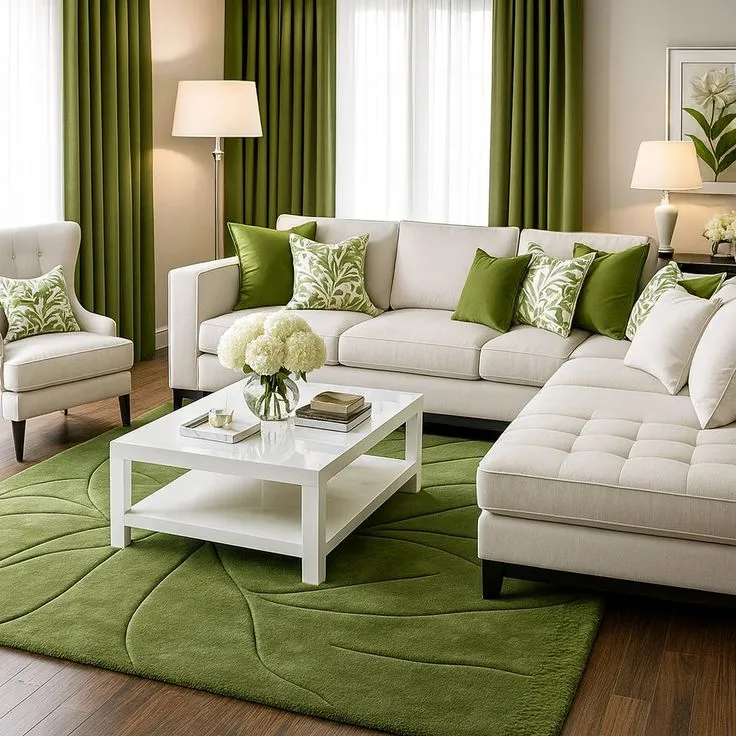
For modern interiors, choose a low-pile carpet in a neutral, monochrome, or softly geometric pattern. The goal is visual clarity, clean lines, and a sleek sense of order. Modern apartments and urban homes often benefit from this approach because it feels current but not overly busy.
Luxury living room carpet ideas
For a premium look, wool or a wool blend is a strong choice. Rich texture, deep neutral colour, and generous sizing help create a refined atmosphere. A luxury carpet should feel intentional, balanced, and quietly elevated rather than flashy.
Small living room carpet ideas
In smaller rooms, light colours are usually best because they expand the sense of space. Slightly oversized carpets can also help the room feel more connected and less fragmented. A subtle texture works well because it adds depth without visual clutter.
Budget living room carpet ideas
For affordable interiors, synthetic fibres such as polyester or polypropylene can be very effective. Keep the colour simple, choose a practical low pile, and avoid overcomplicated patterns. A smart budget choice looks best when the size is correct and the layout is clean.
Carpet Layout & Placement Tips
Placement determines whether a carpet feels deliberate or accidental. Even a beautiful carpet can look wrong if it is positioned poorly.
The best rule is to centre the carpet under the main seating Arrangement. Ideally, the front legs of the sofa should sit on the carpet, and the chairs should be partially on it as well. This makes the room feel composed and functional. Keep the edges parallel to the walls whenever possible so the room feels aligned.
In open-plan homes, the carpet should define the lounge area clearly without clashing with the dining or kitchen zones. It should act as a visual anchor for the seating arrangement and not float aimlessly in the middle of the floor.
A non-slip underlay is highly recommended because it improves comfort, keeps the carpet in place, and adds another layer of support. Underlay may not be the most glamorous part of the purchase, but it makes a major difference in everyday use.
Budget-Friendly Living Room Carpet Ideas
You do not need a luxury budget to create a beautiful room. Smart choices can save money without reducing the visual impact.
One of the easiest ways to save is to choose synthetic fibres. Polyester and polypropylene can provide a pleasant balance of style, affordability, and practical performance. Another smart move is to select a timeless colour rather than chasing a short-lived trend. A neutral carpet will remain usable for much longer and will be easier to restyle later.
It is also worth remembering that the right size is more important than an expensive pattern. A well-proportioned, moderately priced carpet often looks better than a small premium one. Likewise, a good underlay is worth the investment because it supports comfort, extends the life of the carpet, and helps the floor feel more complete.
Where you can save: complex patterning, highly trend-driven colours, and extra-thick piles that are difficult to maintain. Where you should not cut corners: size, durability, and padding.
Premium & Luxury Living Room Carpet Ideas
Luxury is not only about cost. It is about proportion, material quality, texture, and the overall sense of refinement.
Wool is one of the strongest luxury choices because it feels natural, soft, and rich. Oversized carpets generally look more luxurious than undersized ones because they create a fuller and more intentional layout. Tailored edges and custom sizing can improve the finish and help the carpet look integrated with the architecture.
For a high-end result, use deep neutrals, layered lighting, and fewer competing patterns. Luxury interiors often benefit from calm confidence rather than visual noise. The carpet should support the room’s elegance, not compete with it.
Common Living Room Carpet Mistakes to Avoid
One of the most frequent mistakes is buying a carpet that is too small. This can make the room feel disjointed and under-designed. Another mistake is choosing a colour without testing it in the real light of the room. A shade that looks perfect in the store may appear very different at home.
Some homeowners choose delicate fibres for very busy spaces and then find the carpet difficult to maintain. Others ignore the underlay, which can reduce comfort and shorten the life of the carpet. Too many patterns in one room can also create visual confusion, especially when the sofa, curtains, cushions, and rug all compete for attention.
Long-term maintenance is another area people underestimate. A carpet should not be chosen only for how it looks in the first week. It should also remain attractive after months and years of use.
Maintenance, Care & Durability Tips
A living room carpet will stay beautiful much longer when you care for it regularly. Maintenance does not need to be complicated, but it should be consistent.
| Task | Frequency | Why it matters |
| Vacuuming | 2–3 times weekly | Removes dust, grit, and debris before they settle |
| Spot cleaning | Immediately after spills | Prevents stains from setting |
| Rotating furniture | Every 3 months | Reduces uneven wear and flattening |
| Deep cleaning | Every 12–18 months | Revives fibres and refreshes appearance |
| Checking underlay | Yearly | Helps maintain shape, comfort, and support |
Practical care habits
Blot spills rather than rubbing them. Use a vacuum that is suitable for carpets. Try to avoid shoes indoors, especially if the room has light-coloured flooring. Add furniture pads to reduce pressure marks. Air the room occasionally so the carpet and surrounding fabrics remain fresher.
Pet- and kid-friendly advice
For homes with pets and children, choose a low-pile, stain-resistant carpet in a medium tone. This helps hide everyday wear while still keeping the room attractive. Nylon is often a practical choice for this type of household because it offers strong resilience and easier upkeep.
Smart & Future-Ready Carpet Ideas
The best carpet choice is one that continues to work as your lifestyle changes. A future-ready carpet should be stain-resistant, low-maintenance, and versatile enough to suit new décor over time. It should also work well with modern cleaning habits, including robot vacuum use where appropriate.
Neutral and timeless carpets usually offer the best long-term value because they coordinate with future furniture changes and new colour schemes. In many homes, the living room is no longer just a display space; it is a multipurpose zone for relaxing, working, hosting, and gathering. The carpet should support that flexibility.
Pros & Cons of Living Room Carpet
Pros
A living room carpet adds warmth, softness, and Comfort. It reduces noise, makes the room feel more welcoming, and helps define the seating area. It also gives you a wide range of design options, from minimalist and natural to bold and decorative.
Cons
Carpets require cleaning and ongoing care. Some materials stain more easily than others. Over time, fibres can flatten in busy areas. A poor size choice can also damage the room’s layout and make the entire interior feel less polished.
Quick Tips for Choosing the Best Living Room Carpet
Measure the seating area before shopping. Test samples in both daylight and evening light. Choose a low pile for rooms used every day. Select neutral tones if you want a timeless base. Use patterns only when they genuinely add value. Spend on the right size and on durability first. Above all, choose a carpet that suits your lifestyle, not just the latest trend.
FAQ
Nylon or wool blend is best for long-term durability. Polyester works well for budget homes.
At least the front legs of your sofa and chairs should sit on the carpet.
Light carpets make rooms look bigger; dark carpets add depth.
No. Choose a carpet one or two shades lighter or darker.
Yes, especially in homes with pets, kids, or plain furniture.
Conclusion
A rug in the Living space can shift how a room feels, works, looks – all together – without saying a word. Price tags and fashion fades don’t decide what fits best. What matters grows from how much space you have, how you move through it, what sits inside it, how light touches it, how often you’ll care for it.
A space gains comfort when it starts with what matters most – getting the dimensions right, choosing something durable, mixing hues that sit well together, then settling each piece where it belongs. Only once these parts connect does the living area begin to settle into itself, quieter, more put-together.
A rug isn’t just underfoot. Because of it, a room carries a different quiet energy each morning.
