

Introduction
Wall Sconces For Living Room spaces are one of the most effective ways to elevate a room without crowding it. Light steps out from walls through sconces, filling corners with shape and quiet presence. Instead of blank ceiling lights washing everything in even glow, these fixtures wrap rooms in pockets of warmth. Space breathes easier when brightness comes from the sides, not just straight down. Clutter stays hidden because surfaces stay bare, yet the room feels full – alive without noise.
Lighting today isn’t just about brightening a room. These days, it shapes how a space feels and looks. Take a sconce mounted beside a mirror – it draws your eye, adds depth, yet doesn’t crowd the wall. Instead of filling floor space, it lifts light upward, softens shadows, and works quietly behind the scenes. People keep choosing them for living areas because they do many things without trying too hard – save room, catch attention, blend in, and stand out when needed.
2026 Living Room Wall Sconce Trends & Design Insights
Slender LED shapes show up a lot in 2026 lighting trends, along with curved designs that catch the eye. Light spreads gently through hazy surfaces, giving rooms a calm feel. Instead of sharp glows, makers favor gentle radiance you can almost touch. Natural stuff like alabaster appears more often now, bringing earthy depth without looking old. Ceramic pieces add quiet texture, standing out by staying understated. Brushed brass slips in quietly, offering shine minus the flashiness. Frosted glass blurs edges on purpose, helping light blend into walls. Wood elements root fixtures in something familiar, yet fresh. Stone brings weight and still feels light thanks to smart shaping. These choices mix comfort with clean lines, avoiding cold minimalism. Sconces work well here since they live between art and function. They help build space slowly, one glow at a time.
Here’s every detail laid out clearly, all gathered into a single spot. What exactly are wall sconces? They shine nicely in living spaces because of their balance between function and look. Some designs fit better than others, depending on your room’s vibe. Picking one comes down to size, shape, and where it’ll go. Mounting height matters – too low feels awkward, too high loses impact. Spacing them just right keeps the flow smooth along walls or beside furniture. Light strength and warmth affect mood more than most expect. Missteps happen, yet many are easy to prevent once seen ahead of time. Ideas for styling appear throughout, rooted in real use. Cost doesn’t always match quality – one option may surprise you. Cleaning isn’t hard, though skipping it dulls results over months. New patterns emerging now might still feel fresh years from today.
What Are Wall Sconces?
Up high on the wall, sconces stay put without touching floors or surfaces. Light might climb skyward, dive down, do both at once, or shoot straight ahead like a narrow spotlight. A few aim to charm eyes more than rooms. Meanwhile, certain models exist just to help hands turn pages or highlight one spot clearly. Often enough, beauty walks hand in hand with usefulness inside the same housing.
A single fixture on the wall might do several jobs without taking up floor space. Light spills sideways into shadowed corners, especially when ceiling bulbs fall short. Evening glow shapes how people experience the space – softer, slower, layered. A pair of artworks acts like invisible borders around what matters most. Mounted high, their reach extends further than tabletop beams, smoothing out harsh contrasts. Details in trim or texture catch attention now, not just furniture placement.
Light comes from a wall sconce, yet its real role shifts how a space feels at a glance. Rhythm shows up through placement, while symmetry and texture follow along quietly. Height enters the scene without drawing attention to itself. These details gather where someone prefers depth over flatness in design choices. The effect grows stronger when balance matters more than brightness alone.
Main Living Room Sconce Types
Up-light sconces
Upward-shining lights can make a space seem higher, almost like they stretch the walls. When gentle brightness on ceilings matters, these fit just right.
Down-light sconces
Floor lamps cast light straight down, good for drawing attention to chairs, textured walls, or standout decor items. A tighter pool of brightness takes hold closer to the floor.
Up-and-down sconces
Light spreads evenly forward and back. People pick them often now since they seem built into the space, match on each side, and stay uncluttered.
Swing-arm sconces
Out here, you’ll find lights that slide nearer or stretch back from the wall. Perfect for a cozy seat or where pages get turned often.
Plug-in sconces
Fitted easily, these suits anyone renting or rearranging on a whim. Where wires can’t run freely, they still keep things moving. No rewiring needed – just shift them around as plans change.
Hardwired sconces
Smooth. Clean. That is what these deliver over time. Homeowners pick them when they crave a tidy space minus the mess of hanging wires. Hidden lines blend into walls like they were always part of it. A quiet upgrade, really. Not loud. Just there, doing its job without drawing eyes.
Wall Sconces In The Living Room?
Light on walls makes sense for plenty of homes. Not just bright but also sharp-looking, these fixtures do what others often fail to. Living spaces tend to feel more balanced when such pieces step in quietly.
Space gets saved, thanks to them
Rooms meant for sitting usually hold chairs, small tables, a central table, storage for gadgets, decorations, plus space to walk around. Light stands and smaller lights on surfaces occupy floor area, often adding to a messy look. Mounted wall fixtures shift brightness off the ground, opening up spots for pieces people sit on and paths they move through.
When the room feels tight, hanging a light on the wall frees up spots below. Floor lamps take up space – this one doesn’t, yet shines just as well.
They improve the atmosphere
Comfort matters most in a living room, yet warmth shifts as daylight fades. Bright Ceiling Lights can seem cold once the sun goes down. Light from wall fixtures adds a gentle glow where eyes naturally look up and around.
Light bounces softly when sconces join warm bulbs and dim controls, shaping quiet corners. That gentle depth? It’s why they slip into bigger light plans instead of working alone.
Focal spots stand out clearly because of them
A well-put-together living space often rests on how things look together. Instead of crowding the floor, wall-mounted lights draw attention to key spots – like a fireplace, maybe a mirror, or even that stack of books by your favorite chair. Because they frame these details, those places seem meant to be noticed. What stands out feels less accidental when light lands just there.
Firelight dances between two sconces, shaping the edges of stone or wood like quiet punctuation. One on each side, they pull the eye without shouting, turning structure into something seen. Near a painting too big for its corner, twin lights stand guard – suddenly, the wall breathes differently. What was flat now leans forward, alive in the hush.
They work with many design styles
A single wall scone changes a room without taking up space. Whether the setting leans sleek, cozy, old-world, or raw, one finds a match easily. How it looks depends on its lines, coating, build, and also where the glow lands. From sharp angles to soft curves, each detail shifts the feel.
Lighting choices shift how a space feels. Alabaster brings warmth into corners. Matte black LEDs add depth without glare. Brass gives a quiet shine near mirrors. Wood and ceramic tie the walls to earth tones. Fixtures shape mood just as much as light.
Light layers work well with them
A single light source rarely does the job well. Instead, mixing types creates better results in most lounges. Overhead glows set the base, focused beams highlight features, while targeted spots help with activities like reading. Fixtures mounted on walls fit into each role, their effect shaped by position and choice.
A space shaped by shifting light moves with you, changing mood as hours pass. Sconces make that possible – quiet fixtures offering quiet flexibility inside today’s homes.
Best Wall Sconce Styles for Living Rooms
Choosing the right style matters just as much as choosing the right size or placement. A sconce should feel consistent with the rest of the room while still adding its own character.
Modern Minimalist
Modern minimalist sconces typically have slim profiles, neutral finishes, geometric lines, and integrated LED components. They are unobtrusive yet visually crisp, making them ideal for contemporary homes.
These sconces often work well in spaces that already contain clean-lined furniture, restrained color palettes, and minimal decorative clutter. They add light without competing with the rest of the design.
Sculptural Statement Pieces
Some sconces are designed to be seen as art objects. These fixtures may use curved shapes, asymmetrical profiles, unusual silhouettes, or bold materials. They are especially effective when you want lighting to function as wall décor.
Sculptural sconces are a smart choice for living rooms that need a focal point but do not have a lot of surface decoration. One strong fixture can carry a surprising amount of visual weight.
Swing-Arm Functional Sconces
Swing-arm sconces are one of the most practical choices for living rooms because they combine flexibility with style. They can be pulled out for reading, then pushed back when not needed.
They work beautifully beside accent chairs, sofas, and reading nooks. Their adjustable nature makes them particularly useful in multipurpose rooms where lighting needs change throughout the day.
Plug-In Sconces
Plug-in sconces are popular because they are easy to install and easy to move. They are especially helpful for renters, temporary layouts, and homeowners who want a more affordable upgrade.
Design-wise, plug-in fixtures are available in many styles, from minimal brass and matte black designs to softer ceramic and glass looks. They are a smart way to introduce wall lighting without committing to electrical rewiring.
Natural Material Sconces
In 2026, natural materials continue to dominate interior design conversations. Alabaster, stone, ceramic, frosted glass, wood, and rattan are especially appealing because they create visual softness and textural depth.
These materials diffuse light in a more relaxed way than polished metal alone. They feel grounded, warm, and timeless, which makes them ideal for living rooms that aim to feel serene and inviting.
How to Choose the Right Wall Sconces
The best wall sconce for your living room depends on the role you want it to play. A good decision starts with purpose, then moves to scale, finish, Installation Style, and compatibility with the rest of the room.
Define the purpose first
Before choosing a fixture, ask what the light should actually do. This is the most important step because the same sconce style may work beautifully for one purpose and poorly for another.
Purpose and best match
Ambient lighting: Up-light or up/down sconces
Accent lighting: Down-light or narrow-beam fixtures
Task lighting: Swing-arm sconces
Decorative emphasis: Sculptural or material-rich sconces
If the fixture is only for mood, you can prioritize shape and glow. If it is meant to support reading or everyday use, performance becomes much more important.
Choose the right scale
Scale is critical. A fixture that is too small can disappear, while a fixture that is too large can overwhelm the wall.
A large living room with tall ceilings usually needs medium-to-large sconces so the lighting feels proportional. Smaller living rooms often benefit from slim, narrow, or vertically oriented fixtures that do not dominate the wall.
The taller the ceiling, the more vertical presence the sconce usually needs. In compact rooms, a sleek form typically feels more balanced.
Match the finish to the room
Finish changes the mood of the fixture dramatically.
Black finishes feel modern, sharp, and graphic.
Brass adds warmth, elegance, and a richer decorative tone.
Bronze feels more classic and grounded.
Glass and alabaster produce a softer, diffused, luminous effect.
The finish should coordinate with the rest of the room, but it does not need to match every other item exactly. Harmony matters more than strict uniformity.
Pick the installation style
There are three common installation approaches, and each has advantages.
Plug-in sconces are best for rentals, flexible layouts, and low-commitment upgrades.
Hardwired sconces create a cleaner, more custom, and more luxurious look.
Adjustable-arm sconces are ideal for reading corners and multi-use seating zones.
Your choice depends on whether convenience, permanence, or flexibility matters most.
Consider light quality, not just shape
A beautiful sconce is not enough if the light feels wrong. Look at the bulb type, brightness, beam spread, and how the material diffuses illumination.
A frosted globe, alabaster shade, or opal glass cover will produce a softer effect than an exposed bulb. For a living room, softer usually means better.
Think about day and night use
The best living room sconces look attractive when they are switched off and perform well when they are on. This dual role matters because the fixture will be visible all day.
Choose a design that complements the wall even without illumination, but make sure it still produces the kind of light your room needs in the evening.
Best Placement & Installation Rules
Placement can make or break the result. Even a high-quality sconce can look awkward if it is mounted at the wrong height or spacing. The following guidelines give you a reliable starting point.
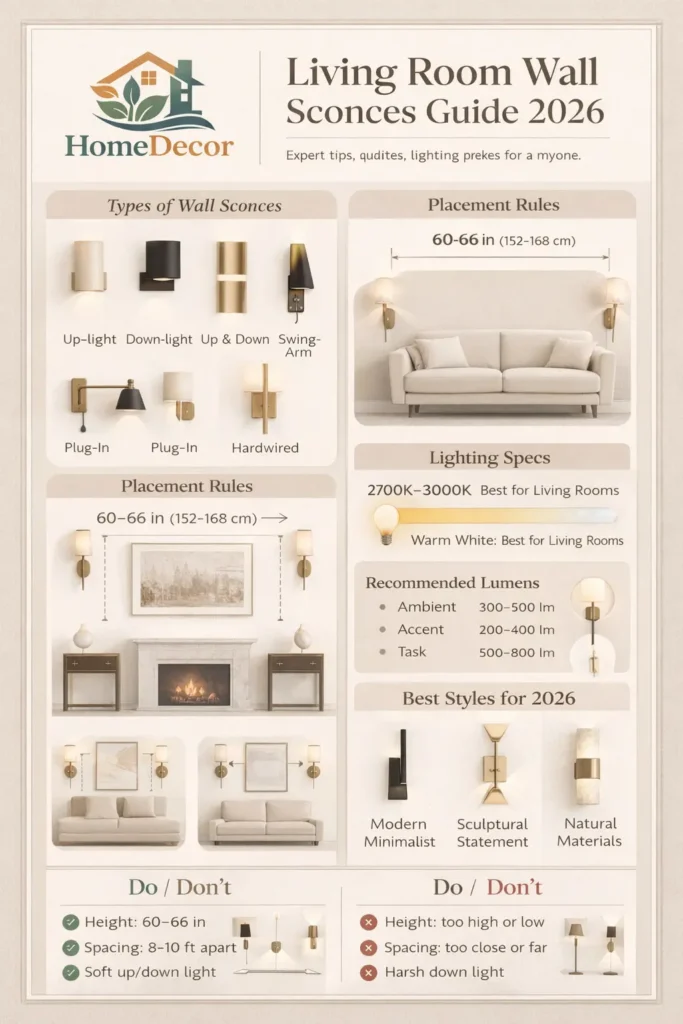
The most widely used rule is to install living room sconces about 60 to 66 inches (152 to 168 cm) from the Floor To The Center of the fixture. This range usually places the light at a comfortable eye level and helps reduce glare.
However, the right height can change depending on what the fixture is doing, what it is placed beside, and how tall the room is.
Placement Table
| Situation | Height | Spacing | Best For | Tip |
| General wall lighting | 60–66 in | 8–10 ft apart | Ambient light | Works well in most rooms |
| Beside sofa | Around 60 in | Pair symmetry | Reading, atmosphere | Keep the bulb out of direct sightline |
| Artwork or mirror | Around 59 in | Based on width | Accent light | Up/down fixtures work beautifully |
| Seating or task area | 55–60 in | One fixture | Reading | Lower placement improves function |
Common Placement Locations
Wall sconces are especially effective in these living room zones:
Both sides of a fireplace
Both sides of a large artwork
Beside a sofa or reading chair
Above or beside a console table
Near or behind a television wall
In dark corners that need soft, indirect illumination
Each location serves a slightly different purpose. A fireplace placement tends to feel balanced and formal. A reading chair placement feels more functional. A dark-corner placement is more about atmosphere and spatial correction.
Spacing Rules
Spacing is just as important as height. Two sconces placed too close together can feel cramped, while fixtures placed too far apart can seem disconnected.
A good starting point is 8 to 10 feet apart for general wall lighting, then adjusted according to the size of the wall and the furniture below it. For symmetrical arrangements, measure from the center of the focal point rather than guessing by eye.
How to think about placement in real rooms
In a living room with a fireplace, sconces often look best when they frame the mantel evenly. In a room with a sofa as the main anchor, the sconces should visually relate to the seating zone.
The exact placement should always be tied to the room’s architecture and furnishings, not only to a generic rule.
Installation considerations
Before hardwiring anything, check the wall material, wiring access, switch placement, and whether the fixture will interfere with artwork, furniture, or window treatments. If you are using plug-in sconces, hide the cord as neatly as possible so the look still feels intentional.
A great sconce placement should feel natural, unobtrusive, and integrated into the room rather than obviously added as an afterthought.
Lighting Specs: Lumens, Kelvin, Bulbs & Dimmers
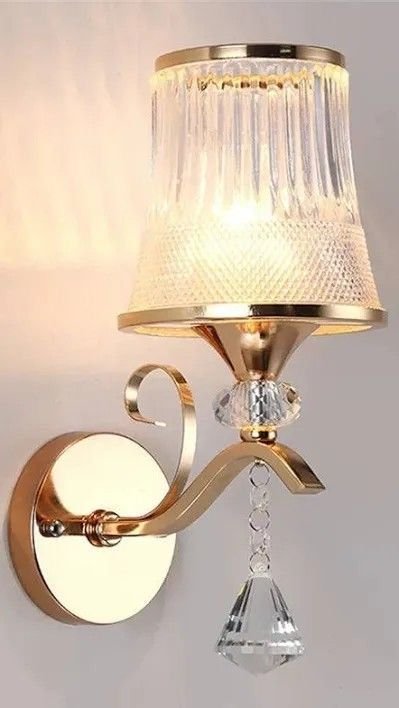
The appearance of a sconce is only part of the equation. To create a living room that feels comfortable and usable, you also need to think about how much light it gives off and what color temperature it produces.
Color Temperature
Color temperature affects the mood of the room more than many people realize.
| Kelvin | Mood | Best Use |
| 2700K | Warm, cozy | Best all-around living room choice |
| 3000K | Warm but crisp | Great for modern homes |
| 3500K–4100K | Neutral white | Use sparingly in living rooms |
| 5000K+ | Cool daylight | Usually too harsh for this space |
For most living rooms, 2700K is the safest and most inviting option. It creates a calm, welcoming atmosphere and pairs well with soft materials and warm finishes. 3000K can work beautifully in modern interiors when you want a slightly clearer, more architectural effect.
Brightness
Brightness should match the function of the sconce.
| Use | Lumens |
| Ambient lighting | 300–500 lm |
| Accent lighting | 200–400 lm |
| Reading or task lighting | 500–800 lm |
A reading nook needs more output than a decorative wall fixture. A soft ambient sconce can stay lower in brightness because it is contributing to the atmosphere rather than direct visibility.
Dimmers are essential
A dimmer gives you control over the room’s mood. That is especially important in living rooms, which often shift between daytime use, social gatherings, movie nights, quiet evenings, and reading time.
Without a dimmer, a sconce can feel too bright at night or too dim during the day. With a dimmer, the same fixture becomes much more versatile.
Best bulbs
LED bulbs are usually the best choice for living room sconces because they are energy efficient, long-lasting, cooler to the touch, and available in warm color temperatures. They also support a wide range of fixture styles, including integrated LED designs and standard bulb-based sconces.
When selecting a bulb, pay attention to:
Brightness
Color temperature
Dimmability
Beam spread
Compatibility with the fixture
The right bulb can transform a basic fixture into a comfortable and elegant lighting source.
Living Room Wall Sconce Ideas
Different rooms call for Different Lighting strategies. The best sconce idea is the one that supports the way the room is used.
Modern Living Room
For a modern interior, slim black or brushed-metal sconces with integrated LEDs work especially well. These styles look streamlined and architectural. They support a minimal visual language without adding unnecessary bulk.
Use them to reinforce clean lines, neutral textiles, and simple furniture silhouettes.
Luxury Living Room
For a more elevated or glamorous space, consider brass, alabaster, frosted glass, or stone. These finishes give the room a richer, more layered quality and help the lighting feel custom and sophisticated.
Luxury sconces often have a sculptural presence even when they are switched off, which makes them useful as decorative accents as well as light sources.
Small Living Room
A compact room benefits from slim fixtures, light finishes, and minimal visual weight. Plug-in sconces are often the easiest option because they let you add wall lighting without major renovation.
In small spaces, the goal is to increase openness, not clutter. A narrow vertical fixture or simple globe design can keep things airy and bright.
Budget-Friendly Idea
If you are working with a tighter budget, matte black plug-in sconces paired with warm LED bulbs are a strong choice. They are accessible, stylish, and flexible enough to fit many interiors.
Even an affordable fixture can look elevated if the scale is right and the placement is thoughtful.
Reading Corner
A swing-arm sconce is the best option for a reading nook or accent chair area. Install it slightly lower than a decorative fixture so the light lands where it is needed.
The convenience of an adjustable arm makes it easy to direct the beam for reading, lounging, or relaxing.
Fireplace Feature Wall
A pair of matching sconces beside a fireplace creates a classic and symmetrical composition. This arrangement is timeless because it reinforces the centrality of the fireplace and adds balanced illumination to the room.
This setup works especially well in traditional, transitional, and contemporary spaces that benefit from visual order.
Budget vs Premium Wall Sconces
Price often affects material quality, finish depth, longevity, and overall presence. The right level depends on how central the fixture is to your room design.
| Category | Best For | Look | Advantage |
| Budget | Rentals, starter homes | Simple plug-in LED styles | Affordable and accessible |
| Mid-range | Most households | Better materials and finish quality | Strong value balance |
| Premium | Designer interiors | Brass, stone, alabaster, sculptural forms | High-end appearance and feel |
Budget fixtures can still perform well if they are thoughtfully chosen. Mid-range options often deliver the best overall value because they balance quality and cost. Premium fixtures are worth considering when the sconce is part of a focal wall or an intentionally elevated interior scheme.
Instead of thinking only about cost, think about visibility. A highly visible wall sconce deserves a stronger design and better material quality because it will influence the room every single day.
Future-Ready 2026 Trends Worth Using
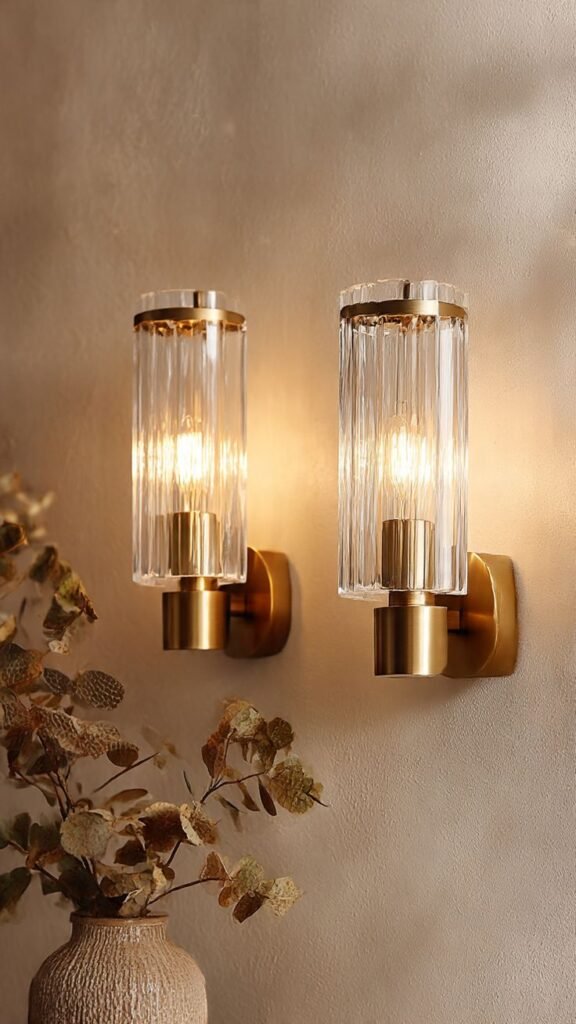
Lighting trends continue to move toward warmth, texture, and understated sophistication. In 2026, the strongest scone trends are not flashy. They are refined, tactile, and layered.
Slim minimalist LED fixtures
Thin profiles remain popular because they blend easily into contemporary rooms and feel visually light. They offer a clean design presence while still delivering effective illumination.
Sculptural, art-forward shapes
Designers are treating sconces more like wall sculpture. Unusual silhouettes and expressive profiles make the fixture part of the decor story.
Alabaster, stone, ceramic
These materials continue to stand out because they look organic and soften the emitted light. They also add a sense of luxury without feeling cold or overly polished.
Cordless and plug-in flexibility
Convenience matters. Homeowners want more flexibility, especially in rooms that may change over time. Plug-in solutions and battery-assisted models support easier adaptation.
Warm layered lighting
The days of relying on a single bright ceiling source are fading. Instead, rooms are being designed around gentle layers of illumination that shift across the space.
Mixed materials
Combining metal with stone, glass with wood, or ceramic with brass creates a richer visual effect. These combinations feel curated and current.
These trends are useful not because they are trendy, but because they align with how people actually use living rooms now: for relaxing, entertaining, reading, watching, and spending long periods in a comfortable environment.
Pros & Cons of Wall Sconces
Every lighting choice has strengths and limitations. Wall sconces are no exception.
Pros
They save floor and table space.
They support both task and accent lighting.
Cons
Poor placement can cause glare.
Hardwired models require installation.
Cheap materials can look flat or dated.
Too many fixtures can clutter the wall.
The pros often outweigh the cons, especially when the sconce is selected with care and installed correctly. Most problems are caused by poor planning rather than by the fixture category itself.
Common Mistakes to Avoid
A well-chosen fixture can still fail if the setup is wrong. Avoid these common errors.
1. Choosing style before function
A fixture can be beautiful and still be wrong for the room. Start with purpose first. Decide whether you need ambient glow, accent lighting, or reading support before focusing on appearance.
2. Installing too high or too low
Height matters. Too high, and the fixture may feel detached from the room. Too low, and it may create glare or interfere with furniture.
The 60–66 inch center-height guideline is a strong starting point for most living room walls.
3. Using cool-white bulbs
Cool bulbs can make a living room feel stark, clinical, or uncomfortable. Warm white is usually the better choice because it supports relaxation and visual softness.
4. Placing fixtures unevenly
Asymmetry can work in some designs, but accidental unevenness usually looks like a mistake. Always measure carefully and compare both sides before drilling or wiring.
5. Skipping dimmers
A dimmer is one of the simplest ways to make a lighting plan feel more premium and adaptable. Without it, the room loses flexibility.
6. Ignoring scale
A tiny sconce on a huge wall can disappear. A giant fixture on a narrow wall can feel overpowering. Match the fixture to the wall size, ceiling height, and surrounding furniture.
7. Overcrowding the wall
More is not always better. Too many sconces can create visual noise and make the wall feel busy instead of elegant.
FAQs
The safest starting point is 60–66 inches from the floor to the center of the fixture. That placement usually feels balanced, comfortable, and visually natural in most living rooms.
For general wall lighting, 8–10 feet apart is a practical guideline. The final spacing should still depend on wall width, furniture placement, and the visual goal of the room.
Yes. LED sconces are efficient, long-lasting, and available in warm color temperatures that suit living room environments very well. They are also a strong fit for modern and minimalist interiors.
For most living rooms, 2700K is the ideal starting point because it creates a soft, cozy, and welcoming atmosphere. 3000K can also work well when you want a slightly cleaner, more contemporary feel.
They do not need to match exactly. A better approach is to coordinate finishes and visual tone. For example, brass, black, bronze, and frosted glass can all work together if they feel intentional and balanced.
Conclusion
Lights mounted on walls bring depth to your main room without taking up floor space. A single fixture near the sofa shifts attention where it belongs, instead of shouting for notice. Some glow from above blends more easily into evening hours than harsh ceiling beams. Placed beside art or mirrors, they lift quiet corners into moments worth pausing at. Shadows soften. The air changes. What was flat now breathes differently.
Finding the perfect fit means picking a fixture that suits the task. Its size should echo the wall’s proportions – nothing feels off quite like mismatched scale. Situate it where light lands just right, not too high, not too low. Warmth matters; soft, adjustable brightness brings comfort into focus. Modern Tastes? There’s a match. A love for elegance, simplicity, or timeless lines? Each finds its counterpart here.
Light spills differently come 2026 – not just stronger, but smarter. Balance matters most, then how warm it feels, what surfaces it touches, and whether you can shift it around. Sconces on walls help with each of those quietly. Placed right, a living area stops feeling flat – starts breathing as someone thought ahead.
Wall Sconces for Living Room: Styles, Placement & Lighting
