
Introduction
Wall Decals for Living Room spaces have become one of the most practical, versatile, and visually effective ways to refresh a home without committing to a full renovation. They are simple to apply, easy to update, and can turn an ordinary blank wall into a polished design feature. For homeowners, renters, and decorators alike, wall decals provide a rare combination of style, flexibility, and affordability. They can soften a room, sharpen a focal point, create balance in a large space, or bring personality into a small living area without overwhelming the interior.
From an SEO and content strategy perspective, this topic also aligns with strong search intent. People searching for wall decals for living room ideas usually want more than inspiration. They want guidance on placement, sizing, materials, durability, style matching, and whether decals are better than wallpaper or paint. That means a high-performing article needs topical depth, semantic relevance, and clear intent satisfaction. It should answer the user’s core question while also supporting related subtopics such as installation, removal, renter-friendly decorating, and budget-friendly buying decisions.
This guide is built to fill those gaps. It explains what wall decals are, how they work in living rooms, which styles are most effective, how to choose the right size and material, where to place them, and how to install and maintain them properly. It also uses a people-first structure that helps readers make confident decisions instead of simply looking at pretty examples.
What Are Wall Decals?
Wall decals are adhesive decorative designs made to stick to smooth wall surfaces. They are usually produced in peel-and-stick formats and can often be removed with far less effort than wallpaper or paint. In the living room, decals are used to create accent walls, add visual storytelling, frame a furniture arrangement, or highlight a specific zone such as the sofa wall, TV wall, or an entry-facing feature wall.
Unlike framed prints or wall art, decals become part of the wall’s visual identity. They do not sit independently on top of the surface. Instead, they blend into the interior and create a more integrated composition. That makes them especially useful when you want a clean, modern, minimal, or curated look. They also work well in homes that need quick style upgrades without dust, tools, or a large renovation budget.
Another reason decals are so effective is their adaptability. A room can feel very different depending on whether you choose a botanical branch, a large abstract arc, a geometric pattern, or a simple quote. The wall becomes a design anchor, and the decal acts like a visual signal that tells the eye where to focus.
Why Wall Decals Work So Well in Living Rooms
Living rooms are the heart of many homes. They are used for conversation, relaxation, family time, entertainment, and sometimes even remote work. Because of this, the space needs to feel welcoming and balanced while still reflecting the personality of the people who live there. Wall decals perform well in this environment because they do a lot with very little.
A well-placed decal can:
- create a focal point without taking up floor space
- make a plain wall feel intentional
- Add character to minimalist or neutral interiors
- visually connect furniture, lighting, and textiles
- provide a low-cost refresh compared with paint or wallpaper
- support rental-friendly styling without permanent change
This is why wall decals for living room design continue to grow in popularity. They fit modern lifestyle needs. People want interiors that are attractive, flexible, and easy to change. Decals meet that demand without the commitment of a full wall treatment.
They are especially useful in homes where design needs to evolve. For example, a young family may want a playful yet stylish living room now, but later they may prefer something more elegant and understated. A decal allows for that change without replacing furniture or repainting the room from scratch.
Top Wall Decal Styles for Living Room Decor
The best wall decal style depends on the room’s layout, color palette, furniture shape, and design personality. Some styles feel timeless and calm, while others feel bold and expressive. Choosing the right one is part aesthetic judgment and part strategic interior planning.
Quote and Typography Decals
Typography decals remain popular because they communicate mood quickly. A simple phrase, family message, or inspirational word can add warmth and identity to a living room. These designs work best when they are concise, readable, and proportional to the wall.
A quote decal can be useful in a family-oriented room, a cozy reading corner, or a modern apartment that needs a little emotional character. The key is restraint. A short statement is usually stronger than a long sentence. The right font matters too. Clean sans-serif fonts feel modern, while serif or handwritten styles may feel softer, more personal, or more decorative.
Use typography decals when you want the room to feel welcoming, meaningful, and visually simple. They are particularly effective on walls with minimal furniture, because the message becomes part of the room’s identity rather than competing with too many objects.
Nature-Inspired Decals
Botanical, floral, leaf, tree, and branch decals are among the most enduring choices for living rooms. They add softness, movement, and a natural rhythm to the wall. They also work beautifully in interiors that use wood, linen, stone, rattan, jute, or earthy colors.
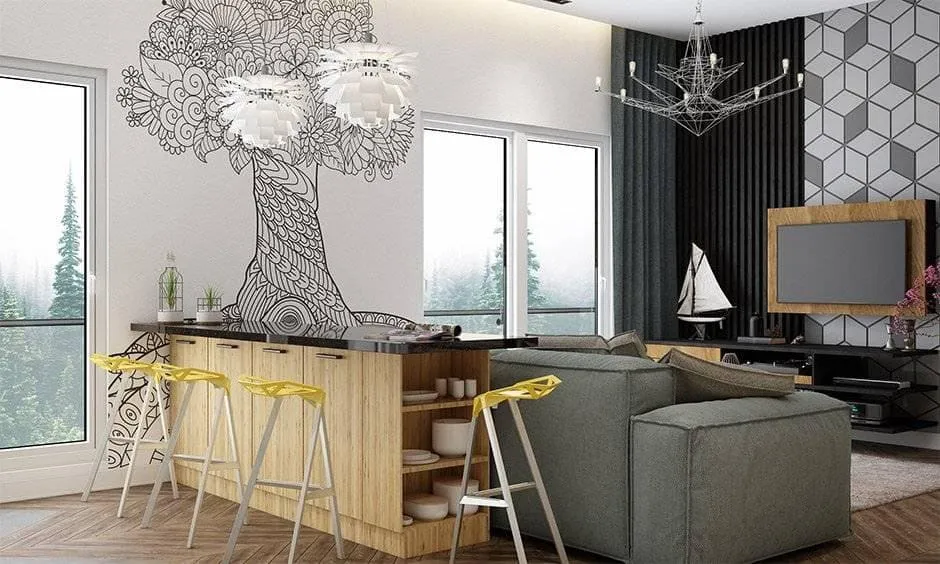
Nature-inspired decals are often associated with calm, balanced interiors because they echo organic forms found outdoors. They can make a room feel grounded without making it heavy. A large botanical silhouette behind the sofa, for instance, can create a subtle but elegant focal point. A delicate leaf trail in a corner can also bring life into an otherwise empty area.
This style is ideal for Scandinavian, Japandi, boho, and neutral homes. It also works well in spaces where you want warmth without clutter. If the rest of the room already contains strong textures or bold colors, a botanical decal can provide a visual pause and help the space breathe.
Abstract and Modern Styles
Abstract decals are one of the best options for contemporary living rooms. They use arches, curves, irregular shapes, brush-like strokes, layered forms, or tonal compositions to create a Fashionable yet uncluttered look. These designs are a strong fit for modern homes because they feel artistic without being overly literal.
Abstract wall decals can be used to support the room’s broader design language. For example, a room with curved furniture, round mirrors, and soft edges can be complemented by a flowing abstract decal. A room with angular furniture and clean lines may suit geometric forms with sharper edges.
This style works especially well behind a sofa or media wall. It creates visual interest while still allowing the rest of the room to remain calm. For buyers who want a premium-looking wall treatment without the cost of custom mural work, abstract decals are often the sweet spot.
3D and Illusion-Style Decals
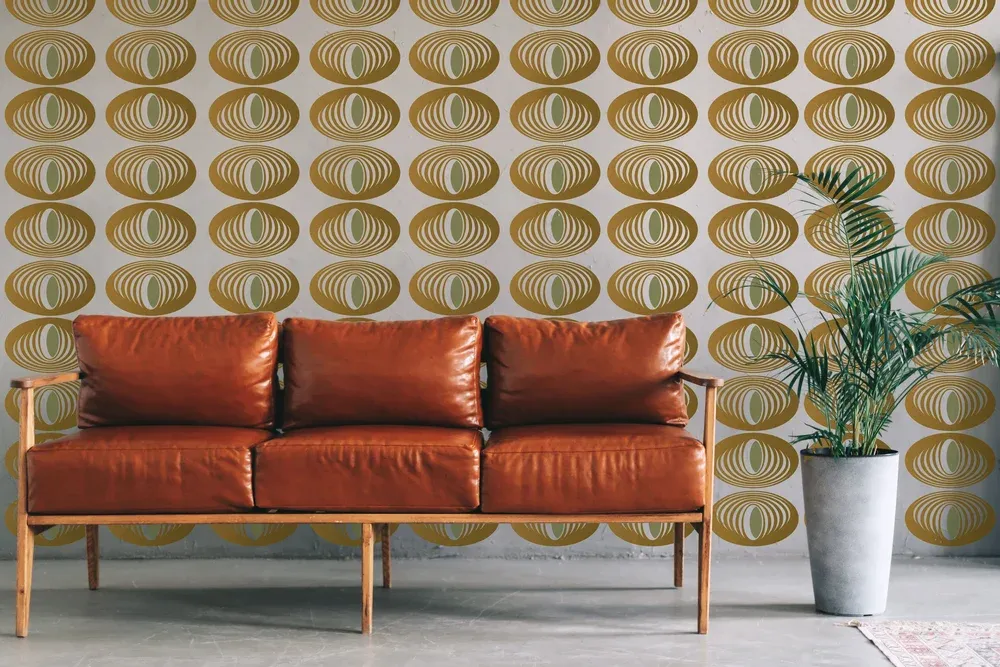
Three-dimensional or illusion-style decals use shading, perspective, or layered shapes to create a sense of depth. These can make a room feel more dynamic and visually engaged. They are especially appealing in rooms where the wall feels flat or uninspired.
That said, they should be used carefully. A dramatic illusion design can become overpowering in a small living room or a space already filled with strong visual elements. In larger rooms, however, a 3D decal can become a conversation piece and a memorable focal point.
These designs are best for homeowners who want something more dramatic and art-forward. They can also be effective in media areas, studio-style interiors, and spaces that need a creative edge.
Minimalist Line Art and Simple Shapes
Minimalist decals remain one of the safest and most elegant choices for living rooms. Thin line art, a simple face outline, a small symbol, or a minimal shape composition can elevate the wall without making it busy. This style has long-term appeal because it adapts easily to changing furniture, new curtains, or seasonal décor updates.
Minimal decals are also highly searchable because many users are looking for modern wall decor ideas that feel refined rather than loud. These decals work exceptionally well in neutral rooms where every decorative element must earn its place.
If your living room already has strong furniture, layered textiles, or accent lighting, minimal line art is often the smartest choice because it adds sophistication without visual overload.
How to Choose the Right Wall Decals
Choosing a decal is not only about personal taste. It is also about proportionality, wall compatibility, color harmony, and design intent. Many articles show beautiful examples, but they do not explain how to make the right selection for a specific room. That is where a more useful guide should go deeper.
Consider the Wall Size
The wall size should guide the decal size. A design that feels elegant on a large wall may look awkwardly small on a wide, empty surface. A design that is ideal for a compact room may dominate a smaller wall and make it feel crowded.
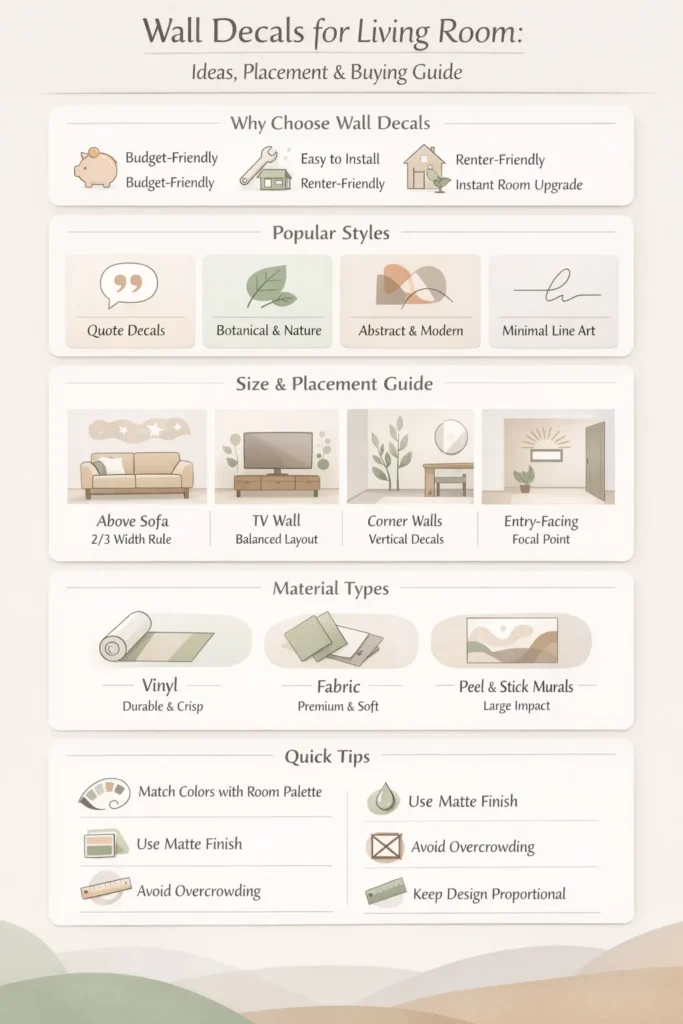
A simple rule of thumb is this: On small walls, choose one medium decal or a slim vertical motif.
- On large walls, use a bigger single graphic or a balanced grouped composition.
- Above a sofa, aim for a decal that feels proportionate to the furniture’s width.
- Above a TV, avoid designs that visually compete with the screen
A well-sized decal should feel as though it belongs to the room, not as though it was added as an afterthought.
Match the Decal to the Room’s Color Story
Color harmony is essential in interior design. A decal can either blend quietly into the wall or stand out as a statement piece. Both approaches work, but they create different emotional effects.
If the room already contains strong patterns or bold furniture, a softer decal color often works best. If the room is visually quiet, a slightly stronger decal may help create a focal point. The goal is not just contrast for its own sake, but meaningful contrast that improves the overall composition.
Try to connect the decal to one or two existing colors already present in the room. That way, the decal feels grounded in the space rather than detached from it.
Choose the Right Visual Tone
Every decal communicates a mood. A botanical branch feels calm. A quote can feel warm. A geometric print can feel structured. A large abstract curve can feel creative and contemporary. Before buying, ask what Emotional Effect you want the wall to have.
Do you want the room to feel peaceful, elegant, energetic, cozy, or sophisticated? The answer will help determine whether the design should be soft, minimal, dramatic, or expressive.
Think About the Room’s Function
The living room’s use also matters. A formal sitting area might benefit from a refined line-art decal or a subtle botanical pattern. A family room may do better with a warmer, friendlier design. A small apartment may need a compact but high-impact visual accent. A large open-plan living room may need a broader composition that helps define the zone.
This is where semantic design thinking becomes useful. The best decal is not simply attractive; it is contextually appropriate. It fits the room’s purpose, furniture arrangement, and visual hierarchy.
Material Types and Finish Options
Most wall decals for living room use are made from vinyl or peel-and-stick materials, but quality varies widely. Some feel polished and durable, while others may lift at the edges or look too glossy. Material choice affects not only appearance but also installation ease, durability, and removal.
Here is a practical comparison:
| Material Type | Best For | Look | Durability | Removal |
| Vinyl | Most living rooms | Crisp and modern | High | Usually easy |
| Fabric-style decals | Premium interiors | Softer and more textured | High | Often very good |
| Peel-and-stick mural decals | Large accent walls | Bold and immersive | Medium to high | Easy to moderate |
| Budget PVC-style decals | Quick updates | Simple decorative effect | Medium | Usually easy |
Vinyl Decals
Vinyl is common because it offers sharp edges, clean lines, and a polished finish. It works well in modern rooms and is often the go-to choice for typography, geometric motifs, and medium-sized decorative graphics.
Fabric-Style Decals
Fabric-style materials can feel more refined and premium. They sometimes offer a softer visual texture, which is helpful in high-end or warm-toned interiors. These may be especially suitable when you want the decal to look more integrated into the wall rather than obviously adhesive.
Murals and Large Peel-and-Stick Graphics
These are ideal for feature walls. They create maximum visual impact and can transform the room quickly. Because they cover more surface area, alignment and sizing become more important.
Matte Versus Glossy Finish
A matte finish usually looks more elegant in living rooms because it reduces glare and helps the decal feel painted on. Glossy finishes can work in some styles, but they may reflect too much light, especially near windows or layered lighting fixtures. If your goal is a premium and contemporary feel, matte is usually the safer choice.
Best Placement Ideas for Maximum Impact
Placement is one of the biggest factors in whether a wall decal looks beautiful or awkward. Even the best design can fail if it is placed too high, too low, too small, or too close to competing décor.
Above the Sofa
This is the most popular and often the most effective placement. It naturally creates a focal point in the seating area and helps the room feel complete. The wall above the sofa is usually one of the first areas the eye notices, so it is a strong location for a meaningful visual statement.
For best results, center the decal relative to the sofa and make sure the scale feels appropriate. A decal that is too small may look lost, while one that is too large may overwhelm the furniture.
On the TV Wall
A decal can soften a television wall and keep it from feeling too plain. This works best when the design is understated and not overly busy. Since the screen already draws attention, the decal should support the wall rather than fight with it.
A modern abstract form or quiet geometric structure is often better than a highly detailed graphic in this zone.
In a Corner
Corner placements are excellent for smaller living rooms. A slim vertical branch, a narrow quote, or a subtle cluster of shapes can make use of a dead zone without crowding the main wall. This is a smart way to add personality without sacrificing openness.
Opposite the Entrance
The wall visible when someone enters the room is a strategic placement. It establishes a first impression and immediately Communicates style. A tasteful decal here can make the whole room feel more designed and intentional.
In Open-Plan Spaces
In open-plan homes, decals can help define zones. They work as soft visual boundaries between the living area, dining area, and kitchen without creating hard partitions. This makes them useful for modern apartments and multi-purpose spaces where layout clarity is important.
Wall Decals vs Wallpaper vs Paint
Many readers are comparing these options before making a decision. Each one has strengths, but they serve different needs.
| Feature | Wall Decals | Wallpaper | Paint |
| Cost | Low to moderate | Moderate to high | Low to moderate |
| Installation | Easy | More complex | Moderate |
| Removal | Usually easy | Can be difficult | Requires repainting |
| Design impact | High | Very high | Medium |
| Rental-friendly | Yes | Sometimes | Usually not |
| Flexibility | Very high | Medium | Low |
Why Choose Wall Decals?
Wall decals are ideal if you want a visual transformation without long-term commitment. They are practical, decorative, and easier to manage than larger wall finishes. They also suit renters, seasonal decorators, and people who enjoy switching styles over time.
Why Choose Wallpaper?
Wallpaper is better for a fully immersive patterned wall and can be more dramatic. However, it is a bigger commitment, both visually and practically.
Why Choose Paint?
Paint is timeless, simple, and versatile. It is the easiest way to change a room’s base tone, but it may not give the same decorative detail or layered character that decals provide.
The best option depends on your goal. If you want flexibility, low risk, and style with minimal effort, decals are usually the strongest choice.
Step-by-Step Installation Guide
Correct installation is essential. A decal that is slightly crooked, wrinkled, or uneven will not look refined, no matter how attractive the design is. Fortunately, most modern decals are manageable if you work carefully.
Clean the Wall
Begin with a clean, dry surface. Dust, grease, and residue can weaken adhesion and create visual imperfections.
Measure the Space
Measure the wall and identify where the decal should sit relative to furniture, windows, shelves, and lighting. Proportion matters more than many people realize.
Test the Layout
Before committing, use tape or paper cutouts to preview the composition. This helps you check the balance and avoid placement errors.
Peel Slowly
Take your time. Pull the backing away gradually so the decal does not fold, crease, or stick prematurely.
Smooth From the Center Outward
Use a soft cloth or squeegee to remove air pockets. Work from the center to the edges to keep the surface smooth.
Secure the Edges
Press the corners and borders down carefully. Those small details often determine whether the final result looks polished.
Review From a Distance
Once installed, step back and evaluate the wall from the other side of the room. This is the best way to catch alignment issues or spacing problems.
| Step | What to Do | Why It Matters |
| Clean | Wipe the wall surface | Improves adhesion |
| Measure | Plan the exact placement | Prevents mistakes |
| Test | Preview the layout | Improves balance |
| Apply | Peel and stick slowly | Reduces wrinkles |
| Smooth | Remove air bubbles | Creates a cleaner finish |
| Review | Check from across the room | Ensures proportion |
Budget-Friendly Wall Decal Ideas
One of the biggest advantages of wall decals is that they can look stylish without a high price tag. You do not need expensive furniture or a full renovation budget to create a beautiful living room accent wall.
A few low-cost ideas include:
- a single quote decal above a console
- a small botanical branch in a corner
- a geometric symbol over a reading chair
- a compact decal cluster instead of a full mural
- a neutral tone that complements existing furniture
Budget decorating works best when the room already has a good base. A clean wall, decent lighting, balanced furniture, and a simple color scheme can make even a modest decal feel intentional and attractive. The decal then becomes the finishing layer that ties everything together.
This is a strong example of content that matches user intent. Many readers are not trying to redesign the whole home. They want one smart, low-cost improvement that delivers visible impact. A well-chosen decal does exactly that.
Premium and Luxury Wall Decal Ideas
Luxury is often more about restraint than expense. In living-room décor, premium styling usually comes from scale, finish, placement, and cohesion. A large decal with a matte surface and carefully chosen neutral tones can look far more expensive than a busy pattern with no coordination.
Premium decal ideas include:
- oversized botanical murals
- large abstract line compositions
- monochrome tonal graphics
- clay, taupe, olive, stone, or sand color schemes
- custom typography with elegant spacing
To make a decal feel more luxurious, pair it with layered lighting, quality curtains, and simple furniture. Leave enough negative space around the design so it can breathe. Overcrowding is the enemy of sophistication.
A premium decal should feel curated. It should look like part of a thoughtful interior plan rather than a last-minute decoration.
Common Mistakes to Avoid
Even a beautiful decal can underperform if it is used without a strategy. The most common mistakes are often simple but costly from a visual standpoint.
Avoid these errors:
- choosing a decal that is too small for the wall
- placing it too high or too low
- matching too many bright colors in one room
- overcrowding the wall with too many decorations
- ignoring the furniture layout
- applying it to a dusty, damaged, or textured surface
- selecting a trend that will feel dated very quickly
One of the biggest mistakes is treating the decal like a sticker instead of an interior design element. The best wall decals are not random accessories. They are part of the room’s visual architecture. They help establish rhythm, balance, and hierarchy.
Maintenance, Care, and Durability Tips
The longevity of wall decals depends on both the product quality and how the wall is treated after installation. A good decal should remain flat, retain its color, and remove cleanly when the time comes. To support that, a few simple habits make a big difference.
Care tips:
- dust gently with a dry cloth
- Avoid scrubbing the Surface
- Keep moisture away from the decal.
- Use decals on smooth, properly painted walls
- Wait for the fresh paint to cure before applying
- Replace lifted edges early rather than waiting
If your home is humid or subject to temperature changes, material quality becomes even more important. Better adhesives and better films usually perform more consistently in real-world living conditions.
Smart, Modern, and Future-Ready Design Ideas
The current direction in home décor favors flexibility, calm color palettes, and low-effort updates. Wall decals fit that trend perfectly. They are a low-commitment way to keep a living room fresh, especially for people who like evolving interiors.
A future-ready decal strategy should focus on:
- timeless shapes instead of ultra-specific trends
- neutral and earthy tones
- designs that work with modular furniture
- enough empty wall space for breathing room
- decorative balance with rugs, curtains, and lighting
This is also where a topical SEO approach becomes important. Readers searching for wall decals for the living room may also be interested in living room layout ideas, best paint colors for the living room, small living room design tips, modern wall decor ideas, and renter-friendly home decor. Connecting these related concepts helps the article feel more complete and more useful.
If your room changes often, decals are one of the easiest ways to keep pace without repainting or remodeling. They are practical, modern, and highly adaptable.
Quick Tips for Better Results
A few simple rules can dramatically improve the final look:
- Keep the design simple in small rooms
- Use larger decals on larger walls
- Match the decal to existing room colors
- place it where the eye naturally lands first
- prefer matte finishes when possible
- think about the wall as a whole composition
The goal is not to fill space. The goal is to shape space. A good decal does not just decorate the wall; it improves the room’s visual flow.
Pros and Cons Summary
Pros
- affordable way to refresh a living room
- easy to install
- easy to remove or replace
- suitable for renters and homeowners
- available in many styles
- can create a strong focal point
Cons
- requires careful placement
- works best on smooth walls
- low-quality versions may peel
- Very detailed designs can be difficult to align
- Not every style suits every room
FAQs
Yes. They are one of the easiest ways to add style, warmth, and personality to a living room without a major renovation. They can help create a focal point, soften a blank wall, and make the room feel more complete.
Large botanical, abstract, minimalist, and quote decals are usually the most versatile. The best choice depends on the room’s size, furniture style, and overall mood.
Many peel-and-stick decals are designed for clean removal, especially when they are applied to smooth and properly prepared walls. Always follow the product instructions and avoid applying them to surfaces that are not suitable.
The most effective spots are above the sofa, on the TV wall, on a corner wall, or on the wall that is most visible from the entrance. The right place depends on your layout and the role you want the decal to play.
It depends on your goal. Wall decals are better when you want flexibility, easier updates, and renter-friendly decorating. Wallpaper is better when you want a more permanent, fully patterned surface.
Conclusion
Wall decals for living room décor are a smart, Affordable, and highly flexible way to transform a space. They offer the visual impact of a decorative wall treatment without the cost or permanence of a major renovation. When chosen thoughtfully, a decal can strengthen the room’s composition, support the furniture layout, and make the whole interior feel more refined.
The best results come from a simple formula: choose the right size, place it with intention, match it to the room’s color language, and keep the design aligned with the mood you want to create. Whether you prefer bold and modern, soft and natural, minimal and elegant, or budget-friendly and practical, there is a decal style that can fit your living room beautifully.
