
Introduction
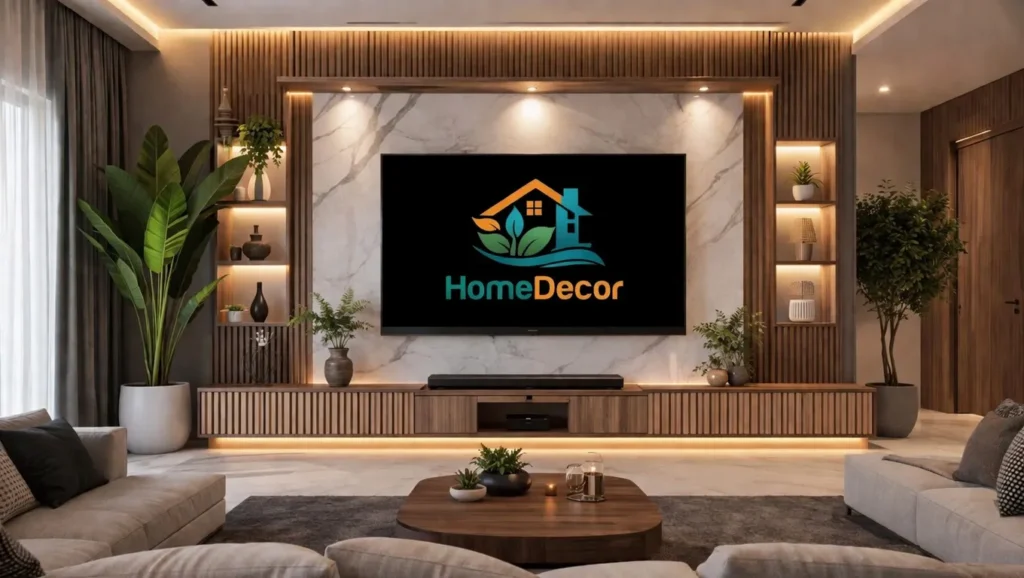
A TV wall is no longer just the place where a screen sits. In modern living rooms, it often becomes the main visual anchor, the style statement, and the point that ties the entire space together. When planned well, it can make a room feel finished, balanced, and far more comfortable to use every day. A strong TV wall can hide clutter, reduce visual noise, support better viewing angles, and create a cleaner architectural look that feels intentional rather than accidental.
That is why the best TV Wall Ideas for Living Room interiors in 2026 are not based on a single trend. A setup like this follows clear thinking – balance, usefulness, ease, places to store things, light control, and materials that go well together. For some, a clean look matters most – a thin unit fixed flat to the wall with bare space nearby. Other people lean toward full integration: cabinets tucked in, open ledges, wires hidden out of sight. One person might pick grainy wooden panels; another could choose a rocky surface, bumpy stucco finish, or a gently colored panel effect on the wall. What works best ties back to how big the space is, where the seating lands, what needs storing, and how the rest of the decor feels.
Real houses need real solutions. Pick a setup that matches how you live, not some staged photo. Figure out where the screen goes before buying anything else. Walls matter just as much as what hangs on them. Tuck wires away without drilling holes everywhere. Small rooms can still feel open with smart choices. Big budgets allow extra details, but simplicity often wins. Hidden tech keeps things clean. Style should follow function, never the reverse. More than fifty examples show different paths – some bold, others quiet. Each idea adjusts to fit tighter spaces or grander ones. Find one that feels like yours. Money changes options, yet good sense stays key. Taste shifts person to person, room to room. Match materials to light, mood, and daily mess. Let the space decide what works.
Why TV Wall Design Matters
A setup on the wall shifts how eyes move when you enter a space. Because most people face the screen first, whatever sits behind it shapes the mood. When that surface stays bare or random, the box up front seems disconnected – like it landed there by accident. Yet line it with purposeful details, and suddenly the eye connects one element to the next. Lines start flowing better through the area. Furniture settles into place more naturally. Order appears where none existed before.
Most folks sit just fine when the screen sits at eye level. Neck pain fades if you set it too high or too low. Step back far enough so colors blend like real life. Light bouncing off glass? Tweak the lamps nearby to dim the ones that shine. Gadgets vanish neatly into shelves built close by. A television on the wall does more than look nice. Instead, it fits right into how people live each day.
Here’s quiet through design. Rooms where people unwind tend to host movie nights, chats, book sessions, gatherings, and shared moments. Cluttered sightlines stir unease rather than peace. One strong focal point settles the eye. Order comes when one feature leads. Balance shows up when pieces aren’t fighting. A resting spot for the gaze – this matters most when rooms flow into one another, like in open layouts where separation must feel light, yet clear. Space unfolds smoothly when sightlines have a pause point built right in.
How to Choose the Perfect TV Wall for Your Living Room
Measure the wall and seating distance first
Before choosing any finish, screen size, or cabinet style, start with measurements. The width of the wall, the distance between the sofa and the TV, the height of the seating position, and the available depth for furniture all affect what will work best. A design that looks beautiful online may feel oversized, cramped, or visually awkward in your own room.
A compact room generally benefits from a lighter, simpler TV wall with fewer layers. A larger room can support more structure, deeper materials, and greater visual presence. The best result usually comes from proportion. When the TV wall fits the room correctly, the whole interior feels better organized.
Decide whether the TV should be mounted or placed on a unit
Wall mounting creates a cleaner, more contemporary look. It also frees up floor space and gives the wall a more streamlined appearance. A console or media unit, on the other hand, adds storage and visual weight. It can help the TV area feel grounded and complete.
Many of the strongest designs use both. A wall-mounted TV above a floating cabinet gives a balanced, modern result. A built-in unit that frames the screen makes the wall look custom and architectural. The key is to choose a setup that matches the way you live. If you need storage, plan for it. If you want visual simplicity, keep the layout lean.
Match the TV wall style to the room style
The best TV wall ideas for living room spaces always feel connected to the rest of the interior. Warm wood works beautifully in Scandinavian, Japandi, and relaxed modern homes. Matte paint and soft neutrals work well in calm contemporary spaces. Stone, marble-look panels, and layered cabinetry suit luxury interiors. Fluted panels, ribbed textures, and soft backlighting work well in modern homes that want depth without excess.
The TV wall should not feel pasted onto the room. It should feel like it belongs there.
Plan lighting and cable management before installation
One of the easiest ways to ruin a great TV wall is to ignore the practical details. Hanging wires, visible plugs, messy device stacks, and harsh light aimed at the screen can make the design look unfinished. Planning those elements early makes the room easier to maintain and more pleasant to use.
Think about where the cables will run, where the power points will sit, where the devices will be stored, and how the lighting will behave at night. These choices affect both appearance and comfort.
Quick Planning Table
| Decision | Best For | Why It Works |
| Wall-mounted TV only | Small rooms, minimalist homes | Saves space and looks clean |
| Floating console + TV | Most living rooms | Balances storage and style |
| Built-in media wall | Large or premium rooms | Adds a custom architectural feel |
| Textured feature wall | Modern or luxury interiors | Makes the TV zone feel designed |
| Hidden cable system | Any setup | Keeps the wall neat and safe |
| Backlit wall | Evening viewing | Softens contrast and adds ambience |
50+ TV Wall Ideas for Living Room Spaces
1) Minimalist floating console
A floating console keeps the floor visually open and gives the room a light, airy appearance. Pair it with a wall-mounted TV, hidden wiring, and one or two restrained decorative pieces. This is one of the cleanest solutions for a modern living room.
Best for: small and medium rooms, apartments, modern interiors
Style match: modern, Scandinavian, Japandi
2) Built-in media wall
A built-in media wall frames the TV with shelves, cabinets, and sometimes even niche lighting. It creates a fully integrated look and is ideal when you want the TV wall to feel like part of the architecture rather than an added object.
Best for: family rooms, large living rooms, premium homes
Style match: modern luxury, classic contemporary
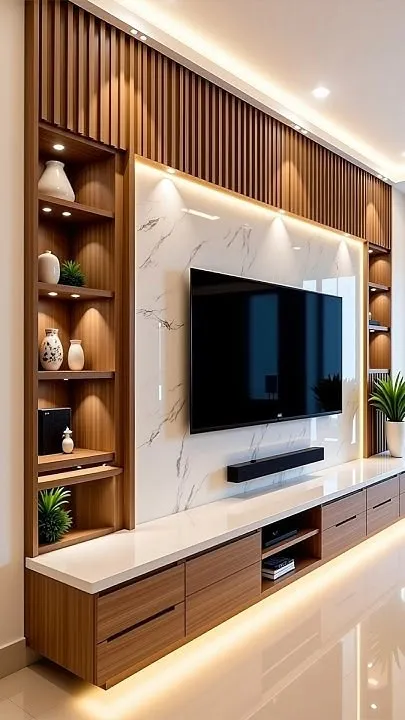
3) Wood slat feature wall
Wood slats add warmth, movement, and natural texture. They make the room feel more layered without becoming too heavy. This is an excellent choice if you want something stylish but not overly dramatic.
Best for: warm modern rooms, Japandi interiors, cozy living spaces
Style match: Scandinavian, organic modern, Japandi
4) Gallery wall around the TV
A gallery wall helps the television blend into a more personal and curated environment. Framed art, photographs, or prints can soften the look of the screen and make the wall feel more expressive.
Best for: lived-in, personality-driven interiors
Style match: eclectic, transitional, modern classic
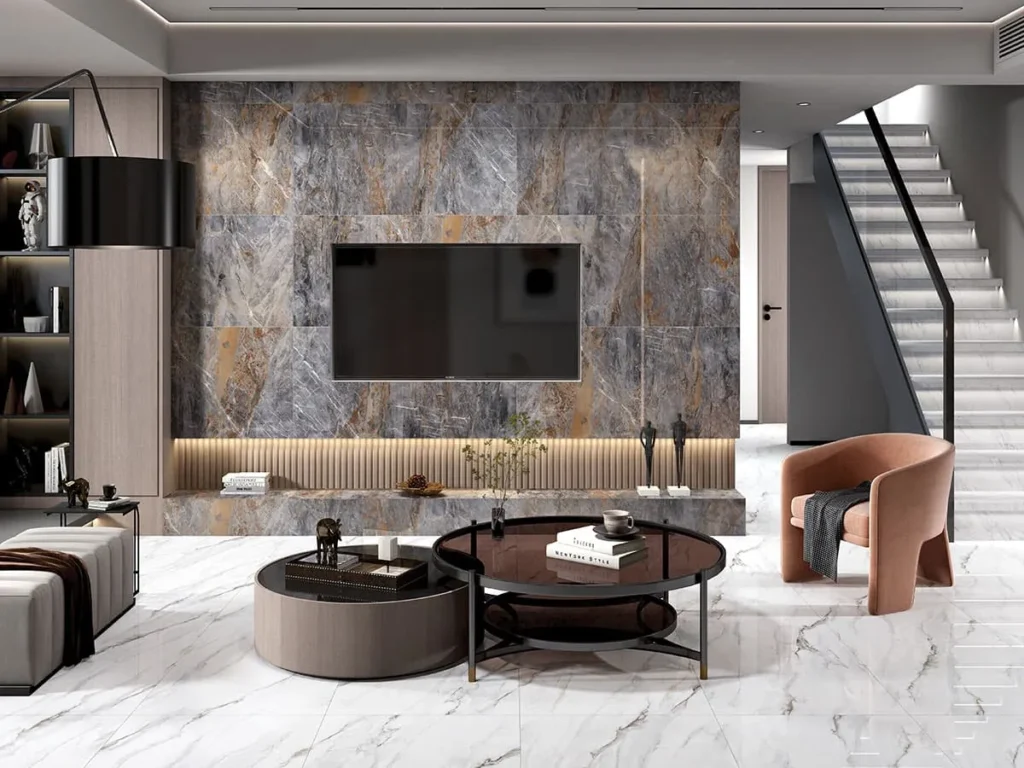
5) Stone or marble-effect backdrop
Stone and marble-look surfaces instantly elevate a living room. Even if you use a lightweight panel or engineered finish rather than full stone, the effect can feel premium and polished.
Best for: elegant, hotel-inspired interiors
Style match: luxury modern, contemporary, glamour
6) Wallpaper accent wall
Wallpaper is a fast and flexible way to create a feature wall. A subtle texture, soft geometric pattern, or muted botanical design can give the TV zone character without overpowering it.
Best for: renters, budget makeovers, quick refreshes
Style match: modern classic, soft contemporary
7) Recessed niche media center
A recessed niche helps the TV sit neatly within the wall. The screen feels built-in, the area looks cleaner, and the design gains a custom architectural quality.
Best for: renovations, new builds, media rooms
Style match: minimal modern, built-in contemporary
8) Bold paint accent wall
A charcoal, navy, olive, or warm greige wall can make the TV area feel grounded and sophisticated. Darker tones can reduce the visual dominance of the screen.
Best for: rooms that need a stronger focus
Style match: moody modern, refined contemporary
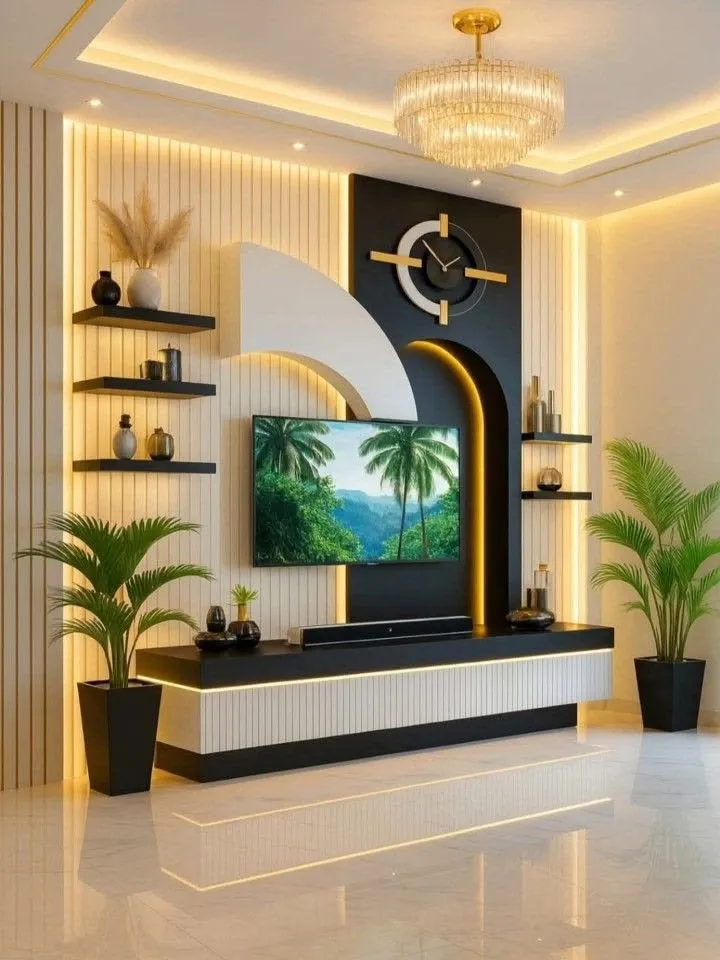
9) LED backlit TV wall
Backlighting adds a cinematic glow and helps the TV area feel more atmospheric. It is especially effective in the evening and creates a softer, more immersive mood.
Best for: home cinema vibes, nighttime viewing
Style match: modern luxury, tech-forward minimal
10) Multifunctional room divider
In open-plan homes, a TV wall can double as a divider between the living room and dining area or between the lounge and entry zone. This makes the wall both functional and spatially defining.
Best for: open layouts, studio-style homes, apartments
Style match: modern open-plan, smart contemporary
11) Slim panel wall with hidden cabinet doors
This design keeps everything tidy by concealing storage behind smooth panels. It works especially well when you want a calm, uncluttered result.
12) Fluted panel feature wall
Fluted panels are visually rich without being loud. They add rhythm, texture, and a refined finish that suits contemporary interiors beautifully.
13) Matte black media wall
A matte black TV wall creates contrast and a sleek, high-end look. It works particularly well with brass, wood, and soft neutral furniture.
14) Soft beige tonal wall
A beige-on-beige composition feels elegant, relaxed, and cohesive. It is ideal if you want the room to feel calm rather than dramatic.
15) Floating shelf only
For very small rooms, a single floating shelf may be enough. It provides a clean base without taking up much space or visually crowding the wall.
16) Slim vertical side cabinet
A narrow cabinet beside the TV offers practical storage without overwhelming the room. It is a subtle but effective addition.
17) Fireplace and TV wall combination
Combining a fireplace with a TV wall can create a cozy focal point. The key is careful height planning so the screen remains comfortable to watch.
18) Low-profile media bench
A low media bench creates a grounded, balanced look. It is ideal when you want storage and style without a tall cabinet dominating the room.
19) Art-frame style TV wall
Frame-style televisions or art-like concealment methods help the screen blend into the wall when not in use. This is a strong choice for people who want technology to feel less intrusive.
20) Two-tone wall paneling
Using one material behind the TV and another on the surrounding portions of the wall creates a subtle contrast. It gives the design structure without visual overload.
21) Floating shelves with curated decor
A TV wall can feel more polished with a small number of open shelves, carefully styled books, and minimal accessories. The trick is restraint, not abundance.
22) Vertical wood and painted combination
Pairing vertical wood detail with a soft painted surface creates a sophisticated layered effect. It gives the wall depth while maintaining a controlled palette.
23) Built-in asymmetrical shelves
Asymmetrical shelving gives the wall a modern designer edge. It works well when you want something a little less formal than a perfectly symmetrical arrangement.
24) Hidden TV wall behind sliding panels
Sliding panels can conceal the television completely when it is not being used. This is excellent for people who want the living room to look like a lounge rather than a media zone.
25) Warm oak media wall
Oak introduces comfort, brightness, and a natural finish. It is one of the easiest materials to pair with both neutral and colorful interiors.
26) Walnut luxury wall
Walnut creates a stronger, richer effect. It brings sophistication and works especially well in high-end or masculine interiors.
27) Floating console with hidden drawers
This is one of the most practical solutions. It gives you visual lightness, useful storage, and a tidy silhouette.
28) Full-height panel backdrop
A wall that extends from floor to Ceiling makes the TV feel more integrated and can visually elongate the room.
29) Textured plaster finish
Textured plaster brings a soft artisanal quality. It adds depth without requiring pattern or strong contrast.
30) Large-scale statement wall
If the room is spacious, the TV wall can become a statement surface with oversized panels, bold proportions, or dramatic finishes.
31) Symmetrical cabinet framing
A balanced cabinet layout on both sides of the TV creates a formal, composed look that works well in traditional or transitional homes.
32) Natural stone shelf accents
Even if the whole wall is not stone, a few stone details can make the TV area feel richer and more deliberate.
33) Concealed tech wall
Hide everything possible: wires, routers, game consoles, and speakers. This gives the living room a cleaner, more polished appearance.
34) Soft green TV wall
Muted green tones create a calm and natural atmosphere. They work well in relaxed modern rooms and pair beautifully with wood.
35) Warm greige backdrop
Greige is one of the easiest TV wall colors to live with because it balances warmth and neutrality. It suits many furniture styles.
36) Curved wall details
Curved edges or softly rounded forms can make the TV wall feel less rigid and more organic. It is a subtle way to introduce softness.
37) Ribbed MDF wall
Ribbed MDF panels are a budget-friendly way to create a designer look. They add texture and can be painted in many finishes.
38) Tall side niches
Vertical niches beside the TV help frame the wall and give you room for decor, books, or accent lighting.
39) Decorative shelf ledges
Shallow ledges are useful for small decor objects, framed photos, or sculptural accessories without making the wall cluttered.
40) Contemporary TV wall with acoustic panels
Acoustic panels improve sound quality and reduce echo, especially in large or open-plan rooms. They are functional and stylish at the same time.
41) Minimal white-on-white wall
A white-on-white scheme keeps the room bright, airy, and clean. It works best when paired with enough contrast from furniture or decor.
42) Concrete-look wall
A concrete finish creates an urban, modern look. It feels strong, architectural, and understated.
43) Slim black frame around the TV zone
A thin dark frame can make the screen zone more defined without making the wall feel heavy.
44) Double-height feature wall
If your room has a high ceiling, use that vertical space. A double-height TV wall can feel dramatic and luxurious.
45) Floating niche with concealed lighting
This look uses a recessed or floating form with hidden light strips. It creates depth and makes the wall feel custom-built.
46) Warm neutral layered wall
Layered neutrals keep the room calm and elegant. Different shades of cream, beige, taupe, and greige can create a soft, premium effect.
47) Mixed material wall
Combine wood, paint, stone, and lighting in a controlled way. This works best when one material leads, and the others support it.
48) Open shelf and closed cabinet mix
Open shelves provide display space, while closed cabinets hide clutter. The combination is practical and balanced.
49) Luxe hotel-style wall
This style focuses on symmetry, subtle lighting, rich textures, and a polished finish. It is ideal for a sophisticated living room.
50) Compact apartment TV wall
In a small apartment, keep the wall slim, simple, and efficient. A compact TV wall should feel light, useful, and visually unobtrusive.
51) Japandi-inspired TV wall
Japandi style combines minimal lines, natural wood, and soft color tones. It creates a serene and grounded living room atmosphere.
52) Transitional TV wall
A transitional approach blends modern and classic elements. It is a smart choice if you want a timeless look that will not feel overly trendy.
TV Wall Ideas for Small Living Rooms
Small living rooms need smart visual discipline. The goal is not to fill every inch of wall space. The goal is to make the room feel open, well-organized, and comfortable. In compact homes, a heavy media wall can quickly make the space feel crowded. A lighter approach usually works better.
The best small-room TV wall ideas tend to include a wall-mounted screen, a narrow floating console, hidden cable routing, and limited décor. Choose one clear focal point rather than multiple competing features. A wall can have texture, or lighting, or storage, but it does not need all three in large amounts.
Good small-space combinations include:
- Wall-mounted TV + slim floating shelf
- TV + vertical wood slats + one side cabinet
- TV + Soft Neutral Paint + backlighting
- TV + narrow niche + hidden wiring
- TV + low console with closed storage
A small living room also benefits from color continuity. If the TV wall is too dark or too busy, it can visually cut the room in half. Matching the wall finish to nearby surfaces helps the room feel larger and more unified.
The simplest rule is this: keep the wall visually light, avoid clutter, and make every element earn its place.
Materials and Finishes That Work Beautifully
Wood panels
Wood is one of the most reliable materials for a TV wall because it brings warmth, texture, and balance. It softens the coldness of electronics and makes the room feel more inviting. Oak, walnut, ash, and other natural tones all work well, depending on the look you want.
Textured plaster
Textured plaster is ideal for a subtle high-end effect. It creates depth without a loud pattern and works especially well in refined, understated interiors.
Stone and tile
Stone and tile create a premium, durable backdrop. They are especially effective in larger rooms or homes that want a more dramatic or architectural presence.
Wallpaper and paint
These are the easiest and most affordable finishes. They are ideal for renters, quick updates, and homeowners who want flexibility without a large renovation.
Fluted panels
Fluted panels remain one of the strongest modern choices because they create movement, elegance, and dimension without making the wall feel overdesigned.
Lighting Tips for a Better TV Wall
Lighting can elevate a TV wall or ruin it. Harsh direct light can cause reflections and discomfort. Very dim lighting can make the room feel flat. The best solution is layered, indirect light that supports both ambience and visibility.
Useful lighting ideas include:
- LED Strips behind the TV for a soft halo
- Shelf lighting under open shelves
- Dimmable ambient lights for evening use
- Side lamps instead of strong overhead glare
- Hidden up-lighting for textured walls
A good lighting plan does not fight the screen. It frames it. That is what makes the wall feel calm and intentional.
Cable Management and Hidden Wiring
Cables can ruin the look of even the most expensive TV wall. They also create visual distraction and can make a space feel unsafe or unfinished. Good cable management is essential.
The best hidden-wire solutions include:
- In-wall conduit for new builds or renovations
- Cable raceways or covers for quick upgrades
- Routing through the mount if the bracket allows it
- Rear cable channels inside a floating cabinet
- Device storage with concealed access points
If you are planning a new TV wall, decide on cable routes before the wall is finished. That one decision can save time, money, and frustration later.
TV Wall Styling Ideas That Add Personality
A TV wall should be styled carefully, not overloaded. The best rooms feel curated, not crowded. A few well-chosen objects can make the wall feel complete without distracting from the screen.
Good styling choices include:
- One tall plant for softness and height
- a soundbar placed neatly beneath the TV
- a few books or ceramics on shelves
- framed art arranged symmetrically or in a gallery layout
- acoustic accents if the room needs sound control
Leave breathing room. Space is not wasted space. In fact, it often makes the entire composition look more sophisticated.
Budget Guide: Low, Mid, and High-End TV Wall Ideas
| Budget Level | Typical Materials | Best For | Look and Feel |
| Low | Paint, wallpaper, slim shelf | Renters, quick updates | Clean and simple |
| Mid | Wood slats, floating console, LED strip | Most homes | Warm, modern, practical |
| High | Built-in cabinetry, stone, niche wall, concealed wiring | Large or premium homes | Custom, luxurious, architectural |
A lower-budget TV wall can still look excellent when the proportions are right and the clutter is controlled. A mid-range setup often gives the best value because it combines function, texture, and style. A high-end wall makes sense when the living room is the main entertainment area or when the homeowner wants a fully integrated feature wall.
Pros and Cons of Popular TV Wall Options
Wall-mounted TV only
Pros
- saves floor space
- Looks modern and minimal
- works with many interior styles
Cons
- can feel plain on a blank wall
- Cables may be visible if not planned
- Storage is limited unless added separately
Floating console + wall-mounted TV
Pros
- balanced and practical
- gives useful storage
- works in small and medium rooms
Cons
- still needs good cable planning
- may feel too simple on a very large wall
Built-in media wall
Pros
- custom and premium appearance
- hides clutter beautifully
- frames the TV properly
Cons
- higher cost
- longer installation time
- less flexible if you change the room later
Textured feature wall
Pros
- stylish without overdecorating
- adds depth
- works well with current design trends
Cons
- Some textures can dominate the room
- may cost more than simple paint
Common Mistakes to Avoid
The most common mistake is placing the TV too high. A screen mounted too far above eye level can feel uncomfortable and awkward over time. The goal is to create a natural viewing position that works with your sofa and seating arrangement.
Other common mistakes include:
- using too many finishes on one wall
- ignoring cable management
- placing bright lights directly opposite the screen
- Making the wall too busy in a small room, choosing furniture that is too deep or bulky for the space
The best TV walls feel calm, balanced, and deliberate. They are designed around the screen, the sofa, the lighting, and the storage together.
Maintenance and Durability Tips
A good TV wall should be easy to live with long-term. Matte finishes generally reduce glare. Closed storage reduces dust and visual clutter. Quality cable routing makes future upgrades easier. Durable materials help the wall stay attractive even with everyday use.
If you expect to replace the TV later, leave a little extra width and avoid framing it too tightly. That helps the wall remain flexible as technology changes.
Family rooms usually need finishes that clean easily. Premium homes may benefit from concealed fixings and a more architectural layout. Busy households tend to do better with storage that closes rather than open shelves that collect clutter.
Smart, Modern, and Future-Ready TV Wall Ideas for Living Room Spaces
The future of TV Wall design is about integration, not just decoration. The strongest modern layouts feel flexible, tidy, and adaptable. They combine hidden wiring, modular cabinetry, soft lighting, and materials that still look timeless years later.
Future-ready ideas include:
- backlit feature walls
- hidden wiring channels
- modular storage systems
- art-style TVs
- low-glare screens
- soft-toned textured surfaces
These solutions matter because living rooms evolve. Furniture changes. Screens get bigger. Families grow. A great TV wall should still feel appropriate after those changes.
Quick Pro Tips
- Keep the TV centered, close to seated eye level.
- Match the TV wall finish to the rest of the living room.
- Use hidden cables wherever possible.
- Choose one main feature: texture, shelving, art, or lighting.
- In small rooms, keep the wall visually light.
- For 4K TVs, you can usually sit closer than with Full HD sets.
FAQ
The safest rule is to keep the center of the TV at or near seated eye level. Sony says the TV should generally be mounted with the horizontal and vertical center lines at eye level.
A useful starting point is Panasonic’s guidance: about 1.5 to 2.5 times the screen size for Full HD and around 1 to 1.5 times the screen size for 4K TVs. Sony also says the best distance depends on the size of the TV, the viewing environment, and the viewer’s comfort.
For most homes, matte or softly textured finishes work best because they reduce glare and keep the screen area calm. Wood slats, textured plaster, stone-look panels, and muted paint are all strong options in current design coverage.
The cleanest options are in-wall conduit, cable covers, mount-based routing, or a cabinet with rear channels. RS and Vogel both show that cable management improves appearance and can also reduce safety concerns.
Not always, but storage helps most living rooms look more polished. House & Garden highlights cabinetry as a smart way to hide or soften the TV, and integrated storage is one of the strongest themes in current TV wall design.
Conclusion
The best TV wall ideas for living room spaces are the ones that balance Comfort, proportion, storage, lighting, and style. In 2026, the strongest designs are not loud or complicated. They are calm, textured, practical, and integrated into the room like part of the architecture. Whether you choose a simple floating console, a warm wood slat feature wall, a built-in media center, or a premium stone finish, the goal is the same: make the TV wall feel intentional, balanced, and easy to live with.
A strong TV wall does more than frame a screen. It improves the whole room.
