

Introduction
If you are searching for Swivel Chairs For Living Room spaces, you are most likely looking for a seat that does more than just “look nice.” You want something that feels inviting, supports real everyday use, and fits naturally into the way your room actually works. That is exactly why swivel chairs continue to grow in popularity.
Spinning easily, a thoughtfully picked swivel chair links what people truly want – easy sitting, smooth motion, because it fits how they live. Facing the couch shifts effortlessly, just like turning to the TV, glancing out at trees, leaning toward warmth from flames, joining in talk without pulling heavy pieces around. This twist ability changes daily life quietly, particularly where spaces mix tasks, blend roles, and shift by the hour. Comfort meets flow, since design follows real use instead of trends or showy shapes.
Swivel Chairs for Living Room: The Complete 2026 Buying & Style Guide
A living room now tends to do more than simply sit still. Often it holds books, hosts voices, shifts between watching screens and folding into thought. Sometimes work slips in during late hours. Swivel chairs move with these changes rather than resist them. Their turn lets conversations flow without rearranging furniture. Comfort arrives quietly, like something familiar, while usefulness stays built in. One shape does many jobs without showing off.
A good chair turns corners without effort – that kind lives well in lounges. Why it fits there comes down to movement and space. Picking a look means seeing what shapes feel current today. Room shape matters just as much as size when setting one up. Position changes how rooms flow around it. Long life depends on small habits over time. Try pairing colors or textures near it for freshness. Spending less does not mean settling on looks. Missteps often hide in measurements ignored for too long. Questions pop up; answers sit close by, spelled out plainly.
What Top-Ranking Articles Do Well and Where They Fall Short
Many of the strongest articles on swivel chairs do a few things right. They show attractive products, mention comfort, and give readers a quick sense of what is available. They also highlight how swivel chairs can improve flexible seating and make a room feel more relaxed and usable.
Still, a lot of content stops too early. It may show a pretty chair list, but it does not always explain how to choose one for a small living room versus a large one, which upholstery is best for families, how much space a swivel chair needs to move freely, or how to style the chair so it looks intentional rather than random.
That missing guidance is where a stronger pillar article can win.
A useful article should answer the real questions readers are asking: What size should I buy? What fabric makes sense for my home? How do I place it? What style looks best in my space? What should I spend? When content answers those practical questions clearly, it becomes far more helpful, more trustworthy, and more likely to satisfy search intent.
What Is a Swivel Chair?
A spinning base lets this chair turn while you sit. Around once, maybe twice, it shifts how the living space feels when used.
A swivel chair moves freely, unlike stiff-backed ones that stay put. Facing your desk early on, then spinning toward the window later, feels natural. When visitors show up, turning to meet them happens without effort. Open layouts love these seats because space shifts often occur there. Small living areas benefit just as much. Rooms meant for many activities gain flexibility simply by having one around.
A swivel chair acts like a smart twist on a cozy corner seat. Not just for show – it handles more tasks than your average fixed seat. When talk flows, pages turn, screens glow, or silence settles, it shifts smoothly along. Instead of moving furniture each time plans change, this one turns right where it sits. Its look stays sharp while doing the work behind the scenes.
Designers still pick it for modern homes because it feels right, moves well, looks good – somehow all at once.
Why Swivel Chairs Matter in Living Rooms
Living rooms are multifunctional by nature. They host daily routines, casual conversation, movie nights, reading sessions, and sometimes even remote work. A swivel chair helps all of those uses feel more natural because it allows the seating arrangement to shift with the moment.
One major advantage is flexibility. A swivel chair can face the sofa for conversation and then turn toward the TV or window in seconds. That makes it especially valuable in smaller living rooms where every piece of furniture needs to earn its place. It also works beautifully in open-plan layouts where the seating has to bridge different zones without making the room feel cluttered.
Another important benefit is balance. Many living rooms are filled with straight edges from sofas, tables, shelving, and media units. A swivel chair softens those hard lines and brings a smoother, more organic feeling into the room. The result is a seating area that feels less stiff and more welcoming.
Swivel Chairs also add social ease. Instead of forcing someone to twist awkwardly in their seat or move a heavy chair around the room, the chair can simply rotate toward the action. That small movement makes the room more comfortable, more flexible, and more lived-in.
For many homes, that is the real appeal: one chair, multiple uses, less effort.
Swivel Chair Styles and Variations at a Glance
Swivel chairs now come in many forms, which means there is something for nearly every interior style. Some are cozy and rounded, some are sleek and modern, and others are rich, sculptural, or intentionally relaxed.
Here is a helpful style overview:
| Style | Best For | Typical Look | Main Strength |
| Barrel swivel chair | Small to medium living rooms | Rounded back, soft silhouette | Cozy feel and visual softness |
| Bouclé swivel chair | Modern and luxury interiors | Textured, sculptural, current | Warmth and design impact |
| Leather swivel chair | Classic or masculine spaces | Clean, tailored, polished | Easy styling and durable appeal |
| Slipcovered swivel chair | Relaxed family rooms | Casual, soft, approachable | Comfortable and easygoing |
| Compact swivel accent chair | Apartments and smaller rooms | Slim profile, lighter presence | Space-saving functionality |
| Oversized lounge swivel chair | Large living rooms | Deep seat, plush proportions | Maximum comfort |
| Woven or rattan swivel chair | Coastal or boho spaces | Natural texture, airy look | Organic character and lightness |
This variety shows how far the category has evolved. A swivel chair no longer belongs only in an office or a dated den. It can now be the centerpiece of a polished living room, a stylish reading nook, or a subtle support piece in a larger seating arrangement.
How to Choose the Right Swivel Chair for Your Living Room
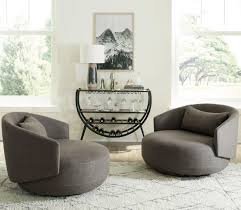
Choosing the right swivel chair is not just about liking how it looks in a photo. The best choice depends on space, comfort, upholstery, structure, and how your household actually uses the room.
Start with room size and layout.
Room size should guide the entire decision. In a small living room, a swivel chair with a compact footprint, slim arms, and a lighter visual profile will usually work better than an oversized lounge piece. In a larger living room, you have more freedom to choose a deeper seat, a broader barrel shape, or a statement chair with more visual weight.
Before buying, measure the space carefully. You need enough room for the chair to rotate without hitting nearby furniture, walls, or tables. A swivel chair that cannot turn comfortably loses one of its biggest advantages.
Think about traffic flow, too. The chair should support movement through the room, not interrupt it. If people have to squeeze around it every time they pass, the placement is not right.
Think about comfort first
A swivel chair can be beautiful and still fail if it is uncomfortable to sit in for more than a few minutes. Comfort should always come before appearance.
Look closely at seat depth, cushion firmness, back support, and arm height. A seat that is too deep may make smaller users feel swallowed up. A seat that is too shallow may feel stiff or upright. The right balance depends on how you sit most often. Do you curl up with a book? Sit upright while talking? Lounge for long movie nights? Those habits matter.
A good swivel chair should support your body naturally and feel easy to settle into. If possible, test how it feels to turn, lean, and sit for an extended period. Comfort is not a luxury detail here. It is a core part of the purchase.
Pick the right fabric.
Fabric changes both the appearance and the practicality of the chair. The right upholstery can make a chair feel rich, cozy, elegant, or family-proof.
Performance fabric is one of the smartest options for busy homes because it is typically easier to maintain and more forgiving of everyday use. Bouclé creates a soft, tactile, designer look that feels current and visually interesting. Leather gives a more refined, polished, and timeless impression. Velvet adds depth, drama, and a sense of luxury. Chenille and woven blends can create warmth without looking overly formal.
The best fabric is not simply the prettiest one. It is the one that suits your daily routine. A formal sitting room can often support more delicate materials. A family room with kids or pets usually needs something tougher, easier to clean, and less high-maintenance.
Check the swivel mechanism.
The rotation is the defining feature of the chair, so the mechanism matters. A good swivel chair should move smoothly and feel stable every time you turn it.
The most practical option for most living rooms is a full 360-degree swivel. It offers maximum flexibility and works well in conversation areas, corners, and open layouts. When evaluating a chair, pay attention to whether the motion feels fluid, steady, and quiet. A noisy or wobbly base can make even a beautiful chair feel disappointing.
A strong swivel mechanism should make the chair easier to use, not more annoying to live with.
Match the chair to how you live.
A reading corner needs a different chair than a family media room. A formal living room needs a different visual tone than a casual den. One of the biggest mistakes shoppers make is choosing based only on appearance without thinking through the chair’s job.
Ask yourself what the chair will do most often. Will it be used for reading, relaxing, watching television, guest seating, or day-to-day family use? A chair chosen for a quiet corner can prioritize cocooning comfort. A chair for a busy social space may need sturdier construction and a more neutral shape. A chair in an open-plan home should complement multiple zones instead of competing with them.
The best chair is not the one that looks best in isolation. It is the one that works best in your actual room.
Best Swivel Chairs for Different Living Room Needs
Different living rooms need different solutions. Here is how to think about the best match for your situation.
For small living rooms
Choose a compact swivel chair with a slim base, smooth lines, and a light visual footprint. Avoid bulky designs that overwhelm the room or make the layout feel tight. In smaller spaces, a swivel chair is especially valuable because it can perform multiple jobs without requiring extra floor space for movement.
A smaller swivel chair near a corner lamp, beside a sofa, or next to a window can create a functional nook without crowding the room.
For modern living rooms
Modern spaces usually benefit from clean silhouettes, curved edges, and refined fabrics. Bouclé, soft velvet, matte leather, and neutral tones often work beautifully here. A modern swivel chair should feel deliberate, sculptural, and calm rather than flashy.
Look for tones like ivory, taupe, charcoal, stone, sand, or muted olive if you want a timeless modern effect.
For luxury living rooms
Luxury rooms often shine with richer materials and more expressive forms. Velvet, leather, brass-finish accents, jewel tones, and oversized proportions can create an elevated look. A luxury swivel chair should feel tailored and substantial, with a finish that looks high-end from every angle.
In this type of room, texture and silhouette often matter more than pattern.
For family rooms
Durability becomes the priority. A Family-Friendly swivel chair should be strong, stable, and easy to clean. Performance upholstery, stain-resistant fabric, or hard-wearing woven material is often the best choice.
Rounded edges, supportive cushioning, and a balanced base are useful features, too. Family rooms see heavy use, so comfort and resilience need to work together.
For reading corners
A reading chair should feel inviting, supportive, and a little cocooning. Look for a deeper seat, a comfortable back, and a fabric that feels soft to the touch. A swivel chair in a reading corner works especially well because you can turn toward the light, the window, or a side table with minimal effort.
A quiet corner becomes much more useful when the chair itself encourages lingering.
Design Ideas for Swivel Chairs in the Living Room
A swivel chair should feel like part of the room, not a random add-on. The right styling approach can make it look intentional and polished.
Modern style
For a modern living room, keep the shape simple and the color restrained. A softly curved chair in a neutral tone can complement a streamlined sofa and minimal decor without making the room feel cold. Matte textures, clean lines, and subtle contrast help the chair integrate naturally.
A modern swivel chair often works best when it adds softness to a room full of rectangular forms.
Luxury style
Luxury styling relies on material richness, proportion, and confidence. A velvet swivel chair with a sculptural back or a leather chair with refined stitching can instantly elevate the room. Deep green, navy, charcoal, cream, and warm camel shades often feel elegant and mature.
A luxury chair does not have to be dramatic to feel special. Sometimes the most expensive-looking pieces are the ones with the quietest, most assured presence.
Small-space style
In a smaller room, the goal is to create impact without visual heaviness. A compact swivel chair in a light color can make a corner feel finished without taking over the space. Pair it with a slim side table and a floor lamp to create a compact reading zone that feels designed rather than improvised.
The chair should help the room feel open, not crowded.
Budget-friendly style
A budget-friendly swivel chair can still look stylish if the silhouette is strong. Shape often matters more than price. A well-proportioned chair in performance linen, textured polyester, chenille, or faux leather can deliver a polished result at a lower cost.
Simple design, clean tailoring, and balanced scale can make even an affordable chair look more elevated.
Family-friendly style
For family homes, focus on ease, resilience, and comfort. Rounded edges, durable fabric, and a sturdy swivel base are the most important features. If the room is used daily, choose materials that can handle spills, constant sitting, and active movement.
A family chair should be forgiving without looking dull.
Budget, Mid-Range, and Premium Buying Guide
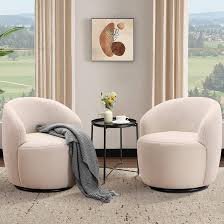
A pillar article should help readers understand what they get at different price levels. Not every home needs the same investment, and not every budget should be treated the same way.
| Budget Level | What to Expect | Best For | Watch Out For |
| Budget | Simple comfort, basic upholstery, lighter construction | Renters, secondary spaces, starter homes | Thin cushioning, weaker frames, and less durability |
| Mid-range | Better materials, stronger structure, more design variety | Most living rooms | Paying too much for style while losing comfort |
| Premium | Richer fabrics, better support, stronger build quality | Main seating areas, design-led interiors | Higher cost, so fit and scale matter more |
Budget tips
Look for a chair with decent padding, a stable base, and straightforward fabric that can handle regular use. Affordable does not have to mean unattractive. A smart silhouette can still look refined even when the materials are simpler.
Mid-range tips
This is often the sweet spot for many households. You usually get a stronger balance of comfort, quality, and design. The chair may feel more substantial, wear better over time, and offer better upholstery choices without pushing into luxury pricing.
Premium tips
Premium chairs should offer more than just a brand name or a decorative shell. The seating experience should feel better, the fabric should look richer, and the construction should feel solid. At this level, size accuracy and style compatibility become especially important because the chair is likely to play a visible role in the room.
How to Place Swivel Chairs in the Living Room
Placement is as important as purchase. Even the best swivel chair can look awkward if it is positioned badly.
A swivel chair should Support Movement, not block it. Leave enough open space for the chair to rotate freely and for people to walk around it naturally. In small rooms, placement near a corner or at an angle can keep the layout efficient while still allowing the chair to function properly.
Some of the best placement ideas include:
Placing the chair across from the sofa to encourage conversation.
Position it near a fireplace to create a balanced seating group.
Setting it beside a window to build a calm reading zone.
Angling it toward the television for movie nights.
Using it in an open-plan layout to help define one zone from another without adding walls.
The simplest rule is this: the chair should make the room easier to use. If it looks good but blocks circulation, it is in the wrong spot.
Common Mistakes to Avoid
A few common mistakes can turn a promising purchase into a frustrating one.
Choosing style before size
A chair can be beautiful and still be a poor fit if it is too large or too bulky for the room. Measure first, then choose the shape.
Ignoring seat depth
Some swivel chairs look comfortable but are not actually pleasant to sit in for long periods. Seat depth has a major effect on comfort, especially for daily use.
Forgetting traffic flow
The chair must be able to rotate without interfering with the room’s movement paths. If people keep walking around it awkwardly, the layout needs adjustment.
Matching everything too closely
A living room often looks more sophisticated when the swivel chair complements the sofa instead of copying it exactly. A slight contrast in texture, shape, or tone can make the room feel more layered and intentional.
Choosing delicate upholstery for a high-traffic room
If the room is heavily used, fragile fabric can create avoidable stress. Pick materials that fit your lifestyle, not just the photo.
Pros and Cons of Swivel Chairs for Living Rooms
Every furniture choice has strengths and trade-offs. A balanced view helps readers make a smarter decision.
Pros
Swivel chairs are highly flexible and can face multiple directions.
They are great for conversation, reading, and TV viewing.
They come in many shapes, sizes, and styles.
They work especially well in open-plan or multi-use rooms.
They can make a room feel more dynamic and welcoming.
Cons
Some styles cost more than standard accent chairs.
Poorly made swivel mechanisms can feel unstable or noisy.
Oversized chairs may overwhelm compact rooms.
Deep seats are not ideal for every body type.
Certain fabrics require more maintenance than others.
These trade-offs do not make swivel chairs a bad choice. They simply show why fit matters so much.
Care, Maintenance, and Durability Tips
Good care keeps a swivel chair looking and performing better for longer.
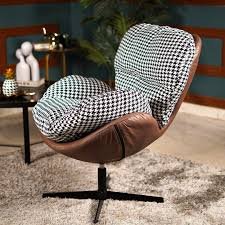
Vacuum the upholstery regularly, especially if the fabric has texture. Wipe spills quickly before they settle. Check hardware and fasteners every so often to make sure the base remains stable. Keep the chair away from intense direct sunlight when possible, especially if the upholstery is velvet or leather, since prolonged exposure can affect color and surface quality.
If the chair has a swivel base, listen for squeaks, friction, or stiffness when turning. Smooth rotation is often a sign of better construction and more reliable materials.
Simple care checklist
Vacuum weekly.
Clean spills as soon as they happen.
Check screws and joints from time to time.
Protect fabric from strong sunlight.
Use fabric-safe cleaners only.
Rotate use patterns so wear stays more even.
These habits are simple, but they make a real difference over time.
Smart, Modern, and Future-Ready Swivel Chair Ideas
A future-ready living room is not only about appearance. It is about adaptability, comfort, and practical beauty. Swivel chairs fit that mindset naturally because they support multiple uses without requiring a complete room reset.
Here are some smart ideas for using them well:
Use a swivel chair in an open-plan room to maintain clear sightlines.
Pair one with a small side table to create a compact reading corner.
Choose performance fabric if the room sees heavy use.
Mix a textured swivel chair with a smoother sofa to create visual contrast.
Use curved furniture to soften a room full of hard lines.
These ideas work because they make the swivel chair useful in more than one way. That is the true strength of the category.
Quick Pro Tips
Choose the chair for the room, not just for the photograph.
Measure the turning radius before buying.
Use texture to create interest without clutter.
Keep the color calm if your decor is already bold.
Select the most durable fabric your budget can support.
Let the swivel chair solve a seating need, not just occupy a corner.
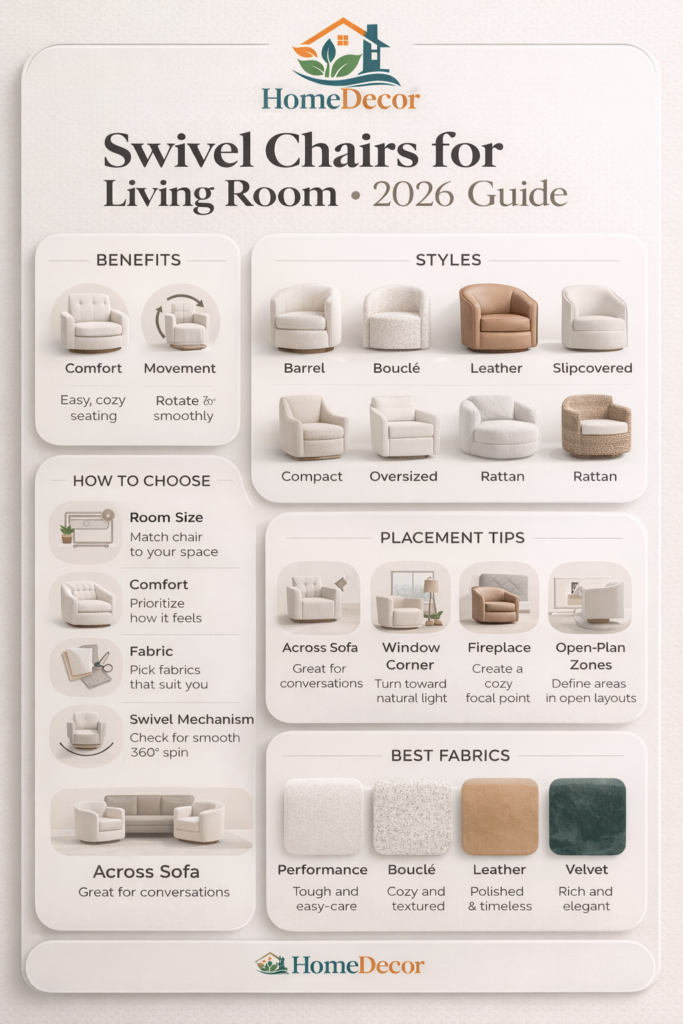
FAQs About Swivel Chairs for the Living Room
Yes. Swivel chairs are one of the most practical living room seating choices because they combine comfort, versatility, and easier movement. They work especially well in rooms that need to support conversation, television viewing, or flexible daily use.
A compact swivel chair with slim arms and a lighter profile usually works best in a small living room. It gives you movement and comfort without overwhelming the space or crowding the layout.
The best material depends on how the room is used. Performance fabric is often the most practical for families. Bouclé offers a soft, current look. Leather feels polished and classic. Velvet adds richness and a more luxurious mood.
Yes. Swivel chairs remain very much in style because they combine practical function with strong design appeal. Curved forms, textured fabrics, and sculptural silhouettes continue to keep them relevant in 2026.
Absolutely. Luxury swivel chairs often use premium upholstery, elegant proportions, and refined details that make them feel elevated. Velvet, leather, brass-finish elements, and deep colors can all help them look sophisticated.
Conclusion
A chair that turns is easy to live with. Because it fits how people actually sit and talk. Not stuck facing one way, it lets you shift without standing up. This small motion changes how space feels. It opens corners, links seating areas, and gives elbow room. Comfort grows when furniture moves as life does. Simple design, but never stiff.
A chair works well when it matches the space, how you live, and then blends with how things look. Pick a form that feels natural, a material that lasts, and position it where it flows. That setup turns ordinary sitting into something smarter. Suddenly, the Corner Changes, the light shifts, and even the air seems different.
